We just sent you a verification email. Please verify your account to gain access to
KubeCon + CloudNativeCon NA 2024. If you don’t think you received an email check your
spam folder.
In order to sign in, enter the email address you used to registered for the event. Once completed, you will receive an email with a verification link. Open this link to automatically sign into the site.
Register For KubeCon + CloudNativeCon NA 2024
Please fill out the information below. You will recieve an email with a verification link confirming your registration. Click the link to automatically sign into the site.
You’re almost there!
We just sent you a verification email. Please click the verification button in the email. Once your email address is verified, you will have full access to all event content for KubeCon + CloudNativeCon NA 2024.
I want my badge and interests to be visible to all attendees.
Checking this box will display your presense on the attendees list, view your profile and allow other attendees to contact you via 1-1 chat. Read the Privacy Policy. At any time, you can choose to disable this preference.
Select your Interests!
add
Upload your photo
Uploading..
OR
Connect via Twitter
Connect via Linkedin
EDIT PASSWORD
Share
Forgot Password
Almost there!
We just sent you a verification email. Please verify your account to gain access to
KubeCon + CloudNativeCon NA 2024. If you don’t think you received an email check your
spam folder.
In order to sign in, enter the email address you used to registered for the event. Once completed, you will receive an email with a verification link. Open this link to automatically sign into the site.
Sign in to gain access to KubeCon + CloudNativeCon NA 2024
Please sign in with LinkedIn to continue to KubeCon + CloudNativeCon NA 2024. Signing in with LinkedIn ensures a professional environment.
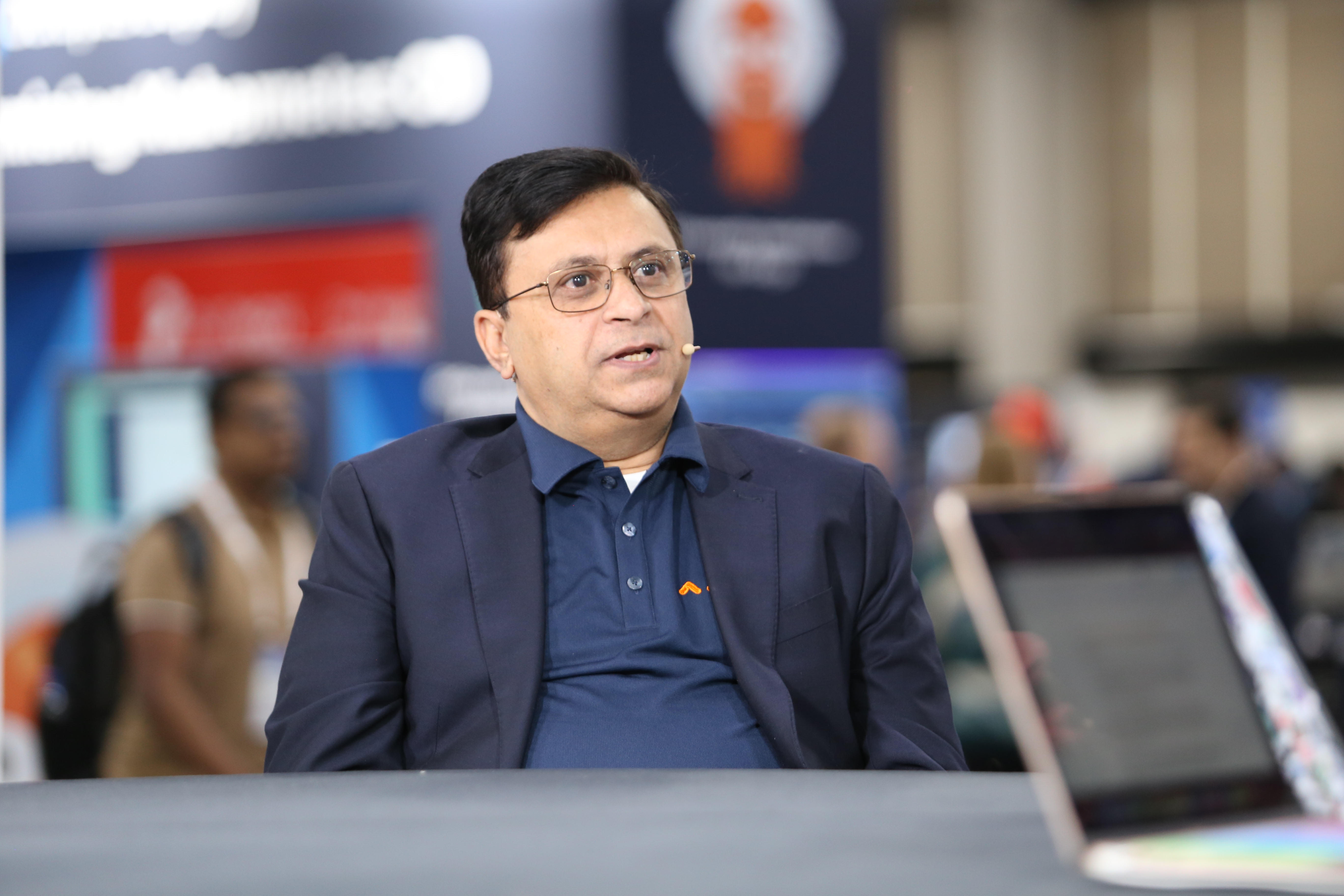
Day two of KubeCon North America in Salt Lake City, Utah kicks off with Anirban discussing the evolution of multi-cloud strategies over the past 18 years. Organizations are now shifting towards true multi-cloud strategies to stay ahead of competitors. The key challenge lies in networking and security, especially with the distribution of data, models, and applications across various clouds. Aviatrix addresses IP exhaustion, overlapping IP addresses, and network security issues for customers with thousands of VPCs. Their controller-based solution enables intent...Read more
exploreKeep Exploring
What has evolved in the public and hybrid cloud space over the past 18 years since AWS was first released?add
What are some important considerations for organizations transitioning to a true multi-cloud environment, specifically in terms of networking and security?add
What are the top three key problems that organizations need to solve with Kubernetes, especially multi-cluster Kubernetes?add
What are the main things that are provided in this service?add
What are the key features and capabilities of the SDN controller being integrated with the Kubernetes ecosystem for providing cross-cloud networking at scale?add
>> Good morning, cloud community, and welcome back to fabulous Salt Lake City, Utah. We are here kicking off day two of our KubeCon North America coverage. My name is Savannah Peterson, joined by, you guessed it, Rob Strechay. Rob, really pumped for the day.
Rob Strechay
>> I am too. I think this is one of those days where we can bridge off of things and make those connections together, which would be a network of things coming together. And I think one of the things that's always been very difficult with cloud computing, as I said from my days at the hyperscaler, is the networking thing. And I'm really excited to be talking about how make it easy now as well.
Savannah Peterson
>> Everyone wants that easy button-
Rob Strechay
>> Absolutely....
Savannah Peterson
>> and talking about it.
Rob Strechay
>> Absolutely.
Savannah Peterson
>> And I am so excited to welcome Anirban to the show today. Thanks for taking the time.
Anirban Sengupta
>> Thank you for having me.
Savannah Peterson
>> Your first KubeCon. I can't believe that. And you've been in the Kubernetes space, your Kubernetes OG just like we are. What's it like for you to be on the show floor and see all your friends?
Anirban Sengupta
>> Yeah, it's a very different experience. So it's kind of... I used to run a lot of the engineering for Google Kubernetes engine, and somehow I never had time to take that week off and come to KubeCon, but it's amazing to see the whole energy and meet all my ex-family, so to speak. Because at certain point, our colleagues become family. We spend so much time together.
Savannah Peterson
>> Absolutely. And it really does feel like a family, particularly in the cloud and open source community, I think more than some subsets of tech. No offense to all them, but just a little bit different. Multi-cloud has been a huge conversation that we've been having all week. Aviatrix, known for being an absolute pioneer in this space. You are a cloud master as well, so I want to start off high level. How do you see the space evolving? Where are we going with multi-cloud? What are the trends?
Anirban Sengupta
>> Yeah, so it's hard to believe that it has been 18 years from the time when AWS first was released and-
Savannah Peterson
>> You just made me feel very old in one single sentence.
Anirban Sengupta
>> Yeah, it's unbelievable, in 18 years, how much the public cloud and the whole hybrid cloud space has evolved, right? So today, we have the hyperscalers. But along with that, we have regional clouds. We have specialized clouds. If you look around here, there are so many cloud companies that have evolved. And if we really look at it, most organizations, they started with a single cloud journey, and soon, they had to move to what I call it a primary cloud journey, right? But moving forward, how I see it is that because every cloud provides such a great breast of breed services, as well as specialization, that organizations are now looking at a true multi-cloud strategy, right? Not just a primary cloud strategy, but a true multi-cloud strategy. So that's how I look at that multi-cloud is really important. So earlier, it was kind of a necessity, right? But now, it is like if you have to really get ahead of your competitors, you have to enable your developers with multi-cloud, through multi-cloud.
Savannah Peterson
>> I love on your website, you call it career-saving cloud management. And I think that it is interesting, and I want to drill in here just for a second because you're bringing something up. I agree with you. Conversation is definitely all around. It seems to be the cohesion, Kubernetes obviously being the platform there behind a lot of these new deployments. How far in this maturation or adoption curve of a truly robust and mature multi-cloud strategy do you think we are? What are you seeing when you talk to companies?
Anirban Sengupta
>> Yeah. So especially from my GKE experience, what I have been seeing is that large organizations, especially huge, big enterprise companies, they have started something which many of the companies are calling it as cloud 2.0 strategy because they all started, most of them started with AWS because that was the incumbent cloud. But now, over time, they're looking at, hey, it's not just AWS, but all the other clouds provide great value, right? And especially with Kubernetes, it has become kind of shifting. And then on top of that, all the AI, GenAI, and AI/ML applications, people are really looking at a cloud 2.0 strategy, so to speak, which is a hundred percent multi-cloud oriented.
Rob Strechay
>> Yeah. And I think that, to me, and one of the big themes for this morning's keynotes was security, and there was a lot of talk about networking and things like that. How do you see people, because you guys are not just in the cloud. You're all the way to on-premise, colo, like you said, the other smaller tier two clouds, not just the hyperscalers, the GPU clouds. How do you see people building out these applications that may have Kubernetes as part of that, they might have VMs as part of it. But one of the tough things is getting everything to talk together,-
Anirban Sengupta
>> Yes....
Rob Strechay
>> and especially from a network and a security. How do you see this evolving? And what are some of the challenges that you see out there?
Anirban Sengupta
>> Right. So if we look a little bit behind what we have gone through, with even organizations having multiple cloud, it was mostly a siloed, right? So they would have a particular application on one cloud, maybe another application from a different line of business in another cloud, right? But with the coming of the GenAI and all these applications, what has happened is that the data is distributed. The models are in a different place, and also the applications are in a different place, right? And lot of the data is actually on the edge. It is generated on the edge, right? And all that data has to come in to the cloud, so that it can be processed, and either for training or inference or any of these use cases. So this is the time when there is a real need for having a true multi-cloud. And the key is when you come into a true multi-cloud situation, networking and security is really important because what you really need is high bandwidth connectivity. And also, it needs to be secure because a lot of that data is PII data, right? There's credit card information.
Savannah Peterson
>> Right.
Anirban Sengupta
>> Yes. And we have customers who are in healthcare, in finance, and all hospitals, they are uploading data into the cloud and it has to be secure, right? That is what is fundamentally necessary, right? Because as Rob has said, that in the keynote, one of the key part was how do we have secure networking across all these different clouds, and on-prem, and edge, right? And how do we have security? And those would be the real key pinpoints which organizations have to deal with and solve.
Rob Strechay
>> Yeah, and I think some of the things that we also see is that, again, overlapping or exhaustion of IP addresses, some of the perimeter security aspects of it, and really having that true interconnection between the different pieces that, again, you you're paying for. And people sometimes have become multi-cloud by accident, and they have different pieces in different places, like you were saying.
Savannah Peterson
>> That's a good point, Rob.
Rob Strechay
>> And I think that, to me... Because I think, and you kind of talked to this about in your blog and really go down into helping people understand how to address these challenges, what was kind of the theme for the blog for people who haven't read it yet?
Anirban Sengupta
>> Yes. So especially with Kubernetes, because Kubernetes has taken over especially on not just the legacy applications, people moving from VM to containers, but also all the new applications and AI applications, they're all being in containerized, right? So there are three big areas, which is key pinpoint today with Kubernetes, and especially multi-cluster Kubernetes. So one is that Kubernetes is very IP hungry, right? So there is exhaustion. IP address exhaustion is the key and top of mind.
Savannah Peterson
>> IP hungry is a great way of phrasing that. I haven't heard someone say it like that before, and that you just nailed it. Yeah, it totally is. Yeah.
Anirban Sengupta
>> And the other part is that overlapping IP. So there's this whole concept of island VPCs, right? And everybody kind of used, most developers, they kind of used the RFC 1918 space with a 10.xx IP address. And we have customers who have not just hundreds, even more than thousand VPCs with overlapping IP addresses.
Rob Strechay
>> Wow.
Anirban Sengupta
>> Now when you are connecting those, how do you-
Savannah Peterson
>> I'm just thinking of that web.
Anirban Sengupta
>> Exactly, right?
Savannah Peterson
>> It's complex.
Anirban Sengupta
>> How do you do that?
Savannah Peterson
>> Yeah,
Anirban Sengupta
>> So that's the number one problem. Number two problem is about security. Egress security is critical, and there are actually millions of VPCs, with almost zero or very light egress security. And last but not the least is inter-cluster, high bandwidth secure connectivity. So if I have to say top three problems which organizations have to solve is IP exhaustion and overlap, number two is network security and egress security for the VPCs, and number three is high bandwidth secure connectivity between their clusters.
Savannah Peterson
>> I am still just thinking about that web of pulling that all together right now, and no wonder you're around. Can you give us some examples of customers adopting this and already seeing success? This is obviously very much at scale in terms of the examples that you're dealing with. So yeah, what can you share?
Anirban Sengupta
>> Yes. Right. So one of the things actually, I wrote a blog on particularly these issues, and thank you, Rob, for reviewing it and providing feedback. So the key piece which is needed is about what we do is about a controller-based solution for Kubernetes, for cross-cloud, right? And we have customers who have, as I said, more than thousand island VPCs with overlapping IP space. So what we do is, because it's a controller-based, it can really take intent-based policies, networking and security policies, and they can connect all these overlapping IP address clusters through the NAT gateway. And they connect through the NAT gateway, and then the intent-based policies, it attaches to all the API servers and gets all Kubernetes resources. And our customers can go and write intent-based policies with the Kubernetes resources without caring about the IP addresses, right?
Savannah Peterson
>> That's a big deal.
Anirban Sengupta
>> Yes, exactly.
Savannah Peterson
>> Yeah.
Anirban Sengupta
>> And we update the whole policy dynamically based on... Because Kubernetes is a very dynamic environment. It grows and shrinks, and you have new replicas that is created. All of that, within seconds, gets updated into the data path, right? So three areas we really excel in. One is multi-cluster, multi-cloud control plane, number two is basically intent-based policy, and number three is extremely fast reconciliation so that it can keep up with the dynamic situation, which is how Kubernetes works and it is great at.
Rob Strechay
>> Yeah. I think, again, a lot of people here are trying to... A thousand VPCs is crazy. I know some of your customers I can't talk about, but I think one of the great things is organizations, like you said, they have thousands of VPCs spread across multiple customers and multiple... Where do people get started? Where should a customer get started? What's your recommendation, your advice for that?
Anirban Sengupta
>> Yeah, thank you. That's a great question. Every customer I talk to, there are few things I ask them to think about. First is that I think today, every organization should embrace multi-cloud, right? That's the best way to get ahead with their competitors and help their developers to, number one, churn out the best software and the best services, number one. Number two is that networking and security should be number, is top of mind for them, right? Because without connecting connectivity and without security, you really can't have a multi-cloud strategy, right? And last but not the least, to think of pure play solutions as much as possible so that the customers are not locked in into a particular cloud, whatever the cloud is, right? For certain things, these CSPs and the cloud providers are really great at. But for certain things, they should look at the best of the breed solutions, right? And that would give them also operational consistency, it would give leverage, it would give... From compliance perspective, they don't have to do compliance on multiple clouds, multiple tech stack, right? So that's the final thing I generally tell organizations, to look at pure play cloud agnostic solutions as much as possible.
Rob Strechay
>> Yeah. Yeah. And I think, again, having been at a hyperscaler myself, I think that is absolutely fantastic advice, especially the embracing that you may have gone there by accident to multi-cloud, but now you're there. So embrace it and solve for it. You guys had some exciting news earlier this week. Why don't you kind of give us a little highlight of what you guys announced earlier in the week?
Anirban Sengupta
>> Yeah, so the big thing which we announced this week was Aviatrix Pass, right?
Savannah Peterson
>> Yeah.
Anirban Sengupta
>> We are really excited. And the main things which we provide there is, number one, you can get to value, the time to value, right? And I challenge my team that the time to value should be less than 10 minutes.
Rob Strechay
>> Wow.
Savannah Peterson
>> Love that.
Anirban Sengupta
>> You should be able to onboard your VPCs and get the value of all the goodness from aviatrix, like observability, NAT gateways, security, networking, all of that, you get it in 10 minutes. That's what-
Savannah Peterson
>> I love that.
Anirban Sengupta
>>
Savannah Peterson
>> In the time it makes you get a cup of coffee, you've got your time to value.
Anirban Sengupta
>> Exactly.
Savannah Peterson
>> That's brilliant.
Anirban Sengupta
>> Right? You have to make the coffee fast though.
Savannah Peterson
>> Yea.
Rob Strechay
>> We limp. I love fast coffee. Trust me.
Savannah Peterson
>> That's about what it takes me to do on my espresso machine. It's about 10 minutes.
Rob Strechay
>> Yeah, exactly.
Savannah Peterson
>> That's what I was thinking in the back of my mind, but I know how long it takes before a call. I that I've got that time stamp.
Rob Strechay
>> Absolutely.
Anirban Sengupta
>> Exactly. And the second piece, which is really important is that operations, we take away the toil of the operations from our customers. So we have a world-class, networking oriented SRE team, right? We take care of all upgrades, data operations, troubleshooting, making sure that everything is running as needed, and they're getting the best operational excellence through SRE. For example, we take care of right sizing all these devices. And last but not the least is that we provide the best TCO overall with the past service.
Savannah Peterson
>> It sounds like a winning formula to me. Congratulations on the announcement.
Rob Strechay
>> Exciting stuff.
Anirban Sengupta
>> Thank you very much. We are so excited.
Savannah Peterson
>> Yeah.
Rob Strechay
>> Making things easy is hard. That's what we know. That's what we know.
Savannah Peterson
>> Yes. Yes, to put it simply. Yeah.
Rob Strechay
>> Yes, absolutely.
Savannah Peterson
>> All right. Last question for you, because you've been a fantastic guest, and we can't wait-
Anirban Sengupta
>> Thank you....
Savannah Peterson
>> to see how the adoption of this new announcement rolls out, what do you hope to be able to say at next KubeCon, whether that's in London or Atlanta, since you'll be going to them all now, that you can't yet say today?
Anirban Sengupta
>> Well, okay, I'll spill the beans.
Savannah Peterson
>> Yes, please.
Anirban Sengupta
>> Yeah. So as you have seen, there is a lot of different sessions and keynote which is talking about true multi-cloud networking and security, right? So one of the things we are close to releasing, and in next months, we will really hone on that, is how do we provide that at scale? Right? So what the major part which we have is we have a SDN controller, which is a multi-cloud controller, right? And what we are doing is integrating it with the whole Kubernetes ecosystem to provide a true cross-cloud networking which adapts to your Kubernetes clusters, right? And I'll give simple things like few just crumbs here. So today, you can increase your Kubernetes clusters, whether it is number of nodes, whether it is number of pods, whether it is number of replicas, in seconds. Can you increase your bandwidth in seconds? Can you propagate your governance and security and provide a consistent security in seconds? Right? So those are the real questions we are trying to solve in next three to six months.
Rob Strechay
>> Wow.
Savannah Peterson
>> Well, . Yeah, I was going to say that was perfect, perfect little tease there, Anirban. Thank you so much for that.
Anirban Sengupta
>> You're welcome.
Savannah Peterson
>> Also, shout out to your bling on your hands, just so everyone can see. Is everyone at Aviatrix as jewelry fashionable as you are? I've been admiring. I've been admiring this entire talk. Under the lights, everything looks great. Anirban, it's been such a pleasure. Thank you so much for taking the time out of your first KubeCon to join us. And Rob, always a joy.
Rob Strechay
>> Oh, yeah.
Savannah Peterson
>> This is the perfect start to a-
Rob Strechay
>> Always learning. I love it.
Savannah Peterson
>> Always learning. Always be learning, ABL.
Rob Strechay
>> ABL. We're ABL today.
Savannah Peterson
>> Yes, we are.
Anirban Sengupta
>> Thank you for having me.
Rob Strechay
>> Yes.
Savannah Peterson
>> Our pleasure. And thank all of you for tuning in. Hopefully you're learning and enjoying this as much as we are. We're in Salt Lake City, Utah here at KubeCon North America. My name is Savannah Peterson. You're watching theCUBE, the leading source for enterprise tech news.