We just sent you a verification email. Please verify your account to gain access to
KubeCon + CloudNativeCon NA 2024. If you don’t think you received an email check your
spam folder.
In order to sign in, enter the email address you used to registered for the event. Once completed, you will receive an email with a verification link. Open this link to automatically sign into the site.
Register For KubeCon + CloudNativeCon NA 2024
Please fill out the information below. You will recieve an email with a verification link confirming your registration. Click the link to automatically sign into the site.
You’re almost there!
We just sent you a verification email. Please click the verification button in the email. Once your email address is verified, you will have full access to all event content for KubeCon + CloudNativeCon NA 2024.
I want my badge and interests to be visible to all attendees.
Checking this box will display your presense on the attendees list, view your profile and allow other attendees to contact you via 1-1 chat. Read the Privacy Policy. At any time, you can choose to disable this preference.
Select your Interests!
add
Upload your photo
Uploading..
OR
Connect via Twitter
Connect via Linkedin
EDIT PASSWORD
Share
Forgot Password
Almost there!
We just sent you a verification email. Please verify your account to gain access to
KubeCon + CloudNativeCon NA 2024. If you don’t think you received an email check your
spam folder.
In order to sign in, enter the email address you used to registered for the event. Once completed, you will receive an email with a verification link. Open this link to automatically sign into the site.
Sign in to gain access to KubeCon + CloudNativeCon NA 2024
Please sign in with LinkedIn to continue to KubeCon + CloudNativeCon NA 2024. Signing in with LinkedIn ensures a professional environment.
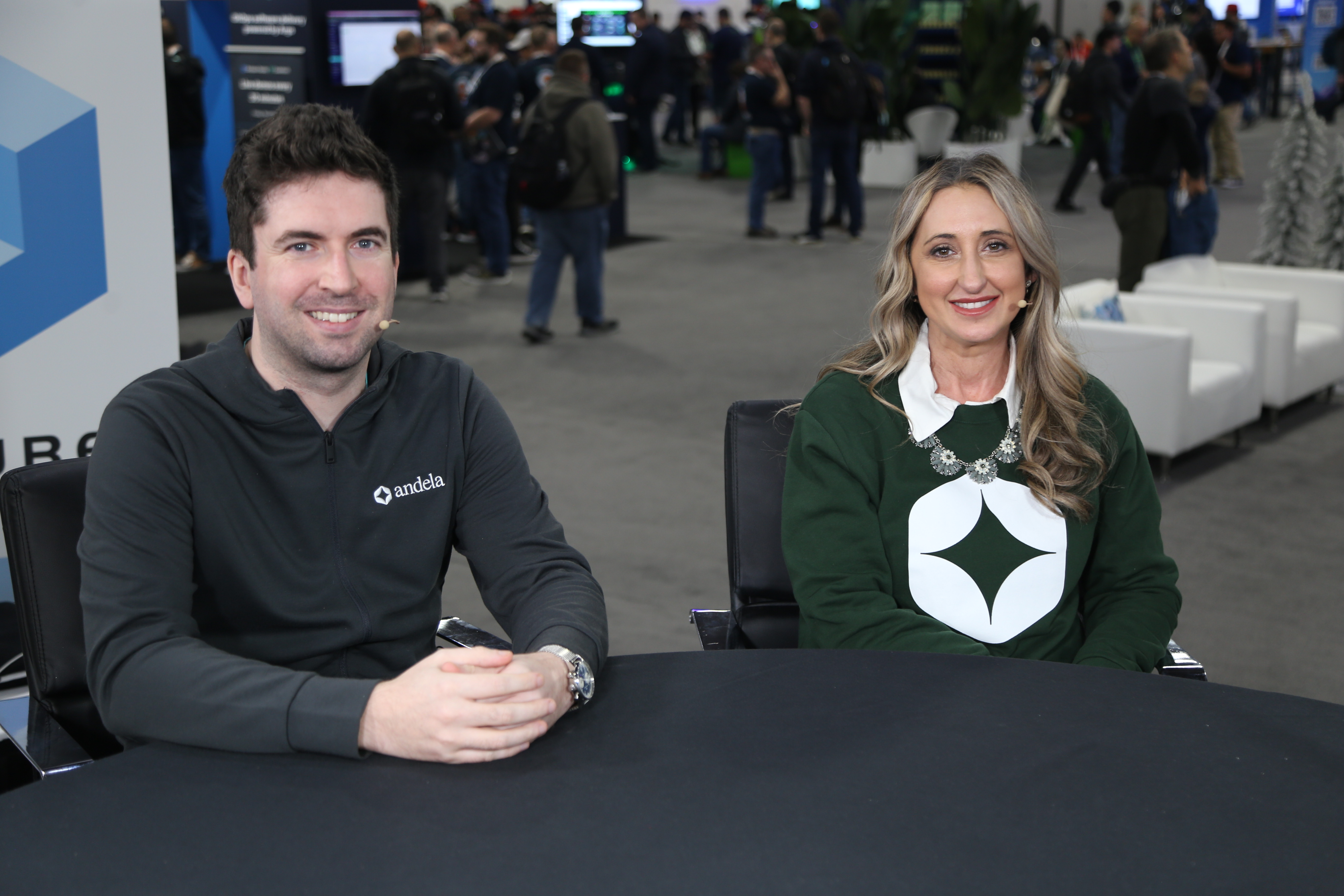
The discussion at KubeCon focuses on the partnership between Andela and CNCF in upskilling technologists in Africa. Andela is a tech talent marketplace connecting talented individuals with companies in need of engineers and developers. The partnership aims to provide Kubernetes training to meet the high demand for these skills. The program is set to last for multiple years, with different cohorts and learning paths tailored to each individual's needs and experience level. Andela's goal is to bridge the gap between talent and opportunities, providing a borderl...Read more
exploreKeep Exploring
What is Andela and what brings Natasha to talk about the company?add
What was the partnership like with the CNCF and what announcement was made that caused confusion among people?add
What are the benefits of accessing a borderless workforce with Andela?add
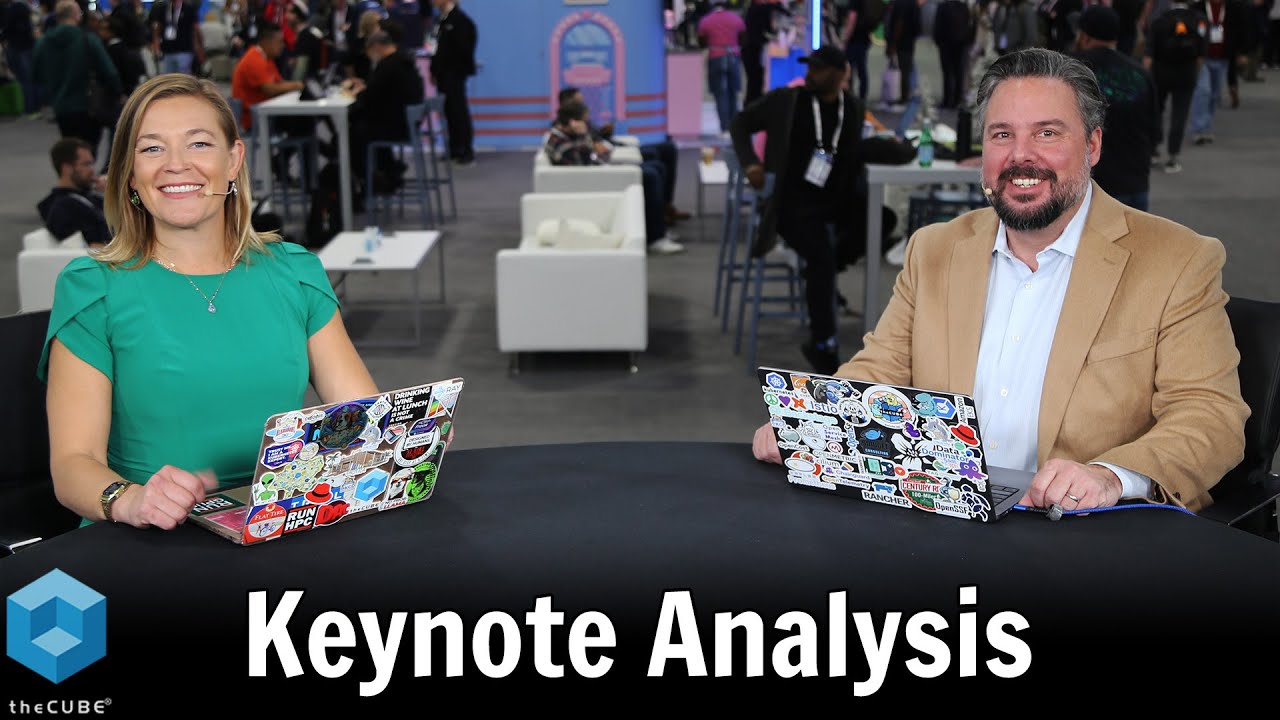
>> Good morning Cloud community and welcome back to Salt Lake City, Utah. We are here starting off day three of our three days of coverage on theCUBE. My name is Savannah Peterson, bringing it home here with Rob Strechay. Rob, what a week.
Rob Strechay
>> It's been awesome. I think the community has been super vibrant and I think that it's just a lot of energy even on day three, on a Friday.
Savannah Peterson
>> I know. It's still pretty packed in here.
Rob Strechay
>> It's still a lot of people here on getaway day, so I'm glad to see that.
Savannah Peterson
>> On getaway day. Yes, on getaway day. And to that point, also very exciting news coming out today from the keynote.
Rob Strechay
>> Absolutely.
Savannah Peterson
>> I can't wait to talk about it with our two guests, Ross and Natasha, thank you so much for joining us.
Natasha Woods
>> Thank you for having us.
Ross O'Neil
>> Thank you.
Savannah Peterson
>> How y'all holding up in the altitude, the dryness in day three?
Natasha Woods
>> I think the energy of KubeCon is just filling my heart so much that it's keeping me going. That and coffee.
Savannah Peterson
>> Yes, it's definitely a big part of it. For those who might not know about Andela, give us a bit of background on the company and what brings you here today. Natasha, I'll have you start.
Natasha Woods
>> Exactly. Andela is a private tech talent marketplace. We have 150,000 technologists spanned over 135 countries. And so we help connect that amazing talent for contingent jobs with great companies that are looking for engineers, data scientists, developers, you kind of name it. We were founded 10 years ago in Nigeria. That's where we started. That's our roots. And we were founded on the mission or the thought that brilliance is evenly distributed across the globe, but opportunities are not. And so it became our mission to connect that brilliance with opportunities and that's where we're here today. We're a unicorn company and we're thriving and about 60% of our talent are still based in Africa and Latin America. Two great emerging markets to really tap.
Savannah Peterson
>> Those are some... Go for it.
Rob Strechay
>> Sorry, yeah, I think again, seeing in the keynote and seeing what was talked about, I totally agree that it's definitely opportunity is definitely not distributed equally. What was it like to really partner up with the CNCF? And talk a little bit about the announcement that you made because I think again, it's really, people looked at it and may have been scratching their head why this was happening.
Natasha Woods
>> It makes sense, yeah, we'll pull back the curtain a little bit. I think to understand how we put this together with CNCF, it's important for my colleague Ross to talk about the learning program and a little bit of our history of the learning program and how that kind of fits into our marketplace. Just to give the reader or the listeners some context.
Savannah Peterson
>> They might be reading. Closed captioning, baby.
Ross O'Neil
>> Multi form factor. Andela has a long history, a long legacy as we mentioned 10 years old, but every year since our founding, we've always invested in up skilling an opportunity and invested in different skillings for African talent. This is building on that legacy and we see huge demand for Kubernetes skills. 90% of our roles that get created by companies with Andela requires Kubernetes as a skill. This is where it makes sense in terms of a strategic learning partnership. We want to, as we said, provide a path to success for those talents. But also for CNCF, we're growing the community in Africa, we're really excited. This is the first step of hopefully a long relationship of doing these types of skilling programs and adding to the legacy that we've already had.
Natasha Woods
>> To add to that, I used to work at CNCF right when we were launching and was there for a few years, when we were doing the first KubeCons. And so coming to Andela and listening to the training programs that Ross has put together with companies like NVIDIA and Microsoft and AWS and Meta, I was like, oh my gosh, I wonder if there's a big need for Kubernetes. And so called Chris and said, "Hey, why don't we combine resources and bring these trainings to a number of African developers? There's over 700,000 African developers and we've actually trained 15% of that population." And so it's, let's bring Kubernetes certifications.
Ross O'Neil
>> Natasha came knocking on my door and saying, "Hey, I used to work here and I can make this." And yeah, she's fostered this great relationship and great program with us. It's been great working together. Even I mentioned we work on different areas of the organization, but this has been a great partnership.
Savannah Peterson
>> I mean that's really impressive. First of all, what an excellent Venn diagram of your background and experience and how inspiring, quite frankly. 90% of jobs.
Ross O'Neil
>> Yeah, that's-
Savannah Peterson
>> I've got to bring it back there for a second. That is a wild stat. I'm curious, we saw in the keynote today, the adoption curves, we're really at an interesting moment right now with Kubernetes. Obviously full tail is the platform of the future. You obviously would've known that already Natasha, which is fantastic. How has that number shifted or increased say over the last two years in that ratio of jobs needing that skill set? Or was it always like that?
Natasha Woods
>> I mean, I'll have to go back to our talent matchers and check that, but I don't think it's always been that way. When you put in a job rack and you're like, hey, these are some of the skills that I'm kind of looking for, our clients understand we're not going to have a vast population of certified talent. The trainees can be complicated and really mastering Kubernetes can be complicated even 10 years later. But I do think that it is the de facto standard for container orchestration. It's very much needed in the infrastructure stack, and so it makes sense that the demand's there.
Ross O'Neil
>> We checked with our matching team what is the demand for that and that was the most real-time data we got just before we came here today to see what is the demand we're seeing and that we want to meet that demand. In relation to the way Andela works, we're this large private talent marketplace, all the technologists go through a rigorous assessment, English proficiency, technical interview, soft skills, professional skills. And so part of that technologies, we're equipping them with skills so that they can pass that assessment and then be matched to the right role to meet the companies' worldwide demand for those skills.
Rob Strechay
>> I was going to say, and part of it, it seems to be that there's this huge gap that everybody talks about, but then there's still a lot of layoffs and other things, and we were talking about that earlier and we see it month over month. How do you see the market changing from the skills that are needed versus the skills that are out there to that point and saying, hey, is it an up-skilling thing? Is it a re-skilling thing? What's happening in that part of it as well?
Ross O'Neil
>> I think it's a bit to do with up-skilling is definitely a piece, but I also think if you are an engineering manager or CTO, and I've been hearing lots of thoughts, getting a lot of feedback here in relation to, yeah, I'm not finding the right talent, it's because they're accessing the same talent pool. That's where with Andela, you're accessing a borderless workforce. You're finding the right talent anywhere. If you're accessing the same talent, it's constrained by the nature that you're accessing it alongside with your competitors and other companies that are all trying to find the right skill while in Andela, that's why we're connecting that brilliance with opportunity with our talent. And that's why we continuously invest in their up-skilling and learning programs so that they're always competitive and of the highest quality for our clients.
Savannah Peterson
>> It's so important. And you with the GitLab background, all remote, always, not surprised you're working in borderless. I think there's a big parallel there and also passion. I mean that's how you and I met originally, but I'm curious because I do think this is interesting. I'm Silicon Valley-based, lots of layoffs in the valley. Actually, honestly, the West Coast, you're seeing a lot of interesting stuff in Techlandia. Obviously on your side, you're seeing this huge craving for Kubernetes talent and up-skilling. What's the discord there you think? What's the mismatch?
Natasha Woods
>> I think if you look at it, it's really what are the projects that are going forward for the coming years? How can we be more efficient? What is going to have a return on the business? How is it going to get us to the next area that we need to get? And then you look at the talent and you're like, okay, we have skills gaps in these areas. And how do you fill those skills gap? Do you have the right skills in your organization and are some roles redundant? Are some projects moved? And so you actually don't need this kind of group of people because we are no longer working on this project. Everyone's moved to AI, and so how is that going to impact platform engineering? And that was another big topic, security was another big topic this week, and so you're going to start focusing a lot more on talent with those skills. And then I think that's when you start looking outside your organization. You're like, how do I find these? And then also I think part of the struggle that companies are, how do I upscale my current talent? And that's why I think these types of partnerships should be inspiring to other companies to reach across the aisle and say, "I have these resources, you have these resources, let's partner together so we can all upscale."
And I think that's why conferences like KubeCon are so important because If you walk around to these different sessions, people are upscaling themselves here. They are collaborating as a community. They are sharing things that they have done and things that have blown up and things that have worked and new ways to work on everything. And so I think that that's going to be really important when we look at tech hiring and tech shortages.
Rob Strechay
>> Where do you see a lot of, what types of companies are coming to? Because I look at it and go borderless. For some companies, smaller companies, it's tough trying to hire in different time zones and be async and things like that. What are the types of companies that can take advantage of this marketplace in Africa in particular?
Natasha Woods
>> We have every type of company.
Ross O'Neil
>> Every type of company. We have enterprise clients, we have small medium businesses. And I think actually to your point, what Andela does is if you're, as I mentioned, a company and you're thinking, well, I don't really want to set up and start spinning up an entity say in Argentina or in Nigeria or Kenya, but I want to access that talent pool, that's where Andela comes in. We're dealing with the pay, the compliance, the assessment. We've spun up talent for client engagements and as fast as 24 hours because we've done this rigorous assessment, but based on meeting what they need, getting that information. You can actually, as a client, you can go onto Andela Talent Cloud and self-serve with fully vetted talent, completely certified and have gone on and actually showcases their experience of other engagements they've done with clients of ours. But in addition to that, we have a matching team that are very, very bespoke and relating to, I want to hear your needs and requirements, and possibly even identify ones you haven't even thought of yet.
Savannah Peterson
>> I was wondering about that because I bet you have a really good lay of the land in terms of that complete holistic skillset that somebody needs to really be successful at .
Ross O'Neil
>> We like being a strategic partner with our clients and building that rapport and figuring out their needs and serving them.
Natasha Woods
>> And some of our long-time clients are GitHub. We work really closely with GitHub. The Weather Channel, which is part of IBM. MasterCard Foundry is another great one. Kinship, which is owned by Mars Petcare. Those are all some of our really long-term clients that we've worked with. I think GitHub we've worked with for seven years now. And so we've got a long, great legacy of helping these companies find the talent that they need when they need it.
Savannah Peterson
>> And it's awesome, what a great match. I mean, 24 hours, very compelling data coming out of here. I'm curious how long, and this could be an interesting metric, but how long does it take the average person who comes into the program to get up-skilled? Let's say there's 20,000 developers in Africa, for example, how long do these learning programs typically take?
Ross O'Neil
>> Yeah, this is a multi-year partnership. What we'll do is we'll do a learning a kind of a curve of ramping up. I'm not sure what the number we'll start with first, we'll work with CNCF on that. But essentially we'll run a learning program with different cohorts over multiple years. And so we might start off with 5,000 learners in the first segment and then ramp up to 10 and go from there. And then continuously and in that very agile way, learn from each cohort and find out the specific needs and demands. As Natasha's mentioned, we've done that multiple times with different partners. We did it with Google. We had a large developer program with them over five years, and we started small and worked our way up. But what's exciting about this one is that this is our largest one from day one, and we're even already talking about what we can do after. We're already thinking about that.
Natasha Woods
>> They had some great certifications that were announced this week, and I was like, "Ooh, telemetry, could that be next? Oh, platform engineering, can we do that?"
Savannah Peterson
>> Love that.
Natasha Woods
>> This is the first of hopefully many things to come.
Ross O'Neil
>> Even though I'm thinking about the implementation of this and how we're going to structure it, and we're going to launch it for talent in 2025, we have to think ahead in order to keep up with the different trends and make good strategic bets on different skills so that we keep our talent highly competitive, highly trained to meet the demand of tomorrow, essentially.
Savannah Peterson
>> Absolutely. And the open source community is such a good, speaking of the Weather Channel, such a good way to forecast what that skillset might be and what those certifications might need to be very wise, Natasha to be walking around and thinking about that. For the developers themselves, how long does that cohort generally last?
Ross O'Neil
>> Roughly, it really depends on the certificate.
Savannah Peterson
>> I figured, yeah.
Ross O'Neil
>> We'll base it on, I would say, on data, on typical learning outcomes and achievements how was the average length. KCNA could be somewhere in the region of two to three months. Also depends on the level of experience that the technologist already has. This is open, it's going to be free for technologists in Africa, and we don't want it to be a case where you have to have lots of years of experience with career. That's not who it's for. It's meant to be completely inclusive, open. We're going to be, you could enter from day one, you could be 27 years old. You may have done one to two years of experience. Well, I'd say we're going to get a lot of demand for the CKAD from senior software engineers based in Kenya, Nigeria, Rwanda. We're really looking forward to facilitating that conduit of learning for them.
Savannah Peterson
>> I love it. It's so exciting. It's the national bird of Kenya on my arm actually-
Natasha Woods
>> It's meant to be.
Savannah Peterson
>> You guys talking about this the whole time, I'm like, oh man, I'm getting all these feels. I can see it, I can hear it, I can smell it as you're talking.
Ross O'Neil
>> That's part of the iterative process as well is to find out what is the average length for a learner. It's not about doing things quickly, it's about doing things well. We're a big believer in that. It's not about how fast you can learn, it's about how well you can learn and do you really take away those learning outcomes that we want to achieve. There's also elements of community fostering and not just about joining Andela and our Andela learning community that we've built up with over 150,000 technologists, but joining this wonderful community as well and bridging that for them, doing Cube days, meetups, hackathon so even though we'll be focusing on the certification for sure, and there'll be elements of how can we make that connect so that those Andelans join these wonderful meetups and join these wonderful people in the community.
Savannah Peterson
>> We're all for all the wonderful community activity and shared learning and those community activities enhance that learning that you're providing through this certification. It's all very cyclical. It all works very symbiotic, I should say rather. It all works very well together.
Ross O'Neil
>> We'll have a KubeCon in Nigeria or Kenya in the future.
Natasha Woods
>> Fingers crossed.
Savannah Peterson
>> I'm here for that.
Natasha Woods
>> That would be fun, right?
Savannah Peterson
>> We're definitely going, Rob, if that happens.
Natasha Woods
>> I know. We put the bug in.
Savannah Peterson
>> Yeah, no it's good. You heard it here first folks.
Natasha Woods
>> Now let's rally around it.
Savannah Peterson
>> You all heard it here first. Last question for both of you because this has been fabulous. When we're hanging out at the next KubeCon when we're in London, what do you hope to be able to say then that you can't yet say today?
Natasha Woods
>> Oh gosh. I think it would be amazing to give an update on the community response to this, the developers in Africa, how do they respond to this? How many people applied when you put the application out in January? I mean-
Savannah Peterson
>> Oh yeah, that's exciting.
Natasha Woods
>> That would be cool.
Ross O'Neil
>> Yeah, we'll definitely be giving a progression update and then hopefully a roadmap of other things we might be doing as well.
Natasha Woods
>> Oh, a roadmap would be so nice.
Ross O'Neil
>> Yeah, a roadmap .
Savannah Peterson
>> We can't wait to hear all about it across the pond.
Ross O'Neil
>> We'll be there.
Savannah Peterson
>> I love it. Ross, Natasha, thank you so much for coming to hang out with us this morning.
Ross O'Neil
>> Pleasure, thank you.
Natasha Woods
>> This was fun.
Savannah Peterson
>> And congratulations on such an exciting announcement today. And what a thoughtful partnership, just warms my heart as much as it excites my brain. Well done.
Ross O'Neil
>> No worries. Thank you.
Savannah Peterson
>> And Rob, thank you for hanging out.
Rob Strechay
>> No, thank you.
Savannah Peterson
>> This is a pleasant way to start our day.
Rob Strechay
>> I agree. I like talking about community to kick things off.
Savannah Peterson
>> Yes, you and I absolutely love it.
Rob Strechay
>> Absolutely.
Savannah Peterson
>> I hope you're feeling as inspired as we are this morning here in Salt Lake City, Utah. It's day three of KubeCon North America. My name's Savannah Peterson. You're watching theCUBE, the leading source for enterprise tech news.