We just sent you a verification email. Please verify your account to gain access to
KubeCon + CloudNativeCon EU 2025. If you don’t think you received an email check your
spam folder.
In order to sign in, enter the email address you used to registered for the event. Once completed, you will receive an email with a verification link. Open this link to automatically sign into the site.
Register For KubeCon + CloudNativeCon EU 2025
Please fill out the information below. You will recieve an email with a verification link confirming your registration. Click the link to automatically sign into the site.
You’re almost there!
We just sent you a verification email. Please click the verification button in the email. Once your email address is verified, you will have full access to all event content for KubeCon + CloudNativeCon EU 2025.
I want my badge and interests to be visible to all attendees.
Checking this box will display your presense on the attendees list, view your profile and allow other attendees to contact you via 1-1 chat. Read the Privacy Policy. At any time, you can choose to disable this preference.
Select your Interests!
add
Upload your photo
Uploading..
OR
Connect via Twitter
Connect via Linkedin
EDIT PASSWORD
Share
Forgot Password
Almost there!
We just sent you a verification email. Please verify your account to gain access to
KubeCon + CloudNativeCon EU 2025. If you don’t think you received an email check your
spam folder.
In order to sign in, enter the email address you used to registered for the event. Once completed, you will receive an email with a verification link. Open this link to automatically sign into the site.
Sign in to gain access to KubeCon + CloudNativeCon EU 2025
Please sign in with LinkedIn to continue to KubeCon + CloudNativeCon EU 2025. Signing in with LinkedIn ensures a professional environment.
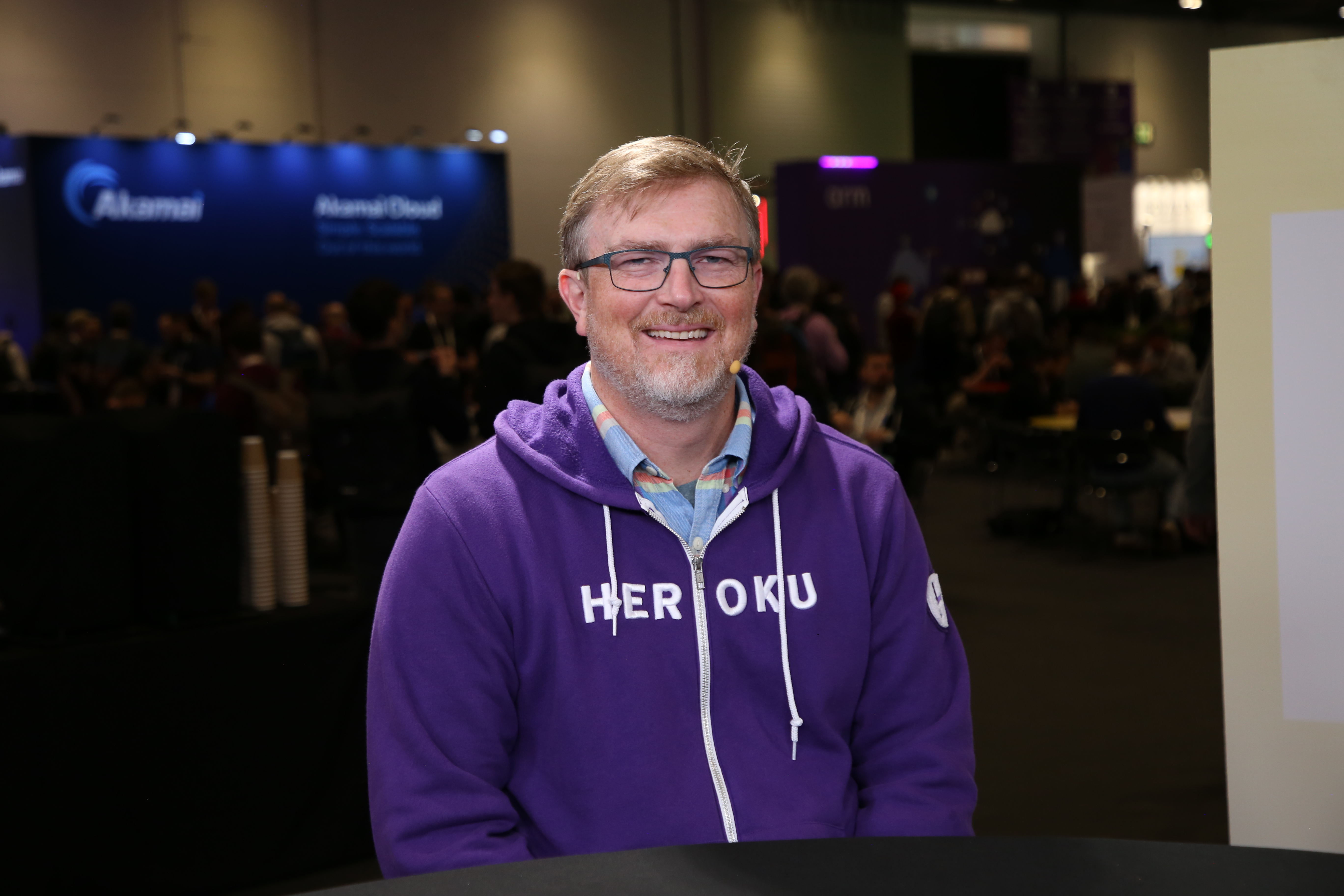
Join us as Savannah Peterson and Paul of theCUBE engage in an insightful discussion with Vish Abrams of Heroku at KubeCon+CloudNativeCon EU 2025. This conversation explores Heroku's resurgence in the cloud-native community, innovative shifts in developer experiences, and the transformative role of artificial intelligence within the tech landscape.
Vish Abrams, Chief Cloud Officer at Heroku, shares the company's strategic advancements and its renewed participation in the cloud-native community. Heroku has launched its next-generation Kubernetes-based ...Read more
exploreKeep Exploring
What is the evolution of the platform helping to grow for developers within the Heroku community?add
What is the most important part of the upcoming platform release that is generating a lot of interest, especially at a Kubernetes conference?add
>> Good morning, nerd fam, and welcome back to London, England. We're here at KubeCon + CloudNativeCon for day three of our live coverage on theCUBE. My name's Savannah Peterson. Super excited to be hanging out in the cockpit with Paul this morning. Paul, how's it been? I'm so excited, this is our first show together.
Paul Nashawaty
>> Absolutely. This is a great show. It's super exciting. Lots of activity, lots of energy. There's a lot happening, so I'm really happy to be here.
Savannah Peterson
>> Yes, me too. Speaking of energy and awesome things happening, Vish Abrams, thank you so much for joining us from Heroku this morning. Wow. My mouth apparently is still waking up, we'll get there. But we're so excited to have you. I had to match you today.
Vish Abrams
>> It's beautiful. Thank you.
Savannah Peterson
>> Just so you felt like you were in good company. Appreciate that your brand colors are so gorgeous. Y'all are quite literally the OGs of platform-as-a-service. I can imagine you're very popular at the show. How's it been so far?
Vish Abrams
>> Well, it's actually been fascinating because I think the message that we're receiving is, "Wow, it's great to see Heroku back in the conversation," right?
Savannah Peterson
>> Ooh, okay.
Vish Abrams
>> Because I think for a number of years we weren't as participating in the cloud-native community, at least publicly. We were doing stuff on the back end, and now over the past six months or so, we've really started having a presence and being here and participating and talking, and everybody's excited about it.
Savannah Peterson
>> I believe that. We're excited about it too. So, actually, talk to me about that. What happened six months ago that catalyzed you to come back to the open-source land over here?
Vish Abrams
>> So, we've been working for the past few years on what we're calling our next gen platform, which is essentially taking our existing awesome developer experience and porting it onto Kubernetes on the back end. And so, that's something that we've been working on and it felt like since that's such a relevant piece of this cloud-native landscape, that we should really start participating publicly in the community and talking about it. So, it's been a great effort to really come back and participate, et cetera. Yeah.
Savannah Peterson
>> Yeah, super fun. You came into this ecosystem back in 2014. I believe that's when KubeCon started. That's also when Kubernetes was born.
Vish Abrams
>> Yeah, in fact, Heroku was founded way back in 2007, and so we were doing platform-as-a-service before Docker, before Kubernetes, before containers were even a thing. We actually originally were using LXC directly, Linux containers before Docker existed, to do our isolation. And so the amazing thing is all of these wonderful technologies, Kubernetes, OpenTelemetry, Cloud Native Buildpacks have really come to the forefront, and made all of those underlying layers so much easier to build. And it allows us to just focus on the top layers, which is our bread and butter, the thing that we're great at is that developer experience, making it super easy for developers.
Paul Nashawaty
>> Yeah, absolutely. And one of the things I was talking to Betty about this morning, which was it's not your dad's platform, it's a new platform now, right?
Vish Abrams
>> Yeah.
Savannah Peterson
>> Ooh, I love that. Great line. Great line.
Paul Nashawaty
>> It was really a fun conversation because we're like, "Well, how do we reinvent Heroku to be like, it's relevant, it's real, it's new?" And there's so much more happening with the developer platform, the proliferation of languages, the adoption of Kubernetes, but it's also very important not to forget that we have to bridge the old with the new, right? And so, that's where I think that there's a lot of success with your heritage that brings success for the future. So, I think that's something you should touch on a little bit.
Vish Abrams
>> Yeah, I feel like we're kind of at an inflection point in the industry. Everybody's talking about all the changes coming with AI and what is that going to mean for developers? Are there even going to be developers? The new world is all these big questions. But it turns out that making an awesome experience for developers actually translates into this new world quite well. If you can imagine a future where there's agents running your platform, people are thinking about that. What do they need? They need a great experience that's built for the stuff that they're trained on. The stuff that agents are trained on is human experiences. So, a great human experience actually makes a great agent experience. So, continuing to focus-
Savannah Peterson
>> That's a really good point that I don't think enough people are talking about, and that's quite simple and direct, but I love that you just said that.
Paul Nashawaty
>> Well, and I also want to touch on that, because I think that the conversation comes up is, is AI going to replace developers? And I don't see that the case actually. I think AI's going to create more developers.
Vish Abrams
>> Exactly.
Paul Nashawaty
>> And this growth of applications, whether it's at the business line, the business unit, AI's going to make it easier for applications to be created and let professional developers focus on innovation and let the generalists focus on-
Savannah Peterson
>> You're absolutely right, Paul....
Paul Nashawaty
>> applications that need to happen. Actually, we're seeing in our research that 67% of organizations are hiring generalists over specialists, not because they don't want specialists, but they can't find them. So, AI's helping them deliver the applications at the business line, at the line of business. So, I think that's where you can use the Heroku platform for the ease of use and rapid deployment and faster time to value.
Vish Abrams
>> So, I think the thing that Heroku is known for is making it super easy to take your code and just get it out into production. And so, this question about, well, are we still going to have coders? Is this going to happen? Well, if you think about it, your administrators, your product people, everybody's going to be able to build applications now, right?
Paul Nashawaty
>> Yes. Yes.
Vish Abrams
>> They need that easy experience, maybe even more than a more traditional developer would. So, it gives a great place for us to really actually expand the market, which I think a lot of people aren't thinking about when they're thinking about how AI plays into this future. They're like, "Does that mean we're going to have jobs?" Well, actually no, there's going to be more usage.
Savannah Peterson
>> It's just such an important point. And I think you can empower the creatives across an organization to be successful, and there's so much that comes from that sense of purpose when everyone can contribute and build and participate, not only are you making this experience more inclusive in terms of the humans that can participate, in theory, y'all support a lot of different languages and a lot of different things. I'm curious, I mean, we all know you're known for that developer experience, what is the feedback loop between you and the developers in these different languages on these different platforms that helps you ensure you're able to continue to deliver this awesome experience?
Vish Abrams
>> So, we have language representatives that participate in each of the development communities that we support. We just recently added .NET support as a new language community, which you could always do on Heroku, but you did it without native support from Heroku itself. And so, we stick in the communities... And that's something that Heroku's been great at, actually driving changes in the communities that we're in to make it easier for them to work.
Paul Nashawaty
>> That's a huge point, and actually I want to bring that up. A lot of people that I speak to and developers I speak to around Heroku think, "Oh, well, if I want to do anything outside of Heroku, I have to come out the platform." And the reality is that's not true. They can develop in the platform, stay within the platform. And now, you have all this support that maybe historically it wasn't there, but now it's there and that's what the evolution of the platform is really helping grown for that unified experience.
Vish Abrams
>> I think we've really been focusing on how we can integrate Heroku in with things. So, both Salesforce products, because that's obviously our parent company, and then also with external systems and products like cloud providers, so that you do get that seamless experience, where you don't have to leave the platform in order to jump into those other tools.
Savannah Peterson
>> I think it's so key because there's a lot of data everywhere now. We're only going to have more data because of AI. I think that we've got a million tools. You look around a room like this and there's a lot of different things happening, but unless you have that unified UI, it's confusing. Nobody wants to learn 17 different things or 17 different languages. They just want to go build stuff.
Vish Abrams
>> Yes.
Paul Nashawaty
>> But it's also important to support the developer where they are in their bespoke environment. So, if they're using-
Savannah Peterson
>> 100%....
Paul Nashawaty
>> those languages, you have that support. I think that also comes down to nicely dovetailing the conversation to the 12-factor manifesto, and they're building the applications for the web. That's when you start looking at that. I would almost dare to say that's the future state. Because if you look at it, you have past, present and future, bridge the gap between the old and the new, but you have the next generation. Can you want to talk a little bit about the 12-factor manifesto?
Vish Abrams
>> Yeah, for sure. So, 12-factor manifesto, many people have heard of it. It's become sort of a de facto standard about how to build web applications. It was actually written by the CTO of Heroku many years ago, back in 2011, 2012. And it's become adopted as sort of a driving force behind how you build applications that are cloud-native. And six months ago, we announced that we've open-sourced it. We're working with the community. We've gotten some nice participation from a bunch of community members on updating it and modernizing it, and bringing in some of these new concepts that really didn't exist 10, 12 years ago when it was written. And for example, I just talked yesterday about workload identity. So, secure identity specifically is something that people didn't really think about a lot back in the early days of the web and cloud and now is important. You mentioned security earlier. Security is just such a key point. And that really focuses on bringing in some of these great identity solutions that exist in the cloud-native community and actually making it easier for developers. So, that's the link, that's the taking from a platform engineer's world, which is where a lot of the CNCF community focuses, and bringing it into the application developer's world.
Paul Nashawaty
>> Yeah.
Savannah Peterson
>> That's your space. I was just going to turn to you on that one. I'm like the king over here.
Paul Nashawaty
>> Yeah. No, I think that's fantastic. I mean, because one of the things that I know that you're participating in our AppDev Done Right Builder Summit that we have coming up in June. All the research that we're fielding right now, that's all going to be announced at that time. The 12-factor authentication or manifesto that we're kind looking at talks about the security elements, the importance of the security, the modernization of security in our DevSecOps part of the survey, but it also talks about what it means to build applications today that will be useful for the next generation. So, looking at the future and not boxing yourself out just to get you to the point where you need to go to. And really, what that comes down to, a lot of organizations I'm talking to are trying to figure out, "Well, how do I get from my heritage applications to current state?" And they look at containerization and go, "That's a daunting task. Maybe I'm going to look at things like WASM or WebAssembly or something else, and see if I can kind of go that direction." So, I think that's kind of an interesting perspective as well.
Vish Abrams
>> Yeah. And actually, it's interesting that you mentioned WebAssembly because that's a really big concept. And ultimately, I think WebAssembly is trying to take those 12-factor principles to the next level and make it applicable across languages, which is a really powerful concept to get into. We've talked about dovetailing those two things together and how they could interplay nicely, and I think there's some really nice places the community can go with that.
Savannah Peterson
>> I mean, we love this community. This whole event is about community, which has got to feel good for you guys, getting to meet them all. You mentioned standardization a second ago. With standardization comes simplification, obviously enhances the experience. What are some of the other trends? I mean, y'all are the OGs in this space, so what are some of the other trends that you're seeing now that the space, that Kubernetes, that containers have matured to the state that we're seeing today?
Vish Abrams
>> So, I think one interesting one that's come around is, I feel like in the past even weeks, this revitalization of API first. And the place that it's come up... There's been all this buzz around model context protocol and defining an API for agents to talk to tools. That seems to be everybody's like, "Oh, we need this. Let's get there." And I feel like we're reliving the past decade when everybody was moving to the web and figuring out how to API-ize all of their business software. And it turns out that you need to work with agents as well. So, it's sort of like, well, we didn't quite finish it last time, so it's coming around again, but I think this is a coming trend. How do you take your software and expose it as an API, so that a human can use it, an agent can use. It's just fully integrated, right?
Savannah Peterson
>> Yeah. How do you do that? What's your advice?
Vish Abrams
>> My advice is build it on Heroku, obviously.
Savannah Peterson
>> Shameless plug. Shameless plug.
Vish Abrams
>> Shameless plug.
Paul Nashawaty
>> Yeah. Well, and it plays nicely into the monetization story as well, right? Because when you look at the encapsulation of heritage applications, a lot of those applications no longer become an application, they become a data source, or dare I say an LLM or an SLM. And using those API-first approaches with new systems of engagement, that allows you to access those heritage systems. You notice I don't use the word legacy because people tend to go-
Vish Abrams
>> Heritage is so much nicer.
Savannah Peterson
>> I actually was noticing that quite specifically. I was like, "Interesting choice of words, Paul."
Paul Nashawaty
>> Exactly.
Savannah Peterson
>> Interesting choice.
Paul Nashawaty
>> People get kind of cranky when you say their systems are legacy.
Vish Abrams
>> Heritage makes it sound like an old wine that they need to keep.
Paul Nashawaty
>> Yeah, but it's good. It's good.
Savannah Peterson
>> It's good. Now, I'm thirsty.
Vish Abrams
>> I'm proud of it.
Paul Nashawaty
>> Exactly.
Savannah Peterson
>> You brought a friend on stage today.
Vish Abrams
>> Yes.
Savannah Peterson
>> Tell us about the bear.
Vish Abrams
>> This is Codey. So, you're aware that Salesforce has a bunch of mascots, and so there's Codey, there's Astro, and we thought, "Hey, why not dress up Codey in a Heroku outfit and have him advocate for us?" So, there he is, Codey the bear.
Paul Nashawaty
>> Love it.
Vish Abrams
>> It's been very popular.
Paul Nashawaty
>> Yeah, I see a lot of them around the show floor. You got to take the picture and put it on you on social, right?
Vish Abrams
>> Yes, absolutely.
Savannah Peterson
>> So, since you get to see such a broad swath of the landscape and work with a lot of different styles of companies at different maturation, what's coming next?
Vish Abrams
>> We are building a lot of things, obviously around AI. We have a bunch of products in pilot. Our manage inferences and agents is in pilot. We have an AppLink product which allows you to connect directly with Salesforce and eventing product. So, we're really kind of leaning into these next-generation spaces. I think the most important part of our upcoming platform is the FUR release, which we're GA-ing in a couple of weeks, which is our next-gen Kubernetes-based platform. I think a lot of the interest here is around that particular product because obviously this is the Kubernetes conference, everybody's interested in it, and the idea that, "Wow, I could have Kubernetes under the covers and get all the security and operational benefits of that, but I don't have to worry about managing it myself," is pretty compelling. Because we're offering the developer API on top. You don't have to have a platform team managing the system, which is super interesting to a lot of the people we've been talking to here.
Savannah Peterson
>> Oh, I can imagine. And it frees up that developer cognitive load for other things, more creative and productive than-
Vish Abrams
>> I talked with one customer that said, "We have a Kubernetes platform internally. I put my best developer on it. He's awesome. He manages the whole platform. But now he can't build any of my business software. My best guy is doing the Kubernetes thing." Right, that's a problem.
Paul Nashawaty
>> That's a big problem, yeah.
Savannah Peterson
>> That's an interesting little data point.
Paul Nashawaty
>> As I was saying earlier, the professional developer needs to focus on innovation, that's what the business value is. That's what you're paying these developers for. And honestly, developers are in a happy place when they're focusing on innovation, not focused on maintenance, not focused on running oiling the machine. However, that's important. It's just, that should be more automated, that should be more built in the platform, that should be more behind the scenes. The innovation is what's going to drive the business forward.
Vish Abrams
>> Yeah, I agree.
Savannah Peterson
>> What do you think is the biggest myth in this AI conversation everyone's having right now?
Vish Abrams
>> Well, I think the idea that CEOs aren't going to need to hire developers anymore is probably the top one. I've experimented a lot with the modern tools and the productivity gains are amazing. I think it's pretty clear though that there is an unlimited demand for software. So, if you gain a bunch of efficiency in developing software, it's not like those people are going to go away and then farm. It's like suddenly there's going to be... I mean, can you imagine if everybody can build applications, you have thousands of personal applications. There's just so much more space to be filled up with things that you can build when things get easier to build.
Paul Nashawaty
>> Which amplifies the dependency on a platform that has compliance, regulation and governance. That's really what's important when you start proliferating all these applications.
Vish Abrams
>> Yes.
Savannah Peterson
>> Absolutely, an important point. And it enables a new class of creator, a new class of builder, whatever that might look like. I can't wait to see what comes out of all of this. I got one last question for you, Vish. When we are hanging out in Amsterdam at KubeCon next year, this time next year, what do you hope to be able to say then that you can't yet say today?
Vish Abrams
>> Oh, that is an interesting question. I would like to be able to say that the new set of people that are just figuring out about vibe coding, this is a new thing. My wife actually built an application for herself for real estate, so she's analyzing real estate. She goes into ChatGPT, she builds an application and has got it on a map, and it's amazing. She couldn't have done that six months ago, right?
Savannah Peterson
>> That's so awesome. Shout out to your wife.
Vish Abrams
>> Yeah, good for her.
Savannah Peterson
>> That's great.
Vish Abrams
>> So, that class of people that are now building applications, I would love to be able to say all of those people are deploying their applications on Heroku. So, there is an easy path for this new wave of builders to have a place to deploy. That's my dream.
Savannah Peterson
>> I love that. Well, I hope that we're talking about that in Amsterdam. I hope we can even talk about it at the AppDev Summit coming up here in just a few weeks, which is very exciting. Vish, thank you so much for taking the time today. We really appreciate it.
Vish Abrams
>> Thank you for having me.
Savannah Peterson
>> And thank you, Codey, for coming to hang out with us as well. Paul, this has been an absolute joy. Time flies when we're hanging out here in the analyst cockpit. And thank all of you for tuning in to our three days of coverage here at KubeCon and CloudNativeCon in London, England. My name's Savannah Peterson. You're watching theCUBE, the leading source for enterprise tech news.