We just sent you a verification email. Please verify your account to gain access to
KubeCon + CloudNativeCon Europe 2024. If you don’t think you received an email check your
spam folder.
In order to sign in, enter the email address you used to registered for the event. Once completed, you will receive an email with a verification link. Open this link to automatically sign into the site.
Register For KubeCon + CloudNativeCon Europe 2024
Please fill out the information below. You will recieve an email with a verification link confirming your registration. Click the link to automatically sign into the site.
You’re almost there!
We just sent you a verification email. Please click the verification button in the email. Once your email address is verified, you will have full access to all event content for KubeCon + CloudNativeCon Europe 2024.
I want my badge and interests to be visible to all attendees.
Checking this box will display your presense on the attendees list, view your profile and allow other attendees to contact you via 1-1 chat. Read the Privacy Policy. At any time, you can choose to disable this preference.
Select your Interests!
add
Upload your photo
Uploading..
OR
Connect via Twitter
Connect via Linkedin
EDIT PASSWORD
Share
Forgot Password
Almost there!
We just sent you a verification email. Please verify your account to gain access to
KubeCon + CloudNativeCon Europe 2024. If you don’t think you received an email check your
spam folder.
In order to sign in, enter the email address you used to registered for the event. Once completed, you will receive an email with a verification link. Open this link to automatically sign into the site.
Sign in to gain access to KubeCon + CloudNativeCon Europe 2024
Please sign in with LinkedIn to continue to KubeCon + CloudNativeCon Europe 2024. Signing in with LinkedIn ensures a professional environment.
(bright upbeat music)
(logo whooshing) >> Hello, and welcome to KubeCon +
CloudNativeCon EU in Paris on theCUBE. We're going to have wall
to wall coverage this week, bringing you all of the
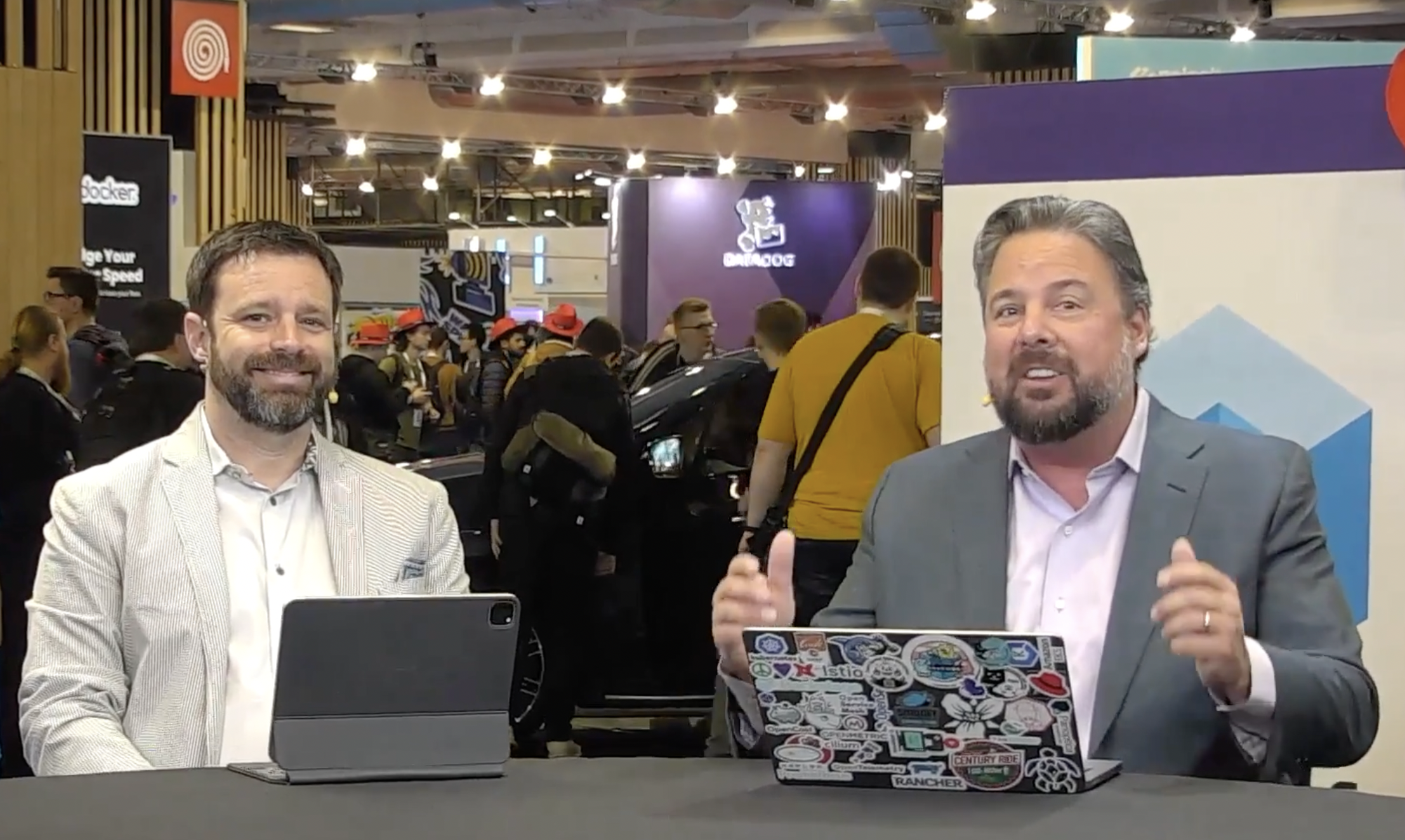
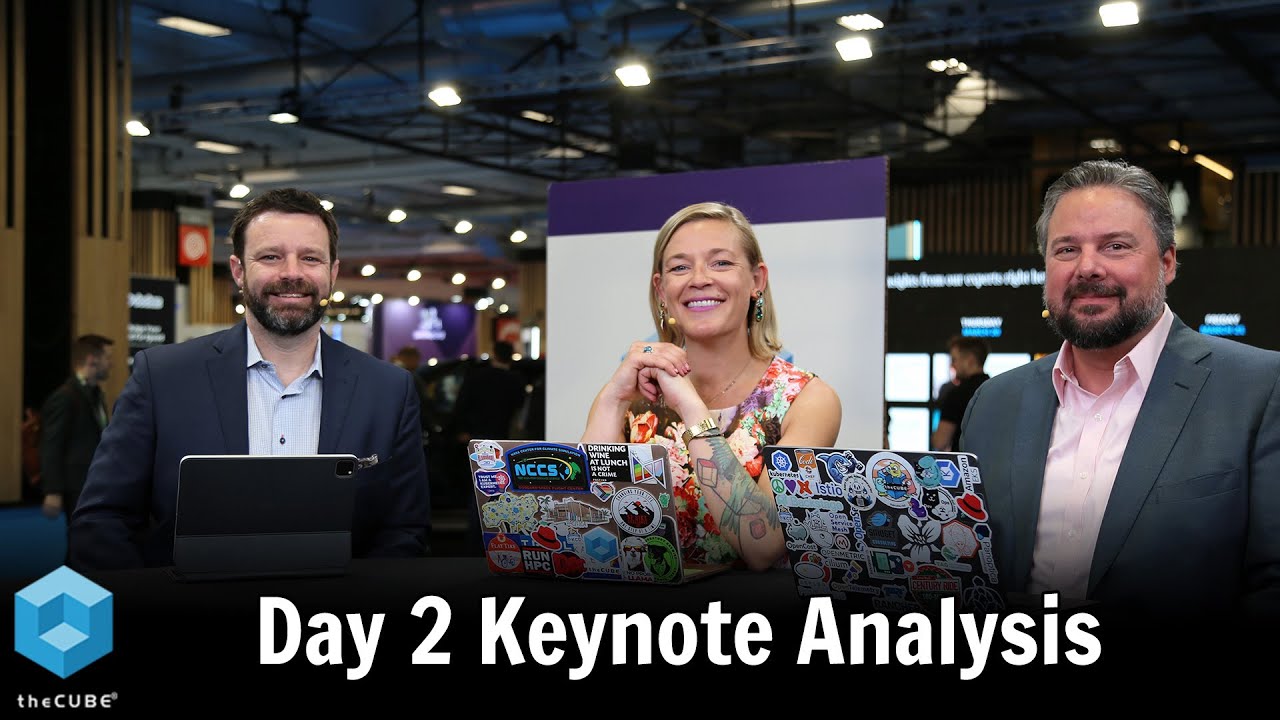
things that you need to know about Cloud Native applications and how they're really changing. Today, I'm joined by Dustin Kirkland who's going to help me
break down the keynote that just got out a few minutes ago. Welcome. >> Bonjor (speaking foreign language) Rob. (speaking foreign language) >> Ah, I know that's about the extent of- (speaking foreign language) >> There we go. >> Yeah, yes. But well, I think it's great to be on with you again. I know you have a lot of background here. Again- >> Love being here. >> You know, really bring the developer perspective, the engineering perspective to this, and it's going to be a great week, and I think there's a lot going on. Let's kind of break down some of the stuff that was going on this
morning and yesterday in the day zero events. >> Yep. >> Where we had a whole number of things from Red Hat
Commons to Backstage Day and Observability Day, and a whole number of other
different things going on, plus the keynotes today, which really AI was front and center. >> Yeah, I mean, just start
with the size of this place. I don't think I've seen
the total numbers yet, but I mean, this expo hall,
we're in expo hall seven of I don't know how many there are, eight or nine here in Paris,
the lines for, you know, badge check-in, security. There's a lot of people here, Rob. I mean, it's a tremendous conference. >> I think they were
saying it was over 12,000. >> Wow. >> The largest KubeCon so far. >> In Europe? Or in total? >> In total. >> Wow.
>> In total. So I think Amsterdam was
somewhere around 10 is where they capped it. So being over 12, I
think they were expecting to be somewhere between 12 and 15,000. >> It shows. I mean, energy is palpable for sure. >> Yes, it is. And so let's jump in. I think what was really
interesting yesterday and today was there was a lot
of different sessions on AI, no matter if you were in the
AI, you know, Kubernetes AI, Cloud Native AI. Things like Kubeflow or what have you. But everything talked about AI. >> For sure. >> And this morning's
keynote was no different from that perspective. What really stood out to you
from the keynote this morning? >> Well, yes, AI certainly was the open, the middle, and the close. Every segment of the
keynote, well orchestrated, but every segment of the
keynote, all about AIML and really about what I
think the CNCF is trying to do here is ensure that the Cloud Native Computing
Foundation, Kubernetes and that family of applications really are the home for AIML. You know, training,
inferencing, fine tuning, all the different types of workloads that, you know, need to run at this point. >> Yeah, I think that was
one of the keys that I heard. And even back to yesterday when
I went to Observability Day, and I had been at the Red Hat Commons, there was a lot of talk about how the Kubernetes infrastructure
needs to really evolve to take on model serving, to
take on resource allocation. I think that was a big theme- >> Yeah, DRA dynamic resource allocation, saw a major upgrade in
Kubernetes 1.30; 1.30. And I think that's just
the tip of the iceberg. NVIDIA had a keynote this morning where they talked about a
couple of different ways to drive better GPU utilization sharing. They showed four different
ways of sharing GPUs and that in fact those can be
layered on top of one another. And I think, you know, one of the sort of paradoxes here is that there's both this worldwide GPU shortage. I mean, you can see that
just in the prices of GPUs, either new or used if you're
buying them, you know, slightly used. There's this shortage of
hardware in part created by some supply chain issues. But at the same time,
there's also underutilized GPUs in clouds. We hear that from CERN also,
this morning in the keynote. >> Yeah, and I thought what
was interesting from CERN and just building off
of what he was saying, is that CERN was very involved in previous open source groups and around resource
allocation all the way back to what was the global grid
form, the open grid forum, and then open stack. And there is prior art
there to be able to do this. I think what was interesting was a lot of the discussion was not about how you train foundation models. It was about how you
deploy these foundation models for inference. >> Yep. >> And how you fine tune them. And there was a lot of
talk about, you know, the actual ARM-based processors and running inference
on ARM-based processors. There was, Oracle made an announcement, the last KubeCon, that
they were actually going to provide $3 million a
year in free to the projects so that they can go out and do this. I think that we're going
to see a lot around this. One of the interesting
pieces also that was a thread through yesterday in the data
on Kubernetes or Doc went to that session as well, was that it's around how do
you actually get the data to the models or the models to the data. And there's a lot of, "What's going to happen out at the edge?" And I think that was a really interesting dichotomy was, "Hey,
containers have been great. We've been talking about are
they, you know, persistent or non persistent data?" And there was a lot of discussion about how you do persistency with
like Postgres and SQL and stuff, but what are you seeing as you look out and see that people are
just interested in AI? But there's a whole lot of pieces that go along with that. >> Yeah, I actually
don't think we heard all that much about the edge actually in that keynote here today. That's something that I hope
we hear a lot more about. Looking at the guest list we have coming on theCUBE this week, I think there should be some
interesting discussions there. I would be very interested
in some of the talk tracks as well, around edge. You're spot on. I mean, the amount of data
that it takes to train a model, moving that across networks
is just, it's unrealistic; it's infeasible. And so just driving some
of that actual training, GPU, CPU compute as close as possible to the actual data that
it needs to consume. It's an important problem that I think we need to
hear a lot more about. >> Yeah, and I think it's a
very interesting task at hand for the CNCF with the fact that they keep bringing
in different groups and keep on having more in Sandbox. As of, I think it was as of
March there was 113 in Sandbox. >> Yeah. >> There's 37 in incubating. There's 26 in graduated. And- >> Is that total projects or
are those AI related products? >> Well, they all have AI now in their name I'm sure,
but to get people in. But when you start to
look at the 113 Sandbox, some of those are already
being used in production. >> Yeah. >> By companies out there or there are commercial
applications being built out. And I think one of the
interesting things is there was a whole track
yesterday for startups. And about how to build a
business on top of open source and how to do it in a way
that doesn't, you know, violate some of the
agreements with the CNCF. What are you seeing from
organizations out there? Do you see a lot more of people trying to figure those models out? >> Yeah, for sure. I mean, things have come a long way. The first startup I was associated with, we were trying to raise
money in 2009, '10, '11, built around an open source
encrypted file system that I had co-authored and co maintained. The VC pitches in that timeframe. You know, '09, '10 and '11, we were explaining open
source to the VCs themselves and many of the VCs ran the other way. We've come a long way in
the last 15 years now, and open source is, it's table
stakes for most startups, you know, talking to to VCs. They do want to see a
business model, obviously, but there's some tried and
true ones at this point. I did find it notable. I heard it; I counted at
least three times in the keynote this morning. Specifically Apache 2 and
MIT licenses were mentioned. I don't know if it was a
nudge or encouragement, but, you know, Priyanka and it
seems like CNCF is certainly, you know, pushing for, asking for Apache and MIT licensed software. >> Yeah. >> And you know, it's a
little different than the GPL that drove Linux. There's a lot of comparisons
between Linux the Kernel, Linux the OS, and Kubernetes. So, but you know, I think in part, the business
models surrounding Apache and MIT license software are
a little better understood. And maybe a little more tried
and true at this point than- >> Yeah, I think we're seeing it. And I did some briefings
before we got here and there was a lot about, "Hey, this part of it's Apache two. This is GPL or it's a custom license." And how they're trying to actually create business value around
the Apache 2 software, the MIT license software,
which is I think, the right way to go about doing it. People like Dbt Labs
have done that for years. And I think they actually have figured out a pretty successful model around that and said that, "Hey, you know, we're not going that direction." I think what will be interesting is that there was a half day
open tofu day yesterday. Open tofu if for those who don't know, is once HashiCorp changed
their license, really- >> For Terraform. >> For Terraform. This really exploded. And I think what was interesting coming into this was there's
now rumors on the street that Hashi may be for
sale as a public company. So we'll have to stay
tuned to that this week because I'm trying to
understand, you know, what could happen if
somebody bigger bought them and actually went and
changed the licenses back or did something with it that made it a more
agreeable open source license versus where they went. So I think it's going to
be really interesting. >> Yeah, for sure.
>> And I would say also one of the big things is right
now some of the crew, Dave and John are out at GTC in San Jose. >> That's right. >> Meeting with Jensen and talking- >> You think they're
talking to AI right now? >> I think they might be. I think they were talking about George Lucas being there and a whole number of others that I saw A-listers coming out. So AI has like jumped the
shark when you have, you know, George Lucas going, and I can't remember if it was Xzibit or one of the other rappers going to the actual keynote for Jensen. >> Wow. >> It's crazy. But I think what I expect
for the rest of the week is that we'll get a heavy
dose of AI throughout and interweave through all
of the different discussions that we have here, which
I think will be great. I also think that, you know, it's 10 years of Kubernetes coming up. We're coming up on the,
you know, the anniversary. Do you think most of the major things that the Kubernetes level are solved for and it's really about Cloud Native? >> Yes and no. I think that question was posed to Clayton in the keynote
as well, you know, what's left to be done? And he said, "What's not left to be done?" I mean, there's still plenty of work. The monitoring and
observability still leaves a little bit to be desired. It's a complicated ecosystem of ways, you know, other things you
have to plug into Kubernetes to get the logging and metrics and observability that
you ultimately need. Especially when now you're
talking about these AIML you know, workloads that are finding their
way deep into the heart of Kubernetes, the scheduler, the resource allocation and so forth. There's a lot still left
to do there, you know, so I think that's one key piece that we still have a ways to go, Rob. >> I think so. And I think that's a place we're definitely dive deep with a number of the different companies that
are part of that ecosystem. I think another one that's
going to be interesting to see is really that service mesh and Istio and what's gone on there. >> Connectivity. Yeah, absolutely. >> Connectivity and networking 'cause I think it's still tough, and I think it's still overly complicated to actually have a mesh of applications talking to each other. And I think that organizations
are looking to have that simplified, and I think
a lot of that's going to be what we see over the coming years is like, how do we get some of these
other things that, okay, yes. Maybe the containers and the format and how they get deployed
is kind of solved for, but actually the Cloud Native aspects and observability is
definitely one of the ones that and the networking
and all of these meshes- >> Security too. I mean.
>> Oh yeah. >> You know, just the security
requirements in an enterprise, you know, however they're leveraging first the Kubernetes pieces, second the rest of the Cloud Native ecosystem. And then third, trying to take
on this whole new world of, you know, AI enablement of that app. >> We'll actually have the
GM from OpenSSF on tomorrow. And we'll actually have
also Melinda Marks, who's the director, practice
director for security over at Enterprise Strategy Group
on with us to kind of wrap on that stuff as well tomorrow afternoon. So I think you're right, dead
on that this is going to be a lot going on, and we
have a lot of different and interesting things
that we can dig into. So, you know, thank you
for coming on board and- >> Absolutely. Looking forward to it. >> This is going to be an awesome time. And thank you for joining us here at KubeCon + CloudNativeCon
EU in Paris on theCUBE, the leader in high tech analysis and news. Keep it tuned here. We'll be right back. (inspiring music)
(bright upbeat music)
(logo whooshing) >> Hello, and welcome to KubeCon +
CloudNativeCon EU in Paris on theCUBE. We're going to have wall
to wall coverage this week, bringing you all of the
things that you need to know about Cloud Native applications and how they're really changing. Today, I'm joined by Dustin Kirkland who's going to help me
break down the keynote that just got out a few minutes ago. Welcome. >> Bonjor (speaking foreign language) Rob. (speaking foreign language) >> Ah, I know that's about the extent of- (speaking foreign language) >> There we go. >> Yeah, yes. But well, I think it's great to be on with you again. I know you have a lot of background here. Again- >> Love being here. >> You know, really bring the developer perspective, the engineering perspective to this, and it's going to be a great week, and I think there's a lot going on. Let's kind of break down some of the stuff that was going on this
morning and yesterday in the day zero events. >> Yep. >> Where we had a whole number of things from Red Hat
Commons to Backstage Day and Observability Day, and a whole number of other
different things going on, plus the keynotes today, which really AI was front and center. >> Yeah, I mean, just start
with the size of this place. I don't think I've seen
the total numbers yet, but I mean, this expo hall,
we're in expo hall seven of I don't know how many there are, eight or nine here in Paris,
the lines for, you know, badge check-in, security. There's a lot of people here, Rob. I mean, it's a tremendous conference. >> I think they were
saying it was over 12,000. >> Wow. >> The largest KubeCon so far. >> In Europe? Or in total? >> In total. >> Wow.
>> In total. So I think Amsterdam was
somewhere around 10 is where they capped it. So being over 12, I
think they were expecting to be somewhere between 12 and 15,000. >> It shows. I mean, energy is palpable for sure. >> Yes, it is. And so let's jump in. I think what was really
interesting yesterday and today was there was a lot
of different sessions on AI, no matter if you were in the
AI, you know, Kubernetes AI, Cloud Native AI. Things like Kubeflow or what have you. But everything talked about AI. >> For sure. >> And this morning's
keynote was no different from that perspective. What really stood out to you
from the keynote this morning? >> Well, yes, AI certainly was the open, the middle, and the close. Every segment of the
keynote, well orchestrated, but every segment of the
keynote, all about AIML and really about what I
think the CNCF is trying to do here is ensure that the Cloud Native Computing
Foundation, Kubernetes and that family of applications really are the home for AIML. You know, training,
inferencing, fine tuning, all the different types of workloads that, you know, need to run at this point. >> Yeah, I think that was
one of the keys that I heard. And even back to yesterday when
I went to Observability Day, and I had been at the Red Hat Commons, there was a lot of talk about how the Kubernetes infrastructure
needs to really evolve to take on model serving, to
take on resource allocation. I think that was a big theme- >> Yeah, DRA dynamic resource allocation, saw a major upgrade in
Kubernetes 1.30; 1.30. And I think that's just
the tip of the iceberg. NVIDIA had a keynote this morning where they talked about a
couple of different ways to drive better GPU utilization sharing. They showed four different
ways of sharing GPUs and that in fact those can be
layered on top of one another. And I think, you know, one of the sort of paradoxes here is that there's both this worldwide GPU shortage. I mean, you can see that
just in the prices of GPUs, either new or used if you're
buying them, you know, slightly used. There's this shortage of
hardware in part created by some supply chain issues. But at the same time,
there's also underutilized GPUs in clouds. We hear that from CERN also,
this morning in the keynote. >> Yeah, and I thought what
was interesting from CERN and just building off
of what he was saying, is that CERN was very involved in previous open source groups and around resource
allocation all the way back to what was the global grid
form, the open grid forum, and then open stack. And there is prior art
there to be able to do this. I think what was interesting was a lot of the discussion was not about how you train foundation models. It was about how you
deploy these foundation models for inference. >> Yep. >> And how you fine tune them. And there was a lot of
talk about, you know, the actual ARM-based processors and running inference
on ARM-based processors. There was, Oracle made an announcement, the last KubeCon, that
they were actually going to provide $3 million a
year in free to the projects so that they can go out and do this. I think that we're going
to see a lot around this. One of the interesting
pieces also that was a thread through yesterday in the data
on Kubernetes or Doc went to that session as well, was that it's around how do
you actually get the data to the models or the models to the data. And there's a lot of, "What's going to happen out at the edge?" And I think that was a really interesting dichotomy was, "Hey,
containers have been great. We've been talking about are
they, you know, persistent or non persistent data?" And there was a lot of discussion about how you do persistency with
like Postgres and SQL and stuff, but what are you seeing as you look out and see that people are
just interested in AI? But there's a whole lot of pieces that go along with that. >> Yeah, I actually
don't think we heard all that much about the edge actually in that keynote here today. That's something that I hope
we hear a lot more about. Looking at the guest list we have coming on theCUBE this week, I think there should be some
interesting discussions there. I would be very interested
in some of the talk tracks as well, around edge. You're spot on. I mean, the amount of data
that it takes to train a model, moving that across networks
is just, it's unrealistic; it's infeasible. And so just driving some
of that actual training, GPU, CPU compute as close as possible to the actual data that
it needs to consume. It's an important problem that I think we need to
hear a lot more about. >> Yeah, and I think it's a
very interesting task at hand for the CNCF with the fact that they keep bringing
in different groups and keep on having more in Sandbox. As of, I think it was as of
March there was 113 in Sandbox. >> Yeah. >> There's 37 in incubating. There's 26 in graduated. And- >> Is that total projects or
are those AI related products? >> Well, they all have AI now in their name I'm sure,
but to get people in. But when you start to
look at the 113 Sandbox, some of those are already
being used in production. >> Yeah. >> By companies out there or there are commercial
applications being built out. And I think one of the
interesting things is there was a whole track
yesterday for startups. And about how to build a
business on top of open source and how to do it in a way
that doesn't, you know, violate some of the
agreements with the CNCF. What are you seeing from
organizations out there? Do you see a lot more of people trying to figure those models out? >> Yeah, for sure. I mean, things have come a long way. The first startup I was associated with, we were trying to raise
money in 2009, '10, '11, built around an open source
encrypted file system that I had co-authored and co maintained. The VC pitches in that timeframe. You know, '09, '10 and '11, we were explaining open
source to the VCs themselves and many of the VCs ran the other way. We've come a long way in
the last 15 years now, and open source is, it's table
stakes for most startups, you know, talking to to VCs. They do want to see a
business model, obviously, but there's some tried and
true ones at this point. I did find it notable. I heard it; I counted at
least three times in the keynote this morning. Specifically Apache 2 and
MIT licenses were mentioned. I don't know if it was a
nudge or encouragement, but, you know, Priyanka and it
seems like CNCF is certainly, you know, pushing for, asking for Apache and MIT licensed software. >> Yeah. >> And you know, it's a
little different than the GPL that drove Linux. There's a lot of comparisons
between Linux the Kernel, Linux the OS, and Kubernetes. So, but you know, I think in part, the business
models surrounding Apache and MIT license software are
a little better understood. And maybe a little more tried
and true at this point than- >> Yeah, I think we're seeing it. And I did some briefings
before we got here and there was a lot about, "Hey, this part of it's Apache two. This is GPL or it's a custom license." And how they're trying to actually create business value around
the Apache 2 software, the MIT license software,
which is I think, the right way to go about doing it. People like Dbt Labs
have done that for years. And I think they actually have figured out a pretty successful model around that and said that, "Hey, you know, we're not going that direction." I think what will be interesting is that there was a half day
open tofu day yesterday. Open tofu if for those who don't know, is once HashiCorp changed
their license, really- >> For Terraform. >> For Terraform. This really exploded. And I think what was interesting coming into this was there's
now rumors on the street that Hashi may be for
sale as a public company. So we'll have to stay
tuned to that this week because I'm trying to
understand, you know, what could happen if
somebody bigger bought them and actually went and
changed the licenses back or did something with it that made it a more
agreeable open source license versus where they went. So I think it's going to
be really interesting. >> Yeah, for sure.
>> And I would say also one of the big things is right
now some of the crew, Dave and John are out at GTC in San Jose. >> That's right. >> Meeting with Jensen and talking- >> You think they're
talking to AI right now? >> I think they might be. I think they were talking about George Lucas being there and a whole number of others that I saw A-listers coming out. So AI has like jumped the
shark when you have, you know, George Lucas going, and I can't remember if it was Xzibit or one of the other rappers going to the actual keynote for Jensen. >> Wow. >> It's crazy. But I think what I expect
for the rest of the week is that we'll get a heavy
dose of AI throughout and interweave through all
of the different discussions that we have here, which
I think will be great. I also think that, you know, it's 10 years of Kubernetes coming up. We're coming up on the,
you know, the anniversary. Do you think most of the major things that the Kubernetes level are solved for and it's really about Cloud Native? >> Yes and no. I think that question was posed to Clayton in the keynote
as well, you know, what's left to be done? And he said, "What's not left to be done?" I mean, there's still plenty of work. The monitoring and
observability still leaves a little bit to be desired. It's a complicated ecosystem of ways, you know, other things you
have to plug into Kubernetes to get the logging and metrics and observability that
you ultimately need. Especially when now you're
talking about these AIML you know, workloads that are finding their
way deep into the heart of Kubernetes, the scheduler, the resource allocation and so forth. There's a lot still left
to do there, you know, so I think that's one key piece that we still have a ways to go, Rob. >> I think so. And I think that's a place we're definitely dive deep with a number of the different companies that
are part of that ecosystem. I think another one that's
going to be interesting to see is really that service mesh and Istio and what's gone on there. >> Connectivity. Yeah, absolutely. >> Connectivity and networking 'cause I think it's still tough, and I think it's still overly complicated to actually have a mesh of applications talking to each other. And I think that organizations
are looking to have that simplified, and I think
a lot of that's going to be what we see over the coming years is like, how do we get some of these
other things that, okay, yes. Maybe the containers and the format and how they get deployed
is kind of solved for, but actually the Cloud Native aspects and observability is
definitely one of the ones that and the networking
and all of these meshes- >> Security too. I mean.
>> Oh yeah. >> You know, just the security
requirements in an enterprise, you know, however they're leveraging first the Kubernetes pieces, second the rest of the Cloud Native ecosystem. And then third, trying to take
on this whole new world of, you know, AI enablement of that app. >> We'll actually have the
GM from OpenSSF on tomorrow. And we'll actually have
also Melinda Marks, who's the director, practice
director for security over at Enterprise Strategy Group
on with us to kind of wrap on that stuff as well tomorrow afternoon. So I think you're right, dead
on that this is going to be a lot going on, and we
have a lot of different and interesting things
that we can dig into. So, you know, thank you
for coming on board and- >> Absolutely. Looking forward to it. >> This is going to be an awesome time. And thank you for joining us here at KubeCon + CloudNativeCon
EU in Paris on theCUBE, the leader in high tech analysis and news. Keep it tuned here. We'll be right back. (inspiring music)