We just sent you a verification email. Please verify your account to gain access to
KubeCon + CloudNativeCon Europe 2024. If you don’t think you received an email check your
spam folder.
In order to sign in, enter the email address you used to registered for the event. Once completed, you will receive an email with a verification link. Open this link to automatically sign into the site.
Register For KubeCon + CloudNativeCon Europe 2024
Please fill out the information below. You will recieve an email with a verification link confirming your registration. Click the link to automatically sign into the site.
You’re almost there!
We just sent you a verification email. Please click the verification button in the email. Once your email address is verified, you will have full access to all event content for KubeCon + CloudNativeCon Europe 2024.
I want my badge and interests to be visible to all attendees.
Checking this box will display your presense on the attendees list, view your profile and allow other attendees to contact you via 1-1 chat. Read the Privacy Policy. At any time, you can choose to disable this preference.
Select your Interests!
add
Upload your photo
Uploading..
OR
Connect via Twitter
Connect via Linkedin
EDIT PASSWORD
Share
Forgot Password
Almost there!
We just sent you a verification email. Please verify your account to gain access to
KubeCon + CloudNativeCon Europe 2024. If you don’t think you received an email check your
spam folder.
In order to sign in, enter the email address you used to registered for the event. Once completed, you will receive an email with a verification link. Open this link to automatically sign into the site.
Sign in to gain access to KubeCon + CloudNativeCon Europe 2024
Please sign in with LinkedIn to continue to KubeCon + CloudNativeCon Europe 2024. Signing in with LinkedIn ensures a professional environment.
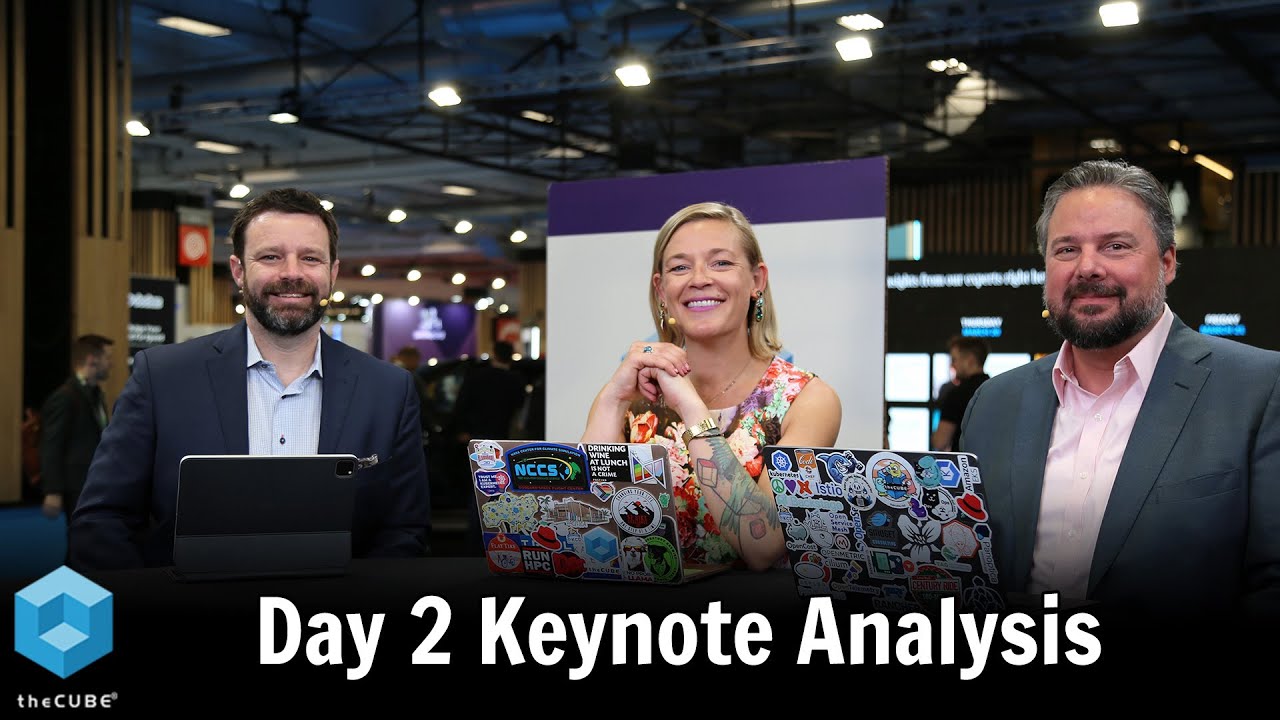
(upbeat music) >> Hello, and welcome back to Paris. We're here at KubeCon CloudNativeCon EU, really digging deep into what's going on in a lot of different
projects and foundations around Kubernetes and
cloud native technology. I'm here joined by Dustin Kirkland, helpin' me out with analyzing things, and Omkhar, who's the GM of
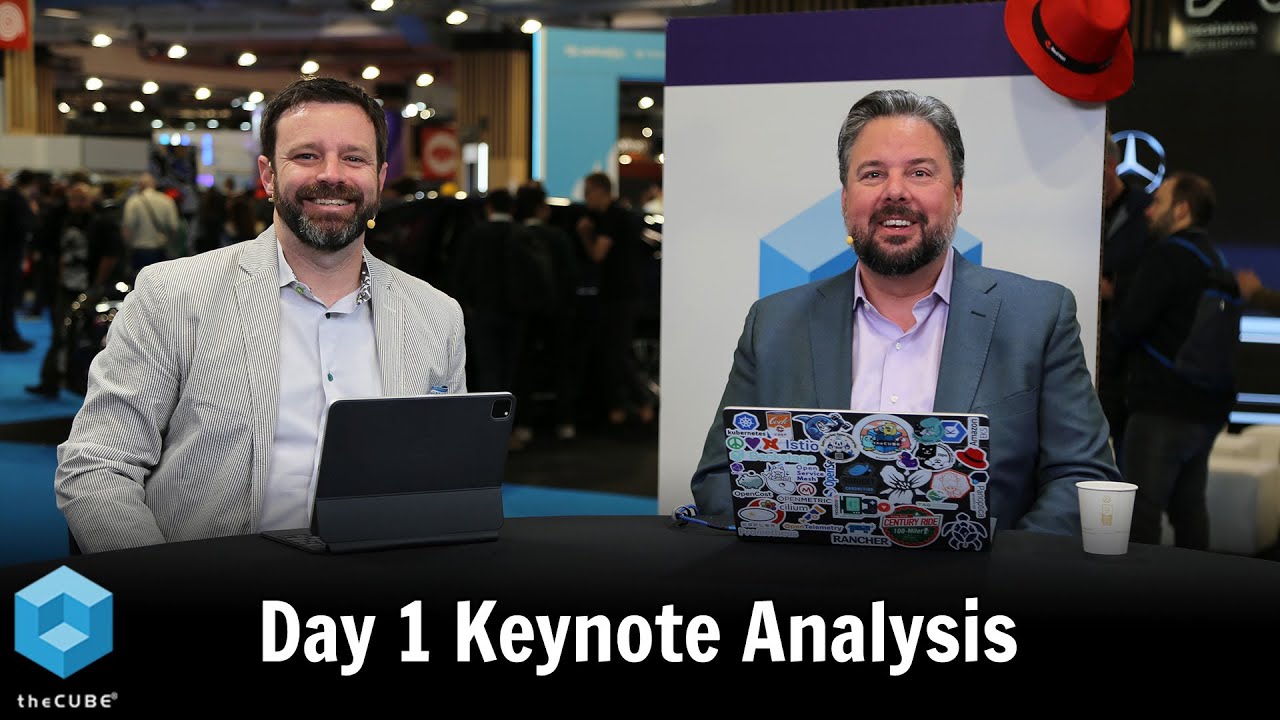
OpenSSF, has joined us as well, which you were on a little bit ago when it was your second day.
>> Yeah. >> As GM.
>> I was shocked. There was a big conference. You guys are very accommodating. (laughter) It's lovely to be back. >> Dustin: You feel more settled in now? >> A little, a little, a little. >> Yeah, well it's great to have you here, because I know we were
just talking beforehand, and you're running all over the place advocating for what has to happen and regulations and
where things are going, and not only working with the groups here, but groups outside, like small groups, like the UN and others,
and things of that nature. >> Little groups like that.
>> Yeah. >> I mean, when we
think about this mission of securing open-source
software, which, it's easy, we're going to be done
by the end of the year, (laughter) there's three main stakeholders, right, which is private sector,
so the larger organizations that make up our premier
membership and our board, the public sector, so US
government, the EU, the UN, all these organizations
that are accountable for setting policy and providing direction and protecting their citizens,
and then the community, so how do we help the community, who you may not be a security expert, but gosh, you really want to make sure that your code is secure
or the providence is good. So those are our stakeholders, and by engaging with
those three stakeholders, we believe we can help
improve the security of open-source software. >> Yeah, I think for us,
we've been talking about SBOMs and attestation and signing of containers with the Notary Project who was just on, and I think it's, people are
looking to get beyond SBOMs. And where do you see us
in that journey to be, because again, you had
the federal directive and things of that nature,
but that only gets you so far. Where do you see the state of things? >> SBOMs are great, but SBOMs on their own aren't a security property per se. They allow you to do a lot of
interesting security things, but on their own, they don't
provide security utility. So one of the things that
we're going to be doing, we're going to be at Open
Source Summit North America, we're having our SOSS,
Securing Open Source Software, Community Day on the 15th
of April, just before that. And in addition to all the wonderful talks that we normally have, we're going to be having three workshops. The first workshop is on Scorecard. So if you always wanted
to contribute to Scorecard but didn't know how, come in,
learn about the code base, raise your first PR, do great things. The second is a SLSA workshop. So if you want to adopt SLSA and you want to be SLSA
two or three level, a lot of people don't know how to do that, and the documentation is extensive. The SLSA team will be there and they will help
contributors and maintainers achieve SLSA levels within that workshop. And then the third, the
one I'm most excited about, I was on Wall Street for about 10 years and our regulators always made us do these simulation exercises
called tabletops, and it was to exercise your
security operations team, engineering team, general
counsel comms team, so that when an event happens,
everybody knows their marks, they know what's going to happen, you're not reading the process
book for the first time when things are melting down. We're going to do a tabletop
exercise with maintainers, cloud providers, and the community at Open Source Summit North
America to really exercise that, okay, so I have an SBOM,
security incident happened, what the heck am I going to do? How am I going to use
Sigstore in an incident? So all of that's going to be exercised, and the output of that
is going to be a guide that we're going to
provide to the community to help us whenever the
next Log4j should occur to have a playbook by
which we can operate. >> Amazing. So you're going to help
develop and share that process for organizations that may not have a tabletop exercise
process in place today? >> Absolutely. And this isn't a one and done, right? So this is going to be the base artifact. From there, we're going
to continue to iterate at our events and explore. One of the things I'd love to see, after each of these kind of exercises, we'd typically, when I was on Wall Street, do a hot wash where we
sit back and we reflect what went well, what didn't. I really want to hear from the community where they feel we're a little bit soft in our incident response
so that we as OpenSSF can start advocating for,
whether it be technology, education, additional guidance to help make that better next time. >> Where do you see kind of
the Scorecard playing out, and kind of describe the Scorecard, because there's a lot of organizations who don't know about it, and
I know you've released it and you actually had some findings that you published at the end of the year, or the beginning of this year, about what had happened last year, and the Scorecard is something that I think organizations
should be looking at, to your point about, "hey, they should also
be doing tabletops." >> Yeah. >> And we advocate for
tabletops all the time, but I think, so that's awesome, because I think getting involved and understanding that process, because having been someplace where Log4j and we had to figure out, okay, where is this-
>> Yep. >> In all of our software, which was not a trivial
thing, to put it mildly. How does the Scorecard
really help organizations and what really is it? >> Absolutely. So Scorecard, as the name implies, is literally a report
card that you can run against the open-source dependencies that you have in your project. And it will take a set of known-to-be-good security properties and test the repo either
in GitHub or GitLab to validate that they're present. It could be things like
branch protection, two factor, well, I guess two-factor
authentication's a default now, but it checks all these
security properties and pops out a score for you. As a consumer of open source, and there's two different
perspectives here, but as a consumer of open source, that allows you to reason over, I need to use an SSL library,
should I use OpenSSL, PolarSSL, BoringSSL? And it allows you to make
a risk-based assessment based on the criteria as to
which one you should take on. The second perspective of
is that of a maintainer. All maintainers want their projects to be adopted by the world. What better way to do that than
to have this Scorecard badge that says, hey, OpenSSF has
checked my security properties and-
>> I'm safe to adopt. >> Exactly.
>> Yeah. >> Exactly. >> You mentioned in your
sort of list of three, the Scorecard, of getting
more people involved and contributing to that. Do you've got, do you have
a list of GitHub issues or- >> Oh yeah.
>> Something that people- >> Omkhar: There's a laundry
list of GitHub issues that are open.
>> Yeah. >> Our TPM's going to
have a burn-down list ahead of our contributor workshop. >> That's great. >> And we're looking forward
to getting everybody out there and helping build Scorecard out. >> How do you see the community
kind of coming together? Because there's a lot
of projects out there aimed at different aspects of security. >> Omkhar: Yeah. >> How do you see that
all coming together? Again, looking at, there's
114 or so sandboxed, there's like another
50 or so in incubation, and 27 graduated. How does the community, how do you see them all working together? >> It's, I mean, like
many open-source projects, it's all bottoms up. We find that a lot of the most avid users of OpenSSF technologies are CNCF projects. >> Rob: Yeah. >> So, I believe there
was a talk just earlier, it was either today or yesterday, on how one of the projects
was using Sigstore in order to attest
provenance of their lineage. The other opportunity that we have, or the other thing that
we saw as an opportunity, and I'm speaking as somebody that's been doing both
open source and security for a really long time, the open-source community has their events and their watering holes, the security community has theirs, right? So on the open-source side,
it's FOSDEM, it's CNCF, KubeCon, it's Open Source
North America and EU. And similarly on the security
side, we have the trade shows, right, RSA, Black Hat-
>> Sure. >> We have the hacker
community at DEF CON, we have the academics at... USENIX and Real World
Crypto and stuff like that. And one of the safe spaces we want to make for the intermingling of the open-source and
security communities is a conference we're going
to be hosting this year in Atlanta in October called SOSS Fusion. And it is focused on
that cross pollination between our communities to make sure the security
folks and the open-source folks are working hand in hand. So we're really looking forward to that. >> Wow.
>> And I think that's- >> OpenSSF is the organizers of that? >> We are the organizers. It is called SOSS, Securing
Open Source Software- >> Yeah.
>> Fusion. >> Really cool. I think that, and also, we'll be at Open Source Summit in Seattle. >> Omkhar: Excellent. >> So it'd be great to have you on after you've done the tabletop and have some just, I would
say qualitative output that you found, because I
think that organizations need to see, this is
how they have to do it. I mean, we go to a lot of the
different security conferences and I think one of the things is that if you haven't done a
tabletop in two years, the last two years, you're pretty screwed. I mean, 'cause and having run DR for a major financial company, I think- >> You know where I'm coming from. >> I know where you're coming from. (laughter) 'Cause I had the book.
>> Yeah. >> And you didn't want
it to be the first day- >> You're blowing the dust off the cover. >> Yeah, when the fiber
got back hoed by... >> Well-
>> People. It's like you're sitting
there like, "okay, now what?" And it's like, "okay, I'm getting the
page at two in the morning, "now what do I do to shut
down all these servers?" >> Exactly.
>> And stuff like that. >> Dustin: Well-rehearsed
incident response. >> Yeah. >> I mean, you can see the
results when that's well-rehearsed and everyone knows what they're doing. >> Absolutely. >> It's still a tough situation, but at least people knowing how to address and what their responsibilities are. >> It's going to be a tough situation, but it shouldn't be a panic. >> Right.
>> Right. >> Right, yeah. >> It should be not routine.
>> Yeah. >> But you should not be worried
about going into executing. >> One of my neighbors is a paramedic and the, there's an analog
with how paramedics operate. You'll never see a paramedic running through an accident scene. They will move deliberately,
they'll move quickly, but they will always follow their steps because rush and panic in an incident can actually cause more damage than what you're trying to rectify. >> Absolutely. Where do you see OpenSSF beyond, okay, so we're, we get to the SOSS Fusion, where do you see by next year this time when we're sitting somewhere
up north of here? (laughs) >> So, I mean, I already told you, we're going to fix all the
open-source problems in security by the end of the year, so here we are. >> Rob: Oh, there we go. Awesome.
>> Mission accomplished. >> Yes. (laughs) >> So a lot of the stuff we're working on really hard this year
focuses in three main areas. One, convening. We talked a lot about bringing
the communities together, talking with public sector and ensuring that they're advocating for things that'll support
better security in open source. We're also really strong
believers in education. We're right now in the middle of revamping our secure developer education. There's a survey that
Linux Foundation Research is putting out right now where
we've asked the community, hey, based on your incidents, based on the issues you
have in your code base, where could we be doing better in terms of providing you instruction? And in addition to that, if we think about the watering holes of our security community, it's really the security repos,
right, or the package repos. It's PyPI, it's Rust Cargo, it's NPM. We recently put out some
guidance along with CISA talking about how to secure repositories because we believe that's
a great choke point in which we can positively
affect the security properties of open-source software
that everyone consumes. We're going to be putting a
lot more effort behind that over the course of the year, and to the point that we're going to develop some much more
specific security standards that repo owners and maintainers
should be adhering to, so that there's an even bar that when you choose to enter the business of being a repository, you know that there's good providence, you know that there's good
production quality control, and access control, all of
these different properties. So we're looking forward
to doing that as well. >> Reproducibility maybe-
>> Reproducibility. >> And being able to
verify those attestations. >> Verify the attestations,
a well-formed SBOM, perhaps. Yeah. >> Yeah, so I think it's, you also get to see this
from a different level because you are interacting
with governments and things of that nature. Kind of give us an idea
of what you're seeing. Are there differences between
what's happening in the US and what's happening over
here in Europe or in Asia? What are you seeing from a, how people are putting
themselves out there and really trying to work
always in a secure manner? >> So from our perspective,
as the foundation, we're here to ensure
technical correctness. And the reason that I start there is I'm a software engineer, most of the folks that work
on OpenSSF are technical. We're not lawyers and
we're not politicians. And we are quite happy for those folks to invoke the appropriate
legislative processes that are the cultural
norms of where they are. We're here for technical correctness. So what we see in the US is the US politically has
generally let innovation occur and then when things start trending badly, come in with a bit of a heavy hammer around legislation and regulation. In Europe, culturally, it seems like the EU wants
to get ahead of that. So they're trying to look
beyond the next horizon and figure out what's coming up. Examples being things like the CRA, as well as the AI Act
that they recently passed. >> Rob: Yeah. >> So culturally, I think the top-down
versus bottoms-up approach to legislation is different,
but the intent's the same, like everybody recognizes
security's incredibly important and we can't keep getting
burned with supply chain issues and ransomware attacks
on such a regular basis. Otherwise, not only will
our economies collapse, but our citizens won't be safe anymore. >> Right. >> So you hit on it there, and we'll kind of end on this question, but AI, I mean, signing
models, trying to understand where models came from and
their lineage, and the data, securing the data and making
sure that PII is protected. Where do you see OpenSSF playing a role, from an open-source
perspective, with that? >> Two perspectives on that. One, I think AI itself
can be a great enabler of security for open source. So we're partnered with DARPA
on the AI Cyber Challenge in which DARPA has challenged
the community and researchers to, I think it's up to $18
million now in prize money- >> Wow.
>> Wow. >> Midpoint check, the open competition's
occurring right now, midpoint check in at DEF CON
2024, finals DEFCON 2025. And we challenged the community to say, hey, how can you apply
large-language models to solve entire class of
vulnerabilities in open source? As for the security of LLMs, a lot of the existing open-source, OpenSSF security software can be used. So if you're talking
about model providence, you can sign using Sigstore and assure the providence of the model. If you're talking about some of the basic open-source components that go into the LLM, again,
you can use security score, or you can use OpenSSF Scorecard
and tools such as that. We have an AI and ML workgroup
that's currently working on some of the higher-order challenges around AI and machine learning. But I'd love to see us produce something like a responsible disclosure guidance for large-language models
and things of that nature. >> Well, Omkhar, thank you for coming on. I think, again, even two
days in, you were great, but I always learn
something when I talk to you and I really appreciate
you coming on board today and being with Dustin
and I to talk about this. Thank you.
>> It's a pleasure. I look forward to seeing you in Seattle and talking about the tabletop. >> Absolutely. We'll see you there. And we'll see you here, so keep it tuned from KubeCon CloudNativeCon EU live from Paris here on theCUBE, the leader in high-tech news and analysis. Stay tuned. (upbeat music)
(upbeat music) >> Hello, and welcome back to Paris. We're here at KubeCon CloudNativeCon EU, really digging deep into what's going on in a lot of different
projects and foundations around Kubernetes and
cloud native technology. I'm here joined by Dustin Kirkland, helpin' me out with analyzing things, and Omkhar, who's the GM of
OpenSSF, has joined us as well, which you were on a little bit ago when it was your second day.
>> Yeah. >> As GM.
>> I was shocked. There was a big conference. You guys are very accommodating. (laughter) It's lovely to be back. >> Dustin: You feel more settled in now? >> A little, a little, a little. >> Yeah, well it's great to have you here, because I know we were
just talking beforehand, and you're running all over the place advocating for what has to happen and regulations and
where things are going, and not only working with the groups here, but groups outside, like small groups, like the UN and others,
and things of that nature. >> Little groups like that.
>> Yeah. >> I mean, when we
think about this mission of securing open-source
software, which, it's easy, we're going to be done
by the end of the year, (laughter) there's three main stakeholders, right, which is private sector,
so the larger organizations that make up our premier
membership and our board, the public sector, so US
government, the EU, the UN, all these organizations
that are accountable for setting policy and providing direction and protecting their citizens,
and then the community, so how do we help the community, who you may not be a security expert, but gosh, you really want to make sure that your code is secure
or the providence is good. So those are our stakeholders, and by engaging with
those three stakeholders, we believe we can help
improve the security of open-source software. >> Yeah, I think for us,
we've been talking about SBOMs and attestation and signing of containers with the Notary Project who was just on, and I think it's, people are
looking to get beyond SBOMs. And where do you see us
in that journey to be, because again, you had
the federal directive and things of that nature,
but that only gets you so far. Where do you see the state of things? >> SBOMs are great, but SBOMs on their own aren't a security property per se. They allow you to do a lot of
interesting security things, but on their own, they don't
provide security utility. So one of the things that
we're going to be doing, we're going to be at Open
Source Summit North America, we're having our SOSS,
Securing Open Source Software, Community Day on the 15th
of April, just before that. And in addition to all the wonderful talks that we normally have, we're going to be having three workshops. The first workshop is on Scorecard. So if you always wanted
to contribute to Scorecard but didn't know how, come in,
learn about the code base, raise your first PR, do great things. The second is a SLSA workshop. So if you want to adopt SLSA and you want to be SLSA
two or three level, a lot of people don't know how to do that, and the documentation is extensive. The SLSA team will be there and they will help
contributors and maintainers achieve SLSA levels within that workshop. And then the third, the
one I'm most excited about, I was on Wall Street for about 10 years and our regulators always made us do these simulation exercises
called tabletops, and it was to exercise your
security operations team, engineering team, general
counsel comms team, so that when an event happens,
everybody knows their marks, they know what's going to happen, you're not reading the process
book for the first time when things are melting down. We're going to do a tabletop
exercise with maintainers, cloud providers, and the community at Open Source Summit North
America to really exercise that, okay, so I have an SBOM,
security incident happened, what the heck am I going to do? How am I going to use
Sigstore in an incident? So all of that's going to be exercised, and the output of that
is going to be a guide that we're going to
provide to the community to help us whenever the
next Log4j should occur to have a playbook by
which we can operate. >> Amazing. So you're going to help
develop and share that process for organizations that may not have a tabletop exercise
process in place today? >> Absolutely. And this isn't a one and done, right? So this is going to be the base artifact. From there, we're going
to continue to iterate at our events and explore. One of the things I'd love to see, after each of these kind of exercises, we'd typically, when I was on Wall Street, do a hot wash where we
sit back and we reflect what went well, what didn't. I really want to hear from the community where they feel we're a little bit soft in our incident response
so that we as OpenSSF can start advocating for,
whether it be technology, education, additional guidance to help make that better next time. >> Where do you see kind of
the Scorecard playing out, and kind of describe the Scorecard, because there's a lot of organizations who don't know about it, and
I know you've released it and you actually had some findings that you published at the end of the year, or the beginning of this year, about what had happened last year, and the Scorecard is something that I think organizations
should be looking at, to your point about, "hey, they should also
be doing tabletops." >> Yeah. >> And we advocate for
tabletops all the time, but I think, so that's awesome, because I think getting involved and understanding that process, because having been someplace where Log4j and we had to figure out, okay, where is this-
>> Yep. >> In all of our software, which was not a trivial
thing, to put it mildly. How does the Scorecard
really help organizations and what really is it? >> Absolutely. So Scorecard, as the name implies, is literally a report
card that you can run against the open-source dependencies that you have in your project. And it will take a set of known-to-be-good security properties and test the repo either
in GitHub or GitLab to validate that they're present. It could be things like
branch protection, two factor, well, I guess two-factor
authentication's a default now, but it checks all these
security properties and pops out a score for you. As a consumer of open source, and there's two different
perspectives here, but as a consumer of open source, that allows you to reason over, I need to use an SSL library,
should I use OpenSSL, PolarSSL, BoringSSL? And it allows you to make
a risk-based assessment based on the criteria as to
which one you should take on. The second perspective of
is that of a maintainer. All maintainers want their projects to be adopted by the world. What better way to do that than
to have this Scorecard badge that says, hey, OpenSSF has
checked my security properties and-
>> I'm safe to adopt. >> Exactly.
>> Yeah. >> Exactly. >> You mentioned in your
sort of list of three, the Scorecard, of getting
more people involved and contributing to that. Do you've got, do you have
a list of GitHub issues or- >> Oh yeah.
>> Something that people- >> Omkhar: There's a laundry
list of GitHub issues that are open.
>> Yeah. >> Our TPM's going to
have a burn-down list ahead of our contributor workshop. >> That's great. >> And we're looking forward
to getting everybody out there and helping build Scorecard out. >> How do you see the community
kind of coming together? Because there's a lot
of projects out there aimed at different aspects of security. >> Omkhar: Yeah. >> How do you see that
all coming together? Again, looking at, there's
114 or so sandboxed, there's like another
50 or so in incubation, and 27 graduated. How does the community, how do you see them all working together? >> It's, I mean, like
many open-source projects, it's all bottoms up. We find that a lot of the most avid users of OpenSSF technologies are CNCF projects. >> Rob: Yeah. >> So, I believe there
was a talk just earlier, it was either today or yesterday, on how one of the projects
was using Sigstore in order to attest
provenance of their lineage. The other opportunity that we have, or the other thing that
we saw as an opportunity, and I'm speaking as somebody that's been doing both
open source and security for a really long time, the open-source community has their events and their watering holes, the security community has theirs, right? So on the open-source side,
it's FOSDEM, it's CNCF, KubeCon, it's Open Source
North America and EU. And similarly on the security
side, we have the trade shows, right, RSA, Black Hat-
>> Sure. >> We have the hacker
community at DEF CON, we have the academics at... USENIX and Real World
Crypto and stuff like that. And one of the safe spaces we want to make for the intermingling of the open-source and
security communities is a conference we're going
to be hosting this year in Atlanta in October called SOSS Fusion. And it is focused on
that cross pollination between our communities to make sure the security
folks and the open-source folks are working hand in hand. So we're really looking forward to that. >> Wow.
>> And I think that's- >> OpenSSF is the organizers of that? >> We are the organizers. It is called SOSS, Securing
Open Source Software- >> Yeah.
>> Fusion. >> Really cool. I think that, and also, we'll be at Open Source Summit in Seattle. >> Omkhar: Excellent. >> So it'd be great to have you on after you've done the tabletop and have some just, I would
say qualitative output that you found, because I
think that organizations need to see, this is
how they have to do it. I mean, we go to a lot of the
different security conferences and I think one of the things is that if you haven't done a
tabletop in two years, the last two years, you're pretty screwed. I mean, 'cause and having run DR for a major financial company, I think- >> You know where I'm coming from. >> I know where you're coming from. (laughter) 'Cause I had the book.
>> Yeah. >> And you didn't want
it to be the first day- >> You're blowing the dust off the cover. >> Yeah, when the fiber
got back hoed by... >> Well-
>> People. It's like you're sitting
there like, "okay, now what?" And it's like, "okay, I'm getting the
page at two in the morning, "now what do I do to shut
down all these servers?" >> Exactly.
>> And stuff like that. >> Dustin: Well-rehearsed
incident response. >> Yeah. >> I mean, you can see the
results when that's well-rehearsed and everyone knows what they're doing. >> Absolutely. >> It's still a tough situation, but at least people knowing how to address and what their responsibilities are. >> It's going to be a tough situation, but it shouldn't be a panic. >> Right.
>> Right. >> Right, yeah. >> It should be not routine.
>> Yeah. >> But you should not be worried
about going into executing. >> One of my neighbors is a paramedic and the, there's an analog
with how paramedics operate. You'll never see a paramedic running through an accident scene. They will move deliberately,
they'll move quickly, but they will always follow their steps because rush and panic in an incident can actually cause more damage than what you're trying to rectify. >> Absolutely. Where do you see OpenSSF beyond, okay, so we're, we get to the SOSS Fusion, where do you see by next year this time when we're sitting somewhere
up north of here? (laughs) >> So, I mean, I already told you, we're going to fix all the
open-source problems in security by the end of the year, so here we are. >> Rob: Oh, there we go. Awesome.
>> Mission accomplished. >> Yes. (laughs) >> So a lot of the stuff we're working on really hard this year
focuses in three main areas. One, convening. We talked a lot about bringing
the communities together, talking with public sector and ensuring that they're advocating for things that'll support
better security in open source. We're also really strong
believers in education. We're right now in the middle of revamping our secure developer education. There's a survey that
Linux Foundation Research is putting out right now where
we've asked the community, hey, based on your incidents, based on the issues you
have in your code base, where could we be doing better in terms of providing you instruction? And in addition to that, if we think about the watering holes of our security community, it's really the security repos,
right, or the package repos. It's PyPI, it's Rust Cargo, it's NPM. We recently put out some
guidance along with CISA talking about how to secure repositories because we believe that's
a great choke point in which we can positively
affect the security properties of open-source software
that everyone consumes. We're going to be putting a
lot more effort behind that over the course of the year, and to the point that we're going to develop some much more
specific security standards that repo owners and maintainers
should be adhering to, so that there's an even bar that when you choose to enter the business of being a repository, you know that there's good providence, you know that there's good
production quality control, and access control, all of
these different properties. So we're looking forward
to doing that as well. >> Reproducibility maybe-
>> Reproducibility. >> And being able to
verify those attestations. >> Verify the attestations,
a well-formed SBOM, perhaps. Yeah. >> Yeah, so I think it's, you also get to see this
from a different level because you are interacting
with governments and things of that nature. Kind of give us an idea
of what you're seeing. Are there differences between
what's happening in the US and what's happening over
here in Europe or in Asia? What are you seeing from a, how people are putting
themselves out there and really trying to work
always in a secure manner? >> So from our perspective,
as the foundation, we're here to ensure
technical correctness. And the reason that I start there is I'm a software engineer, most of the folks that work
on OpenSSF are technical. We're not lawyers and
we're not politicians. And we are quite happy for those folks to invoke the appropriate
legislative processes that are the cultural
norms of where they are. We're here for technical correctness. So what we see in the US is the US politically has
generally let innovation occur and then when things start trending badly, come in with a bit of a heavy hammer around legislation and regulation. In Europe, culturally, it seems like the EU wants
to get ahead of that. So they're trying to look
beyond the next horizon and figure out what's coming up. Examples being things like the CRA, as well as the AI Act
that they recently passed. >> Rob: Yeah. >> So culturally, I think the top-down
versus bottoms-up approach to legislation is different,
but the intent's the same, like everybody recognizes
security's incredibly important and we can't keep getting
burned with supply chain issues and ransomware attacks
on such a regular basis. Otherwise, not only will
our economies collapse, but our citizens won't be safe anymore. >> Right. >> So you hit on it there, and we'll kind of end on this question, but AI, I mean, signing
models, trying to understand where models came from and
their lineage, and the data, securing the data and making
sure that PII is protected. Where do you see OpenSSF playing a role, from an open-source
perspective, with that? >> Two perspectives on that. One, I think AI itself
can be a great enabler of security for open source. So we're partnered with DARPA
on the AI Cyber Challenge in which DARPA has challenged
the community and researchers to, I think it's up to $18
million now in prize money- >> Wow.
>> Wow. >> Midpoint check, the open competition's
occurring right now, midpoint check in at DEF CON
2024, finals DEFCON 2025. And we challenged the community to say, hey, how can you apply
large-language models to solve entire class of
vulnerabilities in open source? As for the security of LLMs, a lot of the existing open-source, OpenSSF security software can be used. So if you're talking
about model providence, you can sign using Sigstore and assure the providence of the model. If you're talking about some of the basic open-source components that go into the LLM, again,
you can use security score, or you can use OpenSSF Scorecard
and tools such as that. We have an AI and ML workgroup
that's currently working on some of the higher-order challenges around AI and machine learning. But I'd love to see us produce something like a responsible disclosure guidance for large-language models
and things of that nature. >> Well, Omkhar, thank you for coming on. I think, again, even two
days in, you were great, but I always learn
something when I talk to you and I really appreciate
you coming on board today and being with Dustin
and I to talk about this. Thank you.
>> It's a pleasure. I look forward to seeing you in Seattle and talking about the tabletop. >> Absolutely. We'll see you there. And we'll see you here, so keep it tuned from KubeCon CloudNativeCon EU live from Paris here on theCUBE, the leader in high-tech news and analysis. Stay tuned. (upbeat music)