We just sent you a verification email. Please verify your account to gain access to
KubeCon + CloudNativeCon Europe 2024. If you don’t think you received an email check your
spam folder.
In order to sign in, enter the email address you used to registered for the event. Once completed, you will receive an email with a verification link. Open this link to automatically sign into the site.
Register For KubeCon + CloudNativeCon Europe 2024
Please fill out the information below. You will recieve an email with a verification link confirming your registration. Click the link to automatically sign into the site.
You’re almost there!
We just sent you a verification email. Please click the verification button in the email. Once your email address is verified, you will have full access to all event content for KubeCon + CloudNativeCon Europe 2024.
I want my badge and interests to be visible to all attendees.
Checking this box will display your presense on the attendees list, view your profile and allow other attendees to contact you via 1-1 chat. Read the Privacy Policy. At any time, you can choose to disable this preference.
Select your Interests!
add
Upload your photo
Uploading..
OR
Connect via Twitter
Connect via Linkedin
EDIT PASSWORD
Share
Forgot Password
Almost there!
We just sent you a verification email. Please verify your account to gain access to
KubeCon + CloudNativeCon Europe 2024. If you don’t think you received an email check your
spam folder.
In order to sign in, enter the email address you used to registered for the event. Once completed, you will receive an email with a verification link. Open this link to automatically sign into the site.
Sign in to gain access to KubeCon + CloudNativeCon Europe 2024
Please sign in with LinkedIn to continue to KubeCon + CloudNativeCon Europe 2024. Signing in with LinkedIn ensures a professional environment.
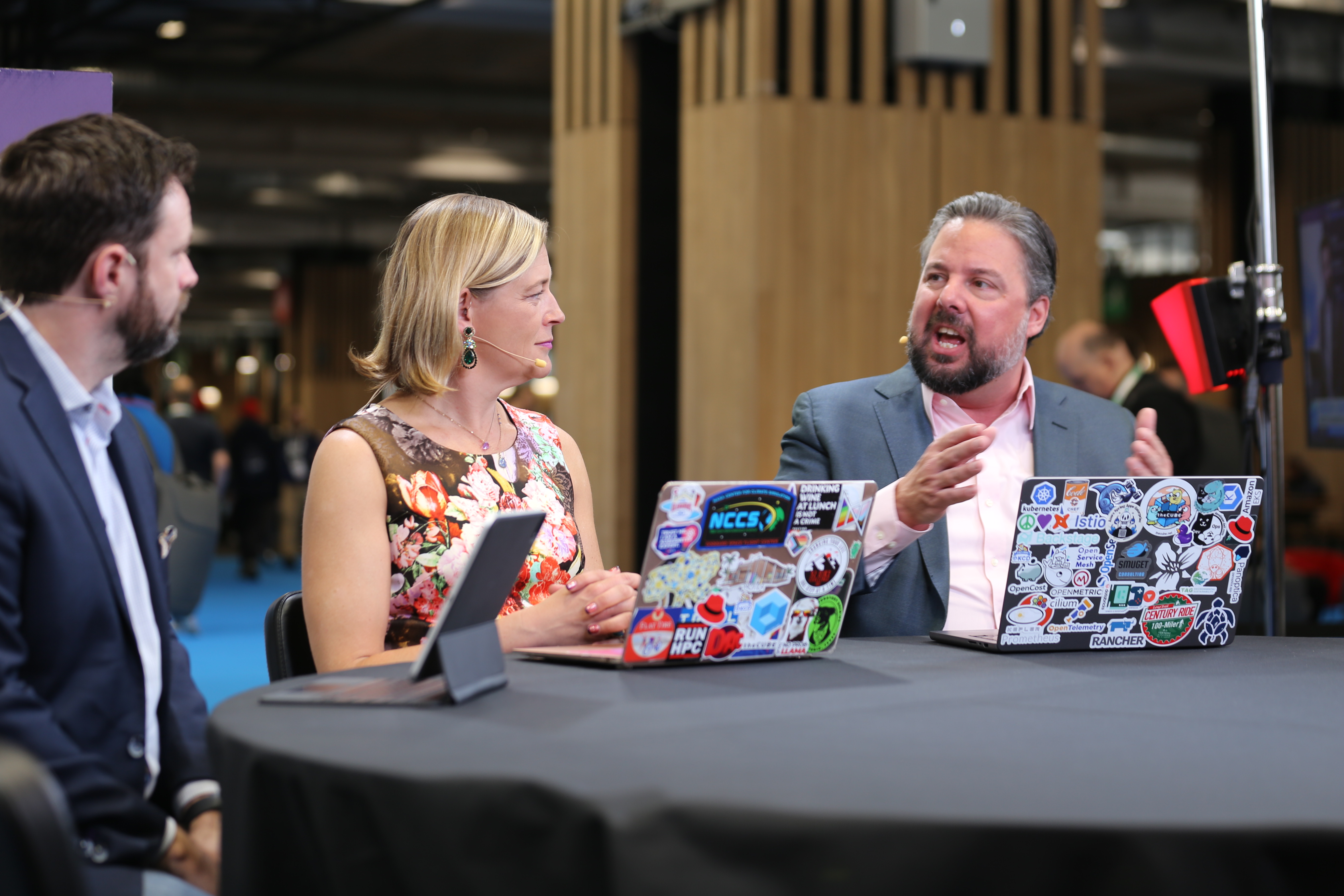
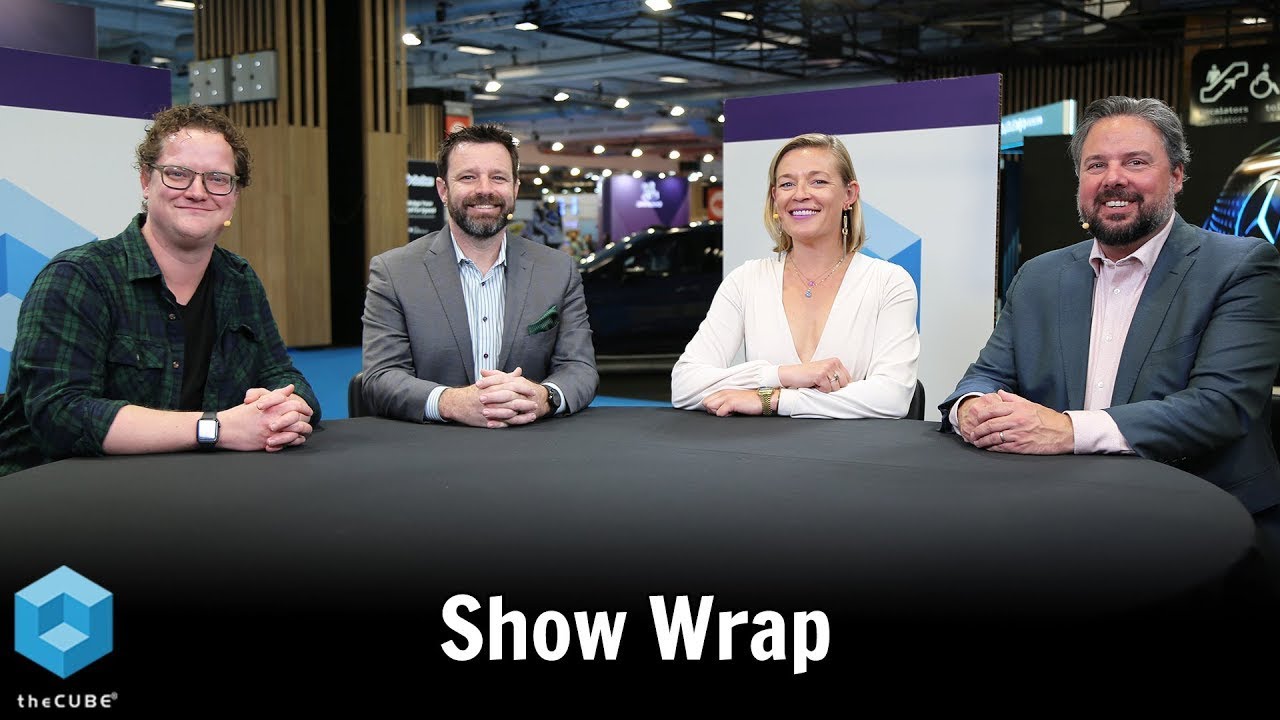
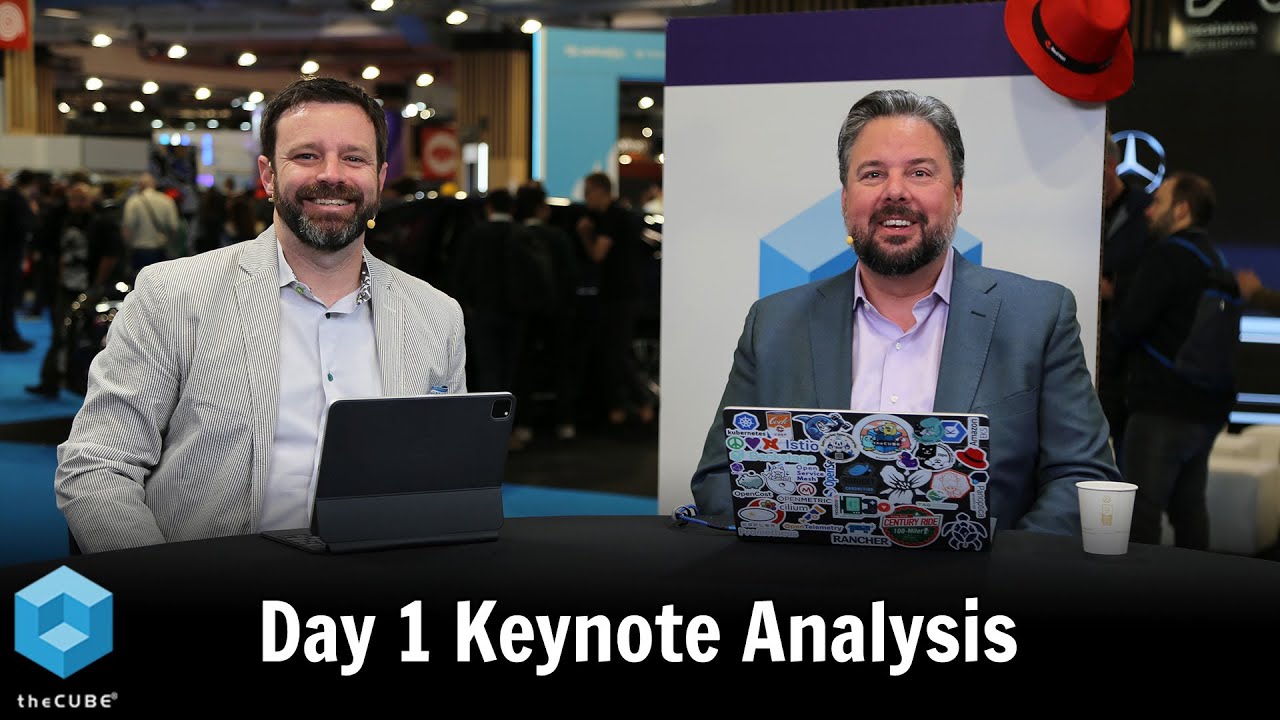
(upbeat music) >> Good morning Cloud Native community, and welcome back to Paris, France. We're here at KubeCon Cloud Native Con. My name's Savannah Peterson , joined by my fabulous analysts, Rob Stretchay and Dustin Kirkland. Gentlemen, day 2, how
you feeling? (laughs) >> Awesome. >> Yeah? (chuckles)
>> Fresh. >> Yeah.
>> Fresh as a daisy. >> Ready to go, let's do this. (panelists laughing) >> Fresh as Paris blooming
in the springtime. Absolutely, absolutely. No, I mean, I think it's been
a very energizing morning that the keynotes were,
that have just wrapped up. And what we saw was some great news around sustainability and funny
enough, something I kind of hit on a little bit harder than I expected to yesterday afternoon, but KubeVirt. >> Oh, yeah.
>> And running VMs on Kubernetes. We had Goldman Sachs
on stage talking about that with Red Hat. We had numerous sponsors,
including Deutsche Bank, talking about sustainability. In fact, I think sustainability
was the big topic and how to develop sustainably. I think one of the things, and Dustin and I were briefly talking earlier, that it's one of the
things that seems to be really in flux is how do you deal with
AI and sustainability? >> Absolutely.
>> And I think that's one of the big ones. And I know you had some thoughts on that. Yeah, the sustainability thread was common across all the keynotes. I'm sure that was an
orchestrated theme here. But what's interesting
there though, is man, it's hard to talk about sustainability and the power consumption driven by GPUs.
>> I was just going to say GPU and sustainability is not. >> And I think rightly so, blockchain and crypto-
>> Yep. >> Has gotten a fair amount of flack about how much-
>> Absolutely. >> Of the world's energy is
spent mining coins, okay. Now, if you're not mining coins with GPUs, you're probably running an
AI-ML workload of some kind. And you know, I think we got
to think a little bit about whether, you know, if that is worth, you know, if the product that
is being produced by those, you know, ML workloads, you know, can be sustainably performed. I don't know, there's-
>> Well there's also about optimizing it.
>> Yeah. If it's sitting there idle and you're just sucking power, it's not- >> Right.
>> Exciting. >> Well it sucks way more power- >> Exactly.
>> When it's running. Less when idle, but
some when idle for sure. So utilization, that's a piece of it. And then running as
efficiently as possible. We heard a little bit from the
ARM folks on the stage today about, you know, that takes care of part of the problem, I think. But the CPU is not drawing the power. The GPUs are drawing the power.
>> 100%. >> And I think also-
>> Storage too. >> And I think part of,
yeah, I think that's, some of 'em had gone into the fact that storage was a big component of it, but it was also about, hey, how are you planning
for high availability? And I think that it was really interesting how they were going through a number of these different high
availability strategies and what they were
still not seeing between how you use auto-scaling and how you use actually these different CPU planning tools to go out and do that. But then there was the backend storage, which moving to non-spinning
disc definitely helps, but there's still a ton of
spinning disc out there. So I think that's an
interesting piece in a way that they were going about it and the string that they
kept pulling on, so. >> I think it, so obviously a conversation around sustainability, and I love that you brought
up the blockchain piece, was a part of that
movement, and it's true. Those are really our power suck moments. So yeah, we're talking about it. How are companies
actually going to do this? Is it possible? Or is this a bit of a myth? >> I mean, it's a great
talking point for a keynote. I think you're right though. >> Right, I mean, love the lip service and love the planet.
>> What are we going to do about this. Yeah.
>> Right. >> But there are a number of projects. The LF Energy Group is looking at this. So there are a number
of projects going down. I think it's still really hard. And in fact, I thought that Deutsche Bank, who's a sponsor, who was up on stage showing some of their dashboards, I thought they hit on a
very interesting point. And when I left Amazon
some number years ago, they literally came out with at Reinvent, a carbon footprint tool. And my whole thing was that I thought it was a little
bit of greenwashing. Well, Deutsche Bank,
now we're two plus years or three years out from
that, me leaving there, Deutsche Bank basically laid
into all the cloud providers saying their carbon footprint
tools are not sufficient, and that they've gone
out and built their own and started to do that. But then they showed
the architecture for it. And it's a lot of gear,
it's a lot of containers. And so I think there's a
lot of different vendors that are kind of aiming at that and to trying to provide that as a really, how to get sustainable. There's got to be more done (indistinct). >> There's a lot of
different approaches, right? There's the one piece that
we have some, not saying we, the, you know, people who are part of the cloud native computing
foundation community have some control over is writing code as efficiently as possible. You can write your code inefficiently that consumes way more CPU,
GPU disc storage and whatnot. We need to do that as best as possible. What the silicon vendors do
or choose to do or can do, that's going to be largely
driven by their customers, what customers decide to pay for, decide to pay a premium for
what customers refuse to buy. And then on the backend, you know, the cloud operators
energy credits, you know, sustainable energy initiatives. I spent some time at Google
with a number of data centers that are carbon neutral. And the way to get that
is consuming energy from renewable sources, but also buying, you know, CO2 offset credits where possible at. It's going to take, you
know, multiple layers. >> It's messy. Yeah, we actually had a
conversation at supercomputing in Denver about a company
in Denmark that's using, they're actually heating, Copenhagen with the power, like liquid
cooling quite literally. And then taking that
liquid and then heating it. And it's a nice way of regenerating that and using that power consumption for good and creating a commodity
for the community. >> And they actually had one of the local providers who's here in France and has data centers here,
in Poland and somewhere else, I can't remember, and they
were talking actually, another thing that doesn't
get talked about is water and the water consumption
and things of that nature. >> 100%, that's part of what (indistinct). To your point about GPUs,
the Iowa Data Center for Microsoft where chatGPT runs, for every five queries or every five prompts
is 16 ounces of water. >> Wow.
>> So if you start >> Glasses of water, which is insane.
>> Yes. >> So you start to look at it, there's a lot of measuring management, better, like you said, there's another, Tegra who's another service
provider up in the Nordics, they're actually building into mines. >> Yep.
>> Abandoned mines. That's where they're
building their data centers to get the ambient cooling. So again, it's got to be an
all of the above strategy. I tend to believe and talk to people that the credit stuff, what the hell is a credit? Where does it go? How does it really get applied? It doesn't take carbon out of the air. It's a nice thought, but I think when you start to look at it, and I think organizations,
especially here in the EU, are starting to hold people- >> It transfers the responsibility. >> Yes.
>> The credits programs transfer the responsibility. It helps others invest in sustainable initiatives.
>> Yeah. >> There are ways of taking
CO2 out of the atmosphere, but it's very expensive to do so. >> Yes it is.
>> And so that's not something that, you know, can be done on the cheap or free. >> Yeah.
>> No, not at all. I mean, and I'm glad that maybe that'll be a theme of our day today. We've got some really
interesting guests on, we've got Scott from
Docker, we've got Microsoft, we've got more guests from Red Hat. >> Yeah.
>> It's going to be power packed. >> Absolutely. And I think they talked
about WASM was another one. And talked about SpinKube.
>> Yeah we got a WASM panel. >> And we'll have that, you know, talking about how they're
packing more in using actually SpinKube on Kubernetes and packing in more smaller applications and being, to your point
about more efficient compute and more efficient development. They were looking at that
and that was a little bit of a message as well. So, got to a lot of fun. >> Well, so have you know, today we're doing our
swag segment tonight. Have you seen any cool swag out there? >> I haven't gotten out yet.
>> This is a pretty swaggy event. >> Yeah, absolutely. There's socks galore if you want. >> Savannah: I mean Chronosphere
made me a pocket square. It's going to be really hard to beat that. >> That's fun. >> Yeah, yeah, yeah, it was fun. I know, I feel bad I don't
have a jacket on today to show it off. But anyway, what do you... What do you think is the
most surprising thing about the show? >> Oh man. >> Hot take, huh?
>> Yeah, hot take. Oh, what is your hot take? It's time for that. Starting day two super fresh. Obviously.
>> I think, again, I just go back to what I pounded on yesterday,
which was security, moving SecurityCon out of, out of the main KubeCon and making it its own thing has kind of forced people to get, we were talking about one
of people saw a huge line for security, one of
the few security tracks that was going on. >> Yeah, yeah, yeah.
>> So I think the fact that security kind of got
separated out may be a miss. And maybe it should just be a co-loaded. >> Interesting.
>> Co-located thing. I don't know how that works out, but I think that to me is, that's my hot take so far for this week, is that security is missing.
>> Yeah. Yeah, I'd like to see a lot more security focus for sure. You know, if we look at the
discussion around AI ML, I think it's surprising
to me that it's still, that it's still, it's so front and center. We spent all day yesterday
talking about it. It's almost like, you know, apps going on the line
in the late nineties. Like at some point being on the internet is no longer like a badge of pride. You just, you were on the internet at some point, right?
>> Right. >> We stopped talking about
it and, and bragging about it and designing around it. I guess we're still in
the early days of that, but at some point, I think
there's AI-ML everywhere and it's less of a story than it is right now.
>> Well, in fairness though, I think when we were, you know, chatGPT came out after the call for papers for KubeCon Amsterdam.
>> Yeah. >> This is actually the
first cloud native event in Europe since- >> In Europe.
>> Yeah. >> Yeah, That's true. That's a good point.
>> Since we saw this whole surge. >> That's a good point.
>> So I would say in fairness, >> Both continents get to have their- >> Exactly.
>> AI-ML. >> I was going to say, come
on, come on, come on, come on. We got to give the community a second. I understand you're on
the front line since then, but I do think it's fair. On that note, actually,
speaking about this, there are 233,000 contributors
to the Cloud Native Foundations Projects.
>> Wow. >> There are 183 graduated, incubating, and sandbox projects. And like we said, this is
the largest KubeCon ever. So maybe that's why everyone's
excited to talk about AI. >> Got another hot take for you. Just thought of one. Oh, the number of VCs and
startups here, outstanding. Actually, really, really impressive to see the VC community in Europe and supporting, you know,
hopefully some founders with some new ideas. >> I will say that the
ecosystem is different here than it is in the United States.
>> Yep. >> Yep.
>> And it is a much more collaborative and inclusive
and maybe I'm obviously jaded 'cause we're in Paris and it's lovely, but genuinely it always is a different energy when we're here. Well, I'm excited for our day. We're going to have some great guests. Can't wait to do it with both of you. Dustin, Rob, thank you
so much for being here. Thank you to our fabulous team over there for holding down the fort. And thank all of you for
tuning in from home, from work, or from wherever you are here for our live
coverage at KubeCon CNCF's largest event here
CloudNativeCon in Paris, France. My name's Savannah Peterson. You're watching TheCUBE,
the leading source for enterprise tech news. (upbeat music)
(upbeat music) >> Good morning Cloud Native community, and welcome back to Paris, France. We're here at KubeCon Cloud Native Con. My name's Savannah Peterson , joined by my fabulous analysts, Rob Stretchay and Dustin Kirkland. Gentlemen, day 2, how
you feeling? (laughs) >> Awesome. >> Yeah? (chuckles)
>> Fresh. >> Yeah.
>> Fresh as a daisy. >> Ready to go, let's do this. (panelists laughing) >> Fresh as Paris blooming
in the springtime. Absolutely, absolutely. No, I mean, I think it's been
a very energizing morning that the keynotes were,
that have just wrapped up. And what we saw was some great news around sustainability and funny
enough, something I kind of hit on a little bit harder than I expected to yesterday afternoon, but KubeVirt. >> Oh, yeah.
>> And running VMs on Kubernetes. We had Goldman Sachs
on stage talking about that with Red Hat. We had numerous sponsors,
including Deutsche Bank, talking about sustainability. In fact, I think sustainability
was the big topic and how to develop sustainably. I think one of the things, and Dustin and I were briefly talking earlier, that it's one of the
things that seems to be really in flux is how do you deal with
AI and sustainability? >> Absolutely.
>> And I think that's one of the big ones. And I know you had some thoughts on that. Yeah, the sustainability thread was common across all the keynotes. I'm sure that was an
orchestrated theme here. But what's interesting
there though, is man, it's hard to talk about sustainability and the power consumption driven by GPUs.
>> I was just going to say GPU and sustainability is not. >> And I think rightly so, blockchain and crypto-
>> Yep. >> Has gotten a fair amount of flack about how much-
>> Absolutely. >> Of the world's energy is
spent mining coins, okay. Now, if you're not mining coins with GPUs, you're probably running an
AI-ML workload of some kind. And you know, I think we got
to think a little bit about whether, you know, if that is worth, you know, if the product that
is being produced by those, you know, ML workloads, you know, can be sustainably performed. I don't know, there's-
>> Well there's also about optimizing it.
>> Yeah. If it's sitting there idle and you're just sucking power, it's not- >> Right.
>> Exciting. >> Well it sucks way more power- >> Exactly.
>> When it's running. Less when idle, but
some when idle for sure. So utilization, that's a piece of it. And then running as
efficiently as possible. We heard a little bit from the
ARM folks on the stage today about, you know, that takes care of part of the problem, I think. But the CPU is not drawing the power. The GPUs are drawing the power.
>> 100%. >> And I think also-
>> Storage too. >> And I think part of,
yeah, I think that's, some of 'em had gone into the fact that storage was a big component of it, but it was also about, hey, how are you planning
for high availability? And I think that it was really interesting how they were going through a number of these different high
availability strategies and what they were
still not seeing between how you use auto-scaling and how you use actually these different CPU planning tools to go out and do that. But then there was the backend storage, which moving to non-spinning
disc definitely helps, but there's still a ton of
spinning disc out there. So I think that's an
interesting piece in a way that they were going about it and the string that they
kept pulling on, so. >> I think it, so obviously a conversation around sustainability, and I love that you brought
up the blockchain piece, was a part of that
movement, and it's true. Those are really our power suck moments. So yeah, we're talking about it. How are companies
actually going to do this? Is it possible? Or is this a bit of a myth? >> I mean, it's a great
talking point for a keynote. I think you're right though. >> Right, I mean, love the lip service and love the planet.
>> What are we going to do about this. Yeah.
>> Right. >> But there are a number of projects. The LF Energy Group is looking at this. So there are a number
of projects going down. I think it's still really hard. And in fact, I thought that Deutsche Bank, who's a sponsor, who was up on stage showing some of their dashboards, I thought they hit on a
very interesting point. And when I left Amazon
some number years ago, they literally came out with at Reinvent, a carbon footprint tool. And my whole thing was that I thought it was a little
bit of greenwashing. Well, Deutsche Bank,
now we're two plus years or three years out from
that, me leaving there, Deutsche Bank basically laid
into all the cloud providers saying their carbon footprint
tools are not sufficient, and that they've gone
out and built their own and started to do that. But then they showed
the architecture for it. And it's a lot of gear,
it's a lot of containers. And so I think there's a
lot of different vendors that are kind of aiming at that and to trying to provide that as a really, how to get sustainable. There's got to be more done (indistinct). >> There's a lot of
different approaches, right? There's the one piece that
we have some, not saying we, the, you know, people who are part of the cloud native computing
foundation community have some control over is writing code as efficiently as possible. You can write your code inefficiently that consumes way more CPU,
GPU disc storage and whatnot. We need to do that as best as possible. What the silicon vendors do
or choose to do or can do, that's going to be largely
driven by their customers, what customers decide to pay for, decide to pay a premium for
what customers refuse to buy. And then on the backend, you know, the cloud operators
energy credits, you know, sustainable energy initiatives. I spent some time at Google
with a number of data centers that are carbon neutral. And the way to get that
is consuming energy from renewable sources, but also buying, you know, CO2 offset credits where possible at. It's going to take, you
know, multiple layers. >> It's messy. Yeah, we actually had a
conversation at supercomputing in Denver about a company
in Denmark that's using, they're actually heating, Copenhagen with the power, like liquid
cooling quite literally. And then taking that
liquid and then heating it. And it's a nice way of regenerating that and using that power consumption for good and creating a commodity
for the community. >> And they actually had one of the local providers who's here in France and has data centers here,
in Poland and somewhere else, I can't remember, and they
were talking actually, another thing that doesn't
get talked about is water and the water consumption
and things of that nature. >> 100%, that's part of what (indistinct). To your point about GPUs,
the Iowa Data Center for Microsoft where chatGPT runs, for every five queries or every five prompts
is 16 ounces of water. >> Wow.
>> So if you start >> Glasses of water, which is insane.
>> Yes. >> So you start to look at it, there's a lot of measuring management, better, like you said, there's another, Tegra who's another service
provider up in the Nordics, they're actually building into mines. >> Yep.
>> Abandoned mines. That's where they're
building their data centers to get the ambient cooling. So again, it's got to be an
all of the above strategy. I tend to believe and talk to people that the credit stuff, what the hell is a credit? Where does it go? How does it really get applied? It doesn't take carbon out of the air. It's a nice thought, but I think when you start to look at it, and I think organizations,
especially here in the EU, are starting to hold people- >> It transfers the responsibility. >> Yes.
>> The credits programs transfer the responsibility. It helps others invest in sustainable initiatives.
>> Yeah. >> There are ways of taking
CO2 out of the atmosphere, but it's very expensive to do so. >> Yes it is.
>> And so that's not something that, you know, can be done on the cheap or free. >> Yeah.
>> No, not at all. I mean, and I'm glad that maybe that'll be a theme of our day today. We've got some really
interesting guests on, we've got Scott from
Docker, we've got Microsoft, we've got more guests from Red Hat. >> Yeah.
>> It's going to be power packed. >> Absolutely. And I think they talked
about WASM was another one. And talked about SpinKube.
>> Yeah we got a WASM panel. >> And we'll have that, you know, talking about how they're
packing more in using actually SpinKube on Kubernetes and packing in more smaller applications and being, to your point
about more efficient compute and more efficient development. They were looking at that
and that was a little bit of a message as well. So, got to a lot of fun. >> Well, so have you know, today we're doing our
swag segment tonight. Have you seen any cool swag out there? >> I haven't gotten out yet.
>> This is a pretty swaggy event. >> Yeah, absolutely. There's socks galore if you want. >> Savannah: I mean Chronosphere
made me a pocket square. It's going to be really hard to beat that. >> That's fun. >> Yeah, yeah, yeah, it was fun. I know, I feel bad I don't
have a jacket on today to show it off. But anyway, what do you... What do you think is the
most surprising thing about the show? >> Oh man. >> Hot take, huh?
>> Yeah, hot take. Oh, what is your hot take? It's time for that. Starting day two super fresh. Obviously.
>> I think, again, I just go back to what I pounded on yesterday,
which was security, moving SecurityCon out of, out of the main KubeCon and making it its own thing has kind of forced people to get, we were talking about one
of people saw a huge line for security, one of
the few security tracks that was going on. >> Yeah, yeah, yeah.
>> So I think the fact that security kind of got
separated out may be a miss. And maybe it should just be a co-loaded. >> Interesting.
>> Co-located thing. I don't know how that works out, but I think that to me is, that's my hot take so far for this week, is that security is missing.
>> Yeah. Yeah, I'd like to see a lot more security focus for sure. You know, if we look at the
discussion around AI ML, I think it's surprising
to me that it's still, that it's still, it's so front and center. We spent all day yesterday
talking about it. It's almost like, you know, apps going on the line
in the late nineties. Like at some point being on the internet is no longer like a badge of pride. You just, you were on the internet at some point, right?
>> Right. >> We stopped talking about
it and, and bragging about it and designing around it. I guess we're still in
the early days of that, but at some point, I think
there's AI-ML everywhere and it's less of a story than it is right now.
>> Well, in fairness though, I think when we were, you know, chatGPT came out after the call for papers for KubeCon Amsterdam.
>> Yeah. >> This is actually the
first cloud native event in Europe since- >> In Europe.
>> Yeah. >> Yeah, That's true. That's a good point.
>> Since we saw this whole surge. >> That's a good point.
>> So I would say in fairness, >> Both continents get to have their- >> Exactly.
>> AI-ML. >> I was going to say, come
on, come on, come on, come on. We got to give the community a second. I understand you're on
the front line since then, but I do think it's fair. On that note, actually,
speaking about this, there are 233,000 contributors
to the Cloud Native Foundations Projects.
>> Wow. >> There are 183 graduated, incubating, and sandbox projects. And like we said, this is
the largest KubeCon ever. So maybe that's why everyone's
excited to talk about AI. >> Got another hot take for you. Just thought of one. Oh, the number of VCs and
startups here, outstanding. Actually, really, really impressive to see the VC community in Europe and supporting, you know,
hopefully some founders with some new ideas. >> I will say that the
ecosystem is different here than it is in the United States.
>> Yep. >> Yep.
>> And it is a much more collaborative and inclusive
and maybe I'm obviously jaded 'cause we're in Paris and it's lovely, but genuinely it always is a different energy when we're here. Well, I'm excited for our day. We're going to have some great guests. Can't wait to do it with both of you. Dustin, Rob, thank you
so much for being here. Thank you to our fabulous team over there for holding down the fort. And thank all of you for
tuning in from home, from work, or from wherever you are here for our live
coverage at KubeCon CNCF's largest event here
CloudNativeCon in Paris, France. My name's Savannah Peterson. You're watching TheCUBE,
the leading source for enterprise tech news. (upbeat music)