We just sent you a verification email. Please verify your account to gain access to
KubeCon + CloudNativeCon Europe 2024. If you don’t think you received an email check your
spam folder.
In order to sign in, enter the email address you used to registered for the event. Once completed, you will receive an email with a verification link. Open this link to automatically sign into the site.
Register For KubeCon + CloudNativeCon Europe 2024
Please fill out the information below. You will recieve an email with a verification link confirming your registration. Click the link to automatically sign into the site.
You’re almost there!
We just sent you a verification email. Please click the verification button in the email. Once your email address is verified, you will have full access to all event content for KubeCon + CloudNativeCon Europe 2024.
I want my badge and interests to be visible to all attendees.
Checking this box will display your presense on the attendees list, view your profile and allow other attendees to contact you via 1-1 chat. Read the Privacy Policy. At any time, you can choose to disable this preference.
Select your Interests!
add
Upload your photo
Uploading..
OR
Connect via Twitter
Connect via Linkedin
EDIT PASSWORD
Share
Forgot Password
Almost there!
We just sent you a verification email. Please verify your account to gain access to
KubeCon + CloudNativeCon Europe 2024. If you don’t think you received an email check your
spam folder.
In order to sign in, enter the email address you used to registered for the event. Once completed, you will receive an email with a verification link. Open this link to automatically sign into the site.
Sign in to gain access to KubeCon + CloudNativeCon Europe 2024
Please sign in with LinkedIn to continue to KubeCon + CloudNativeCon Europe 2024. Signing in with LinkedIn ensures a professional environment.
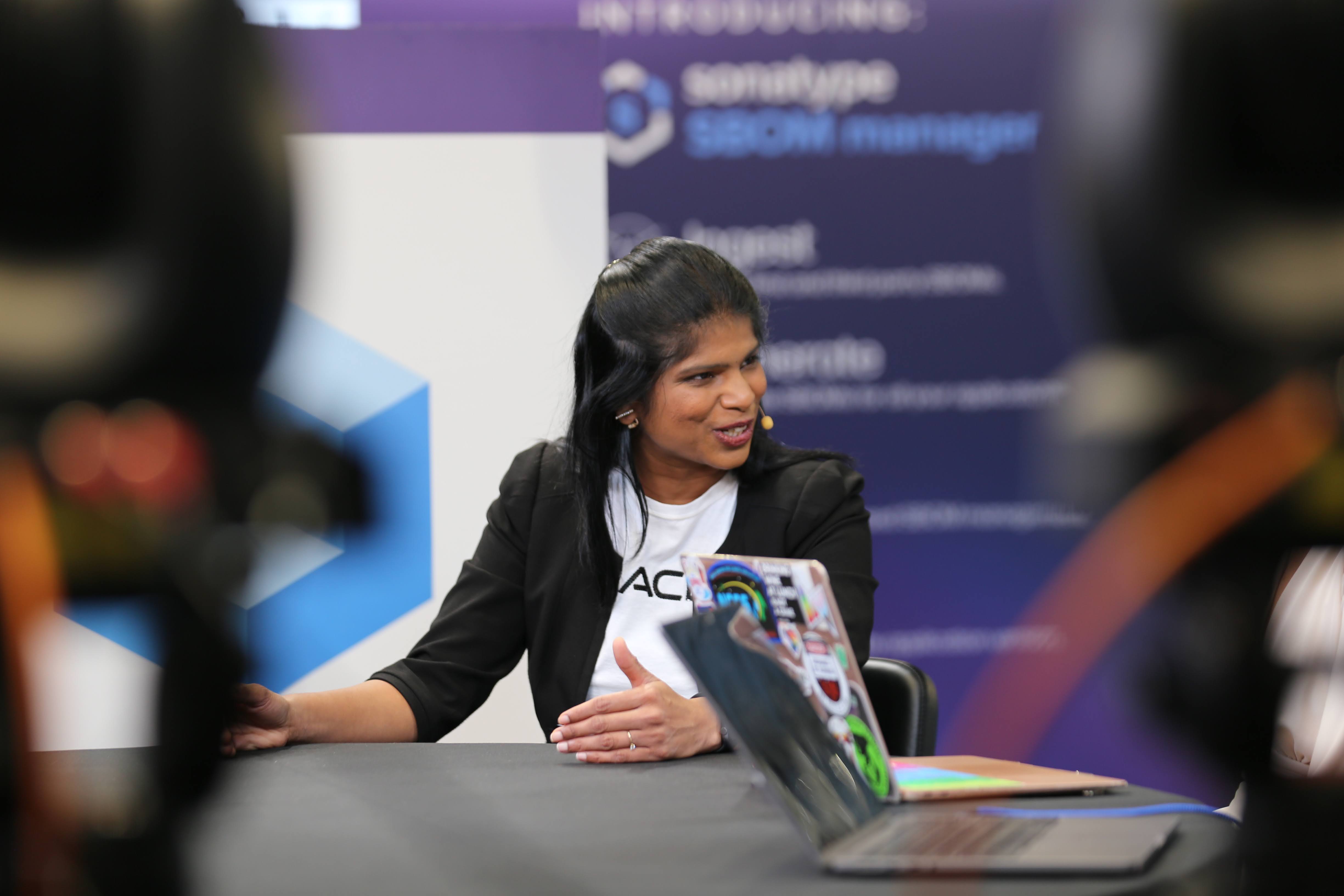
SVP Oracle Cloud Infrastructure (OCI) Developer Platform and CNCF BoardOracle
search
(bright music) >> Good Morning, cloud community, and welcome back to
fantastic Paris, France. We're here at KubeCon, CloudNativeCon, CNCFs flagship European event and the largest KubeCon ever
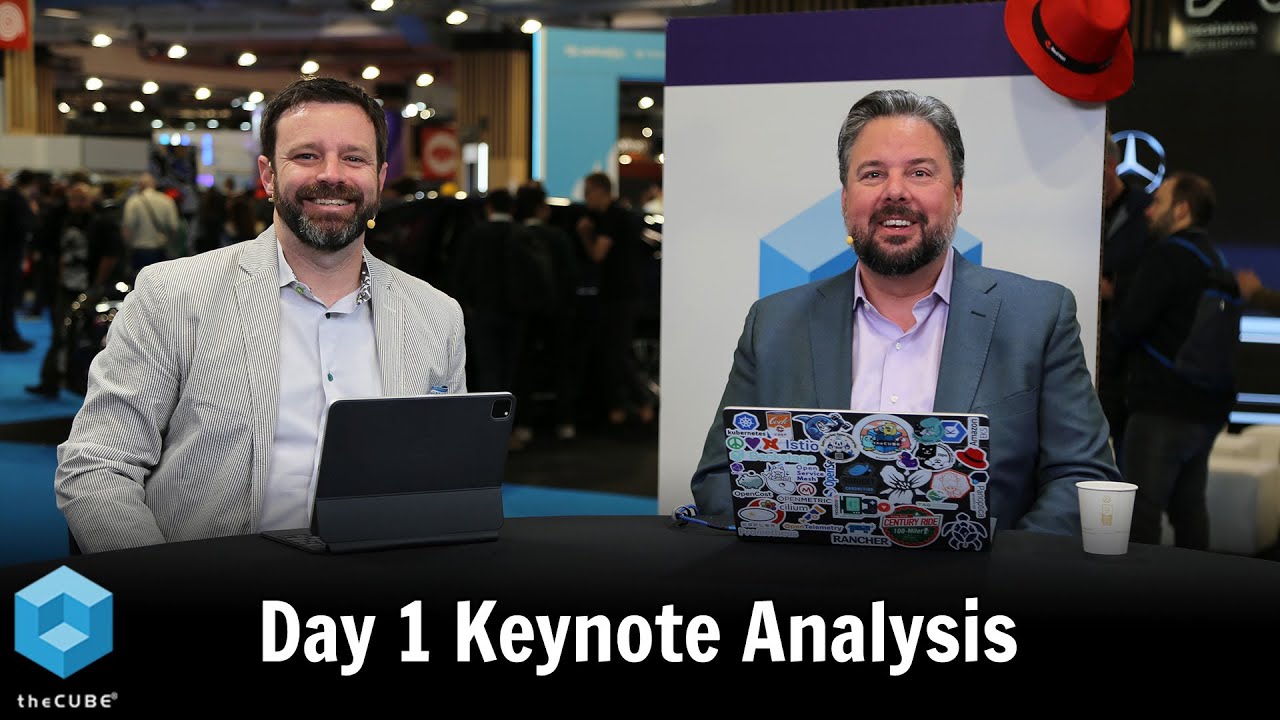
with over 12,000 attendees. My name's Savannah Peterson joined by masterful analyst, Rob Strechay. Rob, we've had the best
time here in Paris. >> I think this has been one of the best KubeCons I've been at. I mean, again, it's hard
to do it wrong in Paris, but I think that just the energy, 51% new people here, new energy coming into the
building, it's been awesome. >> It really has been awesome and speaking of awesome, our next guest is super awesome, Sudha. Thank you so much for being here with us. It's been a busy week for you, yeah? >> Yes, extremely busy, but exciting. >> Yeah, and exciting,
I just got to point out that fabulous sequin bling on your Oracle shirt, loving that. >> Thank you. >> You rocked that on the main stage for your keynote today, correct? >> Yes. >> Yes, congratulations on that. >> Thank you, again. >> How did it go? Can you give us a couple highlights? >> So the keynote was great. The biggest thing we
wanted to get out there is that Oracle is a huge
sponsor of open source. Not only do we use open source, we also contribute back. >> Over 500 projects, right? >> Yes, 500 open source projects. and the biggest part of all of this is we've been doing it for decades. It's just that we haven't
been very public about it and now we're coming out party, so we're telling the world
what we are contributing to. We've always done Oracle, Linux, Java, but now we are trying more
and more CNCF projects. We are becoming one of the
platinum sponsors for CNCF. I am part of the CNCF board and it's an exciting
phase to be part of Oracle and see this journey through from sort of the Oracle DB
that we are always known for to the Oracle Cloud enterprise
that we are now known for. >> So why is the coming out
party happening right now? I mean, I did not realize
until I was prepping for you that Oracle had contributed
to over 500 projects. It's extremely impressive,
what made this moment the time you all wanted to
talk about all of these? >> It's the community, right? You guys spoke about it, right? There are 12,000 people out here and this is the developer community. Who do we talk to about our
contributions to open source? Not the CIOs and the CTOs, but the developer community and this is the perfect conference for it. >> Well, I think also part of it was that when people think Oracle, they don't necessarily, they
think database a lot of times. So what's your pitch to
developers to come to OCI? I liked how you talked about how you were basically
building all your services on Kubernetes going forward and I think that to me shows your investment in the community and why you're here, but what's your pitch
to developers to come and develop on OCI? >> So OCI from the very get go, we are the generation two of cloud. So we have the late movers advantage, and what does that mean? That means we go to the customers where they wanted us to be. Customers don't want rental lock-in. They want to be cloud ubiquitous. I code to an interface. Run me in any cloud that allows that interface
to run seamlessly. That's exactly how we built our products. Everything is open standards compliant. We are not only building our services to be open standards compliant. Being part of the board now, I get the voice to be
able to bring standards to other things that are
not yet standardized. For example, our GPUs that
are in the highest demand. >> Yeah, I thought that
was an interesting one 'cause we're talking
about AI, but go ahead. You looked like you had
something there, but. >> I'm just smirking because I mean, the way that you casually say that, right? We were at Supercomputing
in Denver earlier or at the end of last year and one of my favorite shirts
from there was "Got GPUs?" But that's exactly, you're bringing up a really good point about standardization and how that allows everyone
to accelerate their development and build faster, create more. Do you think we're going to see a lot more standardization with hardware and as we enter into AI? >> Absolutely, it is all
about evolution, right? 10 years ago, there wasn't Kubernetes. Today, that isn't a world
without Kubernetes, right? This is what it's going to look like. AI has to become democratized. Can't have one or two vendors supplying it to their
custom specifications that all of the data scientist community, all of the developer platform community has to adopt to and individually tune. That's never going to scale. We need something a little
bit more standardized so you can again, write
once, run everywhere, right? How do we make that happen
for the AI software? It needs to become commoditized. >> I thought also it was really great and we have a power law of GenAI, and what we see is that
you on the top part where it kind of slopes down, you have all of the big models that are being trained in the cloud and the foundation models. And then in the middle, what's tugging out the
middle is open source like the open source models. We heard a lot from Llama this week and you have Meta with Llama
Two, with LLama Three coming. >> Lots of llamas. >> Lots of llamas, llamas everywhere, but what was also interesting, and I thought you hit
on it in your keynote and it's been hit on a couple
times with Ampere and ARM and what you're doing there about actual AI workloads running on CPUs because for us, the long tail is what we would call SLMs, or segmented, or small language models that
are being deployed at the edge or in other instances. How do you see that developing? >> So you spoke about with the highest end where you actually need
the power of the GPU. So one of the things
that I did not talk about in the keynotes is we at
Oracle are trying to build the largest GPU cluster in the world. We are going to build a
cluster for 16,000 nodes all running again on Kubernetes, right? So and we are very close. We are almost halfway there. We'll be there in a few weeks. That's the highest end,
that's exciting, right? It's one of a kind, it's
the first of the kind, and we have workloads
that need that cluster. But there are also workloads like inferencing the smaller models where innovation can come really fast as long as we can supply
the infrastructure to help with that innovation. That's why we tried CPUs and it works, right? We have proven data that it actually works equally or sometimes even
better depending on the workload to run the same inferencing model on CPUs. And what you were saying is so true because inferencing is the long tail. You train and you fine
tune and you inference. Yes, you do feedback, but inference runs the longest. So again, if we pivot towards running the longest running piece of this workflow in something that is a
little more ubiquitous, a little more available, than best of both worlds. >> Yeah, I think that to me comes back to and again, you're heading up all of the developer aspects within OCI, I think what's really interesting is and you kind of hit on it a little bit, and there's some interesting
subtitles going on here around infrastructure as code and how that's going to developing, and where things like OpenTofu and we'll see if the news of Hashi potentially
selling or being bought, how that changes things. Where do you see some of
the standardizations going with infrastructure as code
beyond just Kubernetes, I mean, as a foundational model? >> So that's an interesting
area of development. Really OpenTofu is a great example, right? As soon as HashiCorp decided whatever it was going
to do with Terraform, OpenTofu came into life. That happened almost seamlessly. It's because both like CNCF. There's always somebody, someone ready to make what is
now private open sourced and that's the great
thing about the community. You spoke about what do you think about infrastructure as
a code standardization? I go back to open standards, right? Now only if your infrastructure is written to a standard specification and in the old days, they
called it terraform providers. I'm calling it old days as
though it was decades ago. It was just a year ago, but. >> In tech land, a year is a decade so. >> Dog years they were
saying in Kubernetes, right? But that standardization allowed us to write code for the infrastructure. If I had gone to someone 10 years ago and said, "You can deploy
on an Intel machine the same way you deploy on an AMD, the same way you deploy on a Mac," they'd go, "What, really?
You can actually do it." And now people don't even think about it. A lot of my customers are
what we call shape agnostic. They don't know what hardware is running. They just know that containers are running to the scale that they want to and scale back down to zero. They don't care what
infrastructure you run on. As long as it's cost
efficient, really nobody cares and that is what standardization
brings to the world. And not just that making infrastructure so ubiquitous means the developers, most of who are trying to
bring value to their customers, don't have to worry about infrastructure. It's there, it's always there. It is standard, it's scales on demand. What more can the developers ask for? So standardization on
infrastructure as code is definitely coming and we are at the forefront of doing that. Not just for the
traditional cloud workloads. We're trying to do it
for the AI workloads too. Acute flow is a great example where started democratizing
what data scientists do which wasn't a thing
again, a few years ago. But now everybody uses it. >> Right, and bringing it to
the platform engineering aspect of it as well, so yeah. >> Which has definitely been a theme. So you're at Oracle, you're on the CNCF board, and you are also a part of the Oracle Women's
Leadership Seattle Chapter, founding member, correct,
which is super awesome. Do you sleep is my initial question here because you wear many hats? >> I try to. >> Nap occasionally, periodically
when the moment strikes. So how are you and Oracle helping grow our community
of women in this space 'cause we're still pretty outnumbered? >> Yes, so what's been great about coming to conferences like this? First thing that when I
came to this conference, Wednesday morning, 8:00 AM, there was a woman's
reception that happened. I'm sorry, I forgot the sponsors, but I met a woman who was
a PhD in physics, physics, and she was here to learn
Kubernetes, fascinating. >> I love that. >> I met people from marketing, from sales, from development, so women are everywhere. It's just we don't seem to grow the women from the bottom of the
stack, the funnel coming in. That was a problem. We've gotten better at it. It's not great, but we've
gotten better at it. Now we need to focus on the middle tier to get them a little bit higher and primarily I try to do
that with a lot of mentoring. I am a huge fan of mentoring as a concept. I am not so great at networking, but mentoring, I love. I have benefited from being a mentee to so many different men,
women, no difference. But that has propelled me in directions that I would've not
thought of without them sort of being there as friends and guides to take me to that next step. So I like to give that
back to the community and I do a lot of mentoring myself. Here I met some wonderful women. Again, the Priyanka who did the keynote. >> Yes, yeah, we had her on
the show on Wednesday, yeah. >> Yeah, and you can see CNCF board, not just the board, the CNCF Foundation is
only about 50 people but they are over 30% women. And that's great, they
built that on purpose. I was talking some other
gentleman yesterday and he was saying we don't need
to do this as women and men. What if we take the gender
out of this equation? Just evaluate us for who we are, what experience we bring in, and let's go from that basic
sort of neutral boundary. and then we will see women
shine as much as men do. And maybe more, I wear a lot of hats. >> Yeah, yeah, yeah, well, I think what you're bringing
up is really important and it's not just about that gateway. It's about elevating women into leadership and making sure that they feel
empowered to take that step. What would be your advice to a woman who might be watching this right now who knows nothing about Kubernetes like the woman you met
who has a PhD in physics? What would your advice be to that person about entering the space? >> So take the trainings, right? Everything today, in this world where data is in our fingertips, we get a lot of data. But it's my true belief that
when you take that first action from the data that you get, no matter where you hear it from, that's when it really sticks and what's the worst that can happen? You can say this is not for me, but now it's not that nagging little thing in the back of your mind
saying, "I should have tried it, I should have tried it,
I should have tried it." So take the action, go to CNCF, look at the training materials. There's so many free trainings out there. Try to set up your own Kubernetes cluster. If nothing else, really I
don't know how many people watched the keynote this morning. Some of the biggest
contributors now to Kubernetes, they started their first contribution was changing a line of comment. Somebody said their first contribution was changing a legal contract. You don't expect them from
those kind of comments, first comments into Kubernetes from people who are very
well known in the community, but that's where they started. So do something about that stack. >> Start small. >> Absolutely. >> I think that's really great. All right, last question for you 'cause this has been a
fascinating interview. What do you hope that you can say next time you're sitting
here on the show with us that you can't say today? So that could be in Salt Lake or London. What do you hope happens in
the next six to 12 months? >> The acceleration of
AI-driven development for the betterment of humankind. >> Rob: Love that. I just got goosebumps, yep. >> I am a huge proponent
of climate change. I really truly believe that
if we don't take action today, tomorrow is going to be really hard. You live on the west coast
of United States, so do I. We've seen the number
of wildfires every year grow up and up and up, and it's real. It's affecting us, everyday lives, and if you don't do something today, it's never going to get done. So I hope six months from now I come back and I see AI driving that change. >> Well, I hope we can have
that exact conversation 'cause I'm here for it in Salt Lake City when we're at KubeCon there. That would be fantastic. >> I'll be there too. >> Oh, see, so we're going to do it. Hopefully we're saving
the world at that point. Sudha, thank you so much
for being on the show. You're absolutely fantastic,
Rob, a pleasure as always. And thank all of you for tuning in for our live coverage here at KubeCon, CloudNativeCon
in Fantastic Paris. My name's Savannah Peterson,
you're watching theCUBE, the leading source for
enterprise tech news. (bright music)
(bright music) >> Good Morning, cloud community, and welcome back to
fantastic Paris, France. We're here at KubeCon, CloudNativeCon, CNCFs flagship European event and the largest KubeCon ever
with over 12,000 attendees. My name's Savannah Peterson joined by masterful analyst, Rob Strechay. Rob, we've had the best
time here in Paris. >> I think this has been one of the best KubeCons I've been at. I mean, again, it's hard
to do it wrong in Paris, but I think that just the energy, 51% new people here, new energy coming into the
building, it's been awesome. >> It really has been awesome and speaking of awesome, our next guest is super awesome, Sudha. Thank you so much for being here with us. It's been a busy week for you, yeah? >> Yes, extremely busy, but exciting. >> Yeah, and exciting,
I just got to point out that fabulous sequin bling on your Oracle shirt, loving that. >> Thank you. >> You rocked that on the main stage for your keynote today, correct? >> Yes. >> Yes, congratulations on that. >> Thank you, again. >> How did it go? Can you give us a couple highlights? >> So the keynote was great. The biggest thing we
wanted to get out there is that Oracle is a huge
sponsor of open source. Not only do we use open source, we also contribute back. >> Over 500 projects, right? >> Yes, 500 open source projects. and the biggest part of all of this is we've been doing it for decades. It's just that we haven't
been very public about it and now we're coming out party, so we're telling the world
what we are contributing to. We've always done Oracle, Linux, Java, but now we are trying more
and more CNCF projects. We are becoming one of the
platinum sponsors for CNCF. I am part of the CNCF board and it's an exciting
phase to be part of Oracle and see this journey through from sort of the Oracle DB
that we are always known for to the Oracle Cloud enterprise
that we are now known for. >> So why is the coming out
party happening right now? I mean, I did not realize
until I was prepping for you that Oracle had contributed
to over 500 projects. It's extremely impressive,
what made this moment the time you all wanted to
talk about all of these? >> It's the community, right? You guys spoke about it, right? There are 12,000 people out here and this is the developer community. Who do we talk to about our
contributions to open source? Not the CIOs and the CTOs, but the developer community and this is the perfect conference for it. >> Well, I think also part of it was that when people think Oracle, they don't necessarily, they
think database a lot of times. So what's your pitch to
developers to come to OCI? I liked how you talked about how you were basically
building all your services on Kubernetes going forward and I think that to me shows your investment in the community and why you're here, but what's your pitch
to developers to come and develop on OCI? >> So OCI from the very get go, we are the generation two of cloud. So we have the late movers advantage, and what does that mean? That means we go to the customers where they wanted us to be. Customers don't want rental lock-in. They want to be cloud ubiquitous. I code to an interface. Run me in any cloud that allows that interface
to run seamlessly. That's exactly how we built our products. Everything is open standards compliant. We are not only building our services to be open standards compliant. Being part of the board now, I get the voice to be
able to bring standards to other things that are
not yet standardized. For example, our GPUs that
are in the highest demand. >> Yeah, I thought that
was an interesting one 'cause we're talking
about AI, but go ahead. You looked like you had
something there, but. >> I'm just smirking because I mean, the way that you casually say that, right? We were at Supercomputing
in Denver earlier or at the end of last year and one of my favorite shirts
from there was "Got GPUs?" But that's exactly, you're bringing up a really good point about standardization and how that allows everyone
to accelerate their development and build faster, create more. Do you think we're going to see a lot more standardization with hardware and as we enter into AI? >> Absolutely, it is all
about evolution, right? 10 years ago, there wasn't Kubernetes. Today, that isn't a world
without Kubernetes, right? This is what it's going to look like. AI has to become democratized. Can't have one or two vendors supplying it to their
custom specifications that all of the data scientist community, all of the developer platform community has to adopt to and individually tune. That's never going to scale. We need something a little
bit more standardized so you can again, write
once, run everywhere, right? How do we make that happen
for the AI software? It needs to become commoditized. >> I thought also it was really great and we have a power law of GenAI, and what we see is that
you on the top part where it kind of slopes down, you have all of the big models that are being trained in the cloud and the foundation models. And then in the middle, what's tugging out the
middle is open source like the open source models. We heard a lot from Llama this week and you have Meta with Llama
Two, with LLama Three coming. >> Lots of llamas. >> Lots of llamas, llamas everywhere, but what was also interesting, and I thought you hit
on it in your keynote and it's been hit on a couple
times with Ampere and ARM and what you're doing there about actual AI workloads running on CPUs because for us, the long tail is what we would call SLMs, or segmented, or small language models that
are being deployed at the edge or in other instances. How do you see that developing? >> So you spoke about with the highest end where you actually need
the power of the GPU. So one of the things
that I did not talk about in the keynotes is we at
Oracle are trying to build the largest GPU cluster in the world. We are going to build a
cluster for 16,000 nodes all running again on Kubernetes, right? So and we are very close. We are almost halfway there. We'll be there in a few weeks. That's the highest end,
that's exciting, right? It's one of a kind, it's
the first of the kind, and we have workloads
that need that cluster. But there are also workloads like inferencing the smaller models where innovation can come really fast as long as we can supply
the infrastructure to help with that innovation. That's why we tried CPUs and it works, right? We have proven data that it actually works equally or sometimes even
better depending on the workload to run the same inferencing model on CPUs. And what you were saying is so true because inferencing is the long tail. You train and you fine
tune and you inference. Yes, you do feedback, but inference runs the longest. So again, if we pivot towards running the longest running piece of this workflow in something that is a
little more ubiquitous, a little more available, than best of both worlds. >> Yeah, I think that to me comes back to and again, you're heading up all of the developer aspects within OCI, I think what's really interesting is and you kind of hit on it a little bit, and there's some interesting
subtitles going on here around infrastructure as code and how that's going to developing, and where things like OpenTofu and we'll see if the news of Hashi potentially
selling or being bought, how that changes things. Where do you see some of
the standardizations going with infrastructure as code
beyond just Kubernetes, I mean, as a foundational model? >> So that's an interesting
area of development. Really OpenTofu is a great example, right? As soon as HashiCorp decided whatever it was going
to do with Terraform, OpenTofu came into life. That happened almost seamlessly. It's because both like CNCF. There's always somebody, someone ready to make what is
now private open sourced and that's the great
thing about the community. You spoke about what do you think about infrastructure as
a code standardization? I go back to open standards, right? Now only if your infrastructure is written to a standard specification and in the old days, they
called it terraform providers. I'm calling it old days as
though it was decades ago. It was just a year ago, but. >> In tech land, a year is a decade so. >> Dog years they were
saying in Kubernetes, right? But that standardization allowed us to write code for the infrastructure. If I had gone to someone 10 years ago and said, "You can deploy
on an Intel machine the same way you deploy on an AMD, the same way you deploy on a Mac," they'd go, "What, really?
You can actually do it." And now people don't even think about it. A lot of my customers are
what we call shape agnostic. They don't know what hardware is running. They just know that containers are running to the scale that they want to and scale back down to zero. They don't care what
infrastructure you run on. As long as it's cost
efficient, really nobody cares and that is what standardization
brings to the world. And not just that making infrastructure so ubiquitous means the developers, most of who are trying to
bring value to their customers, don't have to worry about infrastructure. It's there, it's always there. It is standard, it's scales on demand. What more can the developers ask for? So standardization on
infrastructure as code is definitely coming and we are at the forefront of doing that. Not just for the
traditional cloud workloads. We're trying to do it
for the AI workloads too. Acute flow is a great example where started democratizing
what data scientists do which wasn't a thing
again, a few years ago. But now everybody uses it. >> Right, and bringing it to
the platform engineering aspect of it as well, so yeah. >> Which has definitely been a theme. So you're at Oracle, you're on the CNCF board, and you are also a part of the Oracle Women's
Leadership Seattle Chapter, founding member, correct,
which is super awesome. Do you sleep is my initial question here because you wear many hats? >> I try to. >> Nap occasionally, periodically
when the moment strikes. So how are you and Oracle helping grow our community
of women in this space 'cause we're still pretty outnumbered? >> Yes, so what's been great about coming to conferences like this? First thing that when I
came to this conference, Wednesday morning, 8:00 AM, there was a woman's
reception that happened. I'm sorry, I forgot the sponsors, but I met a woman who was
a PhD in physics, physics, and she was here to learn
Kubernetes, fascinating. >> I love that. >> I met people from marketing, from sales, from development, so women are everywhere. It's just we don't seem to grow the women from the bottom of the
stack, the funnel coming in. That was a problem. We've gotten better at it. It's not great, but we've
gotten better at it. Now we need to focus on the middle tier to get them a little bit higher and primarily I try to do
that with a lot of mentoring. I am a huge fan of mentoring as a concept. I am not so great at networking, but mentoring, I love. I have benefited from being a mentee to so many different men,
women, no difference. But that has propelled me in directions that I would've not
thought of without them sort of being there as friends and guides to take me to that next step. So I like to give that
back to the community and I do a lot of mentoring myself. Here I met some wonderful women. Again, the Priyanka who did the keynote. >> Yes, yeah, we had her on
the show on Wednesday, yeah. >> Yeah, and you can see CNCF board, not just the board, the CNCF Foundation is
only about 50 people but they are over 30% women. And that's great, they
built that on purpose. I was talking some other
gentleman yesterday and he was saying we don't need
to do this as women and men. What if we take the gender
out of this equation? Just evaluate us for who we are, what experience we bring in, and let's go from that basic
sort of neutral boundary. and then we will see women
shine as much as men do. And maybe more, I wear a lot of hats. >> Yeah, yeah, yeah, well, I think what you're bringing
up is really important and it's not just about that gateway. It's about elevating women into leadership and making sure that they feel
empowered to take that step. What would be your advice to a woman who might be watching this right now who knows nothing about Kubernetes like the woman you met
who has a PhD in physics? What would your advice be to that person about entering the space? >> So take the trainings, right? Everything today, in this world where data is in our fingertips, we get a lot of data. But it's my true belief that
when you take that first action from the data that you get, no matter where you hear it from, that's when it really sticks and what's the worst that can happen? You can say this is not for me, but now it's not that nagging little thing in the back of your mind
saying, "I should have tried it, I should have tried it,
I should have tried it." So take the action, go to CNCF, look at the training materials. There's so many free trainings out there. Try to set up your own Kubernetes cluster. If nothing else, really I
don't know how many people watched the keynote this morning. Some of the biggest
contributors now to Kubernetes, they started their first contribution was changing a line of comment. Somebody said their first contribution was changing a legal contract. You don't expect them from
those kind of comments, first comments into Kubernetes from people who are very
well known in the community, but that's where they started. So do something about that stack. >> Start small. >> Absolutely. >> I think that's really great. All right, last question for you 'cause this has been a
fascinating interview. What do you hope that you can say next time you're sitting
here on the show with us that you can't say today? So that could be in Salt Lake or London. What do you hope happens in
the next six to 12 months? >> The acceleration of
AI-driven development for the betterment of humankind. >> Rob: Love that. I just got goosebumps, yep. >> I am a huge proponent
of climate change. I really truly believe that
if we don't take action today, tomorrow is going to be really hard. You live on the west coast
of United States, so do I. We've seen the number
of wildfires every year grow up and up and up, and it's real. It's affecting us, everyday lives, and if you don't do something today, it's never going to get done. So I hope six months from now I come back and I see AI driving that change. >> Well, I hope we can have
that exact conversation 'cause I'm here for it in Salt Lake City when we're at KubeCon there. That would be fantastic. >> I'll be there too. >> Oh, see, so we're going to do it. Hopefully we're saving
the world at that point. Sudha, thank you so much
for being on the show. You're absolutely fantastic,
Rob, a pleasure as always. And thank all of you for tuning in for our live coverage here at KubeCon, CloudNativeCon
in Fantastic Paris. My name's Savannah Peterson,
you're watching theCUBE, the leading source for
enterprise tech news. (bright music)