Join Paul Nashawaty of theCUBE Research as they lead a dynamic discussion at the Kong API Summit 2025 with industry experts such as Ross Kukulinski, Vice President of product management at Kong, and Peter Marton, co-founder of OpenMeter, who pioneer innovative approaches in API and artificial intelligence monetization.
In this insightful video, Kukulinski and Marton delve into the latest advancements in API and AI monetization. With extensive experience in API management and AI integration, Kukulinski highlights the role of Kong's Konnect platform, while Marton discusses OpenMeter's impact on billing and metering infrastructure. Nashawaty provides keen analysis and guides the conversation toward emerging trends in the industry.
Key takeaways from this session reveal a growing emphasis on real-time metering, flexibility in pricing models, and the importance of understanding customer usage patterns. According to Kukulinski and Marton, the integration of AI significantly shapes these strategies as companies seek to optimize both internal and external billing processes for better financial oversight and customer satisfaction.
Forgot Password
Almost there!
We just sent you a verification email. Please verify your account to gain access to
Kong API Summit '25. If you don’t think you received an email check your
spam folder.
In order to sign in, enter the email address you used to registered for the event. Once completed, you will receive an email with a verification link. Open the link to automatically sign into the site.
Register for Kong API Summit 2025
Please fill out the information below. You will receive an email with a verification link confirming your registration. Click the link to automatically sign into the site.
You’re almost there!
We just sent you a verification email. Please click the verification button in the email. Once your email address is verified, you will have full access to all event content for Kong API Summit 2025.
I want my badge and interests to be visible to all attendees.
Checking this box will display your presense on the attendees list, view your profile and allow other attendees to contact you via 1-1 chat. Read the Privacy Policy. At any time, you can choose to disable this preference.
Select your Interests!
add
Upload your photo
Uploading..
OR
Connect via Twitter
Connect via Linkedin
EDIT PASSWORD
Share
Forgot Password
Almost there!
We just sent you a verification email. Please verify your account to gain access to
Kong API Summit '25. If you don’t think you received an email check your
spam folder.
In order to sign in, enter the email address you used to registered for the event. Once completed, you will receive an email with a verification link. Open the link to automatically sign into the site.
Sign in to gain access to Kong API Summit '25
Please sign in with LinkedIn to continue to Kong API Summit '25. Signing in with LinkedIn ensures a professional environment.
Are you sure you want to remove access rights for this user?
Details
Manage Access
email address
Community Invitation
Ross Kukulinski, Kong & Peter Marton, OpenMeter
Join Paul Nashawaty of theCUBE Research as they lead a dynamic discussion at the Kong API Summit 2025 with industry experts such as Ross Kukulinski, Vice President of product management at Kong, and Peter Marton, co-founder of OpenMeter, who pioneer innovative approaches in API and artificial intelligence monetization.
In this insightful video, Kukulinski and Marton delve into the latest advancements in API and AI monetization. With extensive experience in API management and AI integration, Kukulinski highlights the role of Kong's Konnect platform, while Marton discusses OpenMeter's impact on billing and metering infrastructure. Nashawaty provides keen analysis and guides the conversation toward emerging trends in the industry.
Key takeaways from this session reveal a growing emphasis on real-time metering, flexibility in pricing models, and the importance of understanding customer usage patterns. According to Kukulinski and Marton, the integration of AI significantly shapes these strategies as companies seek to optimize both internal and external billing processes for better financial oversight and customer satisfaction.
In this Kong API Summit ‘25 segment, Ross Kukulinski, vice president of product management at Kong for Kong Konnect (Kong’s cloud-based API & AI connectivity platform), and Peter Marton, co-founder of OpenMeter and now product manager for Kong’s API & AI monetization product, join theCUBE Research’s Paul Nashawaty on the show floor. The discussion zeroes in on how AI is reshaping monetization models and why metering sits at the heart of billing for both APIs and AI workloads. Marton outlines the emerging mix of token-based AI monetization, traditional API mon...Read more
exploreKeep Exploring
What is the introduction of key speakers at the Kong API Summit 2025?add
What was the outcome of the technology search conducted, and which company and technology stack was ultimately chosen?add
What are the responsibilities and challenges faced in managing the metering and billing system for Kong's customers?add
What capabilities are being considered for the OpenMeter and Konnect Metering and Billing regarding customer lifecycle, invoicing, and reporting for finance teams?add
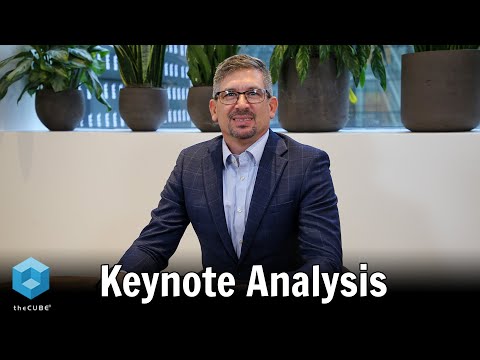
>> Welcome back to the Kong API Summit 2025. My name is Paul Nashawaty and I am the practice lead and principal analyst at theCUBE research for the active practice, and I'm coming to you live from the show floor of the event. I'm joined today with Ross and Peter. Hey guys, how you doing?
Ross Kukulinski
>> Fantastic. Thanks for having us.
Peter Marton
>> Awesome.
Paul Nashawaty
>> Thanks for being on. It's a really great show, really exciting times out there, the keynotes, and all the sessions have been really, really exciting and really popping. Why don't you introduce yourself?
Ross Kukulinski
>> Absolutely. Nice to meet you. My name is Ross Kukulinski. I'm the VP of product here at Kong, broadly responsible for Kong Konnect, so that's our cloud platform, or now API and AI connectivity platform. I've been here about almost four years, and been having a blast meeting with customers and getting to meet with folks like you.
Paul Nashawaty
>> Very cool. Well, thanks for being on. Peter.
Peter Marton
>> Hi Paul, this is Peter. I'm the co-founder of OpenMeter, and since joining Kong, I'm the product manager of the Kong API and AI monetization product.
Paul Nashawaty
>> Well, I appreciate you being here, too. I mean, OpenMeter has been a topic of a lot of conversation, so this is great. Let's jump in. I mean, there's been a lot of announcements, there's a lot of ways of how we monetize these APIs. Just jumping right into the easy questions, right, how do we monetize these APIs? How are we doing this? How are we leveraging this relationship? Peter, let's start with you.
Peter Marton
>> Yeah, so I think there's a big shift happening in industry now, with AI becoming kind of the factor for companies. I think last year we have seen, in the last two years, actually, companies rushing into launching AI features, and now companies want to see a return on that. I think now we see this shift in the mindset, that companies are thinking about how we can monetize that, and the obvious answer, which we see lots of leaders like Jensen talking about that, token is becoming the currency or is already the currency to monetize AI, so that's kind of the answer to the AI monetization, but lots of these AIs are powered by APIs, so API monetization, always going to be there and go hand-on-hand. We see kind of a third pillar growing up, the success-based pricing, which, also API driven, but more about based on the outcome of certain action. We mostly see this being popular for support agents or sales agents, when the pricing happens based on how successful those are.
Paul Nashawaty
>> No, I mean, absolutely, and Ross, I want to come to you, but I want to ask you about the context of usage, monitoring, flexibility, the real-time ability to do billing and unlock those release features. How does that impact with what we're seeing here?
Ross Kukulinski
>> Yeah, I mean, API monetization has kind of been a thing for, I don't know, 10 years now, but when we met with customers, most customers didn't actually want direct monetization. They were doing sort of indirect access management. "Can a given customer or a partner have access to a set of APIs?" We've had support for that in Kong, in our gateway for a long time, but the shift that we've seen, as Peter was mentioning, this rise of AI and the need to get the value out of the investment you're making there, we realized that we really, really needed a deep metering and monetization. Ultimately, billing and AI billing and AI revenue is ultimately a metering problem, and so while obviously we have built direct integrations with our API and AI gateway with the new metering and billing product in Konnect, we also knew that it was going to be really important to have this universal ingestion engine. Customers are going to have other events they need to meter and understand and attribute revenue to, and generate revenue from those experiences, and it's not only API traffic, and so when we looked at the broad segment of, what are all of the companies that are building products and technology or open source technology in the metering and product catalog and billing space? We did a very in-depth search, and there was one company and one technology stack that sort of checked all of those boxes, built on open source, solving a universal metering catalog, being able to handle the performance and throughput of the number of types of events, and then having the sort of actual flexible product catalog and billing engine, and that was OpenMeter, and that was Peter and Andras and that team, and so it started as a, "Hey, should we use this technology?" Then, the more we got to know Peter and the team and got deeper with the technology, we realized it was a better together story. We wanted to bring all of the capabilities of OpenMeter and build those into Kong Konnect, our cloud platform, then obviously bring the team with it. We wanted that expertise. Kong brings opinions to our customer conversations and we wanted to bring that expertise around these types of problems and challenges, and bring that expertise in, into Kong, so we can both build great products and also advise and coach and guide customers on this journey.
Paul Nashawaty
>> Yeah, it makes a lot of sense. Then, when I think about the tech stack and I think about the evolution, you're right, this has kind of been going on for a long time. Right? It's not something that's new, per se, but the new use cases are coming up, right, the AI use cases, and there's different maturity levels for organizations. They can enter it at any level in their maturity. I guess, when I think about the real-time metering, right, that's one of your kind of latest announcements from this event. Why is that important, versus what was working in the past?
Peter Marton
>> Yeah, it's important for two reasons that's very interconnected. AI is very expensive, from an infrastructure perspective. It's a lot more expensive than what the industry's used to from the SaaS profit margin perspective, so companies want to have a very tight control on that, and that's true both on the vendor and the customer side. The vendors want to have real-time metering because they want to have governance in place, they want to be able to control or even stop the traffic of certain features, but on the other end, the customers for the same reason want to see the consumption in real-time. They want to be able to take an action in their agent, in LLM, and they want to see that immediately reflected in both their usage and kind of the estimated cost. That's only possible on both sides with real-time metering.
Paul Nashawaty
>> I would guess that would literally depend on the use case, right? If the use case was looking for specifics, there's flexibility to not have real-time, to have asynchronous and synchronous metering, right? Would that be the case, or?
Peter Marton
>> There's definitely a trade-off when it comes to metering. When we talk about real-time, we are talking about, on a second-ness real-time, not on a millisecond real-time. It's not like we are shooting rockets into the atmosphere, so some engineers probably would be mad at us, that we call this real-time.
Paul Nashawaty
>> I like the analogy, yeah.
Peter Marton
>> For customers, one, two seconds of real-time, that is, it feels immediate when they look into the consumption.
Paul Nashawaty
>> Sure, sure. All right, so then, let's talk about flexibility, because flexibility is another key aspect, right? When we look at flexibility, data-driven product and rate cards, that's kind of a new announcement. Why is that important?
Ross Kukulinski
>> One of the things, and I have a fun job, so part of my responsibility is just operating the Konnect platform for our customers. I'm actually, I need to deliver metering and billing of Kong usage for Kong's customers.
Paul Nashawaty
>> , yeah.
Ross Kukulinski
>> I am basically going to be a consumer, a customer of this product, to offer that as a world-class experience, and then obviously we're also offering this now to customers, but one of the problems I have in my role as sort of product is, I want to experiment with how I'm thinking about pricing and packaging, especially with new products like AI. We need to experiment, and actually, your cost changes drastically. What we saw was that, as part of our broad market look at this space-
Paul Nashawaty
>> Sorry about that.
Ross Kukulinski
>> There are many billing systems that are tightly integrated into the engineering code base, so if you want to change your pricing and packaging, submit a Jira ticket and ask, wait for your engineering team to change something to actually have that reflect. Whereas, what the OpenMeter team have done is they decoupled. There's metering, tell us what events have happened that might matter, but then the feature definition, the entitlements, which we should talk more about, entitlements, of enforcement, and then the product plans and catalogs can be developed and managed externally. I can rework a product catalog. I can introduce a specific customer pricing plan in the Konnect metering and billing product without paging any engineers, without sending any Jira tickets. I can still do API driven for all of this, right, so Kong's API driven, so we want that information to be declarative configured. We want to have control and governance around that, but we've given a UI experience through OpenMeter and now in Konnect to do that in a decoupled way, so a product PM or your platform team or your finance team can experiment and try new pricing plans to see what that effect would have, and then decide when to roll that out and for which customers.
Paul Nashawaty
>> That makes sense. Now, the practitioners that are using this, are they mostly concerned about this, or is it really coming from more the procurement side, saying, "Well, we have to put costs in place"? This question comes from, when I talk to the DevOps teams, a lot of times DevOps teams are like, "I don't really care. I don't pay for the budget. I don't care if things are on, just push the big green button and things go out the door." Not that I'm saying anything bad about DevOps teams, I love you guys, but at the end of the day, sometimes budgets matter in different parts of the organization. Do you see that? Also, with that said, I think that relates to the entitlements and the flexible granularity and add-ons as well.
Ross Kukulinski
>> Yeah, I mean, I think part of it is, app dev teams, they don't want to build and write billing software, and they don't want to update it every time the PM or the finance team wants to change something. For them, it's sort of like the developers ... I used to be a developer, but I'm lazy when I'm developing. If I can just send the event, "This thing happened," or, "This object was created," or, "This customer got this value event out of," and I can just fire that event off, as an engineer, I'm not going to be asked to rework it again three months later or six months later as we change prices. I think that's one angle to it, but you've also, obviously you've spent a ton of time with customers you have on the OpenMeter side that will be coming to Kong. You can probably share some insights there.
Peter Marton
>> Yes. On the entitlement, it's really interesting. If you look into the pricing page of any kind of late-stage startup in the kind of infrastructure space, what you're going to find is a very, very long pricing page. Obviously on the top, you will see a single price. It looks simple, but when you start to scroll down, you will see a bunch of check-marks, Xes, usage limits, overages, lots of, lots of entitlements, basically. Kind of the modern billing, because of the modern pricing and cost, especially with AI, is so kind of buttoned down. It only works until the customer is in those kind of ranges. That's why I think entitlement is also becoming a lot more important in the modern age.
Paul Nashawaty
>> Okay, so that's interesting. You're talking about pricing, you're talking about consumption. Right? What does this mean for invoicing? What does this mean for generating invoice on cycles, or on demand? Is it and/or, or can you know exactly what you're spending at any point in time?
Peter Marton
>> Yeah, when it comes to entitlements, most companies go down and around, that, "Is this pricing metric ... I am going to either monetize it, I'm going to set a price on it, or I'm going to set the limit on it, because I made my calculations that I will be profitable in this range." The entitlement usually doesn't show up in the invoice because that's when you decide that you are not pricing that, you're controlling that. When you price something, the invoice is going to look like that for every single price that you have, and the usage. There will be a calculation there. Some models are more complicated, like volume-based or package-based models, but eventually you will see a line item for every single usage-based price.
Paul Nashawaty
>> No, I think that's important, right? Especially when you have different, I was going to say different personas, but different organization types that are looking at how to use your APIs and such. They want to know exactly how to bill and charge back, as well.
Ross Kukulinski
>> I think there's also, there's a number of different use cases here, too, right? Obviously we have the sort of late stage infrastructure startup or even late start, SaaS companies that are moving from seat-based billing to more usage-based or outcome-based billing.
Paul Nashawaty
>> Usage based.
Ross Kukulinski
>> Yeah, -
Peter Marton
>> use cases.
Ross Kukulinski
>> Yes, so that's certainly one segment of customers, and we're excited to be able to support those, but also when we think about Kong's more traditional either very developer-centric or larger enterprises, there's internal show-back, there's direct chargeback internally within departments, and then you have the whole partner ecosystem. I look at customers that are in airline industry, for example, loyalty programs and partner programs, from data sharing. The same goes for insurance and finance, being able to share the access to partners and be able to actually understand their usage patterns and support your business with it, right, so both API and now AI, it should bring the business value out of that. I think the use cases for things like invoicing, it's not just charged through Stripe. It might be, submit to their NetSuite, or it might be some other sort of more enterprise ERP system, too.
Paul Nashawaty
>> Do you have a dashboard and an analytics view? I know I was looking at one of the demos. I mean, what does that look like?
Ross Kukulinski
>> Yeah, so I mean, the OpenMeter and now Konnect Metering and Billing has basically essentially per customer, seeing the customer lifecycle and invoicing experience, and then I think as we start working more with customers, we're going to be looking at, what sort of more reporting mechanisms will a CFO want, or a sort of VP of finance? I think a lot of having to do this internally at Kong, most of the time we're exporting that data into some data lake, S3 or Snowflake or something, and then we have other reporting tools that our finance team uses, and so the flexibility of being able to export data, invoice data out to another system is ultimately going to be what those finance teams are going to want to use and drive off of.
Paul Nashawaty
>> Very cool. Very cool. There's a lot here. I know there's a press release, just came out. Where can the audience go? Where would you send them to learn more?
Ross Kukulinski
>> Number one, so there's a blog post live as well as a new page for the Konnect Metering and Billing, so that's probably the best place to go. We are going to be launching Beta next month, so you can sign up for early access. Algi said there's 50 access points for 50 people we'll let into that, early in that Beta, so sign up now. I haven't checked it yet today, but we're probably past that, but definitely sign up. Beta coming in November, and we're looking to target general availability for this capability by the end of the year.
Paul Nashawaty
>> Very cool.
Ross Kukulinski
>> It's incredibly fast integration, and kudos to Peter and the entire OpenMeter team for joining forces, and there's a whole lot of Konnect engineering and design teams that have made this possible in record time.
Paul Nashawaty
>> It sounds like it's been incredibly innovative, so it's awesome. Ross, Peter, thank you very much for your time today. This has been awesome. It really is, it's great having you on the show and to have you on theCUBE. Thank you both.
Ross Kukulinski
>> Fantastic. Thanks for coming to summit.
Paul Nashawaty
>> Oh, thank you, and thank you for watching. I'm Paul Nashawaty and I'm coming to you live from the show floor at Kong API Summit 2025 on theCUBE, your leading source for tech news.








 Paul Nashawaty