We just sent you a verification email. Please verify your account to gain access to
Informatica World 2024. If you don’t think you received an email check your
spam folder.
In order to sign in, enter the email address you used to registered for the event. Once completed, you will receive an email with a verification link. Open this link to automatically sign into the site.
Register For Informatica World 2024
Please fill out the information below. You will recieve an email with a verification link confirming your registration. Click the link to automatically sign into the site.
You’re almost there!
We just sent you a verification email. Please click the verification button in the email. Once your email address is verified, you will have full access to all event content for Informatica World 2024.
I want my badge and interests to be visible to all attendees.
Checking this box will display your presense on the attendees list, view your profile and allow other attendees to contact you via 1-1 chat. Read the Privacy Policy. At any time, you can choose to disable this preference.
Select your Interests!
add
Upload your photo
Uploading..
OR
Connect via Twitter
Connect via Linkedin
EDIT PASSWORD
Share
Forgot Password
Almost there!
We just sent you a verification email. Please verify your account to gain access to
Informatica World 2024. If you don’t think you received an email check your
spam folder.
In order to sign in, enter the email address you used to registered for the event. Once completed, you will receive an email with a verification link. Open this link to automatically sign into the site.
Sign in to gain access to Informatica World 2024
Please sign in with LinkedIn to continue to Informatica World 2024. Signing in with LinkedIn ensures a professional environment.
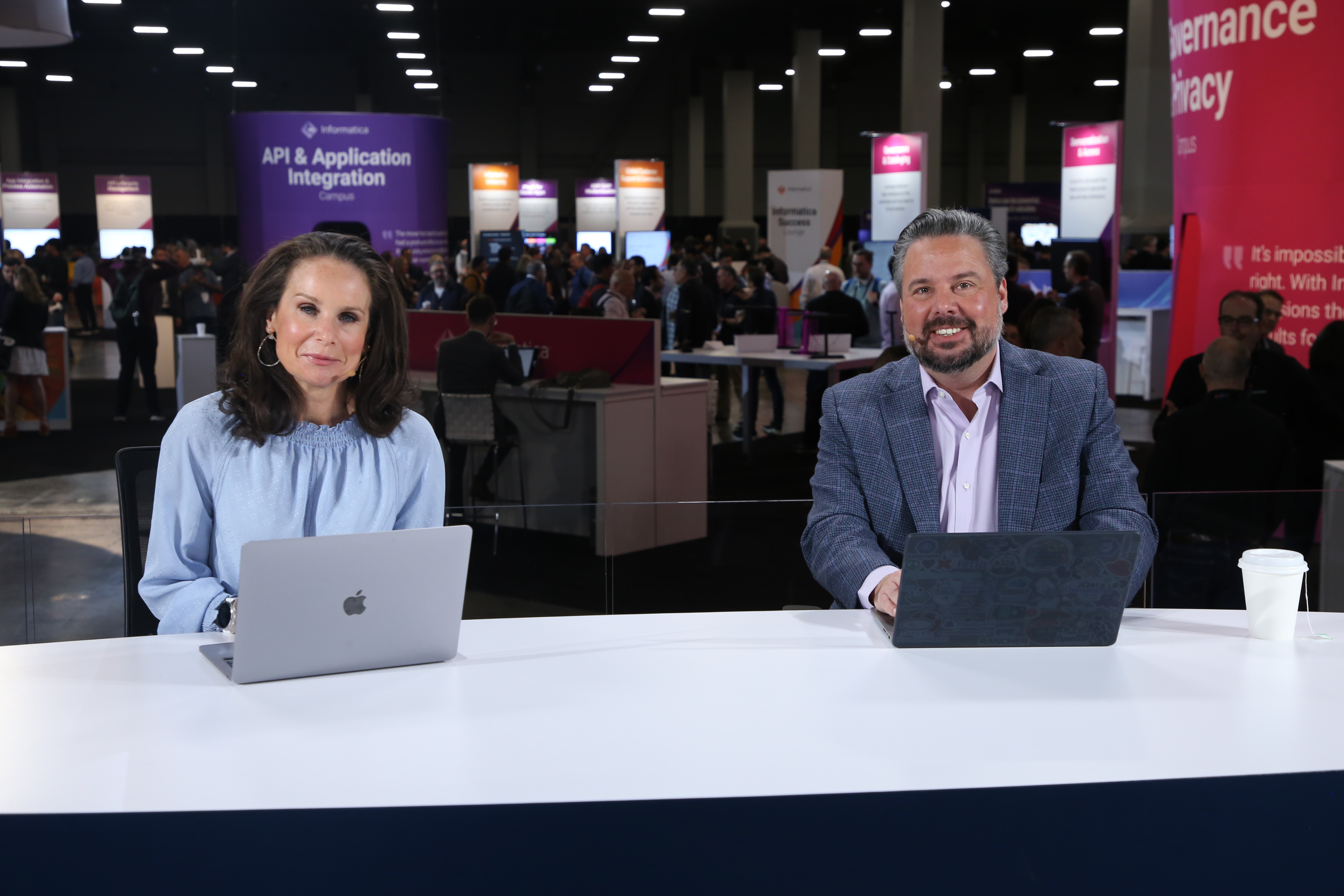
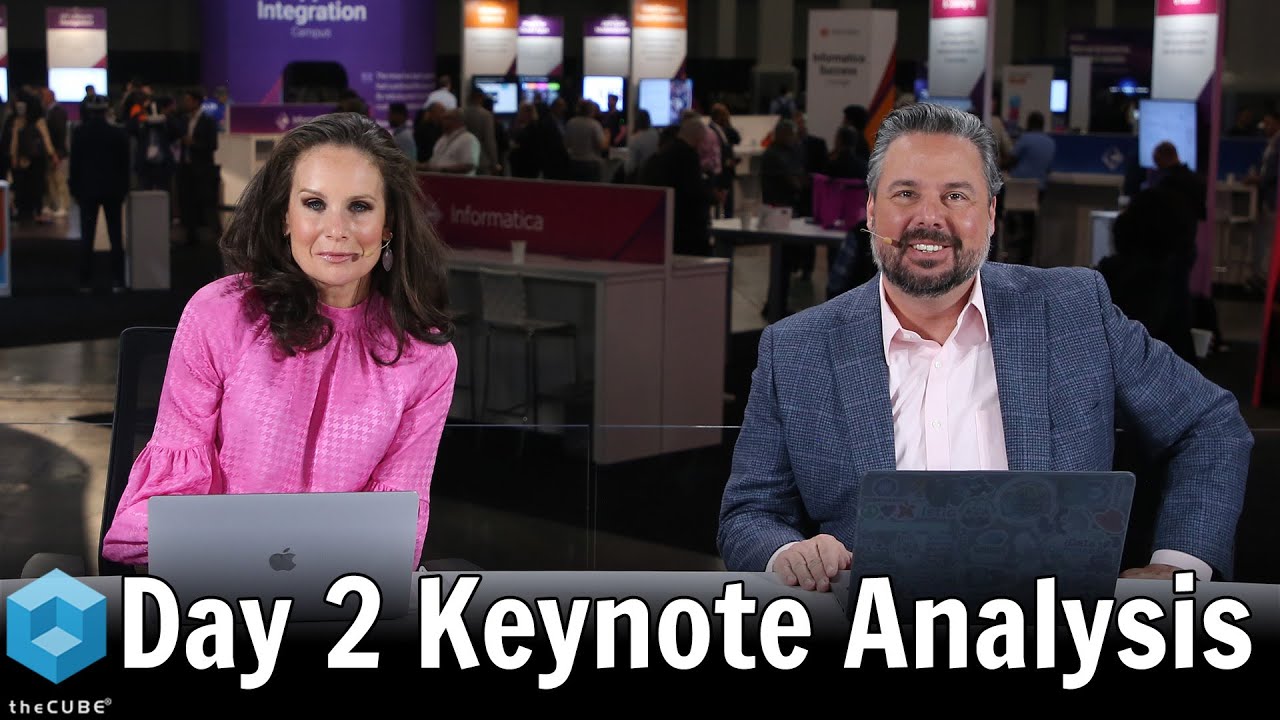
>> Hello, everyone and welcome back to theCUBE's live coverage of Informatica World. We are here at day three, wrapping up three days of wall-to-wall coverage with Informatica executives, customers. I'm your host, Rebecca Knight. I'm sitting alongside my co-host and analyst, Rob Strechay. Rob, it's day three and it's actually our biggest day yet.>> Yeah, I think it's a jam-packed day with executives, customers, and partners once again coming in. And I think we get to hear more out of the executives about the vision and how they're going to go to market, how the partners are a big piece of that, and how we also see the customers leveraging this technology to move their AI strategies forward.
Rebecca Knight
>> Yes, as you said, we're going to have some heavy hitters on. The chief marketing officer, the chief executive officer, lots of great customers from NRMA, which is sort of Australia's AAA. So, lots of great stories. I'm gearing up for a big day.>> Yeah. And I think we just got out of the keynote where they were really leaning in to how you can be more inclusive in data. And again, this is something I know you write about quite a bit. And it was really interesting to see how the journeys of the women who were on stage from the United Nation, DFW Airport, from Chubb, really, again, embraced their journey and some of those challenges. What else did you get out of that?
Rebecca Knight
>> So, this was a keynote for the ages. It was for very impressive women up there talking, as you said about their careers, about biases they faced early on and how they broke through. Really impressive. But I also thought the way they talked about technology and the way they talked about this moment in time that we're living through was really interesting almost from an anthropological standpoint. A woman who, she was the VP of application services and delivery at Dallas-Fort Worth airport, and she was describing starting her career in the early '90s where the questions were, "Should we give our employees access to the internet? Does everyone get an email address?" I mean, these are questions that honestly companies were asking, and it's mind-blowing today. But she said, "We're asking these very same things about AI. And then, what are the guardrails that we put in place? Should we have everyone have full and equal access to it?"
So, I thought that was really interesting, but more to your point about the way these women were talking about, frankly, biases they faced in their careers, and we know that there's a lot of bias and problems in AI, and the reason is that AI is programmed by mostly dudes, and so they're building in their own biases. I love what this woman... She is the head of data for culture and literacy at Chubb, the insurance company, a Jamaican woman who obviously came to the US when she was young and she said, "Women need a seat at the table and we need to make sure that seat is not folding chair. It can't be temporary. It can't be token. It can't be a flimsy chair that we can move in and out when the conversation warrants." I mean, I love that. I'm going to continue on with that, but that's really so important for the representation, but not just representation because that sounds like tokenism. I mean, this is really having women's ideas, their perspectives, their points of view in the conversation.>> Right. Yeah, and I think, again, I know you write about neurodiversity and things of that nature, but when you look at how we're training AI, how we're going and utilizing these things in bots, you don't want them to have one point of view or come from one point of view because if they're not neurodiverse, like the community that are your customers of your organization, you're really going to run into trouble. And I think really what it brought home was, hey, really look and search out these. Look for these artificial challenges you may be putting in front of people and try to remove those. And I thought, to me, that was really powerful in how they were bringing these. And like you said, the woman from Chubb had the most interesting title with data and culture literacy. I was like, this is really embracing that, especially from an insurance company where, again, she was talking about how kids are coming out of high school with patents and with knowing Python and really going in. Yet, in insurance and financial services, there's still a lot being done on the mainframe and there's still a lot of data there. And I think we're going to continue to talk about how Informatica is really trying to bridge the gap of those silos and also a gap in knowledge and skill sets. And I think that's going to be a lot today because we're going to talk heavy about CLAIRE AI and CLAIRE GPT and a number of different other pieces of the Informatica tool set.
Rebecca Knight
>> Yes. And sorry, just one more thing that woman from Chubb said, because I think this was really important too, talking about those young people coming out of high school who already have patents, nudge, nudge, wink, wink, your daughter being one of them. But making sure that when she gets to these companies as in a technology role, that she's not relegated to documentation that they say, no, you're a coder. You're not a product project manager. You're going to be in the tech doing the tech, and that's going to be the representation, which is what another one of the keynote speakers, LeVar Burton, was talking about too. The importance of seeing people and understanding that you can do that, you can make that in your career. I know LeVar Burton from Roots and from Reading Rainbow, but I know in this crowd, known for his Star Trek. So, he was a black engineer... I mean, I'm now really betraying my ignorance about Star Trek, but he was a black engineer.>> Yeah, and he worked with data, and again, they talked about Star Trek having the first interracial kiss and things, but he also talked about how Fred Rogers of... Again, his neighborhood, Mr. Rogers' neighborhood, and he really leaned in and I think he was ahead of his time and looking to take those barriers out. But also LeVar talked about data and how, again, it's always helped him in his life in setting a path forward and aiming for that and having those goals. I think that's a lot of what people are trying to come to these events and trying to figure out in technical terms. But like you said, from a Star Trek perspective, everybody looked at him. He had the banana clip on, and then he could only use 20% of his vision when he's doing that. But I think it brought and humanized data, it humanized him being a nerd, like I am. I think, again, it's one of those things that people could see themselves moving forward and how data actually plays a role in that. And that was a big piece of what he did and how he helped the Enterprise navigate through solar systems and things of that nature.
Rebecca Knight
>> And bringing those TV lessons to realities today of AI, and how we need to be flexible and be open and stay curious and all those things that we learned from Star Trek, now these technology executives need to be thinking about today. Rob, a very exciting last day at Informatica World. I'm delighted to be on the desk with you.>> Yeah, it's going to be a lot of fun. We got a lot to do and a short time to get it done in, and it's going to be a lot of fun. Jam-packed.
Rebecca Knight
>> Indeed. Well, I hope you'll stay with us for more of theCUBE's live coverage of Informatica World. You are watching theCUBE, the leader in enterprise tech news and analysis.
>> Hello, everyone and welcome back to theCUBE's live coverage of Informatica World. We are here at day three, wrapping up three days of wall-to-wall coverage with Informatica executives, customers. I'm your host, Rebecca Knight. I'm sitting alongside my co-host and analyst, Rob Strechay. Rob, it's day three and it's actually our biggest day yet.>> Yeah, I think it's a jam-packed day with executives, customers, and partners once again coming in. And I think we get to hear more out of the executives about the vision and how they're going to go to market, how the partners are a big piece of that, and how we also see the customers leveraging this technology to move their AI strategies forward.
Rebecca Knight
>> Yes, as you said, we're going to have some heavy hitters on. The chief marketing officer, the chief executive officer, lots of great customers from NRMA, which is sort of Australia's AAA. So, lots of great stories. I'm gearing up for a big day.>> Yeah. And I think we just got out of the keynote where they were really leaning in to how you can be more inclusive in data. And again, this is something I know you write about quite a bit. And it was really interesting to see how the journeys of the women who were on stage from the United Nation, DFW Airport, from Chubb, really, again, embraced their journey and some of those challenges. What else did you get out of that?
Rebecca Knight
>> So, this was a keynote for the ages. It was for very impressive women up there talking, as you said about their careers, about biases they faced early on and how they broke through. Really impressive. But I also thought the way they talked about technology and the way they talked about this moment in time that we're living through was really interesting almost from an anthropological standpoint. A woman who, she was the VP of application services and delivery at Dallas-Fort Worth airport, and she was describing starting her career in the early '90s where the questions were, "Should we give our employees access to the internet? Does everyone get an email address?" I mean, these are questions that honestly companies were asking, and it's mind-blowing today. But she said, "We're asking these very same things about AI. And then, what are the guardrails that we put in place? Should we have everyone have full and equal access to it?"
So, I thought that was really interesting, but more to your point about the way these women were talking about, frankly, biases they faced in their careers, and we know that there's a lot of bias and problems in AI, and the reason is that AI is programmed by mostly dudes, and so they're building in their own biases. I love what this woman... She is the head of data for culture and literacy at Chubb, the insurance company, a Jamaican woman who obviously came to the US when she was young and she said, "Women need a seat at the table and we need to make sure that seat is not folding chair. It can't be temporary. It can't be token. It can't be a flimsy chair that we can move in and out when the conversation warrants." I mean, I love that. I'm going to continue on with that, but that's really so important for the representation, but not just representation because that sounds like tokenism. I mean, this is really having women's ideas, their perspectives, their points of view in the conversation.>> Right. Yeah, and I think, again, I know you write about neurodiversity and things of that nature, but when you look at how we're training AI, how we're going and utilizing these things in bots, you don't want them to have one point of view or come from one point of view because if they're not neurodiverse, like the community that are your customers of your organization, you're really going to run into trouble. And I think really what it brought home was, hey, really look and search out these. Look for these artificial challenges you may be putting in front of people and try to remove those. And I thought, to me, that was really powerful in how they were bringing these. And like you said, the woman from Chubb had the most interesting title with data and culture literacy. I was like, this is really embracing that, especially from an insurance company where, again, she was talking about how kids are coming out of high school with patents and with knowing Python and really going in. Yet, in insurance and financial services, there's still a lot being done on the mainframe and there's still a lot of data there. And I think we're going to continue to talk about how Informatica is really trying to bridge the gap of those silos and also a gap in knowledge and skill sets. And I think that's going to be a lot today because we're going to talk heavy about CLAIRE AI and CLAIRE GPT and a number of different other pieces of the Informatica tool set.
Rebecca Knight
>> Yes. And sorry, just one more thing that woman from Chubb said, because I think this was really important too, talking about those young people coming out of high school who already have patents, nudge, nudge, wink, wink, your daughter being one of them. But making sure that when she gets to these companies as in a technology role, that she's not relegated to documentation that they say, no, you're a coder. You're not a product project manager. You're going to be in the tech doing the tech, and that's going to be the representation, which is what another one of the keynote speakers, LeVar Burton, was talking about too. The importance of seeing people and understanding that you can do that, you can make that in your career. I know LeVar Burton from Roots and from Reading Rainbow, but I know in this crowd, known for his Star Trek. So, he was a black engineer... I mean, I'm now really betraying my ignorance about Star Trek, but he was a black engineer.>> Yeah, and he worked with data, and again, they talked about Star Trek having the first interracial kiss and things, but he also talked about how Fred Rogers of... Again, his neighborhood, Mr. Rogers' neighborhood, and he really leaned in and I think he was ahead of his time and looking to take those barriers out. But also LeVar talked about data and how, again, it's always helped him in his life in setting a path forward and aiming for that and having those goals. I think that's a lot of what people are trying to come to these events and trying to figure out in technical terms. But like you said, from a Star Trek perspective, everybody looked at him. He had the banana clip on, and then he could only use 20% of his vision when he's doing that. But I think it brought and humanized data, it humanized him being a nerd, like I am. I think, again, it's one of those things that people could see themselves moving forward and how data actually plays a role in that. And that was a big piece of what he did and how he helped the Enterprise navigate through solar systems and things of that nature.
Rebecca Knight
>> And bringing those TV lessons to realities today of AI, and how we need to be flexible and be open and stay curious and all those things that we learned from Star Trek, now these technology executives need to be thinking about today. Rob, a very exciting last day at Informatica World. I'm delighted to be on the desk with you.>> Yeah, it's going to be a lot of fun. We got a lot to do and a short time to get it done in, and it's going to be a lot of fun. Jam-packed.
Rebecca Knight
>> Indeed. Well, I hope you'll stay with us for more of theCUBE's live coverage of Informatica World. You are watching theCUBE, the leader in enterprise tech news and analysis.