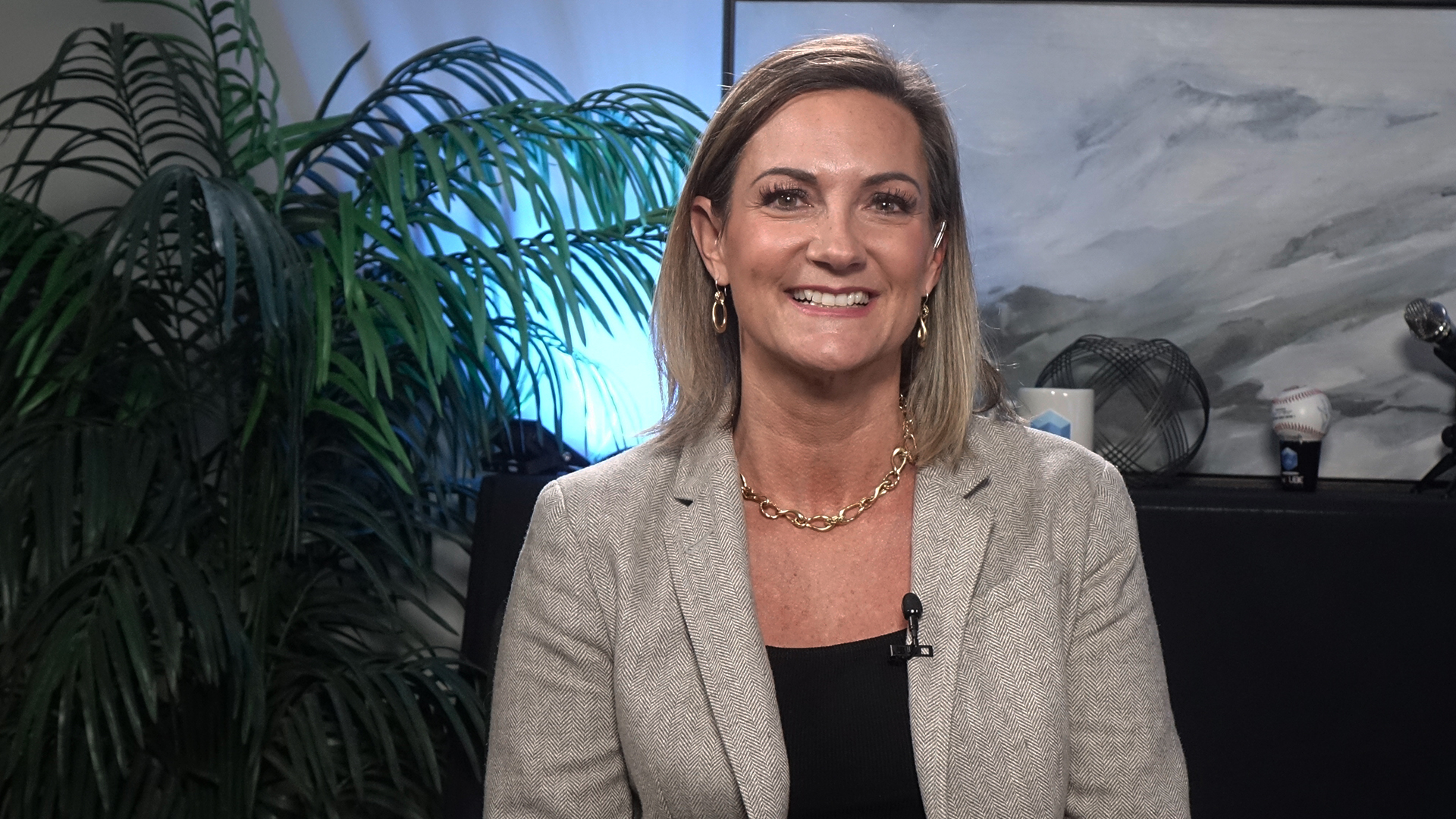
During the Cyber Resiliency Summit, theCUBE Research's Christophe Bertrand talks with Danielle Goode Coady, VP of Marketing at Index Engines, about the critical role of clean data recovery in combating sophisticated cyberattacks. Coady highlights Index Engines' CyberSense product, which leverages AI and machine learning algorithms to detect ransomware corruption with a 99.99% SLA.
Collaborating with partners such as Dell, Infinidat and IBM, the solution emphasizes recovery over prevention to minimize downtime and preserve customer trust. Coady stresses the importance of compliance-driven cyber resilience and a recovery-first approach, focusing on recovery point and time objectives to ensure fast access to clean data. She emphasizes that effective cyber resilience strategies require collaboration, team effort and a commitment to strong recovery solutions.
Forgot Password
Almost there!
We just sent you a verification email. Please verify your account to gain access to
Index Engines on Cyber Resiliency. If you don’t think you received an email check your
spam folder.
In order to sign in, enter the email address you used to registered for the event. Once completed, you will receive an email with a verification link. Open this link to automatically sign into the site.
Register For Index Engines on Cyber Resiliency
Please fill out the information below. You will recieve an email with a verification link confirming your registration. Click the link to automatically sign into the site.
You’re almost there!
We just sent you a verification email. Please click the verification button in the email. Once your email address is verified, you will have full access to all event content for Index Engines on Cyber Resiliency.
I want my badge and interests to be visible to all attendees.
Checking this box will display your presense on the attendees list, view your profile and allow other attendees to contact you via 1-1 chat. Read the Privacy Policy. At any time, you can choose to disable this preference.
Select your Interests!
add
Upload your photo
Uploading..
OR
Connect via Twitter
Connect via Linkedin
EDIT PASSWORD
Share
Forgot Password
Almost there!
We just sent you a verification email. Please verify your account to gain access to
Index Engines on Cyber Resiliency. If you don’t think you received an email check your
spam folder.
In order to sign in, enter the email address you used to registered for the event. Once completed, you will receive an email with a verification link. Open this link to automatically sign into the site.
Sign in to gain access to Index Engines on Cyber Resiliency
Please sign in with LinkedIn to continue to Index Engines on Cyber Resiliency. Signing in with LinkedIn ensures a professional environment.
Are you sure you want to remove access rights for this user?
Details
Manage Access
email address
Community Invitation
Danielle Goode Coady, Index Engines
During the Cyber Resiliency Summit, theCUBE Research's Christophe Bertrand talks with Danielle Goode Coady, VP of marketing at Index Engines, about the critical role of clean data recovery in combating sophisticated cyberattacks. Coady highlights Index Engines' CyberSense product, which leverages AI and machine learning algorithms to detect ransomware corruption with a 99.99% SLA.
Find out more about theCUBE's coverage of the Cyber Resiliency Summit https://www.thecube.net/events/thecube/cyber-resiliency-summit
Collaborating with partners such as Dell, Infinidat and IBM, the solution emphasizes recovery over prevention to minimize downtime and preserve customer trust. Coady stresses the importance of compliance-driven cyber resilience and a recovery-first approach, focusing on recovery point and time objectives to ensure fast access to clean data. She emphasizes that effective cyber resilience strategies require collaboration, team effort and a commitment to strong recovery solutions.
Check out the full article https://siliconangle.com/2025/01/14/cybersense-recovery-confidence-cyber-resilience-cyberresiliencysummit/
Follow theCUBE's wall-to-wall coverage as the roving news desk for SiliconANGLE reports live from tech's top events https://siliconangle.com/category/cube-event-coverage/
#theCUBE #CyberResiliencySummit #theCUBEResearch #IndexEngines, #CyberSense #AI
During the Cyber Resiliency Summit, theCUBE Research's Christophe Bertrand talks with Danielle Goode Coady, VP of Marketing at Index Engines, about the critical role of clean data recovery in combating sophisticated cyberattacks. Coady highlights Index Engines' CyberSense product, which leverages AI and machine learning algorithms to detect ransomware corruption with a 99.99% SLA.
Collaborating with partners such as Dell, Infinidat and IBM, the solution emphasizes recovery over prevention to minimize downtime and preserve customer trust. Coady stresse...Read more
>> Welcome back to the Cyber Resiliency Summit. I'm joined today by my friend Danielle Goode Coady from Index Engines. Good to see you. Danielle. How are you?
Danielle Goode Coady
>> I'm great. Thank you so much for having me, Christophe.>> It's great to have you in our Boston studio. I'm here in Palo Alto and we're going to talk about cyber resiliency all day long, and we have already, but let's continue here with a very interesting solution and a great company, Index Engines. And Danielle, you're the vice President of marketing for Index Engines. Tell us a little bit more about what Index Engines is your customers and what you do.
Danielle Goode Coady
>> Index Engines is a cyber resiliency and cyber recovery solutions. So we really OEM through some of the most trusted partners such as Dell, IBM, Infinidat. And we are the last road to recovery, focused on making sure that companies have an option to recover trusted data. So when you are attacked, it's not kind of if, it's a when. When you are attacked by ransomware, how confident are you to recover? So how confident are you that you can recover when you're attacked? And that's what CyberSense by Index Engines does, is make sure that organizations are confident in their recovery.>> So Danielle, let's talk about innovation and cybercrime. What has changed on the attack side?
Danielle Goode Coady
>> Yeah, it's been really interesting and it's a great question because in the past, the evolution of this has gone from tape backup to disaster recovery software to now we're at a point where we need to figure out how to recover, not if it happens, but when it happens. So it's going to happen. And the cyber criminals are acting as professional organizations, and there's about 60 organizations that we know of, and that's just the ones that we know of. And they are honing in and attacking the gaps in traditional DR and backup. And those traditional DR backup tools are still necessary. We need the backups, but then once an attack happens, how is a company going to recover and how confident are you in a clean recovery, I think is the most important part of this. Can you trust that the data that you're recovering is clean? So when you get to the point of needing to recover, that's where CyberSense, our flagship product from Index Engines comes in and we are able to tell you when that last backup or snapshot was taken and if it's clean or not, where there's a lot of backup and recovery tools that don't do that, or they say that they do that, but it's really buzz in marketing. We have some algorithms in AI that we've been doing this for 15, 20 years. We've been doing AN and ML before AI was cool. And I say that in jest just because it's really, really one of those things that we have a lab, we test variants daily and we have a 99.99% SLA to detect ransomware corruption so that when organizations use CyberSense, they know that they're recovering clean data.>> Right. I think it's fair to say that in many ways cyber resilience is broken. Clearly there's a great framework with NIST, you squarely fit in the recover piece, but I would say in other parts of the framework as well. But what are your thoughts on where customers are at today with their cyber resilience? I mean, lots of investment at the perimeter, but is that enough?
Danielle Goode Coady
>> Yeah, we've been saying for a couple months now, if not a couple years, cyber resilience is broken. It's not just about the prevention, it's also about the recovery. And we work with a very trusted ecosystem of Dell, Infinidat, IBM, many, many resellers where we're really trying to get customers to focus on a recovery first mindset. And I say that in jest that we need the prevention tools as well. We need the backup, but we also need the recovery. And when we can get customers to think about the recovery first, where they know that they're going to recover from a clean backup, then the backup matters just as much. So those backup tools do matter, but there is a gap there and that's where cyber criminals are really honing in on.>> Right, which takes us to a very important topic, a topic of data loss and data loss mitigation, data loss risk. Let's put it this way. We see that a lot of backups themselves, the backup workloads are being attacked so hard to recover if you have no backup. But in general terms, I think it's a fair question to say in this world of cyber resiliency and cyber attacks, how sure can you be that you are recovering good data? Because if you recover data that's essentially been impacted that you haven't essentially cleaned up or could detonate on you, what good have you done? Well. No good. You're back to square one or square zero in this case with no data. So let's talk about data loss because I think that's really at the end of the day, on top of being able to recover, how much can you afford to lose? And are you sure you're recovering the right data? Can you tell us what you've seen from your customer base? I think you have 1,500 customers or so, so you've seen a lot of things.
Danielle Goode Coady
>> Yeah. Everyone watching this should really be asking themselves, what's the price tag for failure? How much are you willing to pay for that ransomware attack. If you don't have CyberSense or you don't have a clean way to recover, what's your price tag for failure? Is it $3 million, is it $5 billion, is it $10 billion? And so with our customers, what we're seeing is instead of taking six months to recover or the data loss, how much can you afford to lose? They're able to recover in days instead of months. And not only are you minimizing downtime, you're increasing customer trust. There's been headlines every single week about companies going down and losing trust that their customer data is out there or the healthcare data is out there, the financial data is out there. And what we're really trying to do with index vendors and CyberSense is mitigate that risk so that customers know that the data is clean, it's trusted, it can be recovered, and anyone in security, in IT, in a cyber resilience or in a data protection title should be working together to mitigate that risk.>> So the concept of data loss is not new. And of course there's recovery point objective and recovery time objective. So index engines, clearly what I'm hearing is you're really helping with both. Not only can you get people back to a good copy of data, and you can do that with a way that you minimize the data loss because of your ability to precisely and accurately detect problems very quickly. So that's number one. So there's a very clear RPO impact, and there's an RTO impact as well because obviously now what's good and you can get that back into production if you have to really get to that, or at least if it's not the full recovery, a partial recovery. And the point being is that both dimensions to your earlier point, have an economic impact. The other thing I want to point out to our viewers is there is also, and that's what you were touching upon, Danielle, a compliance, very big compliance impact, not only customer trust, of course that's important. It's not just confidence, it's compliance. If you lose data as a business, you could be essentially found liable and you get a big fine. And that's a very, very clear threat. And it's very real. Lots of compliance regulations, the big ones and the small ones, the industry ones pretty much all point to cyber resilience at some point in the regulation. Data loss is a big no-no. Look, we've talked a little bit about what's going on. You talked about AI. I know you were doing ML and AI before it was cool, but it's really not in the context of AI for the sake of AI, it's really AI and ML as applied to the detection of threats. Can you walk us through what that means? And really, is all AI good out there? Because I don't know if everybody has built such an advanced engine as you have.
Danielle Goode Coady
>> Yeah, AI is interesting. I've been studying it and practicing it and working with it for about two to three years now. And even working with index engines, I've learned so much about how important training your AI and your AI models are. So it's not just a buzzword for us. For some, it can be, it can be a marketing buzzword, and that comes from someone who's in marketing. But how you train your AI is absolutely critical. And we have a testing lab for CyberSense against the variants and the various threats out there. And we do not put our software out there on a daily basis unless it has a 99.99% SLA that we can recover clean data against these variants. And that's all AI ML driven. And it's really important to mention that because the algorithms and the AI behind the scenes, and I would really encourage users and customers to challenge the status quo. If you're working with a vendor that suggests that they do AI, ask them how they train their AI models, ask them how AI works within their system, because many just say it's a buzzword and it has to be trained, it has to be modeled, and it has to be modeled over time. And we've been doing it for about 15 years. So that tells you how well our AI is working.>> Right. So I'd like to talk a little more about AI and ML because that's really one of the big things that you do. You actually have, if I'm not mistaken, not just one AI ML model, but something like 10. Can you walk us through what that means? And then I'd love to talk more about some of the other capabilities around false positives and all of that?
Danielle Goode Coady
>> Yeah. One of the unique features about Index Engines and CyberSense is our AI models and how we test in the lab. And one of the unique features is that we can test and we work with the different variants on a daily basis to make sure that we're not creating false positives. So cyber criminals are incredibly smart in that they know that a positive will happen if there's a spike or if there's a threat there's a spike. Cyber criminals will now hit a company very slowly. And because our AI models allow for insights over time, and it could be over 10 days, over a month, over 60 days, that's when we know that there's been an attack because we are able to ingest that data and create that. It's forensic insights, it's forensic data over time.>> So there are two dimensions that I'm hearing here. So one of them is time. The other is the ability to sort of smooth over any sort of spikes because that could create false positives. But it's my understanding that you're literally leveraging millions and millions of actual customer samples as part of that training. So there is, in my opinion, a big differentiator for you here maybe versus others, which is what you were hinting at, which is this ability to have had both the time and a lot of data to parse through and a lot of samples to work with. So let's talk a little bit about another dimension, which I think is important and we touched upon it earlier, which is recovery and recoverability. So obviously when you can detect a problem and you can detect it quickly, you can recover faster. So you actually work with both snapshots and backups. Of course, that's not happening in production, right? That's really copies that you literally leverage to create this sort of environment where you're going to study what's in the data. What have you observed in terms of recoverability being faster? Let's double click on that because it's such an important topic.
Danielle Goode Coady
>> It is an important topic, and this is where the data protection and disaster recovery vendors will say speed and performance and recoverability is their unique differentiator. And one of the things that we talk about all the time is how do you know that the data that you're recovering from a snapshot or a backup is clean? And I know that I'm harping on this a little bit, but it's so important because if you do a backup from a traditional data protection vendor, you don't know that it's clean. You don't always know that it's clean. And the easiest way to explain it, and the way that I would talk to my mom about it is I say, "You take food out of the fridge and you put it in the garbage." And she's like, "No, no, no, that lasagna wasn't bad. Let's put it back in the fridge." And it really was bad. But that's how you can relate a bad backup to the real world is those backups aren't always good and those backups might be infected. So how do you as a company know that those backups are real? Well? That's one of the unique differentiators for CyberSense is that we can investigate the data and the backups not only at the metadata but at the content level. So that's what we focus on, is really investigating at the content level to make sure that there hasn't been any changes. And it's been over time to your point before.>> So really parsing through the layers of the backup lasagna that would make for great blog. I love it. So we talked about a lot of topics on how really you combine observation, analytics, and I think it's on the metadata as well, and on the actual full content, which is important. So I'd like to talk about that because the analytics, some people will say, "Well, I do that too," but they only look at metadata. You actually crack everything open.
Danielle Goode Coady
>> We crack everything open, and we go deep into the forensics of the data. And that's what one of the AI ML models is going deep into the forensics of the data. And it's tested against all of the variants that we've talked about previously. On a daily basis, there's at least 800 variants. And then over time we have anonymous customers giving us new variants on a daily basis.>> So we've talked a lot about recovery, and it seems to me that if I look, again, going back to what I was mentioning earlier about the NIST model and where you guys fit, there is probably an answer here to some of the broken components, which is people should probably shift their focus from prevention, which they may historically have invested a lot in, and plenty of data that shows that to recovery. And I think that's where you guys fit. Is it something as you take a step back, look at all these customers you have, I mean 1,500, it's pretty good sample. What have they told you? Have they changed the way they organize themselves? Have they changed their training? What have you seen that has helped them go towards more towards recovery than just traditional prevention?
Danielle Goode Coady
>> So it's really important to remember that the backup vendors, disaster recovery vendors are still very important. They're critical to the ecosystem. But having a recovery first mindset and our customers 1,500, 1,600 of them are understanding now that the confidence that they're getting is because they can recover not from the prevention, because they don't want to be a headline. We had a recent customer about two weeks ago that got attacked, and you don't know about them because they weren't in the headlines. They were a healthcare company, they were a hospital, they got attacked, and no one, except for their leadership team knew that they were attacked and restored within days. And while they did send out a memo to their internal teams, it wasn't necessary because none of their customer data was shared. So that's where their confidence comes from, is from their recovery, not from the prevention.>> Yeah, this is a very important point. Again, we go back to compliance and being in the headlines. It's always a problem. So look, let's take a step back here. We have lots and lots of viewers probably asking themselves, "What's my next step? What should I do? How should I evaluate my recoverability?" What recommendations would you have? What are the steps they should take? Are there some internal steps? Are there some external steps? What research should they do? What would you recommend they do?
Danielle Goode Coady
>> Yeah, my recommendation really is have a conversation about how confident are you in your recovery when you're attacked. Because it's not if, but it's when you're going to get attacked. And it's different layers of attack too. It's databases, it's data, it's content, it's applications, it's financial, it's Starbucks got hit with their payroll. It's every part of the infrastructure. So how confident are you in your recovery? Have a conversation internally, and then determine where the recovery sits. Who owns it? Is it security? Is it storage? Is there a cyber resiliency architecture? Is there a tiger team that can focus on protection and recovery? Those are the things that the next wave of the future for data protection, disaster recovery, cyber resiliency, cyber recovery will play in. I don't want to have the conversation where cyber resiliency is broken in a year from now because there is a better way, there is a solution for this to recover better.>> And I think it's really a journey based on what we are hearing from everybody here at the summit. It's not going to happen overnight. It takes a lot of collaboration. All of the components are important. It's a team sport. And certainly I'm very pleased to see how much you have achieved at Index Engines. Very successful business, lots of customers, very advanced AI ML model, and actually more than one-tenth of them, I believe, and millions and millions of data points to work from. And I think that's really what it comes down to. It's also scale, great partnerships and clearly a solution that everybody should think about. So thank you so much for your insights. I really like what I heard today. I think everybody will have learned something about the work you do, and more importantly, it seems to me that everybody should be doing something like what you do in their own environments. And that's really the net-net for me. Danielle, thank you very much for joining us today.
Danielle Goode Coady
>> Thank you, Christophe. Thank you all.>> And here from our Palo Alto Studio, we will be back in a minute with the Cyber Resiliency Summit. Thank you.