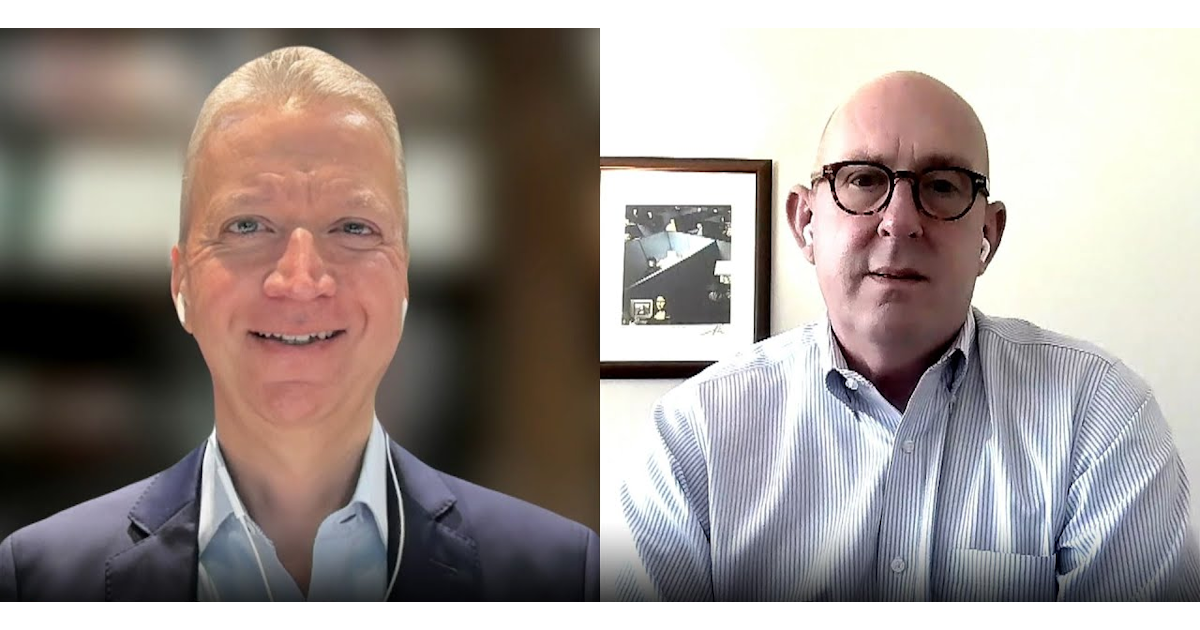
In this CUBE Conversation, theCUBE Research’s Christophe Bertrand hosts a forward-looking discussion with Jim McGann, CMO of Index Engines, and Brian Householder, senior advisor at Index Engines. The trio explores how AI is reshaping cyber resiliency.
Householder shares his perspective on AI’s growing role in bolstering enterprise defenses, emphasizing how intelligent systems are critical in proactively mitigating cyber threats. His experience as a senior advisor offers valuable context on integrating AI across digital ecosystems to support operational continuity and data protection in increasingly complex environments.
McGann highlights how strategic partnerships enhance cyber resilience, particularly as organizations confront rising data threats. Bertrand draws out key insights on industry trends, best practices and infrastructure readiness, framing the conversation around practical strategies for securing enterprise data. Together, they underscore the urgency of AI-driven solutions in today’s evolving cybersecurity landscape.
Forgot Password
Almost there!
We just sent you a verification email. Please verify your account to gain access to
Index Engines on Cyber Resiliency. If you don’t think you received an email check your
spam folder.
In order to sign in, enter the email address you used to registered for the event. Once completed, you will receive an email with a verification link. Open this link to automatically sign into the site.
Register For Index Engines on Cyber Resiliency
Please fill out the information below. You will recieve an email with a verification link confirming your registration. Click the link to automatically sign into the site.
You’re almost there!
We just sent you a verification email. Please click the verification button in the email. Once your email address is verified, you will have full access to all event content for Index Engines on Cyber Resiliency.
I want my badge and interests to be visible to all attendees.
Checking this box will display your presense on the attendees list, view your profile and allow other attendees to contact you via 1-1 chat. Read the Privacy Policy. At any time, you can choose to disable this preference.
Select your Interests!
add
Upload your photo
Uploading..
OR
Connect via Twitter
Connect via Linkedin
EDIT PASSWORD
Share
Forgot Password
Almost there!
We just sent you a verification email. Please verify your account to gain access to
Index Engines on Cyber Resiliency. If you don’t think you received an email check your
spam folder.
In order to sign in, enter the email address you used to registered for the event. Once completed, you will receive an email with a verification link. Open this link to automatically sign into the site.
Sign in to gain access to Index Engines on Cyber Resiliency
Please sign in with LinkedIn to continue to Index Engines on Cyber Resiliency. Signing in with LinkedIn ensures a professional environment.
Are you sure you want to remove access rights for this user?
Details
Manage Access
email address
Community Invitation
Brian Householder & Jim McGann, Index Engines
Explore artificial intelligence (AI) and cyber resiliency in the enterprise landscape. This compelling discussion features Brian Householder of Hitachi Vantara, president of the digital infrastructure business unit, and Jim McGann of Index Engines Inc., vice president of strategic partnerships. This CUBE Conversation, hosted by Christophe Bertrand of SiliconANGLE and theCUBE, examines the intricate relationship between AI and cyber resiliency.
With extensive experience as a senior advisor, Householder explores AI's transformative impact in the enterprise sector, particularly concerning cyber resilience. McGann shares insights into strategic partnerships and their critical role in enhancing cybersecurity. Bertrand, a principal analyst at theCUBE Research, navigates the discussion by highlighting essential trends and practices within digital infrastructure.
Viewers can anticipate key insights into the proactive use of AI against cyber threats, emphasizing the importance of rigorous data integrity strategies, as discussed by Householder and McGann. The conversation serves as a stark reminder of the evolving cybersecurity landscape, underscoring the necessity of AI-driven solutions for robust data protection, according to Bertrand.
AI-Driven Growth Leader in Data, Analytics & IoTIndex Engines
Jim McGann
Vice President Strategic PartnershipsIndex Engines Inc.
Christophe Bertrand
Principal AnalystSiliconANGLE & theCUBE
HOST
In this CUBE Conversation, theCUBE Research’s Christophe Bertrand hosts a forward-looking discussion with Jim McGann, CMO of Index Engines, and Brian Householder, senior advisor at Index Engines. The trio explores how AI is reshaping cyber resiliency.
Householder shares his perspective on AI’s growing role in bolstering enterprise defenses, emphasizing how intelligent systems are critical in proactively mitigating cyber threats. His experience as a senior advisor offers valuable context on integrating AI across digital ecosystems to support operational...Read more
>> Hello, everyone. Welcome to this Cube conversation. We're going to be talking about cyber resiliency and AI. It's a fascinating combination of topics. My name is Christophe Bertrand. I'm the principal analyst here focused on cyber resiliency at theCUBE Research. I am joined today by old friends from Index Engines. So first, Brian Householder, who's a senior advisor. Hello, Brian.
Brian Householder
>> Hi. Good to see you, Christophe.
Christophe Bertrand
>> And Jim McGann, CMO at Index Engines.
Jim McGann
>> Hey, Christophe. Good to see you again.
Christophe Bertrand
>> Well, it's great to have both of you. We have a number of topics we want to discuss, but Brian, let's start with you. What do you do as a senior advisor?
Brian Householder
>> Yeah, so I was at Hitachi for a number of years. Obviously, Christophe, that's where we worked together, and since then, I've been doing advisory board work and doing a lot in enterprise AI, say for the last 18 to 24 months. And so I work with Index Engines, a number of other companies. I work in private equity as well, just really looking at the landscape, trying to understand where AI is going, specifically around how it's affecting the enterprise. And so certainly very interested and the reason why I partnered up with Tim and Index Engines was really around how they're actually out there solving that problem when it comes to the resilience part of those areas.
Christophe Bertrand
>> Excellent, and there's plenty to cover. And Jim, tell us about what do you do every day? What does a typical day look like for you?
Jim McGann
>> A typical day is very non-typical, but I'm responsible for the strategic partnerships. So at Index Engines with our CyberSense product today, we sell through partnerships. We have a number of partnerships out there, and being able to nurture those partnerships as well as marketing and education about what we're doing with our CyberSense product, which is based on the AI platform, which is something that we're going to be talking about today.
Christophe Bertrand
>> Great. And so let's get into the topic at hand here, cyber resiliency. Index Engines, you were a sponsor participant of the Cyber Resiliency Summit. Definitely you have a very interesting solution that really helps with the recovery part of it, and there's a lot to cover around AI as well. And there is really a conflation or a convergence of markets between AI and AI as a feature, really a capability to support better cyber resiliency. As a matter of fact, Brian and I were talking earlier, it's billions and billions of dollars in terms of market size and growing fast. So this technology is really fundamental because it helps solve a big problem, so let's talk about the problem first. Why do we need cyber resiliency? And I'll tell you, we just did a research here. It's going to be published soon. I'll just hint at some of the results, but essentially, most organizations when it comes to their critical workloads are not well protected at all. Very few come even close to that magic 90% plus. It's a very small number, so we'll cover that soon in the next few weeks, which means that data is exposed, the infrastructure is exposed. So maybe starting with you, Brian, what have you seen in terms of examples of the type of consequences that come with essentially not being cyber resilient?
Brian Householder
>> Yeah, for sure. And I think the big one that I see with AI, just because I talk to a lot of CIOs and understand what they're doing for implementations, is AI is the force multiplier and it's the force multiplier for the good or bad actors in terms of what's happening there. So the attack surface, the attack vectors, all of those things are really becoming much, much, much greater, and so I think that's really the challenge that most of them have. I even see it when it comes to AI deployments for enterprises. The biggest thing that they're worried about is how do I actually have good security and good governance? And so I think that's the big challenge. I was talking to the CIO at one of the largest cybersecurity companies and he is like, "Brian, in the past, we have bad actors doing bad things. Now you have bad actors using AI and agents doing bad things, and it just becomes even that much more complicated." And so I think to your point around infusing AI, really, you need to have AI as a good defense in terms of what you do on the prevention upfront, but also when something happens because it naturally will occur, how do you defend on that at the back end as well?
Christophe Bertrand
>> Yeah, absolutely, and that's really using AI to combat AI attackers. And of course, there are so many different facets here. I want to be very focused here in our conversation on the fact that if you don't use AI in your solution or your cyber resiliency strategy, you are already behind. So it means you have to use vendors, work with partners who actually understand this and are developing the type of capabilities that are needed. So Jim, you spend a lot of time with customers. Do you have a couple of examples on what you've seen and how you've been able to help with recovery in difficult times?
Jim McGann
>> Yeah. AI, you're a hundred percent right, you made a number of really good points, Christophe, is we know the bad actors have embraced AI. I don't have any data on this but I suspect that they've embraced it more aggressively than the enterprise has, and customers just struggle with the recovery. And if you read about cyber attacks, the biggest issue they have is how do I know where my clean data, my good data is? How do I know what to recover into production and resume normal business operations? And I think if they think that their disaster recovery platforms are going to do that, they're mistaken. We have customers, there are some good examples on our website, but we have customers that have not only recovered but minimized data loss, and I think what they do is they have a data cyber resiliency strategy, but a data integrity strategy as well. So not only are they protecting data through snapshots or backups or whatever they're doing, but they scan the data for integrity purposes. So I know when I talk to customers, the before customer is the ones you go into and say, "What are you going to do?" This kind of tabletop exercise kind of thing. So you get attacked, what's your first thing that you do? What do you do? And if you're talking to the security folks, they're like, "Well, I call the data protection folks and have them recover." It's like, well, what happens if that's wiped out? Then it's like, "Well, we go to the storage guys." So they really don't have a strategy in place. When a customer, a Canadian customer I was speaking with says that they have a isolated vault through Dell with our CyberSense product that gets scanned every day, he goes, "Every morning, I get a report from the vault that says the data was scanned, it's clean, it's good and it's recoverable. It has integrity." And he goes, "I go about my day. It's the best part of my day. I know I have a confidence."
So I think part of cyber resiliency is about trust in data, trust that you have good data, because that's what keeps a business going, whether it's an Epic or healthcare database with records in it, or whether it's running your financial systems. That's the most important point, is you can try to keep them out, but making sure you have a clean copy data is critical.
Christophe Bertrand
>> Right, absolutely. And the one thing I will quote from our recent research, just general hint of what's coming, is we have evidence now that most people, whether they're in IT or cyber, these were the people we talked to, will actually rank AI technology as a key component of their cyber resiliency approach from a technology standpoint. Actually neck and neck with what? Backup and recovery, right there at the top. Of course, cyber tools are key as well, but the point I want to make is it's really absolutely critical now to be considering AI in your cyber resiliency strategy. And I'd like to explore that a little further and maybe ask essentially, and Brian, maybe let's go to you, how is AI actually effective in detecting corruption by bad actors, and how is it really helping to minimize this impact?
Brian Householder
>> Yeah, I think the ones that are leveraging AI in the best way possible, that's helping with threat detection, like automated responses, just really having a chance to get a better handle on those things. And so all the security firms are trying to do that upfront, monitoring. But to go back to what Jim said earlier, I think the key one here is the enterprise needs to have a gold copy of their data, and it's not just one copy. They need to have multiple versions of that gold copy of their data. And in the past, that would be fine. Okay, great. You protect it, you make sure it's offsite or what have you. Now you have to make sure it actually hasn't been corrupted and it hasn't been ransomware or encrypted or partially encrypted or all these different attack vectors that now occur. And so I think that's the critical one where AI, that I think you mentioned in your survey, it sounds like where people are starting to realize, "Okay, that gold copy, I'm not sure if it's a gold copy."
And then the second question is more a matter of I don't even know if that gold copy is good or not, and then you go through the whole process around when you get attacked or when an event actually occurs, how do you recover and where is that gold copy of data? So I think that's a struggle right now for a lot of the enterprise, and certainly those that are embracing the AI technologies, the ones that can actually have great confidence that they have a cyber resilient infrastructure. So it needs to really be all the way up and down the infrastructure stack. That's really what's going to help them be successful when an event occurs, because it's going to happen. We know all these things happen mainly due to human error. I think it was best described to me as really smart people doing silly things or not so smart things, and that's just usually what ends up happening. And I think as AI gets more and more, what I'm seeing is actually the sophistication is getting more and more. We see it now with some of the deep fakes, but this is just the tip of the iceberg of what we're going to see. It's not just phishing anymore. Now, it's 3D phishing, and the example I heard from this CIO at one of the security firms is you have these multiple different versions of fishing that occurs, including the situation where a CEO reaches out to his CFO to wire some money, which sounds like standard phishing. Then the CFO initiates a video call with the CEO to confirm the wire, which he did, and it was all 100% phishing. And that's I think where we're going in terms of the customization and the sophistication. Right now, it's relatively basic, but I think pretty soon, it's going to be a significant threat that you need to make sure your copies of your data are really the right copies, and they're ones that haven't been corrupted,
Christophe Bertrand
>> Right. Well, we're past the point of your boss sent you an email to go get some sort of gift card. This is pure impersonation, totally made up fake people, totally AI driven, and you have to match that sophistication. And really, the only way to do this is to go apply ML and AI into the data protection infrastructure and the cyber resiliency infrastructure, and that's against the backdrop of teams maybe not collaborating, to your point earlier, Jim, that well between IT and cyber or having different perceptions on who's doing what. So you mentioned tabletops, you mentioned those type of preparation exercises, which maybe great group therapy, but what do you actually do in the technology itself to go really understand what type of bad things are happening in the data? How do you automate, how do you do this more importantly at scale? So Jim, tell us a little bit more about what you do in your labs at CyberSense. How do you really help customers stay on top of the current threats and be ready for the next one? Because there's going to be a next one. It's only a matter of time.
Jim McGann
>> Yeah, there is. So we've been leveraging AI for many, many, many years, before it was really cool, before every vendor hopped onto the AI bandwagon. And we learned early on that when we started doing research to see what the bad actors are doing, if you're going to go to war or even go to play any kind of baseball or any sport, you study what the competition is doing and how they're acting and what they're doing. That's the way you win. So we started doing research on the variants that the bad actors were using and what they were doing to data. Back in the early days, way back 5, 6, 7 years ago, it was just bulk encryption. It was basic encryption using basic encryption algorithms. Those days are over. They're far more sophisticated. So in the research that we were studying, most of it was wrong. They weren't really understanding what they were doing. So we quickly learned that the only way to be accurate here and to provide confidence is to detonate ransomware. So we see 800 to thousands of new variants every day. They're just iterations. And now with ransomware as a service and AI, that's turned up, turned up significantly. So we went in and a customer is doing an evaluation. We went into an AI engine and described what a ransomware needs to do. It kicked out the code to that and it was pretty good. So they definitely amped up their game. We're seeing hundreds if not thousands of variants a day. We download them, we detonate them. We have an isolated network obviously, detonate them, and we study the behavior. There's about 30 plus generalized classification of patterns of what they're doing to the data. It's well beyond encryption. It's very sophisticated what they're doing to databases, what they're doing to files. Study that and use that to train the machine learning algorithms to make sure customers can detect those patterns within their data in their environment. So it's using AI to do the heavy lifting, to look at the data on a continual basis, and in a highly trained environment, say that pattern of what's happening to your data is bad actors versus your normal users. Only AI can do that. It's only AI. Without AI, that would be impossible. The organizations would just not understand what's happening to the data, and then we'd spend a lot of time figuring out what happened. And you don't want to be on the end of that phone call if you're in the IT organization from the CEO saying, "What happened? When can we recover? What's the impact?" And your answer being, "I don't know, I need to get back to you." It's like, "This got affected. We've got a clean copy. It'll take me about this long to recover and we should be good." That's the right response. It's the compressed tabletop exercises, that's what you want to get to.
Christophe Bertrand
>> Exactly. And I think what you've just described actually is fascinating because you may be one of the few organizations that actually truly leverages AI to study all of these behaviors and then turn that into a recoverability process for a variety of clients that you serve in the enterprise space and beyond. So I think that's, again, a very important point for our viewers, that leveraging AI in a context of recoverability has become the absolute key to success. If your solution is not doing that or if you don't have something like this as a process in your recoverability capabilities, you are not only missing out, you are probably exposing yourself significantly. As a matter of fact, we know that traditional RPOs, so recovery point objectives and recovery time objectives, from the good old days when you could predict the disaster and predict a recoverability sequence, those are gone, and now we're in a different world. Brian, you mentioned this notion of force multiplier of AI. What other areas of data protection do you see AI helping with?
Brian Householder
>> I think if you look at AI, AI is helping or affecting or changing pretty much most of the business models in most enterprises. They just may or may not know it yet. I think what I see is most of them are experimenting with it. I think if you're going to be talking about AI when it comes to security, what I've noticed is most enterprises are spending a lot of time and focus and effort on all the tools for proactive monitoring and management, which makes sense, right? We need to obviously catch the bad actors ideally before they do anything. I think they're starting to understand, to your point around and what Jim was talking about, is there's really almost no way for you to be able to... These variants happen so quickly, the derivatives happen so quickly, and now when you add in compute power and AI to be able to go out there and do these kinds of attacks, well, you're going to get affected. And so I think now, more people are focused on, "Okay, how do I make sure I have a clean or gold copy of my data? How do I actually then go out there and figure out..." What's interesting for me too is the time from when you have been affected to then figuring out where the clean copy is is a huge amount of time, and I don't know, Jim, if you could talk about that. But it was very interesting for me, more a matter of some of these attacks that end up occurring, it may take you weeks to find the right copy of data as opposed to actually knowing where that is. So I think people are starting to get a little bit more understanding of that, but I think that's really where the next phases of investment need to occur, because it's going to happen. With human error, with all the agentic workflows that are coming around, all this other stuff that's happening, you're going to get affected or you're going to get attacked. It's a question of how do you respond?
Christophe Bertrand
>> Absolutely, and I see agentic AI actually potentially becoming a risk, sort of killing its own, so like a bad batch process in a sense. And so there's going to be plenty I'm sure in the future we'll talk about. So Jim, maybe in closing, how do I gain access to CyberSense? How do you go to market?
Jim McGann
>> As I mentioned, we go to market through a number of different partners. Dell has a cyber recovery isolated vault that's been very successful. We have thousands of deployments globally, including some of the largest organizations out there. We also have partnerships with IBM with their safeguarded flash storage environment in production, so snapshots of data being scanned. We have partnerships with Infinidat as well. Again, snapshots with their InfiniSafe product. And then just last week or recently, Hitachi just announced a partnership with CyberSense. So our goal is to provide the ability to have data integrity across both primary and secondary storage environments, and to really aid in the recovery, have a smarter recovery. Your backup software is one piece of it, but having the integrity of the data is critical. Because I've talked to customers that say that if they're down for five days, they're out of business, and if you look at some of the stats on what is the recovery time, it's more than five days. So you can do the math there, and they're in trouble. And when we talk to those customers, it does get to board level decisions that will fund that and say, "You need to do this," and it's not just a checkbox. And I think there's some good documentation. You were doing some of the research on the NIST cybersecurity model. That's an awesome template and customers are looking at that. And what we see with our partners and our customers is what do we do? And I think we need to take them down the road of cyber resiliency and help them with that strategy, and the NIST framework is great. Vendors, if you look at a lot of the vendor positioning is great, so any one of those vendors and more to come in terms of how you deploy CyberSense today. But there are thousands of customers deployed and many recovering from attacks on a regular basis.
Christophe Bertrand
>> Great, and I'm sure we'll get a chance in the future to speak to some of them. I'd love to be able to do that because I know you have great stories and your customers have great stories to tell by having leveraged all of these advanced technology you've put in play to really protect, as you pointed out, data, and more importantly, the integrity of the data. Well, gentlemen, thank you so much for joining us today. Brian, thank you.
Brian Householder
>> Thanks, Christophe. Great seeing you.
Christophe Bertrand
>> And Jim, thank you very much as well.
Jim McGann
>> Thanks, Christophe. Always a pleasure.
Christophe Bertrand
>> And to our viewers, thank you for joining us. My name is Christophe Bertrand, principal analyst here at theCUBE research, and we'll see you on the next one.