We just sent you a verification email. Please verify your account to gain access to
IBM: Future-Ready Storage That Redefines the Boundaries of the Data Center. If you don’t think you received an email check your
spam folder.
Sign in to IBM: Future-Ready Storage That Redefines the Boundaries of the Data Center.
In order to sign in, enter the email address you used to registered for the event. Once completed, you will receive an email with a verification link. Open this link to automatically sign into the site.
Remind Me
Enter your email below and click "Submit" to receive a 24 hour email reminder for IBM: Future-ready storage that redefines the boundaries of the data center.
Thanks for confirming your account. Now you can access IBM: Future-Ready Storage That Redefines the Boundaries of the Data Center with this email address.
I want my badge and interests to be visible to all attendees.
Checking this box will display your presense on the attendees list, view your profile and allow other attendees to contact you via 1-1 chat. Read the Privacy Policy. At any time, you can choose to disable this preference.
Select your Interests!
add
Upload your photo
Uploading..
OR
Connect via Twitter
Connect via Linkedin
EDIT PASSWORD
Share
Forgot Password
Almost there!
We just sent you a verification email. Please verify your account to gain access to
IBM: Future-Ready Storage That Redefines the Boundaries of the Data Center. If you don’t think you received an email check your
spam folder.
Sign in to IBM: Future-Ready Storage That Redefines the Boundaries of the Data Center.
In order to sign in, enter the email address you used to registered for the event. Once completed, you will receive an email with a verification link. Open this link to automatically sign into the site.
Sign in to gain access to IBM: Future-Ready Storage That Redefines the Boundaries of the Data Center
Please sign in with LinkedIn to continue to IBM: Future-Ready Storage That Redefines the Boundaries of the Data Center. Signing in with LinkedIn ensures a professional environment.
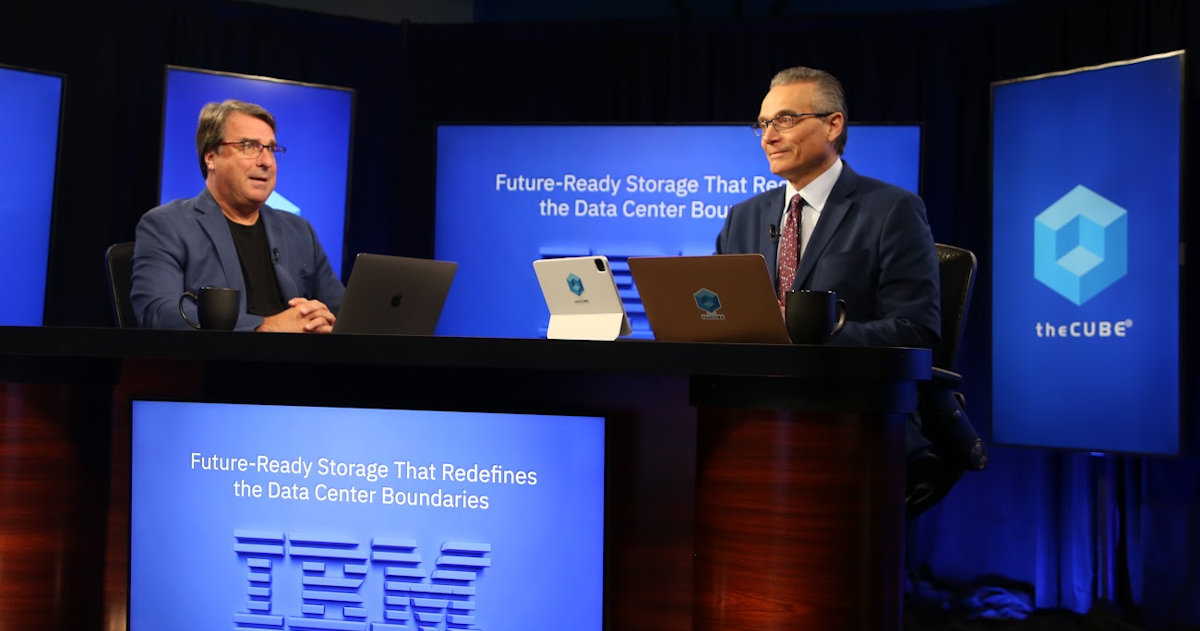
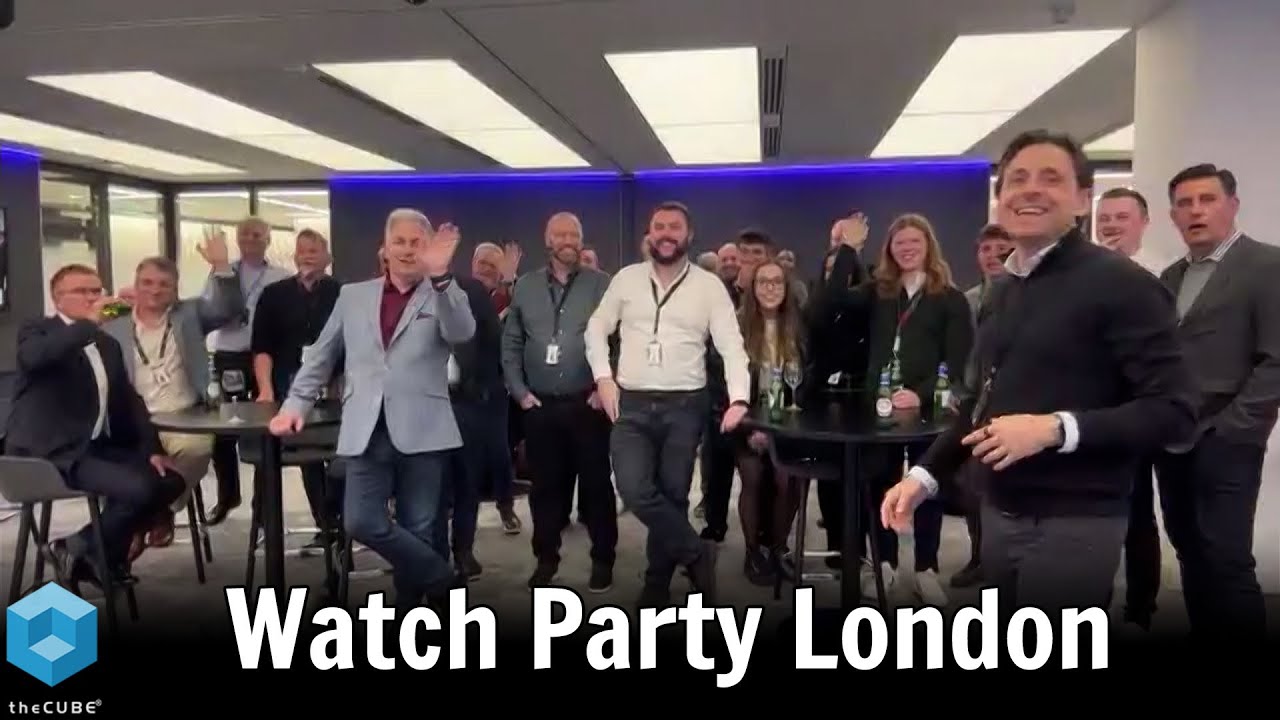
>> Hello, everyone. Welcome to this CUBE special presentation live event with IBM here in our Palo Alto Studios. I'm your host, John Furrier with Dave Vellante. We've got a great lineup for the next few hours, the future-ready storage that's redefining the data center boundaries, here with SiliconANGLE with watch parties in Atlanta, London, Istanbul. Dave, great to kick it off, we've got the next few hours we're going to dig into what's going to be redefining the boundaries of the data center with storage. to be great lineup, great topic.>> John, I love these super studios and we bring in all the innovators and we talk about what's changing in the market. And the big trend in storage is, I think, anyway, we got to bring AI to the data. Right now, a lot of the logic and a lot of the protection lives in the application. And you know, developers, you go to CUBECon all these shows, developers, they have to figure out now how to do security and all this other stuff. Shift left, we always hear about that. I think things are changing where you're bringing the AI to the data. Now, the challenge is, John, not to get too market technical here, but the two-year note hit almost 5today, 4.987. Why does that matter? Because even though you have all this AI tailwind, the reality is IT budgets, they're not growing. And every time the two-year goes up, IT budgets get tighter and tighter and tighter because CFOs are concerned about discretionary spending. Why that important? It's important because customers want infrastructure that is very efficient, that's low power, and it can take them through the future. So they don't want disruption. And for years what they've done is they've had this box mindset, they install a box, they depreciate it over five years, then they rip it out, they bring a new one in, and it's a highly-disruptive process. So, what people want is that cloud-like operating model, on-prem, or in hybrid, or they want the ability to super cloud it, to connect across clouds.>> And the thing about today, the presentation is that underlying infrastructure is the action is. And if you look at the AI demand right now, the developer on the AI side is at an all-time high. But it's all about the data and the data has to run on the infrastructure. And so the infrastructure matters. What's under the hood is super important. And we look at storage and servers. This is where the action is, and this is going to be the pace car that's going to set the agenda for the industry. And having the application, logic, and protecting the data, all kind of managed and software defines being critical. And of course, ransomware, cyber attacks, this is all happening at the same time. So, you've got the nexus of innovation, the nexus of infrastructure expansion and evolution, and all in the backdrop of massive security threats. So, trying to run that in parallel is going to be the channels of the industry. And this is what all the top companies like IBM are working on. This going to be the topic for today. Future-ready storage is key because that's where the data is, that's going to redefine what the future of the data center is going to look like. And ultimately, the AI factories and the data centers, that's going to be the key.>> When you mentioned ransomware, the big trend is data's everywhere. So, data's physically distributed, but people want to be able to logically manage it. And the other thing is, look, if you can bring ransomware protection and detection to primary storage, then that just gives you a one-up because everything's so compressed these days in terms of the adversary. They're so capable, they're in, they steal, they wreak havoc and they're out. to the extent that you can identify anomalies in real time or close to real time at the source of the data, that's a big win for customers.>> For the 14 years we're doing theCUBE, we've been in storage and watching storage evolve. The storage is the same game and it's always changing, but it's all about the data. And if you look at how that's managing with the cloud for instance, that's a collection of storage devices still storing the data. Now, that AI's here, it's the same game, Dave. You got to store things, you got to be fast, agile. And more importantly, you got to deliver SLAs, latency's critical to get that data into the AI system. So, you're going to see a massive script flip when it comes to storage, and that's why it's being redefined. It is a true evolution. And the developers are all waiting there, waiting for the performance.>> What hasn't changed is people want storage to be rock solid, lightning fast and dirt cheap. Now, those three things, how to get there has changed. It used to be disk drives would break all the time. Now, rock solid means you have to protect the data and you have to protect against ransomware attacks. Lightning fast, if you're going to bring AI to the data, that's a different workload. And dirt cheap, okay, well, power is a huge issue now. And as I was mentioning before, non-disruptive migrations can dramatically lower those hidden costs. And so, the nature and the parameters of those three things have changed while those three things remain constant.>> Nobody wants to be caught behind. If you're too far out front, you become driftwood. You got to be on the wave. If you miss the wave, you could be out of business and I think this is the focus of why the future-ready theme is relevant because everyone wants to be on the wave right now, because if they miss it, the consequences could be really quantified as we're out of business potentially. So, everyone's trying to do it in real time without disruption, and that's where it's hard. Storage, servers, infrastructure is hard. You can't just get that done overnight. So, managing that's going to be key, and that's why I like the story from IBM.>> Yeah, I agree, John. And we're going to be covering this all day today. We've got watch parties going on from all over the world. Explain what we can expect there.>> So, we're going to have people physically located, kind of like storage, you physically distribute the action and logically manage, as we say. We're going to have watch parties in Atlanta, London, and Istanbul. We've got folks out there, shout out to you, and other places. So we're broadcasting all this. We've got people gathering. That's where the community is the network effect of this community, Dave. So, it should be really great. And we'll take calls from them, we'll take questions and feel free to tweet at us theCUBE, and we'll take all your calls and have a great time.>> Yeah, excited to be here with you, John. Thanks for hosting and really look forward to the innovations that we're going to hear.>> Well, let's kick it off. We'll be right back with our next guest after this