This episode presents a discussion of HPE Agentic Trend Analyzer with Aible and the HPE Unleashed program, exploring agentic artificial intelligence, abbreviated AI, validated private cloud AI infrastructure and enterprise decision intelligence. The conversation highlights trend detection, deterministic pattern analysis and explainability for enterprise deployments.
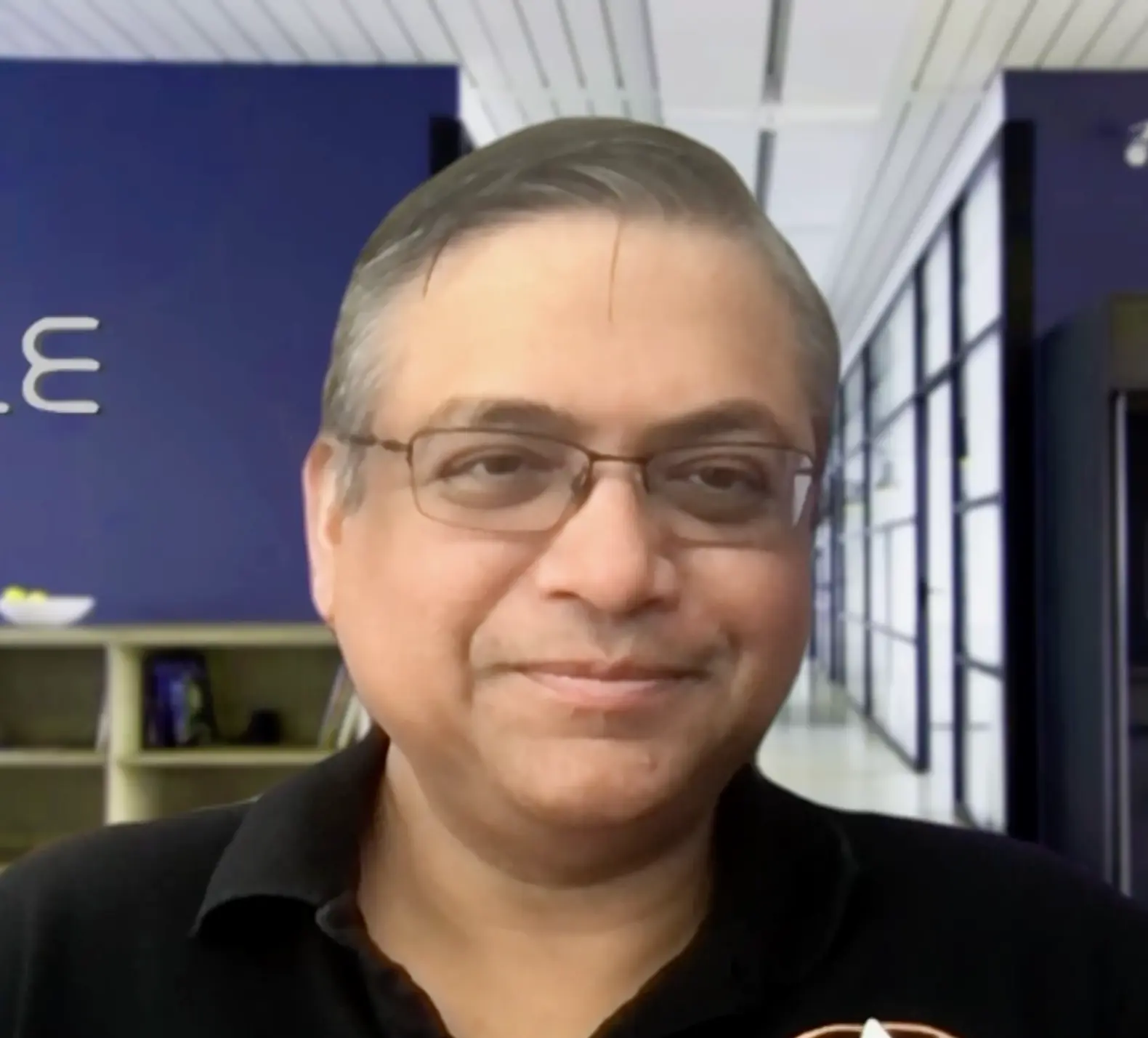
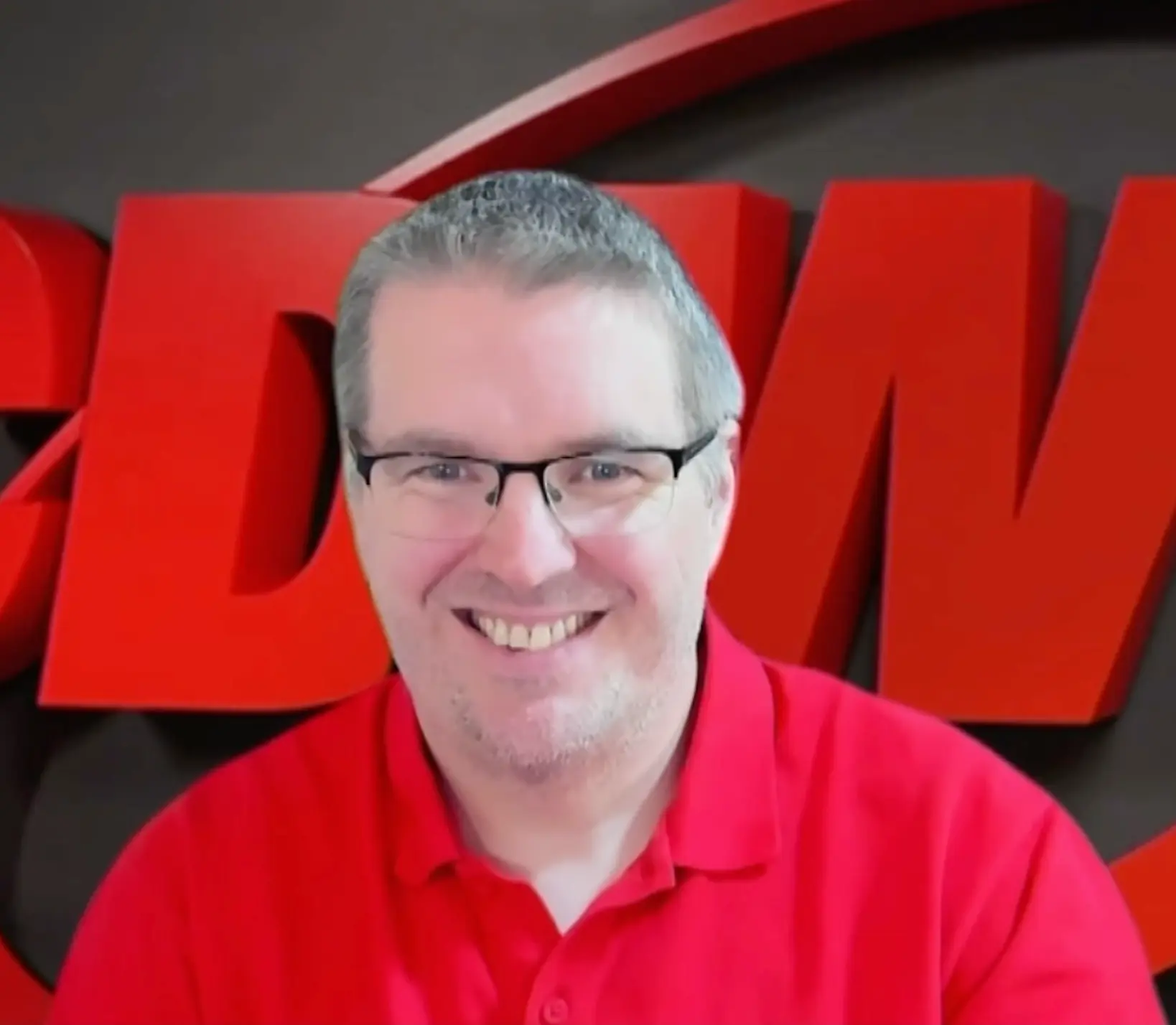
Rob Strechay of theCUBE Research, director and principal analyst, hosts the discussion. Robin Braun of HPE, vice president, AI business development, Hybrid Cloud; Arijit Sengupta of Aible, chief executive officer; and Rob Sims of CDW UK & International, chief technologist, join the panel to explain how agentic AI discovers emerging risks and opportunities across large enterprise datasets.
The discussion explains Trend Analyzer capabilities, deterministic pattern detection and explainability, and deployment on HPE Private Cloud AI with NVIDIA support. The hosts guide a practical conversation about moving solutions from proof of concept to production-ready AI and the operational considerations for enterprise adoption.
Deterministic trend analysis surfaces actionable signals across millions of variable combinations in minutes, reducing time to insight and enabling earlier interventions. Sengupta explains that the approach avoids model hallucination and guarantees calculation traceability. They describe validation and traceability practices for production deployments. Braun highlights HPE Private Cloud AI and NVIDIA for secure on-prem deployments. They emphasize enterprise grade security and compliance. Sims emphasizes reduced risk and faster time to value. They note the operational benefits for IT organizations and the importance of explainable AI in decision intelligence.
Forgot Password
Almost there!
We just sent you a verification email. Please verify your account to gain access to
HPE Unleash AI Momentum Series. If you don’t think you received an email check your
spam folder.
In order to sign in, enter the email address you used to registered for the event. Once completed, you will receive an email with a verification link. Open the link to automatically sign into the site.
Register for Unleash AI 2025 Momentum Series
Please fill out the information below. You will receive an email with a verification link confirming your registration. Click the link to automatically sign into the site.
You’re almost there!
We just sent you a verification email. Please click the verification button in the email. Once your email address is verified, you will have full access to all event content for Unleash AI 2025 Momentum Series.
I want my badge and interests to be visible to all attendees.
Checking this box will display your presense on the attendees list, view your profile and allow other attendees to contact you via 1-1 chat. Read the Privacy Policy. At any time, you can choose to disable this preference.
Select your Interests!
add
Upload your photo
Uploading..
OR
Connect via Twitter
Connect via Linkedin
EDIT PASSWORD
Share
Forgot Password
Almost there!
We just sent you a verification email. Please verify your account to gain access to
HPE Unleash AI Momentum Series. If you don’t think you received an email check your
spam folder.
In order to sign in, enter the email address you used to registered for the event. Once completed, you will receive an email with a verification link. Open the link to automatically sign into the site.
Sign in to gain access to HPE Unleash AI Momentum Series
Please sign in with LinkedIn to continue to HPE Unleash AI Momentum Series. Signing in with LinkedIn ensures a professional environment.
Are you sure you want to remove access rights for this user?
Details
Manage Access
email address
Community Invitation
HPE AI Unleashed with Aible
This episode presents a discussion of HPE Agentic Trend Analyzer with Aible and the HPE Unleashed program, exploring agentic artificial intelligence, abbreviated AI, validated private cloud AI infrastructure and enterprise decision intelligence. The conversation highlights trend detection, deterministic pattern analysis and explainability for enterprise deployments.
Rob Strechay of theCUBE Research, director and principal analyst, hosts the discussion. Robin Braun of HPE, vice president, AI business development, Hybrid Cloud; Arijit Sengupta of Aible, chief executive officer; and Rob Sims of CDW UK & International, chief technologist, join the panel to explain how agentic AI discovers emerging risks and opportunities across large enterprise datasets.
The discussion explains Trend Analyzer capabilities, deterministic pattern detection and explainability, and deployment on HPE Private Cloud AI with NVIDIA support. The hosts guide a practical conversation about moving solutions from proof of concept to production-ready AI and the operational considerations for enterprise adoption.
Deterministic trend analysis surfaces actionable signals across millions of variable combinations in minutes, reducing time to insight and enabling earlier interventions. Sengupta explains that the approach avoids model hallucination and guarantees calculation traceability. They describe validation and traceability practices for production deployments. Braun highlights HPE Private Cloud AI and NVIDIA for secure on-prem deployments. They emphasize enterprise grade security and compliance. Sims emphasizes reduced risk and faster time to value. They note the operational benefits for IT organizations and the importance of explainable AI in decision intelligence.
>> Organizations are surrounded by data, but the real challenge is identifying which signals actually matter, especially in a world where market conditions, supply chains, customer demand, and operational realities can shift quickly and unexpectedly. Today we're going to discuss AI-powered trend detection for enterprise decision making with HPE Agentic Trend Analyzer with Aible, delivered through HPE unleashed AI program powered by HPE and NVIDIA infrastructure. This is going to help organizations continually detect emerging risks and opportunities across data using secure, explainable, production-ready agentic AI. To help me break this down, I am joined once again by Robin Braun, who's the VP of AI Business Development Hybrid Cloud with HPE. Welcome on board, Robin. Then I also have Arijit Sengupta, who's the founder and CEO of Aible. Welcome on board, Arijit. And Rob Sims, who's the Chief Technologist CDW UK and International. Glad to have you all on board with me.>> Glad to be here.
Rob Sims
>> you.
Rob Strechay
>> So, Robin, let's start with you. Why is trend detection becoming such a critical business capability right now?>> Thanks, Rob. We're so incredibly excited about this solution. When you think about how quickly things are changing dynamically on the global stage, from logistics, from supply chain, from all of the changes that we see on a minute-by-minute, day-by-day basis, how do businesses more proactively manage? And that's where I get so excited about this solution, because we talk about querying data, but if you don't know the question to ask, it's really hard to be as proactive as you need to be. What I love about Trend Analyzer is rather than having to guess, it's allowing us to be able to find that signal and the noise. There's so much data. There are all of the different reports about how much new data is coming in from the edge, and is coming in and being created in the world. How can a business harness that to be able to respond in a business critical, time critical way to be able to optimize how they can navigate these shifting waters? And so that's where I think it's so important, is that there are early detection signals out there, but how can we help the business find it across the millions of rows of data that they have being reported every day? And that's why we're so excited about Trend Analyzer with Aible and CDW.
Rob Strechay
>> And I love this because to me this is really... The getting through the noise to the signal is so important for organizations, and I think this is really where agentic AI is... one of the superpowers that it has. Arijit, what are organizations missing when they rely on traditional dashboards and analytics?
Arijit Sengupta
>> Yeah, so fundamentally think of dashboards and analytics as backwards-looking stuff. I set up a dashboard saying, "These are the things that'll matter in the future," and I look at that dashboard over time, or I go in with a question. And this was the first generation of even GenAI was doing natural language querying. I come up with a question and the AI answers that. Well, the fundamental problem here is you're putting that enormous power of AI behind human ability to ask a question. You're saying, "Hey, human, you come up with..." And how many questions can a human come up with, 50, 100? We just did a project with a major retailer where we looked at five billion rows of data across 10 million variable combinations in 10 minutes. You're not going to do anything like that. And what is happening in the market right now with things changing, another different retailer we were working with, we found patterns in their customer purchase behavior that was showing up in certain cities, and then slowly over time showing up in other cities. In just one city, that pattern was worth $20 million. So, if you can detect that pattern early and see that pattern is now showing up in other cities, you can start reacting to it early. What would have happened with a dashboard is three months later, and three months too late, they would have found out that their last quarter's numbers were not so good, but by that time they can't do anything about it.
Rob Strechay
>> I totally agree, and I think one of... The speed at which people have to make these decisions, that decision making is the importance of analytics and what had been BI. But Rob Sims, you're really at the point where the rubber meets the road with customers. And CDW is out there. What are you hearing from customers about the pressure to react faster to these changing business conditions?
Rob Sims
>> Yeah, thanks, Rob. And the stories there around the amount of data we can process in the time we can process it is just... It's mesmerizing compared to where we were six months ago, two years ago, three years ago, et cetera. But on the background that Robin mentioned, macroeconomic challenges, supply chain challenges around memory and storage, but even before that, just the ability to be able to leverage the decision making capabilities that exist within data to deliver the best experience for our customer's customers, has been absolutely top of mind, well, for years. The data problem in inverted commerce is not a new one, but the promises over the last few years of how we're going to solve that have really come to life in the last six months, 12 months, a year with solutions like Aible, operationalized through things like PCAI and HP. And that really changes the conversation then to, "We really can give you the insights to make better decisions, to deliver better services." And that's the reality piece that the customers want to hear, not the potential, not the pie in the sky, but the actual real stories, like we just heard then of an actual customer, saving money or making money or reacting faster. And that's the exciting part about this really.
Rob Strechay
>> Could not agree more. I think when you start to look at all of this, and it's really about the outcomes. But Arijit, what changes when organizations continuously detect emerging patterns instead of waiting for reports or building those reports, like you said, getting in front of the AI?
Arijit Sengupta
>> It's that actionability component, right? What happens is you're not just getting a scorecard after the fact. Let's take a real example. One of the larger health providers, this is a hospital system, we were looking at all of their payments information, and we started finding that certain payer behavior had changed. And it wasn't in general, right? It was for these specific circumstances, these specific payers' behavior has changed. That is much more actionable because, on the call itself, we had the finance guys there, we had some operational guys there, they started throwing out hypotheses, like, "Hey, has the policy changed? Hey, have we started... Did we have a new nurse doing coding? What's going on?"
And the important thing was they found a pattern, they came up with three hypotheses. We pulled in some new data while on the call, which actually invalidated two hypotheses, and a couple of days later they confirmed the correct hypothesis. But instead of going... Firstly, you wouldn't find out early enough. Secondly, testing that hypothesis takes a long time. Here, you're in that meeting. While it's going on, you're adding more data and testing more hypothesis to get to something much more quickly. If you have to leave the room to confirm patterns, that's already too late.
Rob Strechay
>> I love that. If you have to leave the room, that to me is such a critical way of looking at it. But Robin, again, we've been talking Unleash AI for a bit now, and I love it because I think it helps to unpack a lot of what's going on. How does this align with that vision that you have for HPE's Unleash AI?>> This is such a great example of what we're working with our Unleash AI ecosystem on is bringing out these value add truly full solution, customer-focused solution capabilities that allows the customer to fundamentally shift and change in such an impactful way how they're managing their business or how they're automating or how they're looking at this information. It's not that they're not looking at data today. This is just that next leapfrog of how you can use the data, not just look at the data, and use it in real time to manage your business. And that's the type of differentiated solutions that we're working to create with Unleash AI. Like Rob highlighted, being able to bring that entire package together with Private Cloud AI, being able to deliver it all with HPE, with our fantastic ecosystem, like with CDW, UK and International, and being able to package that together with such a fantastic partner like Aible, who is truly on the front lines working with customers, working with our partners to help bring impactful change and solutions for our customers.
Rob Strechay
>> Yeah, at the root of it, it is the customers. So, Rob, what outcomes are customers hoping to achieve with solutions like this?
Rob Sims
>> Yeah. And I think fundamentally, how we can get realtime data into the hands of more decision-makers faster is the fundamental foundation here because we mentioned at the start, create a dashboard, wait for team to pull some data sources together. As an exec, I might ask for some data points, and then I have to wait even a day these days, or even a week or a month, and in some cases I have a customer and have to wait six, nine, 12 months to get access to the data source. The decision's gone. The opportunity's gone at that point. So, with these types of solutions, how we can put the data in the hands of the people that need it, and almost give them that self-service capability is absolutely critical because fundamentally it's not IT or tech people that understand the business problem, it's the line of business owners that understand that, and they need that data and their insights to make the decisions there and then to actually influence something very critical for their organization.
Rob Strechay
>> Yeah, I look at it as being decision intelligence, right? It's really getting to the decision faster and the outcome. So, Arijit, why don't you walk us through how Trend Analyzer actually works?
Arijit Sengupta
>> So, there are two key components to it. One is, of course, the language model that most people are familiar with, but what is different about HPE Trend Analyzer part by Aible is that we have a deterministic algorithm that is looking at millions of variable combinations, looking for how population has shifted, so how many customers have shown up, how many trucks came by, things happening more often, and how behavior has shifted. How much did the customer spend? What did things cost? How much quantity did you sell? So, things that are on the vertical access, and things that are on the counts access, if you will. And it's looking at all of that without any preconceived notion, saying, "Where are the biggest shifts happening that are impacting my overall KPIs?" And it can do it across a wide swath of KPIs. Now, doing it this way has three very important benefits. First is the biggest problem people have had in analytics with GenAI is it takes a lot of time to set up. You got to set up all the terminologies. You got to create a nice metadata. Otherwise I can't do anything, because typically you have the human ask a question, and the AI is trying to find the answer to that question. Here, what's happening is the AI is finding millions of patterns, and then presenting it back in the language of the data, of that company's data, so the human user can easily understand and interpret it, right? We are very flexible when things are presented in our language, in our domain, right? Second part is when you have natural language querying through generative AI, it can hallucinate. And by the way, even if you have a fantastic model and you're at 95% accuracy, if you have 30, 40 calculations in a report, that's already guaranteed every report will be wrong. So, in our case, because we are using a deterministic thing, we can guarantee accuracy. And when the language model turns that into something easy to consume, we go back and double-check every calculation, every number in that report and highlight it in blue if it is true. So, if the number is highlighted, if the insight is highlighted in blue, you're guaranteed that there is no error in it, even in a regulated industry. The last part of this becomes you find that exhaustive analysis that we were talking about, humanly impossible analysis. You are not restricted to the 50 questions you came up with, because the AI found 50 million questions. And now you look at it, and you're like, "Oh, the first one is kind of obvious. I get it. I know what's going on there. The second one, whoa, that's interesting. The third one, I have no idea what just happened here. Let me add some more data. Maybe I can get some more clarity out here." Right? But you're not making people do data cleansing manually upfront. You're not asking people to do setup manually upfront. You let the AI do its job, and then the human interprets and provides feedback to make it even better.
Rob Strechay
>> Yeah. I think that that is such a key way that you talk about it, about really unpacking and finding the needle in the haystack, which really helps make those decisions faster. So, Robin, where do HPE and NVIDIA fit into this architecture?>> Well, I think there's two ways. The first is, of course, from an infrastructure perspective, we have the Private Cloud AI, which is jointly engineered with HPE and NVIDIA coming together. So, that entirely integrated AI stack that allows us to so easily and quickly stand up the infrastructure to then be able to have Aible running on top of it, and starting to get those insights pretty much just within a few days of being installed in the environment. The other part is, of course, being able to explore... expose the blueprints and then all of the supporting NVIDIA software technologies that Aible takes advantage of that we expose with Private Cloud AI, and being able to leverage that full software ecosystem that then Aible takes and drives this great intelligence on top of and with. So, I think it's that entire solution package that comes together with the shining bright light of the insights that the Trend Analyzer can then help deliver to the customer.
Rob Strechay
>> Yeah, I love that. I think, again, it's the power of validation and partnership, all through the stack, being able to bring it all together. So, Rob, why does this validated infrastructure matter for customers trying to operationalize AI?
Rob Sims
>> Yeah, great question, and I think fundamentally one of the big conversations we still have is, "I've got all these cool ideas about how to do stuff, but how do I take that into production? How do I put a framework around that that will meet my compliance requirements, my governance requirements?" Because being honest, most enterprise organizations haven't been doing this sort of stuff for the same amount of time they've been building enterprise IT or cloud environments, et cetera. So, they don't necessarily understand the blueprints and the ways of operationalizing AI in their business. So, being able to take this as a turnkey platform solution in PCAI and then a turnkey ISV solution through Aible and just point them together and go and get insights just simplifies that journey for the customer. And it just gives them that proven way to go from POC pilot to production in a way that they can be sure will deliver consistent outputs for the foreseeable future from that side of it. So, I guess just reduce risk and faster time to value at the end of the day.
Arijit Sengupta
>> And, Rob, if I may add to that, the compliance point you made is so crucial. That is why we had to do all the calculations with deterministic system, right? We work with some of the most regulated industries on the planet, and if you cannot be sure about the numbers, they cannot use it. And we also log all of that calculation in Python code, in Jupyter Notebooks, in the customer's environment. So, if a regulatory ever comes in and says, "How did you get to that number?" you don't say, "Well, this AI magically told me so." You can hand them a deterministically crafted actual set of calculations, and say, "This is the full trace back to where we got these numbers from."
Rob Sims
>> Yeah, makes perfect sense.
Rob Strechay
>> Yeah, I think that's critical as well because when you start to look across that, the AI agents aren't going to pay the fine for you and things like that or go to jail in worst cases. Arijit, let's kind of come back to you on that. What kind of business outcomes are organizations seeing? Because that's really what this is about.
Arijit Sengupta
>> Right. Interestingly, there's a consistent theme of scratching beyond the surface, right? So, what's happening is all of our customers at a top line know what's happening with their business. So, one of our customers is a big agricultural produce provider, and they knew that they're making more money, but what they didn't know was where they're making more money, where risks are beginning to show up. Like in one area, the spend has stayed the same, but the number of customers has dropped significantly. That's actually a bad sign. That means there's something bad coming your way, right? There are cases where spend has gone up and number of customers are buying is also increasing. Very different pattern. If you look at one of the largest airlines, we were looking at their data on market share, a lot of the airlines right now in Europe are cutting down flights and things like that. If you can see exactly where your market share is changing as a result, what your competitors are doing, and then come up with an optimal strategy down to the airport level... The plane type mattered, by the way. So, just because we know transportation companies are going to have a tough time right now, doesn't mean they're going to have the tough time the exact same way. So, the difference in doing something like this is you're scratching beyond what your competitors know. Your competitors know all the obvious patterns you know. How do you find the patterns your competitors do not know because you can find millions of patterns every day if you need to, so you're reacting much faster than your competitors.
Rob Strechay
>> Yeah, totally makes sense. And Robin, let's kind of go back to something what Arijit hit on a little bit there, which is: why is explainability and trust so important to enterprise adoption?>> Well, I think he did such a great job of touching on, well, first off, how they make it so explainable and trustworthy, but also to some of what's been talked about, as people are leaning in with AI, as they're looking to go from piloting playing with AI to operationalizing it. And then as you're going into something like a Trend Analyzer where you're looking for decision intelligence as you stated it, if you're going to be making decisions, you have to trust what you're making decisions on. Otherwise, that has much bigger ripple effects for both the business, and potentially your personal career aspirations. So, I believe really bringing that... AI is cool, it's amazing what it can do, it's amazing what it can see, but understanding that it's trustworthy, that it's reliable, that it stays within that regulatory and compliance envelope that you need for these industries is so key and critical and why we're so excited about our partnership with Aible. And looked at that side of the solution as well, not just the fantastic insights, but that when you got those insights and started to hear that signal and the noise, that you knew it was real.
Arijit Sengupta
>> And one thing on the trust angle, by the way, the fact that the models and the tools and everything is running inside the HPE PCAI envelope is really important here. Trust from a security perspective as well, none of these pieces are running outside your control. There are a lot of organizations that are very worried, "If my data goes to a hosted model, even if they promise not to train on it, what if it gets breached? What if it gets logged? What if something happens?" Here, nothing is leaving your control. It's staying on the trusted device from HPE.
Rob Strechay
>> So, I think this is really critical, one of the things talking around sovereign AI, and not just sovereignty being a place or a country or a region. I think that is really one of those things that has really come to light, to put it mildly. And one of the other things that has really come to light is that organizations really are trying to get from proof of concept to operational success, and really see their ROAI. So, going to Rob, and how are you seeing CDW helping customers move from proof of concept to that operational success?
Rob Sims
>> Yeah, thanks, Rob. And I think it's an interesting point because as a sort of independent technology provider to our customers, it's really incumbent on us to provide the advice and guidance that is sort of balanced against the hype and the reality, and allows them to take that journey to operational reality, at the end of the day, the ROI that you mentioned. So, we actually coined this thing that we call from AI crazy to AI nirvana, and basically it's acknowledging that there is a lot of hype and a lot of noise in the market, and actually we need to take a measure journey to something that's going to deliver value to the business, whether that's in understanding use cases and educating business leaders on the realities of AI delivery, whether it's strategy and governance services to help customers build that plan and that journey, or whether it's the platforms that they need to build on, as you mentioned, the sovereign requirements that come out of this for delivering AI inferencing at scale. I think training is one thing, but as a mass adoption play, the inferencing market is where it's at, and the sovereign nature of that is going to be absolutely critical. And I think when we take things like PCAI, Aible, the NVIDIA ecosystem, the open-source components that were in there, et cetera, it really allows customers to be confident in what's actually processing their data, where it's going, how it's being used. And that really is fundamental to how we're helping customers on that journey, and really get all the benefits that AI has been promising for the last... well, as long as you may believe AI has been around, between, what, three years and 50 years, depending on your view of the market.
Rob Strechay
>> Yeah. It's crazy how fast this is moving, and I totally agree with that, but one of the things that is powerful is the power of partnerships, so Arijit, let's talk about that. What does this partnership really enable that would be difficult independently for Aible?
Arijit Sengupta
>> Well, not just for the Aible. Think of it from the customer's perspective. This technology space is changing so fast. What are their choices? They have to cobble together a bunch of tech or they have to send their data off to somebody else. And what Aible has done with HPE with NVIDIA is we worked on the hardware stack with HPE, we worked on the software stack with HPE, we worked on the software stack with NVIDIA. We were early adopters of their models. We were early adopters of their data flywheel. All of this is pretested, pre-configured, every piece works together. So, when you're getting a PCAI solution, you click a button, it comes up on your box, and you're off and running, creating value, right? When tech changes, we do an integrated update of that solution. We are not saying, "Hey, here's a model update. Everything else is now going to break, and you got to figure it out." No, no, no. Model has changed. Some kind of a vector database version has changed, some kind of other tech has changed. Let's just test everything, make sure it works again, and now we get a consolidated update for the customer. The reason this matters is because customers don't have the time to cobble together stuff, and the CDWs of the world can bring that right advice, the right integration into their systems, but the AI solution itself, you want to be pretested and kept up to date as a whole, not just parts and pieces.
Rob Strechay
>> Yeah. I totally agree. And let's go to Rob, because I think the rubber meets the road with customers and what they see as the power of these solutions that you're bringing to bear. And how does that really factor in building that trust?
Rob Sims
>> No, definitely. And I think some problems will need to be solved by completely bespoke solutions. You'll need a team of data scientists, you'll need a lot of infrastructure, and you need to go sol something very tactical and specific to your organization. And that is fine because they will be the... whatever, let's say the 20% of the big problems for the big organizations out there. But for everybody else, there is a lot of commonality in the problems. We've talked about how we can get insights from data. We don't want to go build something from scratch to that when someone's already built it for us. We don't want to figure out how to deploy it. We don't want to figure out how to manage it and update it. We just want to get the insights. And I think that ISV ecosystem played on top of a turnkey infrastructure platform allows us to go to a customer and deliver them outcomes far faster. I think we got our demo platform for PCAI last year. Within 24 hours of the rack arriving in our data center, it was delivering insights to people in our business. And that is just a testament to how fast and how simple that whole process actually is from a real world deployment perspective. And without the partnerships, that wouldn't happen. We'd have to go and build designs and create documentation and go through testing rigorouses, and that would've been six months, nine months, 12 months, rather than 24 hours. And that is really exciting for everybody involved in this tech ecosystem today.
Rob Strechay
>> Arijit, when we were talking before, really, I think one of the keys is advice and actionable advice. You had a little nugget there that you wanted to share. Why don't you kind of help us understand that, and help the people out there understand this?
Arijit Sengupta
>> So, what we've found with a lot of customers is they're worried about their token costs, right? "This is going to explode. This is going to be very confusing." What we worked on with HPE is to price Aible at a per server per year price, and you can even grow the size of the server a certain amount without having to pay extra. So, you're not paying by the token, you're not paying by the user, you're not paying by the use case. You're paying by the server, so the cost becomes very predictable. And as you actually get value, you buy more servers and you keep expanding. So, there is a different approach we are trying to present to the customers, is they can get started today. And then as they see value, they can increase the spend without increasing the complexity.
Rob Strechay
>> I think that is a fantastic place to leave it. I think that, again, when people are looking at this, they're trying to get to inference and how fast they can get there because that helps them get to success and see the return on AI, the ROAI. So, thank you all for coming on board. This has been a great way to highlight HPE Agentic Trend Analyzer with Aible delivered through the HPE Unleash AI program. This has been great. Thank you, guys.
Arijit Sengupta
>> Thank you so much.>> Thank you.
Rob Sims
>> Thank you very much.
Rob Strechay
>> And thank you for watching this episode on theCUBE, the leader in tech news and analysis. Stay tuned for more.
>> Organizations are surrounded by data, but the real challenge is identifying which signals actually matter, especially in a world where market conditions, supply chains, customer demand, and operational realities can shift quickly and unexpectedly. Today we're going to discuss AI-powered trend detection for enterprise decision making with HPE Agentic Trend Analyzer with Aible, delivered through HPE unleashed AI program powered by HPE and NVIDIA infrastructure. This is going to help organizations continually detect emerging risks and opportunities across data using secure, explainable, production-ready agentic AI. To help me break this down, I am joined once again by Robin Braun, who's the VP of AI Business Development Hybrid Cloud with HPE. Welcome on board, Robin. Then I also have Arijit Sengupta, who's the founder and CEO of Aible. Welcome on board, Arijit. And Rob Sims, who's the Chief Technologist CDW UK and International. Glad to have you all on board with me.>> Glad to be here.
Rob Sims
>> you.
Rob Strechay
>> So, Robin, let's start with you. Why is trend detection becoming such a critical business capability right now?>> Thanks, Rob. We're so incredibly excited about this solution. When you think about how quickly things are changing dynamically on the global stage, from logistics, from supply chain, from all of the changes that we see on a minute-by-minute, day-by-day basis, how do businesses more proactively manage? And that's where I get so excited about this solution, because we talk about querying data, but if you don't know the question to ask, it's really hard to be as proactive as you need to be. What I love about Trend Analyzer is rather than having to guess, it's allowing us to be able to find that signal and the noise. There's so much data. There are all of the different reports about how much new data is coming in from the edge, and is coming in and being created in the world. How can a business harness that to be able to respond in a business critical, time critical way to be able to optimize how they can navigate these shifting waters? And so that's where I think it's so important, is that there are early detection signals out there, but how can we help the business find it across the millions of rows of data that they have being reported every day? And that's why we're so excited about Trend Analyzer with Aible and CDW.
Rob Strechay
>> And I love this because to me this is really... The getting through the noise to the signal is so important for organizations, and I think this is really where agentic AI is... one of the superpowers that it has. Arijit, what are organizations missing when they rely on traditional dashboards and analytics?
Arijit Sengupta
>> Yeah, so fundamentally think of dashboards and analytics as backwards-looking stuff. I set up a dashboard saying, "These are the things that'll matter in the future," and I look at that dashboard over time, or I go in with a question. And this was the first generation of even GenAI was doing natural language querying. I come up with a question and the AI answers that. Well, the fundamental problem here is you're putting that enormous power of AI behind human ability to ask a question. You're saying, "Hey, human, you come up with..." And how many questions can a human come up with, 50, 100? We just did a project with a major retailer where we looked at five billion rows of data across 10 million variable combinations in 10 minutes. You're not going to do anything like that. And what is happening in the market right now with things changing, another different retailer we were working with, we found patterns in their customer purchase behavior that was showing up in certain cities, and then slowly over time showing up in other cities. In just one city, that pattern was worth $20 million. So, if you can detect that pattern early and see that pattern is now showing up in other cities, you can start reacting to it early. What would have happened with a dashboard is three months later, and three months too late, they would have found out that their last quarter's numbers were not so good, but by that time they can't do anything about it.
Rob Strechay
>> I totally agree, and I think one of... The speed at which people have to make these decisions, that decision making is the importance of analytics and what had been BI. But Rob Sims, you're really at the point where the rubber meets the road with customers. And CDW is out there. What are you hearing from customers about the pressure to react faster to these changing business conditions?
Rob Sims
>> Yeah, thanks, Rob. And the stories there around the amount of data we can process in the time we can process it is just... It's mesmerizing compared to where we were six months ago, two years ago, three years ago, et cetera. But on the background that Robin mentioned, macroeconomic challenges, supply chain challenges around memory and storage, but even before that, just the ability to be able to leverage the decision making capabilities that exist within data to deliver the best experience for our customer's customers, has been absolutely top of mind, well, for years. The data problem in inverted commerce is not a new one, but the promises over the last few years of how we're going to solve that have really come to life in the last six months, 12 months, a year with solutions like Aible, operationalized through things like PCAI and HP. And that really changes the conversation then to, "We really can give you the insights to make better decisions, to deliver better services." And that's the reality piece that the customers want to hear, not the potential, not the pie in the sky, but the actual real stories, like we just heard then of an actual customer, saving money or making money or reacting faster. And that's the exciting part about this really.
Rob Strechay
>> Could not agree more. I think when you start to look at all of this, and it's really about the outcomes. But Arijit, what changes when organizations continuously detect emerging patterns instead of waiting for reports or building those reports, like you said, getting in front of the AI?
Arijit Sengupta
>> It's that actionability component, right? What happens is you're not just getting a scorecard after the fact. Let's take a real example. One of the larger health providers, this is a hospital system, we were looking at all of their payments information, and we started finding that certain payer behavior had changed. And it wasn't in general, right? It was for these specific circumstances, these specific payers' behavior has changed. That is much more actionable because, on the call itself, we had the finance guys there, we had some operational guys there, they started throwing out hypotheses, like, "Hey, has the policy changed? Hey, have we started... Did we have a new nurse doing coding? What's going on?"
And the important thing was they found a pattern, they came up with three hypotheses. We pulled in some new data while on the call, which actually invalidated two hypotheses, and a couple of days later they confirmed the correct hypothesis. But instead of going... Firstly, you wouldn't find out early enough. Secondly, testing that hypothesis takes a long time. Here, you're in that meeting. While it's going on, you're adding more data and testing more hypothesis to get to something much more quickly. If you have to leave the room to confirm patterns, that's already too late.
Rob Strechay
>> I love that. If you have to leave the room, that to me is such a critical way of looking at it. But Robin, again, we've been talking Unleash AI for a bit now, and I love it because I think it helps to unpack a lot of what's going on. How does this align with that vision that you have for HPE's Unleash AI?>> This is such a great example of what we're working with our Unleash AI ecosystem on is bringing out these value add truly full solution, customer-focused solution capabilities that allows the customer to fundamentally shift and change in such an impactful way how they're managing their business or how they're automating or how they're looking at this information. It's not that they're not looking at data today. This is just that next leapfrog of how you can use the data, not just look at the data, and use it in real time to manage your business. And that's the type of differentiated solutions that we're working to create with Unleash AI. Like Rob highlighted, being able to bring that entire package together with Private Cloud AI, being able to deliver it all with HPE, with our fantastic ecosystem, like with CDW, UK and International, and being able to package that together with such a fantastic partner like Aible, who is truly on the front lines working with customers, working with our partners to help bring impactful change and solutions for our customers.
Rob Strechay
>> Yeah, at the root of it, it is the customers. So, Rob, what outcomes are customers hoping to achieve with solutions like this?
Rob Sims
>> Yeah. And I think fundamentally, how we can get realtime data into the hands of more decision-makers faster is the fundamental foundation here because we mentioned at the start, create a dashboard, wait for team to pull some data sources together. As an exec, I might ask for some data points, and then I have to wait even a day these days, or even a week or a month, and in some cases I have a customer and have to wait six, nine, 12 months to get access to the data source. The decision's gone. The opportunity's gone at that point. So, with these types of solutions, how we can put the data in the hands of the people that need it, and almost give them that self-service capability is absolutely critical because fundamentally it's not IT or tech people that understand the business problem, it's the line of business owners that understand that, and they need that data and their insights to make the decisions there and then to actually influence something very critical for their organization.
Rob Strechay
>> Yeah, I look at it as being decision intelligence, right? It's really getting to the decision faster and the outcome. So, Arijit, why don't you walk us through how Trend Analyzer actually works?
Arijit Sengupta
>> So, there are two key components to it. One is, of course, the language model that most people are familiar with, but what is different about HPE Trend Analyzer part by Aible is that we have a deterministic algorithm that is looking at millions of variable combinations, looking for how population has shifted, so how many customers have shown up, how many trucks came by, things happening more often, and how behavior has shifted. How much did the customer spend? What did things cost? How much quantity did you sell? So, things that are on the vertical access, and things that are on the counts access, if you will. And it's looking at all of that without any preconceived notion, saying, "Where are the biggest shifts happening that are impacting my overall KPIs?" And it can do it across a wide swath of KPIs. Now, doing it this way has three very important benefits. First is the biggest problem people have had in analytics with GenAI is it takes a lot of time to set up. You got to set up all the terminologies. You got to create a nice metadata. Otherwise I can't do anything, because typically you have the human ask a question, and the AI is trying to find the answer to that question. Here, what's happening is the AI is finding millions of patterns, and then presenting it back in the language of the data, of that company's data, so the human user can easily understand and interpret it, right? We are very flexible when things are presented in our language, in our domain, right? Second part is when you have natural language querying through generative AI, it can hallucinate. And by the way, even if you have a fantastic model and you're at 95% accuracy, if you have 30, 40 calculations in a report, that's already guaranteed every report will be wrong. So, in our case, because we are using a deterministic thing, we can guarantee accuracy. And when the language model turns that into something easy to consume, we go back and double-check every calculation, every number in that report and highlight it in blue if it is true. So, if the number is highlighted, if the insight is highlighted in blue, you're guaranteed that there is no error in it, even in a regulated industry. The last part of this becomes you find that exhaustive analysis that we were talking about, humanly impossible analysis. You are not restricted to the 50 questions you came up with, because the AI found 50 million questions. And now you look at it, and you're like, "Oh, the first one is kind of obvious. I get it. I know what's going on there. The second one, whoa, that's interesting. The third one, I have no idea what just happened here. Let me add some more data. Maybe I can get some more clarity out here." Right? But you're not making people do data cleansing manually upfront. You're not asking people to do setup manually upfront. You let the AI do its job, and then the human interprets and provides feedback to make it even better.
Rob Strechay
>> Yeah. I think that that is such a key way that you talk about it, about really unpacking and finding the needle in the haystack, which really helps make those decisions faster. So, Robin, where do HPE and NVIDIA fit into this architecture?>> Well, I think there's two ways. The first is, of course, from an infrastructure perspective, we have the Private Cloud AI, which is jointly engineered with HPE and NVIDIA coming together. So, that entirely integrated AI stack that allows us to so easily and quickly stand up the infrastructure to then be able to have Aible running on top of it, and starting to get those insights pretty much just within a few days of being installed in the environment. The other part is, of course, being able to explore... expose the blueprints and then all of the supporting NVIDIA software technologies that Aible takes advantage of that we expose with Private Cloud AI, and being able to leverage that full software ecosystem that then Aible takes and drives this great intelligence on top of and with. So, I think it's that entire solution package that comes together with the shining bright light of the insights that the Trend Analyzer can then help deliver to the customer.
Rob Strechay
>> Yeah, I love that. I think, again, it's the power of validation and partnership, all through the stack, being able to bring it all together. So, Rob, why does this validated infrastructure matter for customers trying to operationalize AI?
Rob Sims
>> Yeah, great question, and I think fundamentally one of the big conversations we still have is, "I've got all these cool ideas about how to do stuff, but how do I take that into production? How do I put a framework around that that will meet my compliance requirements, my governance requirements?" Because being honest, most enterprise organizations haven't been doing this sort of stuff for the same amount of time they've been building enterprise IT or cloud environments, et cetera. So, they don't necessarily understand the blueprints and the ways of operationalizing AI in their business. So, being able to take this as a turnkey platform solution in PCAI and then a turnkey ISV solution through Aible and just point them together and go and get insights just simplifies that journey for the customer. And it just gives them that proven way to go from POC pilot to production in a way that they can be sure will deliver consistent outputs for the foreseeable future from that side of it. So, I guess just reduce risk and faster time to value at the end of the day.
Arijit Sengupta
>> And, Rob, if I may add to that, the compliance point you made is so crucial. That is why we had to do all the calculations with deterministic system, right? We work with some of the most regulated industries on the planet, and if you cannot be sure about the numbers, they cannot use it. And we also log all of that calculation in Python code, in Jupyter Notebooks, in the customer's environment. So, if a regulatory ever comes in and says, "How did you get to that number?" you don't say, "Well, this AI magically told me so." You can hand them a deterministically crafted actual set of calculations, and say, "This is the full trace back to where we got these numbers from."
Rob Sims
>> Yeah, makes perfect sense.
Rob Strechay
>> Yeah, I think that's critical as well because when you start to look across that, the AI agents aren't going to pay the fine for you and things like that or go to jail in worst cases. Arijit, let's kind of come back to you on that. What kind of business outcomes are organizations seeing? Because that's really what this is about.
Arijit Sengupta
>> Right. Interestingly, there's a consistent theme of scratching beyond the surface, right? So, what's happening is all of our customers at a top line know what's happening with their business. So, one of our customers is a big agricultural produce provider, and they knew that they're making more money, but what they didn't know was where they're making more money, where risks are beginning to show up. Like in one area, the spend has stayed the same, but the number of customers has dropped significantly. That's actually a bad sign. That means there's something bad coming your way, right? There are cases where spend has gone up and number of customers are buying is also increasing. Very different pattern. If you look at one of the largest airlines, we were looking at their data on market share, a lot of the airlines right now in Europe are cutting down flights and things like that. If you can see exactly where your market share is changing as a result, what your competitors are doing, and then come up with an optimal strategy down to the airport level... The plane type mattered, by the way. So, just because we know transportation companies are going to have a tough time right now, doesn't mean they're going to have the tough time the exact same way. So, the difference in doing something like this is you're scratching beyond what your competitors know. Your competitors know all the obvious patterns you know. How do you find the patterns your competitors do not know because you can find millions of patterns every day if you need to, so you're reacting much faster than your competitors.
Rob Strechay
>> Yeah, totally makes sense. And Robin, let's kind of go back to something what Arijit hit on a little bit there, which is: why is explainability and trust so important to enterprise adoption?>> Well, I think he did such a great job of touching on, well, first off, how they make it so explainable and trustworthy, but also to some of what's been talked about, as people are leaning in with AI, as they're looking to go from piloting playing with AI to operationalizing it. And then as you're going into something like a Trend Analyzer where you're looking for decision intelligence as you stated it, if you're going to be making decisions, you have to trust what you're making decisions on. Otherwise, that has much bigger ripple effects for both the business, and potentially your personal career aspirations. So, I believe really bringing that... AI is cool, it's amazing what it can do, it's amazing what it can see, but understanding that it's trustworthy, that it's reliable, that it stays within that regulatory and compliance envelope that you need for these industries is so key and critical and why we're so excited about our partnership with Aible. And looked at that side of the solution as well, not just the fantastic insights, but that when you got those insights and started to hear that signal and the noise, that you knew it was real.
Arijit Sengupta
>> And one thing on the trust angle, by the way, the fact that the models and the tools and everything is running inside the HPE PCAI envelope is really important here. Trust from a security perspective as well, none of these pieces are running outside your control. There are a lot of organizations that are very worried, "If my data goes to a hosted model, even if they promise not to train on it, what if it gets breached? What if it gets logged? What if something happens?" Here, nothing is leaving your control. It's staying on the trusted device from HPE.
Rob Strechay
>> So, I think this is really critical, one of the things talking around sovereign AI, and not just sovereignty being a place or a country or a region. I think that is really one of those things that has really come to light, to put it mildly. And one of the other things that has really come to light is that organizations really are trying to get from proof of concept to operational success, and really see their ROAI. So, going to Rob, and how are you seeing CDW helping customers move from proof of concept to that operational success?
Rob Sims
>> Yeah, thanks, Rob. And I think it's an interesting point because as a sort of independent technology provider to our customers, it's really incumbent on us to provide the advice and guidance that is sort of balanced against the hype and the reality, and allows them to take that journey to operational reality, at the end of the day, the ROI that you mentioned. So, we actually coined this thing that we call from AI crazy to AI nirvana, and basically it's acknowledging that there is a lot of hype and a lot of noise in the market, and actually we need to take a measure journey to something that's going to deliver value to the business, whether that's in understanding use cases and educating business leaders on the realities of AI delivery, whether it's strategy and governance services to help customers build that plan and that journey, or whether it's the platforms that they need to build on, as you mentioned, the sovereign requirements that come out of this for delivering AI inferencing at scale. I think training is one thing, but as a mass adoption play, the inferencing market is where it's at, and the sovereign nature of that is going to be absolutely critical. And I think when we take things like PCAI, Aible, the NVIDIA ecosystem, the open-source components that were in there, et cetera, it really allows customers to be confident in what's actually processing their data, where it's going, how it's being used. And that really is fundamental to how we're helping customers on that journey, and really get all the benefits that AI has been promising for the last... well, as long as you may believe AI has been around, between, what, three years and 50 years, depending on your view of the market.
Rob Strechay
>> Yeah. It's crazy how fast this is moving, and I totally agree with that, but one of the things that is powerful is the power of partnerships, so Arijit, let's talk about that. What does this partnership really enable that would be difficult independently for Aible?
Arijit Sengupta
>> Well, not just for the Aible. Think of it from the customer's perspective. This technology space is changing so fast. What are their choices? They have to cobble together a bunch of tech or they have to send their data off to somebody else. And what Aible has done with HPE with NVIDIA is we worked on the hardware stack with HPE, we worked on the software stack with HPE, we worked on the software stack with NVIDIA. We were early adopters of their models. We were early adopters of their data flywheel. All of this is pretested, pre-configured, every piece works together. So, when you're getting a PCAI solution, you click a button, it comes up on your box, and you're off and running, creating value, right? When tech changes, we do an integrated update of that solution. We are not saying, "Hey, here's a model update. Everything else is now going to break, and you got to figure it out." No, no, no. Model has changed. Some kind of a vector database version has changed, some kind of other tech has changed. Let's just test everything, make sure it works again, and now we get a consolidated update for the customer. The reason this matters is because customers don't have the time to cobble together stuff, and the CDWs of the world can bring that right advice, the right integration into their systems, but the AI solution itself, you want to be pretested and kept up to date as a whole, not just parts and pieces.
Rob Strechay
>> Yeah. I totally agree. And let's go to Rob, because I think the rubber meets the road with customers and what they see as the power of these solutions that you're bringing to bear. And how does that really factor in building that trust?
Rob Sims
>> No, definitely. And I think some problems will need to be solved by completely bespoke solutions. You'll need a team of data scientists, you'll need a lot of infrastructure, and you need to go sol something very tactical and specific to your organization. And that is fine because they will be the... whatever, let's say the 20% of the big problems for the big organizations out there. But for everybody else, there is a lot of commonality in the problems. We've talked about how we can get insights from data. We don't want to go build something from scratch to that when someone's already built it for us. We don't want to figure out how to deploy it. We don't want to figure out how to manage it and update it. We just want to get the insights. And I think that ISV ecosystem played on top of a turnkey infrastructure platform allows us to go to a customer and deliver them outcomes far faster. I think we got our demo platform for PCAI last year. Within 24 hours of the rack arriving in our data center, it was delivering insights to people in our business. And that is just a testament to how fast and how simple that whole process actually is from a real world deployment perspective. And without the partnerships, that wouldn't happen. We'd have to go and build designs and create documentation and go through testing rigorouses, and that would've been six months, nine months, 12 months, rather than 24 hours. And that is really exciting for everybody involved in this tech ecosystem today.
Rob Strechay
>> Arijit, when we were talking before, really, I think one of the keys is advice and actionable advice. You had a little nugget there that you wanted to share. Why don't you kind of help us understand that, and help the people out there understand this?
Arijit Sengupta
>> So, what we've found with a lot of customers is they're worried about their token costs, right? "This is going to explode. This is going to be very confusing." What we worked on with HPE is to price Aible at a per server per year price, and you can even grow the size of the server a certain amount without having to pay extra. So, you're not paying by the token, you're not paying by the user, you're not paying by the use case. You're paying by the server, so the cost becomes very predictable. And as you actually get value, you buy more servers and you keep expanding. So, there is a different approach we are trying to present to the customers, is they can get started today. And then as they see value, they can increase the spend without increasing the complexity.
Rob Strechay
>> I think that is a fantastic place to leave it. I think that, again, when people are looking at this, they're trying to get to inference and how fast they can get there because that helps them get to success and see the return on AI, the ROAI. So, thank you all for coming on board. This has been a great way to highlight HPE Agentic Trend Analyzer with Aible delivered through the HPE Unleash AI program. This has been great. Thank you, guys.
Arijit Sengupta
>> Thank you so much.>> Thank you.
Rob Sims
>> Thank you very much.
Rob Strechay
>> And thank you for watching this episode on theCUBE, the leader in tech news and analysis. Stay tuned for more.