Mick McNeil of Deliverance AI, chief executive officer and founder, joins Dave Vellante of theCUBE Research to discuss Hewlett Packard Enterprise HPE Sovereign AI: From Strategy to Reality and Deliverance AI’s agentic operating system. McNeil explains how the agentic operating system supports trusted, sovereign artificial intelligence AI for enterprises. They draw on seven years of experience building AI infrastructure and describe how a control plane governs agents, enforces policy, provides audit trails and kill switches and integrates with HPE Private Cloud AI for regulated industries such as government, defense, pharma and finance.
McNeil states that sovereignty equals control and optionality and advises customers to retain the keys, deploy the control plane on premises and adopt active model routing to balance cost and capability. They emphasize return on investment drivers such as cost reduction, deferred future costs and faster time to revenue and highlight Deliverance AI’s co engineered partnership with HPE for full stack sovereign deployments. This conversation addresses enterprise AI governance, model routing strategies and infrastructure considerations for regulated environments.
Forgot Password
Almost there!
We just sent you a verification email. Please verify your account to gain access to
Sovereign AI: From Strategy to Reality. If you don’t think you received an email check your
spam folder.
Sign in to Sovereign AI: From Strategy to Reality.
In order to sign in, enter the email address you used to registered for the event. Once completed, you will receive an email with a verification link. Open the link to automatically sign into the site.
Register for Sovereign AI: From Strategy to Reality
Please fill out the information below. You will receive an email with a verification link confirming your registration. Click the link to automatically sign into the site.
You’re almost there!
We just sent you a verification email. Please click the verification button in the email. Once your email address is verified, you will have full access to all event content for Sovereign AI: From Strategy to Reality.
I want my badge and interests to be visible to all attendees.
Checking this box will display your presense on the attendees list, view your profile and allow other attendees to contact you via 1-1 chat. Read the Privacy Policy. At any time, you can choose to disable this preference.
Select your Interests!
add
Upload your photo
Uploading..
OR
Connect via Twitter
Connect via Linkedin
EDIT PASSWORD
Share
Forgot Password
Almost there!
We just sent you a verification email. Please verify your account to gain access to
Sovereign AI: From Strategy to Reality. If you don’t think you received an email check your
spam folder.
Sign in to Sovereign AI: From Strategy to Reality.
In order to sign in, enter the email address you used to registered for the event. Once completed, you will receive an email with a verification link. Open the link to automatically sign into the site.
Sign in to gain access to Sovereign AI: From Strategy to Reality
Please sign in with LinkedIn to continue to Sovereign AI: From Strategy to Reality. Signing in with LinkedIn ensures a professional environment.
Are you sure you want to remove access rights for this user?
Details
Manage Access
email address
Community Invitation
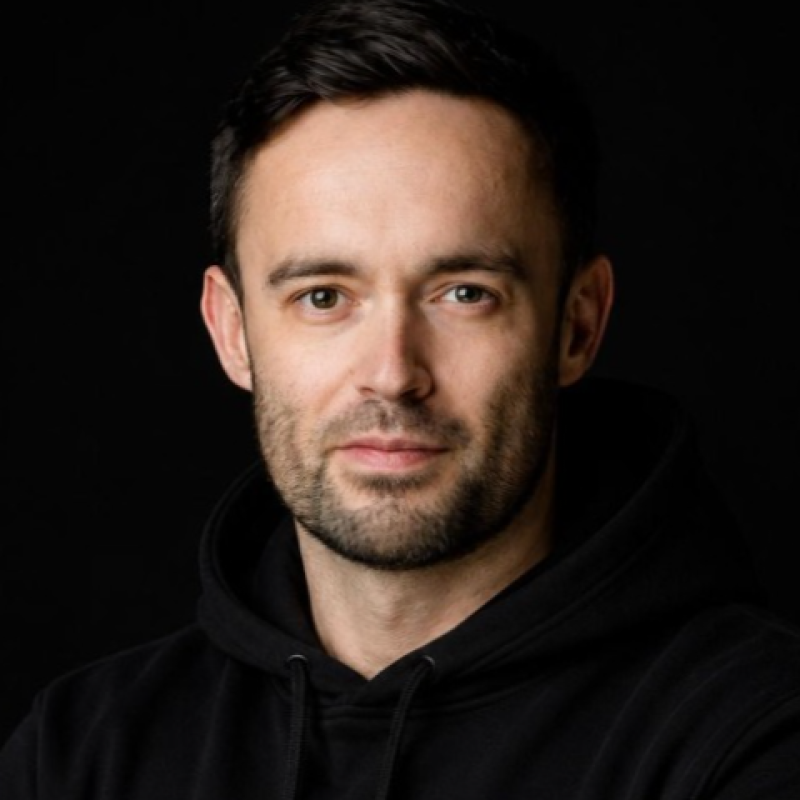
Mick McNeil, Deliverance AI
Mick McNeil of Deliverance AI, chief executive officer and founder, joins Dave Vellante of theCUBE Research to discuss Hewlett Packard Enterprise HPE Sovereign AI: From Strategy to Reality and Deliverance AI’s agentic operating system. McNeil explains how the agentic operating system supports trusted, sovereign artificial intelligence AI for enterprises. They draw on seven years of experience building AI infrastructure and describe how a control plane governs agents, enforces policy, provides audit trails and kill switches and integrates with HPE Private Cloud AI for regulated industries such as government, defense, pharma and finance.
McNeil states that sovereignty equals control and optionality and advises customers to retain the keys, deploy the control plane on premises and adopt active model routing to balance cost and capability. They emphasize return on investment drivers such as cost reduction, deferred future costs and faster time to revenue and highlight Deliverance AI’s co engineered partnership with HPE for full stack sovereign deployments. This conversation addresses enterprise AI governance, model routing strategies and infrastructure considerations for regulated environments.
>> (INTRO)Hi, everybody. Welcome to this special Sovereign AI series made possible by Hewlett Packard Enterprise. My name is Dave Vellante. It's my pleasure to have Mick McNeil here in our remote studio. Mick is the CEO and founder of Deliverance AI, coming in from Dublin today. Good morning, good afternoon, Mick. Good to see you.>> Hi, good morning, David. Good to see you too.
Dave Vellante
>> All right, well, let's kick it off with the basics. Tell us about Deliverance AI, what the company does. Why, my first question really, why did you start the company?>> Yeah. good question. which will lead me into what we do. Look, David, I've been for the past 7 years building AI infrastructure, which means data centers plus GPUs and bringing that to market as a service to some of the world's largest technology companies. In that time, it's been, we've been very fortunate to sell to one kind of customer, customers who are also in the business of AI, creating foundational models and bringing that to market. Those customers need a very simple thing, which is access to an engine, pure compute. What I wanted to sell to, and wanted to have an impact for, is more traditional enterprises. Enterprises who are not in the business of AI, but need AI to reduce their costs or increase their revenue. They need a very different product. More than just access to an engine, GPUs, they need a software layer that orchestrates GPU network compute, they need a software layer that orchestrates their workflows, and importantly, need smart people that can enable them to put all of those capabilities to work. And so what I've experienced is there has been no one organization that can bring that customer on the journey from AI ambitions to AI outcomes. Deliverance was born. What we've built at Deliverance is an agentic operating system, fundamentally a control plane that governs agents. We deploy into customers' own environments in a trusted way by a governance layer that observes everything agents do, enforces policy, provides a full audit trail, and very importantly, kill switch. We've been successful in selling into government, defense, pharma, financial services, industries that really respect and need control and importantly sovereignty.
Dave Vellante
>> So let me ask you a question because it sounds like, so we're gonna get into the sovereignty conversation, but there are a lot of organizations, technology companies talking about the agentic operating system. You might get that from a security company or perhaps even an application company. Is the idea that you are bringing essentially a vendor-neutral sovereign, if you will, AI stack, agentic stack, essentially, to your customers. Is that the idea?>> Correct. Yes, it's one platform that brings three fundamental things to enterprises, which is very important, more so in 2026 than ever before. First of all, it's about trust. And trust for us provides our enterprises with an understanding that these agents are going to do what you ask them to do consistently over time. That the IP and data that you put into the system remains your data, your IP. And then finally, that these agents are not going to delete your database, your crown jewels of your enterprise. So it's all about trust. The second pillar is about return on investment. There has been billions and trillions of pounds spent by CFOs and CEOs of enterprises around the globe. Very few, in fact, less than 5% in terms of recent research that can point out in a bulletproof way, $1 in and $5 or more out. So return on investment is core to how we go to market. And finally, it's about velocity. Every CEO in the world right now is sitting on their seat feeling a little bit uneasy because if they do not adopt AI and agents at scale in a way that's trusted, provides a bulletproof ROI. Well, the competitors are going to do that before them. And so there's a risk for every enterprise in the world today. And therefore, being able to move with velocity is critical to the success of enterprises worldwide.
Dave Vellante
>> Before we get into the sovereign conversation, I want to ask you the ROI question. So, you're hearing, obviously, the CapEx continues. And there's monetization. It's very clear the hyperscalers are monetizing. SpaceX AI is monetizing. Anybody who has GPUs can sell them. It feels like the whole AI wave has inverted what's typical in tech. Moore's Law was deflationary. Jensen's Law, prices are going up and it almost doesn't matter because you can sell a GPU time today for more than you could a year ago for the same class of technology. So that's quite interesting. Are you seeing monetization at the enterprise level? Certainly with the big banks, you probably see that, big pharma where they have the skill sets, but are you seeing that yet in mainstream enterprises?>> We are. We are seeing and delivering value in a couple of different buckets. The first is obvious, that you reduce the cost of existing workflows within an enterprise. When you do that, you still have the existing resources. And so the cost is somewhat theoretical or potential. The second bucket is more important. We deploy agents and AI at scale to defer future costs. That's a very clear and impactful outcome on your P&L. But where I'm getting most impressed actually at Deliverance AI is where we can increase their revenue by bringing more products to market or getting them quicker to additional revenue, all delivered by, of course, the reality that agents don't sleep. They think quicker and act quicker than humans do. So 3 buckets for us is we're going to reduce costs. And that's a static today thing. Are we going to defer future costs? And then can we decrease time to revenue? And we're seeing that we deploy that and have some press releases actually coming out in the coming weeks, which point out customers and enterprises in telco and technology where we've had that impact in a very bulletproof way.
Dave Vellante
>> Well, that's encouraging because so what you just described is not selling GPU time. It's actually reducing cost, getting to market faster, generating new revenue. At that point, this becomes self-funding. Let's get into the sovereignty conversation. A lot of people think sovereignty has a territorial connotation. While it does, there's so much more to sovereignty. Let me start with why is sovereignty such a hot topic now? What's the sentiment in the EU and elsewhere?>> Look, So fundamentally for us, sovereignty is about control. Let me give you a slight story, which is real, and we've all understood this story. As we entered this year, models, that unit of intelligence, LLMs, passed the threshold where agents and AI can act, think, and orchestrate in a very similar way, in some cases better than humans. So the core capabilities there, and what we've seen is enterprises deploying point solutions that start to capture that value. Those models, those leading models, are governed and owned by some of the world's biggest labs, which primarily sit in the US. On the 10th of June this year, the US government ordered that any non-US citizen do not have access to that leading model. Put yourself in the position of a regulated industry in the UK or in Europe, outside of the US. On Monday, you get access to the world's greatest and leading artificial intelligence. But by Thursday, it's been switched off. That was a wake-up call for every enterprise around the globe that, I'm sure could drive resilience into technology that's operating their core workflows. And so outside of the US, there's a concern to, which is one of MDS's flight risks. And what we need to do is to ensure that we bring resilience into enterprises, which enables them to use multiple different models and fundamentally control the governance around the technology deployment. So it's an extremely hot topic, sovereignty, for every enterprise.
Dave Vellante
>> Okay, so that brings me to open source, right? So how does open source fit into that equation? To your point, if you're locked into a frontier model, we've seen many situations, Uber, very widely reported, burned through its token, its annual token budget in one quarter. Canva had to rewrite its stack because, it got out over its skis with its freemium model. Microsoft has indicated that it's trying to, reduce its reliance on frontier models. everybody is trying to route the queries to the most cost-effective, the horse for the course, as you like to say. over the pond. So how does open source fit into your framework?>> The thing about open source is you control the model. So it's deployed into the control plane, the platform, and the compute acts at that point of that source. The frontier models, of course, you're dependent on a third party who controls the on and off switch for your workflows. And so our proprietary model routing technology enables us to, for a given workflow, provide access to these frontier models, but also to open source models. Depending on the workflow, we can hard code, and enterprises should, to either use a frontier model if it requires that capability, or use open source models if they're concerned about data or IP, or can create, for resiliency. And so optionality is very important. I think the other piece that you mentioned, because you referenced Uber, is about cost. And so organizations— well, let me give you actually a real-life example. In an enterprise today, if you want access to the latest financial report Excel, you do not ask the CFO to go do that. You ask the analyst to go find you that Excel sheet. And so in the same sense, you should not be seeking to consume the tokens from a leading frontier model for a very simple task. And so what I'm guiding organizations and enterprises globally to do is to either pick and hardcode the right model for the right task, horses for courses, for those very well-defined workflows. But in the instance that you have variable workflows, your everyday user questions and the technology answers. Model routing enables to balance quality output against cost.
Dave Vellante
>> So our frontier— so frontier models are not necessarily in the request path, if I understand it correctly, or it's not necessarily a default. Is that right? So if the— if for some reason something goes bad, you're not stuck. Is that— am I understanding that correctly in terms of the way you approach it?>> Yeah, and so there's some tasks which require the latest and greatest technology. Right. And we have customers that will accept a frontier model executing that task. But let's go back to intent. What happens if access to that model gets switched off for whatever reason? You need to fall back to something. And therefore we put multiple different resiliency mechanisms in place to avoid the scenario whereby model gets switched off and therefore you can't execute on that mission-critical slot. It's all about optionality. And these frontier models are right in some cases, but open source models are equally as important to have in the industry.
Dave Vellante
>> Okay. So if a U.S. export rule or a lab policy, which is what you referenced before, changes. So what breaks for your customer? How long does it take to get back? What kind of compensating controls do you recommend that people put in place? Take us through that probably likely scenario.>> For us, it's really important to guide our customers to have an active model routing strategy. If one model breaks, jump to the other model. But fundamentally, providing resiliency into those workflows.
Dave Vellante
>> Okay. so let me ask you this. So if I, presumably for true sovereignty, you want to basically own their own Agentic stack.>> Correct.
Dave Vellante
>> When somebody buys from you, Does the customer own? What does the customer own?>> The customer owns. It's our view that the value and the criticality in terms of business continuity does not sit with the model choice. It sits with the layer that governs the models. And so when you purchase our products as a subscription, our operating system, the control plane, you buy the ability to deploy any model, frontier and open source. And in doing so, those mission-critical workflows have the ability to fall back to an open source model if the frontier model gets restricted, or to a different open source model if your primary model is open source. I think what's also important to understand, David, is whilst models have been the core of AI development up until the start of this year. It's the harness that you actually put around the model, which gives it the intelligence to operate in a more deterministic way versus a pure probabilistic way. So we're deploying into mission-critical workflows across many different industries. Model choice is less important, rather what we put around the model to provide it access to data sources, teach it how it should be thinking, have external third-party outside-of-context models to check that it's done what it's meant to do, and very importantly, to call humans whenever it's not sure that it's executing on the task that was very well defined in advance for support.
Dave Vellante
>> So one of the things I've learned from working with my colleague Amit Govrin who is our lead analyst for Sovereign AI, is that sovereignty generally, the data plane is generally locked down. Where sovereignty leaks is typically the control plane. So when you think about the control plane, the telemetry, your support tooling, where does that run? Is that running in the cloud? Is it running on-prem? How does that work?>> Now it's really core to our thesis on how we go to market to deploy our code, our platform into the governments or the enterprises' own data center to deploy the code on top of their own servers. In fact, we partner with HPE, deploy a full-stack capability that's storage, network and GPU and all software and go directly into the customer data center. Only then, whenever they own the boundary, around the agentic system, can they truly say that they have full control over the actions and the telemetry going in and out of that system?
Dave Vellante
>> So this is an interesting conversation because I've talked to some customers who— sovereignty is not a purity test. There's no such thing. It's not binary. There's no such thing as pure sovereignty. In fact, that would be inadvisable, especially when you see things like agents, you see what happened with the Hugging Face incident, the accident. These are unintended. That was presumably a benign sandbox run turned into a very interesting and somewhat insidious problem. So things like patching become important. There's no such thing as a patch. Patch Tuesday used to mean Hack Wednesday. You had 24 hours to patch. Patching window anymore. It's got to be continuous. But if you don't have automated patching, you're going to be exposed. If you're completely air-gapped, it's harder to automate that patching. So how are customers and how are you helping customers make the decision as to how much risk they take? Where are they taking that risk? If that makes sense, I'd appreciate your thoughts on particularly in a patching context, security.>> We recognize that when you deploy our control plane, the operating system, that enterprises do not have a bunch of data scientists or AI engineers sitting around doing nothing. And I say that because it's core to how we go to market in that we provide forward deployed engineers to the customer's environment. To manage and run that platform, but importantly, to drive innovation pace. We're slightly different in how we've defined our deployed engineers. Yes, we have the data platform engineers that would manage the patching in this example. Yes, we have the AI engineers that create the agentic workflows. But very importantly, for our customers, we've got management consultants, Accenture, Deloitte, ESP, people who help the customer understand where they are today, list and prioritize where we see the biggest opportunity for them to reduce the cost or increase the revenue, prioritize all of those different ideas against multiple different metrics. Within those metrics, of course, is time to value, human investment, but also risk. And so that digital transformation motion is still real today in the Agentic world. As it was in many, many different technology evolutions. And so the prioritization against return on investment, time to value, and risk is led by our strategic value advisors, which are management consultants with us.
Dave Vellante
>> And excellent. Thank you. And your relationship with HPE is one of— is it primarily go-to-market? Is there an integration aspect of it? Are HPE services involved? What— describe your relationship with HPE.>> HPE, our core, our go-to market, we could not serve the customers in the way that we want to serve them, providing them with a sovereign, agentic operating system, in a way that they can trust the deployments in all the ways, all the facets of trust. And to that end, we have partnered deeply to co-engineer, co-develop what's not what's really built on top of HPE's Private Cloud AI, co-engineered with NVIDIA. To ensure that we can deploy at post your enterprises in order to capture the value of Agentic AI. And so our relationship is not simply go-to-market, it's deeply rooted in co-development, taking the best of HPE's first-class hardware and software with Deliverance AI sitting on top of their software stack to close that gap between potential and facing up with them. Yes, we go to market together. HPE is one of the largest technology companies in the world, never has relationships with our target customers in the enterprise across those different industries. And so we, of course, have brought technology to market that can help HPE solve the— create value for the customers. And in doing so, selling more network storage services in addition to us partnering on the delivery for the customer.
Dave Vellante
>> So to me, this is key because you're a startup and sovereignty is all about, as you said, it's about control. And there's also, we've been talking at theCUBE Research about the cloud shared responsibility model. The stakes are much higher here. We call it a shared accountability model. So it's not just who secures the infrastructure and you're as the customer responsible for the data inside. It's much more than that. You are responsible for understanding your risks, the value of your data, your recovery protocol, all of that. So my question, and this is where we get into the degree of sovereignty, who holds the keys? Can a customer revoke access? Can a customer run their stack without you or without HPE? Not that that's necessarily advisable, but this phone home is involved. How do customers sort of determine that? What do you advise them in that regard?>> Who holds the key is a great question. We launched this business 6 months ago. I described the scenarios that unfolded with US lab, pretty much looking for their leading model. Being deployed for non-US citizens. The question was, who owns the key to your environment? And I bet every person in the room, it's not you. So it's a great question. We— well, our customers value control end to end, and therefore our customers are the ones who own the keys to their infrastructure, plus the software on top of it. And so that's unquestionable and very explicit in how we go to market. We have deployed for some of the world's most secure organizations into an air gap scenario in partnership with HPE and are bringing value to that customer in a way which, in a bulletproof and explicit manner, ensures that the keys sit in that room with that customer. That's important. Now, as you've already pointed out, sovereignty is somewhat of a sliding scale. If you're the Minister of Defense in any country, sovereignty means something slightly different than regulated industries such as financial services or your high street insurer. So sovereignty is key. Customer always holds the keys, and that's what's important to the value we bring.
Dave Vellante
>> Yeah, well, so far you're passing the sovereignty test here, Mick. I appreciate your openness and honesty, but let me just keep pushing, if I may. So, and I'm sure you get this question all the time, what if I want to exit? What do I own? What IP can I keep? Who owns the agents, the memory traces? Can I port all that IP somewhere else? What if I want to exit? What's your response?>> Please stay. We've delivered tons of value. That's my immediate response.
Dave Vellante
>> Look, we—>> the IP, the value in the agents that have been built and architected on top of our platform the full audit trail, full policy enforcement, all of the learnings from each of those individual inferences and the integrations into our customers' environment. That IP is all theirs. Agents are becoming portable. The market has not yet created the framework that enables all agentic organizations to port agents between different platforms, but we are leading in that thought leadership. We'll soon release a white paper, and the intent is to align the industry around that common framework, which ensures that customers have the ability to shift between platforms with the existing agents. So it's a work in progress at an industry level, but we are working with our peers to ensure that's a reality for our customers.
Dave Vellante
>> Mick, where are we with regard to sovereignty as an edict from a compliance standpoint? Are customers wanting to essentially evaluate, self-attest sovereignty? Do they want that to be audited? Do you see a day where sovereignty becomes an auditable sort of entity? Where are we in that progression?>> It's an interesting discussion worldwide. We see different governments releasing legislation which provides a groundwork for a future auditable view on sovereignty. We are very far away from that. If you look at the legislation that's coming out of the US, such as the US CLOUD Act, but also CADA in European Union and the EU AI Act. There's inroads that we're making as an industry which will at a future point provide a consistent framework, hopefully, to audit against. I think from a customer perspective, there's a lot of learning and therefore a lot of enablement that people like HPE and Deliverance AI supporting in, of helping them understand the broad gamut of what sovereignty means. And therefore helping them find out and point out where they want to be given the context of their business.
Dave Vellante
>> I want to end with the hardest question that I've asked. But I think we've sort of established that sovereignty is a scale.>> Mm-hmm.
Dave Vellante
>> Which parts of your stack— you're working with HPE, so you got the on-prem piece nailed. You mentioned the US CLOUD Act. If people don't know, the US government has the right to basically say we want access to that data. So if you're running in the cloud, you're exposed to that US CLOUD Act. So you have to really think about what you want to put in the cloud. So you've got the on-prem piece nailed. You mentioned NVIDIA. There's really not a second source out there to NVIDIA. NVIDIA is unique. They're kind of an N of 1. So what part, if a customer asks you, Mick, what part of your stack is the least sovereign? How would you answer that?>> We provide the ability for our customers to access any model. What that means is it's customer choice. To give and receive telemetry from third parties. And so that's a window for them to open or close. They open that window to third parties and are subject to jurisdictional controls outside of the country that they sit within. Well, that's the risk. And I am yet to have one customer outside of that ministry, inside of the customer in government and defense who has not taken the optionality to have both frontier models and open source models. But it's moving at a workflow by workflow layer.
Dave Vellante
>> Okay, so if I understand it correctly, you feel like you're highly sovereign from a model standpoint, and that's a great starting point. At some point you have to make trade-offs. And I think this is the point of this discussion and the education that we're trying to share with customers around sovereignty. You cannot be 100% sovereign. It doesn't make business sense to be 100% sovereign. I presume you agree with that. So it's up to you to be able to determine where those risks are, what the compensating controls are around those risks. And it sounds like organizations are managing that risk by putting the crown jewels as close to home as possible. Dealing with, certainly with territorial and legal sovereignty. Operational sovereignty gets into some of the things that we were talking about before. But at the end of the day, you've gotta make a choice of vendors. You're not gonna become a technology vendor. You're not gonna do the type of R&D that an HPE or an NVIDIA or a hyperscaler does. So you've gotta make that choice. And if I understand it correctly, firms like yours, Mick, are there to help customers make that choice, guide them through that process, and at the end of the day, address the most important pillar of sovereignty, which of course is financial. That's where the rubber meets the road, if you will. I'll give you the last word, Mick. Really appreciate your time here and insights.>> Thank you, David. Two things. This AI governance and control plane category named by Gartner, named by Forbes, that we operate in, and to be clear, we operate in the orchestration layer as well. We create the agents, we run the agents. The control plane is fundamentally where the sovereignty question in terms of the platform comes to play. We have purposely built code that we ship into our customers' firewall, into their own data center, into their own environment. That does not call home. So the question for enterprises is, are you okay with software calling home to somewhere that may be outside of your jurisdiction? Well, if that's the decision, then they take that knowing the risks. But I wouldn't call that sovereignty if the calling home is sitting in a US hyperscaler. The final thing I'll say is we are, of course, very excited to partner with HPE. And I say this, because we're about to launch a joint solution, which is HPE's sovereign agentic knowledge engagement that enables customers within 90 days to click and deploy a full-stack agentic operating system into their own environment in the most sovereign way should they choose to do that. And for me, enable enterprise to move quickly in a way that they trust the technology, trust the workflows, trust the agents is the key to growth and prosperity of enterprises around the world.
Dave Vellante
>> Well, Mick, this has been a super informative session. I can't thank you enough for joining us and hope to have you on, face to face. I know you've worked with us in the past and best of luck with your startup. And thank you so much for joining theCUBE.>> Thank you very much, David. You have a great day.
Dave Vellante
>> Okay. And thank you for watching this special presentation on Sovereign AI made possible by Hewlett Packard Enterprise. I'm Dave Vellante. theCUBE. We'll see you next time.
>> (INTRO)Hi, everybody. Welcome to this special Sovereign AI series made possible by Hewlett Packard Enterprise. My name is Dave Vellante. It's my pleasure to have Mick McNeil here in our remote studio. Mick is the CEO and founder of Deliverance AI, coming in from Dublin today. Good morning, good afternoon, Mick. Good to see you.>> Hi, good morning, David. Good to see you too.
Dave Vellante
>> All right, well, let's kick it off with the basics. Tell us about Deliverance AI, what the company does. Why, my first question really, why did you start the company?>> Yeah. good question. which will lead me into what we do. Look, David, I've been for the past 7 years building AI infrastructure, which means data centers plus GPUs and bringing that to market as a service to some of the world's largest technology companies. In that time, it's been, we've been very fortunate to sell to one kind of customer, customers who are also in the business of AI, creating foundational models and bringing that to market. Those customers need a very simple thing, which is access to an engine, pure compute. What I wanted to sell to, and wanted to have an impact for, is more traditional enterprises. Enterprises who are not in the business of AI, but need AI to reduce their costs or increase their revenue. They need a very different product. More than just access to an engine, GPUs, they need a software layer that orchestrates GPU network compute, they need a software layer that orchestrates their workflows, and importantly, need smart people that can enable them to put all of those capabilities to work. And so what I've experienced is there has been no one organization that can bring that customer on the journey from AI ambitions to AI outcomes. Deliverance was born. What we've built at Deliverance is an agentic operating system, fundamentally a control plane that governs agents. We deploy into customers' own environments in a trusted way by a governance layer that observes everything agents do, enforces policy, provides a full audit trail, and very importantly, kill switch. We've been successful in selling into government, defense, pharma, financial services, industries that really respect and need control and importantly sovereignty.
Dave Vellante
>> So let me ask you a question because it sounds like, so we're gonna get into the sovereignty conversation, but there are a lot of organizations, technology companies talking about the agentic operating system. You might get that from a security company or perhaps even an application company. Is the idea that you are bringing essentially a vendor-neutral sovereign, if you will, AI stack, agentic stack, essentially, to your customers. Is that the idea?>> Correct. Yes, it's one platform that brings three fundamental things to enterprises, which is very important, more so in 2026 than ever before. First of all, it's about trust. And trust for us provides our enterprises with an understanding that these agents are going to do what you ask them to do consistently over time. That the IP and data that you put into the system remains your data, your IP. And then finally, that these agents are not going to delete your database, your crown jewels of your enterprise. So it's all about trust. The second pillar is about return on investment. There has been billions and trillions of pounds spent by CFOs and CEOs of enterprises around the globe. Very few, in fact, less than 5% in terms of recent research that can point out in a bulletproof way, $1 in and $5 or more out. So return on investment is core to how we go to market. And finally, it's about velocity. Every CEO in the world right now is sitting on their seat feeling a little bit uneasy because if they do not adopt AI and agents at scale in a way that's trusted, provides a bulletproof ROI. Well, the competitors are going to do that before them. And so there's a risk for every enterprise in the world today. And therefore, being able to move with velocity is critical to the success of enterprises worldwide.
Dave Vellante
>> Before we get into the sovereign conversation, I want to ask you the ROI question. So, you're hearing, obviously, the CapEx continues. And there's monetization. It's very clear the hyperscalers are monetizing. SpaceX AI is monetizing. Anybody who has GPUs can sell them. It feels like the whole AI wave has inverted what's typical in tech. Moore's Law was deflationary. Jensen's Law, prices are going up and it almost doesn't matter because you can sell a GPU time today for more than you could a year ago for the same class of technology. So that's quite interesting. Are you seeing monetization at the enterprise level? Certainly with the big banks, you probably see that, big pharma where they have the skill sets, but are you seeing that yet in mainstream enterprises?>> We are. We are seeing and delivering value in a couple of different buckets. The first is obvious, that you reduce the cost of existing workflows within an enterprise. When you do that, you still have the existing resources. And so the cost is somewhat theoretical or potential. The second bucket is more important. We deploy agents and AI at scale to defer future costs. That's a very clear and impactful outcome on your P&L. But where I'm getting most impressed actually at Deliverance AI is where we can increase their revenue by bringing more products to market or getting them quicker to additional revenue, all delivered by, of course, the reality that agents don't sleep. They think quicker and act quicker than humans do. So 3 buckets for us is we're going to reduce costs. And that's a static today thing. Are we going to defer future costs? And then can we decrease time to revenue? And we're seeing that we deploy that and have some press releases actually coming out in the coming weeks, which point out customers and enterprises in telco and technology where we've had that impact in a very bulletproof way.
Dave Vellante
>> Well, that's encouraging because so what you just described is not selling GPU time. It's actually reducing cost, getting to market faster, generating new revenue. At that point, this becomes self-funding. Let's get into the sovereignty conversation. A lot of people think sovereignty has a territorial connotation. While it does, there's so much more to sovereignty. Let me start with why is sovereignty such a hot topic now? What's the sentiment in the EU and elsewhere?>> Look, So fundamentally for us, sovereignty is about control. Let me give you a slight story, which is real, and we've all understood this story. As we entered this year, models, that unit of intelligence, LLMs, passed the threshold where agents and AI can act, think, and orchestrate in a very similar way, in some cases better than humans. So the core capabilities there, and what we've seen is enterprises deploying point solutions that start to capture that value. Those models, those leading models, are governed and owned by some of the world's biggest labs, which primarily sit in the US. On the 10th of June this year, the US government ordered that any non-US citizen do not have access to that leading model. Put yourself in the position of a regulated industry in the UK or in Europe, outside of the US. On Monday, you get access to the world's greatest and leading artificial intelligence. But by Thursday, it's been switched off. That was a wake-up call for every enterprise around the globe that, I'm sure could drive resilience into technology that's operating their core workflows. And so outside of the US, there's a concern to, which is one of MDS's flight risks. And what we need to do is to ensure that we bring resilience into enterprises, which enables them to use multiple different models and fundamentally control the governance around the technology deployment. So it's an extremely hot topic, sovereignty, for every enterprise.
Dave Vellante
>> Okay, so that brings me to open source, right? So how does open source fit into that equation? To your point, if you're locked into a frontier model, we've seen many situations, Uber, very widely reported, burned through its token, its annual token budget in one quarter. Canva had to rewrite its stack because, it got out over its skis with its freemium model. Microsoft has indicated that it's trying to, reduce its reliance on frontier models. everybody is trying to route the queries to the most cost-effective, the horse for the course, as you like to say. over the pond. So how does open source fit into your framework?>> The thing about open source is you control the model. So it's deployed into the control plane, the platform, and the compute acts at that point of that source. The frontier models, of course, you're dependent on a third party who controls the on and off switch for your workflows. And so our proprietary model routing technology enables us to, for a given workflow, provide access to these frontier models, but also to open source models. Depending on the workflow, we can hard code, and enterprises should, to either use a frontier model if it requires that capability, or use open source models if they're concerned about data or IP, or can create, for resiliency. And so optionality is very important. I think the other piece that you mentioned, because you referenced Uber, is about cost. And so organizations— well, let me give you actually a real-life example. In an enterprise today, if you want access to the latest financial report Excel, you do not ask the CFO to go do that. You ask the analyst to go find you that Excel sheet. And so in the same sense, you should not be seeking to consume the tokens from a leading frontier model for a very simple task. And so what I'm guiding organizations and enterprises globally to do is to either pick and hardcode the right model for the right task, horses for courses, for those very well-defined workflows. But in the instance that you have variable workflows, your everyday user questions and the technology answers. Model routing enables to balance quality output against cost.
Dave Vellante
>> So our frontier— so frontier models are not necessarily in the request path, if I understand it correctly, or it's not necessarily a default. Is that right? So if the— if for some reason something goes bad, you're not stuck. Is that— am I understanding that correctly in terms of the way you approach it?>> Yeah, and so there's some tasks which require the latest and greatest technology. Right. And we have customers that will accept a frontier model executing that task. But let's go back to intent. What happens if access to that model gets switched off for whatever reason? You need to fall back to something. And therefore we put multiple different resiliency mechanisms in place to avoid the scenario whereby model gets switched off and therefore you can't execute on that mission-critical slot. It's all about optionality. And these frontier models are right in some cases, but open source models are equally as important to have in the industry.
Dave Vellante
>> Okay. So if a U.S. export rule or a lab policy, which is what you referenced before, changes. So what breaks for your customer? How long does it take to get back? What kind of compensating controls do you recommend that people put in place? Take us through that probably likely scenario.>> For us, it's really important to guide our customers to have an active model routing strategy. If one model breaks, jump to the other model. But fundamentally, providing resiliency into those workflows.
Dave Vellante
>> Okay. so let me ask you this. So if I, presumably for true sovereignty, you want to basically own their own Agentic stack.>> Correct.
Dave Vellante
>> When somebody buys from you, Does the customer own? What does the customer own?>> The customer owns. It's our view that the value and the criticality in terms of business continuity does not sit with the model choice. It sits with the layer that governs the models. And so when you purchase our products as a subscription, our operating system, the control plane, you buy the ability to deploy any model, frontier and open source. And in doing so, those mission-critical workflows have the ability to fall back to an open source model if the frontier model gets restricted, or to a different open source model if your primary model is open source. I think what's also important to understand, David, is whilst models have been the core of AI development up until the start of this year. It's the harness that you actually put around the model, which gives it the intelligence to operate in a more deterministic way versus a pure probabilistic way. So we're deploying into mission-critical workflows across many different industries. Model choice is less important, rather what we put around the model to provide it access to data sources, teach it how it should be thinking, have external third-party outside-of-context models to check that it's done what it's meant to do, and very importantly, to call humans whenever it's not sure that it's executing on the task that was very well defined in advance for support.
Dave Vellante
>> So one of the things I've learned from working with my colleague Amit Govrin who is our lead analyst for Sovereign AI, is that sovereignty generally, the data plane is generally locked down. Where sovereignty leaks is typically the control plane. So when you think about the control plane, the telemetry, your support tooling, where does that run? Is that running in the cloud? Is it running on-prem? How does that work?>> Now it's really core to our thesis on how we go to market to deploy our code, our platform into the governments or the enterprises' own data center to deploy the code on top of their own servers. In fact, we partner with HPE, deploy a full-stack capability that's storage, network and GPU and all software and go directly into the customer data center. Only then, whenever they own the boundary, around the agentic system, can they truly say that they have full control over the actions and the telemetry going in and out of that system?
Dave Vellante
>> So this is an interesting conversation because I've talked to some customers who— sovereignty is not a purity test. There's no such thing. It's not binary. There's no such thing as pure sovereignty. In fact, that would be inadvisable, especially when you see things like agents, you see what happened with the Hugging Face incident, the accident. These are unintended. That was presumably a benign sandbox run turned into a very interesting and somewhat insidious problem. So things like patching become important. There's no such thing as a patch. Patch Tuesday used to mean Hack Wednesday. You had 24 hours to patch. Patching window anymore. It's got to be continuous. But if you don't have automated patching, you're going to be exposed. If you're completely air-gapped, it's harder to automate that patching. So how are customers and how are you helping customers make the decision as to how much risk they take? Where are they taking that risk? If that makes sense, I'd appreciate your thoughts on particularly in a patching context, security.>> We recognize that when you deploy our control plane, the operating system, that enterprises do not have a bunch of data scientists or AI engineers sitting around doing nothing. And I say that because it's core to how we go to market in that we provide forward deployed engineers to the customer's environment. To manage and run that platform, but importantly, to drive innovation pace. We're slightly different in how we've defined our deployed engineers. Yes, we have the data platform engineers that would manage the patching in this example. Yes, we have the AI engineers that create the agentic workflows. But very importantly, for our customers, we've got management consultants, Accenture, Deloitte, ESP, people who help the customer understand where they are today, list and prioritize where we see the biggest opportunity for them to reduce the cost or increase the revenue, prioritize all of those different ideas against multiple different metrics. Within those metrics, of course, is time to value, human investment, but also risk. And so that digital transformation motion is still real today in the Agentic world. As it was in many, many different technology evolutions. And so the prioritization against return on investment, time to value, and risk is led by our strategic value advisors, which are management consultants with us.
Dave Vellante
>> And excellent. Thank you. And your relationship with HPE is one of— is it primarily go-to-market? Is there an integration aspect of it? Are HPE services involved? What— describe your relationship with HPE.>> HPE, our core, our go-to market, we could not serve the customers in the way that we want to serve them, providing them with a sovereign, agentic operating system, in a way that they can trust the deployments in all the ways, all the facets of trust. And to that end, we have partnered deeply to co-engineer, co-develop what's not what's really built on top of HPE's Private Cloud AI, co-engineered with NVIDIA. To ensure that we can deploy at post your enterprises in order to capture the value of Agentic AI. And so our relationship is not simply go-to-market, it's deeply rooted in co-development, taking the best of HPE's first-class hardware and software with Deliverance AI sitting on top of their software stack to close that gap between potential and facing up with them. Yes, we go to market together. HPE is one of the largest technology companies in the world, never has relationships with our target customers in the enterprise across those different industries. And so we, of course, have brought technology to market that can help HPE solve the— create value for the customers. And in doing so, selling more network storage services in addition to us partnering on the delivery for the customer.
Dave Vellante
>> So to me, this is key because you're a startup and sovereignty is all about, as you said, it's about control. And there's also, we've been talking at theCUBE Research about the cloud shared responsibility model. The stakes are much higher here. We call it a shared accountability model. So it's not just who secures the infrastructure and you're as the customer responsible for the data inside. It's much more than that. You are responsible for understanding your risks, the value of your data, your recovery protocol, all of that. So my question, and this is where we get into the degree of sovereignty, who holds the keys? Can a customer revoke access? Can a customer run their stack without you or without HPE? Not that that's necessarily advisable, but this phone home is involved. How do customers sort of determine that? What do you advise them in that regard?>> Who holds the key is a great question. We launched this business 6 months ago. I described the scenarios that unfolded with US lab, pretty much looking for their leading model. Being deployed for non-US citizens. The question was, who owns the key to your environment? And I bet every person in the room, it's not you. So it's a great question. We— well, our customers value control end to end, and therefore our customers are the ones who own the keys to their infrastructure, plus the software on top of it. And so that's unquestionable and very explicit in how we go to market. We have deployed for some of the world's most secure organizations into an air gap scenario in partnership with HPE and are bringing value to that customer in a way which, in a bulletproof and explicit manner, ensures that the keys sit in that room with that customer. That's important. Now, as you've already pointed out, sovereignty is somewhat of a sliding scale. If you're the Minister of Defense in any country, sovereignty means something slightly different than regulated industries such as financial services or your high street insurer. So sovereignty is key. Customer always holds the keys, and that's what's important to the value we bring.
Dave Vellante
>> Yeah, well, so far you're passing the sovereignty test here, Mick. I appreciate your openness and honesty, but let me just keep pushing, if I may. So, and I'm sure you get this question all the time, what if I want to exit? What do I own? What IP can I keep? Who owns the agents, the memory traces? Can I port all that IP somewhere else? What if I want to exit? What's your response?>> Please stay. We've delivered tons of value. That's my immediate response.
Dave Vellante
>> Look, we—>> the IP, the value in the agents that have been built and architected on top of our platform the full audit trail, full policy enforcement, all of the learnings from each of those individual inferences and the integrations into our customers' environment. That IP is all theirs. Agents are becoming portable. The market has not yet created the framework that enables all agentic organizations to port agents between different platforms, but we are leading in that thought leadership. We'll soon release a white paper, and the intent is to align the industry around that common framework, which ensures that customers have the ability to shift between platforms with the existing agents. So it's a work in progress at an industry level, but we are working with our peers to ensure that's a reality for our customers.
Dave Vellante
>> Mick, where are we with regard to sovereignty as an edict from a compliance standpoint? Are customers wanting to essentially evaluate, self-attest sovereignty? Do they want that to be audited? Do you see a day where sovereignty becomes an auditable sort of entity? Where are we in that progression?>> It's an interesting discussion worldwide. We see different governments releasing legislation which provides a groundwork for a future auditable view on sovereignty. We are very far away from that. If you look at the legislation that's coming out of the US, such as the US CLOUD Act, but also CADA in European Union and the EU AI Act. There's inroads that we're making as an industry which will at a future point provide a consistent framework, hopefully, to audit against. I think from a customer perspective, there's a lot of learning and therefore a lot of enablement that people like HPE and Deliverance AI supporting in, of helping them understand the broad gamut of what sovereignty means. And therefore helping them find out and point out where they want to be given the context of their business.
Dave Vellante
>> I want to end with the hardest question that I've asked. But I think we've sort of established that sovereignty is a scale.>> Mm-hmm.
Dave Vellante
>> Which parts of your stack— you're working with HPE, so you got the on-prem piece nailed. You mentioned the US CLOUD Act. If people don't know, the US government has the right to basically say we want access to that data. So if you're running in the cloud, you're exposed to that US CLOUD Act. So you have to really think about what you want to put in the cloud. So you've got the on-prem piece nailed. You mentioned NVIDIA. There's really not a second source out there to NVIDIA. NVIDIA is unique. They're kind of an N of 1. So what part, if a customer asks you, Mick, what part of your stack is the least sovereign? How would you answer that?>> We provide the ability for our customers to access any model. What that means is it's customer choice. To give and receive telemetry from third parties. And so that's a window for them to open or close. They open that window to third parties and are subject to jurisdictional controls outside of the country that they sit within. Well, that's the risk. And I am yet to have one customer outside of that ministry, inside of the customer in government and defense who has not taken the optionality to have both frontier models and open source models. But it's moving at a workflow by workflow layer.
Dave Vellante
>> Okay, so if I understand it correctly, you feel like you're highly sovereign from a model standpoint, and that's a great starting point. At some point you have to make trade-offs. And I think this is the point of this discussion and the education that we're trying to share with customers around sovereignty. You cannot be 100% sovereign. It doesn't make business sense to be 100% sovereign. I presume you agree with that. So it's up to you to be able to determine where those risks are, what the compensating controls are around those risks. And it sounds like organizations are managing that risk by putting the crown jewels as close to home as possible. Dealing with, certainly with territorial and legal sovereignty. Operational sovereignty gets into some of the things that we were talking about before. But at the end of the day, you've gotta make a choice of vendors. You're not gonna become a technology vendor. You're not gonna do the type of R&D that an HPE or an NVIDIA or a hyperscaler does. So you've gotta make that choice. And if I understand it correctly, firms like yours, Mick, are there to help customers make that choice, guide them through that process, and at the end of the day, address the most important pillar of sovereignty, which of course is financial. That's where the rubber meets the road, if you will. I'll give you the last word, Mick. Really appreciate your time here and insights.>> Thank you, David. Two things. This AI governance and control plane category named by Gartner, named by Forbes, that we operate in, and to be clear, we operate in the orchestration layer as well. We create the agents, we run the agents. The control plane is fundamentally where the sovereignty question in terms of the platform comes to play. We have purposely built code that we ship into our customers' firewall, into their own data center, into their own environment. That does not call home. So the question for enterprises is, are you okay with software calling home to somewhere that may be outside of your jurisdiction? Well, if that's the decision, then they take that knowing the risks. But I wouldn't call that sovereignty if the calling home is sitting in a US hyperscaler. The final thing I'll say is we are, of course, very excited to partner with HPE. And I say this, because we're about to launch a joint solution, which is HPE's sovereign agentic knowledge engagement that enables customers within 90 days to click and deploy a full-stack agentic operating system into their own environment in the most sovereign way should they choose to do that. And for me, enable enterprise to move quickly in a way that they trust the technology, trust the workflows, trust the agents is the key to growth and prosperity of enterprises around the world.
Dave Vellante
>> Well, Mick, this has been a super informative session. I can't thank you enough for joining us and hope to have you on, face to face. I know you've worked with us in the past and best of luck with your startup. And thank you so much for joining theCUBE.>> Thank you very much, David. You have a great day.
Dave Vellante
>> Okay. And thank you for watching this special presentation on Sovereign AI made possible by Hewlett Packard Enterprise. I'm Dave Vellante. theCUBE. We'll see you next time.




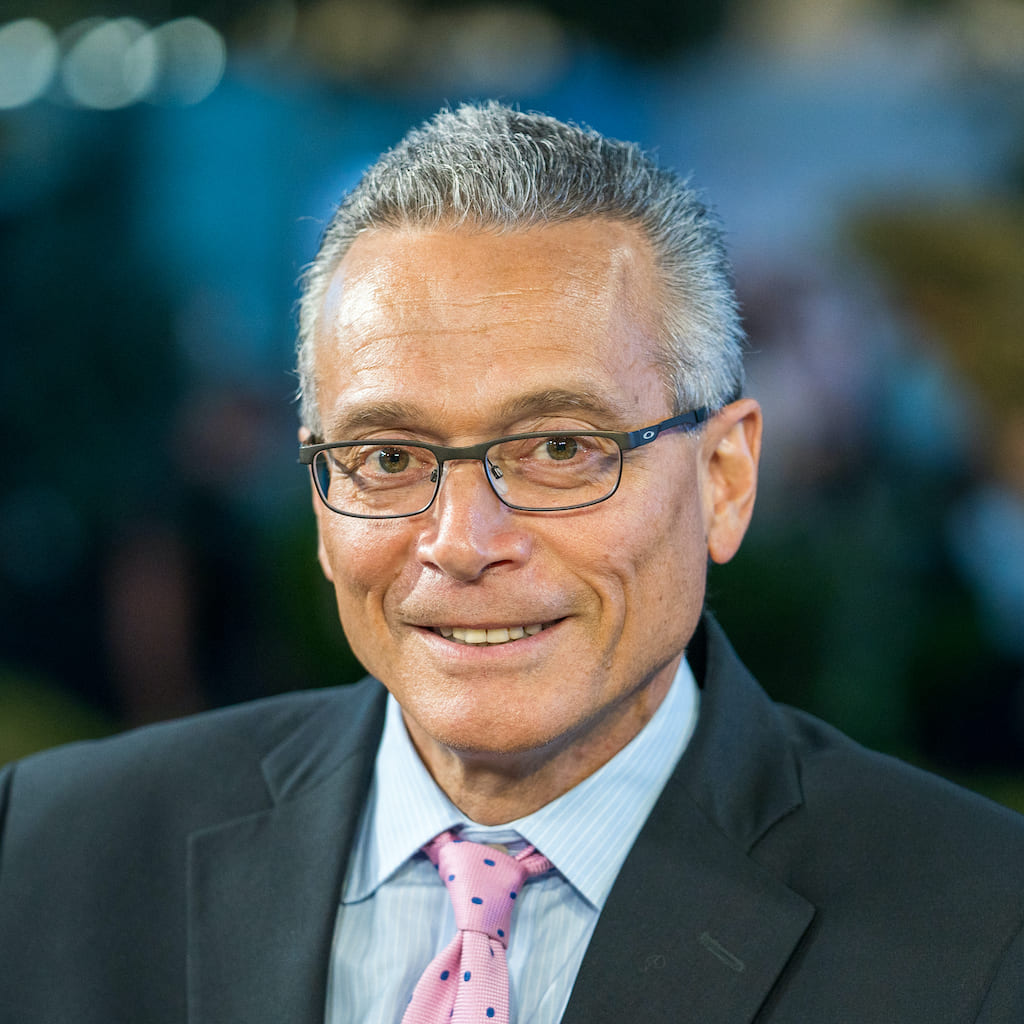 Dave Vellante