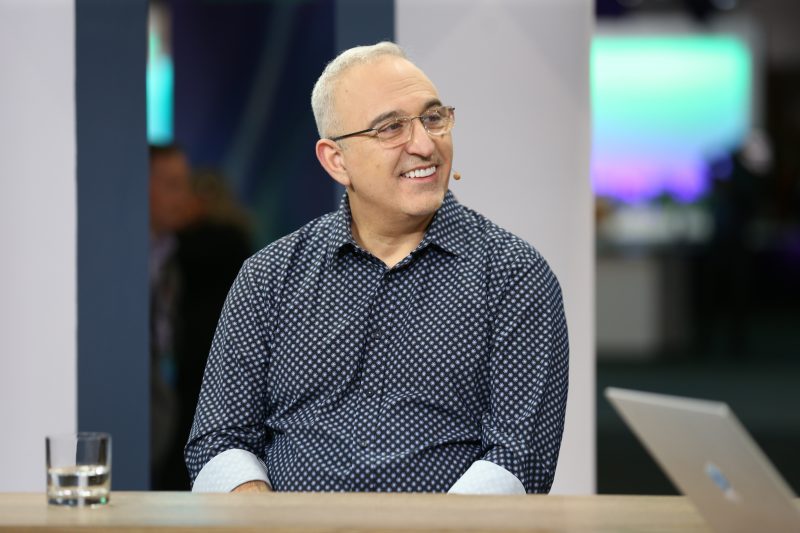
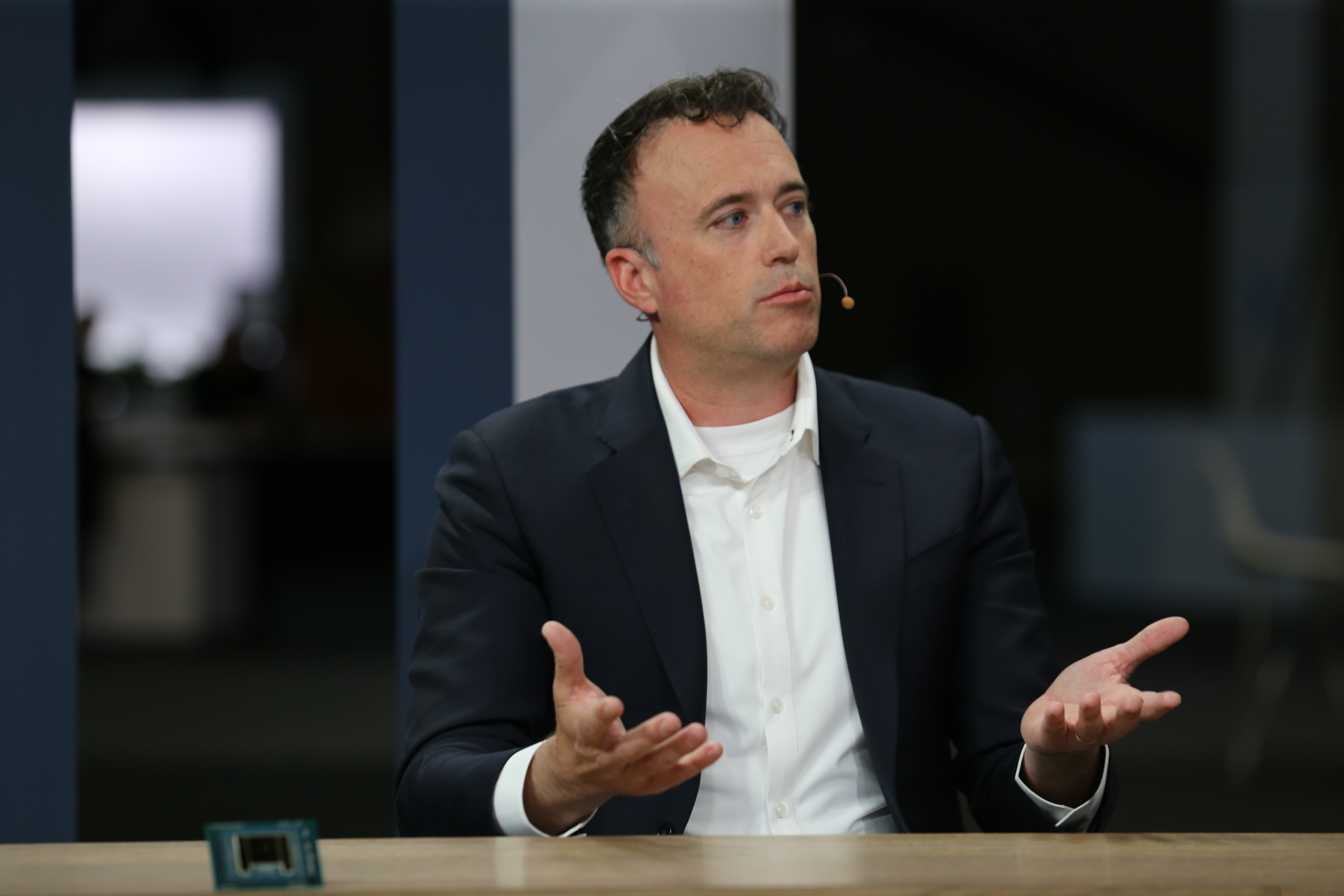
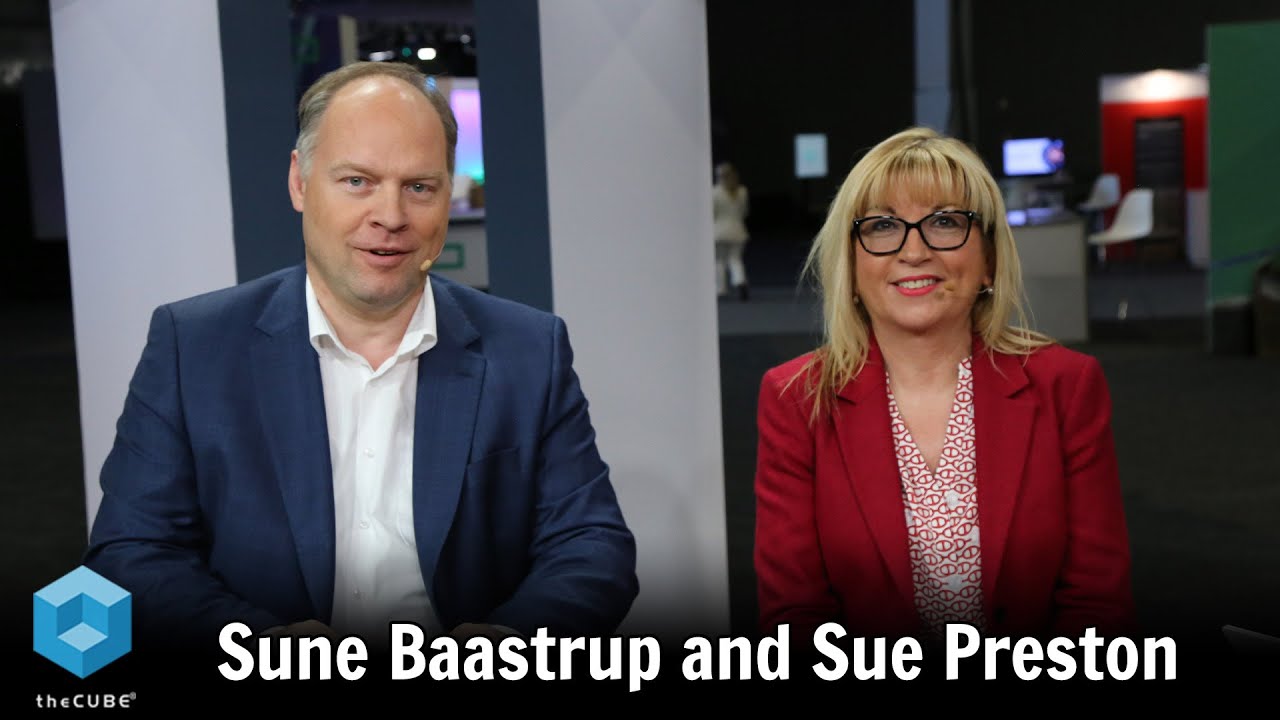
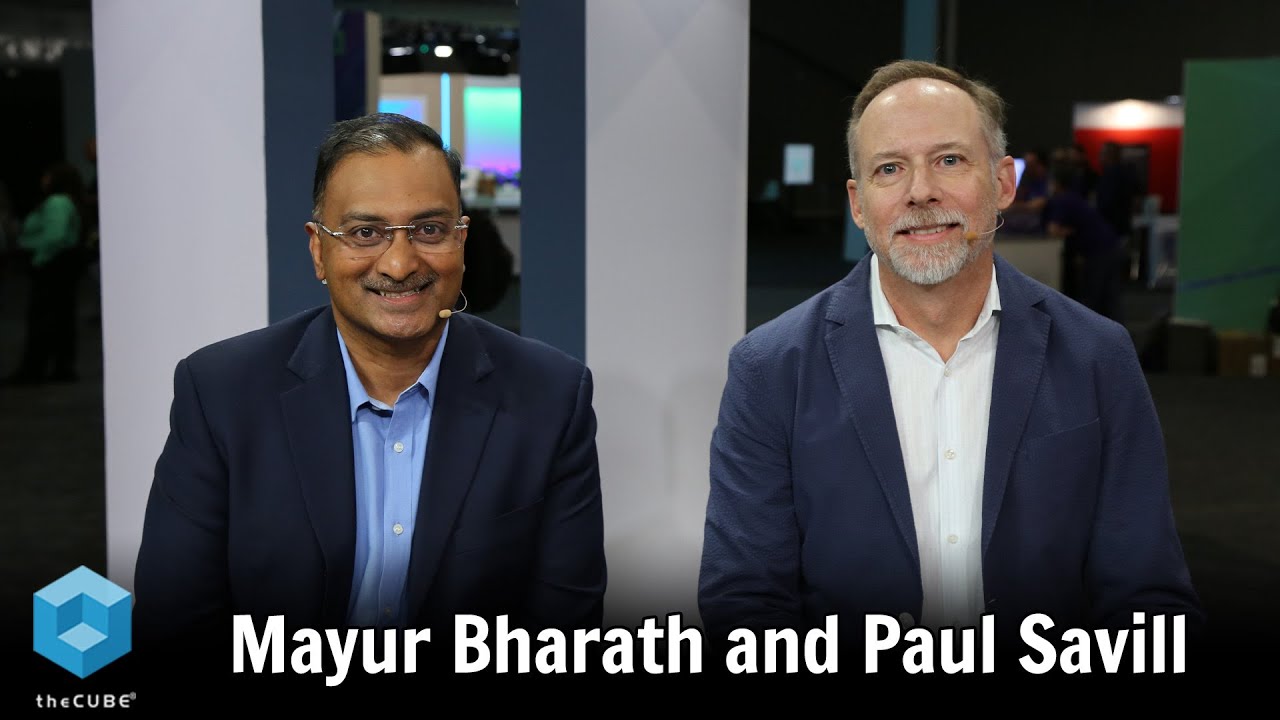
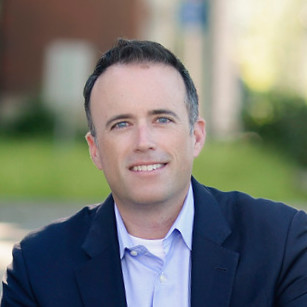
Ryan Tabrah, VP and General Manager, Xeon E-Core Products, Intel, joint theCUBE hosts for insights from day one at HPE Discover 2024, including the power of compute at data centers.
Forgot Password
Almost there!
We just sent you a verification email. Please verify your account to gain access to
HPE Discover 2024. If you don’t think you received an email check your
spam folder.
In order to sign in, enter the email address you used to registered for the event. Once completed, you will receive an email with a verification link. Open this link to automatically sign into the site.
Register For HPE Discover 2024
Please fill out the information below. You will recieve an email with a verification link confirming your registration. Click the link to automatically sign into the site.
You’re almost there!
We just sent you a verification email. Please click the verification button in the email. Once your email address is verified, you will have full access to all event content for HPE Discover 2024.
I want my badge and interests to be visible to all attendees.
Checking this box will display your presense on the attendees list, view your profile and allow other attendees to contact you via 1-1 chat. Read the Privacy Policy. At any time, you can choose to disable this preference.
Select your Interests!
add
Upload your photo
Uploading..
OR
Connect via Twitter
Connect via Linkedin
EDIT PASSWORD
Share
Forgot Password
Almost there!
We just sent you a verification email. Please verify your account to gain access to
HPE Discover 2024. If you don’t think you received an email check your
spam folder.
In order to sign in, enter the email address you used to registered for the event. Once completed, you will receive an email with a verification link. Open this link to automatically sign into the site.
Sign in to gain access to HPE Discover 2024
Please sign in with LinkedIn to continue to HPE Discover 2024. Signing in with LinkedIn ensures a professional environment.
Are you sure you want to remove access rights for this user?
Details
Manage Access
email address
Community Invitation
Insights from Day 1 at HPE Discover with theCUBE and Intel
Ryan Tabrah, VP and General Manager, Xeon E-Core Products, Intel, joint theCUBE hosts for insights from day one at HPE Discover 2024, including the power of compute at data centers.
Insights from Day 1 at HPE Discover with theCUBE and Intel
Ryan Tabrah
Corporate Vice President & Chief Marketing OfficerIntel
search
>> Welcome back everyone to theCUBE's live coverage here in Las Vegas. Day one of HP Discover. Here on the ground, this is theCUBE's coverage. I'm John Furrier, your host with Dave Vellante, my co-host. We also got Rebecca Knight here. We're getting all the action. We've got Intel on the set here. I want to thank them for being involved with theCUBE. Really appreciate, got Ryan Tabrah here, vice president, general manager of the Xeon product family, product management. Ryan, thanks for coming on theCUBE. And I see we got a little show and tell there. We'll get to the processor, but thanks for coming on.
Ryan Tabrah
>> No, I appreciate it. It's great to be here.>> So, everybody wants smaller, faster processors.>> Lower power.>> Lower power, more performance. And we're in an era now where we're back to the old fun days of more horsepower, enabling change with software now data, obviously, gen AI is showing that. So, there's a real appetite and hunger for more power, more horsepower.
Ryan Tabrah
>> Yeah. I actually think it's a seminal moment in the industry where we have this insatiable desire for power. It's all about the race to how much compute can you fit into a square block of cement? And so, there's this demand for, hey, I have a lot of general compute and can I... It's really about power density. So, it's not just perf per watt, it's about power density. And what does it mean for customers? How can they use that to transform their next-generation data centers if they're building brand new ones or their existing infrastructure? So, a lot of data centers out there in areas that they can't grow anymore and can I drive more compute into those data centers?>> And then, how much of this demand do you feel like if you had to do a blame pie is because of the AI awakening versus just sort of natural progression?
Ryan Tabrah
>> It was already naturally happening before this because of, I would say almost like the social media advent, the media transcode, a lot of different workloads were driving us that way. But recently because of AI, the speed in which customers have to address this power problem is, I don't know, it's probably exacerbated at 10X, 20X.>> I want to push on this a little bit because I got so many PCs, but I don't really care about buying a new PC every year. But now, I do. I saw all these AI PCs announced this year, and I see the depreciation cycles of the cloud vendors on their servers, they're up to six years now. My prediction is that's going to change because we're going to need the latest and greatest. Now, maybe the training server will become the inference server. I don't know, maybe you'll keep them around for other stuff. But I'm going to want the latest and greatest now like I never have before, same thing with my smartphone. Do you buy that premise that things are happening, faster cycles are going to compress?
Ryan Tabrah
>> They are, and I think the industry is changing. I mean, we've been working with HPE on DCMHS, it's a new standard where you modularize your server platforms. And so, the new servers that HPE is announcing today with our new Intel Xeon 6 processors, the ProLiant 12th generation servers are based off that foundation. So, you can imagine the future as customers customize and order their servers, they can pick and choose different vendors for networking backplane and other aspects, including the compute module. But then, you can imagine too sustainable-wise that you can go and upgrade with future generations of a similar platform out in time without having to rip and replace the entire system.>> So, not lift and shift, rip and replace is dead has been this model?
Ryan Tabrah
>> Eventually. Yeah, eventually. But I do think there's going to be a giant move over because of AI. I mean, most people today are running on Intel Xeon the second gen, which is like Cascade Lakes. So, we talk about how if you're transcoding video and maybe you have 200 servers in a rack doing all that transcoding, you can take now 66 of these and replace those 200 servers and save a megawatt of power. And so, you can reuse that power, that space for growing your AI footprint. You can invest in other areas of your data center, and it just unleashes the potential of your existing data centers or your future data centers.>> And this is Xeon 6.
Ryan Tabrah
>> This is Xeon 6.>> Can we talk about this? Can we zoom into that and get a look at it?
Ryan Tabrah
>> Yeah. So, two weeks ago, we proudly launched our first Xeon 6, is our Xeon 6 with E-cores. We have two variants, an E-core, and a P-core. This is our efficiency core. And so what this is dedicated towards is a web services, containerized workloads that just out of the box, easy button, saves customers a lot of money. They have a bunch of general compute running. A lot of customers have customer-facing apps. They have APIs that they need to monetize, and those workloads tend to be more dispersed. And you need to be able to feed the speeds of all your customers and your connectivity points, maybe your storage head nodes, your network head nodes. You want to consolidate that. You want to drive it into a higher density of compute. And that's why we launched this. We've gotten great response from customers working with HPE. We pulled in the availability of their platform and we're excited for our customers to get their first samples.>> Ryan, back up, zoom out for a minute on the Xeon 6 for a minute, because one of the things that we are seeing is end-to-end workloads, also flexibility in the type of workloads. People have been talking about the 6 As being flexible in that way. You mentioned E-cores, which stands for what, efficient cores?
Ryan Tabrah
>> Yes.>> More energy? So, there's a P-core and an E-core. Can you explain the Xeon 6, what those two things mean and why? And does that address the flexibility challenge?
Ryan Tabrah
>> Yeah, it is really not just flexibility. We call it a elasticity. So, it's that, hey, you're building your data center for 2025. You actually don't know all the type of workloads you have to run. And so, if you have a modular server box and you have a modular infrastructure around Xeon 6, you can now kind of late-binding decide how much of the performance core, which is the highest performance per thread, so super HPC AI-focused type of workloads, down to your general compute workloads, which needs a lot more efficiency. You can now have an elasticity to choose how many of whichever in your data center later on versus having to choose today.>> And the TAM for E-core is larger than P-core? Or how do you size them up?
Ryan Tabrah
>> It's hard to exactly quantify it. Maybe 12 months ago, I would've said it'll be a slow run, maybe out in time would be 20% or 30%, eventually being like 50% of where compute's going.>> For E?
Ryan Tabrah
>> Yeah, for the E-core. But the consolidation of power in the data center and the squeeze of AI as I call it, is forcing a lot of customers to look at their existing software, looking at their existing workloads, and they're like, "Hey, how can I consolidate this piece of my infrastructure to make more power room?" And so, we actually have a growing segment of customers that maybe it would've been second or third gen that they would've moved over, but they're being forced to now, but it's actually solving a real problem for them, a big TCO problem.>> We're seeing a lot of clustered systems around the silicon. People are packaging it differently. It's not just about the processor, it's what's around it, ethernet, InfiniBand, all these people are talking about all kinds of new systems. It's a systems game, right?
Ryan Tabrah
>> That's right.>> So, the question I have for you is one of the things that comes up in this combining chips together, like chips and wine, what goes best with each other? The big conversation is, I got a lot IO going on and I have memory around the chips. How does the Xeon handle memory and IO, what's the innovation there? Anything notable you want to share? Or does that rely on something else? How does that... Take us through-
Ryan Tabrah
>> No, you're right. So, if you look at this design, there's actually three visible chiplets on there, and the two on the big bar on there, the longer ones are actually the IO die. That's on our Intel 7 node and the CPU tile's on our Intel 3 node. That shares the same IO tile as all of our other variants in Xeon 6. What that does is it simplifies validation and allows customers, like HPE, to save time and money bringing it to market. So, now as they go out to market with our Xeon 6, with E-cores or P-cores, they can just go to market a lot faster because it's the same IO tile. All the hard stuff's taken care of. And this IO tile now has some of the fastest memory speeds with DDR6. And it also supports some of the latest and greatest PCI gen bus speeds. And so that allows people to have higher through-put platforms. And again, being able to modularize if you want to P or E-core, it allows customers to have elasticity for their different types of workloads.>> What about tokens and AI workloads, does that help there? I'm assuming inference is strong with that. How would you-
Ryan Tabrah
>> Yeah, the E-core variant or Sierra Forest was, the code name isn't primarily set for that type of industry, that's our P-core variant. And we have a lot of customers using our current gen, Xeon 5, and then going to Xeon 6. They can expect almost 2.5, 3X speed on just inferencing and AI workloads on the CPU without having to add a bunch of accelerators, and then leaving you more room to do more stuff on your accelerator.>> So, it's really more architecture which chip you use?
Ryan Tabrah
>> Yes.>> I guess that brings up the question which I was trying to get to, which is how has the AI workload or AI pressure changed your Xeon roadmap? Has it changed in any way? What things could you share around either priorities or doubling down or maybe abandoning a direction? Or is it you guys been on this the whole time?
Ryan Tabrah
>> That's a great question. I think the speed. The speed of innovation and the speed that customers demand is insatiable. And so, this launch of this product we pulled in our next gen, we're looking to pull in the next version that'll be socket compatible with this, our second gen Clearwater Forest. And it's all tied to our five nodes in four years, where our CEO is driving the innovation, starting at the node level on the manufacturing side. So, that materializes in the product and people see the actual TCO and return on investment. And so this is a representation of our third node. Our second-gen Clearwater Forest will be the fifth node, and that's coming out later next year. So, I mean, we're excited about it.>> That's awesome.
Ryan Tabrah
>> And that's 18A?
Ryan Tabrah
>> That's 18A. Yeah, it'll be the first Xeon 18A, it'll be the first product in 18A, And it'll be the first major Xeon using the Angstrom era.>> With RibbonFET and backside power, is that right?
Ryan Tabrah
>> Yeah.>> When I heard five nodes in four years. I was like, "Four nodes in five years, they'll never get there." And I was like, "Okay." So, I flipped it and I was like, "That's going to be really hard." But you've done five nodes in four years. So, of course I didn't realize they're interesting packaging, I'll call them tricks. They're more than tricks, magic that you were going to play, but amazing. And then, you said that the IO was 7 processors.
Ryan Tabrah
>> Yeah, Intel 7. Yes.>> And the CPU was 3?
Ryan Tabrah
>> Intel 3, correct. So, you're going to see in the future that the chiplet technology allows you to intersperse and choose the right node for the right technology. And we're excited about the market embracing this. We're excited about having customers innovate with us. And as we go to market with them, it'll build out new products. This product was built with definitional customers, like big definitional customers, and it's built an amazing product that the rest of the industry can now use.>> The chiplet piece, I didn't predict. And that was really genius. So, now 18A, and the target timeframe for that process is?
Ryan Tabrah
>> So, silicon's already coming through the factory right now. We just announced, I think two weeks ago that 18A is still healthy and we're having products start coming out. So, we're expecting to power on our next variation of our Forest line very soon, in the next couple of months. And then we expect to go to market as soon as possible next year, and it'll be a 30% boost over what we're already delivering on this from a perf per watt standpoint.>> And you are the volume driver for your friends at Foundry, right?
Ryan Tabrah
>> Yeah, absolutely.>> So, they thank you for that contribution.
Ryan Tabrah
>> No, no. They're my dear friends.>> Yeah, no doubt.
Ryan Tabrah
>> And we're interwoven with our success, and I appreciate everything they do.>> And then 14A is going to blow people's minds.
Ryan Tabrah
>> That's the plan. That's the plan.>> Well, we're rooting for you.
Ryan Tabrah
>> Delivering value from the silicon to the workload to the data center is absolutely in our DNA, and we're thankful to be working with great partners like HPE to take it to market.>> Ryan, I want to thank you for coming on theCUBE. I'll give you the last word. Obviously, HPE is a big customer of yours. What's the impact of the innovation you guys are coming out with for their customers? For their customers that are watching, what's this mean for them and what's going to be their benefit?
Ryan Tabrah
>> I think that their customers are going to be excited about just the out-of-box, easy-button experience they're going to have of saving power and money in their infrastructure. And again, having that elasticity that starts not only with the chiplet design, but also extends through the design of the box and the design of their own data centers. So, workloads will drive the software. The software will drive how the data center's built. The data center build will drive how the rack is built, which then we just have to have the products there that unleash all of these customers' innovative ideas to use AI for awesome things.>> More performance, lower energy, dream scenario.
Ryan Tabrah
>> Powering the .>> And getting rid of forklift upgrades, that's critical, right? Because the cycles are going that much faster.
Ryan Tabrah
>> It makes it more sustainable. We need a brighter future for us, and we can't use all the power in the world, right?>> Well, looking forward to having you back on theCUBE. Love this conversation. A lot of innovation from Intel with Xeon 6 E-cores. This is theCUBE. We're bringing you all the innovation here from day one. I'm John Furrier with Dave Vellante and Rebecca Knight. We'll see you tomorrow.
Insights from Day 1 at HPE Discover with theCUBE and Intel
search
>> Welcome back everyone to theCUBE's live coverage here in Las Vegas. Day one of HP Discover. Here on the ground, this is theCUBE's coverage. I'm John Furrier, your host with Dave Vellante, my co-host. We also got Rebecca Knight here. We're getting all the action. We've got Intel on the set here. I want to thank them for being involved with theCUBE. Really appreciate, got Ryan Tabrah here, vice president, general manager of the Xeon product family, product management. Ryan, thanks for coming on theCUBE. And I see we got a little show and tell there. We'll get to the processor, but thanks for coming on.
Ryan Tabrah
>> No, I appreciate it. It's great to be here.>> So, everybody wants smaller, faster processors.>> Lower power.>> Lower power, more performance. And we're in an era now where we're back to the old fun days of more horsepower, enabling change with software now data, obviously, gen AI is showing that. So, there's a real appetite and hunger for more power, more horsepower.
Ryan Tabrah
>> Yeah. I actually think it's a seminal moment in the industry where we have this insatiable desire for power. It's all about the race to how much compute can you fit into a square block of cement? And so, there's this demand for, hey, I have a lot of general compute and can I... It's really about power density. So, it's not just perf per watt, it's about power density. And what does it mean for customers? How can they use that to transform their next-generation data centers if they're building brand new ones or their existing infrastructure? So, a lot of data centers out there in areas that they can't grow anymore and can I drive more compute into those data centers?>> And then, how much of this demand do you feel like if you had to do a blame pie is because of the AI awakening versus just sort of natural progression?
Ryan Tabrah
>> It was already naturally happening before this because of, I would say almost like the social media advent, the media transcode, a lot of different workloads were driving us that way. But recently because of AI, the speed in which customers have to address this power problem is, I don't know, it's probably exacerbated at 10X, 20X.>> I want to push on this a little bit because I got so many PCs, but I don't really care about buying a new PC every year. But now, I do. I saw all these AI PCs announced this year, and I see the depreciation cycles of the cloud vendors on their servers, they're up to six years now. My prediction is that's going to change because we're going to need the latest and greatest. Now, maybe the training server will become the inference server. I don't know, maybe you'll keep them around for other stuff. But I'm going to want the latest and greatest now like I never have before, same thing with my smartphone. Do you buy that premise that things are happening, faster cycles are going to compress?
Ryan Tabrah
>> They are, and I think the industry is changing. I mean, we've been working with HPE on DCMHS, it's a new standard where you modularize your server platforms. And so, the new servers that HPE is announcing today with our new Intel Xeon 6 processors, the ProLiant 12th generation servers are based off that foundation. So, you can imagine the future as customers customize and order their servers, they can pick and choose different vendors for networking backplane and other aspects, including the compute module. But then, you can imagine too sustainable-wise that you can go and upgrade with future generations of a similar platform out in time without having to rip and replace the entire system.>> So, not lift and shift, rip and replace is dead has been this model?
Ryan Tabrah
>> Eventually. Yeah, eventually. But I do think there's going to be a giant move over because of AI. I mean, most people today are running on Intel Xeon the second gen, which is like Cascade Lakes. So, we talk about how if you're transcoding video and maybe you have 200 servers in a rack doing all that transcoding, you can take now 66 of these and replace those 200 servers and save a megawatt of power. And so, you can reuse that power, that space for growing your AI footprint. You can invest in other areas of your data center, and it just unleashes the potential of your existing data centers or your future data centers.>> And this is Xeon 6.
Ryan Tabrah
>> This is Xeon 6.>> Can we talk about this? Can we zoom into that and get a look at it?
Ryan Tabrah
>> Yeah. So, two weeks ago, we proudly launched our first Xeon 6, is our Xeon 6 with E-cores. We have two variants, an E-core, and a P-core. This is our efficiency core. And so what this is dedicated towards is a web services, containerized workloads that just out of the box, easy button, saves customers a lot of money. They have a bunch of general compute running. A lot of customers have customer-facing apps. They have APIs that they need to monetize, and those workloads tend to be more dispersed. And you need to be able to feed the speeds of all your customers and your connectivity points, maybe your storage head nodes, your network head nodes. You want to consolidate that. You want to drive it into a higher density of compute. And that's why we launched this. We've gotten great response from customers working with HPE. We pulled in the availability of their platform and we're excited for our customers to get their first samples.>> Ryan, back up, zoom out for a minute on the Xeon 6 for a minute, because one of the things that we are seeing is end-to-end workloads, also flexibility in the type of workloads. People have been talking about the 6 As being flexible in that way. You mentioned E-cores, which stands for what, efficient cores?
Ryan Tabrah
>> Yes.>> More energy? So, there's a P-core and an E-core. Can you explain the Xeon 6, what those two things mean and why? And does that address the flexibility challenge?
Ryan Tabrah
>> Yeah, it is really not just flexibility. We call it a elasticity. So, it's that, hey, you're building your data center for 2025. You actually don't know all the type of workloads you have to run. And so, if you have a modular server box and you have a modular infrastructure around Xeon 6, you can now kind of late-binding decide how much of the performance core, which is the highest performance per thread, so super HPC AI-focused type of workloads, down to your general compute workloads, which needs a lot more efficiency. You can now have an elasticity to choose how many of whichever in your data center later on versus having to choose today.>> And the TAM for E-core is larger than P-core? Or how do you size them up?
Ryan Tabrah
>> It's hard to exactly quantify it. Maybe 12 months ago, I would've said it'll be a slow run, maybe out in time would be 20% or 30%, eventually being like 50% of where compute's going.>> For E?
Ryan Tabrah
>> Yeah, for the E-core. But the consolidation of power in the data center and the squeeze of AI as I call it, is forcing a lot of customers to look at their existing software, looking at their existing workloads, and they're like, "Hey, how can I consolidate this piece of my infrastructure to make more power room?" And so, we actually have a growing segment of customers that maybe it would've been second or third gen that they would've moved over, but they're being forced to now, but it's actually solving a real problem for them, a big TCO problem.>> We're seeing a lot of clustered systems around the silicon. People are packaging it differently. It's not just about the processor, it's what's around it, ethernet, InfiniBand, all these people are talking about all kinds of new systems. It's a systems game, right?
Ryan Tabrah
>> That's right.>> So, the question I have for you is one of the things that comes up in this combining chips together, like chips and wine, what goes best with each other? The big conversation is, I got a lot IO going on and I have memory around the chips. How does the Xeon handle memory and IO, what's the innovation there? Anything notable you want to share? Or does that rely on something else? How does that... Take us through-
Ryan Tabrah
>> No, you're right. So, if you look at this design, there's actually three visible chiplets on there, and the two on the big bar on there, the longer ones are actually the IO die. That's on our Intel 7 node and the CPU tile's on our Intel 3 node. That shares the same IO tile as all of our other variants in Xeon 6. What that does is it simplifies validation and allows customers, like HPE, to save time and money bringing it to market. So, now as they go out to market with our Xeon 6, with E-cores or P-cores, they can just go to market a lot faster because it's the same IO tile. All the hard stuff's taken care of. And this IO tile now has some of the fastest memory speeds with DDR6. And it also supports some of the latest and greatest PCI gen bus speeds. And so that allows people to have higher through-put platforms. And again, being able to modularize if you want to P or E-core, it allows customers to have elasticity for their different types of workloads.>> What about tokens and AI workloads, does that help there? I'm assuming inference is strong with that. How would you-
Ryan Tabrah
>> Yeah, the E-core variant or Sierra Forest was, the code name isn't primarily set for that type of industry, that's our P-core variant. And we have a lot of customers using our current gen, Xeon 5, and then going to Xeon 6. They can expect almost 2.5, 3X speed on just inferencing and AI workloads on the CPU without having to add a bunch of accelerators, and then leaving you more room to do more stuff on your accelerator.>> So, it's really more architecture which chip you use?
Ryan Tabrah
>> Yes.>> I guess that brings up the question which I was trying to get to, which is how has the AI workload or AI pressure changed your Xeon roadmap? Has it changed in any way? What things could you share around either priorities or doubling down or maybe abandoning a direction? Or is it you guys been on this the whole time?
Ryan Tabrah
>> That's a great question. I think the speed. The speed of innovation and the speed that customers demand is insatiable. And so, this launch of this product we pulled in our next gen, we're looking to pull in the next version that'll be socket compatible with this, our second gen Clearwater Forest. And it's all tied to our five nodes in four years, where our CEO is driving the innovation, starting at the node level on the manufacturing side. So, that materializes in the product and people see the actual TCO and return on investment. And so this is a representation of our third node. Our second-gen Clearwater Forest will be the fifth node, and that's coming out later next year. So, I mean, we're excited about it.>> That's awesome.
Ryan Tabrah
>> And that's 18A?
Ryan Tabrah
>> That's 18A. Yeah, it'll be the first Xeon 18A, it'll be the first product in 18A, And it'll be the first major Xeon using the Angstrom era.>> With RibbonFET and backside power, is that right?
Ryan Tabrah
>> Yeah.>> When I heard five nodes in four years. I was like, "Four nodes in five years, they'll never get there." And I was like, "Okay." So, I flipped it and I was like, "That's going to be really hard." But you've done five nodes in four years. So, of course I didn't realize they're interesting packaging, I'll call them tricks. They're more than tricks, magic that you were going to play, but amazing. And then, you said that the IO was 7 processors.
Ryan Tabrah
>> Yeah, Intel 7. Yes.>> And the CPU was 3?
Ryan Tabrah
>> Intel 3, correct. So, you're going to see in the future that the chiplet technology allows you to intersperse and choose the right node for the right technology. And we're excited about the market embracing this. We're excited about having customers innovate with us. And as we go to market with them, it'll build out new products. This product was built with definitional customers, like big definitional customers, and it's built an amazing product that the rest of the industry can now use.>> The chiplet piece, I didn't predict. And that was really genius. So, now 18A, and the target timeframe for that process is?
Ryan Tabrah
>> So, silicon's already coming through the factory right now. We just announced, I think two weeks ago that 18A is still healthy and we're having products start coming out. So, we're expecting to power on our next variation of our Forest line very soon, in the next couple of months. And then we expect to go to market as soon as possible next year, and it'll be a 30% boost over what we're already delivering on this from a perf per watt standpoint.>> And you are the volume driver for your friends at Foundry, right?
Ryan Tabrah
>> Yeah, absolutely.>> So, they thank you for that contribution.
Ryan Tabrah
>> No, no. They're my dear friends.>> Yeah, no doubt.
Ryan Tabrah
>> And we're interwoven with our success, and I appreciate everything they do.>> And then 14A is going to blow people's minds.
Ryan Tabrah
>> That's the plan. That's the plan.>> Well, we're rooting for you.
Ryan Tabrah
>> Delivering value from the silicon to the workload to the data center is absolutely in our DNA, and we're thankful to be working with great partners like HPE to take it to market.>> Ryan, I want to thank you for coming on theCUBE. I'll give you the last word. Obviously, HPE is a big customer of yours. What's the impact of the innovation you guys are coming out with for their customers? For their customers that are watching, what's this mean for them and what's going to be their benefit?
Ryan Tabrah
>> I think that their customers are going to be excited about just the out-of-box, easy-button experience they're going to have of saving power and money in their infrastructure. And again, having that elasticity that starts not only with the chiplet design, but also extends through the design of the box and the design of their own data centers. So, workloads will drive the software. The software will drive how the data center's built. The data center build will drive how the rack is built, which then we just have to have the products there that unleash all of these customers' innovative ideas to use AI for awesome things.>> More performance, lower energy, dream scenario.
Ryan Tabrah
>> Powering the .>> And getting rid of forklift upgrades, that's critical, right? Because the cycles are going that much faster.
Ryan Tabrah
>> It makes it more sustainable. We need a brighter future for us, and we can't use all the power in the world, right?>> Well, looking forward to having you back on theCUBE. Love this conversation. A lot of innovation from Intel with Xeon 6 E-cores. This is theCUBE. We're bringing you all the innovation here from day one. I'm John Furrier with Dave Vellante and Rebecca Knight. We'll see you tomorrow.