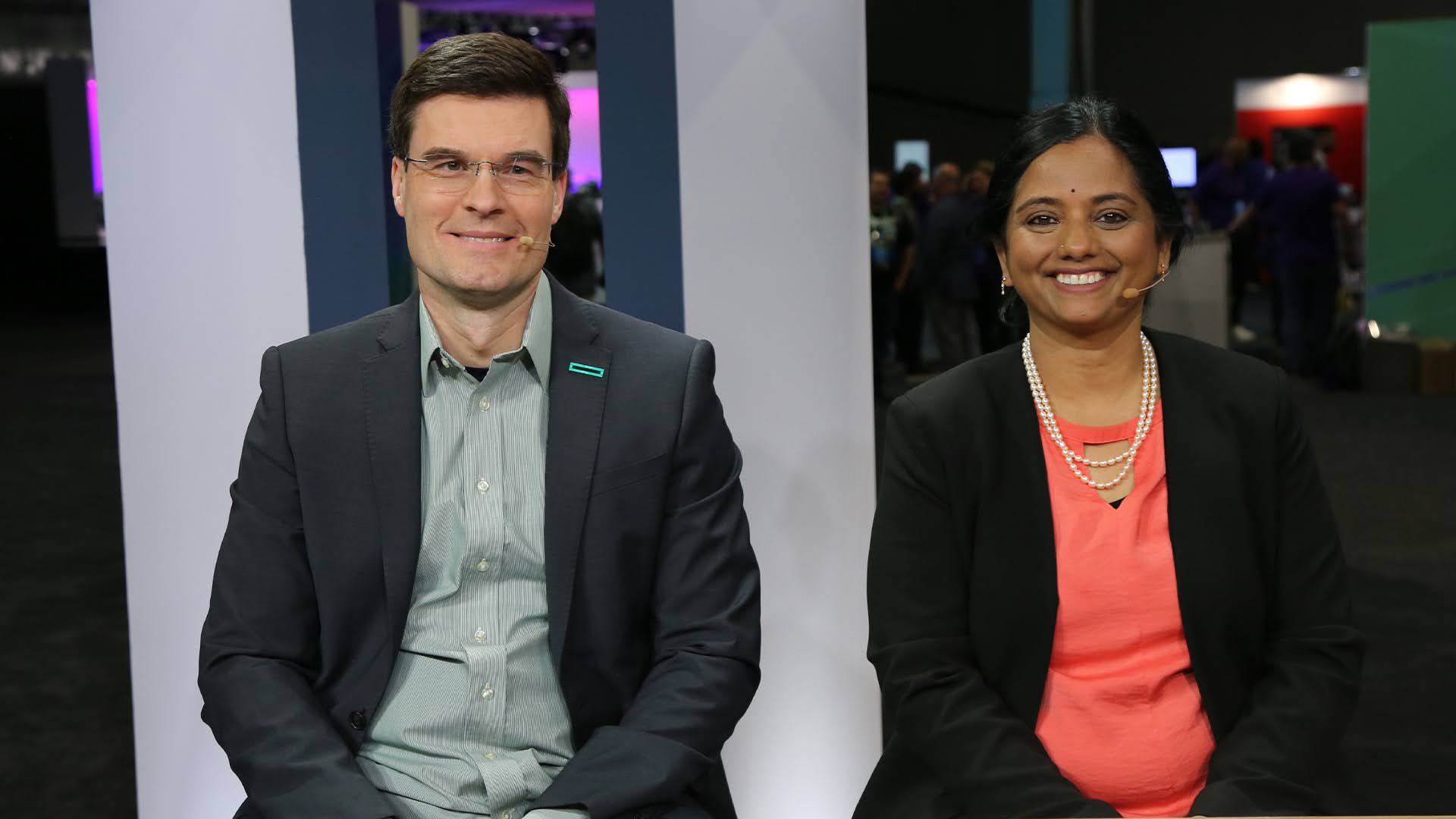
Tony Koinov and Latha Vishnubhotla discuss how to enable hybrid workloads, including AI, using HPE GreenLake cloud. With HPE’s unique platform approach, customers can achieve IT agility and operations simplicity while maintaining control.
Forgot Password
Almost there!
We just sent you a verification email. Please verify your account to gain access to
HPE Discover 2024. If you don’t think you received an email check your
spam folder.
In order to sign in, enter the email address you used to registered for the event. Once completed, you will receive an email with a verification link. Open this link to automatically sign into the site.
Register For HPE Discover 2024
Please fill out the information below. You will recieve an email with a verification link confirming your registration. Click the link to automatically sign into the site.
You’re almost there!
We just sent you a verification email. Please click the verification button in the email. Once your email address is verified, you will have full access to all event content for HPE Discover 2024.
I want my badge and interests to be visible to all attendees.
Checking this box will display your presense on the attendees list, view your profile and allow other attendees to contact you via 1-1 chat. Read the Privacy Policy. At any time, you can choose to disable this preference.
Select your Interests!
add
Upload your photo
Uploading..
OR
Connect via Twitter
Connect via Linkedin
EDIT PASSWORD
Share
Forgot Password
Almost there!
We just sent you a verification email. Please verify your account to gain access to
HPE Discover 2024. If you don’t think you received an email check your
spam folder.
In order to sign in, enter the email address you used to registered for the event. Once completed, you will receive an email with a verification link. Open this link to automatically sign into the site.
Sign in to gain access to HPE Discover 2024
Please sign in with LinkedIn to continue to HPE Discover 2024. Signing in with LinkedIn ensures a professional environment.
Are you sure you want to remove access rights for this user?
Details
Manage Access
email address
Community Invitation
Driving business outcomes with a purposely designed hybrid cloud platform from HPE
Tony Koinov and Latha Vishnubhotla discuss how to enable hybrid workloads, including AI, using HPE GreenLake cloud. With HPE’s unique platform approach, customers can achieve IT agility and operations simplicity while maintaining control.
Driving business outcomes with a purposely designed hybrid cloud platform from HPE
Latha Vishnubhotla
Chief Platform OfficerHPE
Tony Koinov
SVP, GM, HPE GreenLake PlatformHPE
search
Rebecca Knight
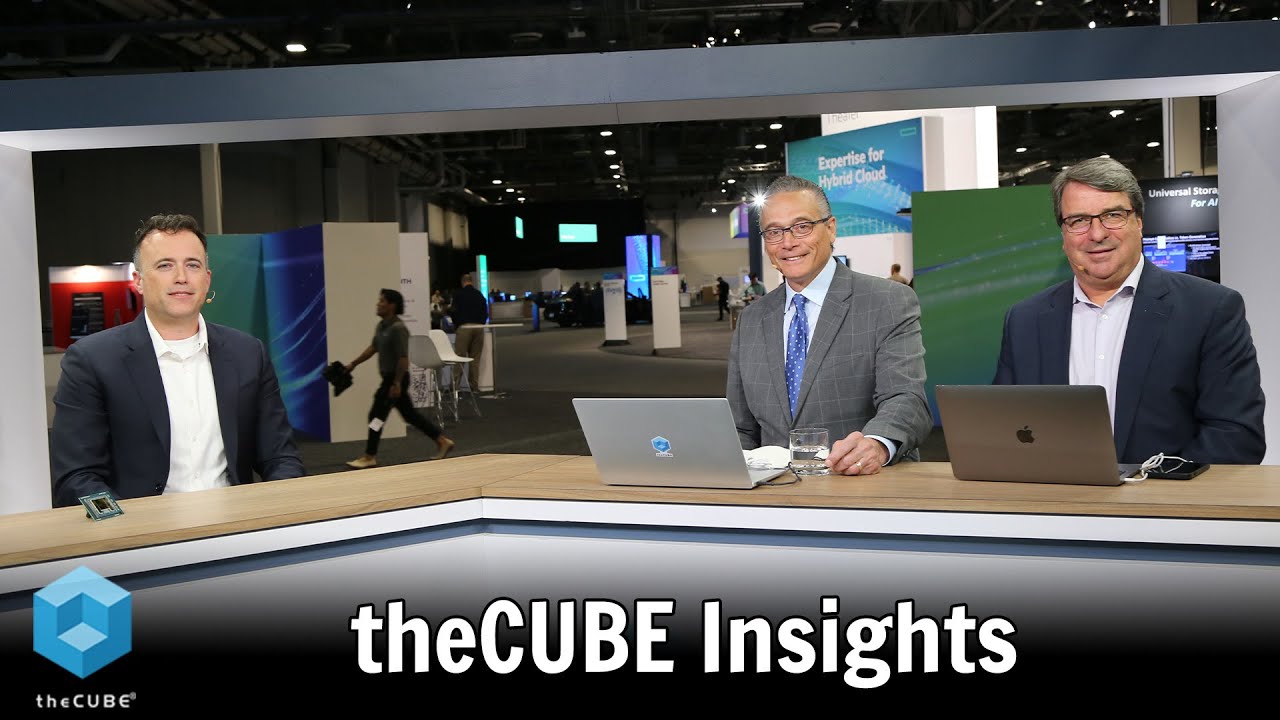
>> Good afternoon, everyone, and welcome back to Day 2 of theCUBE's live coverage of HPE Discover here in Las Vegas. I'm your host, Rebecca Knight, sitting alongside Rob Strechay.>> Hey.
Rebecca Knight
>> Hello.>> Nice to see you again.
Rebecca Knight
>> The last time we were at an HPE show, we were in Barcelona.>> Yeah, we were. It was fantastic and I'm glad to be here again with you. I've been sequestered off in the analyst room for the last two days, and it's great to get out and talk with some people that have really making these products and making the customers happy.
Rebecca Knight
>> Well, speaking of that, let's introduce our next two guests. We have Tony Koinov, he's the SVP, GM, HPE GreenLake Platforms at HPE. Welcome, Tony.
Tony Koinov
>> Well, thank you very much. I'm really excited to be here at theCUBE for the first time, so I'm-
Rebecca Knight
>> First time?...
Tony Koinov
>> looking forward to this conversation.
Rebecca Knight
>> Yes, exactly. And we have Latha Vishnubhotla. She's the chief platinum officer at HPE. Welcome making a triumphant return to theCUBE rather, so thank you so much.
Latha Vishnubhotla
>> Thank you. Thank you very much.
Rebecca Knight
>> So Tony, I want to start with you because you are a veteran of this industry. You've worked at Netflix, GoDaddy, Adobe, some really impressive brand names there. You've been with HPE since October. Tell us a little bit about your background and what you bring to the table at HPE and also what attracted you about the opportunity here?
Tony Koinov
>> Yeah, it's an excellent question. I joined HPE about half a year ago. And as you said, before that, for the last 20 years I was in the high-tech industry, predominantly in the San Francisco Silicon Valley area. Had the opportunity to lead a lot of very large scale services, platforms as well as very high traffic web and mobile applications over those years. As you said, I've had the opportunity to experience some of the transformational times at Google, YouTube, Netflix. But right before joining HPE, I was at Adobe leading multi-cloud initiatives. Had a lot of experience over those years of moving workloads from the data center to the cloud, between clouds, building multi-cloud, as well as building data centers to actually take some of the workloads to the edge for various business and customer satisfaction reasons. So I'll be happy to talk about those more in the future.>> So I think again, as you brought that, how does that really tie into the vision that you're bringing as well?
Tony Koinov
>> Yeah, so that's a good question. The reason I joined HPE now because it's a transformational moment in the industry. As I said, I experienced myself firsthand actually needing to build hybrid cloud environments rather than just pure cloud environments. And the realization that in the industry is today that the hybrid is here with us to stay and this is a pivotal moment, which HPE has predicted five years ago and has been building on this trajectory for a while. And it has a differentiated offering through HPE GreenLake. So it was natural for me to join and really be part of this journey and both help HPE but also bring my knowledge and experience to our customers.
Rebecca Knight
>> Latha, I'm going to bring you into this conversation. As chief platform officer, you've been on theCUBE before talking about platform innovations. I'd love you to give us an update of what you're hearing from customers in terms of how they're adopting these platforms and how they've impacted their businesses.
Latha Vishnubhotla
>> Yeah. If you look at the HPE GreenLake cloud, it's a cloud that comes to you, right? And this cloud offers variety of capabilities for customers to run their traditional cloud-native, AI-native workloads. So this is what we have been building. And if you look at the platform from get-go, we kept hybrid cloud in mind and we kept building a lot of features for solving hybrid cloud needs or the challenges that the customers are facing. So in terms of what we have offered to the customers, variety of services, we offered services in networking, storage, compute. And we also brought in the OpsRamp capability. Last year when I was here, we were talking about OpsRamp acquisition. Now we actually integrated that onto the platform for hybrid multi-cloud, multi-vendor observability. We also added Sustainability Insight Center and consumption analytics. There's a whole bunch of features that we have added onto the platform. If you look from a persona point of view, again, we not only service the network server and storage admins, but we also service other persona like ITOps, FinOps, DevOps, GreenOps. GreenOps is real these days because they are all worried about all the AI workloads and how much power they're going to consume in the data centers. So variety of personas that we serve on the platform. And if you look at the statistics, we have 4 million connected devices on the platform. I'm not even talking about the secondary devices. That will be like hundreds of millions, and if you count even the virtual machines and so on. So 4 million devices, 34,000 customers, and we have more than 1,200 channel partners and managed service providers. Believe it or not, the MSPs love the platform because this is one product they need to learn and they keep on unleashing more services for their customers, right? I couldn't be proud, more proud about what we have achieved in a short time and how we are able to serve our customers and partners. I'm very, very happy about it. And look at all the announcements, right? The HPE private cloud AI for AI workloads to do the inferencing or model tuning or RAG, that's more exciting. I think you will see a lot more customers saying, "Yes, we are on the right track with the platform in a short time.">> Yeah, I think to me that makes so much sense because of what we're seeing in the research that we actually do is that 50% of net new cloud native apps are actually being deployed or in colo. It was a nice announcement with WWT and the Equinox and the public cloud AI that's being rolled out and stuff like that. But Tony, help us understand because it's not just about AI, it is about some of these traditional workloads. It's about the cloud native workloads and the AI workloads that really GreenLake Cloud is assisting customers get a handle on. How do you look at that? How do you talk to that?
Tony Koinov
>> Well, even as I mentioned from my own experience, since the cloud adoption has started, the reality is that the businesses, the enterprises have struggled for gaining the cloud economics across the complete suite of their workloads. Having to run those workloads in different environments, multiple clouds, multiple platforms, as well as having the need to run them at the edge, on-prem for various business and customer needs. In this process, what we have built is we have built from the ground up a platform-first cloud experience for them so that we are providing a single cloud for their multi-vendor, multi-cloud estate, which a single platform that brings common data, common services, common practices across all of their infrastructure as well as workloads, and enables them through this process to significantly simplify their operations, increase their agility, and of course have full control of, which is extremely important with AI nowadays as well, full control of their data and as well as of their environment through a single control plane.
Rebecca Knight
>> Latha, I want to come back to you. Fidelma Russo was up on the main stage and she said customers worry about the what and the why, and it's our job to worry about the how. It wasn't necessarily in the context of platforms, but it could have been. I mean, it's about HPE bringing the expertise. Can you talk a little bit about how these advancements are truly benefiting customers in terms of their day-to-day operations?
Latha Vishnubhotla
>> Yes, you touched upon an important word there, operations. When I talk to many of these customers, the Day 0/Day 1 aspects are one set of problems that they need to worry about, but it's the Day 2 operations is where they're really, really concerned, right? Whenever they are buying any equipment from different vendors. So what we have on the platform with the OpsRamp capability, for example, for the hybrid multi-cloud or multi-vendor operations or sustainability or FinOps, all of these capabilities on the platform really help them to operate their infrastructure and services that they're consuming from us, right? And there is also another thing that Tony touched upon, which is the platform foundational services. What we have kept in mind as we were building the platform is to provide that consistent end-to-end experience. No matter which service you use on the platform, you get a consistent end-to-end experience Day 0/Day 1/Day 2, right? And that actually reduces the operational burden, believe it or not. And just to give you one example, look at the APIs. The customers or managed service providers, they need to learn the APIs once and they can keep using it for different products and do the automation. Automation is key, obviously, from our operations point of view. This is how we are making life easy for the customers to use the services from the platform.>> And I think, again, it was throughout all of the announcements. I mean, the GreenLake cloud is absolutely just... It seems like a foundational part of everything that is being done no matter where it is. I mean, again, with some of the demos that were done today and things of that nature about how it's simple to go from bare metal to KVM or virtual machines and how you then get to Kubernetes and to containers all the way through, "Hey, click," and then you get AI on top of that. Help us unpack some of the innovations and how you really see this, and again, kind of from that customer perspective of the use cases that it's solving for them as well. Because I love the Day 2 thing because I think that to me is, "Great. I set it up, I get it running. Now, it's Day 1." And okay, nothing's went bump in the night, but getting to that Day 2.
Latha Vishnubhotla
>> Yeah, so if you look at the innovation, so let's start from the private cloud AI, we talked about it throughout all of the sessions that discover not only we are offering the AI solutions to our customers, but we are also embracing AI within the platform. So we have something called gen AI-based search capabilities on the platform. I talked about a lot of different users on the platform, so how they can use the gen AI search to get to what they want very quickly. So making life simple again from a Day 0/Day 1/ Day 2 point of view. So that's one additional capability we added into the platform apart from the private cloud AI, which you heard a lot. Then when we talk about the infrastructure that gets deployed, we have something called wellness dashboard or wellness events are recorded for all of the HPE infrastructure and we give recommendations if we need to fix some of those things, remediation aspects or tips to the customers. And if there is any failure or anything that we are observing, the software immediately goes and creates a support ticket with HPE support. So that kind of reduces the customer downtime issues and ability to go and repair things quickly. So that's another innovation. And we already talked about sustainability in site center. Everybody wants to have a baseline understanding of the power consumption and carbon emission footprint because tomorrow when they run the AI workloads, it's only going to go increase eight to 10 times more. So SIC, we call it on the platform, provides that insights so they can place the workloads based on the information. "Is it better to do it in New York or is it in London? Where do I place these workloads?" You see? So from a customer point of view, we give that information and they can achieve their sustainability goals as well. So there's a whole bunch of new features. And one thing I want to also touch upon is the GreenLake cloud for the disconnected or a secure environments. I think Fidelma also touched upon that in her keynote today. So that's another advancement we did on the platform.
Tony Koinov
>> And maybe just to summarize, right, because a lot correctly described some of the latest innovation that we have, the key important fact is that we're continuing to very heavily invest into the platform to grow it in depth breadth, bringing new services. And throughout this process, we're continuously making sure that everything that we build on the platform runs no matter who the vendor is or where those workloads are, giving full control to our customers to build and run their environments in the best way that benefits their business. That's really important philosophy for us for being an innovator in the hybrid space.
Rebecca Knight
>> Well, I have a question about innovation because both of you have led successful technology teams within different organizations. I talked about where you've been Tony, GoDaddy and Adobe, and you've been a Cisco and also Palo Alto Networks. I'm interested to hear in the strategies that you use to foster innovation and drive continuous improvement and then what you're doing at HPE to do the same.
Tony Koinov
>> Yeah, so innovation comes in different ways. One is what I'll call it embedded innovation, which this is an innovation that happens day in and day out throughout the process of building the product. And gradually, we usually will look two years back and see, "Oh yes, this was a huge incremental process that happened." So we are continuously fostering this level of innovation. We also have these innovation weeks periodically in the team and so on. The other innovation is really driving a more thought out, more plan, forward-looking process of innovation where we define what are the areas usually expanding the market or addressing specific customer needs. And then we decide how do we invest into those directions in a way that we lead progressively into prototyping experiments and potentially bringing new products into the marketplace. So we are pursuing both directions continuously to maximize the output for our customers.
Latha Vishnubhotla
>> Yeah, I think in addition to what Tony mentioned, we also work with our CTO team, the fellows and technologists who are looking at three to five years horizon, right? We continuously work with them also, apart from doing how we can service the customer requirements and bring some of those ideas to innovate on the platform. And Sustainability Insight Center, in fact, is one idea that actually stemmed from one of the Tech Con, if you will. I don't know if you're aware, we have Tech Con where the innovations are showcased within HPE and we embrace that on the platform.>> Yeah. In fact, I got to talk to some of those folks in labs and in Tech Con earlier today. And I think that to me has always been... Again, I was at HPE, feels actually it was over a decade ago now. But when I start to look at it really is about the innovation and listening to the customers and bringing that back together. Help us understand, because you guys go so broad across HPE, and I think that was the foresight of Fidelma and everything, bringing it together from a hybrid cloud perspective, how do you work across those different groups and how do you keep that innovation going with them and intersecting with them?
Tony Koinov
>> So we have a process through which we coordinate with our partners, partner groups usually be used within HPE but it could be also external partners, to take on new initiatives. As I said, we are looking at what are the adjacent opportunities to what we have currently in the marketplace, what are the new very novel ideas that we can pursue together, and we're building a plan and execute through incremental prototyping, putting it into the marketplace, running experiments, seeing what the result is. The Sustainability Insight Center is a very good example, which evolved through this process, right? There was an idea. Sustainability obviously is a very, very, very big topic. Antonio Neri mentioned it in his keynote even a day ago. It's very core principle for us. And as Latha mentioned, the AI is a very power-hungry also application that is becoming an even more important aspect. But the Sustainability Insight Center was built from the ground up through bringing the idea forward, building a prototype, experimenting with the users, incrementally building feature by feature until we are now announcing that we are providing a very comprehensive coverage of carbon and power usage and enabling the enterprises to measure and achieve their sustainability goals.
Rebecca Knight
>> Excellent. Well, Tony and Latha, thank you both so much for coming on theCUBE. And Tony, you're a CUBE alum now, so well done.
Tony Koinov
>> Yeah. Thank you. Thank you.
Rebecca Knight
>> Thank you. I'm Rebecca Knight for Rob Strechay. Stay tuned for more of theCUBE's live coverage of HPE Discover. You're watching theCUBE, the leader in enterprise tech news and analysis.
Driving business outcomes with a purposely designed hybrid cloud platform from HPE
search
Rebecca Knight
>> Good afternoon, everyone, and welcome back to Day 2 of theCUBE's live coverage of HPE Discover here in Las Vegas. I'm your host, Rebecca Knight, sitting alongside Rob Strechay.>> Hey.
Rebecca Knight
>> Hello.>> Nice to see you again.
Rebecca Knight
>> The last time we were at an HPE show, we were in Barcelona.>> Yeah, we were. It was fantastic and I'm glad to be here again with you. I've been sequestered off in the analyst room for the last two days, and it's great to get out and talk with some people that have really making these products and making the customers happy.
Rebecca Knight
>> Well, speaking of that, let's introduce our next two guests. We have Tony Koinov, he's the SVP, GM, HPE GreenLake Platforms at HPE. Welcome, Tony.
Tony Koinov
>> Well, thank you very much. I'm really excited to be here at theCUBE for the first time, so I'm-
Rebecca Knight
>> First time?...
Tony Koinov
>> looking forward to this conversation.
Rebecca Knight
>> Yes, exactly. And we have Latha Vishnubhotla. She's the chief platinum officer at HPE. Welcome making a triumphant return to theCUBE rather, so thank you so much.
Latha Vishnubhotla
>> Thank you. Thank you very much.
Rebecca Knight
>> So Tony, I want to start with you because you are a veteran of this industry. You've worked at Netflix, GoDaddy, Adobe, some really impressive brand names there. You've been with HPE since October. Tell us a little bit about your background and what you bring to the table at HPE and also what attracted you about the opportunity here?
Tony Koinov
>> Yeah, it's an excellent question. I joined HPE about half a year ago. And as you said, before that, for the last 20 years I was in the high-tech industry, predominantly in the San Francisco Silicon Valley area. Had the opportunity to lead a lot of very large scale services, platforms as well as very high traffic web and mobile applications over those years. As you said, I've had the opportunity to experience some of the transformational times at Google, YouTube, Netflix. But right before joining HPE, I was at Adobe leading multi-cloud initiatives. Had a lot of experience over those years of moving workloads from the data center to the cloud, between clouds, building multi-cloud, as well as building data centers to actually take some of the workloads to the edge for various business and customer satisfaction reasons. So I'll be happy to talk about those more in the future.>> So I think again, as you brought that, how does that really tie into the vision that you're bringing as well?
Tony Koinov
>> Yeah, so that's a good question. The reason I joined HPE now because it's a transformational moment in the industry. As I said, I experienced myself firsthand actually needing to build hybrid cloud environments rather than just pure cloud environments. And the realization that in the industry is today that the hybrid is here with us to stay and this is a pivotal moment, which HPE has predicted five years ago and has been building on this trajectory for a while. And it has a differentiated offering through HPE GreenLake. So it was natural for me to join and really be part of this journey and both help HPE but also bring my knowledge and experience to our customers.
Rebecca Knight
>> Latha, I'm going to bring you into this conversation. As chief platform officer, you've been on theCUBE before talking about platform innovations. I'd love you to give us an update of what you're hearing from customers in terms of how they're adopting these platforms and how they've impacted their businesses.
Latha Vishnubhotla
>> Yeah. If you look at the HPE GreenLake cloud, it's a cloud that comes to you, right? And this cloud offers variety of capabilities for customers to run their traditional cloud-native, AI-native workloads. So this is what we have been building. And if you look at the platform from get-go, we kept hybrid cloud in mind and we kept building a lot of features for solving hybrid cloud needs or the challenges that the customers are facing. So in terms of what we have offered to the customers, variety of services, we offered services in networking, storage, compute. And we also brought in the OpsRamp capability. Last year when I was here, we were talking about OpsRamp acquisition. Now we actually integrated that onto the platform for hybrid multi-cloud, multi-vendor observability. We also added Sustainability Insight Center and consumption analytics. There's a whole bunch of features that we have added onto the platform. If you look from a persona point of view, again, we not only service the network server and storage admins, but we also service other persona like ITOps, FinOps, DevOps, GreenOps. GreenOps is real these days because they are all worried about all the AI workloads and how much power they're going to consume in the data centers. So variety of personas that we serve on the platform. And if you look at the statistics, we have 4 million connected devices on the platform. I'm not even talking about the secondary devices. That will be like hundreds of millions, and if you count even the virtual machines and so on. So 4 million devices, 34,000 customers, and we have more than 1,200 channel partners and managed service providers. Believe it or not, the MSPs love the platform because this is one product they need to learn and they keep on unleashing more services for their customers, right? I couldn't be proud, more proud about what we have achieved in a short time and how we are able to serve our customers and partners. I'm very, very happy about it. And look at all the announcements, right? The HPE private cloud AI for AI workloads to do the inferencing or model tuning or RAG, that's more exciting. I think you will see a lot more customers saying, "Yes, we are on the right track with the platform in a short time.">> Yeah, I think to me that makes so much sense because of what we're seeing in the research that we actually do is that 50% of net new cloud native apps are actually being deployed or in colo. It was a nice announcement with WWT and the Equinox and the public cloud AI that's being rolled out and stuff like that. But Tony, help us understand because it's not just about AI, it is about some of these traditional workloads. It's about the cloud native workloads and the AI workloads that really GreenLake Cloud is assisting customers get a handle on. How do you look at that? How do you talk to that?
Tony Koinov
>> Well, even as I mentioned from my own experience, since the cloud adoption has started, the reality is that the businesses, the enterprises have struggled for gaining the cloud economics across the complete suite of their workloads. Having to run those workloads in different environments, multiple clouds, multiple platforms, as well as having the need to run them at the edge, on-prem for various business and customer needs. In this process, what we have built is we have built from the ground up a platform-first cloud experience for them so that we are providing a single cloud for their multi-vendor, multi-cloud estate, which a single platform that brings common data, common services, common practices across all of their infrastructure as well as workloads, and enables them through this process to significantly simplify their operations, increase their agility, and of course have full control of, which is extremely important with AI nowadays as well, full control of their data and as well as of their environment through a single control plane.
Rebecca Knight
>> Latha, I want to come back to you. Fidelma Russo was up on the main stage and she said customers worry about the what and the why, and it's our job to worry about the how. It wasn't necessarily in the context of platforms, but it could have been. I mean, it's about HPE bringing the expertise. Can you talk a little bit about how these advancements are truly benefiting customers in terms of their day-to-day operations?
Latha Vishnubhotla
>> Yes, you touched upon an important word there, operations. When I talk to many of these customers, the Day 0/Day 1 aspects are one set of problems that they need to worry about, but it's the Day 2 operations is where they're really, really concerned, right? Whenever they are buying any equipment from different vendors. So what we have on the platform with the OpsRamp capability, for example, for the hybrid multi-cloud or multi-vendor operations or sustainability or FinOps, all of these capabilities on the platform really help them to operate their infrastructure and services that they're consuming from us, right? And there is also another thing that Tony touched upon, which is the platform foundational services. What we have kept in mind as we were building the platform is to provide that consistent end-to-end experience. No matter which service you use on the platform, you get a consistent end-to-end experience Day 0/Day 1/Day 2, right? And that actually reduces the operational burden, believe it or not. And just to give you one example, look at the APIs. The customers or managed service providers, they need to learn the APIs once and they can keep using it for different products and do the automation. Automation is key, obviously, from our operations point of view. This is how we are making life easy for the customers to use the services from the platform.>> And I think, again, it was throughout all of the announcements. I mean, the GreenLake cloud is absolutely just... It seems like a foundational part of everything that is being done no matter where it is. I mean, again, with some of the demos that were done today and things of that nature about how it's simple to go from bare metal to KVM or virtual machines and how you then get to Kubernetes and to containers all the way through, "Hey, click," and then you get AI on top of that. Help us unpack some of the innovations and how you really see this, and again, kind of from that customer perspective of the use cases that it's solving for them as well. Because I love the Day 2 thing because I think that to me is, "Great. I set it up, I get it running. Now, it's Day 1." And okay, nothing's went bump in the night, but getting to that Day 2.
Latha Vishnubhotla
>> Yeah, so if you look at the innovation, so let's start from the private cloud AI, we talked about it throughout all of the sessions that discover not only we are offering the AI solutions to our customers, but we are also embracing AI within the platform. So we have something called gen AI-based search capabilities on the platform. I talked about a lot of different users on the platform, so how they can use the gen AI search to get to what they want very quickly. So making life simple again from a Day 0/Day 1/ Day 2 point of view. So that's one additional capability we added into the platform apart from the private cloud AI, which you heard a lot. Then when we talk about the infrastructure that gets deployed, we have something called wellness dashboard or wellness events are recorded for all of the HPE infrastructure and we give recommendations if we need to fix some of those things, remediation aspects or tips to the customers. And if there is any failure or anything that we are observing, the software immediately goes and creates a support ticket with HPE support. So that kind of reduces the customer downtime issues and ability to go and repair things quickly. So that's another innovation. And we already talked about sustainability in site center. Everybody wants to have a baseline understanding of the power consumption and carbon emission footprint because tomorrow when they run the AI workloads, it's only going to go increase eight to 10 times more. So SIC, we call it on the platform, provides that insights so they can place the workloads based on the information. "Is it better to do it in New York or is it in London? Where do I place these workloads?" You see? So from a customer point of view, we give that information and they can achieve their sustainability goals as well. So there's a whole bunch of new features. And one thing I want to also touch upon is the GreenLake cloud for the disconnected or a secure environments. I think Fidelma also touched upon that in her keynote today. So that's another advancement we did on the platform.
Tony Koinov
>> And maybe just to summarize, right, because a lot correctly described some of the latest innovation that we have, the key important fact is that we're continuing to very heavily invest into the platform to grow it in depth breadth, bringing new services. And throughout this process, we're continuously making sure that everything that we build on the platform runs no matter who the vendor is or where those workloads are, giving full control to our customers to build and run their environments in the best way that benefits their business. That's really important philosophy for us for being an innovator in the hybrid space.
Rebecca Knight
>> Well, I have a question about innovation because both of you have led successful technology teams within different organizations. I talked about where you've been Tony, GoDaddy and Adobe, and you've been a Cisco and also Palo Alto Networks. I'm interested to hear in the strategies that you use to foster innovation and drive continuous improvement and then what you're doing at HPE to do the same.
Tony Koinov
>> Yeah, so innovation comes in different ways. One is what I'll call it embedded innovation, which this is an innovation that happens day in and day out throughout the process of building the product. And gradually, we usually will look two years back and see, "Oh yes, this was a huge incremental process that happened." So we are continuously fostering this level of innovation. We also have these innovation weeks periodically in the team and so on. The other innovation is really driving a more thought out, more plan, forward-looking process of innovation where we define what are the areas usually expanding the market or addressing specific customer needs. And then we decide how do we invest into those directions in a way that we lead progressively into prototyping experiments and potentially bringing new products into the marketplace. So we are pursuing both directions continuously to maximize the output for our customers.
Latha Vishnubhotla
>> Yeah, I think in addition to what Tony mentioned, we also work with our CTO team, the fellows and technologists who are looking at three to five years horizon, right? We continuously work with them also, apart from doing how we can service the customer requirements and bring some of those ideas to innovate on the platform. And Sustainability Insight Center, in fact, is one idea that actually stemmed from one of the Tech Con, if you will. I don't know if you're aware, we have Tech Con where the innovations are showcased within HPE and we embrace that on the platform.>> Yeah. In fact, I got to talk to some of those folks in labs and in Tech Con earlier today. And I think that to me has always been... Again, I was at HPE, feels actually it was over a decade ago now. But when I start to look at it really is about the innovation and listening to the customers and bringing that back together. Help us understand, because you guys go so broad across HPE, and I think that was the foresight of Fidelma and everything, bringing it together from a hybrid cloud perspective, how do you work across those different groups and how do you keep that innovation going with them and intersecting with them?
Tony Koinov
>> So we have a process through which we coordinate with our partners, partner groups usually be used within HPE but it could be also external partners, to take on new initiatives. As I said, we are looking at what are the adjacent opportunities to what we have currently in the marketplace, what are the new very novel ideas that we can pursue together, and we're building a plan and execute through incremental prototyping, putting it into the marketplace, running experiments, seeing what the result is. The Sustainability Insight Center is a very good example, which evolved through this process, right? There was an idea. Sustainability obviously is a very, very, very big topic. Antonio Neri mentioned it in his keynote even a day ago. It's very core principle for us. And as Latha mentioned, the AI is a very power-hungry also application that is becoming an even more important aspect. But the Sustainability Insight Center was built from the ground up through bringing the idea forward, building a prototype, experimenting with the users, incrementally building feature by feature until we are now announcing that we are providing a very comprehensive coverage of carbon and power usage and enabling the enterprises to measure and achieve their sustainability goals.
Rebecca Knight
>> Excellent. Well, Tony and Latha, thank you both so much for coming on theCUBE. And Tony, you're a CUBE alum now, so well done.
Tony Koinov
>> Yeah. Thank you. Thank you.
Rebecca Knight
>> Thank you. I'm Rebecca Knight for Rob Strechay. Stay tuned for more of theCUBE's live coverage of HPE Discover. You're watching theCUBE, the leader in enterprise tech news and analysis.