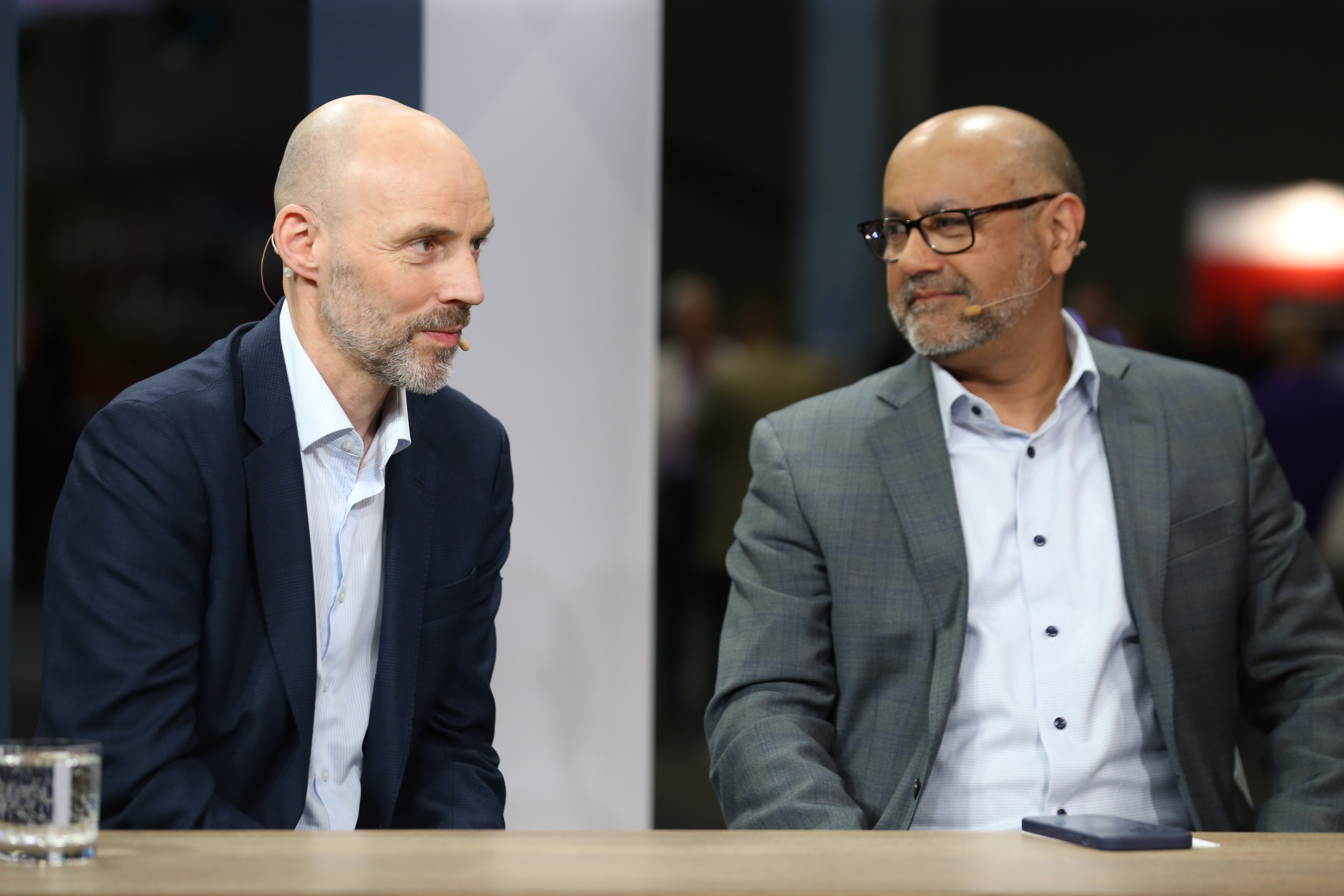
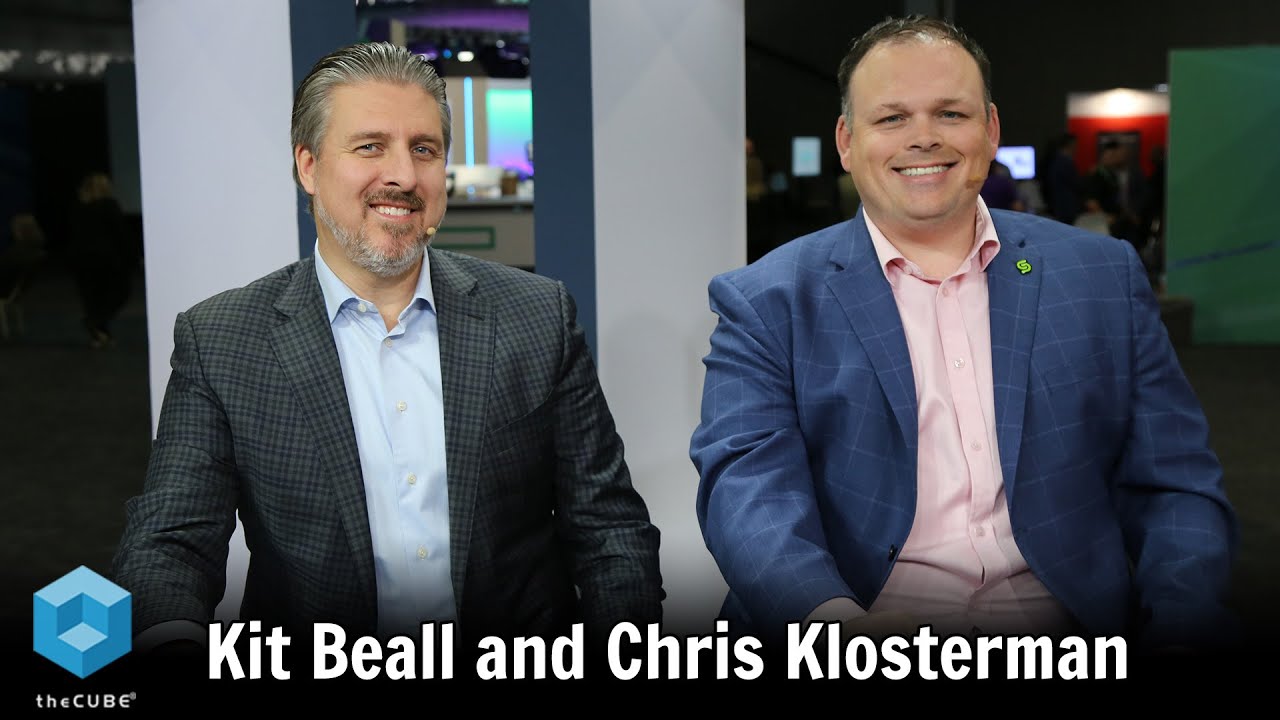
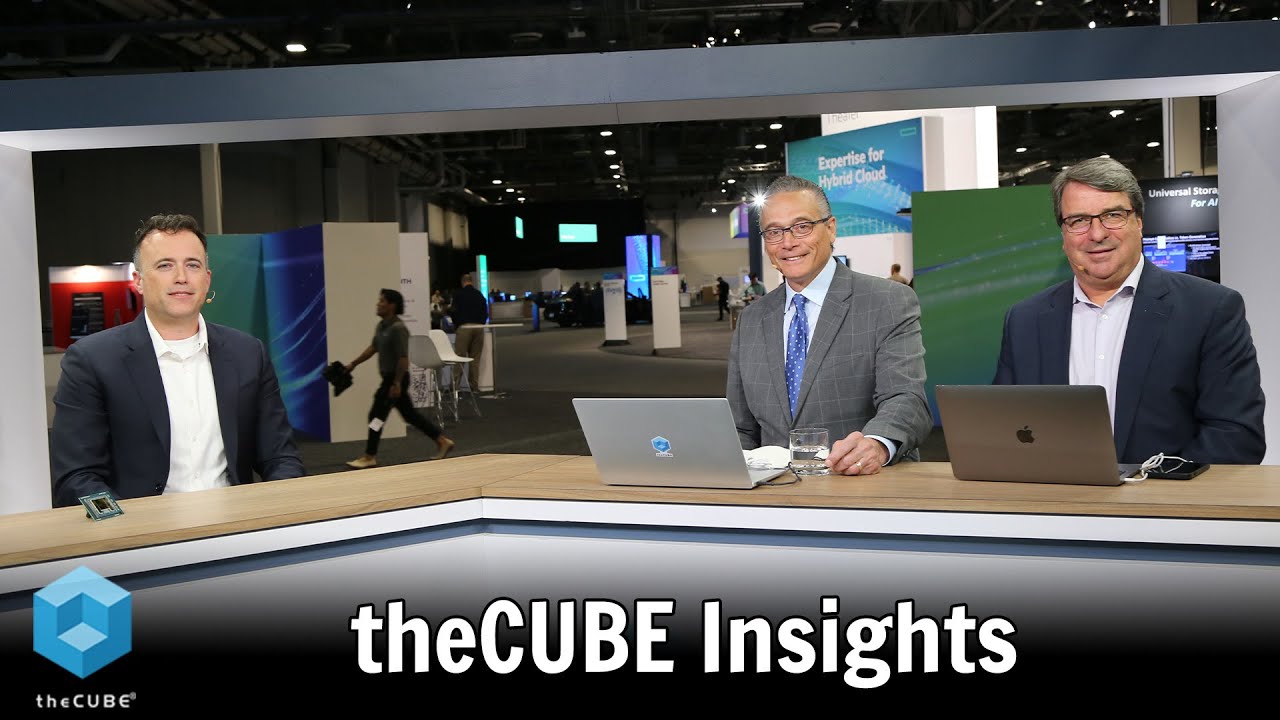
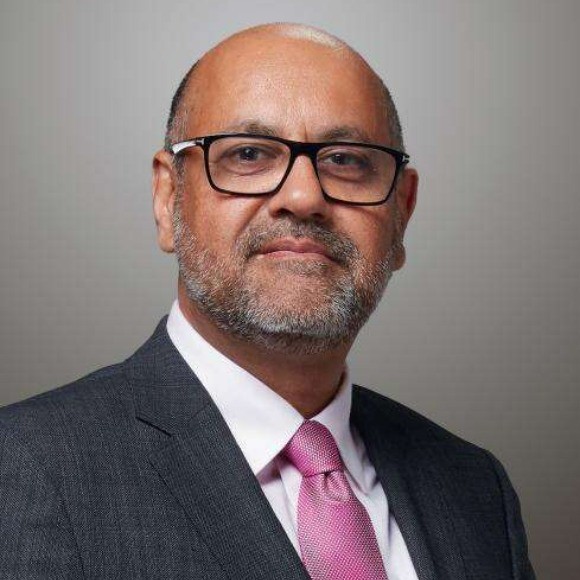
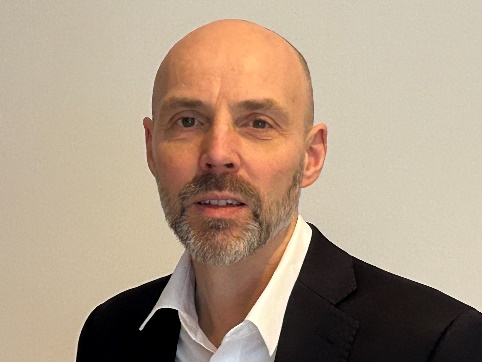
Anil Ganjoo, Chief Growth Officer, HCLTech, and David Stark, HPE Aruba Networking Telco Solutions, discuss how their strategic partnership drives innovation.
Forgot Password
Almost there!
We just sent you a verification email. Please verify your account to gain access to
HPE Discover 2024. If you don’t think you received an email check your
spam folder.
In order to sign in, enter the email address you used to registered for the event. Once completed, you will receive an email with a verification link. Open this link to automatically sign into the site.
Register For HPE Discover 2024
Please fill out the information below. You will recieve an email with a verification link confirming your registration. Click the link to automatically sign into the site.
You’re almost there!
We just sent you a verification email. Please click the verification button in the email. Once your email address is verified, you will have full access to all event content for HPE Discover 2024.
I want my badge and interests to be visible to all attendees.
Checking this box will display your presense on the attendees list, view your profile and allow other attendees to contact you via 1-1 chat. Read the Privacy Policy. At any time, you can choose to disable this preference.
Select your Interests!
add
Upload your photo
Uploading..
OR
Connect via Twitter
Connect via Linkedin
EDIT PASSWORD
Share
Forgot Password
Almost there!
We just sent you a verification email. Please verify your account to gain access to
HPE Discover 2024. If you don’t think you received an email check your
spam folder.
In order to sign in, enter the email address you used to registered for the event. Once completed, you will receive an email with a verification link. Open this link to automatically sign into the site.
Sign in to gain access to HPE Discover 2024
Please sign in with LinkedIn to continue to HPE Discover 2024. Signing in with LinkedIn ensures a professional environment.
Strategic partnership to drive innovation together – HCLTech and HPE
Anil Ganjoo
Chief Growth OfficerHCLTech
David Stark
Senior Software EngineerHPE
search
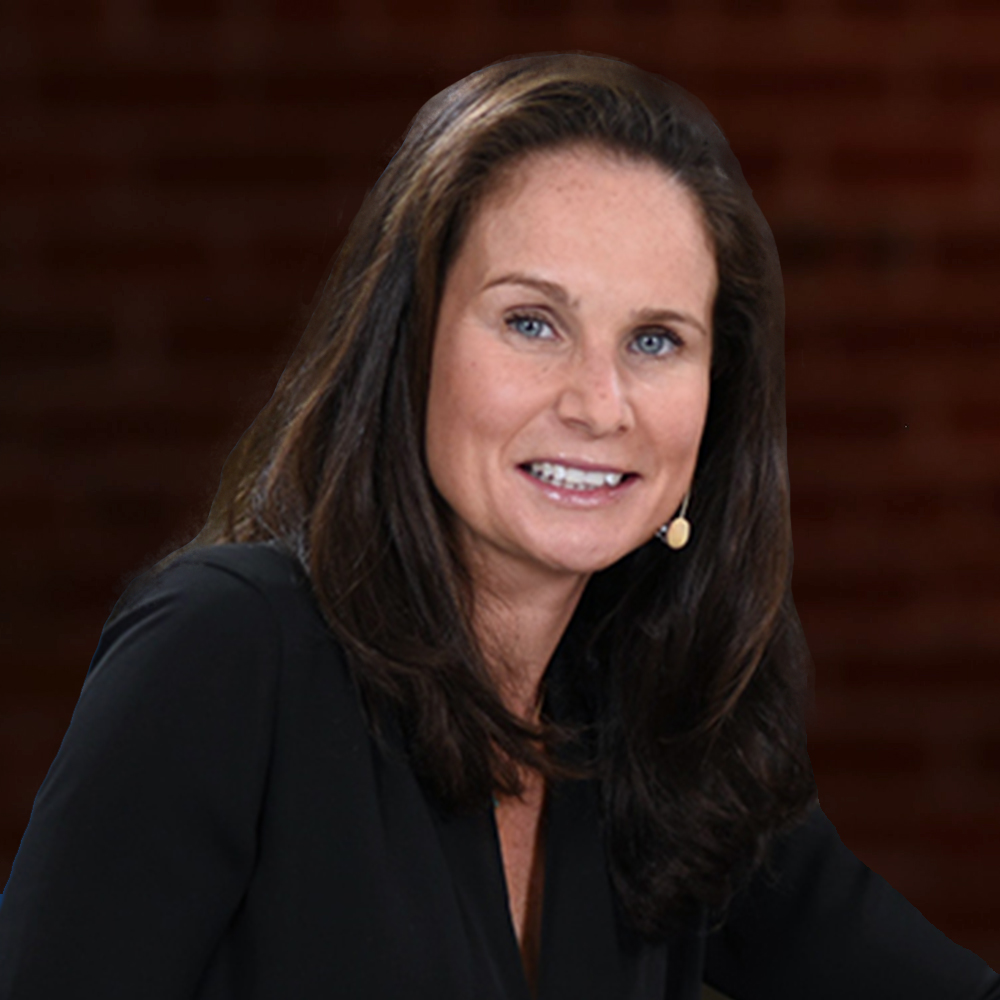
Rebecca Knight
>> Hello everyone and welcome back to theCUBE's live coverage of HPE Discover here at the Venetian in Las Vegas. We are doing three days wall to wall coverage. I'm your host Rebecca Knight, sitting alongside my co-host and co-analyst, Dave Vellante. I'd like to welcome two new guests to this segment. We have Anil Ganjoo. He is the Chief Growth Officer at HCL Tech.
Anil Ganjoo
>> Hello there.
Rebecca Knight
>> Welcome, Anil. And David Stark, GM and VP Aruba Networking Telco Solutions at HPE. Thank you both for-
David Stark
>> Hi.
Rebecca Knight
>> Coming on theCUBE.
David Stark
>> Hey, guys.
Anil Ganjoo
>> Hi there. Hi.
Rebecca Knight
>> So, Anil, I'm going to start with you. Why don't you tell our viewers a little bit about the partnership between HCL Tech and HPE?
Anil Ganjoo
>> Well, Rebecca, the partnership is actually nothing new. The partnership actually was struck 40 years back by HCL Tech with HPE, and so, we had a joint venture between HCL and HP, and the company is called HCL Hewlett Packet about 40 years back in India. Now, in the last few years, that has been a very different partnership where we have been working on HP GreenLake Hybrid Cloud solutions. Then, we've also been working on Aruba Networking Solutions. Most recently, actually, it's Aruba Telco Solutions as well as private 5G ethernet based solutions that this partnership is extended to most recently. And I think we are also looking at some new service line areas like Edge, which is where we'll be using Aruba Network with data and as well as one of the other platforms of HP. So, there's a lot on gen AI and AI based solutions, network solutions and cloud hybrid solutions.>> And Anil, your scope is more than just telco or are you telco focused?
Anil Ganjoo
>> No, it's much more than->> You personally in the role.
Anil Ganjoo
>> I look after not just telecom, I look after media and entertainment, the technology industry, retail, CPG industries.>> So the reason I ask this, David, I'm interested in your thoughts on what's different about telco from the broader enterprise and maybe Anil could give us some context there as well.
David Stark
>> Well, if you like, the obvious short answer is speed. And part of that is enterprises put in systems and technology for their own use. It's a single customer. Obviously, you have more complexity in some enterprises, but in general, that is, telcos worry about providing services across everything. In some cases, consumers through a SOHO SME, up to MNCs. And that is a much harder thing to do in terms of providing a reliable service, almost ensuring if you like, there's always dial tone. So, that change to a telco's network and its infrastructure, it's a lot harder to do. It needs to often come with a lot more thought and heavy lifting and that's why speed is different. But having said that, telcos often would like to be like an enterprise and move at speed and that, for us, is the, if you like, interesting opportunity, an interesting opportunity to work with people like HCL.>> So longer go to markets, maybe you had to do some unnatural acts and customizations and the like. But we all know the story of the telcos. They built out trillions of dollars in CapEx, and on the over at the top, vendors came in and said, "Thank you very much. Now, we'll just take the customers." And the telcos are very vocal, "But we cannot let this happen again. If we're going to spend all this money on 5G, we have to move faster." So, how are you guys helping customers in this industry move fast, but at the same time live up to their heritage of we don't break, and when we break, you don't know it. We saw that during the pandemic. We didn't miss a beat from the... We switched to landlines in many cases, but telcos didn't get much credit for that but they were the reason why. How do you simplify things so that they can move faster?
Anil Ganjoo
>> So, first of all, telcos are all pervasive. There is nowhere in this world that you can be without a telco. Now, telcos are also evolving. As you rightly said, there was a lot of tech debt that telcos have built up over time. They're competing with the bond digital companies. So now, this is where we are differentiating, we are helping them reduce their tech debt, number one. We are helping them in modernizing a lot of their platforms. In fact, this partnership is a lot about network transformation and modernization, simplification of things, modernization of platforms, which is really what is it helping telcos and other enterprises do? It's helping them build customer loyalty, improve customer experience and journeys and, basically, a lot of data that telcos have through consumers like you and I, monetize that by recognizing who your consumers are and reach out to them rather than the bond digital company. So there's a lot of that transformation that firms like us are helping them through the network transformation and experience management.>> And there were a lot of promises around NFV early on, and you talk to the telcos, they were like, "It didn't really get us the outcomes that we wanted." Now, David, there's a big push toward open, and that's somewhat antithetical to the history of telco, but how is that going and how are you guys helping customers maintain, again, that reliability and at the same time be, "Oh, HP's always been an open company." HCL, you're agnostic to technology. Very important issue right now.
David Stark
>> It absolutely is. In a way, all of these kind of technology revolutions are usually about timing. They're not an if, they're a when. And sometimes, you just need a bunch of things to line up for them to start happening. So, I'll take an example and one where we're pretty focused from a telco solutions point of view is ORAN. So, there was a great expectation that ORAN would come along and it would revolutionize and enable telcos to choose best of breed, get commercial leverage, be able to plug things in and out as they change vendors, et cetera. And, obviously, the market hasn't reacted in that way for a variety of reasons. It goes back to, not least, one of the things Anil said, which is technical debt. To bring in new technology, you have to have the right systems and processes and be able to actually justify why you're changing technology out. So, that's why I say timing really matters. But what we're now beginning to see is absolutely the movement of the industry in terms of starting off with vRAN and starting to see trials of ORAN as well. And that's where, if you like, going back to your original point on NFE, you're beginning to see that approach to technology actually become something that people are doing because there's a reason now to do it. And from our point of view, what we want to do is provide that network orchestration automation for the telcos so they get some of that speed and that ability to manage life cycles around microservices or CNFs or whatever. But our challenge, and this is why I'm here with my friend Anil to talk about HP and HCL is, part of the technical debt is how do you integrate those new capabilities into, in some cases, living IT entropy that is the 30 years of telcos? And part of it is having very strong SI partners that could work with our products and make that promise real around the orchestration automation. So, that's kind of where we're coming from.>> Sometimes you feel like entropy winning but it's your job to make it that that doesn't happen.
Rebecca Knight
>> Indeed. Indeed. So Anil, speaking of that, what do you see are these areas of the go-to market that you are going to strengthen the partnership?
Anil Ganjoo
>> Sure. I think we were already partnering on the hybrid cloud front of GreenLake, but now, as per this morning's announcements by Jensen and Antonio, this is now going to go four steps ahead with AI built in and factory level of scaling. So, you can clearly imagine, that will be first big area where we will be partnering in a big way. The second is, again, on the Aruba network front, again, they're going to be infusing it with gen AI. That's another second place where we are going to be extending this partnership. Athonet, which is the private 5G implementations to execution and operations is another big place where we are looking at partnering Edge. So many solutions which are Edge to cloud, connectivity, leveraging data, leveraging HP's products and services. And finally, as NVIDIA's partnership with HPE and HCL Tech's partnership with both NVIDIA and HPE, I can see a lot of triangulation of AI and gen AI based models that we have been working on and dedicated labs that we are partnering on to go to market to enterprise customers and telcos to monetize what they have been spending a lot of money on.>> That was February of '23 at MWC, when HPE announced the acquisition of Athonet. It was actually quite ironic because it was right after Dell announced a partnership with them. So, it was very good timing by HPE. I remember we were talking about it on theCUBE. So, what is the status now of private 5G? What's adoption look like and how do you guys work together to help customers take advantage of that capability?
David Stark
>> So, in terms of adoption, it does vary a bit by vertical industry segment and even geo, not least geo because it's just a simple matter of where's spectrum available and what form. But in terms of segments, certainly from an Athonet point of view, there's a lot in public sector, emergency services, et cetera, in mining, transportation, ports, airports, et cetera, so, we've seen good traction there. I think generally, all of us have seen that kind of proof of value, proof of concept approach. We're beginning to see, from an assay point of view, more and more actual adoption of it. But I think, depending on where you are in the market, there is still that, what's the business case, what's the justification, what's the need for certain bits of the industry? But what you have seen certainly HP do in the last week or so is we've announced Aruba Enterprise Private 5G offer. And that really goes back to the fundamental reason of why did we buy Athonet? Because we see that convergence between wifi and private 5G, the single pane of glass, making private 5G as easy to deploy as wifi. And we still strongly think that is what our customers want. And when we talk to large enterprise customers, the service provider channels, they're absolutely still on that page. So, that bringing together and then using private 5G as infill definitely sells resonance in the market. So, I would say it's good progress. There's no, I think, dramatic change from what we expected and we're looking forward to particularly working with people like HCL to deploy that. And that's one of the things Anil and I were meeting about earlier on. How do we take that to market with an SI capability as well?
Anil Ganjoo
>> So, we are combining the two strengths of both the companies, their products and experience and all the service offerings. We've got joint labs in which we are discussing of making investments, building these, not just POCs of proof of values, but some things which we will take to the customers, build their business case, and then, make it easy for them to deploy at scale. That's what we are talking about.>> Thank you for that. Another thing I want to ask you about is, telcos have always had an affinity for sovereignty, whether it's public policy, local regulations, countries wanting to have a strong telco for their citizens. Now, sovereign AI is this big trend. You're hearing it in all the earnings calls. We heard it in HPE'S earnings call recently. How real is it, how do you see that playing out? Where are the cloud guys in all that, and how do you see the partnership facilitating things like sovereign AI?
Anil Ganjoo
>> I think, AI definitely, as you heard from Jensen, Antonio, everyone, AI is getting more and more real and AI is getting actually deployed by a lot of players, be it from the cloud side to the private cloud providers, to the pure operators, including in products, building up new products as well as customer services, everywhere, AI and gen AI based solutions are getting infused. We are doing it in a lot of operations that we run for some of the largest enterprises. A lot of those operations today are getting infused by AI and gen AI based solutions. By the way, these enterprise customers are expecting us to be deploying a lot of things that we are talking about for future. They're saying that future is today real, and that's what is allowing us to infuse that while we work on newer technology based products that they can be releasing in the marketplace. Yet, everyone expects a couple of additional things. Responsible AI, which is getting very real and there are a lot of regulations involved in it, policies getting where we are all involved. And the second thing is sustainable AI, which is also getting equally real. So, we are working with at a semiconductor level, chip level, equipment manufacturer level, software company level and the complete data center level of all the issues, which is associated with huge workloads moving to AI, but power consumption, energy utility, everything that needs to be reduced so that it is sustainable AI.
Rebecca Knight
>> Anil, David, thank you both so much for coming on theCUBE. A really fascinating conversation.
Anil Ganjoo
>> Rebecca, always a pleasure.>> Thanks guys.
Anil Ganjoo
>> Thank you.
David Stark
>> Thank you very much.
Anil Ganjoo
>> Bye.
Rebecca Knight
>> I'm Rebecca Knight for Dave Vellante. Stay tuned for more of theCUBE's live coverage of HPE Discover. You're watching theCUBE, the leader in enterprise tech news and analysis.
Strategic partnership to drive innovation together – HCLTech and HPE
search
Rebecca Knight
>> Hello everyone and welcome back to theCUBE's live coverage of HPE Discover here at the Venetian in Las Vegas. We are doing three days wall to wall coverage. I'm your host Rebecca Knight, sitting alongside my co-host and co-analyst, Dave Vellante. I'd like to welcome two new guests to this segment. We have Anil Ganjoo. He is the Chief Growth Officer at HCL Tech.
Anil Ganjoo
>> Hello there.
Rebecca Knight
>> Welcome, Anil. And David Stark, GM and VP Aruba Networking Telco Solutions at HPE. Thank you both for-
David Stark
>> Hi.
Rebecca Knight
>> Coming on theCUBE.
David Stark
>> Hey, guys.
Anil Ganjoo
>> Hi there. Hi.
Rebecca Knight
>> So, Anil, I'm going to start with you. Why don't you tell our viewers a little bit about the partnership between HCL Tech and HPE?
Anil Ganjoo
>> Well, Rebecca, the partnership is actually nothing new. The partnership actually was struck 40 years back by HCL Tech with HPE, and so, we had a joint venture between HCL and HP, and the company is called HCL Hewlett Packet about 40 years back in India. Now, in the last few years, that has been a very different partnership where we have been working on HP GreenLake Hybrid Cloud solutions. Then, we've also been working on Aruba Networking Solutions. Most recently, actually, it's Aruba Telco Solutions as well as private 5G ethernet based solutions that this partnership is extended to most recently. And I think we are also looking at some new service line areas like Edge, which is where we'll be using Aruba Network with data and as well as one of the other platforms of HP. So, there's a lot on gen AI and AI based solutions, network solutions and cloud hybrid solutions.>> And Anil, your scope is more than just telco or are you telco focused?
Anil Ganjoo
>> No, it's much more than->> You personally in the role.
Anil Ganjoo
>> I look after not just telecom, I look after media and entertainment, the technology industry, retail, CPG industries.>> So the reason I ask this, David, I'm interested in your thoughts on what's different about telco from the broader enterprise and maybe Anil could give us some context there as well.
David Stark
>> Well, if you like, the obvious short answer is speed. And part of that is enterprises put in systems and technology for their own use. It's a single customer. Obviously, you have more complexity in some enterprises, but in general, that is, telcos worry about providing services across everything. In some cases, consumers through a SOHO SME, up to MNCs. And that is a much harder thing to do in terms of providing a reliable service, almost ensuring if you like, there's always dial tone. So, that change to a telco's network and its infrastructure, it's a lot harder to do. It needs to often come with a lot more thought and heavy lifting and that's why speed is different. But having said that, telcos often would like to be like an enterprise and move at speed and that, for us, is the, if you like, interesting opportunity, an interesting opportunity to work with people like HCL.>> So longer go to markets, maybe you had to do some unnatural acts and customizations and the like. But we all know the story of the telcos. They built out trillions of dollars in CapEx, and on the over at the top, vendors came in and said, "Thank you very much. Now, we'll just take the customers." And the telcos are very vocal, "But we cannot let this happen again. If we're going to spend all this money on 5G, we have to move faster." So, how are you guys helping customers in this industry move fast, but at the same time live up to their heritage of we don't break, and when we break, you don't know it. We saw that during the pandemic. We didn't miss a beat from the... We switched to landlines in many cases, but telcos didn't get much credit for that but they were the reason why. How do you simplify things so that they can move faster?
Anil Ganjoo
>> So, first of all, telcos are all pervasive. There is nowhere in this world that you can be without a telco. Now, telcos are also evolving. As you rightly said, there was a lot of tech debt that telcos have built up over time. They're competing with the bond digital companies. So now, this is where we are differentiating, we are helping them reduce their tech debt, number one. We are helping them in modernizing a lot of their platforms. In fact, this partnership is a lot about network transformation and modernization, simplification of things, modernization of platforms, which is really what is it helping telcos and other enterprises do? It's helping them build customer loyalty, improve customer experience and journeys and, basically, a lot of data that telcos have through consumers like you and I, monetize that by recognizing who your consumers are and reach out to them rather than the bond digital company. So there's a lot of that transformation that firms like us are helping them through the network transformation and experience management.>> And there were a lot of promises around NFV early on, and you talk to the telcos, they were like, "It didn't really get us the outcomes that we wanted." Now, David, there's a big push toward open, and that's somewhat antithetical to the history of telco, but how is that going and how are you guys helping customers maintain, again, that reliability and at the same time be, "Oh, HP's always been an open company." HCL, you're agnostic to technology. Very important issue right now.
David Stark
>> It absolutely is. In a way, all of these kind of technology revolutions are usually about timing. They're not an if, they're a when. And sometimes, you just need a bunch of things to line up for them to start happening. So, I'll take an example and one where we're pretty focused from a telco solutions point of view is ORAN. So, there was a great expectation that ORAN would come along and it would revolutionize and enable telcos to choose best of breed, get commercial leverage, be able to plug things in and out as they change vendors, et cetera. And, obviously, the market hasn't reacted in that way for a variety of reasons. It goes back to, not least, one of the things Anil said, which is technical debt. To bring in new technology, you have to have the right systems and processes and be able to actually justify why you're changing technology out. So, that's why I say timing really matters. But what we're now beginning to see is absolutely the movement of the industry in terms of starting off with vRAN and starting to see trials of ORAN as well. And that's where, if you like, going back to your original point on NFE, you're beginning to see that approach to technology actually become something that people are doing because there's a reason now to do it. And from our point of view, what we want to do is provide that network orchestration automation for the telcos so they get some of that speed and that ability to manage life cycles around microservices or CNFs or whatever. But our challenge, and this is why I'm here with my friend Anil to talk about HP and HCL is, part of the technical debt is how do you integrate those new capabilities into, in some cases, living IT entropy that is the 30 years of telcos? And part of it is having very strong SI partners that could work with our products and make that promise real around the orchestration automation. So, that's kind of where we're coming from.>> Sometimes you feel like entropy winning but it's your job to make it that that doesn't happen.
Rebecca Knight
>> Indeed. Indeed. So Anil, speaking of that, what do you see are these areas of the go-to market that you are going to strengthen the partnership?
Anil Ganjoo
>> Sure. I think we were already partnering on the hybrid cloud front of GreenLake, but now, as per this morning's announcements by Jensen and Antonio, this is now going to go four steps ahead with AI built in and factory level of scaling. So, you can clearly imagine, that will be first big area where we will be partnering in a big way. The second is, again, on the Aruba network front, again, they're going to be infusing it with gen AI. That's another second place where we are going to be extending this partnership. Athonet, which is the private 5G implementations to execution and operations is another big place where we are looking at partnering Edge. So many solutions which are Edge to cloud, connectivity, leveraging data, leveraging HP's products and services. And finally, as NVIDIA's partnership with HPE and HCL Tech's partnership with both NVIDIA and HPE, I can see a lot of triangulation of AI and gen AI based models that we have been working on and dedicated labs that we are partnering on to go to market to enterprise customers and telcos to monetize what they have been spending a lot of money on.>> That was February of '23 at MWC, when HPE announced the acquisition of Athonet. It was actually quite ironic because it was right after Dell announced a partnership with them. So, it was very good timing by HPE. I remember we were talking about it on theCUBE. So, what is the status now of private 5G? What's adoption look like and how do you guys work together to help customers take advantage of that capability?
David Stark
>> So, in terms of adoption, it does vary a bit by vertical industry segment and even geo, not least geo because it's just a simple matter of where's spectrum available and what form. But in terms of segments, certainly from an Athonet point of view, there's a lot in public sector, emergency services, et cetera, in mining, transportation, ports, airports, et cetera, so, we've seen good traction there. I think generally, all of us have seen that kind of proof of value, proof of concept approach. We're beginning to see, from an assay point of view, more and more actual adoption of it. But I think, depending on where you are in the market, there is still that, what's the business case, what's the justification, what's the need for certain bits of the industry? But what you have seen certainly HP do in the last week or so is we've announced Aruba Enterprise Private 5G offer. And that really goes back to the fundamental reason of why did we buy Athonet? Because we see that convergence between wifi and private 5G, the single pane of glass, making private 5G as easy to deploy as wifi. And we still strongly think that is what our customers want. And when we talk to large enterprise customers, the service provider channels, they're absolutely still on that page. So, that bringing together and then using private 5G as infill definitely sells resonance in the market. So, I would say it's good progress. There's no, I think, dramatic change from what we expected and we're looking forward to particularly working with people like HCL to deploy that. And that's one of the things Anil and I were meeting about earlier on. How do we take that to market with an SI capability as well?
Anil Ganjoo
>> So, we are combining the two strengths of both the companies, their products and experience and all the service offerings. We've got joint labs in which we are discussing of making investments, building these, not just POCs of proof of values, but some things which we will take to the customers, build their business case, and then, make it easy for them to deploy at scale. That's what we are talking about.>> Thank you for that. Another thing I want to ask you about is, telcos have always had an affinity for sovereignty, whether it's public policy, local regulations, countries wanting to have a strong telco for their citizens. Now, sovereign AI is this big trend. You're hearing it in all the earnings calls. We heard it in HPE'S earnings call recently. How real is it, how do you see that playing out? Where are the cloud guys in all that, and how do you see the partnership facilitating things like sovereign AI?
Anil Ganjoo
>> I think, AI definitely, as you heard from Jensen, Antonio, everyone, AI is getting more and more real and AI is getting actually deployed by a lot of players, be it from the cloud side to the private cloud providers, to the pure operators, including in products, building up new products as well as customer services, everywhere, AI and gen AI based solutions are getting infused. We are doing it in a lot of operations that we run for some of the largest enterprises. A lot of those operations today are getting infused by AI and gen AI based solutions. By the way, these enterprise customers are expecting us to be deploying a lot of things that we are talking about for future. They're saying that future is today real, and that's what is allowing us to infuse that while we work on newer technology based products that they can be releasing in the marketplace. Yet, everyone expects a couple of additional things. Responsible AI, which is getting very real and there are a lot of regulations involved in it, policies getting where we are all involved. And the second thing is sustainable AI, which is also getting equally real. So, we are working with at a semiconductor level, chip level, equipment manufacturer level, software company level and the complete data center level of all the issues, which is associated with huge workloads moving to AI, but power consumption, energy utility, everything that needs to be reduced so that it is sustainable AI.
Rebecca Knight
>> Anil, David, thank you both so much for coming on theCUBE. A really fascinating conversation.
Anil Ganjoo
>> Rebecca, always a pleasure.>> Thanks guys.
Anil Ganjoo
>> Thank you.
David Stark
>> Thank you very much.
Anil Ganjoo
>> Bye.
Rebecca Knight
>> I'm Rebecca Knight for Dave Vellante. Stay tuned for more of theCUBE's live coverage of HPE Discover. You're watching theCUBE, the leader in enterprise tech news and analysis.