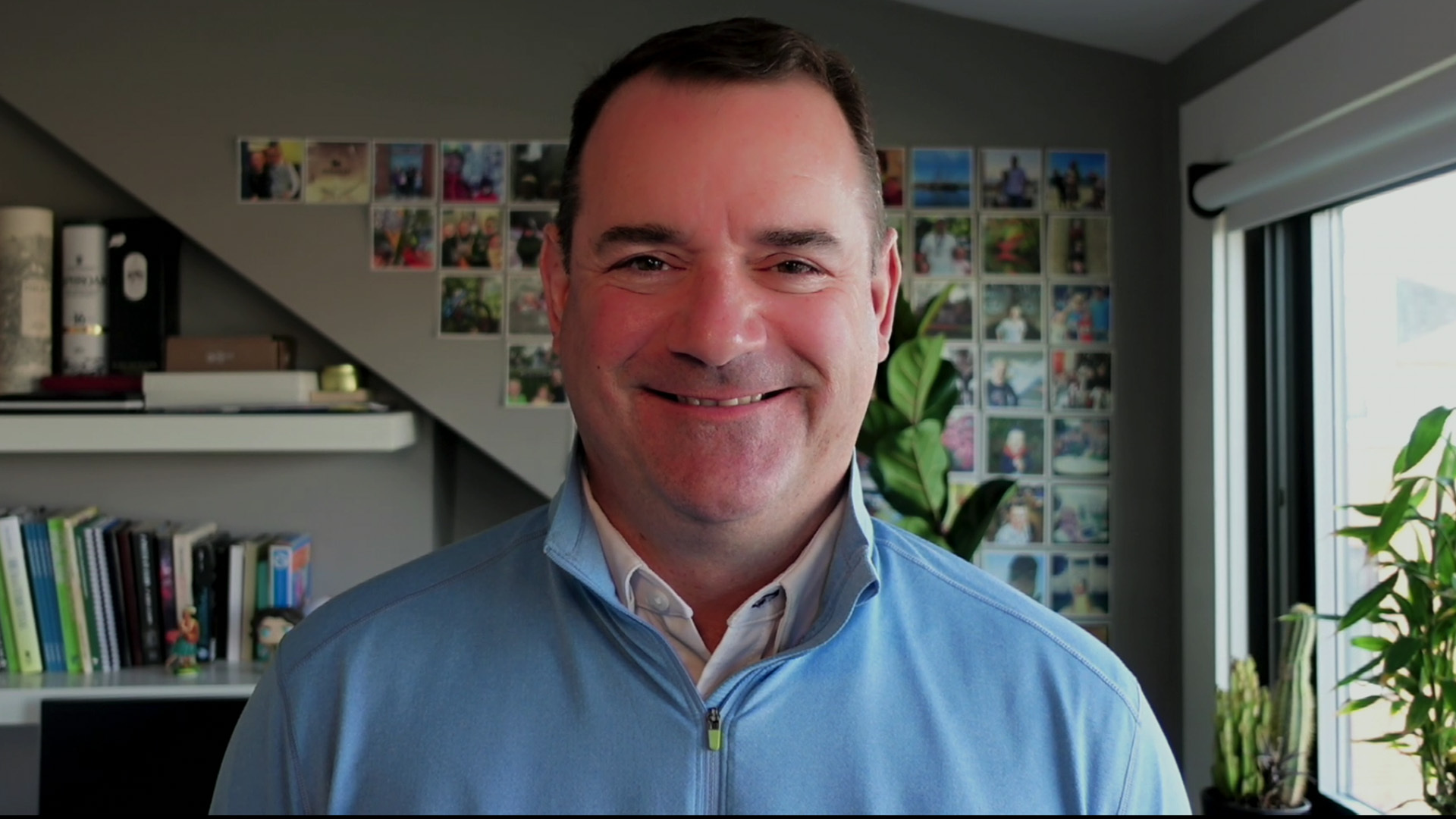
In this episode of "Cloud AI Journey with HPE," theCUBE's Savannah Peterson talks with Patrick Osborne, SVP and GM of cloud data infrastructure, HPE Storage, at Hewlett Packard Enterprise Co. Osborne shares insights on the company's latest developments in unified data services as a vital part of the artificial intelligence landscape.
Peterson and Osborne explore the strategic advancements that led to HPE's creation of the Alletra Storage MP, a cutting-edge disaggregated storage architecture. They highlight its ability to scale resources for performance and capacity, articulating how this model supports various workloads, from traditional block storage to progressive file and object store capabilities.
Key takeaways include insights on evolving storage ownership models and the critical role of AI in data management. Other discussion points include HPE’s mission to assist companies in navigating AI-driven transformation effectively.
Find more SiliconANGLE news and analysis https://siliconangle.com/
Follow theCUBE's wall-to-wall event coverage https://siliconangle.com/events/
Learn about the latest theCUBE events https://www.thecube.net/
00:00 - Intro
00:07 - Exploring the Future of Cloud and Data with HPE
02:07 - Advancing Architecture: Navigating Market Trends in Storage and AI
04:24 - Revolutionizing Data Storage: Overcoming Architectural Challenges
07:23 - HPE's Announcements and Developments
09:29 - Enhancements in User Experience
12:21 - Navigating Customer Engagement Through Strategic Technology Partnerships
15:03 - Driving Future Success: Innovations, AI and Customer Commitment at HPE
#theCUBE #HPECloudAI #theCUBEresearch #HPE #DataManagement #StorageArchitecture #AITransformation #EnterpriseTech
Forgot Password
Almost there!
We just sent you a verification email. Please verify your account to gain access to
Cloud AI Journey With HPE. If you don’t think you received an email check your
spam folder.
In order to sign in, enter the email address you used to registered for the event. Once completed, you will receive an email with a verification link. Open this link to automatically sign into the site.
Register For Cloud AI Journey With HPE
Please fill out the information below. You will recieve an email with a verification link confirming your registration. Click the link to automatically sign into the site.
You’re almost there!
We just sent you a verification email. Please click the verification button in the email. Once your email address is verified, you will have full access to all event content for Cloud AI Journey With HPE.
I want my badge and interests to be visible to all attendees.
Checking this box will display your presense on the attendees list, view your profile and allow other attendees to contact you via 1-1 chat. Read the Privacy Policy. At any time, you can choose to disable this preference.
Select your Interests!
add
Upload your photo
Uploading..
OR
Connect via Twitter
Connect via Linkedin
EDIT PASSWORD
Share
Forgot Password
Almost there!
We just sent you a verification email. Please verify your account to gain access to
Cloud AI Journey With HPE. If you don’t think you received an email check your
spam folder.
In order to sign in, enter the email address you used to registered for the event. Once completed, you will receive an email with a verification link. Open this link to automatically sign into the site.
Sign in to gain access to Cloud AI Journey With HPE
Please sign in with LinkedIn to continue to Cloud AI Journey With HPE. Signing in with LinkedIn ensures a professional environment.
Are you sure you want to remove access rights for this user?
Details
Manage Access
email address
Community Invitation
Episode 3: Patrick Osborne Charts HPE’s Cloud AI Strategy and Storage Innovations
Patrick Osborne, senior VP and GM of cloud data infrastructure for HPE Storage, talks with theCUBE's Savannah Peterson for a discussion on how HPE is reshaping data storage and infrastructure in the AI era. Osborne highlights HPE’s advancements in unified data services, disaggregated storage architecture and the pivotal role of the GreenLake platform. He also reveals the key trends driving customer demands, including scalable storage for AI workloads, virtualization shifts and workload-specific systems. Osborne emphasizes the urgent need for organizations to rethink their data strategies for long-term agility.
Episode 3: Patrick Osborne Charts HPE’s Cloud AI Strategy and Storage Innovations
Patrick Osborne
SVP & GM, Hybrid Cloud Data StorageHPE
search
Savannah Peterson
>> Hello and welcome back to our exclusive series, the Cloud AI Journey with HPE. My name is Savannah Peterson. Delighted to be bringing you the second interview in our series and very pumped to welcome Patrick to the show. Patrick, thank you so much for taking the time to come hang out with us today.
Patrick Osborne
>> My pleasure, Savannah. Always an opportunity to be on theCUBE, it's great. Love your crew. Thank you so much.
Savannah Peterson
>> Yeah, I mean, you are quite a VIP. You're an alum. We've had you on at events. I feel lucky getting to have my first interview with you today. I think it's going to be awesome. We were just talking about how beautiful HQ is. Shout out to the team back at HQ for hosting us there for that Gen 12 launch a little bit ago. So many fun things going on at HPE, but today we're going to be talking a lot about storage and a lot of the different things that you are offering during what is perhaps the most exciting time in technology that we've been alive for. To get us started, I know there's some really compelling and unique things that HPE is doing with unified data services, and I would love if you could talk us through those.
Patrick Osborne
>> Yeah, great. That's an awesome question and thanks always for supporting HPE. We've got a great technology portfolio and really excited to talk about some of the things we're doing around data management and storage. So we started this journey about 18 to 24 months ago with our Alletra MP product line, and we saw on the market the need for... Customers they need to scale both for performance and for capacity, and we brought out a very unique and differentiated what we call a disaggregated storage architecture, all based on some of the modern basic building blocks in data storage. All NVMe, you can scale. It's an end-by-end architecture and it really allows customers to start small, scale as they grow, do hardware lifecycle management. And I think one of the key things is that it's a unified data services architecture in that it can serve multiple workloads. So we do block, we do file hub, and then now we have capabilities around object store with our key value store. And it's a great system, it's a great opportunity for customers to talk about data transformation. It's a hot topic right now in the world of AI because you don't have AI without data. And I think two of the big things that differentiate it for us is we're changing the storage ownership model. So we're bringing the cloud consumption model. Everyone is pretty familiar with HPE for GreenLake. They associate that with a flexible consumption model, and we're bringing the cloud operational model with our GreenLake cloud platform. So very scaled and a lot of customers are voting with their dollars for Alletra MP, which has been very exciting.
Savannah Peterson
>> That is very exciting and you've lots of big announcements around GreenLake over the last little while. Honestly, you've got a lot of offerings and services really in the right place at the right time for your community. Given your role, you get quite a view of the broader storage landscape. What are some of the trends that you're seeing? What are some of the features that your customers are craving?
Patrick Osborne
>> So a couple things. Number one is the opportunity around AI, it's enormous right now. That doesn't have to be oversold here, but that puts a huge tax on customer's ability to do data preparation, data classification. They are re-architecting their storage ecosystem to be able to deal with all of the demands around scale and performance for GPUs and GPU accelerated workloads. Oftentimes there are different storage types. So AI is putting a big focus on unstructured data, so all different types of data, different protocols. Many of the applications that you use in the AI data pipeline were born in the cloud. So they use different paradigms for accessing data, different ways to organize that data. And so it's a great opportunity for customers to kind of step back and take a look at, "Do I have the right architecture in place to service those needs?"
Some of those applications are going to get deployed on-prem because of data privacy and regulation. Some of them are going to be hybrid in nature, so we have a set of data services that unlocks that. So AI is a big area. And then obviously what's going on in the market right now, people are taking a look at what they're doing for virtualization, and that's a big re-architecture of their infrastructure to take a look at, "Am I going to continue to do things the same way? Am I going to start deploying containerized applications?" So there's lots of questions for customers, all opportunities for HPE to help.
Savannah Peterson
>> Yeah, it does sound like there's a lot of opportunity. I'm curious, are there any specific trends across industries or verticals that you notice or patterns that you're seeing? Or is everyone across the board approaching this transformation essentially at the same time, given the velocity of how quickly we're moving through this AI revolution?
Patrick Osborne
>> Yeah, one of the big trends that I see, not only just specifically on the data layer for AI, people sort of rethinking their architecture and, "Is it going to be good for the next 10 years?" They're making tender choices there. One of the key things I see is that customers, they no longer want to buy on horizontal lines. I've got a compute vendor, server vendor of choice in a second source. I've got a networking person, I've got a storage vendor I work with quite a bit. They want outcomes. They want to drive towards a very compelling TCO and obviously an ROI for them that they can show back to their business and they want workload oriented systems. So we have this great and awesome storage and persistence layer for data, but we also build that into all of our private cloud and hybrid cloud offerings. So a customer comes to us and says, "I have a workload XYZ." Maybe it's a mode one workload, virtualization or database. "I've got all these new containerized applications. HPE, help me architect a workload oriented system that's going to give me SLAs, it's going to provide the best TCO and in some cases, provide me a managed service to do that because I don't want my people doing that anymore." So we can offer all that to our customers.
Savannah Peterson
>> It's a pretty exciting time. I can imagine that you're doing a fair bit of market education given the vulnerability of HPE and your depth of knowledge and really helping people navigate this new terrain and this new territory. If you had a magic wand that you could wave and with that everyone that you're talking to or the industry as a larger body would all of a sudden be aware of something or be up skilled or you could dispel a myth is another way of putting it, what would that be?
Patrick Osborne
>> That's a great question. And I have a magic wand, I wave it every day. This is how we get things done here. No, but seriously, I think one of the things is that people need to start thinking right now about their data architecture for the future. This whole market around AI and how it's being applied... I know we just made some announcements on workload oriented systems in concert with NVIDIA, like a big theme around that, Agentic AI workflows, people are oftentimes taking Brownfield applications and adding AI services to it, but it's just the beginning. And so incrementalism is not going to work in this case. They need a new way of thinking. They need to set an order of magnitude... A different mindset on performance, on scale, on data services that come along with their data. In terms of AI alone, things like scalable metadata services are becoming super important. The data about the data is almost as important as the data itself because of the volume of it, the needs from an application standpoint. So I'd say starting now and having a really good enterprise view of your data real estate... It's all over the place. It's in the core data center, it's in colocation facilities. It's at the edge now, which is super important. So there's no better time to start than now.
Savannah Peterson
>> Love that. I hope everyone listens too. I totally agree. That also might be one of the more meta-statements we've ever had about data, the data about the data in the data landscape. That was fantastic. You've made a lot of announcements this year in addition both to the Gen 12 announcement that we were a part of at HQ, but there's been a lot going on at HPE Discover and at GTC. Can you give us some of the highlights?
Patrick Osborne
>> Yeah, so we had our HPE Discover in Barcelona a few months ago and made some very compelling announcements around the storage layer. We brought to market a new persona, essentially a new storage operating system specifically aimed at these unstructured data workloads. So in the past, one of the big storage paradigms in the cloud was using object storage, and it was often relegated to a very low-performant, low dollar per terabyte tier, archiving and what have you. But now this is like a first-class protocol and people expect it to be always on, very performant, have all the data services and capabilities that you would have for any other storage architecture. So we launched our Alletra MP X10000, and at GTC we announced a number of capabilities in this area around object, around the ability to do RAG and inferencing directly on the platform. So indexing and a number of capabilities specific to the AI pipeline. We've made a number of announcements for our block and file portfolio as well too. So unified block and file for customers who need those two protocols for their various virtualization and mode one workloads. So we're making quite a bit... And then one of the cool things about our platform is that the platforms themselves have a very rich technology trajectory, but the user experience is all on the GreenLake cloud platform. And so people oftentimes don't understand the scale of what we've deployed. We are literally managing millions of devices across the world, almost nine exabytes of storage globally.
Savannah Peterson
>> Wow.
Patrick Osborne
>> And it allows us to really quickly update the user experience, so data services, data visibility, observability, sustainability metrics, et cetera. So we can get those features out to customers every four to six weeks. And that is the beauty of having a cloud control plane for all of your infrastructure and software that could live anywhere, in your data center, cloud adjacent, or in the cloud.
Savannah Peterson
>> Well, not only is that meeting your community and customers where they are, that developer experience, that user experience is so critical because every time we tool up or evolve, not just the tech stack, but the solutions that we're creating through the technology that's powering our companies, there's someone who has to learn how and adapt and do that. So I think that's a real advantage of HPE is the fact that you own so many parts of the ecosystem.
Patrick Osborne
>> And I think one of the things that I think is really helpful to our customers is we talk about storage for AI, but we're also using AI for storage. So we are one of the first folks to come out with a full-fledged AI ops stack, and it's not just for storage. It helps customers get a view of their applications, their workloads, how they interact with compute, GPU accelerated compute, networking, storage. And so we can do a lot of that work for customers and automate that so they can work on more important things to their business so that we're fully automating that user experience for customers within Greenlight cloud platform.
Savannah Peterson
>> Which I'm sure is something that they all enjoy. Actually speaking of just feelings here and we're talking about AI, what's the general mood of your customers? Are people excited? Are they anxious? What are your conversations like?
Patrick Osborne
>> Well, I think they're excited by the amount of efficiency they can drive into their organization. I mean, we are excited about that too. No one likes mundane tasks. I mean, we think about people upskilling within the organization. You've got data center teams, infrastructure teams. You've got teams that are dedicated to storage or dedicated to networking or dedicated to compute engineering. Those folks have the ability to automate what they're doing and then upskill a little bit closer to the application stack. They're servicing their own users. And so for us, we have just an untold amount of projects that are making our engineering teams more efficient, getting our knowledge base closer to our customers with a natural language interface. We are doing a number of things around quality to help customers with mean time to resolution. So there's so many things that our people are excited about. I think the one thing that they have angst about is it's a superfast moving portion of the market. And so what you know today may be outdated in three months, especially in the software ecosystem. And so what we've done within storage and hybrid cloud in particular is we came out with what we call private cloud for AI, very curated set of infrastructure for customers. That includes storage, networking, compute, GPU accelerated compute, the runtime environment, a very well-known software catalog. So we can really take the complexity out of that for customers and drive commonality. It's easy for the operations team to manage, and it really helps customers with first time to inference.
Savannah Peterson
>> Wow. Listening to that wonderful list of things you're doing, is there anything you're not doing? My goodness.
Patrick Osborne
>> And if we don't do it here, HPE has a really big technology partner ecosystem. We've always partnered very heavily, and I think that's one of the things we bring to the table too, is sort of demystifying that for our customers.
Savannah Peterson
>> Absolutely. And I think we're actually... As much as you mentioned that it's a very fast moving time that we're a part of right now, I do think it's one of the most collaborative times in technology as well, because we can't move this fast unless we do it together and we're stronger together. I think that's no surprise there to hear what a benefit that ecosystem is. Taking a look moving forward throughout the rest of the year, given the hot start that you've already had, wat can we...? Whatever you're allowed to tell us, I can imagine. Can you tease us a little bit or give us a taste of what we can expect at HPE Discover in Las Vegas this summer?
Patrick Osborne
>> Yeah, so I think one of the things that customers have a lot of questions about is this area around virtualization. "What am I going to do?" There's some big market shifts technologically. Also, I think one of the most important thing is economically and for customers, one of the things that we provide is we give them safe harbor on SLAs. I think that's a big thing for our customers when it comes to data. So a hundred percent data availability guarantee, data compaction guarantee, SLAs around workloads, SLAs around the infrastructure stack. And we've embedded a number of data services actually into our storage layer. So things like... We've taken some great technology from our Zerto acquisition and embedded cyber resiliency directly into the storage layer. So I think what you're going to see is more collapsing of the stack, services running very close to the data. Data has gravity, so moving data around, it can be expensive and time-consuming. So how can you bring more services directly to the data? Virtualization is a hot topic. "What am I going to do?" Folks are taking a look at alternate hypervisor journeys. "What do I do with refactoring applications?" At the end of the day, data is going to run through that stack, and we provide customers a number of different deployment methodologies, different options. You've talked to some of my cohorts around things like what we call VM essentials and things in the private cloud stack. And then I think to our point earlier is that we're providing very vertically oriented workload specific systems to help customers really drive down that TCO. So you're going to see more of that from HPE as we go throughout the year.
Savannah Peterson
>> Wow, it sounds super exciting. I can only imagine what comes next, and we look forward to covering all these stories between now and Discover and beyond. You are in a very unique position, like I said earlier, given your visibility. Taking your storage hat off for a second, what gets you most excited about our AI revolution and what may be possible in the future that isn't possible today?
Patrick Osborne
>> Yeah, I mean, one of the things that I'm super excited about is around... I mean, the efficiency gains are... I think there's untold right now. When I think about the folks on my team and when I think about the customers that we serve, being able to take out as much of the repeatable, mundane tasks and really unlock the value of that data for customers and essentially make their jobs easier... I have multiple customers. I have end user customers, I have channel partners, I have sellers, and they all want to automate, get access to their data, and get to an answer very quickly and then allows them to do other things which are much higher value add to our customers at the end of the day. And so for me, unlocking all that efficiency within the organization is very important. And then these systems of management, Agentic AI and being able to provide these layered services, it's cool that we're providing a lot of services within Brownfield applications, but I think a year from now we're going to be seeing some unbelievable things in the world of AI.
Savannah Peterson
>> Yeah, I think you're absolutely right. I totally agree with you. I think we're really just getting started. I think we're just starting to see some of that early ROI trickle in, and I think that that's really just about to be exponentially fascinating and more interesting, and it's great to hear how much is getting built in together and being embedded. I think that makes a big difference. I would imagine that in itself is a productivity gain for your customers, right?
Patrick Osborne
>> Yeah, absolutely. I mean, we've been using some of these technique for years around... We've vastly improved the customer success journey for customers. So when you open up a support case, for example, over 90% of our cases are auto opened and auto closed for our customers now. So you have a dramatically different support experience on the product. By using some of these techniques, our engineering team has become 25% more efficient. It's a big engineering team. So by doing that, we can work on other more high value features for customers to be able to unlock that. Our sellers, having access to the right information at the right time very quickly to be able to answer those questions for our customers. So all these things are playing into it, and it benefits the end user customer at the end of the day if they invest in HPE.
Savannah Peterson
>> Yeah, that's awesome. I can definitely see why. Patrick, this has been a really exciting discussion. Thank you so much for taking the time.
Patrick Osborne
>> Always a pleasure to be on theCUBE.
Savannah Peterson
>> We love to hear, and I promise we didn't pay Patrick to say that. Most importantly, thank all of you for tuning in wherever you might be. We are coming to you from both coasts of North America right now. My name's Savannah Peterson, you're watching our exclusive series with HPE on the cloud AI journey. Thanks for tuning into theCUBE, the leading source for enterprise tech news.
Episode 3: Patrick Osborne Charts HPE’s Cloud AI Strategy and Storage Innovations
search
Savannah Peterson
>> Hello and welcome back to our exclusive series, the Cloud AI Journey with HPE. My name is Savannah Peterson. Delighted to be bringing you the second interview in our series and very pumped to welcome Patrick to the show. Patrick, thank you so much for taking the time to come hang out with us today.
Patrick Osborne
>> My pleasure, Savannah. Always an opportunity to be on theCUBE, it's great. Love your crew. Thank you so much.
Savannah Peterson
>> Yeah, I mean, you are quite a VIP. You're an alum. We've had you on at events. I feel lucky getting to have my first interview with you today. I think it's going to be awesome. We were just talking about how beautiful HQ is. Shout out to the team back at HQ for hosting us there for that Gen 12 launch a little bit ago. So many fun things going on at HPE, but today we're going to be talking a lot about storage and a lot of the different things that you are offering during what is perhaps the most exciting time in technology that we've been alive for. To get us started, I know there's some really compelling and unique things that HPE is doing with unified data services, and I would love if you could talk us through those.
Patrick Osborne
>> Yeah, great. That's an awesome question and thanks always for supporting HPE. We've got a great technology portfolio and really excited to talk about some of the things we're doing around data management and storage. So we started this journey about 18 to 24 months ago with our Alletra MP product line, and we saw on the market the need for... Customers they need to scale both for performance and for capacity, and we brought out a very unique and differentiated what we call a disaggregated storage architecture, all based on some of the modern basic building blocks in data storage. All NVMe, you can scale. It's an end-by-end architecture and it really allows customers to start small, scale as they grow, do hardware lifecycle management. And I think one of the key things is that it's a unified data services architecture in that it can serve multiple workloads. So we do block, we do file hub, and then now we have capabilities around object store with our key value store. And it's a great system, it's a great opportunity for customers to talk about data transformation. It's a hot topic right now in the world of AI because you don't have AI without data. And I think two of the big things that differentiate it for us is we're changing the storage ownership model. So we're bringing the cloud consumption model. Everyone is pretty familiar with HPE for GreenLake. They associate that with a flexible consumption model, and we're bringing the cloud operational model with our GreenLake cloud platform. So very scaled and a lot of customers are voting with their dollars for Alletra MP, which has been very exciting.
Savannah Peterson
>> That is very exciting and you've lots of big announcements around GreenLake over the last little while. Honestly, you've got a lot of offerings and services really in the right place at the right time for your community. Given your role, you get quite a view of the broader storage landscape. What are some of the trends that you're seeing? What are some of the features that your customers are craving?
Patrick Osborne
>> So a couple things. Number one is the opportunity around AI, it's enormous right now. That doesn't have to be oversold here, but that puts a huge tax on customer's ability to do data preparation, data classification. They are re-architecting their storage ecosystem to be able to deal with all of the demands around scale and performance for GPUs and GPU accelerated workloads. Oftentimes there are different storage types. So AI is putting a big focus on unstructured data, so all different types of data, different protocols. Many of the applications that you use in the AI data pipeline were born in the cloud. So they use different paradigms for accessing data, different ways to organize that data. And so it's a great opportunity for customers to kind of step back and take a look at, "Do I have the right architecture in place to service those needs?"
Some of those applications are going to get deployed on-prem because of data privacy and regulation. Some of them are going to be hybrid in nature, so we have a set of data services that unlocks that. So AI is a big area. And then obviously what's going on in the market right now, people are taking a look at what they're doing for virtualization, and that's a big re-architecture of their infrastructure to take a look at, "Am I going to continue to do things the same way? Am I going to start deploying containerized applications?" So there's lots of questions for customers, all opportunities for HPE to help.
Savannah Peterson
>> Yeah, it does sound like there's a lot of opportunity. I'm curious, are there any specific trends across industries or verticals that you notice or patterns that you're seeing? Or is everyone across the board approaching this transformation essentially at the same time, given the velocity of how quickly we're moving through this AI revolution?
Patrick Osborne
>> Yeah, one of the big trends that I see, not only just specifically on the data layer for AI, people sort of rethinking their architecture and, "Is it going to be good for the next 10 years?" They're making tender choices there. One of the key things I see is that customers, they no longer want to buy on horizontal lines. I've got a compute vendor, server vendor of choice in a second source. I've got a networking person, I've got a storage vendor I work with quite a bit. They want outcomes. They want to drive towards a very compelling TCO and obviously an ROI for them that they can show back to their business and they want workload oriented systems. So we have this great and awesome storage and persistence layer for data, but we also build that into all of our private cloud and hybrid cloud offerings. So a customer comes to us and says, "I have a workload XYZ." Maybe it's a mode one workload, virtualization or database. "I've got all these new containerized applications. HPE, help me architect a workload oriented system that's going to give me SLAs, it's going to provide the best TCO and in some cases, provide me a managed service to do that because I don't want my people doing that anymore." So we can offer all that to our customers.
Savannah Peterson
>> It's a pretty exciting time. I can imagine that you're doing a fair bit of market education given the vulnerability of HPE and your depth of knowledge and really helping people navigate this new terrain and this new territory. If you had a magic wand that you could wave and with that everyone that you're talking to or the industry as a larger body would all of a sudden be aware of something or be up skilled or you could dispel a myth is another way of putting it, what would that be?
Patrick Osborne
>> That's a great question. And I have a magic wand, I wave it every day. This is how we get things done here. No, but seriously, I think one of the things is that people need to start thinking right now about their data architecture for the future. This whole market around AI and how it's being applied... I know we just made some announcements on workload oriented systems in concert with NVIDIA, like a big theme around that, Agentic AI workflows, people are oftentimes taking Brownfield applications and adding AI services to it, but it's just the beginning. And so incrementalism is not going to work in this case. They need a new way of thinking. They need to set an order of magnitude... A different mindset on performance, on scale, on data services that come along with their data. In terms of AI alone, things like scalable metadata services are becoming super important. The data about the data is almost as important as the data itself because of the volume of it, the needs from an application standpoint. So I'd say starting now and having a really good enterprise view of your data real estate... It's all over the place. It's in the core data center, it's in colocation facilities. It's at the edge now, which is super important. So there's no better time to start than now.
Savannah Peterson
>> Love that. I hope everyone listens too. I totally agree. That also might be one of the more meta-statements we've ever had about data, the data about the data in the data landscape. That was fantastic. You've made a lot of announcements this year in addition both to the Gen 12 announcement that we were a part of at HQ, but there's been a lot going on at HPE Discover and at GTC. Can you give us some of the highlights?
Patrick Osborne
>> Yeah, so we had our HPE Discover in Barcelona a few months ago and made some very compelling announcements around the storage layer. We brought to market a new persona, essentially a new storage operating system specifically aimed at these unstructured data workloads. So in the past, one of the big storage paradigms in the cloud was using object storage, and it was often relegated to a very low-performant, low dollar per terabyte tier, archiving and what have you. But now this is like a first-class protocol and people expect it to be always on, very performant, have all the data services and capabilities that you would have for any other storage architecture. So we launched our Alletra MP X10000, and at GTC we announced a number of capabilities in this area around object, around the ability to do RAG and inferencing directly on the platform. So indexing and a number of capabilities specific to the AI pipeline. We've made a number of announcements for our block and file portfolio as well too. So unified block and file for customers who need those two protocols for their various virtualization and mode one workloads. So we're making quite a bit... And then one of the cool things about our platform is that the platforms themselves have a very rich technology trajectory, but the user experience is all on the GreenLake cloud platform. And so people oftentimes don't understand the scale of what we've deployed. We are literally managing millions of devices across the world, almost nine exabytes of storage globally.
Savannah Peterson
>> Wow.
Patrick Osborne
>> And it allows us to really quickly update the user experience, so data services, data visibility, observability, sustainability metrics, et cetera. So we can get those features out to customers every four to six weeks. And that is the beauty of having a cloud control plane for all of your infrastructure and software that could live anywhere, in your data center, cloud adjacent, or in the cloud.
Savannah Peterson
>> Well, not only is that meeting your community and customers where they are, that developer experience, that user experience is so critical because every time we tool up or evolve, not just the tech stack, but the solutions that we're creating through the technology that's powering our companies, there's someone who has to learn how and adapt and do that. So I think that's a real advantage of HPE is the fact that you own so many parts of the ecosystem.
Patrick Osborne
>> And I think one of the things that I think is really helpful to our customers is we talk about storage for AI, but we're also using AI for storage. So we are one of the first folks to come out with a full-fledged AI ops stack, and it's not just for storage. It helps customers get a view of their applications, their workloads, how they interact with compute, GPU accelerated compute, networking, storage. And so we can do a lot of that work for customers and automate that so they can work on more important things to their business so that we're fully automating that user experience for customers within Greenlight cloud platform.
Savannah Peterson
>> Which I'm sure is something that they all enjoy. Actually speaking of just feelings here and we're talking about AI, what's the general mood of your customers? Are people excited? Are they anxious? What are your conversations like?
Patrick Osborne
>> Well, I think they're excited by the amount of efficiency they can drive into their organization. I mean, we are excited about that too. No one likes mundane tasks. I mean, we think about people upskilling within the organization. You've got data center teams, infrastructure teams. You've got teams that are dedicated to storage or dedicated to networking or dedicated to compute engineering. Those folks have the ability to automate what they're doing and then upskill a little bit closer to the application stack. They're servicing their own users. And so for us, we have just an untold amount of projects that are making our engineering teams more efficient, getting our knowledge base closer to our customers with a natural language interface. We are doing a number of things around quality to help customers with mean time to resolution. So there's so many things that our people are excited about. I think the one thing that they have angst about is it's a superfast moving portion of the market. And so what you know today may be outdated in three months, especially in the software ecosystem. And so what we've done within storage and hybrid cloud in particular is we came out with what we call private cloud for AI, very curated set of infrastructure for customers. That includes storage, networking, compute, GPU accelerated compute, the runtime environment, a very well-known software catalog. So we can really take the complexity out of that for customers and drive commonality. It's easy for the operations team to manage, and it really helps customers with first time to inference.
Savannah Peterson
>> Wow. Listening to that wonderful list of things you're doing, is there anything you're not doing? My goodness.
Patrick Osborne
>> And if we don't do it here, HPE has a really big technology partner ecosystem. We've always partnered very heavily, and I think that's one of the things we bring to the table too, is sort of demystifying that for our customers.
Savannah Peterson
>> Absolutely. And I think we're actually... As much as you mentioned that it's a very fast moving time that we're a part of right now, I do think it's one of the most collaborative times in technology as well, because we can't move this fast unless we do it together and we're stronger together. I think that's no surprise there to hear what a benefit that ecosystem is. Taking a look moving forward throughout the rest of the year, given the hot start that you've already had, wat can we...? Whatever you're allowed to tell us, I can imagine. Can you tease us a little bit or give us a taste of what we can expect at HPE Discover in Las Vegas this summer?
Patrick Osborne
>> Yeah, so I think one of the things that customers have a lot of questions about is this area around virtualization. "What am I going to do?" There's some big market shifts technologically. Also, I think one of the most important thing is economically and for customers, one of the things that we provide is we give them safe harbor on SLAs. I think that's a big thing for our customers when it comes to data. So a hundred percent data availability guarantee, data compaction guarantee, SLAs around workloads, SLAs around the infrastructure stack. And we've embedded a number of data services actually into our storage layer. So things like... We've taken some great technology from our Zerto acquisition and embedded cyber resiliency directly into the storage layer. So I think what you're going to see is more collapsing of the stack, services running very close to the data. Data has gravity, so moving data around, it can be expensive and time-consuming. So how can you bring more services directly to the data? Virtualization is a hot topic. "What am I going to do?" Folks are taking a look at alternate hypervisor journeys. "What do I do with refactoring applications?" At the end of the day, data is going to run through that stack, and we provide customers a number of different deployment methodologies, different options. You've talked to some of my cohorts around things like what we call VM essentials and things in the private cloud stack. And then I think to our point earlier is that we're providing very vertically oriented workload specific systems to help customers really drive down that TCO. So you're going to see more of that from HPE as we go throughout the year.
Savannah Peterson
>> Wow, it sounds super exciting. I can only imagine what comes next, and we look forward to covering all these stories between now and Discover and beyond. You are in a very unique position, like I said earlier, given your visibility. Taking your storage hat off for a second, what gets you most excited about our AI revolution and what may be possible in the future that isn't possible today?
Patrick Osborne
>> Yeah, I mean, one of the things that I'm super excited about is around... I mean, the efficiency gains are... I think there's untold right now. When I think about the folks on my team and when I think about the customers that we serve, being able to take out as much of the repeatable, mundane tasks and really unlock the value of that data for customers and essentially make their jobs easier... I have multiple customers. I have end user customers, I have channel partners, I have sellers, and they all want to automate, get access to their data, and get to an answer very quickly and then allows them to do other things which are much higher value add to our customers at the end of the day. And so for me, unlocking all that efficiency within the organization is very important. And then these systems of management, Agentic AI and being able to provide these layered services, it's cool that we're providing a lot of services within Brownfield applications, but I think a year from now we're going to be seeing some unbelievable things in the world of AI.
Savannah Peterson
>> Yeah, I think you're absolutely right. I totally agree with you. I think we're really just getting started. I think we're just starting to see some of that early ROI trickle in, and I think that that's really just about to be exponentially fascinating and more interesting, and it's great to hear how much is getting built in together and being embedded. I think that makes a big difference. I would imagine that in itself is a productivity gain for your customers, right?
Patrick Osborne
>> Yeah, absolutely. I mean, we've been using some of these technique for years around... We've vastly improved the customer success journey for customers. So when you open up a support case, for example, over 90% of our cases are auto opened and auto closed for our customers now. So you have a dramatically different support experience on the product. By using some of these techniques, our engineering team has become 25% more efficient. It's a big engineering team. So by doing that, we can work on other more high value features for customers to be able to unlock that. Our sellers, having access to the right information at the right time very quickly to be able to answer those questions for our customers. So all these things are playing into it, and it benefits the end user customer at the end of the day if they invest in HPE.
Savannah Peterson
>> Yeah, that's awesome. I can definitely see why. Patrick, this has been a really exciting discussion. Thank you so much for taking the time.
Patrick Osborne
>> Always a pleasure to be on theCUBE.
Savannah Peterson
>> We love to hear, and I promise we didn't pay Patrick to say that. Most importantly, thank all of you for tuning in wherever you might be. We are coming to you from both coasts of North America right now. My name's Savannah Peterson, you're watching our exclusive series with HPE on the cloud AI journey. Thanks for tuning into theCUBE, the leading source for enterprise tech news.



 Savannah Peterson