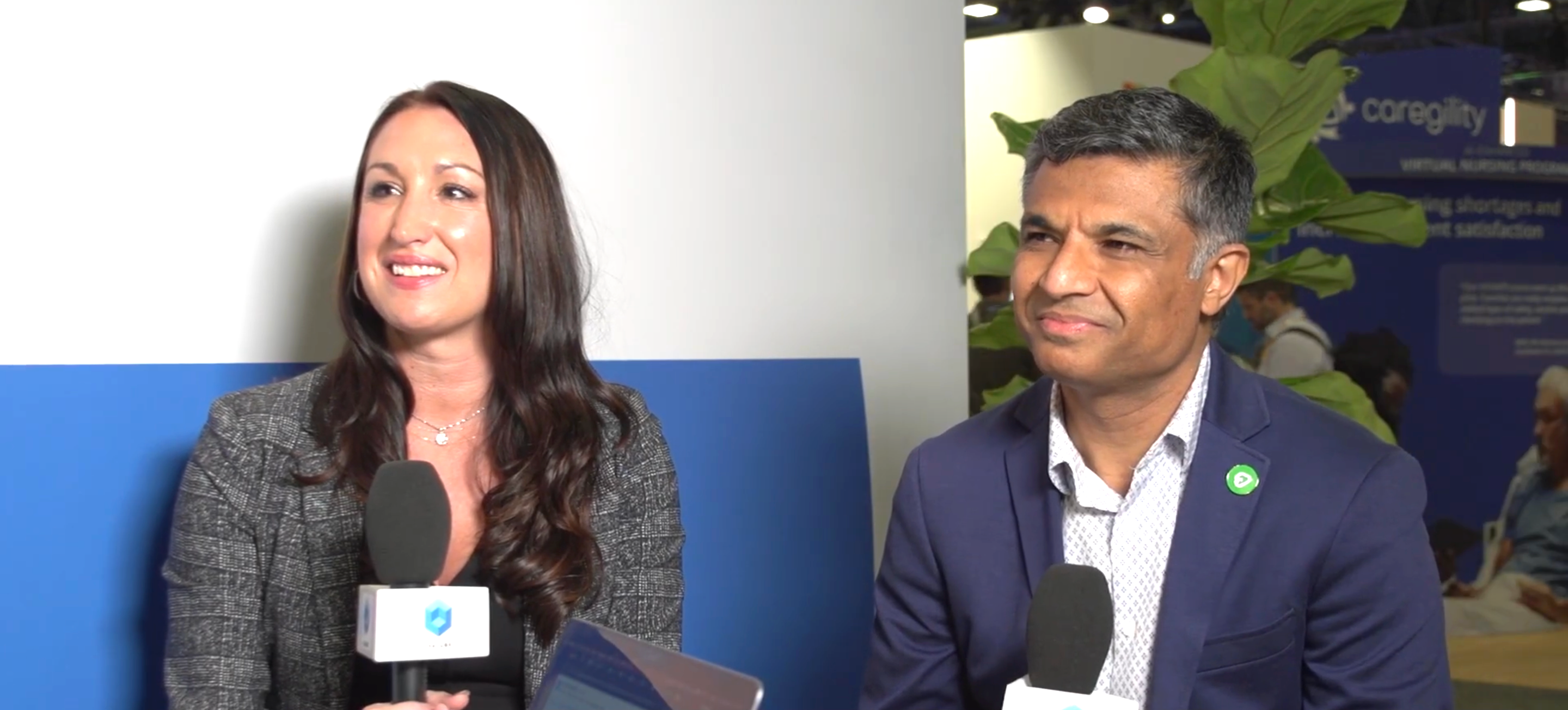
In this interview from theCUBE's coverage of Google Cloud at HIMSS26 in Las Vegas, Dr. Sonia Gupta, enterprise imaging chief medical officer at Optum, joins Jason Klotzer, customer engineer, healthcare and life sciences at Google Cloud, to talk with theCUBE's Rebecca Knight about how AI is moving beyond pilot programs to reshape clinical workflows and reduce physician burnout. Gupta highlights the physician shortage and burnout epidemic driving urgency around AI adoption, explaining why responsible governance demands cross-functional committees and continuous model monitoring rather than one-time deployments. Klotzer describes how foundation models have matured to solve multifaceted clinical problems and underscores the role of cloud infrastructure in enabling modern data architectures that legacy systems simply cannot support.
The conversation also explores what separates organizations successfully scaling AI from those stuck in pilot mode. Both guests point to organizational buy-in and change management as the decisive factors, noting that even the most powerful AI tools fail when they sit outside a clinician's natural workflow. Gupta draws a sharp analogy: an AI assistant that requires logging into a separate system will never get adopted, no matter how capable it is. She details how leading health systems succeed by identifying a clear problem, selecting the right model and investing heavily in seamless integration. Klotzer highlights the emerging impact of agentic AI in imaging, where agents can aggregate patterns across thousands of patient images and surface insights that would otherwise be buried. Looking ahead, both guests envision a future where fragmented point solutions give way to unified AI capabilities and administrative burdens like report drafting and guideline documentation are automated — freeing physicians to focus on increasingly complex patient care.
Forgot Password
Almost there!
We just sent you a verification email. Please verify your account to gain access to
theCUBE's Coverage of Google Cloud at HIMSS26. If you don’t think you received an email check your
spam folder.
Sign in to theCUBE's Coverage of Google Cloud at HIMSS26.
In order to sign in, enter the email address you used to registered for the event. Once completed, you will receive an email with a verification link. Open the link to automatically sign into the site.
Register for theCUBE's Coverage of Google Cloud at HIMSS26
Please fill out the information below. You will receive an email with a verification link confirming your registration. Click the link to automatically sign into the site.
You’re almost there!
We just sent you a verification email. Please click the verification button in the email. Once your email address is verified, you will have full access to all event content for theCUBE's Coverage of Google Cloud at HIMSS26.
I want my badge and interests to be visible to all attendees.
Checking this box will display your presense on the attendees list, view your profile and allow other attendees to contact you via 1-1 chat. Read the Privacy Policy. At any time, you can choose to disable this preference.
Select your Interests!
add
Upload your photo
Uploading..
OR
Connect via Twitter
Connect via Linkedin
EDIT PASSWORD
Share
Forgot Password
Almost there!
We just sent you a verification email. Please verify your account to gain access to
theCUBE's Coverage of Google Cloud at HIMSS26. If you don’t think you received an email check your
spam folder.
Sign in to theCUBE's Coverage of Google Cloud at HIMSS26.
In order to sign in, enter the email address you used to registered for the event. Once completed, you will receive an email with a verification link. Open the link to automatically sign into the site.
Sign in to gain access to theCUBE's Coverage of Google Cloud at HIMSS26
Please sign in with LinkedIn to continue to theCUBE's Coverage of Google Cloud at HIMSS26. Signing in with LinkedIn ensures a professional environment.
Are you sure you want to remove access rights for this user?
Details
Manage Access
email address
Community Invitation
Jason Klotzer, Google Cloud & Dr. Sonia Gupta, Optum
In this interview from theCUBE's coverage of Google Cloud at HIMSS26 in Las Vegas, Dr. Sonia Gupta, enterprise imaging chief medical officer at Optum, joins Jason Klotzer, customer engineer, healthcare and life sciences at Google Cloud, to talk with theCUBE's Rebecca Knight about how AI is moving beyond pilot programs to reshape clinical workflows and reduce physician burnout. Gupta highlights the physician shortage and burnout epidemic driving urgency around AI adoption, explaining why responsible governance demands cross-functional committees and continuous model monitoring rather than one-time deployments. Klotzer describes how foundation models have matured to solve multifaceted clinical problems and underscores the role of cloud infrastructure in enabling modern data architectures that legacy systems simply cannot support.
The conversation also explores what separates organizations successfully scaling AI from those stuck in pilot mode. Both guests point to organizational buy-in and change management as the decisive factors, noting that even the most powerful AI tools fail when they sit outside a clinician's natural workflow. Gupta draws a sharp analogy: an AI assistant that requires logging into a separate system will never get adopted, no matter how capable it is. She details how leading health systems succeed by identifying a clear problem, selecting the right model and investing heavily in seamless integration. Klotzer highlights the emerging impact of agentic AI in imaging, where agents can aggregate patterns across thousands of patient images and surface insights that would otherwise be buried. Looking ahead, both guests envision a future where fragmented point solutions give way to unified AI capabilities and administrative burdens like report drafting and guideline documentation are automated — freeing physicians to focus on increasingly complex patient care.
Jason Klotzer, Google Cloud & Dr. Sonia Gupta, Optum
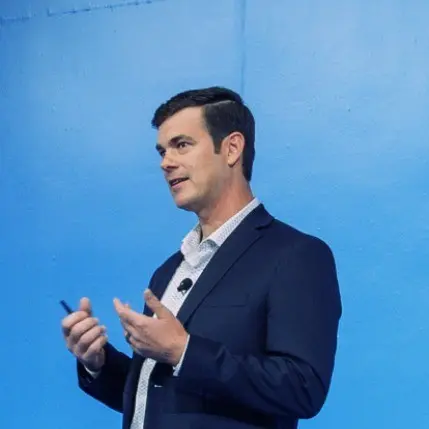
Jason Klotzer
Customer Engineer, Healthcare & Life SciencesGoogle Cloud
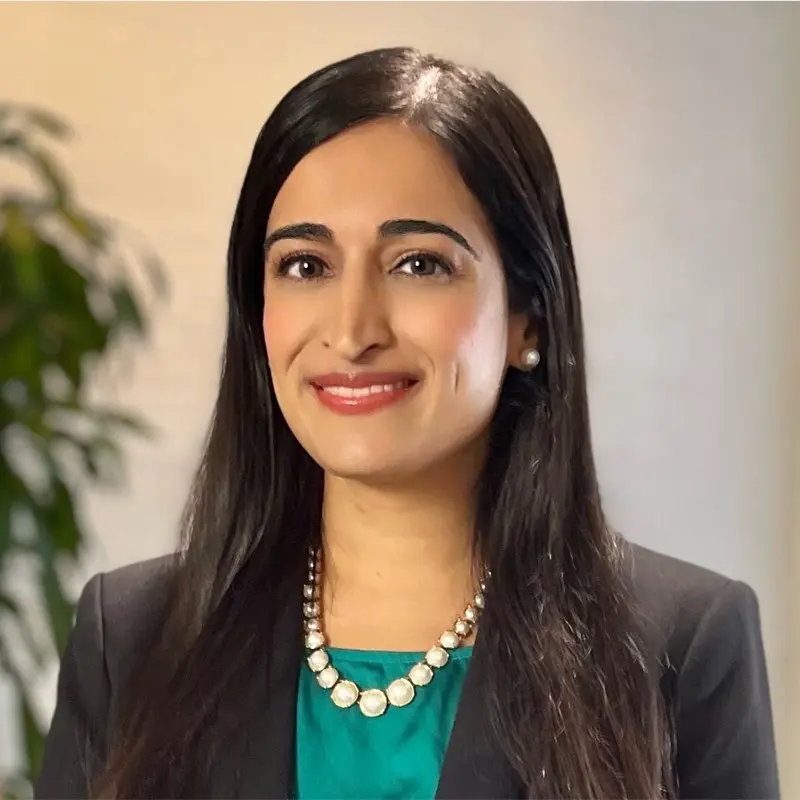
Dr. Sonia Gupta
Enterprise Imaging Chief Medical OfficerOptum
In this interview from theCUBE's coverage of Google Cloud at HIMSS26 in Las Vegas, Dr. Sonia Gupta, enterprise imaging chief medical officer at Optum, joins Jason Klotzer, customer engineer, healthcare and life sciences at Google Cloud, to talk with theCUBE's Rebecca Knight about how AI is moving beyond pilot programs to reshape clinical workflows and reduce physician burnout. Gupta highlights the physician shortage and burnout epidemic driving urgency around AI adoption, explaining why responsible governance demands cross-functional committees and continuous...Read more
exploreKeep Exploring
Given increasing volumes and complexity in radiology, where is AI genuinely reducing radiologists' workload, and in which areas does it still require substantial human oversight?add
What is required to reach buy-in for using AI tools in clinical workflows?add
How do you expect AI (including large language models) to change radiology workflows and patient care over the next three to five years?add
Jason Klotzer, Google Cloud & Dr. Sonia Gupta, Optum
search
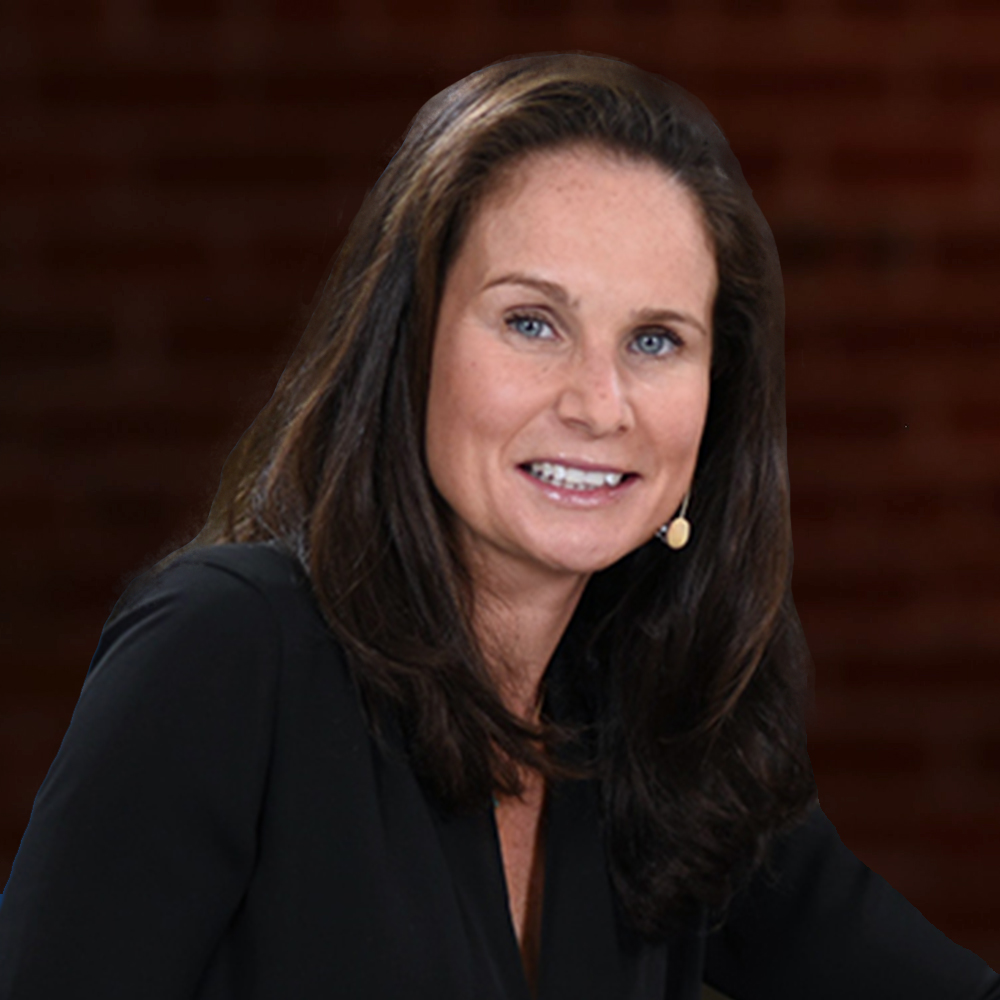
Rebecca Knight
>> Hello, everyone and welcome to theCUBE's coverage of HIMSS 2026 here in Las Vegas, Nevada, at the Google Cloud booth. I'm your host, Rebecca Knight. We've got two great guests for this segment. I would like to welcome Dr. Sonia Gupta, Enterprise Imaging Chief Medical Officer at Optum. Welcome, Sonia.
Dr. Sonia Gupta
>> Thank you.
Rebecca Knight
>> And Jason Klotzer, Customer Engineer, Healthcare and Life Sciences at Google Cloud. Welcome both of you.
Jason Klotzer
>> Thank you.
Rebecca Knight
>> Terrific to have you. So Sonia, I'm going to start with you. You are both a practicing physician and a leader on the technology side. From your vantage point, what are some of the biggest shifts that you're seeing that AI is driving in healthcare right now? And why does this moment ... I mean, it feels very different from at least the chatter and especially when we're here at HIMSS. But why does this moment feel different from your perspective as both a doctor and a technology leader?
Dr. Sonia Gupta
>> It's a great question. It does feel really different. We've got a lot of momentum right now. So I think from the physician perspective, we know that there's an epidemic of burnout for physicians right now. We know there's a global physician shortage as well. So we're really searching for opportunities, and AI is one of them, to address that burnout and to help with the cognitive load, to make physicians be able to actually take care of patients like they intended to do instead of spending a lot of time on the computer.
Rebecca Knight
>> Yeah. On the paperwork and actually connecting with the humans and making medical medicine more human. Jason, from the implementation side, are you seeing that same shift play out? And how would you characterize how organizations are trying to solve their problems with AI right now?
Jason Klotzer
>> Yeah, so absolutely. Myself personally, I typically do look at things from the technology kind of angle, first and foremost. Sometimes too much, but nonetheless, we definitely do see, because of how foundation models and these sort of frontier models are becoming so impactful, that they are able to actually do the things we've kind of spoken about for a little while now. But seeing it on the clinical impact side, I think it's a lot more actually all-encompassing workflows, actually solving problems, which, in many cases, are multifaceted. We're seeing that play out quite well right now. And frankly, as a technology person, I love this stage that we're in.
Rebecca Knight
>> And burnout is real. It's important in the medical profession, obviously, but it is apparent in a lot of professions too. So Sonia, healthcare systems are moving quickly to adopt AI tools. From a clinical perspective, how do you characterize what responsible AI use looks like in practice?
Dr. Sonia Gupta
>> It's incredibly important. And as we're adopting AI, I think health systems are becoming more mature in how they look at AI governance and setting appropriate guardrails. One of the most important things is the health systems have to identify what problems they want to solve and then take a cross-functional approach to that. So they have to engage the right stakeholders. It's not just physicians. There's nurses, there's the IT leadership, there's finance, there's regulatory, there's legal. So there's so many different pieces of the puzzle, and organizations are realizing this and making these governance committees now a lot more mature in how they handle AI. And another big piece of it is continuous monitoring. It's not a one and done situation. You don't implement an AI solution and then just walk away from the hospital. We have to continue to monitor the models for accuracy and drift. And as we're learning how the AI models respond in real clinical environments, our governance is also becoming more mature.
Rebecca Knight
>> You are a radiologist, and radiologists are facing higher volumes and more complex studies right now. Where are you seeing AI genuinely take the pressure off of them, and where does it still require, as you say, a lot of human oversight?
Dr. Sonia Gupta
>> Definitely on the LLM side, we are able to use AI models now to draft reports for radiologists and to bring in guidelines into our reports. Outside of radiology, a lot of physicians are using it to draft notes. When a patient goes to an appointment with their physician, there can be an AI note that's generated of the appointment, and that is huge. I mean, that, otherwise, is a very big administrative task. So to be able to take that off our plate. And then the human-in-the-loop element becomes where we're checking the draft, because at the end of the day, the physician has to sign off on this clinical note and is responsible for this clinical interaction with our patient. And so that's where we have that human-in-the-loop component.
Rebecca Knight
>> And Jason, what would you add to about how AI in radiology, what does it actually look like inside the workflow?
Jason Klotzer
>> So before I answer that question, I'd love to comment on the sort of principle aspects around responsible AI. I loved the points Sonia made, and what I'm finding right now, the beauty is we don't want every organization to have to know how in detail to actually keep track of models, see the drift. These are very complex things. So what I love about the stage that we're in right now is that we found that these are incredibly important things for responsible AI, for giving radiologists and physicians comfort in using the technology. So we're inherently exposing that type of capability as is now. And that's the thing that I love about this stage, that we've gone through a couple of different stages where everybody kind of agrees this is very, very important for adoption, for use, and for impact, and that's why we're inherently doing them with models now.
Rebecca Knight
>> But you've talked about cloud being really foundational to all of this. So from a technical standpoint, what does cloud infrastructure make possible, particularly on older systems?
Jason Klotzer
>> Well, you have to throw in the particularly older systems.
Rebecca Knight
>> Just a small question.
Jason Klotzer
>> It's extremely necessary right now. I mean, you look at the typical kind of talk track around infrastructure, data centers, the capabilities that clouds have right now. While I don't particularly subscribe to the anything is infinite, they are nearly infinite in the capacity available, the modern hardware that's available to you. And these are inherently things that are very necessary to do any modern data architecture. If you want an agent or even just an AI model to gain access to some sort of information that you've allowed it to have access to that information, if you have an old-school architecture, an old-school clinical system that's interacting with, good luck, okay? So clouds have not only kind of brought all the capabilities, but they've also effectively driven patterns for how to interact with these capabilities. And that's something that I'm particularly very happy about because it allows the access to this really intelligent layer to very important data that it needs to have access to.
Rebecca Knight
>> So looking across the organizations that you work with, what do you think it is that separates the organizations that are successfully scaling AI and the ones that are really stuck in pilot mode?
Jason Klotzer
>> Wow. So I'm going to start with maybe not a prototypical answer, but buy-in. So buy-in across the organization, and this isn't just ... For myself, again, I'm very tech-forward. So if I were to say, "Wow, cool technology," the rest of the organization may not subscribe to that thought. Clinical users naturally, which I definitely want Sonia to chime in on this one, but clinical users may say, "This doesn't even help me in my workflow. Why would I want that?" So I would say the first thing is making all of your stakeholders comfortable with the technology, what the ROI is around it, the real practical implications of the technology, I would start there. And I do think that the technology age that we're in, there are answers to those questions now.
Rebecca Knight
>> Well, Jason makes a great point about really understanding the why, and why we're doing this as an organization, why for you professionally, personally it matters, why for your patients it matters. How would you describe, from your perspective as a practicing clinician, what it is that separates the folks in the hospital who are working on these problems from getting them to get to that buy-in point?
Dr. Sonia Gupta
>> Well, the irony of it is it really comes down, again, to the human in the loop. We're talking about amazing technology, cloud, speeding up what physicians are able to do in a hospital using AI models, but at the end of the day, it comes down to people and change management, learning how to use the new technology, making sure the technology actually is in your workflow. If you think about your email, if someone gave you AI to read your email and draft it for you, but you had to log in to a different system or maybe a different computer altogether to make it work, you probably wouldn't use it. And that's been the challenge that some organizations have had. They've implemented AI solutions that require a little bit of extra work to get going. And so then people don't want to use it because it's not easy to use. So I think that's been a major challenge. And the organizations that have really succeeded have had a very clear mandate. They've identified the problem they have, they've identified the AI they want to use to solve the problem, and then they've spent a long time on the workflow component, making sure that it's seamless and easy to use.
Rebecca Knight
>> Right. Convenient, intuitive, and helpful, as you say too.
Dr. Sonia Gupta
>> Yes, actually helpful.
Rebecca Knight
>> Yeah. So Jason, you're talking with customers all the time. Is there a particular example that comes to mind where AI clearly improved a workflow or an outcome for patient care?
Jason Klotzer
>> So if you were to ask me this question maybe six months ago, I would give you one answer, and that is absolutely on text generation, kind of accelerating sort of templatized things that, frankly, physicians shouldn't have to do. I mean, it seems like such an obvious thing. But what I'm finding now, because of the sort of agentic era that we're in, is that incorporating information that may just not be front and center in a workflow is something that agents have become incredibly good at. Keeping a context of information that they have seen, this is the sort of thing that I think is incredibly impactful in imaging workflows, seeing thousands of images, which I'm sure Sonia can attest to. That's the sort of thing where, yes, you're particularly looking for patterns, but in a sort of cognizant way, being in the mindset that, "Hey, I have these thousands, maybe even tens of thousands of images that I've seen for a particular patient. Here's some patterns that I've seen across all these different images." Agents are very good at being able to aggregate information at a large scale and then presenting it to the clinical user and saying, "Hey, I've actually just found this." I think that's incredibly impactful now.
Rebecca Knight
>> One of the words we keep hearing here at HIMSS is this anticipatory sense about what the agentic workflow will look like. Can you talk a little bit about that, Sonia, in terms of this anticipatory element that agents are now understanding what kinds of actions might be necessary and when it comes to patient care?
Dr. Sonia Gupta
>> I think it's really exciting to think about that, but it's still a little bit of a future state for us because we're still talking about moving to the cloud, health systems modernizing their technology. We still have fax machines in hospitals and CDs.
Rebecca Knight
>> I watch The Pitt, I know.
Dr. Sonia Gupta
>> So I think it's really exciting to talk about and anticipate, like you said, but we still have a lot of work that has to get done before we get to that level, I think.
Rebecca Knight
>> Okay. So final word for both of you. If we look out three to five years ahead, how do you expect the daily workflow of, say, a radiologist to really change, and what might patients notice about their experiences? Want to start with you, Jason?
Jason Klotzer
>> So I'm going to give you a practical answer and then a very, very hopeful answer to that. So practically speaking, the rate of change in very highly regulated, very impactful sort of industries like healthcare, three to five years, I would kind of say I think that there is going to be more automation, especially in tasks that are really not net benefit tasks to a patient, to a physician. Hopeful, I do hope that because of how agentic-based coding and sort of vibe coding has become really a relevant thing in all industries, that we can actually see a substantially bigger difference in three to five years, in the sense that maybe we can actually get rid of those legacy monolithic systems at some point because the cost point actually makes sense. That's my hopeful side.
Rebecca Knight
>> How about you, Sonia? Last word.
Dr. Sonia Gupta
>> I think more and more AI adoption will be taking place, and it'll probably be a little bit more unified. Right now, we have a lot of point solutions, things that, for example, screen for lung cancer, screen for breast cancer, screen for a hemorrhage in someone's brain, but they're all different AI models, different widgets might come up on someone's screen, a lot of popups potentially. So my hope is that in three to five years, it's a lot more comprehensive and more complete. And then on the LLM side, I'm hoping that more and more of these administrative tasks have been taken from us so that we can spend more of our time on the actual patient care, because we know our image volumes are going up, more patients need imaging, and the cases are getting more complex. So if we can free ourselves from drafting a report, for example, or actually, in my case, literally cutting and pasting guidelines, which I have to do, patient recommendations, if we can automate that part, then there's a lot more that we can free up for us.
Rebecca Knight
>> That the patient will feel too.
Dr. Sonia Gupta
>> Yeah, the patient will feel that.
Rebecca Knight
>> Sonia and Jason, thank you both so much. A really interesting conversation.
Jason Klotzer
>> Absolutely. Thank you.
Dr. Sonia Gupta
>> Thank you so much.
Rebecca Knight
>> And thank you so much for watching the HIMSS coverage of Google Cloud 2026. I'm Rebecca Knight. Stay tuned for more.







 Rebecca Knight