In this interview from theCUBE's coverage of Google Cloud at HIMSS 2026 in Las Vegas, David Denov, global healthcare practice leader at Quantiphi Inc., joins theCUBE's Rebecca Knight to discuss how agentic AI is shifting healthcare from task-level automation to fully autonomous, context-aware workflows. Denov highlights Quantiphi's nearly decade-long co-innovation partnership with Google Cloud and explains why this moment feels fundamentally different: entire processes now self-learn and improve without constant human intervention. He walks through a radiology solution where disparate data was unified into a longitudinal patient record, enabling automated disease screening, gap detection and anonymized research pipelines.
The conversation also explores a home healthcare provider with 15,000 employees that transformed its contract management from an entirely manual process into an AI-powered workflow — reducing lawyer review time from three to five hours per contract down to roughly 15 minutes while dramatically improving consistency and enabling natural-language search across historical agreements. Denov notes a surprising shift in clinician attitudes: because AI agents embed directly within existing systems and eliminate points of friction, physicians are now actively championing adoption rather than resisting it. Looking ahead, he outlines a vision where agent-to-agent communication finally delivers healthcare's long-sought goal of data following the patient through the continuum of care, creating ecosystems of autonomous agents that improve outcomes while freeing clinicians to focus on what matters most.
Forgot Password
Almost there!
We just sent you a verification email. Please verify your account to gain access to
theCUBE's Coverage of Google Cloud at HIMSS26. If you don’t think you received an email check your
spam folder.
Sign in to theCUBE's Coverage of Google Cloud at HIMSS26.
In order to sign in, enter the email address you used to registered for the event. Once completed, you will receive an email with a verification link. Open the link to automatically sign into the site.
Register for theCUBE's Coverage of Google Cloud at HIMSS26
Please fill out the information below. You will receive an email with a verification link confirming your registration. Click the link to automatically sign into the site.
You’re almost there!
We just sent you a verification email. Please click the verification button in the email. Once your email address is verified, you will have full access to all event content for theCUBE's Coverage of Google Cloud at HIMSS26.
I want my badge and interests to be visible to all attendees.
Checking this box will display your presense on the attendees list, view your profile and allow other attendees to contact you via 1-1 chat. Read the Privacy Policy. At any time, you can choose to disable this preference.
Select your Interests!
add
Upload your photo
Uploading..
OR
Connect via Twitter
Connect via Linkedin
EDIT PASSWORD
Share
Forgot Password
Almost there!
We just sent you a verification email. Please verify your account to gain access to
theCUBE's Coverage of Google Cloud at HIMSS26. If you don’t think you received an email check your
spam folder.
Sign in to theCUBE's Coverage of Google Cloud at HIMSS26.
In order to sign in, enter the email address you used to registered for the event. Once completed, you will receive an email with a verification link. Open the link to automatically sign into the site.
Sign in to gain access to theCUBE's Coverage of Google Cloud at HIMSS26
Please sign in with LinkedIn to continue to theCUBE's Coverage of Google Cloud at HIMSS26. Signing in with LinkedIn ensures a professional environment.
Are you sure you want to remove access rights for this user?
Details
Manage Access
email address
Community Invitation
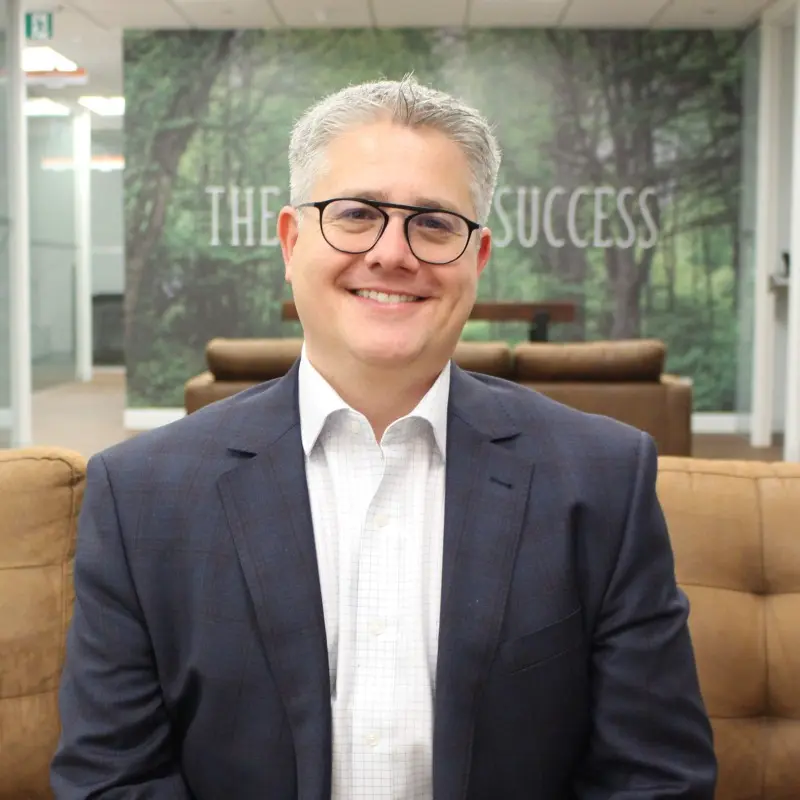
David Denov, Global Healthcare Practice Leader, Quantiphi
In this interview from theCUBE's coverage of Google Cloud at HIMSS 2026 in Las Vegas, David Denov, global healthcare practice leader at Quantiphi Inc., joins theCUBE's Rebecca Knight to discuss how agentic AI is shifting healthcare from task-level automation to fully autonomous, context-aware workflows. Denov highlights Quantiphi's nearly decade-long co-innovation partnership with Google Cloud and explains why this moment feels fundamentally different: entire processes now self-learn and improve without constant human intervention. He walks through a radiology solution where disparate data was unified into a longitudinal patient record, enabling automated disease screening, gap detection and anonymized research pipelines.
The conversation also explores a home healthcare provider with 15,000 employees that transformed its contract management from an entirely manual process into an AI-powered workflow — reducing lawyer review time from three to five hours per contract down to roughly 15 minutes while dramatically improving consistency and enabling natural-language search across historical agreements. Denov notes a surprising shift in clinician attitudes: because AI agents embed directly within existing systems and eliminate points of friction, physicians are now actively championing adoption rather than resisting it. Looking ahead, he outlines a vision where agent-to-agent communication finally delivers healthcare's long-sought goal of data following the patient through the continuum of care, creating ecosystems of autonomous agents that improve outcomes while freeing clinicians to focus on what matters most.
David Denov, Global Healthcare Practice Leader, Quantiphi
David Denov
Global Healthcare Practice LeaderQuantiphi
In this interview from theCUBE's coverage of Google Cloud at HIMSS 2026 in Las Vegas, David Denov, global healthcare practice leader at Quantiphi Inc., joins theCUBE's Rebecca Knight to discuss how agentic AI is shifting healthcare from task-level automation to fully autonomous, context-aware workflows. Denov highlights Quantiphi's nearly decade-long co-innovation partnership with Google Cloud and explains why this moment feels fundamentally different: entire processes now self-learn and improve without constant human intervention. He walks through a radiolog...Read more
exploreKeep Exploring
How would you describe the Quantiphi–Google Cloud partnership — its history, current state, and what distinguishes it from a typical strategic technology partnership?add
Can you describe an example of a radiology solution you implemented using Google Cloud technologies to harmonize disparate data into a longitudinal record, enable automated disease screening and anonymization for secondary uses, and what outcomes were achieved?add
How will agent-based systems transform the day-to-day experiences of clinicians and patients over the next three to five years?add
David Denov, Global Healthcare Practice Leader, Quantiphi
search
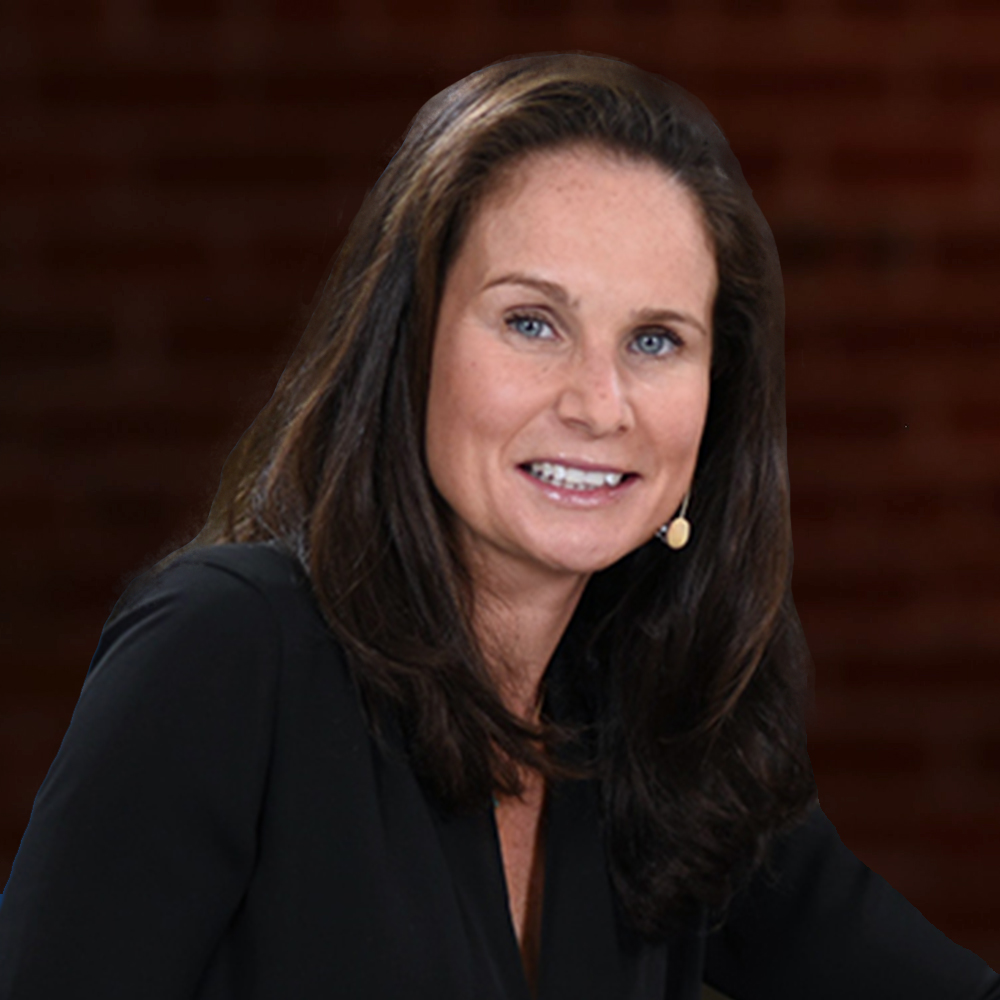
Rebecca Knight
>> Hello, everyone, and welcome to theCUBE's coverage of the Google Cloud Partner AI series here at HIMSS 2026. We are in Las Vegas, and I'm your host, Rebecca Knight. I have a terrific guest for this next segment. I would like to welcome David Denov. He is the global healthcare practice leader at Quantiphi. Welcome, David.
David Denov
>> Thank you very much.
Rebecca Knight
>> Thank you so much for coming on. So Quantiphi and Google Cloud have been partners for nearly a decade. I'd love you to start by describing this relationship, where it is today, where it's come from, and what makes it different from your average strategic technology partnership.
David Denov
>> So like you said, our partnership is almost 10 years old. So we're one of the original ecosystem partners, and I don't think too many others are in that category. We have been co-innovating with Google from the beginning. We're an early launch partner for a number of products. As a result, we have gotten the opportunity to co-innovate, co-invest, and really drive value for our clients. In addition, we are absolutely committed to the strategic alignment with Google. We do a number of regular touchpoints with their executive team. We're a member of the partner council, and it's a relationship that frankly we think is really important to our success, and we're happy to be part of it.
Rebecca Knight
>> You've described this moment as the start of the agentic era, and a lot of people have described this moment that way, Dave. But from your perspective, what are some of the biggest shifts that AI is driving in health care right now? And why, from your perspective, as a technology leader, does this particular moment feel different from past technological waves?
David Denov
>> I think in the past we saw automation of individual tasks. We saw things in time happening, but they were all driven by an individual trying to do something in the process. Now we're starting to see entire processes becoming automated. We're seeing autonomous processes that are in fact self-learning. So the output of individual steps of the process will feed the process going forward and improve the model on the fly where that improvement required a lot of human intervention in the past. Additionally, by being able to put multiple steps together, we're seeing much more complicated problems being solved. In an environment where all of that is in an environment where healthcare organizations are looking for context awareness, it's enabled that context awareness to be part of that process of automation. So we're seeing that the process itself knows where the information is coming from, how important it is, when it needs to escalate, and all of those things are helping to, I guess, individualize or make more individual the results of those processes.
Rebecca Knight
>> Yeah. So it's understanding the context that will really improve the patient care.
David Denov
>> Right.
Rebecca Knight
>> So many organizations have experimented with AI pilots over the past few years. How do you see what's changing now that lets those systems move from isolated tools that are really into workflows that can coordinate actions across different teams and systems?
David Denov
>> Well, it's interesting. There's an example of a radiology solution that we put in place with a client where they had disparate data across a bunch of different systems. We used a bunch of the Google Cloud technologies to bring that data together, to get a longitudinal record in place to do automated disease screening, and to use those AI tools to automatically understand gaps in the data so that now you can start to use the data for secondary uses as well. You could provide anonymization pipelines. You could start to feed research by using anonymization pipelines. So all of the data now is in context and harmonized across a longitudinal record where it wasn't before. By being able to use these multistep complicated processes as automation targets, we're seeing incredible results that we've never seen before. Individual tasks were stuck at the task level, and then it required human intervention to go to the next task, and then iteration of that human intervention potentially. Now these tools are autonomously learning from the outputs and actually getting better on their own.
Rebecca Knight
>> So it's reducing the bottlenecks for the clinicians. And then what is the actual outcome for the patient itself when their medical images are being read?
David Denov
>> Actually, it's an improvement in time, in quality of care. Clinicians have a safety net. So if there are automated tools behind them, if they miss something, it's going to catch it. There's a potential safety net there. The speed at which all of this can happen could go a lot quicker. Physicians and clinicians in general can focus on the things that are important. The administrative burden that clinicians face every day is significant as well. So clinical documentation or claims forms or billing, all of that can now be automated to some extent, enabling them to spend more time facing the patient and providing a better overall experience.
Rebecca Knight
>> We all know about the tremendous paperwork there is in health care. Let's bring one example to life. Now, you worked with a home healthcare provider that faced challenges in contract management. There were bottlenecks, and there was a lot of time spent. Can you describe a little bit about what life was before AI took over and then what the outcome was?
David Denov
>> So they were the perfect storm, because before AI, they were an almost entirely manual process. So if they had to search for a contract historically to find wording that they'd used before.
Rebecca Knight
>> What kinds of contracts were-
David Denov
>> So they were looking at everything from NDAs through service agreements with nursing agencies. So it was literally everything. This home care agency, just to give you some context, 15,000 employees, national footprint, multiple geographies, jurisdictions to deal with, and using a lot of nursing agencies to provide staff on the ground. So it's really important for them to get through their contracting processes really quickly in order to make sure that the care that patients need is available to them. In the prior world where they were mostly manual, they had no way to search, no way to understand when contracts were coming up for renewal. The application that we put in place, they can ingest the contract and automatically summarize the whole contract, automatically summarize each clause in natural language. We built models based on their preferred language, so it automatically redlined those contracts against that language. And all of this happened in about 15 minutes. So whereas a lawyer would have had to spend three to five hours reviewing a contract, now they're down 15 minutes. The other thing is, multiple lawyers all had their own preferences around languages. So now that they're using a standard set of languages, a redlining benchmark, the consistency in the contracts was tremendous. The last thing it gave them was the ability to talk in natural language to the system. I know we did a contract like this in the past. We did some wording that I really liked. It was unique. I can't remember who it was for, but it was about this, and it'll do an enterprise search on all the contracts that are ingested because we ingested all of their historical contracts as well, and it can actually conversationally bring that forward and recommend it into the language. Again, if there's feedback for the language, it captures that feedback and feeds it back into the models, the model can self-improve as well. All of this, so they're a team of six to eight lawyers looking after, again, an organization of 15,000 employees. So where they were stressed before, now they are focusing on the tasks that actually bring value. When I talked to them recently, they said that we were taking paperwork out of the way of patient care, and I thought that tagline was perfect.
Rebecca Knight
>> Yeah. No, that really makes a lot of sense there, because the ultimate outcome with the lawyers spending less time on this or being able to, as you say, conversationally describe what they're looking for in a contract means that the nurses are more available to provide care to the patients in need.
David Denov
>> Totally. Lawyers, paralegals, their whole legal team was enabled by the tool. Again, the ability to provide alerts, let somebody know when a contract is about to expire. The human impact of all of that was really what would have taken weeks before. They're now within a couple of days able to get a contract returned, signed, and get nurses on the ground. There are people in need that need these people to help them on a day-to-day basis. The faster we can get nurses into the environment, the faster they can get care.
Rebecca Knight
>> This is a great segue. Looking out three to five years ahead, getting out your crystal ball here, how do you see these agent-based systems transforming the day-to-day experiences of clinicians, but then also the patients themselves?
David Denov
>> It's a great question, and it's one of the things that I'm really excited about. Right now we're seeing the shift from task-based automation to process-based automation. So as we get good at process-based automation within an organization, the agents themselves are going to get good at talking to each other as well. The holy grail in health care has always been data following the patient through the continuum of care. So now with agents talking to agents, that goal is in sight. We can start to see how agents will interact, and we'll have ecosystems of agents working together to provide a better overall experience and better outcomes for patients.
Rebecca Knight
>> We're here at HIMSS, and there's obviously so much hype around what AI can do in health care. What do you think people most often misunderstand about what these systems can realistically do today?
David Denov
>> Well, I think it's interesting, AI is changing everything. I think human in the loop becomes a really important process. It's not that we can take humans completely out of the process. It's about bringing the right things to attention at the right time. That's where that context awareness is really important. One of the things that the AI systems will never be able to do on the internet is really that human in the loop performance piece.
Rebecca Knight
>> What is something that has surprised you about what these systems can do? It could be an unexpected benefit or an unexpected challenge.
David Denov
>> One of the benefits that I've noticed that I thought was fascinating is that clinicians historically are one of the biggest resistors of change in the market, especially with technology.
Rebecca Knight
>> It's scary. Change is scary. It's hard.
David Denov
>> Change is scary. But because AI agents are sitting between systems that they're already working with, that are working within processes that they're already working in, and automating the points of friction for them, we're actually seeing that the willingness to change is dramatically different. Physicians, clinicians in general are driving the process, where before they were like, "No, I don't want to deal with the learning curve." Now, they're, "We need to get this in place because I can't afford to spend my time doing low-value tasks." So I think that big change is one of the things that surprised me most.
Rebecca Knight
>> Is it because the learning is so much easier than it was? Or is it because the tedium is so great that they want to get rid of that?
David Denov
>> Well, I don't know that it's easier. I think administrative burden is one of the biggest problems that our system faces across the board. I think anything we can do to enable physicians to maintain eye contact with clients, to focus on patient care tasks versus administrative tasks, I think, is worth, it's a problem we're solving.
Rebecca Knight
>> A great note to end on. Dave Denov, thank you so much for coming on the show. I really appreciate it.
David Denov
>> Thank you for the opportunity.
Rebecca Knight
>> Thank you for watching the Google Cloud Partner AI series and theCUBE's live coverage here at HIMSS 2026. I'm Rebecca Knight.





 Rebecca Knight