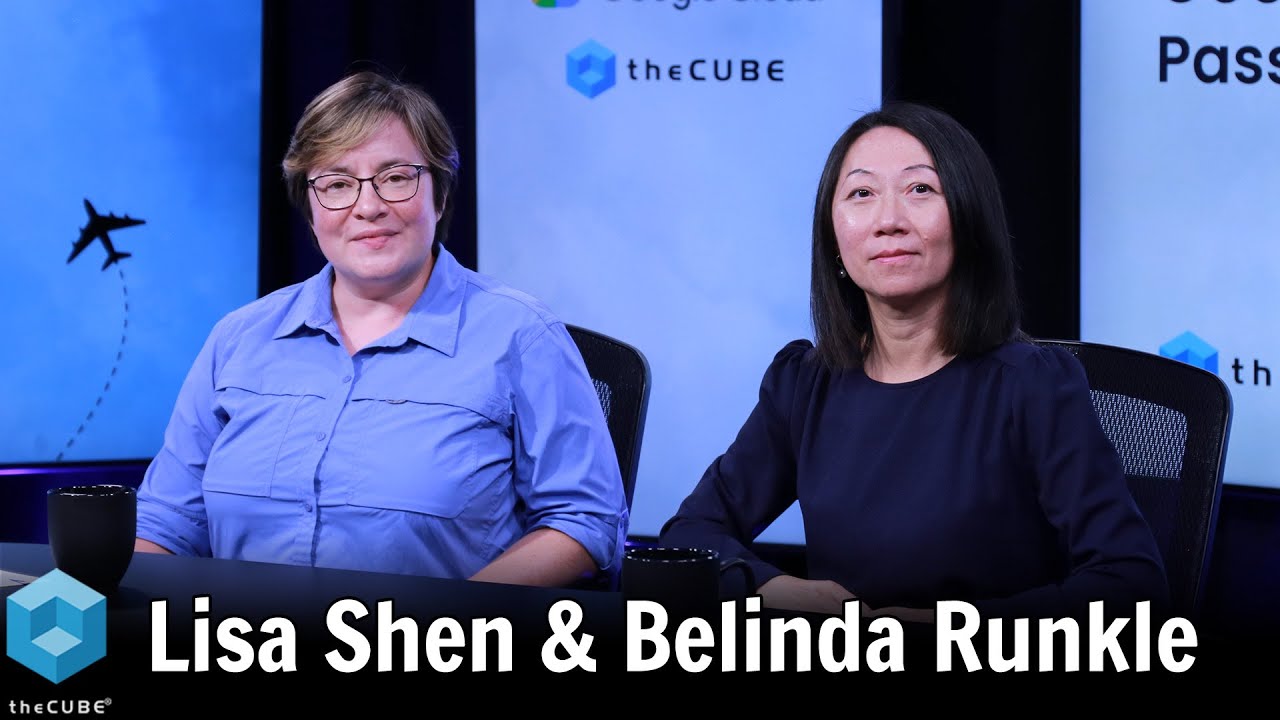
In this episode of theCUBE's Google Passport to Containers series, Savannah Peterson sits down with Google Cloud’s Ameenah Burhan, solutions architect, and Nick Eberts, product manager, to talk about the evolving world of platform engineering. The conversation unpacks how platform engineering unlocks speed, scalability and innovation for container-based development.
Burhan reflects on their nontraditional path from business studies to tech leadership, while Eberts shares his journey from the Navy to product management at Google. Their distinct perspectives shed light on the human side of engineering transformation.
Together, the trio explores how platform engineering clears a path for developers to focus on what they do best, building. Burhan and Eberts emphasize the importance of streamlining backend complexity, so teams can experiment quickly and deploy with confidence.
Forgot Password
Almost there!
We just sent you a verification email. Please verify your account to gain access to
Google Cloud: Passport to Containers. If you don’t think you received an email check your
spam folder.
In order to sign in, enter the email address you used to registered for the event. Once completed, you will receive an email with a verification link. Open this link to automatically sign into the site.
Register For Google Cloud: Passport to Containers
Please fill out the information below. You will recieve an email with a verification link confirming your registration. Click the link to automatically sign into the site.
You’re almost there!
We just sent you a verification email. Please click the verification button in the email. Once your email address is verified, you will have full access to all event content for Google Cloud: Passport to Containers.
I want my badge and interests to be visible to all attendees.
Checking this box will display your presense on the attendees list, view your profile and allow other attendees to contact you via 1-1 chat. Read the Privacy Policy. At any time, you can choose to disable this preference.
Select your Interests!
add
Upload your photo
Uploading..
OR
Connect via Twitter
Connect via Linkedin
EDIT PASSWORD
Share
Forgot Password
Almost there!
We just sent you a verification email. Please verify your account to gain access to
Google Cloud: Passport to Containers. If you don’t think you received an email check your
spam folder.
In order to sign in, enter the email address you used to registered for the event. Once completed, you will receive an email with a verification link. Open this link to automatically sign into the site.
Sign in to gain access to Google Cloud: Passport to Containers
Please sign in with LinkedIn to continue to Google Cloud: Passport to Containers. Signing in with LinkedIn ensures a professional environment.
Are you sure you want to remove access rights for this user?
Details
Manage Access
email address
Community Invitation
A Primer on Platform Engineering
In this episode of theCUBE's Google Passport to Containers series, Savannah Peterson sits down with Google Cloud’s Ameenah Burhan, solutions architect, and Nick Eberts, product manager, to talk about the evolving world of platform engineering. The conversation unpacks how platform engineering unlocks speed, scalability and innovation for container-based development.
Burhan reflects on their nontraditional path from business studies to tech leadership, while Eberts shares his journey from the Navy to product management at Google. Their distinct perspectives shed light on the human side of engineering transformation.
Together, the trio explores how platform engineering clears a path for developers to focus on what they do best, building. Burhan and Eberts emphasize the importance of streamlining backend complexity, so teams can experiment quickly and deploy with confidence.
play_circle_outlineFrom Business to Tech: Ameenah's Journey into Platform Engineering Amidst Current Innovations
replyShare Clip
play_circle_outlineNick discusses his transition from the Navy to tech and academia.
replyShare Clip
play_circle_outlinePlatform Engineering: Simplifying Developer Experience with Internal Tool Maintenance Through the Vending Machine Analogy
replyShare Clip
play_circle_outlineDiscussion of Kubernetes’ role in platform engineering and customer experiences.
replyShare Clip
play_circle_outlineMaximizing Developer Efficiency: The Case for Reducing Cognitive Load and Emphasizing Simplicity in Tools and Experience
replyShare Clip
play_circle_outlineAmeenah's ideal platform engineering recipe includes CI/CD pipelines and documentation.
replyShare Clip
play_circle_outlineThe significance of viewing platform engineering as a product with user feedback.
replyShare Clip
play_circle_outlineFostering Innovation: Embracing Responsible AI Development Through Experimentation and Educational Platforms in a Rapidly Evolving Tech Landscape
replyShare Clip
play_circle_outlineAdvice for newcomers to tech: build something and explore, leveraging current tools.
In this episode of theCUBE's Google Passport to Containers series, Savannah Peterson sits down with Google Cloud’s Ameenah Burhan, solutions architect, and Nick Eberts, product manager, to talk about the evolving world of platform engineering. The conversation unpacks how platform engineering unlocks speed, scalability and innovation for container-based development.
Burhan reflects on their nontraditional path from business studies to tech leadership, while Eberts shares his journey from the Navy to product management at Google. Their distinct perspect...Read more
>> Hello, Google fam and welcome to Atlanta, Georgia. We're here kicking off the second half of our first season of Passport to Containers in a new location. Very excited to be here in Georgia with two fabulous human beings who are going to teach us everything we need to know about platform engineering and what that best case scenario menu looks like for building your future in this next innovation cycle. Joining me today is Nick and Ameenah. Thank you both so much for being here. Nice, Nick, are you going to be that awkward for the rest of this?
Nick Eberts
>> Sure.
Savannah Peterson
>> Well, it's good if anyone in the audience is feeling awkward or a little bit nervous about what their platform engineering approach is, maybe they can feel a little more comfortable.
Nick Eberts
>> Yeah. Professional.
Savannah Peterson
>> Yeah. So before we dig into the content, your new guest to this wonderful series, so I'd love to hear a little bit more about you and Ameenah, I'm going to start with you.
Ameenah Burham
>> Okay. My origin story, I'm from Ohio, Cleveland, Ohio. I visited Atlanta to look at the schools and whatnot, and I got so excited about the weather and the environment that I decided to three weeks later move to Atlanta.
Savannah Peterson
>> Wow.
Ameenah Burham
>> Yeah. So as far as the whole tech thing, I didn't plan to do this. I started off as a business student and I remember my aunt had asked, "Well, what do you want to do in business?" And I had no clue whatsoever. So I switched it to finance, and in that program we had to do an intro to Java class, never touch programming languages at all. Our capstone project was a calculator and you had to have it functioning and have the little gooey and everything like that. And that felt so invigorating to me. I'm like, "Wow, what is this thing?" So I ended up switching my major to computer science and eventually get into Google through some other means of-
Savannah Peterson
>> That's amazing. So would you say that was the moment that you fell in love with tech?
Ameenah Burham
>> Yes. I actually have a friend, and I remember I was telling him about the, "Oh, I'm a software engineer now after an intro to Java class, I'm a software engineer." And he was like, "Oh, well I want someone to create a POS system for me," and for some reason I felt like I could do it. I'm like, "Yeah, I can do that. I built a calculator."
Savannah Peterson
>> I love this though. I love this. That confidence.
Ameenah Burham
>> It was extreme confidence because I think beyond understanding the syntax of different languages, you can really create what you want. You can make things do whatever you want. So it's almost like an artsy kind of thing or more of a creative thing, which I kind of tend to drive towards. So yeah, I didn't make the POS system, but I did go into computer science and here I am.
Savannah Peterson
>> Well, shout out to that teacher who inspired that spark in you. That is really awesome. I'm so glad you shared that. Thank you, Ameenah. What about you, Nick? I know you've had quite the career trajectory from playing tunes with the Wu-Tang Clan to menagerie and serving our nation and a lot of different things. When did you fall in love with tech?
Nick Eberts
>> Yeah, so tech started for me. I went to Georgia State after I got out of the Navy, which you hinted to. And while I was going to Georgia State, I was studying geophysics, which is of course, tech adjacent.
Savannah Peterson
>> Right. Number one major for this career path.
Nick Eberts
>> And so I had my mindset on getting into academia on, and I got accepted to UC, San Diego into a geophysics program.
Savannah Peterson
>> Oh, cool. Beautiful.
Nick Eberts
>> At the very same month that I found out my wife was pregnant with my first kid.
Savannah Peterson
>> Exciting.
Nick Eberts
>> And so financial and responsibilities made the decision. At that point, I had been working in tech as of like a Linux administrator because I rolled out of the Navy with some skills. And that was the turning point for me in which I approached it as a career instead of just a stopgap. And all of the studying that I did with science, a hard science actually made me appreciate computer science even more because up until that point I was just fixing things, troubleshooting, working help desk. I had a lot of jobs while it was working and going to school. And being able to apply to the scientific process to computers really brought it home for me.
Savannah Peterson
>> That's awesome. And that's what we find you here sitting in this chair. That's really sweet. Great stories y'all. All right, so let's dig into it a little bit. And the platform engineering conversation, it's been heating up a lot over the last two years, a little bit of tension in the space. So Ameenah, to set the stage, can you define platform engineering and what it means for us today?
Ameenah Burham
>> Sure. So the way I would define platform engineering is building and maintaining a set of internal tools that software developers can use to get their applications up and running without really worrying about the infrastructure that needs to be set up as well. If I was explaining this to my sister who's not technical at all, I would say it's like either a kiosk or a vending machine. You know what you want, you know the snack that you want, but you don't care about how it's going to get to you, you push a button, it comes down and now you can go on about your business. That's how I would explain it to her if she was asking and she probably wouldn't understand that either, but that's a little sister joke.
Savannah Peterson
>> I actually really, I love that analogy because it's true. You don't necessarily have to understand the mechanics. It's optional complexity. Something else that we've talked a lot about in this series, just real quick since we're here, what's your favorite vending machine snack?
Ameenah Burham
>> I love Twizzlers. No one else I know loves Twizzlers like I do. Yes, the classical ones, not the Pull 'n' Peel, the classical Twizzlers. I love Twizzlers.
Savannah Peterson
>> What about you Nick? Favorite vending machine snack. Didn't see us going here, but I'm loving this.
Nick Eberts
>> Oh, yeah. I don't know man, Fritos.
Savannah Peterson
>> I was thinking Fritos myself. Yes.
Nick Eberts
>> I could do that.
Savannah Peterson
>> Yeah, no, it's great. So why does this vending machine, this easy to use vending machine? Why does this matter to customers, Nick?
Nick Eberts
>> Well, computers are tough. Kubernetes is tough. So a lot of the history here of platform engineering is kind of predicated on the distributed systems, which is where Kubernetes comes into play. And it turns out that maybe not every single software engineer on your massive enterprise team needs to understand that Kubernetes API to get their job done. And so the vending machine analogy is that your software engineer can maybe pick a, I don't know, like a three tier app Frito, push the button and then get a scaffold of a golden path that represents that and gets started quicker. They don't need to understand how they're connecting the frontend to the backend, how the backend connects to the database, but they just know that these things need to happen and they can just work on writing business logic. So I think it makes their life easier and more simple, right?
Savannah Peterson
>> Yeah, it's like having a simpler menu.
Nick Eberts
>> Sure.
Savannah Peterson
>> It's the opposite of the Cheesecake Factory, would you say?
Nick Eberts
>> Yeah, it's definitely the opposite of the Cheesecake Factory. I mean, yeah.
Savannah Peterson
>> So build on that a little bit for me. We think about developer cognitive load, we think about the amount of time that developers typically only spending 27% of their time coding, which is absolutely insane. So what's the benefit then, not just getting started faster, but how does that carry out?
Nick Eberts
>> Well, so the benefit is being able to, it's not about just starting quicker, it's about being able to do more experiments in volume. But then there's a whole other side of value I think in doing this kind of process of platform engineering, which is efficiency. So if you abstract away the infrastructure from the developers, then you can move it around and re-bin, pack it and replace it as you need to and do things in a much more efficient, cost-effective manner.
Savannah Peterson
>> Yeah, absolutely. And it makes a big difference and it also makes for a happier team, I think a lot of the time too, which is something we don't talk a lot about. It's just the general morale of having to deal with all these different tools and Kubernetes is complex. Ain't nobody going to say it's not. So it's important to be able to have these toolkits. Ameenah, if you were setting up the ideal, it could be a menu, it could be a vending machine, your perfect platform engineering recipe, what would you include in that?
Ameenah Burham
>> I would start with small building blocks. I wouldn't try to eat the elephant. You got to do the first bite versus worrying about that. I think some common things across most teams are we use repository to store our code. So CI/CD pipelines would be a good starting place. Kubernetes, one of the things is until I got to Google, I never even used Kubernetes and then I went into the cost optimization part of it. So I had to understand it, how it worked and then how to optimize it, what I learned-
Savannah Peterson
>> It was a learning journey for you, yeah.
Ameenah Burham
>> It was. And what I learned is that a lot of teams don't necessarily have the expertise. It's so much information. If you can provide your team with the best cost optimized, performance, reliability container that they could just press a button, you don't have to worry about it. I would do that. That would probably be the second thing I'd do after the CI/CD pipeline. And the documentation, I think a lot of times, especially when you're moving fast through projects, what tends to happen is that you kind of forget that part. And with AI now you can just put code in here...
Savannah Peterson
>> That's a really good point, Ameenah.
Ameenah Burham
>> And you can, yeah, bring it into it. So that's kind of where I would start as far as what I would consider as good. And once I built that platform, kind of monitoring the adoption, how many people are providing feedback and wanting us to build new things that would show that I've actually built something that was useful for them.
Savannah Peterson
>> So I love that. That was simple and easy to digest. Who would be the key players on that dream team then?
Ameenah Burham
>> So a platform should always be treated as a product. So just like a product, you need a product manager who's going to...
Savannah Peterson
>> Do we know any of those? I don't know.
Ameenah Burham
>> ... who's going to create roadmaps, collect feedback, and align with business goals. So that's absolutely one. You can have an expanded team, but I think from my previous experience, I realized that a lot of non-tech businesses work very lean. So the idea of having an SRE specialist and a security specialist that specifically focus on the platform may not be realistic, but you probably have someone like that in your organization and just kind of collaborating with people, obviously have someone that's going to build the core services that has the experience with Kubernetes, but lean on your SRE specialist or your security specialist to make sure that you're making all of those best practices and golden Paths for people, won't have to worry about that on the backend.
Savannah Peterson
>> Yeah, absolutely. Decreasing complexity, that's what it's all about. Would you add anything to that, Nick?
Nick Eberts
>> Yeah, so I think that one thing I've noticed is that there's this kind of focus on the golden Paths, which I know that's the value building an internal developer platform, to be clear, not portal, platform. But while it frees up the developers to focus on what's important to them and building products that are important to their customers, it also then frees up the people that are building the platform to focus on doing things in a highly efficient, secure manner. So the rising tide brings all the boats up kind of thing. And so to that end, I would say one of the most important things for anyone who's doing this is I think to completely abstract the tenant mechanics from the infrastructure so that they can move those tenants around freely and adjust them and put them in places where computers are cheaper, where computers exist.
Savannah Peterson
>> Things are going to be moving really fast. I mean, we talked about the whole landscape of compute and edge and everything that you're talking about right now, we don't even know what it's going to look like. So you don't want anything too anchored. I think that makes a lot of sense. So what are your conversations like with customers about this right now?
Nick Eberts
>> So as a product manager for GKE, I have to admit there's a bias. So a lot of them are asking me questions about how to build platforms on top of Kubernetes. So there's that bias straight-up front.
Savannah Peterson
>> I do think a lot of the industry is building on Kubernetes though. So in fairness, I appreciate you acknowledging the very obvious bias as we say here in the Google offices talking about Kubernetes. But I do think that there's, and I've felt it being a part of our community, you've felt it over the last few years at different KubeCons, a real shift in commitment now. It used to be this kind of people were using different tools for different things, and now I feel like AI has been a bit of a catalyst for the commitment to Kubernetes as a tool.
Nick Eberts
>> So when I talk to customers, and most of the customers that I'm talking to are probably already using Kubernetes and a lot of them are already using GKE, I find them in this position and there's usually one of two things, two spots that they're at. They started and they built one or two or three massive clusters and they've got this tech debt just sitting right there and they can't escape it because they built a pet. And then on the other side, you've got customers who gave everybody a cluster that, like Oprah analogy, everybody gets a cluster. So they've got hundreds and hundreds of clusters. And what I see from both sides of that coin is they're both trying to move towards the middle. They're trying to strike the right balance of availability and consolidation and efficiency, but without all of the overhead of thousands and thousands of clusters, they're trying to come to the middle.
Savannah Peterson
>> So there is a sweet spot is what you're telling me.
Nick Eberts
>> I think so, yeah.
Savannah Peterson
>> Do you think there will be some level of community standardization that goes along with finding that sweet spot? Because we are flirting with the open source community here a little bit too. Or do you find that people are finding their sweet spot and keeping secrets about it?
Nick Eberts
>> I think that businesses have varying sweet spots. The sweet spot for a business is a number of applications that could be bin packed together that run super cost-efficient without too much risk. And that's very dependent on the business itself. I mean, that said, my team, we work open source and SIG Multicluster. We're not just working for Google, in fact, we're working for the whole team if you want to think about it that way.
Savannah Peterson
>> Absolutely.
Nick Eberts
>> Yeah.
Savannah Peterson
>> So what are some of the product features that support this type of agility, Nick? Sticking with you since you're a PM here.
Nick Eberts
>> Yeah. So for one, if you look at what's happening in SIG Multicluster, there's been a standardization on a proto or a pointer for a cluster. So you have a cluster and it has some metadata and it has a representation as an object within Kubernetes. So once you have that, then you have the ability to create a list of clusters. And if you have a list of clusters, then you can start to treat clusters fungibly as cattle. And so I think just working with that upstream and making sure that all of us industry players, Azure, Microsoft is working, is compatible with it, Red Hat, Google, we're sort of corralling around this standard. And then we're working with the downstream multi-cluster tool providers like Argo CD and Flux and all of these tools that we know and making sure that they're looking at using this list. So we have this sort of common way to reason about clusters and kind of removes the need from either side to have to create a bunch of bespoke unique tools to deal with multi-cluster situations, which I think everyone is in.
Savannah Peterson
>> I would say that's very accurate and I think there were a lot of ad hoc, or to your point, bespoke solutions because people are just trying to make it work. They want to be able to build, they want to be able to do things faster. And I think we're kind of at this point where it's like, "Woow, we've got to make sure that we're ready because when we think about AI, it's an exponential greater amount of data, potentially applications." There's a lot of different pieces to this. My next question is for both of you. We were joking about magic wands earlier, and I'm curious because you're talking to customers a lot, you're building and helping people build. If you could wave a magic wand and magically clear up any myths that you think that people have about their platform engineering efforts and also maybe educate them on something with the twist of your wrist, if you will, what would that be? Ameenah, I'll start with you.
Ameenah Burham
>> So I think one of the things that, and I think I came to the same when I kind of started this journey is, well how is this different than DevOps? How is this different than software engineering?
Savannah Peterson
>> Yeah, a lot of people ask.
Ameenah Burham
>> Yeah, and almost like I think one of the things, especially earlier in my career, the message was "Work yourself out of a job so you can do something else more important." And that didn't feel right to me. I'm like, "What you mean work myself out of a job?" And when I first heard about this, I'm like, "Well, isn't that the engineers or the DevOps' responsibility?" But understanding how they work together and kind of splitting that up, when I first started, I don't know if I didn't mention it, but I started in HR security and then I moved into SAP.
Savannah Peterson
>> Wow.
Ameenah Burham
>> Yeah.
Savannah Peterson
>> That's a journey.
Ameenah Burham
>> And it was my first time experiencing ABAP and the language, whatever. But one of the things is that...
Savannah Peterson
>> Good on you.
Ameenah Burham
>> Trying to-
Savannah Peterson
>> I mean that.
Ameenah Burham
>> ... use what I knew how to do versus worrying about setting up things. So we did move to the cloud and that was a new set of tools and because we were so lean, we kind of just did everything. So I didn't understand the split of it. I think that the platform engineering kind of thing comes in and if you talk about creating a new team to do this, people probably get a little bit cautious that they're going to not have a job, but that's not what it is. It allows you to focus. Imagine especially with this whole AI landscape, you find something, you're really excited about it, but you had to put tickets in and wait two weeks for someone to approve it. And this allows analysts, software engineers to do their job and actually get fulfillment from it, from not having to worry about the infrastructure and the backend of it. It's already set up. You can experiment, fail fast, create MVPs. So I think that was my biggest... And I had another coworker just trying to nail it into me, what's the difference there? But that's probably what I would tell someone who's actually kind of worried about that is, "You don't have to worry about your job, it's just to help you do it a lot better and a lot faster."
Savannah Peterson
>> Well, and your job's just going to continue to get more interesting moving forward.
Ameenah Burham
>> Exactly, more in the field.
Savannah Peterson
>> I would say you're going to work yourself out of the things you don't like about your job...
Ameenah Burham
>> Exactly.
Savannah Peterson
>> ... which is great. And just because you brought it up and I don't know that we have a beautiful soundbite on the show yet about this and I think you'd be great for it. What is the difference between DevOps and platform engineering?
Ameenah Burham
>> So the way I would describe it is, and I compare also I'll add software engineering to that as well.
Savannah Peterson
>> Yeah.
Ameenah Burham
>> So for a software engineer, your job is to create business value by releasing features, applications. That's your focus. The programming language, you do know how to do things. DevOps is more of creating the infrastructure, you create the infrastructure, observability, making sure that your applications are meeting SLOs and SLAs and then platform engineering is kind of making it easier for both people to do their job. So where you can work side by side with DevOps is when you're creating those templates and those golden paths, whatever you decide to work with them so that way they're still doing their job. You're not all of a sudden responsible for the upkeep of it or the infrastructure, but you work with them in order to help build those pieces.
Nick Eberts
>> Can I add to that?
Savannah Peterson
>> Of course you can.
Nick Eberts
>> All right.
Ameenah Burham
>> How would-
Nick Eberts
>> I want to have the sound blurb too for platform engineering and DevOps.
Savannah Peterson
>> So what's the difference between platform engineering and DevOps, Nick? Let me tee you all the way up.
Nick Eberts
>> I have to. So we were arguing about this on Twitter a couple of years ago, I'm sure that you read-
Savannah Peterson
>> Oh, this is part of why I bring up the question with YouTube because-
Nick Eberts
>> Along with DevOps, DevOps is dead.
Savannah Peterson
>> ... this has been a whole thing. This is in our community. This has been a very big thing for the last five years.
Nick Eberts
>> Right. And I think I just have to say it's really important to acknowledge that DevOps is not tools, it's a process and platform engineering does by no, it doesn't remove any of the importance of the process of DevOps. In fact, it enhances it. I think that platform engineering is born out of a necessity. Why did DevOps pop off? Cloud, APIs. You could move fast. You had small businesses and big companies doing shadow IT really fast. And that's great. It turns out moving fast actually delivers business value. At least that's what the correlation in DORA is, right?
Savannah Peterson
>> Accurate.
Nick Eberts
>> But then now fast-forward three years and you have 100 of those teams and they're all building pipelines differently. They're all building their own mechanics. It becomes super inefficient and a little bit insecure, right? Because you're just kind of out there. Right?
Savannah Peterson
>> Yeah.
Nick Eberts
>> Platform engineering is saying, "Hey, you know what? The processes are good, the results are good, but we need to consolidate these tools. And maybe instead of 100 teams building 100 different CI/CD pipelines, we build 10 different patterns." And I think that's why platform engineering was born. And platform engineering honestly isn't anything new. It's stuff that I was doing 10 years ago with just pure Linux and hard computers instead of cloud. But yeah, that's my take on it.
Savannah Peterson
>> Yeah, no, I think that's good. And Ameenah, I'm going to start with you, what does good look like?
Ameenah Burham
>> Good looks like creating a platform where people are using it, where you are getting feedback to create more things. Being able to monitor before and after states and show improvement and then continuously improving upon what you have and adding more things. As far as, I did a workshop and one of the questions was like, "Okay, well how do I know I have a platform? Where should I start?" Kind of thing. And it can really start, like I said, we talked about the pipelines and things like that, but something as small as documentation or something that you don't take the burden off.
Savannah Peterson
>> It's actually not small if it's not done well.
Ameenah Burham
>> That is true.
Savannah Peterson
>> I mean, for those us who have been in the tech industry for a long time. I'm thinking of a startup I used to work for very specifically. Right now people matriculate out of a company. If there's no documentation, you don't know what's in there. You don't know what's in that tech stack, you don't know what that code is, you don't know where it's going to break. Documentation is an unsung hero in that world of successful teams that have the agility and ability to move at the pace of innovation that we're currently experiencing. So I think it's an important thing. Anyway, I'm interrupting you, but carry on.
Ameenah Burham
>> No, and I agree with that and especially with my previous experiences going into a shop where there's tons of scripts here and these thousands of thousands of-
Savannah Peterson
>> It can be a rough out there.
Ameenah Burham
>> Yeah. I don't don't know if you've ever seen some of the ERP programs where it's like thousands of thousand. It's not object-oriented at all. It's just literally you'll do the same thing here, down here. And I spent so much time just trying to go through all of these lines of code to understand it, but if I can understand ahead of time, I would know exactly how to either refract it into a way that it's more object-oriented instead of having someone else have to do that same work again. So yeah, I mean it's not small, but it's one of those things that's like a lot of people don't think about that.
Savannah Peterson
>> They don't, no, they think about the lift or compute or the specific software that you're trying to deploy or the applications, but the reality is if nobody knows what's going on, if you don't have a map, you're not going to find anything. You're not going to be able to repeat that either, which I think is important. Do you have anything you wanted to add? What does good look like?
Nick Eberts
>> I think it's about obviously moving fast, right? If you come back to DORA, what is the thing? We're all here for business outcomes. We live in capitalism, so you want to increase your business. And how do you do that? You ship software faster. I also think there's a correlation between shipping software faster and contentment like you were talking about. There's nothing more frustrating than being an engineer and you push something and having to wait. So if you detach yourself from the mental state of being just ready to understand what's happening with the software you just pushed because you have to wait for 10 approvals, pipelines, all this crazy stuff to happen, by the time you come back to it, you're going to spend two hours, maybe less, but you'll spend a fair amount of time getting the context back to figure out, okay, well why is this breaking?
Savannah Peterson
>> And to your exact point though, the passion's gone.
Nick Eberts
>> Interesting fact, I forget exactly where, I guess it's not a fact if I can't call the source, but it's true. I read it on the internet.
Savannah Peterson
>> We're going to trust you for this.
Nick Eberts
>> It's true. I read it on the internet. What do you think is the biggest bottleneck that most customers or most software shops have in their release process? What would you guess? Any guess? Just one kind of...
Savannah Peterson
>> Is it testing or...
Nick Eberts
>> No. It is a good guess though.
Savannah Peterson
>> Manager approval.
Nick Eberts
>> Sort of. A PR approval.
Savannah Peterson
>> Oh, yeah.
Ameenah Burham
>> Oh, yeah.
Nick Eberts
>> Waiting for someone to review your code and process it. That's it.
Savannah Peterson
>> Say it's okay. Yeah.
Nick Eberts
>> That's it.
Savannah Peterson
>> I had a feeling it was going to be something kind of annoying like that.
Nick Eberts
>> So humans are still the bottleneck.
Savannah Peterson
>> Exactly. We're still in the loop. Actually, speaking of that takes us to our next part of this conversation. How does AI fit into all of this? Obviously AI, all the buzz, that's all anyone's talking about, but on the flip side, there's a lot of tools and things we're doing now that are absolutely critical to achieving the ROI that is hyped about this revolution, Nick?
Nick Eberts
>> Yeah, so one of the things that, I work for Google on GKE and one of our focuses, if you don't know, Savannah, is AI/ML workloads.
Savannah Peterson
>> Really?
Nick Eberts
>> Yeah.
Savannah Peterson
>> We haven't talked about this at all at next or anywhere else in the last six months.
Nick Eberts
>> But I mean listen, in all seriousness, customers are running, training and inferencing like gangbusters on GKE right now.
Savannah Peterson
>> It's cool.
Nick Eberts
>> A lot. It's been kind of crazy to watch the hockey curve growth.
Savannah Peterson
>> So when did that hockey curve really start to go up?
Nick Eberts
>> Probably I would say as early as this time last year it really started picking up.
Savannah Peterson
>> That's about 6 to 12 months have been, especially the last six months, have just been spicy in a good way.
Nick Eberts
>> And it turns out that what are you doing when you're building an AI/ML infrastructure? You're building a platform. And so we have customers building these platforms on top of GKE and we're trying to, there's basically two sides of the AI/ML story. There's one training models and so we're doing a lot of work to help customers find capacity because capacity can be scarce.
Savannah Peterson
>> It's a thing right now.
Nick Eberts
>> It's a thing. So we're building tools that allow them to schedule the work. We know how much work this particular training model is up front and then we can go find them computers where we have them on the training side. And then on the inferencing side, it's all about more efficiently using the GPUs. So we're doing things to help customers bin pack the right requests to the right model and the right GPU, stuff like that.
Savannah Peterson
>> Yeah. You mentioned there's a lot of customers doing a lot of things. Are you noticing any trends in any verticals, any sizes? Is everyone kind of navigating these uncharted seas together?
Nick Eberts
>> Yeah, I feel like every customer we talk to is now doing something with AI/ML. You get the traditional enterprise that's just trying to figure it out. More often than not they'll take canned models and then do stuff with them, like build agents and stuff like that. But then you have the startups in the space that are doing crazy things, attracting away all of the clouds to give customers a single model that they can use.
Savannah Peterson
>> Yeah, Ameenah, how do you think platform engineering empowers innovation?
Ameenah Burham
>> Well, I think we talked about this, touched a little bit. As far as it allows you to get started quickly, fail fast, create MVPs relatively fast while other projects and other demands come on to you. I think that while there are obviously great AI engineers out there, I think a lot of companies don't have necessarily dedicated talent for AI.
Savannah Peterson
>> I agree with that.
Ameenah Burham
>> What platforms help is to, I don't know if you've ever seen the architecture on some of these pipelines and how to make sure, especially with custom models and things like that, making sure that it's giving good feedback. And I think that's intimidating a lot of times to people who aren't used to it or don't understand it.
Savannah Peterson
>> Agree with that.
Ameenah Burham
>> So it's like platforms help to abstract that. You can play with the thing and on the backend there's the testing, there's the data split, there's all that type of stuff that's happening on the backend that you don't have to worry about and you could get reports and tweak things and it makes it more approachable for just regular people who are at least somewhat tech-savvy. You don't have to be an AI engineer or anything like that. So I think platforms are doing a really good job or can do a good job. Everybody has their own flavor of platform, but it can do a good job of making it less intimidating for those who aren't familiar or classically trained in school for AI, things like that.
Savannah Peterson
>> I think that's a really important thing, especially as we usher in a new generation of folks that are going to be building and well, generations doesn't have to be ageist. Just in general we've got new creators and we don't want it to be intimidating. We don't want it to be scary. You all welcome, I promise. Definitely. Two final questions for you. We've been talking about your girls a fair bit and your lovely wife.
Nick Eberts
>> Yes.
Savannah Peterson
>> And you mentioned your sister. What do you all hope that AI and our future innovations do for your family? Nick, I'll start with you.
Nick Eberts
>> Selfishly encourage them never to leave the home and live with me forever, I think.
Savannah Peterson
>> I mean, I'm sure you could train some sort of model to promote that type of behavior, but I suspect you're a slightly cheekier dad than that.
Nick Eberts
>> Yeah, I mean, honestly look, there's not to get too deep, but there's just systemic problems on the earth today.
Savannah Peterson
>> Yeah. I want you to get deep. That's why I asked the question.
Nick Eberts
>> Yeah. And I'm hoping that through the combination of my actual degree, geophysics or chemistry or whatever, we can figure out ways to solve these problems that maybe human beings couldn't figure out in a quick enough amount of time. So I'm really looking at the PhDs in the world to focus and help leverage computers like they have been, but computers in a way that they haven't been able to in the past to solve these problems because we really need to solve them.
Savannah Peterson
>> We absolutely do. You should come to Supercomputing this year. It's in St. Louis the week before KubeCon. It's the intersection of research, big hyperscalers and also government is really interesting, the regulation piece of that and what we're funding when and what we're doing as we're trying to do it. I think you're absolutely right. There's some really interesting stories coming out about how much quicker we can do research and whether that's cancer research or in this case geographical research or climate research, whatever that might be. I mean, we're running out of time.
Nick Eberts
>> Much more important than making cat videos.
Savannah Peterson
>> Yes. I think it is critical. I like that. What about you, Ameenah? What do you hope AI does? Or just the next tech revolution, doesn't have to be AI.
Ameenah Burham
>> You guys are not going to like this, but I am worried a little bit about it because I think a lot of people aren't prepared and how all of the tech companies are really racing to shock everyone and wow everyone. I think that we've already had the social media kind of buzz and everybody's grandma is on the social medias and the content is getting really good, where you can't necessarily distinguish between, before it had 10 fingers and it's like, "Oh, that's the AI." But now, especially with some of the recent updates that are products we showed.
Savannah Peterson
>> It gets spooky. It's definitely spooky.
Ameenah Burham
>> It gets spooky. And it's like I think that especially with kind of regulations being, they're letting tech companies go free and do the things it does worry me a bit about people who aren't necessarily as into it and can kind of decipher. There was on the website, it's like this, I don't know if you guys seen it, they cut fruit, but it's like glass fruit. It's like crystal fruit and they cut it like regular fruit. And my sister, not that they're under the bus, she thought it was real. She's like, "Oh my God, I wonder what this fruit is." And it's like, "That's not a fruit, that's AI." And I hope that there's some education that goes out or something to help-
Savannah Peterson
>> Maybe we should do some videos. Now that you're talking about that maybe we should do this. It would be kind of, I know exactly what you mean, where it's not assuming anyone's not smart, everyone's smart. The reality is there's a lot that can deceive you out there right now. And whether that's audio, visual, text, any of it is pretty... You're touching on something I think that's really critical.
Ameenah Burham
>> One of my hopes are for tech companies to be responsible. If there's a way, I know there's going to be bad actors that's going to do things or whatever, but I want the people who are building things to be responsible with it. It is powerful. A lot of times you could prove something to someone unless you could show them and now you can show them, but it could still be fake. So I just want education to be there as well as everyone being responsible with what you build.
Savannah Peterson
>> Yeah. And I don't want us to make the same mistakes we made with social media where we didn't put the right guardrails up and we prioritized engagement over humanity, which is really tragic. If you haven't read the Facebook book that just came out. It's an indictment. My God. Holy moly. But that said, no, I think it's really important. Okay, last question for you both and an uplifting one.
Ameenah Burham
>> Sorry to-
Savannah Peterson
>> No. Do not apologize because this is exactly the type of conversations we're supposed to be having. And if we all just make it look like it's gumdrops and daisies in a field of rainbows, we're not being authentic and accurate about the landscape. And I do think that there needs to be a fair bit of regulation. I think there are a lot of factors that will shape what this does. And if it's the same nerdy cowboys who built the last round of tech companies, we've seen what happens there if there's no questioning of that type of stuff. And I literally just submitted some questions for Sam Altman this week. It's funny that we're talking about this because I want to know that they're not going to make the same mistakes that we saw in the past, and I am so glad you brought that up, Ameenah. All right, but last question. You both have really interesting career backgrounds and little stories that led you to sitting in these chairs with me today, which I'm very grateful for. What would your advice be to someone who is really curious about this space? Or maybe they've just built a calculator or they're having... But kind of just getting their feet wet, but they want to jump in. What would you tell them? Nick, I'll start with you.
Nick Eberts
>> Ooh, that's rough. I know you wanted this to be uplifting, but in the light of everything that we just talked about. No, so this question you'd imagine, right?
Savannah Peterson
>> Yeah.
Nick Eberts
>> I get asked this question by young kids all the time. People like, "Oh, should I study computer science in college right now?" My legit answer to them is like, "I don't know."
Savannah Peterson
>> Oh, I would agree with that. I mean-
Nick Eberts
>> I don't know.
Savannah Peterson
>> Yeah.
Nick Eberts
>> So yeah, to answer that question, I don't think I'm prepared to, but I mean, if you're into computers and you have a draw towards them, one thing that has worked for me in my whole life was to experiment, to be hands-on, to figure things out, to go down to the bottom turtle if you can. It just helps. At least that's the way my brain works. I need to know how the layers underneath the abstraction work. So I guess if you're like me, at one point I was doing support type work, just keep on asking questions and keep on digging and learning because it will pay dividends, I think as you want to progress in your career, if you want to change.
Savannah Peterson
>> Yeah, stay curious. I think that's important. I think what you just touched on is I think it's less about perhaps the specifics of your degree or every class that you're taking right now because the landscape's shifting, but learn how to think and learn how to think critically and figure out what you're stoked to think about. I think we forget that all the time. When you go to school or even if you're not in school, even if you're a different later career professional and you're curious about AI and you're thinking about this, there's always this, well, how is this thing going to make money? Well, I can tell you when I started school, we didn't know we were going to be making money this way. And I'm sure it's the same for both y'all. So I think that's kind of figure out what you love because you can always apply tech to that thing that you love.
Nick Eberts
>> Yeah, I mean the plate tectonics program at Google is substantial.
Savannah Peterson
>> Yeah, I'm sure it is. As someone who lives on the San Andreas Fault, I very much would love to see that if you really want to be smarty about it. Ameenah, and what about you? What would your advice be to someone who just got very inspired listening to you because I'm sure they did?
Ameenah Burham
>> Yeah, I think my advice hasn't changed really from before AI kind of came in. I don't know if I said this, but I didn't apply. I didn't co-apply to Google. I was on YouTube just building apps that I use every day. And recruiters reached out to me and I decided to take a call. I think-
Savannah Peterson
>> Oh my God, so you were discovered on YouTube?
Ameenah Burham
>> Yeah.
Savannah Peterson
>> Okay. That's amazing.
Ameenah Burham
>> And I didn't have a lot of followers or anything like that.
Savannah Peterson
>> You were talking about that. That was a lunchtime conversation. That's amazing.
Ameenah Burham
>> Well, because the place I was at, we kind of, after our move to the cloud, we got back into routine. We were just maintenance and small changes here and there, and I still had that kind of itch to try things. So one of my old mentors said, "The best way to learn something is to try to teach it." So I tried to teach it on YouTube, and that's kind of how they found me. Anytime I talk to someone who wants to get into tech and are inspired by what I've done or whatever, I tell them to build something and now it's even easier to build stuff. A lot of the complexity of programming, there's tons of AI tools now to help you at least get an MVP of your product and then to try to understand how it works. So I still would say build something. Just start. Just do it and the people will come.
Savannah Peterson
>> Yes, if you build it, they will come. Man, after spending some time in Iowa, that line hits so different. Oh my goodness. All right. Well, Ameenah and Nick, this was really fabulous. Thank you both so much for taking the time today in these beautiful Atlanta offices. Appreciate you all coming in, sharing your insights and some laughs with our guests. And I hope that all of you are continuing to enjoy this fantastic Google Cloud: Passport to Containers series that we're doing here, episode seven, kicking off the backend of the season. My name's Savannah Peterson. You're watching theCUBE, the leading source for enterprise tech news.