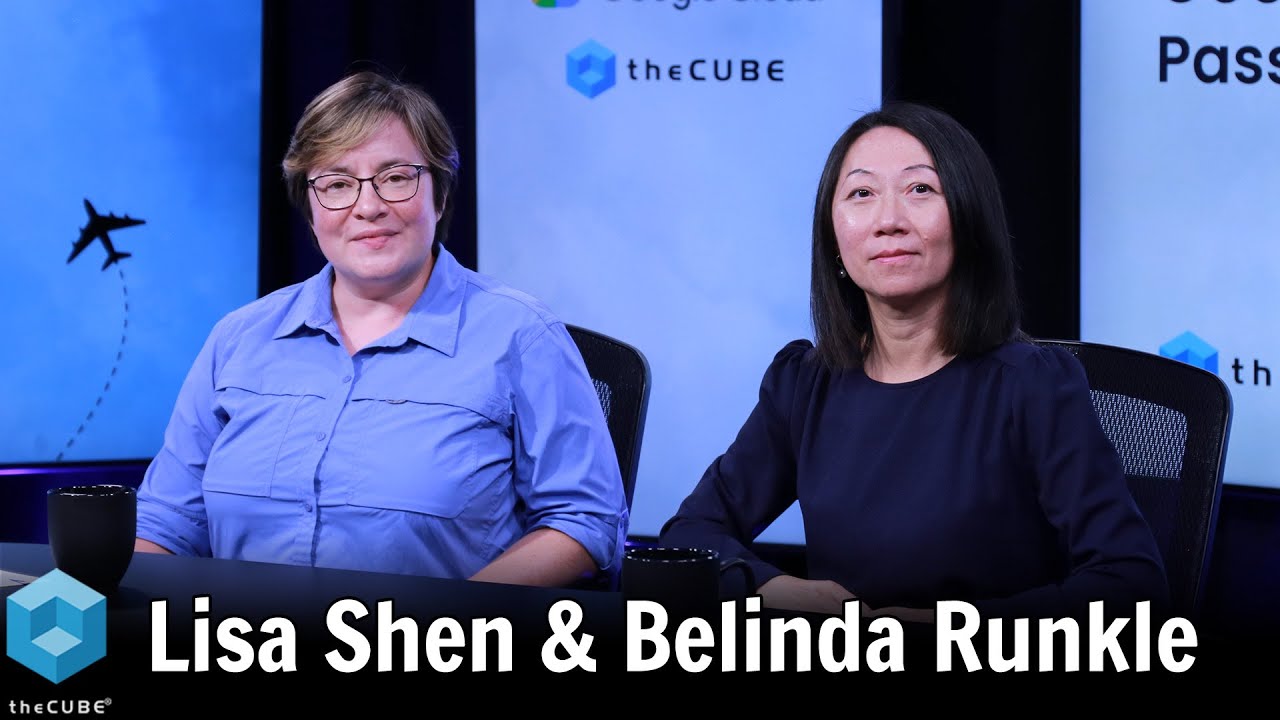
In this episode of Google Cloud: Passport to Containers, theCUBE welcomes John Belamaric, senior staff software engineer at Google, and Jago Macleod, director of engineering, Kubernetes at Google, as they talk to theCUBE Research’s Savannah Peterson about the intersection of Kubernetes and AI.
Belamaric, who has been with Google for nearly seven years, shares his expertise in Kubernetes, focusing on key developments and the adaptation required to integrate AI workloads effectively. Macleod, involved in AI and Kubernetes, discusses the evolution of open-source projects and the balance between innovation and system stability.
Key takeaways include the importance of collaborating with open-source communities for driving innovation, ensuring effective infrastructure management for optimizing AI workloads and the critical role of Kubernetes in supporting AI and machine learning deployments.
Forgot Password
Almost there!
We just sent you a verification email. Please verify your account to gain access to
Google Cloud: Passport to Containers. If you don’t think you received an email check your
spam folder.
In order to sign in, enter the email address you used to registered for the event. Once completed, you will receive an email with a verification link. Open this link to automatically sign into the site.
Register For Google Cloud: Passport to Containers
Please fill out the information below. You will recieve an email with a verification link confirming your registration. Click the link to automatically sign into the site.
You’re almost there!
We just sent you a verification email. Please click the verification button in the email. Once your email address is verified, you will have full access to all event content for Google Cloud: Passport to Containers.
I want my badge and interests to be visible to all attendees.
Checking this box will display your presense on the attendees list, view your profile and allow other attendees to contact you via 1-1 chat. Read the Privacy Policy. At any time, you can choose to disable this preference.
Select your Interests!
add
Upload your photo
Uploading..
OR
Connect via Twitter
Connect via Linkedin
EDIT PASSWORD
Share
Forgot Password
Almost there!
We just sent you a verification email. Please verify your account to gain access to
Google Cloud: Passport to Containers. If you don’t think you received an email check your
spam folder.
In order to sign in, enter the email address you used to registered for the event. Once completed, you will receive an email with a verification link. Open this link to automatically sign into the site.
Sign in to gain access to Google Cloud: Passport to Containers
Please sign in with LinkedIn to continue to Google Cloud: Passport to Containers. Signing in with LinkedIn ensures a professional environment.
Are you sure you want to remove access rights for this user?
Details
Manage Access
email address
Community Invitation
Cake, Compute & Community – Exploring OSS & AI Inference
In this episode of Google Cloud: Passport to Containers, theCUBE welcomes John Belamaric, senior staff software engineer at Google, and Jago Macleod, director of engineering, Kubernetes at Google, as they talk to theCUBE Research’s Savannah Peterson about the intersection of Kubernetes and AI.
Belamaric, who has been with Google for nearly seven years, shares his expertise in Kubernetes, focusing on key developments and the adaptation required to integrate AI workloads effectively. Macleod, involved in AI and Kubernetes, discusses the evolution of open-source projects and the balance between innovation and system stability.
Key takeaways include the importance of collaborating with open-source communities for driving innovation, ensuring effective infrastructure management for optimizing AI workloads and the critical role of Kubernetes in supporting AI and machine learning deployments.
Find more SiliconANGLE news and analysis https://siliconangle.com/
Follow theCUBE's wall-to-wall event coverage https://siliconangle.com/events/
Learn about the latest theCUBE events https://www.thecube.net/
00:00 - Intro
00:06 - Embarking on New Horizons: Journeys and Introductions
02:38 - Evolution of Kubernetes
05:05 - Challenges and Innovations in Kubernetes
10:35 - AI and ML Integration with Kubernetes
13:00 - Evolving Dynamics: AI and Kubernetes for the Future
17:38 - Advice for Kubernetes and AI Beginners
22:47 - Monetizing Open Source and AI Impact on Industry
28:50 - Personal Reflections on AI's Future Impact
31:55 - Concluding Remarks and Anecdotes
#theCUBE #GoogleCloud #Google #theCUBEresearch #Kubermetes #containers #AI
Cake, Compute & Community – Exploring OSS & AI Inference
Savannah Peterson
Principal Analyst & HostSiliconANGLE Media, Inc.
HOST
John Belamaric
Senior Staff Software EngineerGoogle
Jago Macleod
Director Of Engineering, KubernetesGoogle
In this episode of Google Cloud: Passport to Containers, theCUBE welcomes John Belamaric, senior staff software engineer at Google, and Jago Macleod, director of engineering, Kubernetes at Google, as they talk to theCUBE Research’s Savannah Peterson about the intersection of Kubernetes and AI.
Belamaric, who has been with Google for nearly seven years, shares his expertise in Kubernetes, focusing on key developments and the adaptation required to integrate AI workloads effectively. Macleod, involved in AI and Kubernetes, discusses the evolution of open...Read more
Cake, Compute & Community – Exploring OSS & AI Inference
search
Savannah Peterson
>> Hello container fans and welcome back to our exclusive series with Google, Passport to containers, where we take you on the end-to-end journey everyone is trying to navigate as we step into our AI future. The focus of today's show is going to be Kubernetes AI and inference with a bonus sweet treat when we talk about cake. Make sure you tune in all the way to this fantastic interview. Without further ado, our wonderfully curated guests, John Belamaric and Jago Macleod. Thank you so much for taking the time, gentlemen.
Jago Macleod
>> Thank you.
John Belamaric
>> Thanks for having us.
Savannah Peterson
>> This is so exciting. You know your reputations precede you. Bobby has said nothing but the best and Jago, I'm going to go to you first because he refers to you as a bit of an OG at Google. Would you mind telling us a little bit about your tenure history there and how that relates to OSS and Kubernetes?
Jago Macleod
>> Sure. Thanks for having us. I joined Google a little over 10 years ago. I interviewed at Google, it was right about the time of the Nest acquisition.
Savannah Peterson
>> I noticed that when doing my homework. Were you on the Nest team and got absorbed in or you-
Jago Macleod
>> No, I joined Google just happened to be at that time. Then you do sort of a team fit tour and it seemed like an interesting project to work on. So I went to Nest and it was a really fascinating social experiment of ex-Apple execs getting absorbed by Google execs, and that culture change was really interesting.
Savannah Peterson
>> Well, I can imagine that. We talked about this a fair bit on the show, but smaller teams coming into a bigger engine, Nest still has its brand, it still has that ownership. It says a lot about how the Google team welcomes in their new friends when these sorts of things happen, which I think is really interesting. John, tell me a little bit about your journey. You've also been at Google almost seven years now.
John Belamaric
>> That's right.
Savannah Peterson
>> Borderline OG status as well. Curious, did you go on the same team fit tour?
John Belamaric
>> No, I joined really specifically to work on Kubernetes. I came in, I got involved in Kubernetes in the open source community and worked on bringing Core DNS into Kubernetes. I was working on Kubernetes for about a year and I met a bunch of people at Google, a bunch of people in the community and had the opportunity to interview. Really, the only reason I moved my family across the country was to be able to work on Kubernetes.
Savannah Peterson
>> Wow, that is awesome. A lot of Kubernetes in the house. Shout out to all of our Kubernetes fans watching. It's one of the few unique words in tech that I think my mother even knows what it is.
John Belamaric
>> That's impressive.
Savannah Peterson
>> Given our passion. I know Robin is an OG. We're going to be talking about Kubernetes, we're going to be talking about open source. We're also going to be talking about AI training and inference and how it relates to both today. Jago, I want to come back to you. Obviously been a voyage since you've joined, but also from Kubernetes 10 years ago versus Kubernetes and what people are doing with containers now, pretty dramatic. What has that journey been like?
Jago Macleod
>> Well, I think early on the end users really were the community, so we didn't have a lot of PM work going on, it wasn't a lot of communicating with customers asking what they wanted. We were the world's leading experts in containers and container orchestration. We really were bringing what we had at Borg into the open source world, so we moved really fast. There was a lot of tolerance for pain early on. We ran production workloads we probably shouldn't have at that point, and we just ran really, really fast. Then it sort of exploded into the ecosystem and there was a huge explosion of projects in the CNCF. Look at the landscape page in the CNCF, and it's pretty dizzying at this point to figure out what do you need, what's useful, what's necessary. The next round of adopters really don't care about learning about the elegance of Kubernetes API, they just want to continue to sell what they're selling or manage their financial services, so the usability, the simplicity has had to improve over time.
Savannah Peterson
>> Absolutely. You just gave a talk on this last KubeCon, correct? So speaking of the tolerance for pain, it's now less pain, more gain, right? You see it shifting into a world where we're finally decreasing the complexity and mutability of Kubernetes.
Jago Macleod
>> Well, I think the capabilities have expanded a lot-
Savannah Peterson
>> I waw that.
Jago Macleod
>> I think the core has settled down some, but we're in a new wave of innovation now. So really now it's about the balance of stability and innovation. We have to move fast and not break things. We have to evolve to meet the needs of the next trillion core hours and still keep banks and healthcare systems up and running. So it's really hard.
Savannah Peterson
>> Especially with the investment that folks are putting into this. Move fast and break things, you're breaking much more expensive things than you might have been breaking a few years ago. John, what do you think? Tell me about your observations on this journey as well.
Jago Macleod
>> I think exactly like... Before the sort of impact of AI and ML on Kubernetes and the industry in general, we were working really hard to work on stability in Kubernetes. Because we had banks and financial institutions and things running on it, we wanted to make sure that any change we made was super safe, so we put a lot of effort into ramping up the processes around making it safer and more controlled. Then this other opportunity came where it was clear that as a project we needed to shift. So we still keep all of those safety constraints, but we are having to invest in building out the functionality for these new workloads and adapting Kubernetes to these new workloads while still allowing the existing APIs. It really comes down a lot to APIs. Stability, yes. Upgrades, yes. But stability of APIs because we have tooling, ecosystem, everything built on top of those APIs, they can't change, they can't go away. You have to be additive about it and do it in a way that allows the new things to use the new APIs, the older things to continue running as they've always run. It's hard and it also does lead to a little more complexity, so then the secondary challenge on that is how do you keep the user experience from becoming overwhelming?
Savannah Peterson
>> I was just going to ask about that, because not only are you balancing the complexities from a product roadmap perspective as well as the architecture to your point of what runs on what and how, but one of the things that I know we all agree on, the Kubernetes community is one of the strongest, most passionate developer communities, open source side of things. I can imagine there's a lot of dialogue that you need to have with your community. How often are you interfacing with your developers and users of the platform as you're making this transition specifically?
John Belamaric
>> Every day? You're right, it's constant.
Jago Macleod
>> And it comes at different layers of the cake.
John Belamaric
>> Yes.
Jago Macleod
>> We'd have direct conversations with our end users sometimes because there was a production incident outage, they hit a new limit that we've never seen before, so those can get kind of spicy. But generally we work through them and we co-innovate to find the right solution. Our customers really appreciate that about working with Google. Then through the community also. We have customers, our counterparts, and it's a really strange process. We collaborate with other companies on some feature and then we compete for the same small list of customers of that feature. It's a really strange system and it seems to work out pretty well.
Savannah Peterson
>> Well, what you're describing there is precisely the tension between open source and private. I think they're necessary. I think it is the balance that may the best man win when it comes to win the customer. But on the flip side, we all don't need to be reinventing the wheel, we should be building the best solutions together. Talk to me a little bit about the differences for folks using the open source side of things versus operating on Google Cloud and the benefits thereof or what people expect. Jago, I'll start with you.
Jago Macleod
>> Sure. I think there's two directions. There's, we on GKE have spent an enormous amount of time automating, creating a managed version of Kubernetes. And we're world-class in automated upgrades and a lot of the management aspects. A lot of our customers are multi-environment, either on-prem and GCP or in another cloud and GCP. No matter how good some of that automation and management service is, they can't or won't use it because consistency is more important than being best in class on a specific environment.
Savannah Peterson
>> That's a really good point.
Jago Macleod
>> So we have both kinds of customers, customers that run on GKE and those that run on GCE, open source, Kubernetes in some way. We're evolving so that there's a common substrate that both of those sets of customers can use, our third-party customers who build their own platforms and our own internal GKE platform. One thing that we really focus on in GKE is the ability to replace a node if something goes wrong. So for example, if a customer SSHs into a node and makes some changes that we don't know what that change is, we can't reliably replace that node or create another one if they scale. So we always try to figure out, "What are you trying to customize? Can we productize that and make it part of the product roadmap?" We kind of see it as a conga line, of customer customizes their own environment, and then we see trends and figure out what's the right abstraction and then build that into the product. That's a pretty unique approach in this market.
Savannah Peterson
>> Well, it's more collaborative, I would say, than some of the traditional service-oriented approaches. I also got to point out, you've referenced cake, spice and a conga line, I'm coming to you next half an hour. I am already seeing what we can do if we've got -
Jago Macleod
>> We got to mix metaphors next.
Savannah Peterson
>> We might have to get Bobby involved in this. John, I'm curious because you came to Google specifically for Kubernetes, love that passion, that focus, you're probably talking to a lot of different, both community members as well as developers, as well as companies making big spend decisions on what they're building on right now as we enter this AI revolution. What are some of the trends that you're seeing and what are some of the common speed bumps that you are noticing that people are hitting, that you're helping them through?
John Belamaric
>> That's a good question. I think that my focus for the last year or so has been really tightly focused on trying to enable our work in upstream Kubernetes to enable Kubernetes to work better for AI and ML workloads. So some of the speed bumps we see in those areas are just that Kubernetes was originally designed for a different set of use cases. So things like hardware, in a microservices type of HTTP world, we're trying to make hardware more and more fungible and more like a CPU, is a CPU, is a CPU, but for the newer workloads, a GPU is not GPU, is not a GPU.
Savannah Peterson
>> It is not.
John Belamaric
>> Right. Some of the fundamental primitives within Kubernetes allied the complexity intentionally, because we're trying to make that fungibility work in a world of infinite cloud resources that are always available and can be scaled infinitely. That's not the world we live in. What are the changes we need to make? Obtainability of GPUs, of course, has been a big issue lately, so we're looking at-
Savannah Peterson
>> I haven't heard anyone talking about it.
John Belamaric
>> No, nobody's talking about it. One of the things we're doing within Kubernetes within this, what we call dynamic resource allocation project, which is really about helping Kubernetes understand the hardware better than it used to, is we're allowing people to be able to specify how they ask for hardware in a little bit of a fuzzy way, but with constraints. They can say, "Well, I could take this type of GPU, or I could take two of that type of GPU." Now they only have to write that workload specification once and they have some control over what hardware they get, but there's also some flexibility, so the platform can make a decision and say, "Well, somebody else is using all of those, but you know what, I've got a bunch of these over here, I'll give you a bunch of those."
It's like trying to shift the work of making all of these decisions from the user, the human to the machine, and that way when you're asleep at night, if some other job finishes, you can get the thing you wanted and your workload will run by the time you wake up in the morning. It's shifting more work to the machine. That's one of the speed bumps, I guess.
Savannah Peterson
>> I think that's a really good call out. I was actually reading something by Jonathan Ross, ex-Googler on the TPU team originally today about the TPU and LPU, and in this conversation, also GPUs. How many things can I say that ends in PU in the next four seconds? But the crux of some of this, beyond workloads, is inference. I really want to dig in here because that's the nugget that makes AI real for most of the end users. That's the nugget that tips over the true viability of a lot of the efforts that are going on across industries and verticals right now. How have you been optimizing GKE and your OSS projects for AI inference and training? Because I can imagine it requires a bit of strategy and you're also moving at the speed of light right now. Jago, I'll start with you since you're giving me the good smile.
Jago Macleod
>> Sure. It is a little bit forward-looking on the inferencing side. Most of our really large customers in the AI space so far have been training foundational models. We don't think there are thousands more of those, we probably don't need thousands more of these foundation models. We have a hypothesis that as that new hardware becomes available that's best in class for training, that the hardware we're selling right now for training will become more useful in the inference. Inference is something that not many companies do today. I don't think we've seen gen AI native winners emerge yet. It's sort of the chat use cases. It's not really deeply baked into every business yet, but we think it will be. And Kubernetes, as John was mentioning, was built for a different set of use cases. It's not great at training today, but it's useful enough to add value. What we really want to do on the inferencing side, is make Kubernetes gen-AI inferencing aware. Actually evolve it-
Savannah Peterson
>> Intimidation.
Jago Macleod
>> Not succeed in spite of Kubernetes, but succeed because of Kubernetes. A lot of the work we're doing adjacent to the DRA work is in that area. In-place pod updates, so you can scale up and down pods at runtime without resizing them. Pod level resources. The scheduling aspect and auto-scaling becomes a lot more interesting when you can scale a pod or add a new one. You can do this at different layers in the cake again. That's the big push, is making the idea that inference is the next web app is a term that we can talk about a lot.
Savannah Peterson
>> I love this. I've been really hot all year and all my analysts work right now is around taking AI beyond the browser. So exactly to your point, it's that touch point, whether that's an edge device at on-prem, it doesn't matter where it is, but it's that human interaction. John, I see you nodding.
John Belamaric
>> Yeah. Well, no. I think that's right. In some ways inference is a little bit more like the original use cases that Kubernetes designed previously. You've got load that comes in, in varying ways that you have to scale up for and things like that. I think that... I don't know, as Jago said, we're trying to evolve Kubernetes. The hardware relationship is one of it, that's both for training inference. But the other one is, I see there's a Ray sticker on your laptop here. So there are AI and ML frameworks that are used to serve either training or inference, and we want to ensure that Kubernetes is the best place to run those. Right now Kubernetes is the default place to run those, and it's a good place to run those, but we want to make it the best place to run those so that those inference workloads, Kubernetes as a project really wins those workloads.
Savannah Peterson
>> Yeah, I love that. Yeah, go ahead.
Jago Macleod
>> That is something that we've strived for in the Kubernetes project for a long time, is not to do everything for everyone, but to be really clear about where the boundary is and then create opportunities for adjacent organizations or communities. We envision a future where businesses have to run Ray and Slurm and Spark and Kubeflow, all next to each other. The next framework that doesn't exist yet emerges, the platform team shouldn't have to learn how to run that on bare metal or VMs even, and build the security model and figure out how to charge back and all of this, that Kubernetes does well today. We're working really closely with those communities to support them better so that they don't succeed in spite of the platform.
Savannah Peterson
>> Well, you want people to keep coming back and scaling up and telling their friends because it's a positive experience, not because it was the only experience you could have.
John Belamaric
>> Exactly, right.
Savannah Peterson
>> We've all had those experiences, particularly in technology. Unfortunately, some in our human lives as well. I think that's really important. All the research shows us that even though we've had this acceleration with AI and we are seeing greater adoption with Kubernetes, many companies and industries are still very early in their container journey. What would be your, maybe for each of you, we'll call it one to three top pro-tips for that team or those architects who might be watching this show right now as they're trying to think, "Oh my goodness, I'm balancing figuring out AI, ROI. I have heard all this stuff about containers and Kubernetes, and I know this is a tool that's going to help me in this." What would you like to tell them right now? Jago, I'll start with you again.
Jago Macleod
>> Migrations are very hard. It could be a migration from on-prem to the cloud. It could be a migration, but from one cloud to another. In almost every case, what you get, if you're lucky, is what you thought you already had. One anti-pattern I would caution against, is to make it the might as well project from hell, "While we do this, we might as well also fix this thing that's been bothering me for five years." That's when projects stretch into years. Where we see a lot of success is, they set up a new environment in GCP on GKE, for example, and start one workload at a time, kind of migrating a workloads, or lighting up new workloads in a new environment and not trying to shift everything at the same time. That becomes really tricky.
Savannah Peterson
>> Some great advice I got from some Stanford authors way back in the day was, "Set the bar low and clear it often." You don't have to clear the 20-foot hurdle the first day. Do a little one, do a little, "Oh, okay, this is how this works." Toggle this, toggle that, get the team by, and then it's much easier to tackle some of these tasks. John, do you have any other great insights?
John Belamaric
>> I think it applies to a lot of things in life. Do the things that you're good at. Maybe it's a little self-serving, at Google Cloud we have GKE, we do a really good job of all the management aspects, so why should you have to learn to do that? Why do you have to learn to do the upgrades and the migrations and the maintenance windows? Getting stuck on an old version of Kubernetes is a very dangerous thing to do. What I've seen a lot is companies come in and they build out an open source Kubernetes environment, and they're all excited at first, but then they get busy with actual work that delivers value to their company, not building out infrastructure. Then when the next version comes out in four months and another one in four months and another one in four months, and wait a second, now that one I'm running is not getting security patches anymore, I have to do it. Don't try and do everything yourself. Rely on this community and these companies and vendors that, that's what they do day in and day out.
Jago Macleod
>> This is a great point. Almost every other migration before this one, before the one to being cloud native has been, change everything, get everything just right and then don't touch it anymore. This is not that world. Something somewhere is always changing at every second of every day. This idea of dynamic stability, like make small changes, and as you say, set the bar low and clear it often, make small changes that you can easily reverse. That's a really different mental model than what many of our more enterprise customers are used to.
Savannah Peterson
>> I think that's a really good point. I can imagine you have to coach them a bit on that particular journey. And also, when people think of open source, they don't always first think of money or ways to monetize that in the private sector. What is that conversation like? John, I'll start with you first this time.
John Belamaric
>> I think that in open source, the way I view it and my opinion, everything gets-
Savannah Peterson
>> That's what we're asking for here, don't worry.
John Belamaric
>> Everything gets commoditized. Everything we work on in the open source community, and whether you can build something in a proprietary way, but it doesn't work on other clouds, it doesn't work on-prem for other people if it's just built for your particular environment. Eventually somebody else is going to build the same thing, they're going to say, "Hey, there's a whole nother market out here that's really big, not just that one vendor. If this thing has value, I'm going to have a pure play startup that maybe makes this solution for this group and covers everything." Then that has the momentum and then your little proprietary thing, your customers are asking you to migrate to this open source thing. I think that everything gets commoditized. The kind of treadmill is that, we need to be ahead of what our customers need. We need to build the things and be able to build the better version. A lot of times with open source, we're starting with an open set of APIs, an open source implementation, but proprietary vendors can build their own implementations as long as they adhere to the APIs, and those can be better. They can be faster, they can put more investment into them. Those are kind of the strategies for monetizing the open source work we do.
Savannah Peterson
>> Yeah, that makes a lot of sense. One thing that Bobby and I are really passionate about, and part of why we wanted to do this series was not just to make it digestible, cake, pun intended, and to make these conversations accessible no matter where you are on your journey. And since we're all on a new journey as we take on more complicated or heavier AI workloads in our innovation across the board, is making sure the next generation comes along with us and making sure that we talk about democratizing various technologies over the years, that doesn't happen unless we actually up-skill people and empower minds that may not have been sitting at the table before. What would your advice be to someone who's watching this conversation and really excited about Kubernetes or AI infrastructure and it is just coming out of the gate? Where do they get started? Jago, I'll go with you right now.
Jago Macleod
>> I think building on what John was talking about earlier is, only do what only you can do and outsource the other stuff. Many of our customers coming to us now have either tried to build a DIY Kubernetes platform or run in another provider, and they're scaling bottlenecks. Early on in the adoption of cloud native technologies most customers want to be special. They think they have extra special needs, and they have to customize everything and manage everything themselves and tweak it, and they want access to every knob. The truth is, being special is really just code for risk. So the more like your neighbors you are, the less risk you're of finding new edge cases that haven't been found elsewhere. I think I would say you adopt a managed service, you only do what only you can and need to do, because it's hard enough already. I've worked places where there was not enough to do and we had to invent hard things to do. This is not that time. There's plenty of hard work to do right now, so don't go and find new hard work to do.
Savannah Peterson
>> Generally speaking for sanity, it's good advice in general. What about you, John?
John Belamaric
>> I think that sort of following out of that, it's don't strive for perfection. The successive drafts, rough drafts on anything you're trying to do, just get something working. We talk about bias toward action. Which is, make something work, see how it happens, learn from that, and then take the next step. Because every piece of code I've ever written will eventually be thrown away, sometimes very-
Savannah Peterson
>> It's all temporary.
John Belamaric
>> Sometimes within months. And that's normal. That's because we learn. So don't get overly invested or overly emotionally attached to your project or your code, because it's going to be thrown away pretty soon. Do the next thing, learn from it. It's the knowledge you're building that's most important.
Savannah Peterson
>> Yeah, don't be precious.
John Belamaric
>> Yes.
Savannah Peterson
>> We're very much in the sandbox stage with a lot of innovation that's happening right now, and that's a good thing. We forget sometimes the joy of the things you weren't expecting to make when you-
John Belamaric
>> It's fun, right?...
Savannah Peterson
>> made a drip castle or pulled this together or saw what worked, and all of a sudden you're like, "Wait a minute, those building blocks could actually lead to something pretty structurally and profound." So I like that, stay creative and have fun. Taking off your super awesome Google hats right now, what do you hope that AI does for our friends, our families, our future, on a personal level? John, you're looking pensive. I'm going to you.
John Belamaric
>> Oh boy. I don't know. It's a tough question, because I think that taking away drudgery is an obvious thing.
Savannah Peterson
>> Amen.
John Belamaric
>> Nobody likes drudgery. Every job has some drudgery. Everything in life has some struggle, but struggles are also good. Actually, it's a question that I'm not sure personally how I feel about it. I certainly don't want it taking away the creative aspects we do, but I definitely want it to address the drudgery. I do get a kick out of enabling people to do more with less. I think that it absolutely has, it hits that sweet spot. I hope that it will enable us as a species to do more with less in a way that we've never been able to do before.
Savannah Peterson
>> Less pain, more gain. Just like Jago said. What about you, Jago?
Jago Macleod
>> My passion, inspiration, motivation is accelerating human innovation. I think every age has a place where you can make the most impact in that direction. I think we are squarely in the center of that right now. I think this is healthcare, I think this is exploration, it's science. We need to accelerate in some dimension, and I think this is a great opportunity for that. I love the drudgery comment. If I never have to buy another plane ticket, I will be thrilled. That would be enough on its own. But I-
Savannah Peterson
>> Literally had this conversation with my mother this weekend as I was buying a plane ticket while visiting. I'm like, "Sorry, I just have to do this, . It's got to be like this.
Jago Macleod
>> How can it still be like this?
Savannah Peterson
>> Yeah.
John Belamaric
>> Still so tedious.
Savannah Peterson
>> Yeah. Well, we all agree on the drudgery. I think that's when Doomers say, "Oh, AI might take your job." No, it's going to make your job suck less. It's going to take all the bad parts out of that, or most of the less pleasurable parts.
John Belamaric
>> I think we're going to learn how to use it. Right now it's so up in the air, how to really enable us to do our jobs better, enable everything. It's very early.
Savannah Peterson
>> Which makes it so exciting. I look forward to when we look back on this conversation in a few years and-
John Belamaric
>> And we laugh at ourselves.
Savannah Peterson
>> Yes. To your point of getting work out there, if you're not laughing at the conversation you had a few years ago, or knowing that your code's going to get thrown out eventually, you're not aware of what this industry looks like. We're all learning. I think that's also what's really important, and I hope the audience takes away from this is, you're two incredibly brilliant men. Everyone we've had as a part of the Passport to Container series has been top tier expert in their field, very well respected. And we're all still kind of like, "Let's see what happens next." And in a great way, right? We're here to be the right partners and learn from each other, but I think there is a really refreshing humility from the industry right now where we know that we don't know, but we know if we work on it together it'll be better, so let's just go build. Which, it's a very inspiring thing to be able to see. Do you have any use cases that you can share with me, and then we'll wrap this up, of stories that have you really excited right now with the customers that you're getting to talk to? Or examples of industries doing fascinating things that might get the wheels turning for our audience? Or if you're just full of secrets, that's totally fine too.
Jago Macleod
>> Not secrets, but one thing I'm really excited about is improving the Kubernetes contributor experience. It's started to become more and more terrible over the last several years. We're not replacing the most senior people at a fast enough clip or adding to them. So the same small group of people end up overwhelmed three times a year as we try to get to a KEP freeze or a code freeze. I think as we talked about eliminating some of the drudgery and the early passes, a lot of the work in the Kubernetes project itself can be accelerated or eliminated by using some of this technology. We're not building it, it's super fascinating, but we're not actually getting benefit out of it ourselves, and I would love to invest in that a bit more.
John Belamaric
>> Well, and that definitely goes straight to that accelerating human innovation, certainly in our little patch. We spend a lot of time doing things that maybe if 80% of it could be done by machine, that would be fivefold the number of people in the project.
Savannah Peterson
>> Yeah. Or we even see it with cancer PhDs, I just learned something fascinating right now. There's a wonderful situation going on at Memorial Sloan Kettering where they're able to get people their PhD in three years instead of four. Now, when you think about that in terms of human impact of all of these researchers being able to do more and deliver, we're talking about curing cancer and stuff there.
John Belamaric
>> Well, it's not only that extra year, but it's just if you're multiplying their-
Savannah Peterson
>> Well, exactly. It compounds that interest in intellectual capital compounds big time.
John Belamaric
>> I think those are the applications I'm most excited about, is just the healthcare applications or the research, the science and research, I think you mentioned those. There's so many intractable problems, or problems that have seemed intractable that maybe become tractable.
Savannah Peterson
>> Yeah. I think we're kind of getting a Z-axis. We think about the X, Y, but I feel like lately we've got this kind of new dimension and we're going to be able to solve problems that we haven't been able to solve. It kind of reminds me of a little bit when, I'm really going on a tangent, but reading A Wrinkle in Time when we were kids, and all of a sudden you think about the fourth dimension. I kind of feel like right now when I have been thinking about what's possible or what's going to be possible or what we'll see as a result of all these collective efforts and the creativity out there in the world, to your earlier point, creativity isn't going anywhere, we are now going to be able to creatively solve things in a way that we have not been able to solve them before, which is really exciting. I find myself, I may have been dreaming about it, says what a nerd I am, but I find myself thinking, "Whoa, we'll be able to connect these dots where people are communicating too, in a way, on both sides of these fences to really optimize the human experience and human innovation." John, Jago, this has been absolutely fantastic. One final question for you, because this is fun, and we'll have to make sure it's a part of the show next time. What's your favorite kind of cake since that was our analogy?
Jago Macleod
>> Cheesecake. New York cheesecake.
Savannah Peterson
>> Oh, full calorie.
Jago Macleod
>> Absolutely.
Savannah Peterson
>> I love that.
Jago Macleod
>> Oh, yeah. That's it.
Savannah Peterson
>> As a New Yorker, you're speaking my language right there. What about you, John?
Jago Macleod
>> No, pause.
Savannah Peterson
>> I know.
Jago Macleod
>> It is a difficult choice, but I am actually, and maybe this will be a shameful admission, I actually really like carrot cake.
Savannah Peterson
>> There's no shame.
John Belamaric
>> Or actually it's the cream cheese frosting that really does it for me.
Jago Macleod
>> It's just a vehicle.
John Belamaric
>> It's just a vehicle for the frosting.
Savannah Peterson
>> We're a carrot cake household. My mother and I are carrot cake fans. I love that. Sometimes I really throw the wild card on the cake and say, "I want a lemon bar." So it's okay.
John Belamaric
>> Lemon bars good.
Savannah Peterson
>> But no shame to the carrot cake. We'll make sure that we have-
John Belamaric
>> I didn't say fruit cake.
Savannah Peterson
>> There's actually two ends of the cake spectrum, which makes sense why you work well together. The full calorie New York cheesecake and the carrot cake, which is like, I'm trying to be healthy, but I really like cream cheese frosting.
Jago Macleod
>> Diet cake.
John Belamaric
>> Exactly. As long as it's not a diet cake.
Jago Macleod
>> flan. Flan disturbs me. The self-healing dessert, when you stab it and it heals itself, is wrong. I will go on record with that.
John Belamaric
>> Crème Brûlée.
Jago Macleod
>> It's a different thing altogether.
John Belamaric
>> But flan, I am not a big fan of flan either. Our Spanish friends will hate us for that.
Savannah Peterson
>> Folks, and this is exactly how they go through each of the products sets in your GKU experience, in your Google Cloud experience, it's making sure that it is not flan, but it is instead, Crème Brûlée. What a fantastic interview. Jago and John, thank you so much for taking the time.
John Belamaric
>> Thank you.
Jago Macleod
>> Thanks for having us.
Savannah Peterson
>> Absolutely. Anytime. We'll make sure we've got fun, sweet treats. Hopefully you found this interview as tasty as we did over here. This is the fourth in our wonderful Passport to Containers series, special exclusive series with Google. We're here in Palo Alto, California. My name's Savannah Peterson. You're watching theCUBE, the leading source for enterprise tech news.