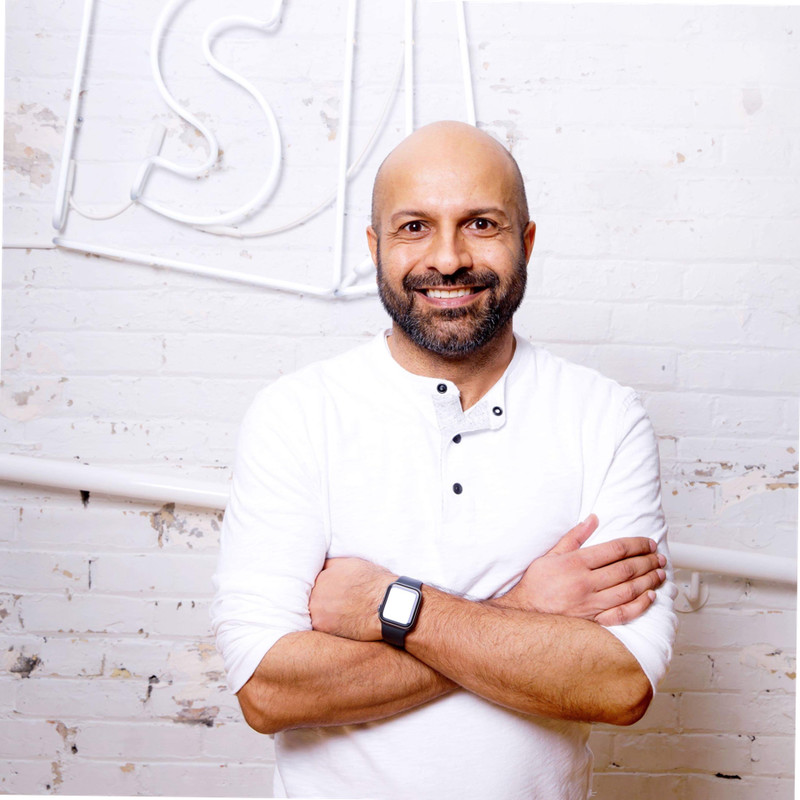
Drew Bradstock, senior product director for Kubernetes and Serverless at Google, and Farhan Thawar, VP and head of engineering at Shopify, join theCUBE Research's Savannah Peterson in an insightful conversation as a part of the Google Cloud: Passport to Containers series. Their discussion highlights how cutting-edge technology and seamless integration are shaping the future of commerce and entrepreneurship.
Bradstock and Thawar, explore their personal journeys with technology. Taking place during the Google Cloud Next event, the conversation covers Google Cloud's partnership with Shopify. The conversation covers Bradstock's and Thawar's expertise, emphasizing the evolution and simplification of Kubernetes over time. It takes a look into how Shopify skews the traditional commerce system, leading millions of online merchants to enhanced operational efficiency.
Crucial insights involve how Google and Shopify's partnership drives both innovation in commerce and the practical application of AI. Acknowledging the need for risk-taking in Canada's tech landscape, Thawar shares the significance of open communication and end-to-end collaboration to create seamless merchant experiences.
Forgot Password
Almost there!
We just sent you a verification email. Please verify your account to gain access to
Google Cloud: Passport to Containers. If you don’t think you received an email check your
spam folder.
In order to sign in, enter the email address you used to registered for the event. Once completed, you will receive an email with a verification link. Open this link to automatically sign into the site.
Register For Google Cloud: Passport to Containers
Please fill out the information below. You will recieve an email with a verification link confirming your registration. Click the link to automatically sign into the site.
You’re almost there!
We just sent you a verification email. Please click the verification button in the email. Once your email address is verified, you will have full access to all event content for Google Cloud: Passport to Containers.
I want my badge and interests to be visible to all attendees.
Checking this box will display your presense on the attendees list, view your profile and allow other attendees to contact you via 1-1 chat. Read the Privacy Policy. At any time, you can choose to disable this preference.
Select your Interests!
add
Upload your photo
Uploading..
OR
Connect via Twitter
Connect via Linkedin
EDIT PASSWORD
Share
Forgot Password
Almost there!
We just sent you a verification email. Please verify your account to gain access to
Google Cloud: Passport to Containers. If you don’t think you received an email check your
spam folder.
In order to sign in, enter the email address you used to registered for the event. Once completed, you will receive an email with a verification link. Open this link to automatically sign into the site.
Sign in to gain access to Google Cloud: Passport to Containers
Please sign in with LinkedIn to continue to Google Cloud: Passport to Containers. Signing in with LinkedIn ensures a professional environment.
Are you sure you want to remove access rights for this user?
Details
Manage Access
email address
Community Invitation
Shopify Spotlight: Innovation Through Platforms & Partners
Drew Bradstock, senior product director for Kubernetes and Serverless at Google, and Farhan Thawar, VP and head of engineering at Shopify, join theCUBE Research's Savannah Peterson in an insightful conversation as a part of the Google Cloud: Passport to Containers series. Their discussion highlights how cutting-edge technology and seamless integration are shaping the future of commerce and entrepreneurship.
Bradstock and Thawar, explore their personal journeys with technology. Taking place during the Google Cloud Next event, the conversation covers Google Cloud's partnership with Shopify. The conversation covers Bradstock's and Thawar's expertise, emphasizing the evolution and simplification of Kubernetes over time. It takes a look into how Shopify skews the traditional commerce system, leading millions of online merchants to enhanced operational efficiency.
Crucial insights involve how Google and Shopify's partnership drives both innovation in commerce and the practical application of AI. Acknowledging the need for risk-taking in Canada's tech landscape, Thawar shares the significance of open communication and end-to-end collaboration to create seamless merchant experiences.
Shopify Spotlight: Innovation Through Platforms & Partners
Savannah Peterson
Principal Analyst & HostSiliconANGLE Media, Inc.
HOST
Drew Bradstock
Sr. Product Director for Kubernetes & Google Compute EngineGoogle
Farhan Thawar
VP & Head of EngineeringShopify
Drew Bradstock, senior product director for Kubernetes and Serverless at Google, and Farhan Thawar, VP and head of engineering at Shopify, join theCUBE Research's Savannah Peterson in an insightful conversation as a part of the Google Cloud: Passport to Containers series. Their discussion highlights how cutting-edge technology and seamless integration are shaping the future of commerce and entrepreneurship.
Bradstock and Thawar, explore their personal journeys with technology. Taking place during the Google Cloud Next event, the conversation covers Goo...Read more
Shopify Spotlight: Innovation Through Platforms & Partners
search
Savannah Peterson
>> Hello, Google Cloud community, and welcome back to our exclusive series with the Google Cloud team, Passport to Containers. My name's Savannah Peterson. Very excited to bring you two fantastic guests in this continuing series. This time, we get to talk to a little bit of a customer as well. Farhan and Drew, thank you so much for taking the time today.
Drew Bradstock
>> My pleasure.
Savannah Peterson
>> It is a busy week. I would be remiss not to mention that we're here at Google Cloud Next, so a big celebration of all things Google this week, though the content of this interview is going to be evergreen. Since Bobby has done nothing but bring me fantastic stories of interesting people, he is batting a thousand on that one. Keep it up, Bobby. We love it. I would love for each of you to tell me a little bit about your role, but answer a question that him and I both love, which is, why did you fall in love with tech? And Drew, I'll start with you because then I've got a follow-up question for Farhan after he goes.
Drew Bradstock
>> Yeah, and really looking forward to this. This is great. So I think my role right now is running all of Kubernetes and serverless, which includes cloud-run-
Savannah Peterson
>> A small job.
Drew Bradstock
>> Yes, it is. And I had a lot less gray hair before I took over this role. It was long and luxurious and... But no, it's been great because I've seen so much transformation from when, it was OSS beginnings, even when I joined GK, it was a very tiny product. And now, you were at KubeCon last week, and it's literally tens of thousands of people in conferences around the globe. So I think also, that's one of the reasons I came back from Google. I was in the ads business for years.
Savannah Peterson
>> I saw you did a Boomerang.
Drew Bradstock
>> I did, which is rare, but I came back purely for Kubernetes. We were using Kubernetes at the start of , and I'm like, "This is amazing." And I also thought, "Oh my God, this is a nightmare." It was not easy to use.
Savannah Peterson
>> Complex.
Drew Bradstock
>> It was complex.
Savannah Peterson
>> Oh my God.
Drew Bradstock
>> And the end result was great, but getting there was a struggle. The struggle was definitely real to get there. So I had the opportunity to rejoin Google, work on this. I'm like, "A, this is such a big challenge. B, I can only go up from the nightmare that was Kubernetes many, many years ago," so that's really why I'm here.
Savannah Peterson
>> Well, and things have gotten so much easier. It must feel good for you to look around these rooms and see everyone.
Drew Bradstock
>> It really does. There's less like... When I chat with Farhan, he's less angry with me over the years. Right?
Farhan Thawar
>> Slowly but surely.
Drew Bradstock
>> Slowly, slowly. He's not quite there.
Savannah Peterson
>> You've still got some ground to cover, yeah.
Farhan Thawar
>> Good things in the mix.
Drew Bradstock
>> So there'll be some interesting questions, he'll always answer honestly, but it has improved a lot. The challenges with... Kelsey Hightower's Kubernetes the Hard Way is how I learned. And that was a nightmare, but it really taught you the nuts and bolts. I'm finding the people who use Kubernetes now, they don't even worry about that stuff, unless you reach the scale of Shopify, it's just not there because it works versus the olden days to age myself, it just took a lot of effort and I'm super proud of what all the teams and the OSS community have accomplished to make that easier.
Savannah Peterson
>> I cannot agree with you more and very well stated. On that note, Farhan, tell us about you. When did you fall in love with tech? What brings you here today?
Farhan Thawar
>> I mean, I've been a nerd my whole life. I was taking apart my toys-
Savannah Peterson
>> Same. Speaking my language, man. Yeah.
Farhan Thawar
>> Taking apart my speakers and trying to get the magnets out and my parents brought home an XT.
Drew Bradstock
>> I had an XT.
Farhan Thawar
>> I'm dating myself, in 1988 when I was 14. And the first thing I did was take it apart, then I put it back together.
Savannah Peterson
>> I'm sure they loved it.
Farhan Thawar
>> No, they hated that, because of course, it was like $2,000.
Drew Bradstock
>> Did it work again?
Farhan Thawar
>> Of course, yeah, yeah.
Drew Bradstock
>> Okay, good. All right.
Farhan Thawar
>> And the other thing was they had... It came with a giant DOS manual and I just went, as you would, page by page.
Drew Bradstock
>> Oh, you did? You read it?
Farhan Thawar
>> I read the DOS manual, every command. And they're like "What are you doing?" I'm like, .
Savannah Peterson
>> The person who wrote that is feeling so seen right now.
Farhan Thawar
>> Yes.
Drew Bradstock
>> Yeah. Yeah.
Farhan Thawar
>> Amazing, yes. And I don't know, I was riveted. I just read the DOS manual. That's what I wanted to do for fun.
Drew Bradstock
>> That's cool.
Savannah Peterson
>> So how does that take us to where you are now and what you're working on at Shopify?
Farhan Thawar
>> Well, I mean, again, I'm a hacker and a nerd. I want to fix things for people. And so what Shopify is here to do is remove the toil from getting people to be entrepreneurs. And so I like at the beginning you said, "Just a little customer, Shopify." Our goal, I mean, we are Canadian, so we like to be the brand-
Drew Bradstock
>> We're both Canadian actually. So you're outnumbered.
Savannah Peterson
>> I know, love this.
Drew Bradstock
>> I know.
Farhan Thawar
>> And we want to be the brand behind the brand. So many times, you're shopping online, you had a great experience, and then you're like, "I wonder how that all came together." And him in the corner is like, "Powered by Shopify," because we want those merchants to be front and center and their brands to shine through and we want to be in the back making it easy for them.
Savannah Peterson
>> Yeah, I noticed that. I noticed as you walk into the massive show floor here, there's actually a sign about how you're making that customer experience better as one of those marquee narratives that you all are working on. So Farhan, I'm staying with you, talk to me about the partnership with Google. How long have you been hanging out with Drew? How long has he been annoying you?
Drew Bradstock
>> Answer honestly, yeah.
Farhan Thawar
>> I mean, we've been on Google Cloud since about 2018. We had our own data centers before that. We made the decision to move to Google Cloud, made it very quickly, moved everything. So we are, I like to say, 99% Google Cloud because we have an acquisition here or there that might be on another system, but it's a great partnership. Again, when you say little, I think it's funny because we are such a big part of commerce in the US, and we have to talk all the time because when something happens, we're like, "This is coming." And Google's like, "No problem. We can handle it." We're like "Cool, but this is coming." "No problem." And so we work together to handle these crazy sales that happen, especially like a Black Friday/Cyber Monday, which is, for us, an all year planning event to make sure it all goes smoothly.
Savannah Peterson
>> How many merchants are you supporting in the United States?
Farhan Thawar
>> Millions.
Drew Bradstock
>> Yeah.
Savannah Peterson
>> Yeah, many millions I would assume.
Farhan Thawar
>> Yes, many millions. And again, we always tell people, "If you were online, you buy something and it was a good experience, it's probably Shopify."
Savannah Peterson
>> Oh, casual.
Farhan Thawar
>> Casual.
Savannah Peterson
>> That's how the Canadians do the flex.
Farhan Thawar
>> It's a Canadian flex. A Canadian flex.
Drew Bradstock
>> Yeah, we're humble most of the time and then sometimes-
Farhan Thawar
>> If it was a good experience, yes.
Drew Bradstock
>> I was at a startup event last night and one of the SaaS providers is running on Shopify. It was some tire startup in California, and they were talking about their front end and I'm like, "You should try Shopify." And they're like, "We're using it." So they were doing all their optimization behind the scenes and using you for the front end, which is awesome.
Farhan Thawar
>> Amazing. A good example.
Savannah Peterson
>> It is.
Farhan Thawar
>> I'll throw a little flex in because yesterday at one of the Google keynotes, Malcolm Gladwell was speaking and I got to randomly sit there and have lunch with him.
Drew Bradstock
>> Oh, cool.
Savannah Peterson
>> Amazing.
Farhan Thawar
>> And I was looking at his shoes and I was like, "Those are on Shopify."
Savannah Peterson
>> Wow, you even know all the SKUs.
Farhan Thawar
>> Tracksmith, Tracksmith.
Drew Bradstock
>> .
Savannah Peterson
>> I love that You even know that. What a great anecdote. Now-
Drew Bradstock
>> Do you have a sneaker obsession? Is that why you're-
Farhan Thawar
>> No, I do not. He was just telling me how he loves his shoes.
Drew Bradstock
>> Because I know there's some sneaker obsessions in Shopify.
Farhan Thawar
>> His line was, "Serious runners run with Tracksmith." I'm like, "Cool." And I looked it up, I had to look it up.
Drew Bradstock
>> That's pretty cool.
Savannah Peterson
>> I love that. I am a sneaker head. My sneaker's actually Google themed, you'll see-
Drew Bradstock
>> Oh, those are good.
Savannah Peterson
>> I wish I could show them on camera. We'll show them on camera at some point today.
Drew Bradstock
>> Okay. Maybe we'll also try to get them on.
Savannah Peterson
>> Not in the appropriate-
Drew Bradstock
>> The post cut.
Savannah Peterson
>> ... outfit to show my sneakers right now. However, that's a, I'm here for the sneaker stories. The thing that you just so casually flexed a little bit there though, that great experience that you're talking about has a lot to do with data and with inference. And so Drew, tell me a bit about how y'all are focused on that and delivering solutions like the one that Shopify deploys.
Drew Bradstock
>> Yeah, it's really changed a lot because if we look at what we've done with Shopify for years, and actually I'll come back with one sneaker story where we've looked at how to make commerce run really well for them. Because the sheer volume that goes through the platform, not just in BFCM but through flash sales, like sneaker sales, a number of vendors you'd know who are Instagram influencers, the spikes that Shopify would see was immense. But if their system couldn't handle it in a very short period of time, it was gone. And the amount of damage to their merchants was huge and they really pushed us and pushed their own teams to do things that were just unheard of. And even on the GKE side, we're like, "What do you mean it's going to be a random spike that's at the same level of BFCM for 15 minutes?" So we've had to do a lot of that on regular commerce. But where for inference, it's the same thing. It's actually, it's very similar, so you can use your same skills but completely different because inference doesn't behave the same way. It really comes down to where it's not predictable. It can be random in terms of the needs, the latency, the more complex the answers that the merchant tasks want, it's going to be really a variable. And a lot of the teams aren't ready for it to take a long period of time or very short and then the systems can't handle it. So for us it's once again, how do we simplify it? But how do we get Kubernetes and GKE, so community and within Google running well so that people like Shopify don't have to spend all their time optimizing how to get inference running well. And it's a learning experience. Just like AI, there's a lot of tribal error. We're announcing a couple of things this week, but we learned by seeing what horribly didn't work. And Shopify has been a great partner, they give us very direct feedback.
Farhan Thawar
>> The joke is that the SREs at Google are Shopify Reliability Engineers, not the site reliability engineers.
Drew Bradstock
>> They need some more sneaker swaggers and stickers and then they'll be a little more loyal.
Farhan Thawar
>> Yes, exactly. You hit the nail on the head, when you've got a, not just an influencer, a celebrity, a musician drops like new merch, new album, new lipstick, new pantyhose, and all of the sudden we're like, "What's going on?" And we just see crazy spikes and it's there, you're right, 10 minutes, 30 minutes. And if you don't serve those customers, they're gone. They want the items. And so it's a super fun challenge. It allows us to have these cool conversations like, "Are you seeing this? Are you seeing this?" It's crazy and it's fun.
Savannah Peterson
>> Yeah. Well, I mean it's got to keep you on your toes with the BFC on Black Friday/Cyber Monday, we know it's coming. I used to work in 3D printing, e-commerce, you know it's coming. You're prepared, the hatches, you've got everyone, every reliability engineer you can possibly have on deck in those moments. But with this, it is really, it's sporadic, it's staccato. If it was a song, it is kind of all over the map and that's why this ability, this is why Google Cloud is such an interesting partner in my opinion, is the ability to expand and adapt to those needs when they happen.
Farhan Thawar
>> It's a true partnership. I'll tell you a funny example. We do scale tests all throughout the year to make sure we get ready for Black Friday/Cyber Monday.
Drew Bradstock
>> Some surprise ones.
Farhan Thawar
>> Some surprise ones. Sometimes they're like, ""-
Drew Bradstock
>> And I know all of them.
Farhan Thawar
>> And they're like, "Can you run it at night? Can we try it on a day..." Because we're just trying different things to make sure the infrastructure works. It's again, back and forth and we tell them, "Hey, we're going to run this thing. What do you see on your side? What do we see on our side?" They'll fix stuff. We'll fix stuff. So the next test is even more smooth.
Drew Bradstock
>> I think on that, that's probably been the best part of us working together where it's so end to end. It's not like, "Here's a road map," because Farhan will be like, "That's great, but here's the road map we need." And a lot of it's going back and forth and iterating quickly and actually changing Kubernetes. And they've been very active in the OSS community for years because it needs to actually reach Shopify scale so it's been a good back and forth with making things better.
Savannah Peterson
>> Yeah, I can imagine. When you are collaborating like this, I'm sure you've had a bit of trial and error along the way. We're all learning together and you've had the opportunity to work together now for many years. One of the points of this series is to really make sure that we leave the audience with some actionable takeaways. Are there some key lessons that you've learned or some pro-tips that you can share with the group? Farhan, I'll start with you.
Farhan Thawar
>> I mean, one of the things that I tell folks is that we use Slack for our communication. We have internal channels, external channels. I kind of just treat them the same. Sometimes I just go into an external channels like, "Hey folks, here's what's coming up. Why are we not thinking..." And people are like, "Oh, I don't know if you know, but you posted it in the one with Google." I'm like, "I did that on..." They're our partners, there's not a secret here. I'm trying to let them know where we're going, what's maybe some big merchants coming on or big sales happening and we can trust them with information so we can make sure the info is ready. So I think that's a big part of it, is not trying to feel like our team, their team, it's just one team.`
Savannah Peterson
>> And no silos. I mean you're going to build it together and stronger together.
Farhan Thawar
>> Yeah. And I think the other thing too is that the world's always changing. So we're also trying to share. Toby sent out this thing about AI reflexivity as a concept and Google's asking us, "What does that mean for you guys? How are your employees embracing grabbing AI as quickly as possible to solve a problem?" Not just talking about GKE all the time and not just talking about how we serve, but how our employees work together.
Drew Bradstock
>> And I think, really to mirror it, you've got to try it. I think, especially on the AI side, the GKE team's really tried to embrace all the Gemini models with what we're doing for code assist or cloud assist, we've been working for a while, and the initial experience was horrible. To be honest, AI is not magic. It takes work, it takes iteration, it takes failure.
Farhan Thawar
>> It takes prompting.
Drew Bradstock
>> It takes some prompting, it takes some more failure. But actually just playing with all the new tech before the customers are so you can go through the problems yourself, keeps you current, but also keeps you really honest. And that's where, on the AI side, we're trying to do this within the GKE team in every role, product management, products and tech writing. How do we use it? Because then we can actually understand where the limitations are and that's been fabulous.
Farhan Thawar
>> And we'll push them to be like, "We heard you announced this thing." "It's not ready yet." "Can we try it?" Even before, because we want to see... And we are not going to say, "Oh, this sucks." We want to see and we want to give you feedback and we want to try it early. We are very, very early adopters. We want to try it right away just to see what happens.
Drew Bradstock
>> Well, and early adoption's been interesting because AI is, even with the cycle we have with Shopify of trying new things, it shrunk everything so much. One partner, Anthropic, who we work with heavily, it's being pushed down from like, "Hey, it's going to take a week," to a day, to an hour, to literally pre-release builds because when NVIDIA does something new, we do something new, compute does something new, there's a bug, you need to turn around really quickly because these training runs are expensive. So that's been a complete shift of how fast we can turn it around, which has been... Now it's a lot of fun, my end team probably didn't agree with me for a while. If my eng lead Alex Zakonov was beside me, his eye would probably twitch a little. But now we're in a really good state.
Farhan Thawar
>> One example of that was actually, you had a new CPU type come out. I can't remember if it was CPU or GPU. And they go, "Yeah, we can get you some, we can try it." I'm like, "Cool. Yeah, we have 20." I'm like-
Drew Bradstock
>> ?
Farhan Thawar
>> I can't remember. They said, "We have 20." I'm like, "Cool. 20,000, we should..." "No, no, no, we have 20." I'm like, "Oh, 20." I'm like, "We'll try it." Yeah, perfect. I mean it's not Shopify scale yet, but we can try it, give feedback and see.
Drew Bradstock
>> And we did and we've had a few commerce clients do exactly that where if they can kick the tires and give us brutal feedback earlier, we can actually work with them, which is a lot of fun.
Savannah Peterson
>> What I took from that is stay collaborative and stay curious and don't stop playing. I think that's great advice for anyone no matter where they're starting on their AI or container journey right now.
Farhan Thawar
>> Reach for AI as quickly as possible
Drew Bradstock
>> At all ages.
Savannah Peterson
>> Exactly.
Drew Bradstock
>> So we were having a discussion earlier, I shouldn't say it aloud, but the other non-Gemini version of AI, having your kids play around with it keeps you honest and giving them advice on it too, because it's amazing what they accomplish, or vibe, coding, trying it all the time is a lot of fun as well.
Savannah Peterson
>> Yeah, it definitely is. What do you hope, just hanging it out there since you brought up the fam, what do you hope that AI and our current tech revolution does for your families?
Drew Bradstock
>> One, it's going to teach my son to check secondary sources. So that's probably a good thing. But in all honesty, it opens up programming so much earlier.
Savannah Peterson
>> Oh, that's a good point.
Drew Bradstock
>> He does a bunch of Lego robotics and his Python, it's very precise, but he can now just start getting experience and learn versus semantics and get better so it's really encouraging more kids to get into STEM and play because before it's so rigid and it can be considered... We're both nerds, giant nerds.
Savannah Peterson
>> Also a nerd, it's okay to speak-
Drew Bradstock
>> Yeah, yeah, it's a nerd .
Savannah Peterson
>> ... we're an all nerd desk here.
Drew Bradstock
>> Opening up coding to everyone actually really helps. And I think as long as people aren't arrogant about it, it's not true coding, all coding is coding. So I really hope it just gets a new generation more willing to play and not just use Excel or Google Sheets.
Savannah Peterson
>> Yes, yes, there you go. No, I think that's really important. What about you? For the future nerds, what do you hope they get out of this?
Farhan Thawar
>> So my middle son is very interested in finance, as any thirteen-year-old boy would be.
Drew Bradstock
>> Crypto?
Savannah Peterson
>> Professionally?
Farhan Thawar
>> No, not -
Drew Bradstock
>> Okay, good. Okay, good.
Farhan Thawar
>> Like, Rich Dad Poor Dad, The Psychology of Money, the old school financial-
Savannah Peterson
>> Wow.
Drew Bradstock
>> That's cool.
Farhan Thawar
>> Yeah. And so there's a game in Rich Dad Poor Dad called Cashflow Quadrant that he found online and he goes, "I kind of want to change the rules." And I said, "Let's build it ourselves."
Drew Bradstock
>> Oh, that's cool.
Farhan Thawar
>> And so we vibe coded, built the game, the UI, the players moving across the board. We had different stock simulations and then we built the version of it and just vibe coded the whole thing. And he understood what's going back and forth. And we didn't really look at the code, we just totally vibe coded building a game. And again, it shows you what you can do now without having to actually learn all the internals.
Savannah Peterson
>> I love that, vibe coding is such a hot-
Farhan Thawar
>> Vibe coding.
Savannah Peterson
>> ... buzzword right now.
Drew Bradstock
>> But it's good because it gets people to trying things and learning and it's like they'll also learn when you've got poor architecture or poor design later, but that's part of our experience as well.
Farhan Thawar
>> We restarted many times. It's not doing the direction, let's start over.
Savannah Peterson
>> Yeah. Well I think you bring up a really good point. I mean it is a little bit of old guard, new guard . I was traditionally TV trained and then the Tubers and the creators and the online folk all came out. The water level rises together. When you've got more people paying attention or more people paying attention to how to build or what to build or knowing that they could build a solution who may have not even thought about it, who cares what type of coding it was, let them vibe out, man. I think that's a really good takeaway. Speaking of hot topics, interesting memo came out from the Shopify CEO recently stating that, "No new hires unless one can prove that the job cannot be done by AI." Now I was struck by this because I think it's such an interesting and also powerful move. I know it's a hot conversation in the media, totally, curious for you on the inside. What was that like? And talk us through it.
Farhan Thawar
>> Yeah, so I think that the whole memo is worth reading. There's so many things in there around what I mentioned earlier, AI reflexivity. How long does it take you to pull AI out as a tool when you're trying to do something? And that one line ended up being the because a headcount's related, but it's really about the ability to wield the tools. If you don't wield the tools, you're going to be taken out by somebody who does know how to wield the tool. And so our whole goal there is to make sure that the toil of anything that you're working on, whether it's in product, design, engineering, accounting, finance can be... The parts that are value-add, you're working on, but the parts that are not value-add, boilerplate code or, "Hey, let me figure out if there's a prototype with this new language that we should be looking at and we can build something quickly," that's how we think about it. And of course, yes, there's the line of like, "Well, do you need a new person or do you just need know how to use this tool better so that you can actually just be more productive?"
Savannah Peterson
>> And happier.
Farhan Thawar
>> And happier. And I would say the other thing that was interesting for us is the industry and how many more people are sending me, "I love this memo. I wrote a version for my team internal at company X." And I love how people are posting saying, "We're doing the same thing." And again, not just about headcount, it's about productivity and toil reduction and having fun on your job.
Savannah Peterson
>> Yeah. I mean, I always say AI is not going to take your job, it's just going to make it suck less.
Farhan Thawar
>> Yes, .
Savannah Peterson
>> And we all have super boring stuff that we are not fans of. I mean, come on, no one has the perfect job.
Drew Bradstock
>> reports.
Savannah Peterson
>> Literally.
Drew Bradstock
>> TPS reports.
Farhan Thawar
>> TPS reports.
Savannah Peterson
>> Where is my red stapler.
Drew Bradstock
>> Yeah, yeah. You know there's going to be a TPS AI agent at some point coming out and we're all going to try it and it'll probably be malware, but we're going to try it out.
Savannah Peterson
>> But then all of us are going to have a good laugh.
Drew Bradstock
>> It'll nerd bait.
Savannah Peterson
>> It'll be a great day on the internet for all of us when that happens. But there are things, and I think the differentiator here is going to be how companies upskill because when you have this opportunity, like you're opening up there, which is also saying, "Hey, take a moment and figure out your tooling." I don't think we even give ourselves that much time when you look at a meeting, a week fill of meetings and the like versus saying, "Whoa, I need a couple hours every Friday to just play and to have my kids touch it and see what they're doing with it. Maybe I'll learn something that makes sense for how to be a better manager or leader, whatever that might be." So I'm curious, with that little ripple effect that's coming out of that memo, what is the plan to upskill? Do you feel like there's a clear blueprint for the team to know what to do next?
Farhan Thawar
>> Well, I mean the number... You said it earlier, tinker, play. I really want people to reach for AI and keep a... One of the things, keep a Gemini tab open all the time and so it reminds you to be like, "Wait a sec, actually, can I use this for something that I'm doing right now? Am I analyzing some data? Do I want to prototype something? Do I want to build some imagery that I couldn't before, it would take me a long time." There's so much you can do. And I think just playing and tinkering is the first step. Once you get confidence and you feel like I'm getting value here, you will reach for it more instinctively.
Savannah Peterson
>> Yeah, no, I think that's very sage advice. What challenges are you guys going to accomplish next? Drew, I'll go to you.
Drew Bradstock
>> I think one of the biggest things is making Kubernetes simple for AI. And I don't mean generically, I mean taking the complexity away so companies like Shopify can do that tinkering and exploring and tackling the new challenges so that our customers don't. But for me it's doing it with the community, so it's not . One of the best things about Kubernetes all up, you're at KubeCon, everyone's involved, but not everyone's shaping it. So we want to make sure we're actually setting Kubernetes as the platform for AI because if you don't keep on improving things, to Farhan's comments, people stop using it. So I think that's the biggest challenge, to stay ahead of the needs of end savvy clients like Shopify and others and make it a great platform for them.
Savannah Peterson
>> Yeah. All right, anything else you're taking on in the next year or two?
Farhan Thawar
>> Yeah, and I think again, I mentioned our overall mission is to make e-commerce more common, actually entrepreneurship more common and make sure that merchants can actually get onto the platform and not stay in our tools. We want them to be building the best products and working with their customers and not sitting in our admin. And so if we can use these tools to allow them to reduce toil, and you mentioned your line about AI, we say, "AI replaces tasks, not jobs." So if you can remove that task and actually just be focused on building a great product, that's all we're focused on. And using Google allows us to not have to worry about the infrastructure as much and just let our entrepreneurs thrive in our ecosystem.
Savannah Peterson
>> I think it's good, and continue to have those seamless payment experiences, maybe get rid of our expense reports. Last question for you-
Drew Bradstock
>> I don't want to over promise on AI, that's going to be the last thing that gets fixed.
Savannah Peterson
>> Come on, Drew. Come on.
Drew Bradstock
>> I know, I'm trying, I'm trying.
Savannah Peterson
>> We need one for the frequent flyers and heavy travelers amongst us, last question for you, just because I could not miss the opportunity given that you're both Canadian, how is the culture surrounding AI in Canada versus say what we are experiencing here in the United States?
Drew Bradstock
>> Honestly, I think it's more risk-averse. Canada-
Savannah Peterson
>> Interesting.
Drew Bradstock
>> And you'll back me up on this, not within the startup community, I think we've actually got a really vibrant startup community. I work at a Google Waterloo, there's a huge number of startups. The death of Blackberry was actually great for seeing the market to have tons of people wanting to invest and do new things. So I think that is vibrant. The rest of it, especially on AI, I met with a couple of customers even this morning where they're like, "Oh, but we can't because of X, and Z." And it's more, let's wait until the issues are resolved. But at that point it's too late. You've got to start playing with multiple versions. You've got to see what's working and we don't do enough of that. And I think that is actually a problem both within Canadian enterprises and Canadian culture, it means we avoid things like some of the mortgage crises and that's... So sometimes we can risk adverse is good, but especially for AI, it's sad because we have a massive intellectual investment in the universities. Geoffrey Hinton's from there, we've got, a lot of Google brain came from Toronto and Montreal, but then when it comes to our businesses, we're not taking that leap forward and that's what, for anyone watching, I would love to see more people do that and just try it. And if it fails, that's okay. We fail. Farhan's likely failed with some of these things too.
Farhan Thawar
>> All the time.
Drew Bradstock
>> And that's how we're getting better. And we need Canadian companies to do more.
Savannah Peterson
>> What a great little-
Drew Bradstock
>> I may not be able to get across the border after that comment, but we're fine.
Savannah Peterson
>> We'll always welcome you and I'm sure they will too. Farhan, anything to add?
Farhan Thawar
>> Yeah, I mean, I think a lot of the fundamental AI advances happened in Canada and then we're commercialized by others. And so I think one of the things that from a culture perspective is different is in the US you'll kind of think, "What could go right?" And in Canada we're kind of like, "What can go wrong?"
Savannah Peterson
>> That's a great point.
Farhan Thawar
>> So that mindset shift is what we're trying to look for. And the try things tinker, maybe it fails. Maybe you learn something.
Drew Bradstock
>> Yeah, you always learn.
Farhan Thawar
>> Well, I mean, that's the theory behind people just trying things. So there is a thriving ecosystem. I think this is the moment for Canada to be able to actually take that information and be like, "Hey, why don't we just try more things and see if we can get that productivity that we should be getting in Canada and from Canadian startups." So it's exciting.
Savannah Peterson
>> It is very exciting. Well, you heard it first here folks. It's a moment for Canada.
Farhan Thawar
>> Yes.
Drew Bradstock
>> It is.
Savannah Peterson
>> Your sneakers were purchased with Shopify and there is a lot of exciting stuff going on between Google and all of their partners. Farhan and Drew, thank you so much for taking the time today.
Drew Bradstock
>> Our pleasure, thank you.
Savannah Peterson
>> Really, really appreciate it. This was a fun one. It's going to be tough for the rest of the show to keep up with that. And shout out to all of our lovely neighbors to the north up in Canada-
Drew Bradstock
>> Thank you.
Savannah Peterson
>> ... to both of your families. And to Bobby and the Google Cloud team for letting us do this exclusive series, Passport to Containers. My name's Savannah Peterson. You're watching theCUBE, the leading source for enterprise tech news.