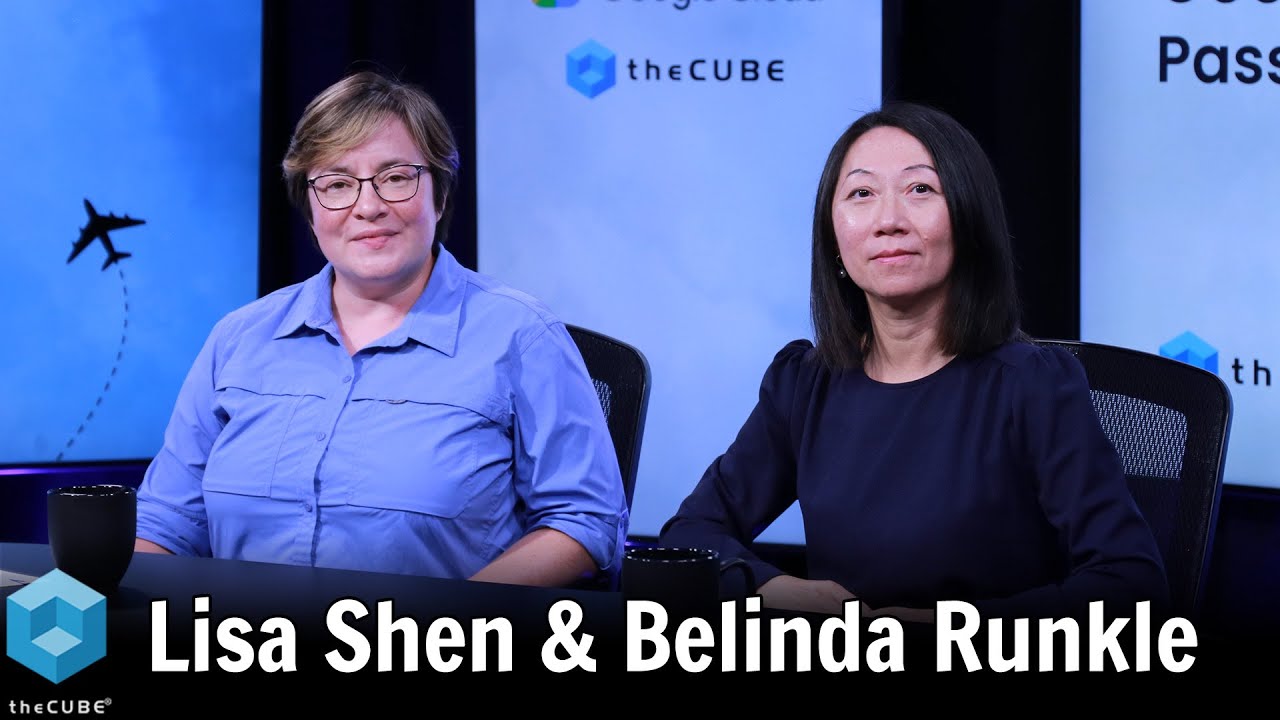
At Google Cloud’s Sunnyvale headquarters, theCUBE Research’s Savannah Peterson engages in a thoughtful conversation with Jason Davenport, technical lead for DevRel at Google, and Aja Hammerly, director of DevX AI at Google Cloud. As part of the Partner AI Series, the discussion examines the evolution of container technology through both technical insights and personal career perspectives.
Davenport shares his focus on helping individuals demystify coding, while Hammerly emphasizes enabling developers to build effectively on Google Cloud. Together, they address the tension between “hype versus reality” in technology, highlighting how established skills continue to provide value in an increasingly cloud-driven environment.
The conversation also explores emerging trends, including the expanding role of agents in coding and the importance of strong data foundations. Davenport and Hammerly advocate for open-minded exploration and continuous skill development, offering practical strategies for developers and organizations to adapt and innovate in a rapidly evolving technological landscape.
Forgot Password
Almost there!
We just sent you a verification email. Please verify your account to gain access to
Google Cloud: Passport to Containers. If you don’t think you received an email check your
spam folder.
In order to sign in, enter the email address you used to registered for the event. Once completed, you will receive an email with a verification link. Open this link to automatically sign into the site.
Register For Google Cloud: Passport to Containers
Please fill out the information below. You will recieve an email with a verification link confirming your registration. Click the link to automatically sign into the site.
You’re almost there!
We just sent you a verification email. Please click the verification button in the email. Once your email address is verified, you will have full access to all event content for Google Cloud: Passport to Containers.
I want my badge and interests to be visible to all attendees.
Checking this box will display your presense on the attendees list, view your profile and allow other attendees to contact you via 1-1 chat. Read the Privacy Policy. At any time, you can choose to disable this preference.
Select your Interests!
add
Upload your photo
Uploading..
OR
Connect via Twitter
Connect via Linkedin
EDIT PASSWORD
Share
Forgot Password
Almost there!
We just sent you a verification email. Please verify your account to gain access to
Google Cloud: Passport to Containers. If you don’t think you received an email check your
spam folder.
In order to sign in, enter the email address you used to registered for the event. Once completed, you will receive an email with a verification link. Open this link to automatically sign into the site.
Sign in to gain access to Google Cloud: Passport to Containers
Please sign in with LinkedIn to continue to Google Cloud: Passport to Containers. Signing in with LinkedIn ensures a professional environment.
Are you sure you want to remove access rights for this user?
Details
Manage Access
email address
Community Invitation
Agents, Data & Developers
What does it really take to run generative AI at scale? In this Google Cloud Partner AI Series episode, theCUBE Research’s Savannah Peterson sits down with Poonam Lamba, senior product manager of GKE AI inference and stateful workloads, Google Cloud, at Google, and Eddie Villalba, outbound product manager at Google Cloud, to unpack how Kubernetes — specifically GKE — is evolving to support enterprise AI inference with real-world impact.
Lamba shares how Google is meeting developers where they are, with tools such as the GKE Inference Gateway and custom compute classes. Eddie Villalba adds his perspective on how AI is “just another workload” — but with some important twists.
From dynamic scheduling to stateful services and network-aware storage, the discussion makes it clear: Kubernetes isn’t just powering the web anymore — it’s the foundation for AI at scale. Whether you’re deep into DevOps or exploring agentic AI, this episode offers a grounded look at what’s next for containerized intelligence.
At Google Cloud’s Sunnyvale headquarters, theCUBE Research’s Savannah Peterson engages in a thoughtful conversation with Jason Davenport, technical lead for DevRel at Google, and Aja Hammerly, director of DevX AI at Google Cloud. As part of the Partner AI Series, the discussion examines the evolution of container technology through both technical insights and personal career perspectives.
Davenport shares his focus on helping individuals demystify coding, while Hammerly emphasizes enabling developers to build effectively on Google Cloud. Together, they...Read more
exploreKeep Exploring
What question did Asha pose to her LinkedIn community regarding her job?add
What is the story of how the speaker became involved in technology?add
What inspired Asha's interest in coding at a young age?add
What is being discussed in the context of a series that focuses on demystifying tools and realities in a particular field?add
What is the current state of agents in generative AI and how do they execute goals for users?add
What are the implications of the rise of large language models on the value of first-party data and how should organizations approach using AI tools?add
What are agents in the context of computing, and how can they be deployed effectively?add
>> Hello, nerd fam, and welcome back to our special exclusive series with Google Cloud, Passport to Containers. My name's Savannah Peterson, very delighted to be coming to you from the Google Cloud HQ here in Sunnyvale, California, with two new fabulous Passport guests. Asha and Jason, thank you so much for taking the time to hang out today.
Savannah Peterson
>> Thanks for having us.>> Thanks for having us, this is going to be awesome.
Savannah Peterson
>> This is awesome. This is definitely one of our cooler sets, I have to say. I am vibing with the library. You all also made a trip to be here from Seattle and Denver, thank you so much.>> Oh, anytime. We also tried to coordinate our attire, you can tell.
Savannah Peterson
>> Next time send a girl a text. I'll get on the level. I'll get my Google green on, that's no problem. Asha, I noticed something when doing my research on you that you had recently posed the question to your LinkedIn community to describe your job in 10 words or less.>> Oh, yeah.
Savannah Peterson
>> So I'm going to start this segment by letting each of you do this. Asha, since it's your question, I'll open with you.>> So there's a lot of ways I can do that, depending on who I'm talking to. But if I'm talking to just friends at a barbecue, I help people make cool stuff. That is my job. I teach folks how to build cool stuff with Google Cloud products and Google products. I help them understand the concepts behind some of the new tech, and I hope that by learning that stuff, they build the cool stuff and they show me.
Savannah Peterson
>> Fantastic. I can't wait to talk about more of that today. Jason, what about you? 10 words.>> Help people code things, that's-
Savannah Peterson
>> Four. That was great.>> Four.
Savannah Peterson
>> Brevity, your talent.
Savannah Peterson
>> I'm known for that. I also told my parents that I help demystify coding.
Savannah Peterson
>> Ooh.
Savannah Peterson
>> Ooh.
Savannah Peterson
>> Which then they're like, "What does demystify mean?" I'm like, "Well, it's just like engineering." And they're engineers. It's like helping people get to an outcome, which is what a lot of things are in engineering that we do just with numbers or code or math.Love it.>> So, try to make it easy.
Savannah Peterson
>> Yeah, you're here to help the helpers and the creators. This is fantastic. Before we dig into our content today, we've opened each one of these segments with a fun question that Bobby and I came up with, which is, when did you fall in love with tech? Jason, I'm going to start with you this time.
Savannah Peterson
>> Okay. So I fell into tech, had no idea what it was until someone gave me an Access database in 2015. Like, "Hey, you can crunch numbers in this." And I was like, "Oh."
Savannah Peterson
>> Well, wait. So how did you fall into it, you just fell into a physical database?
Savannah Peterson
>> I literally fell. No, I was on a consulting project, and like, "Someone needs to fix this Access database because there's a bunch of problems." I was like, "Oh, okay." So started doing that in data and then graduate into software engineering, and then DevOps and all those other things. But purely happenstance and it was, "Here's a challenge, go solve the challenge." And I was like, "Well, that's how we got here."
Savannah Peterson
>> So necessity was the mother of the skill adoption in this case.
Savannah Peterson
>> Yeah, and always trying to bite off slightly more than you can chew.
Savannah Peterson
>> Yeah, it seems to be a common theme from everyone in this series.
Savannah Peterson
>> Yeah, absolutely.
Savannah Peterson
>> Not surprised, Jason. Asha, what about you?>> My story's a little more, I don't know, traditional. I was in my school library when I was, oh gosh, seven, maybe eight years old, and there was this illustrated children's book on coding and basic, and I'm like, "Wait, I can tell computers what to do? Tell me more." I wrote out programs on that kindergarten, first grade writing paper with the extra dotted lines in the center. Never actually got to run them because it was the '80s, there weren't a lot of computers around. But I was super into it, and just kept poking at it whenever I got an opportunity, and now I'm here?
Savannah Peterson
>> Okay, that's incredible. First of all, we just got to step back for a second. Where was this library?
Savannah Peterson
>> In my elementary school that was located in the Seattle suburbs in the 1980s where there may have been some computer people.
Savannah Peterson
>> I just want to say shout out to the computer nerds in the '80s in the Pacific Northwest for there being this illustrated children's book. I didn't even know those existed.
Savannah Peterson
>> I can't find it. I've tried to find it numerous times and I cannot find it. So maybe I'm false memory and I just dreamed it. But I very vividly remember this animated book and it saying, "And basic, people count by 10, so in case you need to make mistakes and shove things in the middle between the line numbers." And I'm like, "This is the coolest stuff ever."
Savannah Peterson
>> Okay, I love this. Internet, this is a challenge for you in our audience. Someone needs to find this animated book that talks about basic from the '80s, or whoever does, we'll figure out some sort of super cool -
Savannah Peterson
>> I will be so grateful.
Savannah Peterson
>> Google and theCUBE swag, I promise we got this for you all. Well, that is just incredible. I love that that was a seed planted so young and now you help other people build.
Savannah Peterson
>> I just think it's really cool that you can make stuff with, I mean at the end of the day, electricity. And it's cool and it's fun. And the idea, even that young that you could, computer games were saying you had an Atari, but wait, people can do this, and I could theoretically do this, which is such an amazing light bulb moment for me.
Savannah Peterson
>> Yeah, absolutely. So can we expect you to publish a children's book anytime soon?
Savannah Peterson
>> No. Books. No. I could not draw those amazing illustrations that they had.
Savannah Peterson
>> Well maybe we can figure out some ways to do that. I bet you I could help. We definitely got the tools. Bringing us into this conversation, so what I've really appreciated about this series is we do a lot of demystification and we separate the myth from reality in terms of what people are doing, what tools are actually working for that, and talk a lot about the dreams that are obtainable now versus the things that we'll see farther along in the future. I think it helps ease the fears of folks ramping up as well as educate those making some really expensive decisions right now, Jason, I know you're having a lot of conversations with developers with your community. What are people talking about? Tell us about the hype versus what's actually getting done.
Savannah Peterson
>> Yeah, great question. So let's start, obviously with the hype, agents, a lot of hype.
Savannah Peterson
>> What's that?
Savannah Peterson
>> Yeah. You think so where we were really three years into this whole big push for LLMs and generative AI, you could argue it started back in 2018-ish with some of the things that were published with like GPT and Transformers. But you think now, so agents, how do we get code to do things for us on our behalf and execute those goals? We're starting to be kind of in that territory. I think people, and this is where a lot of what Asha and I talked about is actually terminology, like these tools have existed for a long time, you think about chatbots even in the late 2010s.>> Before that, even.
Savannah Peterson
>> Yeah, even earlier than that. But we're more sophisticated, but still, how do we get computers to do stuff for us and act on our behalf, get to a goal that maybe that's a happy customer, at the end of the day. It's not really that different, the business things that we're doing haven't really changed, get customers, grow customers, sell to customers, make customers happy. I don't think those have been reinvented in the past four years, or even three years.
Savannah Peterson
>> Or even 150 years since the industrial revolution.
Savannah Peterson
>> Business is business.>> Yeah. But take that and then, so hype, and then where are we at? Well, I think you're starting to see more, "Okay, well how do we actually break apart that problem?" Because you think about, it's like, "Oh my gosh, how do I do all these things with one agent?" You're like, well, actually, if you think about yourself, you're a collection of many skills. How do we use those skills to do a specific thing, like math, like addition, another skill, subtraction, and just using coding for those parts. And here's the thing, you can start small, start with addition and then move on from that.
Savannah Peterson
>> Yeah. One of the things that I've really noticed when I'm talking to folks is that there's a lot of folks who feel super intimidated, and that's one of the things we do. We try to talk to folks, because, yeah, there's some new stuff, there's some math, there's a lot of math. But you can do a lot with these technologies, which is the existing stuff we know about orchestrating systems, deploying things to production, and just general software engineering. And so a lot of what I spend time doing with folks is they hear the hype and they hear these words, transformers, agents, things like that. And at the end of the day, an agent is some code with a model or several, and a job. And you can think about it, hand wave, hand wave as a microservice. And that is a thing that a lot of folks who were coding when I was in the early 2000s and stuff, we know that, we went through the microservice craze. So I spend a lot of time explaining that the hype and the reality, there's a difference, but a lot of it is just around terminology and that the skills we already have are useful still, and that we actually have a lot of the basic skills we need to work with these tools. And there's not that much more to learn.
Savannah Peterson
>> Yeah. Asha, I think that's a really good point, because I mean, we were talking about AI chatbots a year ago instead of calling it agentic. The whole lexicon has changed. And it sounds silly to say that now, but I was looking back on some interviews from literally 12 months ago and I thought, "Oh my goodness, I look like a fool." But it wasn't the case. And the reality is it's going to ebb and flow and change a lot more as these things become adopted at scale. Don't be afraid by a term, ask a friend or ask one of us or watch some of these videos and realize that we've been here before. This motion isn't completely foreign, and it is changing, but we are learning together. And I know there's a lot of tools on the Google platform as well as in addition to the work that you both do that really help alleviate that scary top of the rollercoaster feeling when you're thinking, "Oh my gosh, I'm about to dive into this. That's really scary.">> Like take that, the first season of our series that we did, I think we talked about retrieval of my generation, which for those like queuing in, it's just retrieving information from the database.
Savannah Peterson
>> But calling it rag made it sound like it was so more->> Super fancy.
Savannah Peterson
>> Like oh goodness. Right?>> Super fancy.
Savannah Peterson
>> It's the same thing as calling an operator to get a telephone number, right?
Savannah Peterson
>> Exactly. And they way like, "Wait, but what is this?" "Oh, it's embedding." "Oh, it's its master.">> It's maths. It's maths.
Savannah Peterson
>> Right. Yeah.>> "Oh, so it's a vector database." You're like, "Well, yeah, but what else is there?" And it's like, "Well, you can do some coding things on the front to find vectors, and maybe there's some things there that you do, but at the end of the day, you're just searching vectors for vectors that look similar." And granted, we've also evolved on that a little bit in terms of different strategies, but fundamentally it's still the same pattern that you're trying to do.>> It's just a different kind of database retrieval with a different kind of index. I remember the day that I finally snapped, some of the stuff snapped together for me, and I texted one of my co-workers and I'm like, "Wait, wait, is vector search just fancy math indices on a database?" He's like, "Yeah." I'm like, "Oh, okay then." Right. And I'm like, "Okay. So actually I do know most of this." And there are a lot of great tools. There's a lot of stuff that helps guide you, gives you best practices, frameworks to help you work with this. But at the end of the day, we've been evolving tech. I've been in tech 20-plus years at this point, closer to 25. And when I started the mobile revolution hadn't happened. And stuff is constantly changing. That is one of the coolest parts of the job, but also we know how to deal with change because we've been doing it our entire careers.
Savannah Peterson
>> Well, and agents, I mean, you could take a very simple approach and just say that their orchestration.>> Or you can say that it's some code with a job.
Savannah Peterson
>> Yeah, orchestrate some other things like execute the job.>> And it has the tools to do that job. But at the end of the day, it's some code with a job, and some of those tools might be an LLM or an API, and we just call those tools.
Savannah Peterson
>> Cool. Yeah, that's exactly what it is. And I think it becomes less overwhelming when we think about it like that. And think about it as that literal agency, which is why it's called an agent. It's on some freaky, scary black box of chaos. Well, most of the time at least. So staying with this, separating this from reality thing that we've got going on here, Asha, I'm going to come to you first on this one. What sort of success is being realized and where are you seeing a lot of progress and rapid adoption versus what's still a little dreamy in terms of project scope?>> Oh, so it's tricky because it's all over the place.
Savannah Peterson
>> Yeah. Okay, let's talk about it.>> It's any tech adoption curve. You've got the curve and you've got the folks at one end who are just doing amazing stuff that I didn't even know was possible. And I've talked to folks at startup like, "Wait, that's super cool. Where did you even come up with that idea?" And they're using agents and they're building systems and they're finding ways to efficiently process large amounts of information to make it easier for humans to comprehend and interact with, which awesome. And then I have folks who are like, "Okay, can you tell me about this AI thing?" And we have a conversation about the box that an LLM fits. Like there are things that they're amazing at, and there are also things that they're not awesome at, and that's when you need custom models or you need SLMs or you need to use traditional AI techniques. And so I have a hard problem answering that question because day to day I see both. I'm really inspired by some of the systems that people are making to reduce toil, using the SRE term from the SRE book. There are tasks that are repetitive or easily automatable or somewhat automatable, and in many cases they're not toil.
Savannah Peterson
>> Toil is the right word for it, though, I think one of the terms that actually kind of turns my gears a little bit in the era that we're in right now is productivity. And people don't think of themselves as being more productive, they think of themselves as having more time to do things that they want to do or more creative time to build or whatever that might be. But when we think about toil psychologically, you know it's what creates toil in your day, you know the worst, most boring, irritable part of your day.>> Or even just the little stuff that adds up, those two and three minute tasks. One of the first things I played around with and built was a tool to help me break down big projects and better organize my weekends with my chores and stuff, because those two or three minute context switches were adding up. And so just something that helped me break down the big tasks, group stuff together and stuff was really super interesting. Did I ship it? No, but it was fun to build and I actually got some value out of it.
Savannah Peterson
>> Yeah. Well, and it made you think a little bit differently about-
Savannah Peterson
>> Well, yeah, and it also showed me that these are the things, some of the things that this tech could do for me, and make ways that I find beneficial and useful for my day-to-day.
Savannah Peterson
>> Yeah, which is I think some of the most exciting inspiration right now coming out is these little pockets and these little niches of application. Building on that, and I want both of you to answer this. Jason, I'm going to start with you. I'm big on expectation management. I actually think as an analyst, that's sort of my job, and I think that doesn't mean I'm not excitable and get very pumped, but how would you advise companies, people, developers starting out or wherever they're on their journey, to manage their expectations about LLMs and about agents right now?>> Yeah, so a couple of things with that. One of the things that I found in my personal workflow, even thinking about expectations is just using a large language model for the initial question and plan. And I find where we're at now with even thinking models, that actually has helped me kind of reset my expectations about what I could also get out of an LLM. It's hey, sometimes I don't even read the actual output, but I read the thinking notes. It's like I'll go into AI studio and I'm be like-
Savannah Peterson
>> Oh, that's interesting.>> "What do you think about this?"
Savannah Peterson
>> And that makes a lot of sense.>> And see how the LLMs actually-
Savannah Peterson
>> What the reasoning was essentially. Yeah.>> Yeah. Because I actually care more about that in particular in an ideation phase. "So hey, well here's this. All right, I've been at this for a while. I want one, two, three, four and five. Oh, six is interesting, and then seven, eight, nine, yeah, I know I need to do that too. But six was actually something I hadn't considered. So how do I integrate that into my flow?" That's an easy way that I've been kind of using it to, in some sense, hack my own brain with some of these things.
Savannah Peterson
>> It's like show your work when we were kids in school.>> Yeah, exactly. Which I was like, "Why do I have to do that?"
Savannah Peterson
>> But it makes so much more sense now.>> Yeah. "And oh, and you messed up step five on this problem, and as a result the answers one." I was like, "Oh, that's why I had to do that. Yeah, cool." The other thing, shifting to outcome management, I see a lot of folks when they start using these to ask a very specific task, and then of course the model fails on the task and it's like, "Oh, fine, it's not going to work for my thing. Move on." And so take a step back from how much context do you have to answer that problem, "Is this one of those asymmetric information things that we talk about in negotiating?"
It's like, "Yeah, didn't have all the information, so couldn't answer the problem or couldn't negotiate effectively with you." It's like it's no different. So how do you give it either an outcome and take yourself out of the problem set, or how do you make sure that you're giving it all the information that's actually relevant? And sometimes that's actually using the LLM to just make the list of things that it needs to do before you actually answer the problem in kind of like a plan tasks model. But those are to me easy things that once I started doing them and reprogram how I interact, actually made it far easier to then use these things in a way that was effective for my use case.
Savannah Peterson
>> You're really reminding me of this great exercise we did in argumentative essay, it must've been fourth grade, and you had to write down how to make a peanut butter and jelly sandwich.>> Yeah, it's the classic.>> Yeah.
Savannah Peterson
>> Yes. And of course the teacher makes the PB&Js exactly as described, and you're ending up with this mess of jelly everywhere and peanut butter on the wrong side of the bread. And it was such a, that has stuck with me forever as a communicator in thinking about how to do it most effectively. And you're talking exactly about that. You're talking about looking at a system and saying, "Okay, your reasoning needs to start with buying the ingredients from the grocery store, and then you need to lay them out and put them on in this order and put them in a sandwich bag and then go do it." When you break it down that it's as simple as making lunch.>> It is, except that you think about it, you're like, "Well, when you said buy the ingredients, what did that actually mean?" And even taking that and saying, "Okay, do I want it to specifically buy in this order or is the outcome that I just need to have these things and then I outsource," even like, hey, how do you purchase or get it, you just need these five things.
Savannah Peterson
>> Instacart or when I walk through the grocery store essentially.>> Well, and do you care?
Savannah Peterson
>> Right.>> And one of the things that Jason says a lot and I very much agree with is how much context, what information would you need to be successful if you were going to have a friend do this task for you, or if you're a manager, have someone on your team do this? What do you need to do to set them up to win? And then how much of that and in what format do you need to do to set the tools you're working with, up to win? And I believe, I really, when I'm talking to folks, one of the things that I always come back to is this is a skill, just like coding is a skill. Just like understanding architecture is a skill. Just like SRE is a skill, just like all this stuff is a skill. Using these tools effectively is a skill. And so I had a lot of failures, I will own up to that. I had a lot of times where I'm like, "How the heck are you making that work? Because it is not working for me." And so you talk to folks, and you can even just ask the model, "Hey, I asked for X, you did Y, How can I make that not a thing the next time?" And sometimes you get some really interesting advice on how to work more effectively with the tools. And it's kind of cool that the tools will help you work with the tools. But it's the stuff you said, "How much context do you need?" And then getting yourself, if you care about how it happens, you better be real specific. And if you don't actually care about how it happens, just that it happens at an accuracy level or correctness and style and everything that you like, don't be overly specific.
Savannah Peterson
>> Yeah. I also like, to the peanut butter and jelly sandwich example. If you look at in 2023 when all these things started happening, it's like, "Oh my gosh, I'm just going to tell it that I want a peanut butter and jelly sandwich.>> Butter and jelly sandwich, yeah.
Savannah Peterson
>> And in two years we're just going to have peanut butter and jelly sandwiches, and we don't even have to do anything else.>> Delivered by drones, of course.
Savannah Peterson
>> Hype.>> Right.>> Yeah, drones obviously. A lot of hype. And where we're at now I think is far more realistic where you do need to talk to it about what's the plan, what are these other things, what's the outcome, what's the image of the sandwich that I want? The multi-modality piece of this. And now that we're there, I think we're kind of on the, I don't know if we're on the back end of the hype curve, but we're getting to a point where people like, "Oh, well, here's the things that I need to do to actually get what I want. Don't just say peanut butter and jelly sandwich and then expect this mythical peanut butter and jelly sandwich to appear in front of me in an immediate fashion." If there's one other thing, I say expectations, it's when we're interacting, consider this is like streaming mode. It's bidirectional streaming. It's actually very difficult to do at scale.>> It is.
Savannah Peterson
>> But we don't expect a chat agent, if it's a real person, hey, we talk. Sometimes it's immediate, sometimes it's two hours later. For whatever reason in coding world, we expect things to be immediate, and if an agent takes five or 10 seconds to get to the right answer, in 2023, like oh my gosh, that's far too long. Whereas I think now we're kind of to the point where it's like, "Yeah, what is that actual latency trade-off?" If it takes 10 seconds or 15 seconds, but it's correct, that's fine.>> I think it depends on who you talk to.
Savannah Peterson
>> I was just going to say, I think the patience and elasticity there for an early adopter or someone who was say patient when they were waiting for images to render or songs to download when we were younger, or those of us who've been in video and waiting for that to render in itself, I think there is a patience there. But when you're thinking about, say a young child in a learning environment, there's no time for latency. They'll walk away from something if it's slow in its response and move on to something else. So I think it's very contextually relevant, but that's what makes this so complex and diverse, depending on the solution.>> And one of the things we say over and over again to the point where I'm pretty sure that anyone who's chatted with us in the last two years is sick of it is, it depends. And you need to know your problem space. You need to know what your tolerances are. And there are solutions for a lot of these problems. I won't say all because I'm sure someone will find an example where there isn't, but it all depends on your particular use case and your particular domain, which of the many different paths you can go down with these tools is the right one. And that sounds very hand wavy. There are best practices, there are established patterns. We're establishing and learning new things every day, but it's just like cloud architecture was when cloud was becoming a thing. There were some stuff, there were some ways we did stuff in 2007, there in 2010, that aren't what we do the way we do things now because we've learned and we've adopted, and there are ways that certain companies do things because of their needs that are potentially overkill for another company, because they have different needs. And that's the thing is that all of these problems are different. So we say it depends a lot when we're talking to folks about like, "Well, should I use a local model or not?" It depends. That's the thing, is it all depends.
Savannah Peterson
>> It does depend, but at least we are getting some patterns in the choose your own adventure of this that allow us to make some of these decisions a little bit quicker. On that note, building on that, and I'd love for you both to answer. If you were to give folks one piece of advice in terms of an investment that could make, it could be in people, could be a tool, could be in their ideology, quite frankly right now, or regulation even. What do you think is something that folks could be thinking about now that will be at least somewhat evergreen, taking into consideration that technology changes? Jason, I'll start with you.>> That's a good one. Can I say one and a half thing?
Savannah Peterson
>> Yes, I'll allow it. Only because you asked me that.>> I think we're about to enter another data renaissance. I think people are terrified right now. They're like, "Oh my gosh, all of this big data stuff is going to get blown away by these things." But I think reinvesting in first-party data, if there's something that people in organizations take away, that is actually probably the most valuable asset that people have moving forward in large language models. Because hey, what do you know about the customer? How do you give that superior experience, that really upscale store experience, that is based on the information that you and only you will have as an individual or an organization. In terms of taking that first step, using something like either AI Studio or Gemini CLI, I think one of the benefits there is just starting to ask it for tasks. Ask things that are in it. It's a journey to programming yourself and programming code or all these things, but the way that you got to do is you got to get in and start to figure out how these things work. Sometimes it doesn't work, and it's also failure is an acceptable modality in these things.>> Yeah, it's data.>> It's learning from it though. Learn from it and move on to the next thing, refine your approaches. Because we're all going to live with this for the rest of our life. I remember when we got AOL in 1993, it's like you've got mail, and you were like, "Oh my gosh, this is life-changing because I'm not waiting for something at the post office, like come to my house."
Savannah Peterson
>> I can hear the sound of the dialogue.>> Yeah, definitely can.
Savannah Peterson
>> I know, I wish I had that voice. But it's kind of that moment, and so it's like how are we looking to leverage that moment for the power of good, personally and society-wise? But that starts by using it and trying it and seeing how it works, I think is a lot of it.
Savannah Peterson
>> Yeah, I was going to say something similar, is look at the stuff you do. Look at how people are using the new technologies, generative AI models in that space. I code, I have spent a lot of time figuring out how to effectively work with a AI coding assistant, and spend the time. And some people are going to learn best from watching videos or reading books and stuff. And some people, myself included, probably you Jason as well, we're just going to get in, get dirty and make mistakes and learn by getting hands on. Even if, honestly, getting comfortable with how the people in your role or who do what you do every day, because your tasks and your role may not always a hundred percent align. That is one of the most powerful things people can do, not necessarily because the skills they will gain by doing that, the techniques they'll learn are going to be the same prompting techniques or the same data context management techniques that we're going to use in a year. But because getting comfortable with where things are going, and understanding, getting kind of a gut feel understanding for the edges of the technology today is super-duper important. And the thing I will add to that, this is my half, is the thing I'll add to that is that, be willing to ask questions. One of the most important conversations I've had with some folks is they're like, "Hey, I tried this thing. Here's what I tried to do. It didn't work." And I'm like, "Tell me about the flavor of didn't work, because didn't work requires a little more data." And we were able to have a conversation about how their approach could be changed and also maybe that they weren't using the exact right tools for the job. But if you're confused, ask questions, go to friends, go to the internet, and be willing to experiment and try new things because this is, and watching the change happen in real time, and just getting comfortable with the edges of the technology data and getting comfortable with learning is going to be so important.
Savannah Peterson
>> Yes, I think that's beautifully stated, and I think the reality is nobody has the exact answer of they're doing next.>> I don't know.
Savannah Peterson
>> I mean, I spend my life talking to the smartest people on earth about precisely this, and I can tell you there's some patterns in what we think it may be possible, but in terms of some well-illuminated pathway straight to the next stop, that's for us to define, and it's a really exciting time.
Asha, I'm going to stay with you on the next question. This whole series has been about, well, it started with us talking a lot about containers. How do agents connect with containers?
Savannah Peterson
>> Oh, I'll give you my answer and then I'm curious what Jason's answer is. Agents are code. I know that they sometimes feel like this magical thing with unicorns, but they're code at the end of the day. Containers are a fantastic way to ship code. So if you want multiple container platforms inside Google Cloud, you can run your agents on those. And if you want your agents to do something off of your own computer, they need to be running somewhere where someone else can consume them, whether that's as an API endpoint or through some other means, you have to ship them. And containers are a fantastic way to do that. It's a great way to package things up. It's a great way to make sure you have the dependencies you want. We've been using containers for what, 10, 15 years now, and we're still using them because they work well. And so for me, it's just an obvious place to deploy.
Savannah Peterson
>> Anything to add, Jason?>> Yeah. So two sides, right? There's the agents and the code that we ship in the container, and then the agent executing the... I think the other place where I think of containers law is actually the agent executing things in containers. So you take something like developing code, containers are actually great for say, "Hey, you have an agent that needs to write this code, give it a new container to be able to go do its work in."
We get things like observability around it. We can inspect the container to see, "Hey, what's the agent up to?" Troubleshoot, figure out all these things. But containers make it very easy to sandbox that work. So when we think about, "Oh, well, we're going to give the agent access to..." No, actually we just gave it a container with very limited access to even the internet, all these other things, let's use that and then have containers, make containers for doing these work things and kind of make a virtuous cycle out of it.
Savannah Peterson
>> Containers all the way down.>> Yes. Well, it allows for->> It's cyclical. Is it cyclical or is it all the way down?>> Is it containers in a circle? I don't know.
Savannah Peterson
>> Well, it de-risks things that allows for a lot of privacy. There's a lot of governance that comes with that containers all the way down, and it makes a lot of sense right now when we're talking about data and data privacy as well. So it is important to be very mindful. Jason, I'm going to stick with you because Bobby was giving me some, a fun graph this morning. Lots of buzz about Gemini CLI going on, lots of stars on GitHub. What is it? What are people using it for?>> Yeah, so Gemini CLI, we launched just a few weeks ago. Think of it as a, I did not personally launch it. I wish I did. It's a way to interact with Gemini on the terminal or command line. So, hey, you have a question, you can type Gemini, press enter after you've installed it, get a nice little thing that pops up, kind of like a VI or Vim or Emacs, whatever your thing of preference of choices, and then interact with Gemini. Have it interact with your code base. It can actually execute commands on your behalf. So doing things like reading files, creating directories, creating new files, modifying files. But actually I've been using it a lot. I find it very easy to work with the code base on those different things. It's great to see the community participation, quite frankly as well. I was looking, I mean, we have probably over a thousand ideas from the community. The roadmap is actually public, so folks can go into GitHub, see the roadmap of ideas and things that we're planning to ship. It's really an open way of us doing work around this stuff, and you can even go and look at the prompts that we use. "Hey, how are we interacting with Gemini? How can you use this? Fork it for your own company if there's additional things that you want to do in it." So, it's super cool.
Savannah Peterson
>> Do you tell them all, "Happy prompting.">> I have a little thing in there. I've changed my system instruction, so it says, "Happy prompting," when it signs off. Yeah, I have.
Savannah Peterson
>> Yeah. Good, I'm glad to see that you're carrying it all the way through, all the way through the theme. Final question for you both. What do you hope that all this wonderful technology that we've just discussed today on the show does for your family? You were mentioning your kids. Jason, I'll start with you.
Savannah Peterson
>> For my kids. Ooh. There's so many analogies and history, and I don't know where this current one will end up. Is this Wikipedia when I was in school, and it's like, "Wait, we can just have a thing on the internet that has all this information." And it's like, "Well, you can also edit it. Maybe that's not the best idea." We did a little bit of that. Is this high-speed internet? Is this the internet all over again? It's probably somewhere in the middle of all those things. I hope that it allows them to solve more complex problems ultimately. You think about what we're able to do once we've had the first computer and a calculator, and okay, now we're launching rockets, we're doing all these other things, which is for society, big things, but also big changes just in tools that we use as a result of it. I hope that it just becomes that, and I hope that's an enabler and not something where then we outsource a lot of thinking too. I think that's the thing that we just have to, and for my kids continually balance, where are you being the ideator or the creator, and how are you using these things for like, "Bring this to life."
Savannah Peterson
>> How can we critically think faster, not delegate critical thinking.
Savannah Peterson
>> Yes. Exactly.
Savannah Peterson
>> And provide more data points to navigate what we're building. Well stated. What about you, Asha?
Savannah Peterson
>> This is a hard question for me, but one of the reasons it's hard is that I'm just thinking about my daily life and I, if you do the research on agents, you'll find out that we've had things that look like the current agents we have just with less capabilities for a long time. I have a robot vacuum. I have a thing on my sprinkler system that checks the weather and decides not to sprinkle it. Those are agents that are responding to things from the... They're responding to sensor input, and then they are taking an action based on that on my behalf. Cleaning my floor, watering my plants. And so thinking about, for me, it's all about, I don't know where we're going, and I'm really excited about this ride. I'm really excited to see the things that people come up with to take these basic ideas that have actually been around for a while in various forms, like chatbots have existed, I think since, I don't remember when Eliza was, that's one of the first ones I know of. It was the 1950s or '60s. It's a long way back. I played with Eliza back in high school.
Savannah Peterson
>> In your elementary school when you were reading your animated book?>> No, no, I was not that good. I was using DOS back then. It was a while ago. And so for me, the thing that I'm hoping for is that I get surprised in a pleasant and enjoyable way. I'm hoping that my family, my nieces, I'm hoping that my friends, that they come to me with ideas that they've used this technology for where I'm like, "Wow, I wouldn't have thought of that. And that is actively making my life better or actively making the world better." And that is the thing I want, is I want to see the cool stuff that this enables for everyone, and this is the big thing for me is that it is everyone. These tools bring interesting abilities, or I don't want to say powers, but it's a little too magical for me. We're not a superhero universe here. But it's making things that previously only things that certain people could do with certain kinds of training, like coding, people can make apps now, and seeing at least get them well started. Seeing what people are doing with that and seeing what is living in people's heads who maybe didn't have the time to get the skills to do this themselves. I'm excited about that, and I'm super excited to see what everyone will bring to us, and I am absolutely convinced that I'm going to be surprised in very positive and enjoyable ways. But I can't tell you what's going to surprise me. That's the cool part. It's like opening up a present, and I just don't know what's inside, and I'm very excited to find out.
Savannah Peterson
>> I love that we're all kind of waking up on Christmas morning here to some sort of degree, let's see. Wow. Well, I hope that too, and I really hope we, and I hope this series helps bring in that new class of creator who is going to do things that we didn't know we could solve prior to this err in technology. Jason and Asha, thank you so much for being here today.
Savannah Peterson
>> Thanks for having us.>> Thanks for having us.
Savannah Peterson
>> This has been really great. I'm really glad we could cover everything from PB&Js to children's books to being surprised and delighted. And I hope that all of you have had as much fun as we've had here today in Sunnyvale, California. Be sure and check out Jason and Asha's series, as well as all the links we'll have below this video. And the other nine episodes already recorded in our exclusive series, Passport to Container, here with Google Cloud. My name's Savannah Peterson. You're watching theCUBE, the leading source for enterprise tech news.