In this segment of the Google Cloud Partner AI Series from NYSE CUBE Studios, Mark Shank, US Google Cloud Platform leader at KPMG, and Aaron Reinitz, director of AI go-to-market with Strategic Industries at Google, join theCUBE’s John Furrier. The discussion centers on how their strategic partnership is shifting from AI strategy to execution by transforming enterprise operating models. Shank details KPMG’s "client zero" approach, revealing how a wall-to-wall rollout of Gemini Enterprise has driven immediate productivity gains, including saving millions of minutes through enterprise search and reimagining executive briefings with NotebookLM.
The conversation explores the evolution toward agentic AI and why high-scale adoption is the key to creating viral innovation moments within a highly skilled workforce. Reinitz highlights how Google’s unique infrastructure and research labs allow partners to build differentiated experiences that leapfrog the competition, while Shank discusses the rise of custom agents designed by non-technical users. Together, they break down the necessity of tackling governance and risk alongside aggressive experimentation to ensure proof-of-concepts reach production. From "AI-native" HR functions to composable software architectures, the leaders outline a roadmap for turning AI ambition into measurable enterprise-wide impact.
Forgot Password
Almost there!
We just sent you a verification email. Please verify your account to gain access to
Google Cloud Partner AI Series. If you don’t think you received an email check your
spam folder.
In order to sign in, enter the email address you used to registered for the event. Once completed, you will receive an email with a verification link. Open this link to automatically sign into the site.
Register For Google Cloud Partner AI Series
Please fill out the information below. You will recieve an email with a verification link confirming your registration. Click the link to automatically sign into the site.
You’re almost there!
We just sent you a verification email. Please click the verification button in the email. Once your email address is verified, you will have full access to all event content for Google Cloud Partner AI Series.
I want my badge and interests to be visible to all attendees.
Checking this box will display your presense on the attendees list, view your profile and allow other attendees to contact you via 1-1 chat. Read the Privacy Policy. At any time, you can choose to disable this preference.
Select your Interests!
add
Upload your photo
Uploading..
OR
Connect via Twitter
Connect via Linkedin
EDIT PASSWORD
Share
Forgot Password
Almost there!
We just sent you a verification email. Please verify your account to gain access to
Google Cloud Partner AI Series. If you don’t think you received an email check your
spam folder.
In order to sign in, enter the email address you used to registered for the event. Once completed, you will receive an email with a verification link. Open this link to automatically sign into the site.
Sign in to gain access to Google Cloud Partner AI Series
Please sign in with LinkedIn to continue to Google Cloud Partner AI Series. Signing in with LinkedIn ensures a professional environment.
Are you sure you want to remove access rights for this user?
Details
Manage Access
email address
Community Invitation
Aaron Reinitz, Google & Mark Shank, KPMG
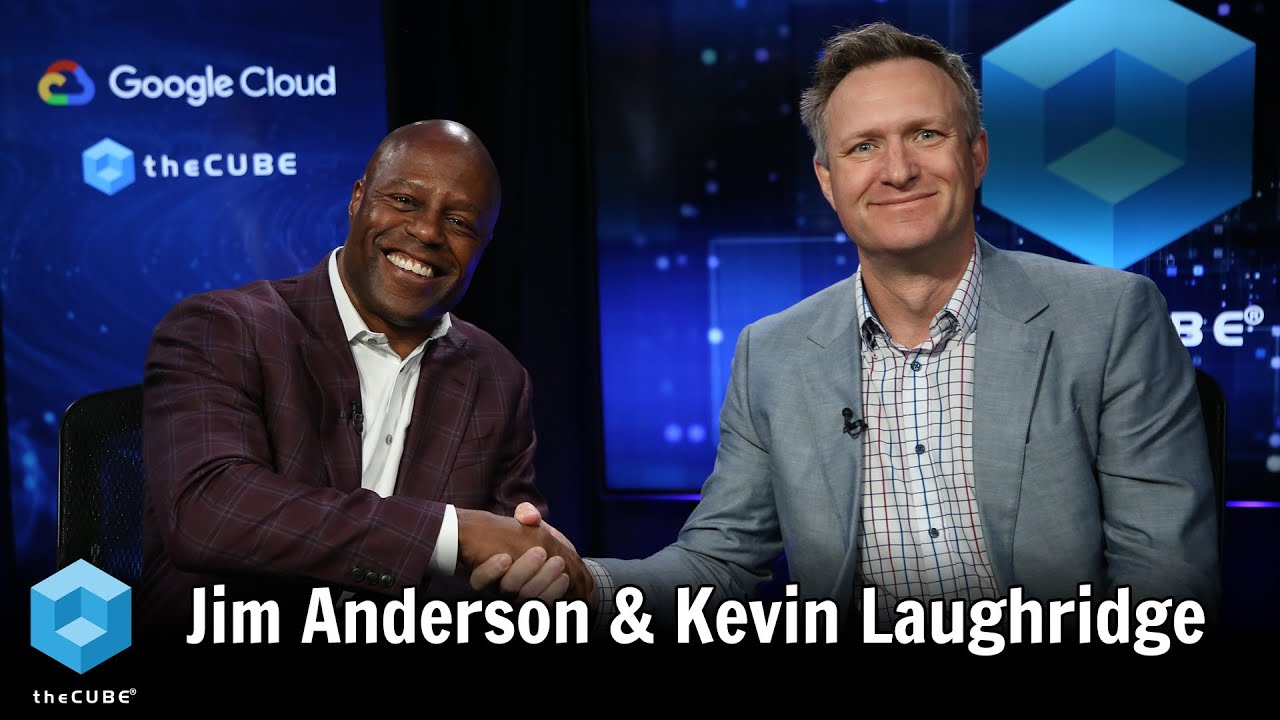
What happens when cloud innovation meets partner agility? In this episode of the Google Cloud Partner AI Series, theCUBE Research’s John Furrier sits down with Jim Anderson, VP of North America partner ecosystem and channels at Google Cloud, for a candid and forward-looking conversation. Together, they unpack how AI is reshaping Google’s partner playbook — and what that means for the future of enterprise transformation.
Anderson shares how partners are shifting from transactional relationships to long-term, journey-based engagements — mirroring the evolution of AI itself. By integrating Google Cloud’s core AI capabilities with their domain expertise, partners can accelerate time-to-value and deliver smarter, more contextual solutions that meet the growing demands of enterprise customers.
Key Highlights:
• How Google Cloud’s full AI stack is driving innovation across industries
• The rise of AI agents and why they're set to surpass SaaS in enterprise value
• The evolving role of partners in delivering scalable, high-impact solutions
• Democratization of computer science and how it’s enabling the next wave of creators
• Jim’s take on the future of the ecosystem, customer co-selling and partner growth strategies
With rapid innovation as a constant, Anderson emphasizes the need for partners to be adaptable and future-focused. He highlights how Google Cloud’s infrastructure provides a solid foundation for experimentation, growth and AI-driven transformation. The message is clear: partners who lean into AI integration will lead in delivering differentiated value and stronger business outcomes.
In this segment of the Google Cloud Partner AI Series from NYSE CUBE Studios, Mark Shank, US Google Cloud Platform leader at KPMG, and Aaron Reinitz, director of AI go-to-market with Strategic Industries at Google, join theCUBE’s John Furrier. The discussion centers on how their strategic partnership is shifting from AI strategy to execution by transforming enterprise operating models. Shank details KPMG’s "client zero" approach, revealing how a wall-to-wall rollout of Gemini Enterprise has driven immediate productivity gains, including saving millions of min...Read more
exploreKeep Exploring
How has the strategic partnership between Google and KPMG (including deployment of Gemini Enterprise) helped KPMG modernize its operating model and realize operational AI use cases and productivity gains?add
How does large-scale deployment affect AI adoption and success within an organization?add
What is the importance of integrating with Google for your platform, what have you learned from that integration, and how has it translated into value?add
How should an organization build an AI-native operating model (or function) so its AI initiatives move beyond small pilots/POCs into broad, sustained adoption?add
>> Hello, I'm John Furrier of theCUBE here at our NYSE CUBE Studios. Of course, we have our Palo Alto studio connecting Wall Street and Silicon. This is the Google Cloud Partner Showcase featuring the leaders who are making the changes, bringing in AI, and also changing the operating models. We've got two great guests. They're going to break it down. From KPMG, Mark Shank, US Google Cloud Platform leader, KPMG. Thanks for coming on.
Mark Shank
>> Thanks for having me.
John Furrier
>> Aaron Reinitz, who's the director of AI go to market with Strategic Industries. Thanks for coming on. Okay.
Aaron Reinitz
>> .
John Furrier
>> So partner showcase, Google KPMG, you guys have a strategic partnership. Changing the operating model, and that's one of the themes we're seeing this year. It's not a strategy risk, it's execution risk with AI, and managing that is transformational challenges, but also operations. Mark, talk about the partnership.
Mark Shank
>> Well, the partnership is great. We started with a significant investment that we made with Google around Gemini enterprise and getting that rolled out to all of our employees in the US. It's been really big from a perspective of just laying that baseline of AI enablement so that you can begin to start to move forward on that modern operating model that you're talking about. You need a single kind of point where you can interact with AI agents, and where you can surface those interactions, have your employees discover them and start to use them. And we really found the platform was a great spot for us to get going.
John Furrier
>> One of the things we're seeing, and I reported on this last week, in S&P 500 or large enterprises, massive productivity gains, actually bigger and larger than just basic the average worker because of the leverage in operations. That translates directly to some of the AI. That's how software's supposed to work. Get more productivity. So there's a been of big discussion around role of SaaS. Again, this is where we're starting to see how operationally the impact is not so much add more headcount. It's the results that matter. This has been a key thing. How has Google helped you guys this? Because this is where we're starting to see the use cases where, okay, there's value, there's operationalizing the AI. What are some of the things you're seeing around some of the successes?
Mark Shank
>> So I think right off the bat, first I would say number one is it's definitely a journey as you look to build out AI agents and evolve your operating model. But even right out of the box, one of the killer apps for us was enterprise search. And the ability of the application or of the Google platform to be able to look across all the connectors that we built into it or that we had integrated into it and be able to find anything that we were looking for. So we were doing some math around our users, and I think we landed at like 3.5 hours per user saved across tens of thousands of employees, millions of minutes, just from enterprise search. Some of the other more anecdotal stuff, but is pretty cool, just looking at NotebookLM, we don't really have to prepare briefing decks anymore. We used to spend so much time trying to drive the narrative, and like, okay, here's our briefing. And now it's like, no, here's all the materials. We put it in NotebookLM. Here's a series of prompts. And then you give it to the person and they'd rather interact with NotebookLM than read your painfully curated briefing doc anyway. And it's been a lot of things like that that are really helpful.
John Furrier
>> I mean, the user functionality, the consumption's been obviously a game changer. But there's still more headroom with autonomous. You got agents. Aaron, you guys have really hit a nerve with Gemini. People love it. We've been hearing a lot of great feedback. How is that translated into the ecosystem? The ecosystem was last year we reported on theCUBE. And so at Google Next, very vibrant. So the partners are now getting a lot more coming out of it because now Gemini is front and center.
Aaron Reinitz
>> Yeah. Well, I think that Google has been able to leverage some unique assets in our infrastructure, in our first party research lab, in our data infrastructure, to put together a product that is completely differentiated in the market. And our customers and our partners are taking advantage of that by putting it to work in a myriad of ways, be it by making themselves more productive or by building new experiences to allow them to interact with their customers and constituencies in ways that they just couldn't even imagine before. And doing all of it at incredible speed and efficiency in a way that, quite frankly, our competitors struggle to deliver on.
John Furrier
>> Well, congratulations on all the business success. And obviously the tech matters. Mark, let's talk about scale. KPMG kind of fits in the category of scale. So you have a large scope to deal with. And then the other thing with AI we're seeing in the successes is adoption is huge. So when you have adoption, good things happen. Can you share your thoughts? Because scale is hard, day one, adoption is also proof points at this value, and then also throws off more, I won't say ideas, but more areas to innovate around.
Mark Shank
>> Yeah. I think one of the things we've seen, which is maybe counterintuitive, which is adoption has been easier with more scale. And I think where that comes from is, instead of just trialing things out in small groups or saying like, "Hey, we're going to do this, but we're only going to do it with 1,000 employees over here." By rolling things out wall to wall, you're able to create more of those viral moments. If those viral moments are kind of statistically hard to make happen, when you roll it out to more people, you get more of those moments. They tell more of those stories. They message their coworkers, and say, "Hey, I can't believe I actually got it to do this." And that creates the kind of flywheel effect that drives adoption really across. When we rolled out, we saw over 90% of our users within the first couple of weeks. We had over 70% in the first 48 hours using the system. We have over 83% employees reporting that they're satisfied with the answers that they're getting back, that they're satisfied with the help that they're getting from the system.
John Furrier
>> So big, high scores from users.
Mark Shank
>> Yeah.High scores across the board, which has been really useful. And we're actively moving towards agents that will be able to allow the employees to do things like self-service on the HR side and all these other kinds of capabilities to, again, be able to make their lives easier, let them focus more on their customers and ultimately their client's goals.
John Furrier
>> How would you describe ... Okay, go ahead.
Aaron Reinitz
>> No, I was just going to add, I mean, to what Mark is talking about, I think that we're at a stage in the market where authenticity is currency. And when you have a partner like KPMG who has gone and adopted the technology, figured out how to roll out value quickly and impact a very highly skilled workforce at scale, it puts them in a position to be able to do that same work for our shared customers in the broader market in a really differentiated way. Because I think when I talk to CEOs, they're less interested in the functionality of the tool and more interested in the how you got there. And when you have somebody like Mark and his team doing that and living it and breathing it, it's just a different conversation.
John Furrier
>> Yeah. Mark, I mean, everyone kind of knows, KPMG, big brand. You mentioned the elite workforce. What word did you use? It was highly skilled workforce. I say elite, but smart. They're tough customers. They're smart. So share a story around some of the feedback and impact. Because again, when I say tough customer, I mean, they're smart. They're demanding. If it's going to waste their time. The scores are high. Share a story around some of the outcomes and the impact.
Mark Shank
>> So I've talked about the enterprise search, the Notebook. I think one area I haven't touched on is the ability to create your own custom agents. And I've seen people build their own agents. These are non-technical users. These are, like you said, very, very, very elite, very smart people in their space. But going in and loading a corpus of data into it, connecting it to their data internally within the system, and then prompt engineering an agent that they are the person that's qualified to say that this agent is talking at a high level. They're really representing our point of view here. And being able to use that to train junior employees, have new people be like, "Look, I'm not always going to be able to answer your question, but I did a lot of work to make this agent that can speak to this and try your questions here, see how you get answers." And it's been a lot of people just coming to me as the Google platform lead, like, "Hey Mark, I can't believe we were able to do this." Showing me demos and things like that.
John Furrier
>> Yeah, parade for you. Gold star. I mean, this speaks to the whole software conversation. So again, right now there's a lot of confusion on Wall Street and the general audience between the technology innovation. This shift is very transformational to the point where this idea of software is there's more software than ever before, but the utility where you start seeing, hey, I just used the software, but I'm doing more like agents. I think this is the feature, not a bug. I mean, I think that I'm very pro software. In fact, there's no decline in software. It's just easier to use.
Aaron Reinitz
>> I think it's an evolution towards composability. And what I mean by that is a more nuanced understanding of the user and their intent with the software or with the data, and this technology being able to act as an interpretation layer that previously couldn't have been imagined. And now you have companies developing net new product assets on existing IP or existing software developers just rethinking and reimagining their relationship with users. And I think that's really exciting. I think that's net accretive. I don't think that that is a zero sum game by any means.
Mark Shank
>> Yeah. It's really this generation of technology that can operate in a way that a person does within your... And so we have clients where it's like, yeah, they have data, they have data challenges. And they're like, "Okay, but my data's a mess." It's like, okay, but your people figure out how to navigate that mess today. And so let's see what we can do from a perspective of getting an agent to help navigate that. And then if we can start to automate that, we can create the business case to fix the mess and to modernize it and really improve the outcomes as you go to the next level.
John Furrier
>> I mean, that empowerment and that agency that they get from that, I won't say freedom, but the utility of doing more with their domain expertise is I think the real transformative shift. So I have to ask you guys on how to make that work. Because you have customers, you have partners, you guys have a relationship. Talk about the Google integration. And other folks I've interviewed around Google Cloud and other environments where there's a lot of models and the environment's big, you got a lot going on. Different data systems. So that's all being abstracted away. What's the importance of the Google integration? What have you guys learned? How has that played out, and how has that translated into value for you?
Mark Shank
>> So we really see Google as the glue for our platforms. And it is the platform that we are driving agentic work through. Of course, there's lots of platforms, and they have AI agents. But really the orchestrator of work and that coordinator of work, and the platform itself is very well set up to be able to accommodate that. And that's really what we've gotten so excited about around this partnership, I think.
Aaron Reinitz
>> Yeah. I mean, if I can reflect on the other side of that coin, we're at a moment where the technology is so compelling and so novel, there's a very deep temptation to kind of fall into this trap of solution seeking problem. And when you have a great partner like KPMG who intimately understands the business processes of the customers, it allows you to start from a place of what is the strategic imperative? How could we or should we think about automation or increasing in efficiency, and then and only then to be choose the tool and the technology. And when you have that type of dialogue, you're wasting less time, you're getting to market much faster, and you're just creating these outcomes that are completely differentiated and leapfrogging your competitors.
Mark Shank
>> Yeah. Working with organizations that are starting to ask what does the AI native version of my function look like, whether it's HR or finance or business or sector specific, but starting to ask, what does that AI native operating model or system look like? And this is honestly the most exciting time of my career, more exciting than mobile, more exciting cloud, in regards to being able to start to answer that and build that out and build that future vision. And it is really just-
John Furrier
>> It's an interesting time. I feel the same way. I feel like I wish I was 25 again because I could do so much more knowing what I know now. It's the classic like, damn, it's so good right now. It's technically fun. The business results are immediate if you do it right. And there's a lot of ways you could go wrong, but if you get it right, it works. So it's like there's all these kind of factors that play into it. And I think you guys are a great template because when you have to do something new, you got to embrace it first. You got to invest in it, embrace it first.
Aaron Reinitz
>> And I think there's a real premium on experimentation. So I know you're kind of half kidding, you wish you were 25 again, but if you have the energy to experiment, you can create things that are super remarkable. And it just comes down to the time and willingness to invest to figure things out.
Mark Shank
>> Yeah. And the speed of experimentation, the cost of experimentation has just plummeted completely. And even if you do end up landing it in a SaaS platform or somewhere later, but just the fact that you're able to work through the proof of concept for almost no money, like nominally, it's nominally free to go in and just do some of these things, that it becomes really-
John Furrier
>> And the agents are becoming, the programming are becoming with the programming tools, you're starting to see very easy average people just saying voice activated. If I can describe the problem, it can produce an agent. You're starting to see that trend. You guys are seeing it. Mark, I have to ask you with the scope of your investment in AI and Google Cloud specifically, you guys have a notion of client zero, which is a success pattern. Again, I think this is the template. You're embracing it first, you're getting in there, you're working it, you're understanding it. That's the muscle. You bring that also to the customers. Talk about that approach, why it's worked, best practices. Give me the cheat sheet everyone wants to know.
Mark Shank
>> Sure. So I mean, I think it's, one, it's necessary for us. If we're going to go in and talk to clients about the AI native operating model or function that we're trying to enable for them, we need to be able to speak to where we are in that journey ourselves. And it helps to really be a few months ahead of them in regards to that journey so that we can speak to the problems that we think that they will run into because we ran into them. And that's really been a strong impetus for us to push ourselves out there. In regards to the cheat sheet.
John Furrier
>> I'm only kidding. It's not really a one pager.
Mark Shank
>> I mentioned it earlier in regards to-
John Furrier
>> Google Cloud's the cheat sheet, I guess.
Mark Shank
>> I mentioned it earlier in regards to going broad. And when you trial things in small teams, it's hard to get those special moments. So going big, going with a great platform like Google to be able to be the orchestration of the center of gravity around your AI and what you're trying to do is also really good. And then tackling governance and some of the risk part of this stuff first so that you don't get through a great POC, everyone gets excited, and then it just stops.
Aaron Reinitz
>> Great point.
Mark Shank
>> And it doesn't go past-
John Furrier
>> The adoption.
Mark Shank
>> ... the POC phase.
John Furrier
>> Got to get the-
Mark Shank
>> So you need to be tackling that as aggressively as you are experimenting, because if you don't, then your experiments aren't going to go anywhere.
John Furrier
>> Well, congratulations on awesome success. I guess my final question to wrap up would be, what's next on the partnership? What are you working on? What are you optimizing for? Where's it going from here?
Mark Shank
>> What's next?
John Furrier
>> More agents and more production workloads.
Aaron Reinitz
>> Yeah. I mean, I can maybe-
Mark Shank
>> Go for it.
John Furrier
>> Yeah, take a stab.
Aaron Reinitz
>> I'll take a stab and you can build on it. I mean, I think that continuing to invest in this foundation of adoption at the executive level is a really key trend. Making sure that the senior most leaders of publicly traded companies are developing fluency and thinking their work to be able to set the example for all the layers below them is a huge, huge area of investment for both of us today. Not just allowing the product developers and the engineers to have all the fun, but bringing it to every part of the back office to front office and the executive suite. And I think the second one is continuing to iterate on these net new business lines and experiences that allow our shared customers to compete in a completely different way. I think that frontier is almost infinite, and we're just at the very beginning of getting after it.
Mark Shank
>> Yeah. I think that's very well said. I think it's hard to really know. You can feel that there's this very different future in front of us, but it's very hard to predict exactly what that's going to look like. And so I think what's next is really working through that definition, working through iteratively and progressively.
John Furrier
>> Pragmatically too. We got to get the answer right.
Mark Shank
>> Absolutely. And getting to that desired kind of future.
John Furrier
>> Guys, thanks so much for sharing. Really appreciate it. Awesome success. Thanks for coming on.
Mark Shank
>> Thanks for having us.
Aaron Reinitz
>> Thank you. It's good to be here.
Mark Shank
>> I'm John Furrier, host of theCUBE here, part of the Google Cloud Partners Showcase. We'll be right back after this short break.
















 John Furrier