In this interview from theCUBE's coverage of Google Cloud at HIMSS 2026, Aashima
Gupta, director of healthcare solutions at Google Cloud, joins Baiju Jacob,
healthcare strategist at TEKsystems, to talk with theCUBE's Rebecca Knight about
how agentic AI is moving from pilot projects to production-ready healthcare
workflows. Jacob explains how TEKsystems leveraged Google Cloud's platform to
build a conversational AI capability that now handles 80% of inbound patient
calls, freeing clinicians from thousands of hours of administrative work. Gupta
underscores that the defining shift in this agentic era is not what AI can do
but what it is trusted to do, noting that guardrails around agency, role-based
access and auditability form the bedrock of deploying AI agents across consumer,
clinical and operational healthcare workflows. The conversation also explores
what Gupta calls healthcare's "pilotitis" problem — too many pilots, not enough
scaled implementations. She highlights the importance of starting with a clear
AI strategy driven from the C-suite, thinking platform-first to bridge the gap
between experimentation and operationalization, and red teaming models to guard
against risks like prompt injection. Jacob details how agentic workflows are
eliminating systemic friction across payer organizations, enabling service
agents to deliver personalized benefits information in minutes rather than
navigating dozens of screens over 15- to 20-minute calls. Both guests emphasize
a human-centered design philosophy — bringing clinicians and staff into the
process from the start rather than imposing technology on existing workflows.
From reclaiming thousands of clinician hours to building the trust frameworks
that make autonomous agents viable in regulated environments, the discussion
offers a practical roadmap for healthcare organizations ready to move beyond
experimentation and deliver measurable AI outcomes.
Forgot Password
Almost there!
We just sent you a verification email. Please verify your account to gain access to
Google Cloud Partner AI Series. If you don’t think you received an email check your
spam folder.
In order to sign in, enter the email address you used to registered for the event. Once completed, you will receive an email with a verification link. Open this link to automatically sign into the site.
Register For Google Cloud Partner AI Series
Please fill out the information below. You will recieve an email with a verification link confirming your registration. Click the link to automatically sign into the site.
You’re almost there!
We just sent you a verification email. Please click the verification button in the email. Once your email address is verified, you will have full access to all event content for Google Cloud Partner AI Series.
I want my badge and interests to be visible to all attendees.
Checking this box will display your presense on the attendees list, view your profile and allow other attendees to contact you via 1-1 chat. Read the Privacy Policy. At any time, you can choose to disable this preference.
Select your Interests!
add
Upload your photo
Uploading..
OR
Connect via Twitter
Connect via Linkedin
EDIT PASSWORD
Share
Forgot Password
Almost there!
We just sent you a verification email. Please verify your account to gain access to
Google Cloud Partner AI Series. If you don’t think you received an email check your
spam folder.
In order to sign in, enter the email address you used to registered for the event. Once completed, you will receive an email with a verification link. Open this link to automatically sign into the site.
Sign in to gain access to Google Cloud Partner AI Series
Please sign in with LinkedIn to continue to Google Cloud Partner AI Series. Signing in with LinkedIn ensures a professional environment.
Are you sure you want to remove access rights for this user?
Details
Manage Access
email address
Community Invitation
Aashima Gupta, Google Cloud & Baiju Jacob, TEKsystems Global Services
In this interview from theCUBE's coverage of Google Cloud at HIMSS 2026, Aashima
Gupta, director of healthcare solutions at Google Cloud, joins Baiju Jacob,
healthcare strategist at TEKsystems, to talk with theCUBE's Rebecca Knight about
how agentic AI is moving from pilot projects to production-ready healthcare
workflows. Jacob explains how TEKsystems leveraged Google Cloud's platform to
build a conversational AI capability that now handles 80% of inbound patient
calls, freeing clinicians from thousands of hours of administrative work. Gupta
underscores that the defining shift in this agentic era is not what AI can do
but what it is trusted to do, noting that guardrails around agency, role-based
access and auditability form the bedrock of deploying AI agents across consumer,
clinical and operational healthcare workflows. The conversation also explores
what Gupta calls healthcare's "pilotitis" problem — too many pilots, not enough
scaled implementations. She highlights the importance of starting with a clear
AI strategy driven from the C-suite, thinking platform-first to bridge the gap
between experimentation and operationalization, and red teaming models to guard
against risks like prompt injection. Jacob details how agentic workflows are
eliminating systemic friction across payer organizations, enabling service
agents to deliver personalized benefits information in minutes rather than
navigating dozens of screens over 15- to 20-minute calls. Both guests emphasize
a human-centered design philosophy — bringing clinicians and staff into the
process from the start rather than imposing technology on existing workflows.
From reclaiming thousands of clinician hours to building the trust frameworks
that make autonomous agents viable in regulated environments, the discussion
offers a practical roadmap for healthcare organizations ready to move beyond
experimentation and deliver measurable AI outcomes.
Aashima Gupta, Google Cloud & Baiju Jacob, TEKsystems Global Services
Aashima Gupta
Director, Healthcare SolutionsGoogle Cloud
Baiju Jacob
Healthcare StrategistTEKsystems Global Services
In this interview from theCUBE's coverage of Google Cloud at HIMSS 2026, Aashima Gupta, director of healthcare solutions at Google Cloud, joins Baiju Jacob, healthcare strategist at TEKsystems, to talk with theCUBE's Rebecca Knight about how agentic AI is moving from pilot projects to production-ready healthcare workflows. Jacob explains how TEKsystems leveraged Google Cloud's platform to build a conversational AI capability that now handles 80% of inbound patient calls, freeing clinicians from thousands of hours of administrative work. Gupta underscores that...Read more
exploreKeep Exploring
How does the view that AI (and partnerships like with Google) can transform member and patient experiences in healthcare resonate with you, and what trends are you seeing in the industry right now?add
What is the current state of the healthcare industry with respect to AI and the rise of agentic technologies?add
How are conversational agents (using platforms like Google's) being used in healthcare to improve clinician workflows and patient experience, and what outcomes have you seen?add
Aashima Gupta, Google Cloud & Baiju Jacob, TEKsystems Global Services
search
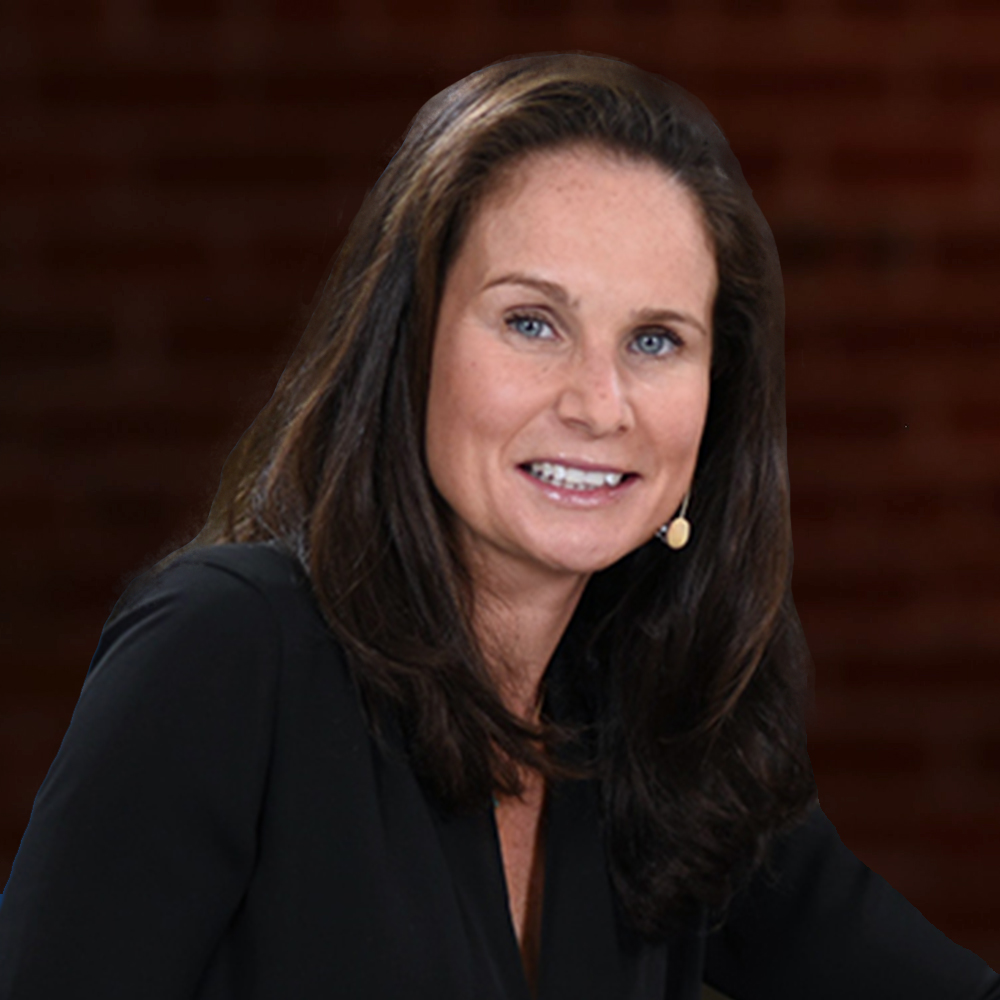
Rebecca Knight
>> Hello everyone, and welcome to theCUBE's coverage of the Google Cloud Partner AI Series here at HIMSS 2026. I'm your host, Rebecca Knight. I would like to welcome two new guests to this segment. We have first Aashima Gupta, director healthcare solutions at Google Cloud. Welcome back, Aashima.
Aashima Gupta
>> Glad to be here.
Rebecca Knight
>> And Baiju Jacob, healthcare strategist at TEKsystems Global Services. Thank you so much for coming on.
Baiju Jacob
>> Thank you for having me, Rebecca.
Rebecca Knight
>> So Baiju, I'm going to start with you because you've been partners with Google, and we've now entered this really special moment, this agentic AI era. Talk a little bit about why this partnership, why now, and what you're doing that excites you so much about transforming healthcare at this time.
Baiju Jacob
>> Absolutely. Great to be here. Great to be here with Google and Aashima talking about our partnership and how we're helping our clients in the healthcare industry. Our focus really at this point, if you think we're at a cusp, if you listen to what's going on around here, AI is the buzzword. And part of that is the technology is there, and the need is there. We have a challenge with workforce ability to do the kinds of things to improve the outcomes of members. So we feel that with Google as our partner and the technology and the solutions they offer, we can build compelling solutions around using AI to improve the member experience for payers and the patient experience for our providers. So that allows us to essentially leverage this technology to change how consumers interact with healthcare.
Rebecca Knight
>> Yeah. Hearing what Baiju is saying, Aashima, how does that resonate with you and what you're seeing from your vantage point about what's taking place in the industry right now?
Aashima Gupta
>> He nailed it. We are entering into this special moment. It is an agentic era for healthcare. And the shift in the technology is not what AI can do, but what AI is trusted to do. When we talk about agents, agent have agency, meaning you really need to protect and create the guardrails around what agents are able to do or not able to do. So from Google perspective, as we bring forward that technology in healthcare to enable the different agentic experiences all the way from consumer side to enterprise, to operational, we believe as enterprise go into this agentic moment, the access management, trust, safety becomes center stage. And our aim here is to build the helpful tools for these agents to be able to have role-based access, trust, compliance, auditability. And that forms the bedrock of the trust and the foundation that we are bringing to the table, like Gemini as an example. It's going to be the front door for enterprises to experience agentic workflows. We have a strong belief that healthcare workflows will be augmented by agents. And in that, that human and agent collaboration and the agency. Healthcare workflows are very deterministic. How do you balance the agentic with the agency and the generative probabilistic part of it? So we're building all those AI foundation, AI infrastructure. We have the complete AI stack, all the way from TPUs to the top. And that's what we bring to the partners, bring to the customers, and bring it to life.
Rebecca Knight
>> Baiju, when technology and when AI works as it should, you don't feel it. It just makes life and work a lot easier. Can you describe an example of how AI has worked to free up clinicians to spend more time with patients, maybe around conversational interface?
Baiju Jacob
>> Yeah, absolutely. I mean, at TEKsystems, we work with healthcare systems to make it easier for clinicians to do what they do best, which is take care of their patients, not spend a lot of time on administrative activities, things that don't add value to how a patient is being treated and how they get better. So we have partnered using Google's platforms to build a conversational capability to handle inbound calls from patients. They're trying to find information. Previously, clinicians, nurses, doctors would be talking to the patient, doing the triage, spending a lot of time that they could be treating the patient to collect this information, schedule appointments, and get them into the clinical workflow. So the conversational capability that we did actually handled a situation where 80% of the inbound calls coming in were being handled by the agent, which is fantastic. When you think about that, that's almost thousands of hours that the clinicians no longer have to spend on administrative task that they can go spend to help members. So these are the success stories that agentic and agents provide in making the quality of healthcare experiences of not just patients and members, but also of the clinicians and those delivering that care to our consumers.
Rebecca Knight
>> And so the outcome for the patient on the other end is that they are talking to an agent who is then understanding what their medical issue is, helping them figure out what kind of specialists they might need to see, and then helping them actually schedule that appointment in a timely manner.
Baiju Jacob
>> That's right. Absolutely. And what that also does is, you can know your member, too. So there's a lot of data that sits today in our health systems. How do we use that intelligently at that point where a member is contacting you? So you can almost anticipate to some extent what the cause or why they're calling, and that allows it to be a much more personalized experience. And it also simplifies the friction because you're not asking a set of routine questions. That could be a 10-minute call; now, all of a sudden, it becomes a 30-second call. That's fantastic when you think about it. I don't have to sit on a phone talking for hours to somebody. So yeah, absolutely.
Aashima Gupta
>> To build on that, I think this is one of the use cases we see. Agent Assist, we just launched that with Humana, where 20,000 agents, 80 million calls annually. So this is where AI is coming from the workflow perspective in that assistant to, in this case, the call center agents. Very similar use case. Can we help reduce the time? Can the agents have the real-time nudges? Do we have the summarized patient information? The pattern is very similar. AI is an assistant to A, get the data, summarize the data, build the helpful nudges, be it for the patient, for clinician, or all the way to call center agents.
Rebecca Knight
>> Baiju talk a little bit about some of the administrative bottlenecks that exist in frankly all organizations, but also famously in healthcare organizations. And give an example of how AI started helping to untangle those.
Baiju Jacob
>> Healthcare is interesting. When I started it and I heard the word systemic friction. And it's probably the only industry that talks about systemic friction, and then it doesn't really address it. Part of it is because it's processes, people, multiple stakeholders. And where AI offers an opportunity is to simplify that. It's really the ability to look at a complex process. And that's the reimagined aspect of what AI brings today. You think of processes that have been built over decades, and now all of us say, "Why did we do that? Do we really need to do it? Is this something that we could do better?" And that allows us to reimagine, rethink those processes, and then AI fits in nicely to be able to take the information insights that we have to simplify that. So it's a great way in terms of how AI is able to transform those experiences for members, patients, consumers in general.
Rebecca Knight
>> So the service experience and the service that the patient feels on the other end is improved, more efficient, more timely, all of those things.
Baiju Jacob
>> Absolutely. And this is not just for hospital systems. I mean, we have payers that have thousands of agents answering calls for members. And those members are calling in to find out what are my benefits, which doctor can I get an appointment with, how much is my copay. So as you think about those benefits summaries that we all as healthcare consumers sometimes have to figure out, agentic allows you to very quickly personalize that to your plan, to where you live based on your zip code, provider with the condition that you're looking to find an appointment for, even calculate what your copays are going to be, what your co-insurance looks like, all of these things to provide the transparency, visibility. And the other part, which I think is the coolest part if you're a service agent is, you're not spending time looking at 30 different screens to find that information, process it with a member on the phone. You actually have that presented to you right away, and you're able to answer that question in a few minutes versus a 15 to 20-minute call. So the member goes back with a high level of satisfaction that I asked for a question, I got it answered, and it's personalized to my need. So that's how a systemic friction is taken out and simplifies it.
Rebecca Knight
>> So Baiju started this conversation by talking about the real need for AI in organizations right now, because we know that so many healthcare workers are overloaded with paperwork. We know that there's a lot of burnout in this industry, and we know that patients are hungering for a more human connection, and yet AI rollouts are often bumpy in healthcare organizations. Can you talk a little bit, Aashima, about some best practices that have emerged in terms of the most successful organizations and what they're doing right to make their workforce feel more comfortable with this?
Aashima Gupta
>> I think that's a great question. Where I see success is where it's a strategy first. So when we work with our leading customers, they already start with an AI strategy. Like, what are the problem we're trying to solve? It's not technology for the technology's sake. So starting with the overarching strategy, because I often say, if you don't know where you're going, you won't get there. So where is your AI strategy? Where do you want to improve? And we're seeing that has to come from top down, the sponsorship, in some cases, from CEO level down. The good news is AI has become a vernacular. We all have seen it on the consumer side, so that barrier is slightly lower. The second is think platform first. Healthcare also has, I jokingly say, a disease, it's called pilotitis. There are too many pilots, not many that scale. And that distance between a pilot to a scaled implementation is the operationalization. How are you going to scale it? What are your operational rigor? What's your platform? So we believe from Google perspective, providing that platform to our partners, to our customers, where they can choose. They have a model choice. We definitely have our frontier model, Gemini, beating all benchmarks. But from cloud perspective, we have 200 plus different models on our platform. And then we have Vertex, where we are serving those models. Security is often... I think it's less talked about, but model armor is something functionality we provide. Prop injection is a real thing, where can you... The other best practice I see leading organizations are red teaming, where you're actually creating a team designed to break the model so that you anticipate and you put the model armor around it. And finally, having a sequence roadmap and bringing your teams along. Healthcare education is a big topic is less talked about, where if you're changing a clinician workflow, a nurse workflow, we need to bring them along. And bringing them along from the get-go, not bringing a technology and throwing it over the fence. So doing it with them, not to them. Those are the kind of best practices I see.
Rebecca Knight
>> And that's leadership right there. Baiju, I'm going to give you the final word here because I think you said this is your 26th HIMSS.
Baiju Jacob
>> It's not HIMSS. 26th visit to Vegas.
Rebecca Knight
>> Oh, okay. But you're a HIMSS veteran, I should say.
Baiju Jacob
>> Yes, I've been there a few times. Yes.
Rebecca Knight
>> What's your prediction for what we're going to be talking about at HIMSS 27?
Baiju Jacob
>> It's going to be all the successes that AI has generated healthcare. Aashima's spot on. There's a lot of fatigue around pilots and experimentation. I mean, that's so 2025. 2026, executive leaders and the boards are asking companies, all this money that we've invested in AI, where's the return on that investment? How's it making it better for our members? How is it making it better for our patients? And at the end of the day, how are our employees? Whether they're clinicians or service experience people, are they being able to do their jobs better? So it's really around that whole... At TEKsystems we use human-centered design in how we build and deliver AI experiences, because that drives how successful an implementation. I think you were spot on when you said, you don't want people doing something to them, you want to do it with them. And I think that's so important. That human-centered approach ensures that whatever workflow we end up designing and deploying actually works for that.
Rebecca Knight
>> A perfect note to end on. Baiju, Aashima, thank you both so much. A really great conversation.
Baiju Jacob
>> Thank you so much. Bye.
Aashima Gupta
>> Thank you.
Baiju Jacob
>> Thank you, Aashima.
Aashima Gupta
>> Thank you.
Baiju Jacob
>> Thanks.
Rebecca Knight
>> And thank you for tuning in to the Google Cloud Partner AI Series here at HIMSS 2026. I'm Rebecca Knight.
















 Rebecca Knight