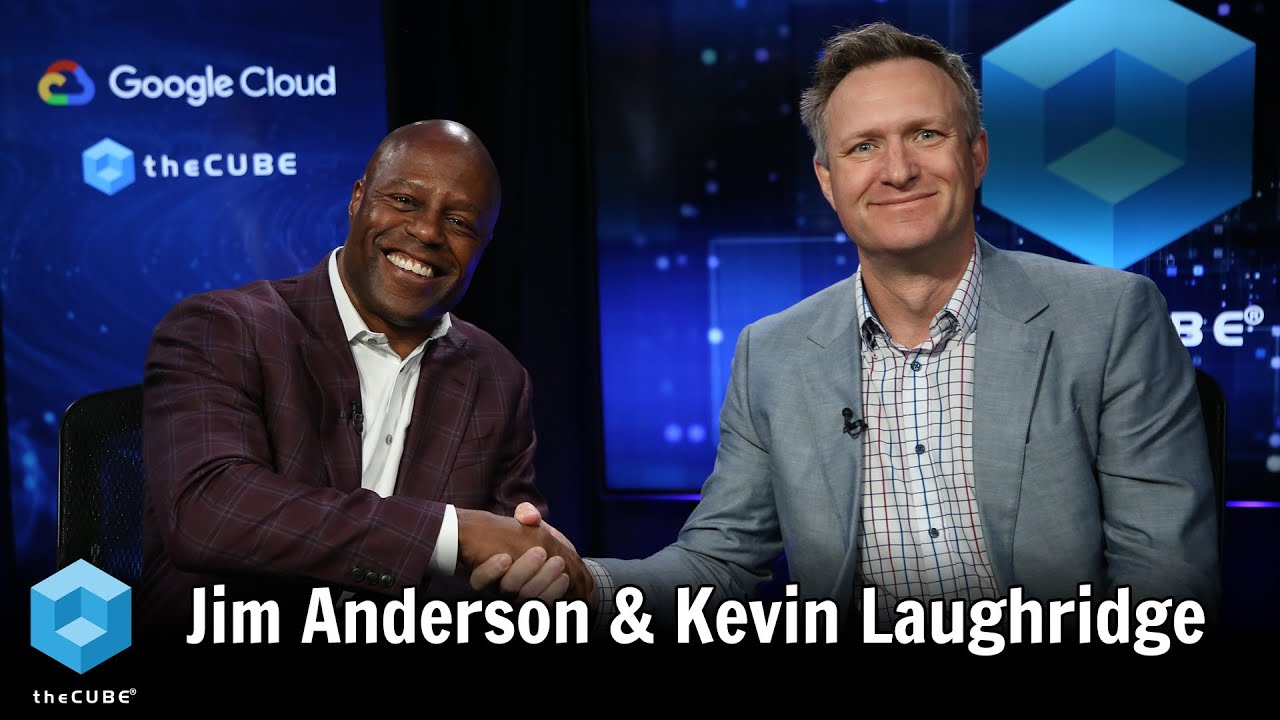
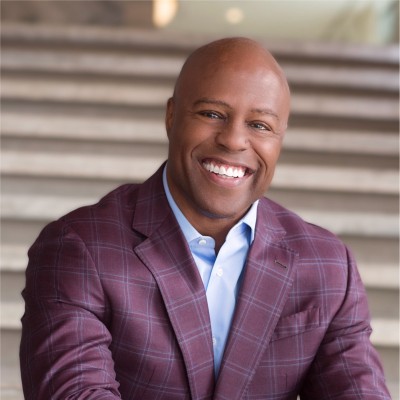
The video explores the collaboration between Oracle and Google Cloud in the evolution of artificial intelligence and cloud technologies within the enterprise sector. Jim Anderson, Vice President of North America Partner Ecosystem and Channels at Google Cloud, joined Jay Heglar, Senior Vice President of Data Platform Sales and Engineering at Oracle, for a discussion in the Google Cloud Partner AI Series hosted by theCUBE.
Anderson and Heglar explore how the integration of Oracle's robust data platform capabilities with Google Cloud's advanced analytics technology enables enterprises to enhance data intelligence and optimize functionalities driven by AI. They analyze how AI can unlock value from existing data repositories, addressing a critical challenge faced by modern enterprises.
Anderson emphasizes the importance of secure and agile environments for data management. Heglar focuses on the flexibility Oracle offers by providing its database services across multiple cloud infrastructures. Together, they demonstrate how their partnership aims to transform data management and create innovative AI solutions, offering customers greater choice and capability.
Forgot Password
Almost there!
We just sent you a verification email. Please verify your account to gain access to
Google Cloud Partner AI Series. If you don’t think you received an email check your
spam folder.
In order to sign in, enter the email address you used to registered for the event. Once completed, you will receive an email with a verification link. Open this link to automatically sign into the site.
Register For Google Cloud Partner AI Series
Please fill out the information below. You will recieve an email with a verification link confirming your registration. Click the link to automatically sign into the site.
You’re almost there!
We just sent you a verification email. Please click the verification button in the email. Once your email address is verified, you will have full access to all event content for Google Cloud Partner AI Series.
I want my badge and interests to be visible to all attendees.
Checking this box will display your presense on the attendees list, view your profile and allow other attendees to contact you via 1-1 chat. Read the Privacy Policy. At any time, you can choose to disable this preference.
Select your Interests!
add
Upload your photo
Uploading..
OR
Connect via Twitter
Connect via Linkedin
EDIT PASSWORD
Share
Forgot Password
Almost there!
We just sent you a verification email. Please verify your account to gain access to
Google Cloud Partner AI Series. If you don’t think you received an email check your
spam folder.
In order to sign in, enter the email address you used to registered for the event. Once completed, you will receive an email with a verification link. Open this link to automatically sign into the site.
Sign in to gain access to Google Cloud Partner AI Series
Please sign in with LinkedIn to continue to Google Cloud Partner AI Series. Signing in with LinkedIn ensures a professional environment.
play_circle_outlineIntroduction of Google AI Leaders series at the New York Stock Exchange.
replyShare Clip
play_circle_outlineMulti-cloud strategy emphasizes movement of Oracle databases to Google Cloud Platform (GCP).
replyShare Clip
play_circle_outlineData platforms as a key area for unlocking enterprise value discussed.
replyShare Clip
play_circle_outlineUnlocking AI Potential: Google Cloud and Oracle's Strategic Partnership for Enhanced Data Insights and Evolving Customer Collaborations
Vice President, NA Partner Ecosystem & ChannelsGoogle Cloud
Jay Heglar
SVP Data Platform Sales and EngineeringOracle
In this episode of the Google Cloud Partner AI Series, theCUBE’s John Furrier sits down with Jay Heglar, SVP of Data Platforms at Oracle, and Jim Anderson, VP of North America Partner Ecosystem & Channels at Google Cloud, to explore how their collaboration is helping enterprises unlock the full potential of AI by replatforming data and modernizing infrastructure.
The discussion dives into how Oracle and Google Cloud are enabling customers to bring mission-critical data closer to compute using Oracle Database on GCP. Heglar and Anderson detail how this ...Read more
exploreKeep Exploring
What is the context and participants of the event being described?add
What trends have been observed regarding the migration of applications to the cloud in large enterprises over the past 15 years?add
What is the significance of the partnership between Oracle and Google Cloud Platform (GCP) in relation to data movement and AI strategy?add
What is the significance of unlocking enterprise data and how do Google and Oracle collaborate in this process?add
>> Hello, and welcome to theCUBE here at the New York Stock Exchange at theCUBE Studio on the East Coast. Of course, we've got our Palo Alto studio connecting the West Coast and East Coast tech and Wall Street here. We've got a great series with Google AI Leaders series. We've got Jim Anderson, Vice President of North America Partner Ecosystem & Channels. He leads the partnership efforts for Google Cloud in North America. And Jay Heglar, who's the SVP of the Data Platforms at Oracle. Gentlemen, thanks for coming on theCUBE, and congratulations on being a lead AI leader. Jay and Oracle, we've been following you guys. Of course, everyone knows Oracle. Jim, thanks for coming back.
Jim Anderson
>> Thank you for bringing me back.>> You can see the Wall Street scene here, it's really about practical, right? This is a trend we're seeing is, okay, I got to make the AI practical, and you're enabling that at Google. Oracle relationship has been key for what you guys do. Oracle enables a lot of value in the database and the software, and they have a cloud. Talk about the relationship with Google and what you're working on with Jay, set the table.
Jim Anderson
>> Yeah, I think it's based on this whole concept of making data usable, right? In ways that we pretty much haven't done it before, and really bringing the best of both worlds together. The best of Oracle, I think Jay mentioned a 48-year history with data, with the best of Google and our data analytics technology so that people can, actually I talk about this, return on intelligence, get more intelligence out their data and actually make a difference on the bottom line since they're here at the Stock Exchange.>> Jay at Oracle, you were talking before we came on camera, you've seen the hyperscalers, you worked in the industry. You've seen many ways of innovation. Right now we're at a time where data driving all the value, a lot of, I won't say re-engineer, I'd say a lot of re-platforming of large scale enterprises. Hyperscalers been, they're spending, everyone knows the CapEx game, but if you look at enterprise AI right now, the whole focus is okay, they see the headroom for AI, but all the work is being done on the AI infrastructure and the platforms around the data because that's a distributed computing hybrid cloud-like scenario. You want cloud-like capabilities, but you also have on-premises and edge, all that in fact, with the data platform, Oracle, you've been in the data business, you have the databases that run in production workloads for most of the large enterprises, if not all of them. What's your vision on Oracle in that environment and with Google and the partnership?
Jay Heglar
>> Well, for the better part of 15 years now, large enterprises have been moving applications to the cloud, dating back to the early 2010s. This is a new act of cloud where now people are looking at all the applications that had yet to move. A lot of systems still sit on-prem. A lot of those are run by Oracle database. This new act, this multi-cloud act that everybody is in today is they're looking at and they're revisiting these systems, many mission-critical systems with Oracle database, and they're saying, "Why not make that move now?" We've been in the market now for I guess June of last year we announced our partnership, and so now we're working together to take the of both worlds, which is a technology preference, which is Oracle database, and moving that to a cloud preference, which in this case would be GCP.>> What does that mean for customers? Because I mean, you have a plethora of solutions. Again, we covered, you got Exadata, I mean, zillions of stuff going on in the enterprise. Data movement's huge. This is where you start to see when people say, "Okay, I love my data in a database," and there's now many databases out there, but AI needs that data and moving it around and having it trained, inference, reinforced learning. These are all hot areas that are working on the data itself, so it's got to be available. What's your view on that whole multi-cloud data movement piece and how does that relate to Oracle and Google?
Jay Heglar
>> We ultimately want to give customers the power of choice. There's many different ways you can move data. Well, there's different ways you can reference data so you don't actually have to physically move it, but at the end of the day, when you've got all of this data that is sitting inside and being created within Oracle database, this particular offer that we have with GCP, we get to now move that Oracle data closest to compute and sitting right within the confines of GCP. What that does for a company's AI strategy is now you have access to all of this Oracle data and you have it as close to compute as possible so that you can do all the different work, the different functions you want relative to AI. At the end of the day, we're bringing all of that Oracle data that the customer wants to make available and expose to GCP.>> Jim, when you talk about the partnership with Oracle and what you're doing at Google, I want to get your reaction to the famous word that's been most said on theCUBE in the past six months: unlock. Unlocking value on the enterprise where literally there's not a lot of data being produced for AI. Some say 10% to 15% of data is being used. It's 80% plus available, hasn't yet been worked on. They're in databases in on-prem, they want to go to the cloud so you have a cloud relationship. How is the unlocking of the data piece for customers with Google? What are some of the conversations you've been involved in and how does Oracle fit into that?
Jim Anderson
>> Yeah, I think you alluded to it. We have this whole foundation of data sitting with Oracle that we can now unlock with Google technologies like Agentspace. You think about the possibilities of, hey, taking an order management system, leveraging the data associated that with some of the analytical capabilities that are sitting with Google in our environment, and then make sure that we do things like optimize and automate and find new revenue streams for our customers. It's really opened up the door. You talked about only 10% to 15% of the data in a typical customer is actually being used, and so now we want to open that Pandora's box up and bring the exciting new opportunities associated with that.>> Jay, what's your take on this? Because a lot of that data is sitting in Oracle.
Jay Heglar
>> It is.>> You guys have been dominant player, obviously. What are some of the conversations you're having with customers as they look to unlock?
Jay Heglar
>> A couple different ways to answer that question. You think about the back office functions. A lot of mission-critical applications that run businesses, financial services, retailers. Those have Oracle database, the underpinnings of that application. Customers want to move that, bring the data back and reunite it with the application. From the back office system, we're seeing a lot of that. Then also, when you talk about unlocking that data, it's actually just providing more value to end users. So something like Agentspace, now when you have that palette, the ability to create all these different agents, now you have another option, which is all of this Oracle data that previously hasn't necessarily been easily accessible for end users so it's the best of both worlds.>> I actually love this agent wave because I think that highlights what people can in their minds see as the magical moments, but it's hard. There's a lot of stuff going on under the covers. What are some of the challenges you guys see with that? Because yeah, that's a great first step, but now you got to, there's a lot of legacy. There's collaboration on governance, so it's a lot of stuff that's got to go on under the covers in the data layer. I say layer in quotes, there's a lot going on in the data layer. What are some of the top challenges that you guys are see as you guys take the agent to the market, agent vision to the market, there's a lot of appetite, there's demand for it. What are some of the challenges that customers have?
Jim Anderson
>> Yeah, I'll start, and I'll let Jay just elaborate, but it all starts with security. To be successful with this new technology, you have to have a secure foundation and have to have trust associated with it, especially with some of the emerging things we do there. Some people are moving from on-prem to our cloud environment just because they want to have a more secure environment with regards to their data. Second is using the digital transformation to scale your operations or having access to all of my data, and being able to access it in the digital formats like we're doing now between Oracle and GCP, and then leverage analytics on that. That means I can personalize environments in a lot better way than I had in the past, and people are really excited about that and what that means for the customer experience. You see that going on, but as you mentioned, there's a whole governance aspect of it, and I do believe it's easier to have governance when your data is sitting in a common ecosystem, one environment versus fragmented or siloed out there, and that's what people are trying to do right now.>> Jay, what's your take on the customer? You're handling all the go-to-market engineering and motions and the value propositions. What are they talking about? What's in their way or what's stopping them?
Jay Heglar
>> Well, Oracle was built on trust, security, performance, scalability, and when you bring together Oracle database and put that inside of GCP, the best part about that is you're not changing your environment. It's the same database that our customers have known and loved for nearly five decades now. So it removes that, I'll call it the risk because you're using the same database, the same tools, the same skills that you've always used. You're just doing so in the friendly confines of a GCP cloud environment, so you remove all of that risk and make it much, much easier to simply add new capability.>> Yeah, Jay, the best of both worlds, Google Cloud and Oracle, the story resonates. You've been partnering, integrating together. The partnerships are deeper. They're not just business, it's like a technology shift there. I've noticed that the enterprise cloud world and classic enterprise, I'll say classic enterprise, when they see all the abstractions and all the programmatic AI coming, a lot of people who have been in the business, they light up because a lot of hard stuff that was legacy can be solved with some of the AI tooling coming out. I mean, if you look at the coding assistance and some of the technology out there, it makes life easier for all the hard stuff. If you try to do an integration like go back 10, maybe 20 years ago, it would've been eight months just to get everything planned out. Now it's just literally coding. You got agent to agent, you got MCP, the protocols are developing, so you have a lot more tooling coming on scene that's only going to benefit pre-existing Oracle, for example, and now Google's efficiency just as an industry participant, how do you view that because that's compelling. Do you see the same thing on the Oracle side?
Jay Heglar
>> Absolutely. By the way, it is fun. Oracle and Google's sitting next to each other on the same side of the table here, right?
Jim Anderson
>> Right.
Jay Heglar
>> It's a lot of fun to go talk with customers to give them this new and incremental capability, and when we give the power of choice. Larry Ellison, he's a true visionary. He says, "Let's bring down the walled gardens of all these clouds," and so now we've made our product, our flagship available in other clouds because the only people that really benefit from that are our customers. And when we go meet with customers and sit side by side and talk about what are the problems they're trying to solve, which typically ends up with Oracle database in a GCP environment, all of a sudden now we're working on behalf of the customer, and it's a lot of fun to have that conversation.>> This is our 16th year doing theCUBE. We've seen Larry evolve, modernizing Oracle at every step of the game, but he starts off skeptical, but when he sees reality, he does not flinch. He goes hard at the trends that matter. If you look at some of the transformation with Fusion and Exadata, OCI, building on top of the asset has been one of his things. So how would you describe the modernization of Oracle with Google? What are some of the key things people should know about? If you look at the cloud and Oracle together with Google as a modernization play, because everything starts out as a modernization thing, then it turns into a transformational discussion. This has been one of the key themes that's coming out of the AI leader series here is that, yeah, we love modernization. Who doesn't like that? But then again becomes, wow, we can actually do more. It turns into transformation. How is Oracle modernizing? What does that mean for customers that are transforming from your perspective?
Jay Heglar
>> Well, so modernization typically is very individualistic. When we think about modernization, we want to give the customer the power of choice to deliver our database anywhere, and that's a very new concept. So you mentioned Exadata. So Exadata, we have three different places you can deliver Exadata, but what we're seeing a lot right now in the industry is customers are taking their on-prem environments and they want to move them all to the cloud consistent with what they've been doing for over a decade now. The modernization there, it's less about modernizing the database, but more modernizing the location. Where is that served? And at the end of the day, it doesn't matter. We don't care.>> It's a workflow.
Jay Heglar
>> It's a workflow. You can have it delivered anywhere. We believe we've got the world's best enterprise database and customers are liking to deploy that in GCP.>> This is a key, Jim, part of what the value is we've talked about in the past. What's some customer examples of this AI enablement, some of the modernization? Can you share a customer?
Jim Anderson
>> Well, yeah, I alluded to a little bit before, but we have retailers that are using their billing system and now they're combining that with some work, and that's obviously based on Oracle, combining it with some data, analytical work that they're already doing in Google Cloud to really drive a new customer experience in front of customers. It's very exciting to see. Likewise, we've seen customers move once again from Oracle on-prem into Google, really from a security perspective. They've taken a look at, "Hey, what's the best way to secure my data?" Especially now I want to use it for agents, those types of things, and go from there. And last but not least, I do think we have situations where people are moving just to get more agility. They're saying, "Listen, my data's fragmented. It's siloed. I like to consolidate it. It's a one area. I want to take the best of both worlds, meaning my foundation, I built with Oracle. I don't want to start that over, but then I want to match it with some of my data analytics capabilities from Google and then drive some new outcomes." I like to say we get a chance working with Oracle to actually reimagine some businesses out there. That's what's exciting.>> What I love about the AI wave, generative AI wave, and I want to get both of your reaction if you don't mind, is that the analytics market's been around for decades. That's been like, "Hey, we've seen that movie." Yeah, you got teams doing data science, so it's been out there. The generative AI intersection is going to be an overlap between analytics and gen AI. And gen AI is also doing things a little bit different. We were talking about some of these abstractions, but also apps are being developed. So you're starting to see whether it's content, you're starting to see that on social media, obviously that's rolling up content, but when you have data available, you're starting to see coding, autonomous coding layers coming where if you've got access to the data, the app side is changing. What's your guys' thoughts on that? Because then, because the classic relationship, I need a database for the app, right? Now, you have a database that's everywhere, it's distributed. What is the impact? How do you guys see that? Are there conversations you're having with customers around, okay, I got to enable this new gen AI intersection with pre-existing analytics practices? Because the old analytics, they were programmable, but not really. But now you have the intersection of those two worlds, business logic meets coding and enablement, just random thoughts. Jay, what's your thoughts on that?
Jay Heglar
>> A couple of things. When we talk about database delivered in these multi-cloud environments where really we're talking about our newest release, which is 23ai, and part of that commercial release has a lot of different capabilities. You mentioned some things you mentioned distributed. One of the elements is globally distributed as an option there. We talked about the utmost of security. You talked about Vector, which is a new data type that people leverage for AI purposes. All of those things are wrapped in our newest database release called 23ai. I think what customers are really starting to do is take advantage of what type of capabilities come within the database because a lot of AI is built in there. So you mentioned autonomous. Well, we've had a product out there for eight years now called Autonomous Database, and it's available and delivered at GCP, so.>> We called it the self-driving database.
Jay Heglar
>> Self-healing, self-patching.
Jim Anderson
>> Exactly.
Jay Heglar
>> And with that, what I love so much about the vision that the company had there is we innovated up the stack. We took away the things that humans didn't necessarily like to do, weren't the best at. We automated those, and now those DBAs work on much higher order magnitude type of operations.>> I would love to be a fly on the wall on the agentic roadmap inside Larry and the brain trust over there at Oracle, because this is a dream scenario because you can do more. And I think it speaks to some of the things, Jim, you were putting out there. So I have to ask, Jim, what's the relationship with Oracle look like today and how do you see it unfolded? Do you guys go into market together? Can you just give some data on how you guys engage with each other? Is it business technical? What are some of the relationship parameters?
Jim Anderson
>> First, as mentioned, it's relatively new, and with that, we've seen a lot of traction already. I think we're just at the tip of the spear with regards to what we're going to be able to do together for our customers. But we have joint go-to-market activities. We actually have joint technology and roadmaps we work on together. I think it's more than just a partnership. It's about two companies coming together to address customer needs and ways that haven't been done before. That's probably the most exciting aspect of it. We both have this customer obsession, and we're both trying to leverage that to make sure we can make a difference with our customers.>> Jay, talk about from your perspective, obviously you guys are very engineering culture, performance has been one of the hallmarks of Oracle. How does that continuing with Google? Can you share some insight into how you guys are engaging there as obviously some of the products or product-led growth comes out of this as well? We're seeing a lot of growth there, what's your take on the relationship?
Jay Heglar
>> Oracle hasn't historically been the best partnering company. We're changing that, and we're doing so because of customer demand. I'm here this week to meet with our friends from Google, talk about go-to-market activities, how we can partner best together, and at the end of the day, we meet at the customer because that's what the customer demands. I think you should expect to see more of that from Oracle because at the end of the day, we're all a bunch of technology and ingredients and our customers want to be able to pick and choose things that work best to meet their needs.>> We're in a platform era now, and we're going into a whole nother platformization of AI with AI forces, the distributed computing conversation, which is platforms need apps, and they need value, right? So what's next for you guys? Obviously you guys are VIP featured partners. What's next? What's on the agenda?
Jim Anderson
>> I think I can't give too much, but I would say continue innovation about really making data usable. I talk about the concept of democratizing access to data a lot about this is how do we make sure that people have access more people to data and can make it usable for their environments and those types of things. I think you'll still see some innovations along those lines along with more joint go to market and working with customers and making a difference.>> Yeah, data platform's the hottest area right now, so that's where it's enabling a lot of the value. Guys, thanks for coming in. Congratulations on the partner feature. Great to have you on.
Jay Heglar
>> Thanks for having us.
Jim Anderson
>> Thank you.
Jay Heglar
>> Appreciate it.>> All right, I'm John Furrier with theCUBE. We are here for the AI Partner series with Google Cloud. Thanks for watching.