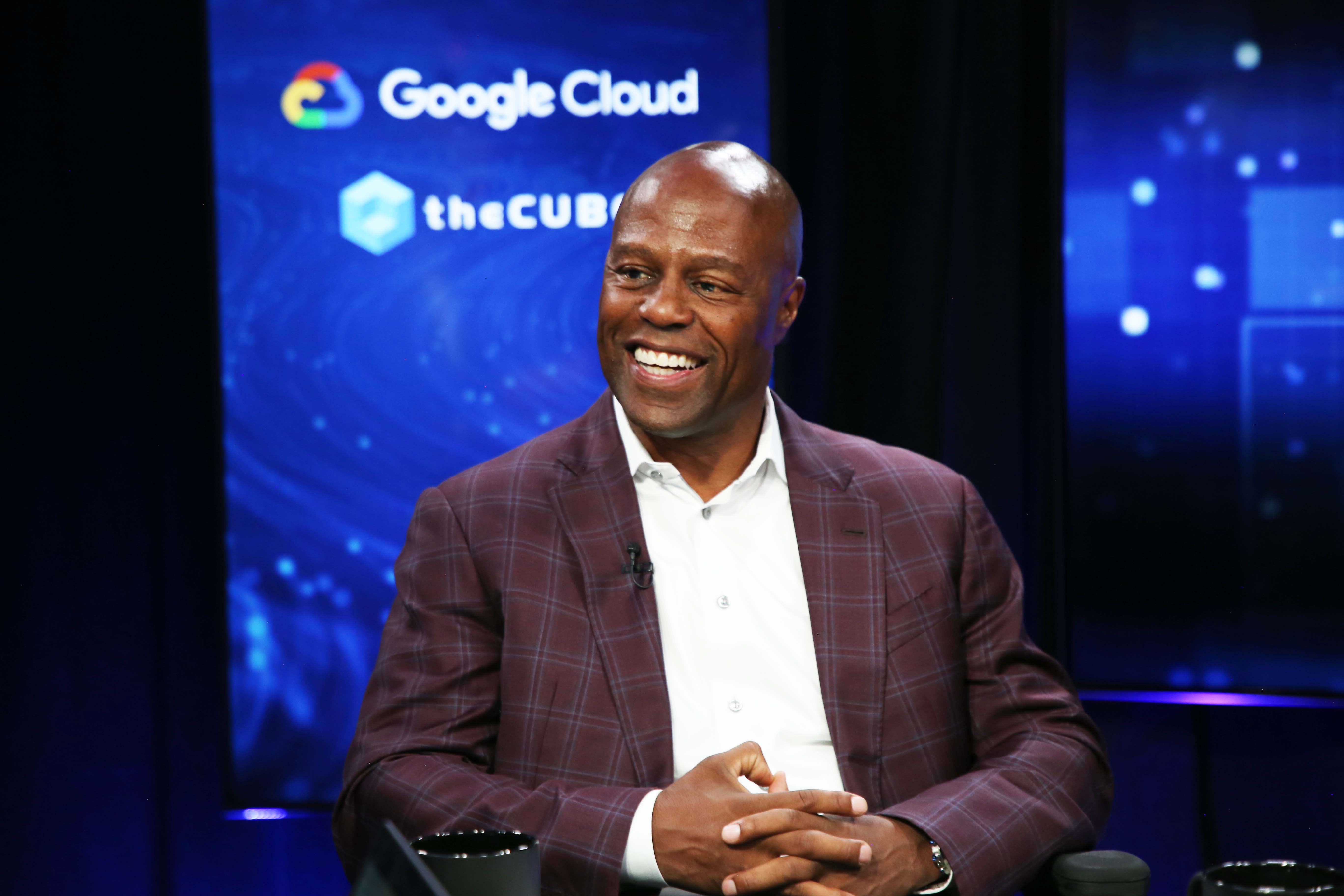
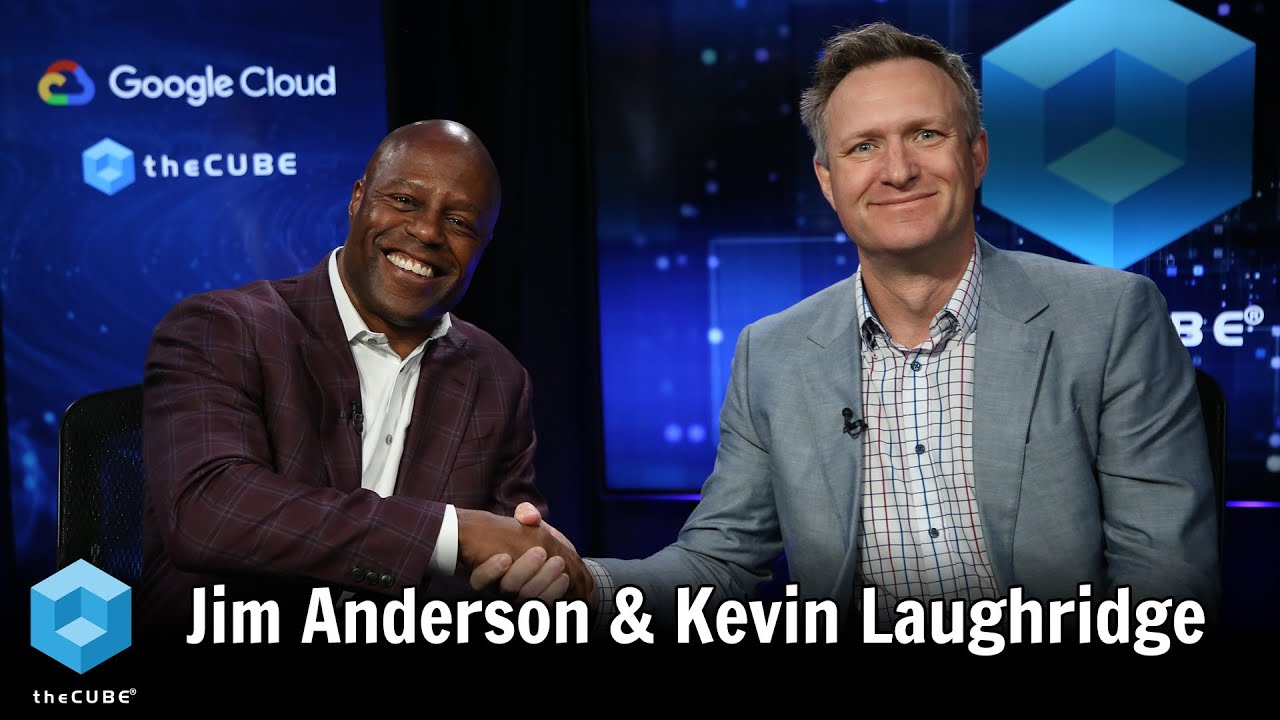
What happens when cloud innovation meets partner agility? In this episode of the Google Cloud Partner AI Series, theCUBE Research’s John Furrier sits down with Jim Anderson, VP of North America partner ecosystem and channels at Google Cloud, for a candid and forward-looking conversation. Together, they unpack how AI is reshaping Google’s partner playbook — and what that means for the future of enterprise transformation.
Anderson shares how partners are shifting from transactional relationships to long-term, journey-based engagements — mirroring the evolution of AI itself. By integrating Google Cloud’s core AI capabilities with their domain expertise, partners can accelerate time-to-value and deliver smarter, more contextual solutions that meet the growing demands of enterprise customers.
Key Highlights:
• How Google Cloud’s full AI stack is driving innovation across industries
• The rise of AI agents and why they're set to surpass SaaS in enterprise value
• The evolving role of partners in delivering scalable, high-impact solutions
• Democratization of computer science and how it’s enabling the next wave of creators
• Jim’s take on the future of the ecosystem, customer co-selling and partner growth strategies
With rapid innovation as a constant, Anderson emphasizes the need for partners to be adaptable and future-focused. He highlights how Google Cloud’s infrastructure provides a solid foundation for experimentation, growth and AI-driven transformation. The message is clear: partners who lean into AI integration will lead in delivering differentiated value and stronger business outcomes.
Forgot Password
Almost there!
We just sent you a verification email. Please verify your account to gain access to
Google Cloud Partner AI Series. If you don’t think you received an email check your
spam folder.
In order to sign in, enter the email address you used to registered for the event. Once completed, you will receive an email with a verification link. Open this link to automatically sign into the site.
Register For Google Cloud Partner AI Series
Please fill out the information below. You will recieve an email with a verification link confirming your registration. Click the link to automatically sign into the site.
You’re almost there!
We just sent you a verification email. Please click the verification button in the email. Once your email address is verified, you will have full access to all event content for Google Cloud Partner AI Series.
I want my badge and interests to be visible to all attendees.
Checking this box will display your presense on the attendees list, view your profile and allow other attendees to contact you via 1-1 chat. Read the Privacy Policy. At any time, you can choose to disable this preference.
Select your Interests!
add
Upload your photo
Uploading..
OR
Connect via Twitter
Connect via Linkedin
EDIT PASSWORD
Share
Forgot Password
Almost there!
We just sent you a verification email. Please verify your account to gain access to
Google Cloud Partner AI Series. If you don’t think you received an email check your
spam folder.
In order to sign in, enter the email address you used to registered for the event. Once completed, you will receive an email with a verification link. Open this link to automatically sign into the site.
Sign in to gain access to Google Cloud Partner AI Series
Please sign in with LinkedIn to continue to Google Cloud Partner AI Series. Signing in with LinkedIn ensures a professional environment.
Are you sure you want to remove access rights for this user?
Details
Manage Access
email address
Community Invitation
Jim Anderson, Google Cloud
What happens when cloud innovation meets partner agility? In this episode of the Google Cloud Partner AI Series, theCUBE Research’s John Furrier sits down with Jim Anderson, VP of North America partner ecosystem and channels at Google Cloud, for a candid and forward-looking conversation. Together, they unpack how AI is reshaping Google’s partner playbook — and what that means for the future of enterprise transformation.
Anderson shares how partners are shifting from transactional relationships to long-term, journey-based engagements — mirroring the evolution of AI itself. By integrating Google Cloud’s core AI capabilities with their domain expertise, partners can accelerate time-to-value and deliver smarter, more contextual solutions that meet the growing demands of enterprise customers.
Key Highlights:
• How Google Cloud’s full AI stack is driving innovation across industries
• The rise of AI agents and why they're set to surpass SaaS in enterprise value
• The evolving role of partners in delivering scalable, high-impact solutions
• Democratization of computer science and how it’s enabling the next wave of creators
• Jim’s take on the future of the ecosystem, customer co-selling and partner growth strategies
With rapid innovation as a constant, Anderson emphasizes the need for partners to be adaptable and future-focused. He highlights how Google Cloud’s infrastructure provides a solid foundation for experimentation, growth and AI-driven transformation. The message is clear: partners who lean into AI integration will lead in delivering differentiated value and stronger business outcomes.
Vice President, NA Partner Ecosystem & ChannelsGoogle Cloud
What happens when cloud innovation meets partner agility? In this episode of the Google Cloud Partner AI Series, theCUBE Research’s John Furrier sits down with Jim Anderson, VP of North America partner ecosystem and channels at Google Cloud, for a candid and forward-looking conversation. Together, they unpack how AI is reshaping Google’s partner playbook — and what that means for the future of enterprise transformation.
Anderson shares how partners are shifting from transactional relationships to long-term, journey-based engagements — mirroring the evo...Read more
exploreKeep Exploring
What are some of the dynamics currently taking place in the marketplace?add
What are some of the dynamics currently at play in the marketplace?add
What types of partners does the company have and how does it plan to ensure they are all part of the enablement plan moving forward?add
>> Hello everyone. Welcome to theCUBE Studios here at Palo Alto, California. I'm John Furrier, your host of theCUBE. We are here kicking off a series with Google Cloud and their partners. Jim Anderson is the vice president, North America Partner Ecosystem and Channels for Google Cloud. Jim, great to see you. Thanks for coming on theCUBE.
Jim Anderson
>> Hey, John. Thanks for having me. I'm always excited to be here.>> We've got a great partnership series. You oversee the ecosystem, which is probably under a lot of pressure because it's growing really fast and changing. If the cloud is going next level, agents is going to be the app layer, cloud changing, more horsepower, more speed, supercomputing now for the masses, is what you're in the business of delivering as well as databases and all those services.
Jim Anderson
>> Yes.>> Your ecosystem must be hungry for this. Give us a taste for the dynamics going on now in the marketplace.
Jim Anderson
>> Well, I think you sort of highlighted. The dynamic is providing a lot more capabilities to our customers. The complexity has increased. We have exciting things like AI and you need service partners to bring some of their domain expertise along with process expertise to combine it with our core AI tech stack out there. And they're seeing the value in doing that, and so that's why they're really excited about working with Google right now.>> I love seeing the change because when every time you have a major shift like we're seeing now with AI, it kind of floats all the sectors, right?
Jim Anderson
>> Yeah.>> Infrastructure, AI infrastructure is changing and growing. The demands for tokens for instance, is causing, and with reasoning and inference, you're seeing that token sizes increase the amounts that's driving cluster sizes, both the need for computing. And then you get the data layers expanding because of the data's continuing to expand, the database is the role of data for agents, which is this next wave. Some say agents will be bigger than SaaS. Obviously SaaS was an app you ran on the cloud and put in the app store, you're off to the races. Now agents are going to be end-end, much more enterprise-like in the sense they'll be multi-stepped, things are happening, real value is being created. So you have this value capture, value creation dynamic. You guys create value, you offer it to partners, partners capture that value, then create value for their customers who then have to capture it. So the new mechanisms are coming together and so new exciting things are happening. What does that do for Google Cloud? Is the game is still the same? Is it more faster pace? How has the market changed the ecosystem from your standpoint?
Jim Anderson
>> I think there's a couple of things. First, it's definitely faster pace. The pace of innovation today is not like I've seen in at least a decade. So trying to keep up with that, trying to have an ecosystem that can keep up with that and make sure they're enabled around that is critical, and a big challenge that. At the same time, as I mentioned a little bit earlier, I think the complexity has changed. We're moving to a era where it's not about the transaction, it's around the journey. And that's what AI is, around the journey. You talked about it, we talked about LLMs at one point, then we talked about platforms, right now we're talking about agents and evolving agents who actually over time do work for us. And to your point, I think the markets for labor is bigger than the market for SaaS. So that the agent and the genetic marketplace is going to be huge. And you need an ecosystem that knows how to take advantage of that with their customers, leveraging their domain expertise.>> Jim, we were talking on another interview we've done in the past, you have a CS degree, computer science, I think it's called CompSci, CS-
Jim Anderson
>> Don't remind me. Don't remind me.>> ... whatever acronym they use these days. But CS was at one point the hottest discipline of the past generation.
Jim Anderson
>> Yeah. Yeah.>> But now computer science aperture has increased. You're seeing things like voice prompting, hey, build me an app or prompt no code, low code. As the computer science gets democratized, the computer science moves down the stack so as to make the roads better, we use road analogy. You guys provide a lot of the road with Google Cloud for customers. What is in your view, the CS, the computer science? Because we're hearing keynotes like Jensen Huang says the word computer science multiple times. Robotics is hot. Physical AI's coming and manufacturing, all the verticals have AI in them. So you starting to see computer science kind of go everywhere, but it's not like the old school computer science.
Jim Anderson
>> It's not the old school. I'm old and it's not the old school computer science. I think first, to me, the exciting part of it is we democratize the creation of code out there with the code assist, those types of things. What that means is more people can innovate. So what I see is computer science is actually becoming a broader field that everyone can tap into. The past where I was ECS, I was a geek up there at school and stuff like that. But now everyone can tap into computer science and computer science things that I only used to be able to do with me and my computer science friends. And like I said, that's going to just lead to a lot more innovation and I think that's going to open the market to things that we haven't even thought about right now.>> And what are your partners doing with some of the tech? Because you had Google Cloud, it was a great event for you guys as a company. Saw some great advancements, breakthroughs, Google I/O, the Google proper show, which is a lot to do with the end user side. A lot of goodness coming out, new things, very breakneck speeds, breakthroughs about breakneck speed. That's going to create an enablement. When you have enablement, that's fertilizer for the channels.
Jim Anderson
>> Yes.>> They also have process. They also have distribution channels. These things, in my mind, I can envision automation going on. What areas do you see excitement from your standpoint where the channel and the partners are actually leveraging the superpowers coming out of Google Cloud and the power of that partnership and what are they doing with it? Because you're seeing kind of like this dynamic where it's like you provide value, you create value offer to the customers, they capture it and then they create value for their customers.
Jim Anderson
>> Yes.>> What cool things do you see emerging?
Jim Anderson
>> What's really exciting, you talked about agents and agent space earlier, we see just as many of our partners using agent space internally as a foundation for taking that process expertise and going to their customers to bring value. So you have, like I said, this dynamic of, hey, they're now using our technology internally. They're using that to gain experience and learn along that journey. Now they're using that learning experience to go bring value to the customer's externally and help them with some of their complex challenges over there. So you now have this cycle of innovation coming out from Google. We like to be on the frontier of innovation. Partners taking that innovation, leveraging it themselves, and then based on that experience going to the customer and say, listen, I've done it for myself, I can do this for you. And going from there.>> One of the things that look great about this market is that there's, we used to have an expression during the Web 2.0 days, 1,000 flowers will bloom when you have democratization. Cloud kind of accelerated now even more with AI where one person can create a startup, two people can create the startup that 10 would do or 100 would do. So you're starting to see specialism, human skills, domain experts, or a task, a narrow market segment or a thing and owning it and innovating it and disrupting a bigger company that might have 6 features or 10 features, but the one core feature is disrupted by the company. So a long tail of potential partners and most ecosystems, it's hard to get into, a lot more programs, a lot of work. How do you deal with this tsunami of long tail partners?
Jim Anderson
>> Well, it's definitely tough, right? Because, one, you don't actually know who they are. The technology's moving so fast, people are coming up, different partners are coming out that bringing up value. But what we see is that, sure, we have some core big, we call them, tier one partners out there, but increasingly we have, I call regional niche partners that are specialized in a particular area and customers love using them. They want that level of expertise. Once they've seen they've done it at one customer, they want to leverage that because they communicate, another customer. And so we have to nurture and make sure they're part of our enablement plan too. So we're sort of scaling and making sure we're leveraging our technology to make sure we can scale across a broader range of partners as we move forward also.>> If I'm a customer, if I'm a partner, let's just say I say, hey, theCUBE, we got some stuff going on with data and videos and whatnot, and I want to join the partner program. Do I sign up? Do you accept the small niche partners? How do they engage with your teams? Because it's self-service, imagine probably be less touch.
Jim Anderson
>> We have a range. We have from self-serve to partner advisors to, when I say it's a high-touch model. In the beginning based on where you are in your journey with Google, you'll enter our partner system that way and then we'll work with you to try to grow and make you successful. I always tell people a key thing about partners is a win-win on both sides. So we want to provide a win to you like you're providing a win to us, and we both provide a win to our customers. And if we do that successfully, our partners will continue to grow with this.>> I was at an event, it wasn't a Google event, it was in New York City at our new NYSE Exchange studio, and I asked the partner, hey, so tell me about who you like working with. He said, look, I care about two things, more profit and more customer satisfaction, customers and customer satisfaction. So not to oversimplify the partner equation, but that's pretty much the key KPIs. They want to make money, they want distribution, they need access to technology to serve their customers, and they want to make high profit and they want more customers from Google.
Jim Anderson
>> Exactly.>> So if you bring them more customers or tools to help them with customers, they win.
Jim Anderson
>> Yes. Well, I mean I think that's a key aspect of our program. I like to say our partner program is a co-selling program. My team works with partners to co-sell. So we bring customers. Likewise, our technology is such that you actually make more money on the services side than you do the consumption. So for every dollar of consumption there's several dollars of services out there that the partners can take advantage of. And equally important, I like to say it's a little sticky, is that AI is a journey, not a transaction. So you have this combination that we're trying to co-sell with our partners, IE bring them customers. We're trying to make sure they can leverage the fact that there's cloud out there to drive the service aspect of it, which is a multiple of clouds. And then we're getting stickiness with going on their journey and introducing new technologies that they can take to their customers constantly to bring value.>> I think you guys really figured out that game. And I think they want to be close to their customers, they're on the front lines, they're in meetings trying to differentiate, charge more wrap services around things. The more goodness the better.
Jim Anderson
>> Yes, definitely.>> So what's the hot goodness coming from Google Cloud? If you had to kind of overgeneralize, but generally speaking across the tiers, what's the hot products?
Jim Anderson
>> It's clear. our AI core tech stack is the hot product right now. The fact that we have a platform, we have an infrastructure, and we have pre-packaged agents that you can all take advantage of all within the same environment to accelerate time and value with our customers is something that our partners appreciate and they're fully taken advantage of right now.>> Talk about the workforce, because like you said earlier, going back to some of the things we were talking about, the computer science, a lot more new folks are coming into the game. And not to throw shade on our age, but folks our age are getting back into-
Jim Anderson
>> Our age.>> Well, you're younger than I. Maybe. You look younger. I'm grinding. No, no, but we're coming back into the coding world because you don't have to get back and be fluent in the semantics. If you learn computer architecture, you can come in and put some stuff together because the coding assistants are literally easy to use, especially the demos and the production code you guys have. I mean, literally coding up some of the hard work can be done. Hard work's like understanding the data relationships or understanding how fast performance you need.
Jim Anderson
>> But I think that's great. You can now concentrate on being creative versus understanding at least the underlying infrastructure, where the data is and all the things we had to worry about when we're coding those types of things. And like I said, that's going to spawn a whole new set of innovation of things that we probably haven't even thought about right now. As more important people can take advantage of this technology.>> And not only have to make it easier for the folks like us coming in, but also the younger generation. I always say this at Google Next is that the folks in their 20s were using Google Docs in middle school. So just not to peg how long you guys been in the game that that's your target audience. They're used to collaborative features, so they want to be coding or designing in line to what they're comfortable with, sharing docs with their friends, looking over each other's shoulder, helping each other, sharing, that's what they want.
Jim Anderson
>> Yes. And I think with the AI assist tools that are coming out and everything else, that's only going to accelerate. That you're going to have people say, you know what? I can do it now. I actually have a helper here along with that, I'm going to be more productive and allow myself to focus in some more creative or high-value task.>> All right, Jim, appreciate you coming on. Quick chat here. Final question. What's your focus, what's your goals for the group next six months into the next year? What's some of the things you're focusing on?
Jim Anderson
>> I think we have a singular focus on trying to maximize the time to value associated with Google technologies and creating an ecosystem that does it. So I'm working with my partners to understand where they can bring value, understand their specialty, make sure they understand our core AI stack and how that all comes together, I talk about trifectas, to actually solve real customer problems.>> Put a plug in for what you're working on, you're looking to hire, any kind of focus, what kind of folks you're looking to bring on board, key stats, successes, put a plug in.
Jim Anderson
>> Hey listen, we're always looking for good talent. I think talent is the key to everyone's success, and so always looking at that out there.>> Jim, thanks for coming on theCUBE. I'm John Furrier here in our Palo Alto studios kicking off the Google Cloud Partner series. Thanks for watching.