In this segment of the Google Cloud Partner AI Series from the NYSE, Mike Shea, head of partner co-sell at Google, and Valentin Cojocaru of Datatonic join theCUBE’s John Furrier to discuss the shift from AI experimentation to enterprise-scale execution. The conversation highlights how Datatonic, a "Google-only" partner, is helping organizations in telco, retail and financial services move beyond the "POC graveyard" where only 5% of projects typically reach production. By focusing on agentic infrastructure and a "velocity-first" approach, the partnership aims to unlock measurable ROI and turn technical potential into eight- and nine-figure business value.
Cojocaru breaks down Datatonic’s six core principles for AI strategy, emphasizing the necessity of automated governance and standardized platforms to speed up deployment in regulated industries. The discussion explores how Google Cloud’s Vertex AI and Gemini Enterprise provide the hardened security tools – such as Cloud Armor and responsible AI scanners – required to mitigate risks while scaling modularized agents. From addressing the non-deterministic nature of generative AI to uncovering the value in "dark data," the guests outline a roadmap for companies to win the AI velocity race in 2026 and beyond.
Forgot Password
Almost there!
We just sent you a verification email. Please verify your account to gain access to
Google Cloud Partner AI Series. If you don’t think you received an email check your
spam folder.
In order to sign in, enter the email address you used to registered for the event. Once completed, you will receive an email with a verification link. Open this link to automatically sign into the site.
Register For Google Cloud Partner AI Series
Please fill out the information below. You will recieve an email with a verification link confirming your registration. Click the link to automatically sign into the site.
You’re almost there!
We just sent you a verification email. Please click the verification button in the email. Once your email address is verified, you will have full access to all event content for Google Cloud Partner AI Series.
I want my badge and interests to be visible to all attendees.
Checking this box will display your presense on the attendees list, view your profile and allow other attendees to contact you via 1-1 chat. Read the Privacy Policy. At any time, you can choose to disable this preference.
Select your Interests!
add
Upload your photo
Uploading..
OR
Connect via Twitter
Connect via Linkedin
EDIT PASSWORD
Share
Forgot Password
Almost there!
We just sent you a verification email. Please verify your account to gain access to
Google Cloud Partner AI Series. If you don’t think you received an email check your
spam folder.
In order to sign in, enter the email address you used to registered for the event. Once completed, you will receive an email with a verification link. Open this link to automatically sign into the site.
Sign in to gain access to Google Cloud Partner AI Series
Please sign in with LinkedIn to continue to Google Cloud Partner AI Series. Signing in with LinkedIn ensures a professional environment.
Are you sure you want to remove access rights for this user?
Details
Manage Access
email address
Community Invitation
Mike Shea & Valentin Cojocaru, Datatonic
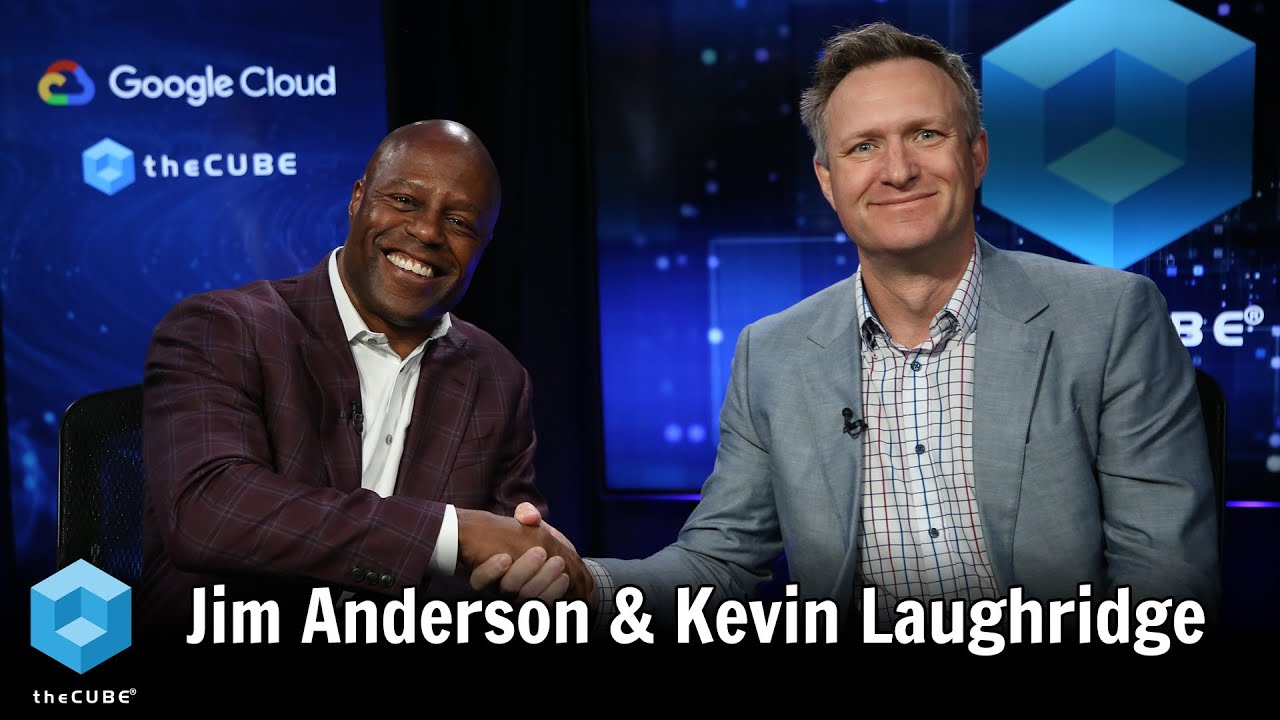
What happens when cloud innovation meets partner agility? In this episode of the Google Cloud Partner AI Series, theCUBE Research’s John Furrier sits down with Jim Anderson, VP of North America partner ecosystem and channels at Google Cloud, for a candid and forward-looking conversation. Together, they unpack how AI is reshaping Google’s partner playbook — and what that means for the future of enterprise transformation.
Anderson shares how partners are shifting from transactional relationships to long-term, journey-based engagements — mirroring the evolution of AI itself. By integrating Google Cloud’s core AI capabilities with their domain expertise, partners can accelerate time-to-value and deliver smarter, more contextual solutions that meet the growing demands of enterprise customers.
Key Highlights:
• How Google Cloud’s full AI stack is driving innovation across industries
• The rise of AI agents and why they're set to surpass SaaS in enterprise value
• The evolving role of partners in delivering scalable, high-impact solutions
• Democratization of computer science and how it’s enabling the next wave of creators
• Jim’s take on the future of the ecosystem, customer co-selling and partner growth strategies
With rapid innovation as a constant, Anderson emphasizes the need for partners to be adaptable and future-focused. He highlights how Google Cloud’s infrastructure provides a solid foundation for experimentation, growth and AI-driven transformation. The message is clear: partners who lean into AI integration will lead in delivering differentiated value and stronger business outcomes.
Head of Partner Co-Sell, US Enterprise & Strategic IndustriesGoogle
Valentin Cojocaru
Global Head of AIDatatonic
In this segment of the Google Cloud Partner AI Series from the NYSE, Mike Shea, head of partner co-sell at Google, and Valentin Cojocaru of Datatonic join theCUBE’s John Furrier to discuss the shift from AI experimentation to enterprise-scale execution. The conversation highlights how Datatonic, a "Google-only" partner, is helping organizations in telco, retail and financial services move beyond the "POC graveyard" where only 5% of projects typically reach production. By focusing on agentic infrastructure and a "velocity-first" approach, the partnership aims ...Read more
exploreKeep Exploring
Can you describe the partnership between Datatonic and Google and what you are doing together?add
- Who are your target customers / which industries do you focus on?
- How does the Google side of the partnership work with your company, and how is that relationship going?add
How has Google Cloud worked with organizations to integrate Gemini into enterprise environments, addressing security, compliance, and domain-specific integrations?add
How can enterprises adopt generative AI securely and at scale — does Google Cloud’s Vertex AI address responsible AI and security needs, and how will increasing model velocity and unmanaged “dark” data affect deployment and governance?add
>> Welcome back. I'm John Furrier at theCUBE here at theCUBE's NYSE Studio. Of course, we have our Palo Alto Studio connecting Silicon Valley and Wall Street. This is the Google Cloud Partner Showcase. We're featuring the leaders in the ecosystem. We're doing really cool work, changing the business models, bringing in the AI, having real results. Execution is the key for 2026. We've got two great guests. We've got Valentin Cojo ... Cojocaru.
Valentin Cojocaru
>> Close enough.
John Furrier
>> Datatonic. That's a tough one. Mike Shea, that's an easy one.
Mike Shea
>> There you go. Easy one.
John Furrier
>> Head of Partner Co-Sell, Google. Guys, thanks for coming on.
Mike Shea
>> Thanks for having us.
John Furrier
>> You guys are part of the showcase here on theCUBE. You've got 400 partners here in New York. Talk about the partnership and what you guys are doing together.
Valentin Cojocaru
>> Yeah. First of all, the partnership's really strong, I guess even by nature. So for those of you who don't know, Datatonic is a leading data and AI consulting company. We're at the bleeding edge. We've got a few principles, innovation first, state-of-the-art first, big transformation programs. We're a Google only partner. And I like to tell this story because the partnership is kind of by nature to some extent, our chairman, Louis, and the founder of the company started the company in early 2010s together with Google when they sort of started penetrating the market. We were the first-
John Furrier
>> He's in the Clouderati class. He's one of the OGs.
Valentin Cojocaru
>> Literally that. One of the OGs.
John Furrier
>> Yeah. So talk about who you guys target for customers. Put that out there. Who are your customers?
Valentin Cojocaru
>> Yeah. So the industries are telco, big industry, FSI, so insurance, finance, retail.
John Furrier
>> So you're horizontal
Valentin Cojocaru
>> Agency. We're horizontal, but we focus mainly on these four or five industries. Yeah.
John Furrier
>> Mike, talk about the Google side of this. How does that work with these guys? How's that going?
Mike Shea
>> Yeah. These guys make my job incredibly easy. I don't pick favorites, but Datatonic is a fantastic partner for me to work with. The reason that they do so well with our sales teams is basically they can bring expertise around all things AI, all things data, while maintaining a very nimble culture. So we're moving very quickly and Datatonic is able to move quickly, which is what our sales team and customers do.
John Furrier
>> We were talking about before we came on camera, and we're seeing in the industry the year of execution. I won't say pretenders go down that road. Oh, there's an AI wrapper. There's real good code development. The agentic infrastructure, AI native infrastructure is actually booming right now. MCP, a lot of tech there. Cloud Native has been around for a while. You guys have that hardened over to Google, but the actions, where's the value for the customer? So I want to ask you guys how you see your customers and the velocity of change. Where's the value being created? What are some of the use cases that you've seen work, and what are some use cases you've seen that doesn't work, and how does that relate to how Google navigates the technology for you guys?
Valentin Cojocaru
>> Yeah. I see a lot of the use cases could work. It is true that in the industry overall, there's been some sort of bottlenecks in terms of generating that sort of value that companies are expecting. All use cases, the majority of the use cases will work if you follow some principles of AI strategy, if you have an AI strategy in place, if you do use cases, discovery really well, if you have a measurable framework for value. What's really big and important right now in 2026, I think it's a contraction back to first principles. I'm seeing with customers where we tried some POCs, they may or may or may not have produced the value, but right now there's a big mandate from the top. We need to go big and agentic. We need to deliver the value and we need to do as quickly as possible. And honestly, my prediction is whomever will get the velocity game right will be exponentially more better off in 2026 and 2027 than those who are following, let's say random acts of digital innovation, the new shiny technology, whatever.
John Furrier
>> I want to get to the six principles, but first on Google side, you guys were set up for this. We've been, again, following Google Cloud since the beginning. Over the past three years in particular, you guys have built the stack and your engagements with the partners for this moment, and we're in a moment of consequence right now. We're accelerating the value in every vertical, so no one's really getting disrupted other than themselves. So they're accelerating. That seems to be the transformation. This seems to be a good fit.
Mike Shea
>> A hundred percent. I mean, we've had the technology obviously for a long time using internally at Google, but we're certainly becoming more advanced in the way that we go to market and bring those things together. Our amazing ecosystem of partners helps us do that. And also, our excitement and rigor that we're bringing to our customers, I think around just what's changing in the industry and how we can be involved.
John Furrier
>> So Valentin, the security piece and compliance for the enterprise is a hurdle, but just other integrations become important, how has Google Cloud worked with you guys on integration? Because I mean, Gemini is Gemini. That's Google, but you got to integrate it into the domain expertise of these use cases.
Valentin Cojocaru
>> Yeah. Absolutely. So I think what we recommend to customers is whenever you're going through this large transformational objective or program of work, you need to start with the basics. You need to have a platform, and that platform essentially will provide you with the integrations at a very low level, the connectors that you need, the security on top and everything related to it. And then you can start putting the use cases in there. You can automate and templatize a lot of the things inside of the platform, which will give you that velocity. But it's mostly through a platform building. And Google has Gemini Enterprise, which is a fantastic platform that provides that front end experience. Yeah.
John Furrier
>> I had a former CUBE host on today talking to me about the old days of the... I'm talking about OG Cloud. When Kubernetes came out out of Google, which was part of the Google Cloud team, you saw that the OGs see the value of the cloud scale. It really orchestrated a lot of things filled in. Google was instrumental in making the KubeCon and Kubernetes community work. So I have to ask you in your side, so your founder would have an opinion, love to ask them too, what's changed the most in cloud? Going back, you've been with Google for a long time. Right now, how would you describe where Google is today from even the beginning, but even four years ago?
Valentin Cojocaru
>> Yeah. I think, well, if you look at the beginning, Google Cloud was what? App Engine. Then it was what? Google Cloud Storage and then BigQuery. So it is feature-rich. So if you want to drive organizational transformation from end-to-end, be it data, infrastructure, APIs, AI platform, you can find it all in Google right now. And I think that's the biggest change. There are tools for everything, and I think the sort of industry in general is moving towards this platforming where there's a lot of tools available even to business stakeholders, no longer to engineers. You no longer need to do everything custom. I think that's also a big part in driving velocity, especially in agentic. You don't need a fleet of engineers building stuff because you have everything in Google right now.
John Furrier
>> So first principles and the ones you mentioned, the six here out of here. Use case discovery roadmap, enablement and adoption, security and governance, value focus, AI velocity, and agent-ready data. Okay, that's a lot.
Valentin Cojocaru
>> That's a lot.
Mike Shea
>> That's a lot.
John Furrier
>> Okay. Where do you start? Which one's one?
Valentin Cojocaru
>> Number one, number one, use case discovery. So number one and number two, ultimately, what's the name of the game is to deliver value for an organization and to deliver value really quickly. In order to do that, you need to holistically, again, stop chasing random technologies. Look at your business context and portfolio. Select the opportunities or the bottlenecks that you're trying to automate or augment. Come up with those solutions holistically and then prioritize them, assign value to them and move quickly.
Mike Shea
>> To add onto that, we are moving from a POC proof of concept culture to actually figuring these things out for production. I think MIT released a study that was 5% of POCs actually go to deployment and then see ROI. We need to get that number a lot higher, and I think that comes from not having AI strategy as a checkbox of, hey, we're excited to launch something. It's about really thinking about what are the long-term use case is and how do we get there.
John Furrier
>> So it's not a vanity project in the sense of, hey, the vanity is in the results.
Mike Shea
>> Exactly. Exactly. Right.
John Furrier
>> I mean, at the end of the day, this is what software's supposed to do. I mean, to provide productivity and value. So the people that have leaned in this year, what's the pattern that you've seen for the ones that were winning it or getting it right and winning?
Valentin Cojocaru
>> So first of all, this understanding of you need to go at scale and at speed. So if you do this very simple exercise, you discover a hundred, say use cases in your roadmap. You assign a value over the course of a year. You extrapolate that for five years. You really quickly realize how much value you're leaving on the table.
John Furrier
>> You do a discounted cash flow on.
Valentin Cojocaru
>> You do a discounted cash flow. Absolutely.
John Furrier
>> My MBA route there. See, I pulled a good one.
Valentin Cojocaru
>> Exactly.
John Furrier
>> Net present value.
Valentin Cojocaru
>> You realize how much money you're actually leaving on the table in five years, if you're only, let's say deploying 10 agents as opposed to 20 agents in one year. And we're not talking about seven figures. We're talking about eight or nine figures. So I think my prediction is again, the companies who are using levers for velocity-
John Furrier
>> So you're saying, look at this right, layout the use cases, stack them by importance with consequences that you can quantify.
Valentin Cojocaru
>> Yeah.
John Furrier
>> If we don't do this, here's the consequence, quantify.
Valentin Cojocaru
>> Yeah. That's not enough. Obviously you need a framework to increase the speed at which you're delivering these use cases, and that's the third more important one, the velocity and scale, right? We've got levers that we use with organizations, platform levers that standardize and technicalize.
John Furrier
>> Like what/.
Valentin Cojocaru
>> So for example, all agents need to be deployed somewhere on a platform, right? It's usually writing code from scratch and copy-pasting all the single time that could be handled at a platform level. All agents need to be monitored. The best way to do it is a platform level. You write the code once you read the benefits for all of the use cases. We're also very big believers as opposed to traditional machine learning, which is not very easily modularized that agents can be easily modularized. Is this sort of like system engineering?
John Furrier
>> Machine learning is very rigid based on use case fraud detection.
Valentin Cojocaru
>> A lot of it is data, 80% data. Then you write, I'm generalizing 30 lines of code to train an XGBoost model. Agents aren't unlike that. They are applications, right? So you can modularize a lot of that.
John Furrier
>> Yeah. Cue the Learning.
Valentin Cojocaru
>> Correct. Correct. So once you have the platform bit that automates deployment and the security, you come in with the templates and the accelerators to automate actually building the agents themselves, and then you read the benefits.
John Furrier
>> On the agents, one of the things that's come up is, okay, cross agents talking to each other, trust is one. So I want to get into that, but I also want to ask, where's Google fitting into this? What are they enabling you to do that? Because, I mean, that's like the playbook. So what's Google's impact? What are they doing?
Valentin Cojocaru
>> Yeah, they've got a fantastic platform in Vertex AI. Again, very feature rich. You talked about security for example. Security is a big... Security is still one of the main drivers why companies aren't adopting Gen AI as fast as they should. The best way to do it is to find all of the risk factors, which there are a lot in Gen AI, try to mitigate against them. There's no one size fits all, but Google Cloud has a suite, for example, of services within their platform like Cloud Armor, which is a responsible AI scanner, scans every input and output from an LLM, so you know that everything is safe. People aren't trying to jailbreak your application, not disparaging PI obfuscation through data loss protection, natural language API. There's a lot of tools so that you don't necessarily need-
John Furrier
>> They have the pieces.
Valentin Cojocaru
>> They've got all of the pieces. You don't necessarily need to go anymore 2023 where you're trying to put together a responsible AI platform on Google Cloud. You had to use open source tools from hugging face scanners. Right now you don't have to do that.
John Furrier
>> Google's hardened it.
Valentin Cojocaru
>> Hardened everything.
John Furrier
>> And scales it. That's what you're talking about, scale and velocity.
Valentin Cojocaru
>> Scale. Yeah.
John Furrier
>> All right. Let's talk about velocity. How do you see that playing out? Because it's only getting faster. The models are coming out faster. The integrations between small models, custom models, proprietary, what do you want to call it? A lot of data's not unlocked. I mean a lot of public data's out there, Gemini. But if I'm an enterprise customer, that data might not be in any models. It's dark data. How do you see that working in the AI equation?
Valentin Cojocaru
>> So there's two things. One is if you talk about velocity purely, and I'm talking particularly now about let's say regulated industries, you have to look at it from two angles. One is the process side and the other one is the engineering side. From the process side, you've got governance, right? How do you speed up governance? You've got way too many stakeholders involved in the government's process, technical design authority, privacy boards, security boards, what have you. A lot of documents and collateral that need to be produced to say whether or not you're compliant with specific regulation. In our large FSI customers, this sort of governance process for one use case takes anywhere between six months to one year. That is a long time to deploy and reap the benefits of that specific value. If you can automate that as much as you can, even with agents now, we have some proprietary agents that do that, in terms of data, I think it's a bit of a wild west. And I actually want to know you guys' opinions because you probably had this conversation a million times. Before 2023, everyone was focused on data quality, how important data strategy and a good solid data foundation is to even creating an AI strategy, garbage in, garbage out, platitudes. Then all of a sudden large language models arrived and everyone acted as if though data quality doesn't exist anymore. Look, I'm talking gibberish to Gemini and understands what I'm seeing. It's a miracle. Meanwhile, data engineers pulling their hair out in unison, but what we didn't know at the time was that Gen AI doesn't have necessarily a problem with accuracy, but it's with consistency and I think that's what really hurts, especially in regulated industries. If you ask an agent the same question 10 times, you'll get the same answer nine times and the 10th time will be different. And a lot of that is through data. Unfortunately, agents have different data requirements than traditional machine learning. You cannot find-
John Furrier
>> The non-deterministic nature of Gen AI.
Valentin Cojocaru
>> Exactly.
John Furrier
>> And there's also memory problems both on the contextual memory and just, well, Google solves the memory problem with that. Infrastructure, that's not an issue, but the agents need some work, which is why I think the production conversation is going to be big. So, well, you guys got a lot going on. What's the biggest, coolest thing you're working on this year with data and agents in Google Cloud?
Valentin Cojocaru
>> Yeah. We're doing a whole suite of things. I think this year is specifically going back to the scale. The majority of the enterprise that we're talking with have a backlog of 200 use cases and they want to deliver at least half of that within one to two years. So it's all about how do you build these large platforms that could host all of these agents and how do you move them through
John Furrier
>> You're thinking builds of foundational services with Google Cloud and then have agility be like a low-code, no-code programming level.
Valentin Cojocaru
>> Some of it, yes, but we have proprietary IP and levers and frameworks and templates so that they could deliver-
John Furrier
>> That's your business advantage.
Valentin Cojocaru
>> Correct. Correct.
John Furrier
>> That's great. That's smart.
Valentin Cojocaru
>> So it's all scale. This year will be all about scale, and I generally predict again that in two years time, whomever wins this velocity race will be exponentially better off in terms of value.
John Furrier
>> So you guys are building, you have IP 21 be high velocity and work the backlog of these use cases and then be nested into the customer.
Valentin Cojocaru
>> Correct. Correct.
John Furrier
>> By continuing to prime now.
Valentin Cojocaru
>> We can have the time it takes to deploy all of the use cases.
Mike Shea
>> You're getting why I love them so much. They get it.
John Furrier
>> Mike, you got a great partner here.
Mike Shea
>> I know. They're the best.
John Furrier
>> Well, he's in the mix in the arena as they say, but also pragmatic. This is the execution. Guys, thanks for coming on theCUBE real quick.
Mike Shea
>> Thank you, John.
John Furrier
>> Congratulations on being selected as a partner here on theCUBE Showcase. Appreciate it. Enjoy the event. I'm John Furrier. This is the Google Cloud Partner Showcase where the leaders share best practices and what's happening, sharing the signal, not the noise. Of course, that's going to help everyone get better. We're doing our part here on theCUBE. Thanks for watching.
















 John Furrier