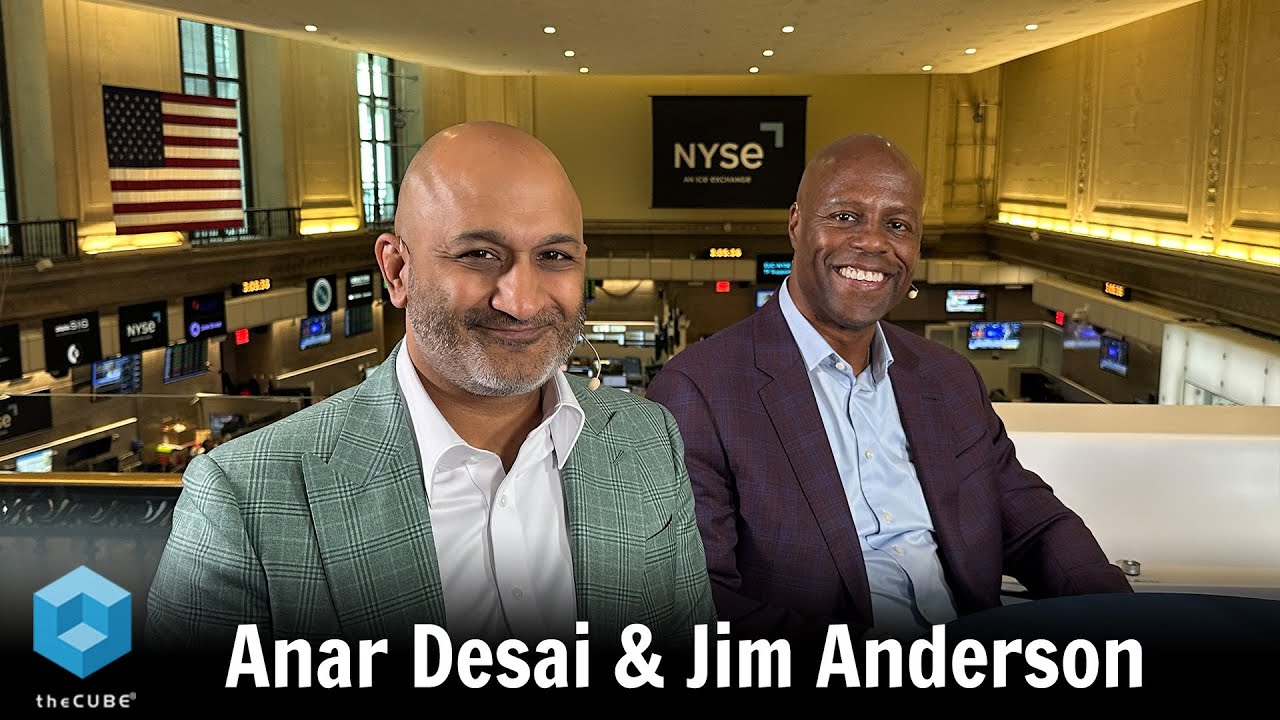
In this episode from the Google Cloud Partner AI Series, theCUBE’s John Furrier welcomes Anar Desai, VP of North America Channel Sales at Palo Alto Networks, and Jim Anderson, VP of Partner Ecosystem and Channels at Google Cloud, for a deep dive into their evolving partnership and shared mission to secure the AI-powered enterprise.
The discussion explores how Palo Alto Networks and Google Cloud are operationalizing secure AI by aligning go-to-market efforts, co-innovating ‘platformized’ solutions and supporting joint customers across high-demand sectors including financial services, healthcare and retail. With over $1.5 billion in Marketplace bookings, Palo Alto has become one of Google Cloud’s top ISV partners, showcasing how integrated solutions are driving measurable business outcomes.
Desai and Anderson unpack how the two companies are addressing the growing cybersecurity demands tied to agentic AI and runtime protection. From real-time threat detection to Precision AI in SOC operations, the conversation highlights how a unified platform approach is reshaping the enterprise security posture. Key initiatives include the recent Protect AI acquisition, Prisma Cloud advancements and SOC transformation tools that help defenders respond in under 47 seconds.
Whether you're navigating the AI adoption curve or rethinking your security architecture, this conversation delivers tactical insights on ‘platformization’, co-innovation and ecosystem strategy.
Forgot Password
Almost there!
We just sent you a verification email. Please verify your account to gain access to
Google Cloud Partner AI Series. If you don’t think you received an email check your
spam folder.
In order to sign in, enter the email address you used to registered for the event. Once completed, you will receive an email with a verification link. Open this link to automatically sign into the site.
Register For Google Cloud Partner AI Series
Please fill out the information below. You will recieve an email with a verification link confirming your registration. Click the link to automatically sign into the site.
You’re almost there!
We just sent you a verification email. Please click the verification button in the email. Once your email address is verified, you will have full access to all event content for Google Cloud Partner AI Series.
I want my badge and interests to be visible to all attendees.
Checking this box will display your presense on the attendees list, view your profile and allow other attendees to contact you via 1-1 chat. Read the Privacy Policy. At any time, you can choose to disable this preference.
Select your Interests!
add
Upload your photo
Uploading..
OR
Connect via Twitter
Connect via Linkedin
EDIT PASSWORD
Share
Forgot Password
Almost there!
We just sent you a verification email. Please verify your account to gain access to
Google Cloud Partner AI Series. If you don’t think you received an email check your
spam folder.
In order to sign in, enter the email address you used to registered for the event. Once completed, you will receive an email with a verification link. Open this link to automatically sign into the site.
Sign in to gain access to Google Cloud Partner AI Series
Please sign in with LinkedIn to continue to Google Cloud Partner AI Series. Signing in with LinkedIn ensures a professional environment.
Are you sure you want to remove access rights for this user?
Details
Manage Access
email address
Community Invitation
Alexis Johnson, Google Cloud, & Gaurav Goel, NTT DATA
In this episode from the Google Cloud Partner AI Series, theCUBE’s John Furrier welcomes Anar Desai, VP of North America Channel Sales at Palo Alto Networks, and Jim Anderson, VP of Partner Ecosystem and Channels at Google Cloud, for a deep dive into their evolving partnership and shared mission to secure the AI-powered enterprise.
The discussion explores how Palo Alto Networks and Google Cloud are operationalizing secure AI by aligning go-to-market efforts, co-innovating ‘platformized’ solutions and supporting joint customers across high-demand sectors including financial services, healthcare and retail. With over $1.5 billion in Marketplace bookings, Palo Alto has become one of Google Cloud’s top ISV partners, showcasing how integrated solutions are driving measurable business outcomes.
Desai and Anderson unpack how the two companies are addressing the growing cybersecurity demands tied to agentic AI and runtime protection. From real-time threat detection to Precision AI in SOC operations, the conversation highlights how a unified platform approach is reshaping the enterprise security posture. Key initiatives include the recent Protect AI acquisition, Prisma Cloud advancements and SOC transformation tools that help defenders respond in under 47 seconds.
Whether you're navigating the AI adoption curve or rethinking your security architecture, this conversation delivers tactical insights on ‘platformization’, co-innovation and ecosystem strategy.
play_circle_outlineIntroduction of guests Gaurav Goel and Alexis Johnson at theCUBE Studios.
replyShare Clip
play_circle_outlineMaximizing Client Value Through NTT DATA's Innovative Partnership with Google Cloud: A Co-Innovation Journey
replyShare Clip
play_circle_outlineOvercoming Foundational, Philosophical, and Operational Challenges in AI Adoption: Modern Solutions for Legacy Infrastructure and Mindset Shifts
replyShare Clip
play_circle_outlinePublic sector transformations require attention to security, sovereignty, and compliance needs.
replyShare Clip
play_circle_outlineSuccess stories like Carrefour demonstrate real-world impact of AI collaboration.
Alexis Johnson, Google Cloud, & Gaurav Goel, NTT DATA
Gaurav Goel
North America Google Cloud & Security LeaderNTT DATA
Alexis Johnson
Director of Customer Engineering, Strategic AI and ISV,Google Cloud
In this Google Cloud Partner AI Series conversation, theCUBE’s Rebecca Knight sits down with Alexis Johnson, Director of Customer Engineering, Strategic AI & ISV at Google Cloud, and Gaurav Goel, North America Google Cloud & Security Leader at NTT DATA, to unpack a newly signed co-innovation strategic partnership and what it means for enterprise AI at scale. The discussion explores why this alliance goes beyond a tech stack – combining Google Cloud’s full-stack capabilities (from TPUs to AI models) with NTT DATA’s end-to-end services (from data center and IP ...Read more
exploreKeep Exploring
What is the significance of the recent co-innovation strategic partnership agreement between NTT DATA and Google Cloud?add
What were the motivations and achievements behind the strategic partnership agreement between NTT and Google?add
What are the main challenges facing AI adoption in the financial and healthcare sectors?add
What unique requirements do public sector transformations present, and how does Google Cloud address them?add
What are some examples of partnerships that have delivered value for customers in terms of cost, speed, or new business value?add
Alexis Johnson, Google Cloud, & Gaurav Goel, NTT DATA
search
Rebecca Knight
>> Hello everyone and welcome to theCUBE Studios in Palo Alto and the Google Cloud Partner AI Series. I'm your host, Rebecca Knight. Today, I'm here with two terrific guests. I have Gaurav Goel, he is North America Google Cloud and Security Leader at NTT DATA. Welcome, Gaurav.
Gaurav Goel
>> Nice to be here.
Rebecca Knight
>> And Alexis Johnson, Director of Customer Engineering, Strategic AI and ISV at Google Cloud. Welcome, Alexis.
Alexis Johnson
>> Nice to be here.
Rebecca Knight
>> So, I'm going to start with you, Gaurav, because NTT and Google Cloud have been partners for years and you've just signed a co-innovation strategic partnership agreement. From your perspective, how does this elevate the NTT DATA relationship with Google and what kind of value can clients expect?
Gaurav Goel
>> Yeah, you are right. We are delivering together for such a long time. But it was more regional in nature. We did some amazing project in India, APEC, Chile, and we were named partner of the year in 2023, 2024, 2025. It was all good. And we did some truly, truly amazing projects with our customer, and customer loved it. And we thought, all the goodness we are delivering to our customer, how can we bring it to all our customers globally? Right? So, NTT is a global company, it's a full-stack company, and we work in 50 countries, right? We work with Fortune 100 customers. And the idea was, we want to bring this innovation with Google to all this customer, and that was the basis to sign this strategic partner agreement. And with Google and NTT combining, we are bringing that entire power to our customer.
Rebecca Knight
>> So, Alexis, I want to bring you in here. Because, you have described this alliance as more than a tech stack. I want you to unpack that for us and talk a little bit about how partnership helps you run your business.
Alexis Johnson
>> I think one of the things that's really interesting is, as we are working with our customers, we have a very specific point of view about the technology that we bring to bear for them. We work with partners and look to them to ensure that they're bringing an understanding of our customers' end business and their end customers. This is the way that we make sure that we have the fullest set of knowledge and expertise in order to drive our customers' business forward as well.
Rebecca Knight
>> Okay. So, it's really understanding your customers' customers and what they need.
Alexis Johnson
>> Yeah, and how that technology that we have is going to best address it. And so, a partner like NTT is someone who deeply understands Google Cloud, but also deeply understands the industries and customers that they work with as well. And so, they're kind of like the glue and the gel that makes everything fit together.
Gaurav Goel
>> And this excite me the most about the relationship. Because, I look at Google, they're the full stack company, from TPU infrastructure, AI models, everything. And if I look at NTT DATA, they're also full stack in terms of services. They do everything from your data center to IP network, Edge, your cloud and app. So, they coming together, we can really deliver scale and industry depth to our customers.
Rebecca Knight
>> So, I want to ask about that, because what industries would you say are leaning in the hardest right now? Financial services, healthcare, public sector, and what's different about their needs when it comes to scaling AI?
Gaurav Goel
>> I think financial sector and healthcare are the most leaning right now. But if I look at the entire industry and market, I think there are three big challenges everyone see for AI adoption. And I categorize these challenges as foundational challenges, philosophical challenges and operational challenges. When I talk about foundational challenges, it's about whether the enterprises have legacy infrastructure or they have modern infrastructure. Because AI could not apply at scale to a legacy infrastructure. And that's where we partnered with Google to develop AI transformation factory, right? Cloud transformation factory, where we can really modernize client's infrastructure and make it ready for AI enterprises. The second one is philosophical challenges, which is related to mindset gap. So, this is more about, enterprises are still thinking about AI as a automation or RPA 2.0. So, that relates to very little incremental change. They're not unlocking the full potential of AI. And that's where our industry cloud platform with Google comes into the play, where we can really, really transform their business processes and make them ready for unlocking customer value. And the last one is all about operational challenges. You deploy an AI agent in the production, then what next? Right? How do you measure it? How do you look at the scale of it? How do you measure the SLA around it? And that's where we have our smart AI agent ecosystem, where we can measure each agent, SLA, KPI and ROI. And that is all based on Google Vertex, Agentspace and everything.
Rebecca Knight
>> So, Alexis, Gaurav has really just laid out some major stumbling blocks for a lot of companies, the foundational, that philosophical and the operational. We know that there's so much hype and so much investment in AI, but very few companies are able to scale it successfully. Where are you seeing the most successful clients, be able to move past those legacy challenges?
Alexis Johnson
>> I think what's really interesting right now is, as we talk about AI, the promise is that AI can do everything. Right? And so, that makes it very hard actually to know where to start. A lot of the customers that I work with are actually starting to think about AI internally first for internal use cases, as a way to play around, get familiarity with it, get comfortable and ensure that their teams know how to use it, before they start to expose it to their end customers. The challenge with that is that, often those internal use cases are the places where it's the hardest to measure the business value. And so, those are the places where, when we can come and say, okay, here are the metrics we want to help you measure, to ensure that you understand what does good look like for adopting AI, now you get to see a little bit closer to value. But the real excitement I think is when we start to work with our customers and our partners, in order to ensure that we are building AI that will hit the end user, the end customer. That's the closest to revenue, that's the easiest value to measure, and that's where the most obvious business metrics are tied. And so, to me, it's about the push from internal to external use cases for AI, in order to get the biggest and fastest return on value.
Rebecca Knight
>> But it's also the scariest one. I mean, moving outside of your sandbox, it feels risky and it is risky.
Alexis Johnson
>> I would say, it feels risky. It can be... You have to know the right gates. And so, this is a place where, again, in working in concert with our customers, our partners and ourselves, how are we thinking about? What are the right testing frameworks and benchmarks that allow you to know that you're entering into that production scale in a safe manner? So, you should have a testing plan, you should work through that, but that shouldn't prevent you from doing it at all.
Rebecca Knight
>> Okay. So, Gaurav, moving into that deployment that Alexis is talking about, NTT DATA talks about being a agentic led with frameworks like Takumi. Can you share how those frameworks help customers and clients move past the experimentation phase and the internal phase, toward that end user?
Gaurav Goel
>> So, Takumi framework is the NTT proprietary framework. So, it helped companies to move from experimental AI, to scale like production AI, exactly what you were talking about. That certain customers still stuck with, what should I do with AI? How to move from internal to external use case like you talked about? And Takumi exactly do that. It brings set of frameworks, processes, that helps customer to realize the AI value proposition, to their businesses, to their customers, where the revenue is, where the growth is.
Rebecca Knight
>> So, Alexis, I want to hear about this partnership and really the behind the scenes look. Because, what does this co-innovation really look like? How do these different engineering teams from different companies with different corporate cultures, come together? And how does it look different from the traditional client vendor model?
Alexis Johnson
>> So, at the end of the... Well, for all the way through, it's about recognizing that we share the same goals and that is the success of our end customer. So, as we are operating together and we are going through the exploration phase, the discovery moment where we are working and talking in concert with our end customer about what they need to see, what their metrics look like, I tell people all the time, the same problem at two different customers is two different problems. And so, making sure that when we are working with a partner like NTT DATA, that we are together working through all of the stages of understanding that problem at that customer's and what does success look like. We go through the workshops together, the brainstorming, we are one team operating in concert with that end success in mind.
Rebecca Knight
>> And how does it look from your perspective, Gaurav?
Gaurav Goel
>> It's the same thing what Alexis said. It's all the, looking at the customer first and thinking about how technology and industry depth could come together to solve the problem. And that's where we use Takumi framework, we use our agentic AI ecosystem, all that come together to solve a customer problem.
Rebecca Knight
>> Alexis, public sector transformation often comes with unique requirements as well as sovereignty requirements and security requirements. So, how are you tailoring Google Cloud solutions to meet those different requirements?
Alexis Johnson
>> From the start, in any conversation with an end customer, one of the things that we look to understand is, what are the security posture and requirements of the customer and the workload? Right? So, how do we understand how they think about security, for their own existing architecture and for what we are trying to work towards and build with them? And then also, as they are building this out, what are the requirements that are being imposed upon them by their end customer? So, if you're thinking about that as a function of sovereignty, data locality, right? There's a number of different aspects. These are things that we need to know as early in the stage as possible, so that we can ensure that we are building the right solution. Whether that is, where we are thinking about where the infrastructure is placed? What different region globally in order to meet those needs? Or the specifics, if we're leaning into, for example, something like a Google distributed cloud and actually dealing with more restrictive requirements. So, as far as the end result, it starts early in the conversation.
Rebecca Knight
>> And making sure that there is the right expertise, the local expertise.
Alexis Johnson
>> Yes.
Rebecca Knight
>> So, Gaurav, I want to talk outcomes and real world examples, where this partnership has delivered value for customers, whether in costs or speed or creating new business value.
Gaurav Goel
>> Yeah. And we are seeing this transformation all over the place with our customer. For example, I'll give you a Carrefour example. It's a global retailer with 12,000 stores and they had a legacy data center. We were able to make them exit their data center, move hundreds of workloads to Google Cloud with our cloud acceleration factory. And now, we are able to insert agentic AI in their ITSM models and they're able to solve problems like observability, how to resolve client tickets faster, all that is happening. The other example is, a Canadian retailer. For this particular retailer, they have legacy app written in Informix, which is very difficult to innovate on. For them, we have literally used agentic AI framework to recode the entire app cloud native in less than five months. Now, they're able to launch feature to the customer in weeks, rather than months.
Rebecca Knight
>> Wow. That's astonishing. Alexis?
Alexis Johnson
>> I was just going to say, the Carrefour example is such a success and has been such a longstanding success, that we actually use it internally in Google in part of our onboarding training, so.
Gaurav Goel
>> It was a joint customer.
Alexis Johnson
>> Yeah. We worked together on that customer. But, that use case .
Rebecca Knight
>> Okay. You were learning from your clients.
Gaurav Goel
>> Yes, .
Alexis Johnson
>> When I joined Google, Carrefour, this example was one of our onboarding case studies.
Rebecca Knight
>> Excellent. Oh, okay. I see now. So, Alexis, we've heard about the Virtual Travel Concierge in hospitality as well as REGLA in financial services. What excites you most about these use cases?
Alexis Johnson
>> So, I mentioned earlier that the promise of AI is, it can do everything. That makes it hard. Right? These are use cases where it has been very clearly defined of what is the problem and how do we apply this? We can do everything AI to a specific problem that has a clear need and a clear outcome. But at the same time, something like a travel concierge has aspects of that solution, that can be translated to other places. Whether you're talking about customer experience, how do you operationalize or streamline support services, the aspects of that key solution will be applied across other use cases as well. And so, I look at those as examples and the frameworks for additional solutions that will take this big wide promise of AI and make it very specifically applicable. Which to our earlier conversation about risk, if you have something that's much more specific to a problem, it becomes less risky as well, because you've already applied the domain knowledge and the technology stack in another place.
Rebecca Knight
>> So, I'm thinking about the learnings from that and a best practice that could emerge for an organization that's watching right now. Is it to be ambitious and think big and think about impact, but also to be very narrow in what you're expecting the AI to do? Because as you say, it can do everything, which is almost... It's almost too good.
Gaurav Goel
>> Yeah, you need to be a little cautious. Yeah, it could do everything, but you need to build the right governance around it to achieve the result. Otherwise, you will go too wide and you will not be able to achieve the result you want to achieve. Like the travel concierge example, Alexis talk about. When we implemented it, it was implemented as a POC. But when we scaled it, it was able to handle 3 million transactions or conversation every month. So, that's a huge, huge, huge impact.
Rebecca Knight
>> And has obvious applications to other kinds of customer experience.
Gaurav Goel
>> Right. Because if you solve this customer... This is all related to customer interaction. And if you're able to solve it for one industry, then you can apply to all other industries.
Alexis Johnson
>> I would also say that being, ambitious and being specific are not necessarily different things.
Rebecca Knight
>> Yeah.
Alexis Johnson
>> I think the key thing is, as you are thinking about how to apply AI across your organization, it's to be very strategic and how you prioritize. Where are the places that you will see the most value add from the application of AI? That's really the best place to start, because it's the place where most people are going to be excited, interested, and where the results will be clearest.
Rebecca Knight
>> Right. And it's however you define value if it's our .
Alexis Johnson
>> 100%.
Rebecca Knight
>> Yeah, okay. So, Alexis, cloud partnerships are everywhere these days. And from your perspective, what should clients look for? What separates in your mind, the real deal from the marketing noise, when you are choosing your transformation partner?
Alexis Johnson
>> I think the biggest thing is, making sure that you feel heard. And so, as I mentioned, to me, when we're working with partners, it is that we are along every part of the conversation together and that we can make sure that the customer knows that we hear them and understand them. And that comes from, like I mentioned earlier, that combination of the technology hearing, what are the technology requirements, the compliance, the security concerns? What are the industry concerns? And that is going to come from that combined cloud and partner team. And so, are you feeling that that combined team hears the full spectrum of your needs and your goals?
Rebecca Knight
>> So, we always talk about how technology is almost the easy part when it comes to this. It's bringing the humans along, that is a really important piece of this puzzle, because it requires... Embracing agentic AI really requires cultural change. How, Gaurav are you helping clients achieve this kind of cultural change and bring people along on this journey?
Gaurav Goel
>> And this is one of the most important aspect of embracing AI. Because, people think about what happens with AI, like what happens to the job? What happens to the impact of it? But when we talk to our customer, we talk about, hey, this is AI, this is how it could impact your business, but it could also help you to re-skill your employees to a different part of the function. We are one of the biggest managed services partner in the world, and we implemented it in ourself. So, all our 65% of our L-Zero tickets are actually now handled by AI. So, what we did with the people who are working on those ticket, repurpose them on L-two and L-three different part of the business. So, there's always a case that how you could embrace it, how you implement it and how you get efficiency and productivity out of it.
Rebecca Knight
>> Right. And also allaying the fears and anxieties of those workers too. And part of the way to do that is to, it sounds like re-skill, upskill.
Gaurav Goel
>> Right, there's always an opportunity, because there's so many different points in the business that could be impacted. So, you have to just figure out where you have to implement it and where you have to take the efficiency out of it and implement it somewhere else in the business.
Rebecca Knight
>> Alexis, a similar question to you, because many companies can pilot AI and have employees experiment with it and do the fun stuff, but adopting it is the hard part. So, how are you, together with partners like NTT DATA, helping clients move beyond those proofs of concept, to really deploying it?
Alexis Johnson
>> I think there's a couple of different aspects. The first and foremost is, to go from sandbox to production. You also have to get the employees comfortable. And as Gaurav mentioned, it's making sure that they understand the path, but it also is making sure that they understand the full adoption in the organization. So, to me, one of the most important aspects for any customer who's looking to adopt AI, is that every single person in the organization is thinking about it. I think this is best achieved when leadership is trying something new with AI every day. And, I know personally, just from my own experience, I sit down with my team and tell them, this is how I've used NotebookLM today, this is what I've done with Gemini. What are you all using? And collectively, we've done a lot of things that change how we operate in the sales organization. I think that's true with our customers as well. So, making sure that we together are helping our customers think about how AI is going to impact the full organization, and making sure... Then again, as we keep talking about metrics, and I feel a little bit repetitive there, but it really is the most important thing. Because if it is just a matter of, oh, this is really interesting, it's a science experiment. If you don't understand what good is and what better is, then you don't have a goal to work towards, and that's really what you need in order to move to production.
Rebecca Knight
>> Okay. So, Gaurav, a year from now, what do you want your clients to be saying about this alliance?
Gaurav Goel
>> I think I want them to look at this alliance as a disruptor in the market. Like, with technology, what kind of business impact you can make, what kind of industry depth you could reach. And I really want them to see us impacting their business, because I really believe, in next few years, how agentic AI will work, it will fundamentally change how business interact, operate and act in the industry. So, that's where I want Google and NTT DATA to come together and put the effort there.
Rebecca Knight
>> Okay. Alexis, final word. What do you want your customers to be saying about you?
Alexis Johnson
>> I want our customers not to know where we end and our partner begins. The best engagements are the one where it's not clear who's who in the zoo and everybody is working towards the common goal. And so, if the customer doesn't know that Gaurav is from NTT DATA and I'm from Google, we just represent the team that made something happen, that's success.
Rebecca Knight
>> Excellent. Great. Great note to end on, mic drop. Alexis, Gaurav, thank you both so much for coming on the show.
Gaurav Goel
>> Thanks so much.
Alexis Johnson
>> Thank you.
Rebecca Knight
>> And thank you for tuning into this edition of the Google Cloud partner AI series. We hope you'll stay tuned for more.















 Rebecca Knight