Exploring Strategic Cybersecurity Partnerships Between Palo Alto Networks and Google Cloud
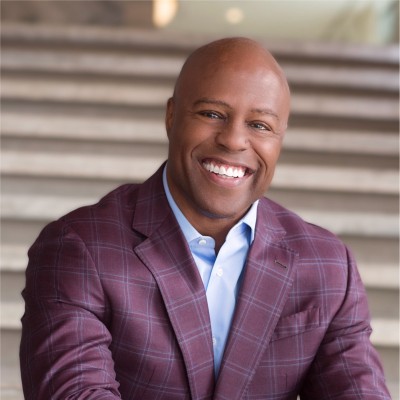
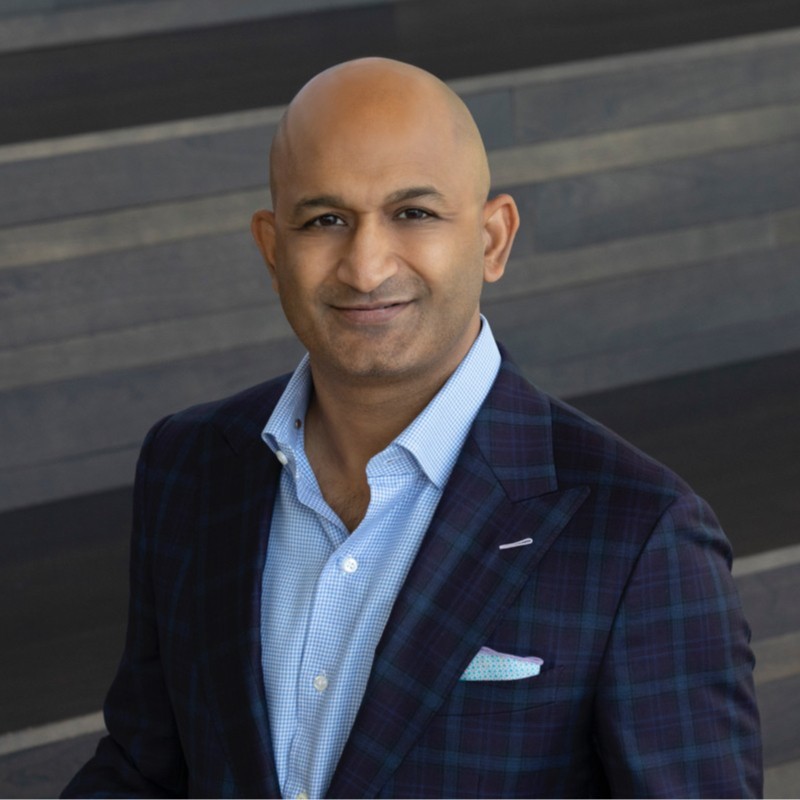
Anar Desai, vice president of North America channel sales at Palo Alto Networks, and Jim Anderson, vice president of NA partner ecosystem and channels at Google Cloud, discuss their collaboration on AI-driven cybersecurity platform initiatives. This conversation, part of the Google Cloud Partner AI Series, highlights the strategic partnership between two industry leaders in the rapidly evolving technology landscape.
In this insightful discussion hosted by theCUBE Research, Desai and Anderson share their expertise on the intersection between AI and cybersecurity. Desai outlines how the Google Cloud Marketplace bolsters Palo Alto Networks' success as a leading independent software vendor, while Anderson delves into the synergistic value of their partnership. They emphasize how integrated AI platforms enhance cybersecurity solutions and improve customer security postures by supporting seamless technology adoption.
The discussion also delves into actionable insights, with both Desai and Anderson emphasizing unified solutions to tackle complex security issues. According to Desai, Palo Alto Networks' recent acquisition of DeepSeek-R1 enhances their offerings by addressing the security challenges that AI presents. Anderson further elaborates on the importance of co-innovation, which empowers both companies to deliver cutting-edge solutions that streamline data management and security, ultimately supporting scalable efficient cloud ecosystems.
Forgot Password
Almost there!
We just sent you a verification email. Please verify your account to gain access to
Google Cloud Partner AI Series. If you don’t think you received an email check your
spam folder.
In order to sign in, enter the email address you used to registered for the event. Once completed, you will receive an email with a verification link. Open this link to automatically sign into the site.
Register For Google Cloud Partner AI Series
Please fill out the information below. You will recieve an email with a verification link confirming your registration. Click the link to automatically sign into the site.
You’re almost there!
We just sent you a verification email. Please click the verification button in the email. Once your email address is verified, you will have full access to all event content for Google Cloud Partner AI Series.
I want my badge and interests to be visible to all attendees.
Checking this box will display your presense on the attendees list, view your profile and allow other attendees to contact you via 1-1 chat. Read the Privacy Policy. At any time, you can choose to disable this preference.
Select your Interests!
add
Upload your photo
Uploading..
OR
Connect via Twitter
Connect via Linkedin
EDIT PASSWORD
Share
Forgot Password
Almost there!
We just sent you a verification email. Please verify your account to gain access to
Google Cloud Partner AI Series. If you don’t think you received an email check your
spam folder.
In order to sign in, enter the email address you used to registered for the event. Once completed, you will receive an email with a verification link. Open this link to automatically sign into the site.
Sign in to gain access to Google Cloud Partner AI Series
Please sign in with LinkedIn to continue to Google Cloud Partner AI Series. Signing in with LinkedIn ensures a professional environment.
play_circle_outlineExploring Google's Financial Growth through Palo Alto Networks Partnerships and the AI-Cybersecurity Intersection as a Key Growth Area
replyShare Clip
play_circle_outlineEmpowering Innovation: Google Partnership Enhances Solutions Through Co-Creation and Collaborative Security Efforts for Customers
replyShare Clip
play_circle_outlineEmphasis on unified solutions and removing complexity in security offerings.
Anar Desai, Palo Alto Networks & Jim Anderson, Google Cloud
Jim Anderson
Vice President, NA Partner Ecosystem & ChannelsGoogle Cloud
Anar Desai
Vice President, North America Channel SalesPalo Alto Networks
In this episode from the Google Cloud Partner AI Series, theCUBE’s John Furrier welcomes Anar Desai, VP of North America Channel Sales at Palo Alto Networks, and Jim Anderson, VP of Partner Ecosystem and Channels at Google Cloud, for a deep dive into their evolving partnership and shared mission to secure the AI-powered enterprise.
The discussion explores how Palo Alto Networks and Google Cloud are operationalizing secure AI by aligning go-to-market efforts, co-innovating ‘platformized’ solutions and supporting joint customers across high-demand sector...Read more
exploreKeep Exploring
What is the nature and status of the partnership mentioned, including its financial achievements and future potential?add
What type of collaboration exists between technology partners regarding security solutions for customers?add
What are customers looking for in terms of security solutions, and how are companies addressing security concerns related to the adoption of AI technology?add
Anar Desai, Palo Alto Networks & Jim Anderson, Google Cloud
search
>> Welcome back, everybody, to theCUBE here at our NYSE studio. Of course, we have our Palo Alto Studio connecting Wall Street and Silicon Valley. And this is part of the Google Cloud AI Partner Leaders. Jim Anderson, vice president partner ecosystem and channels at Google Cloud leads the partnerships in the ecosystem. Anar Desai, vice president North America channel sales for Palo Alto Networks. Of course, both CUBE alumni. Thanks for coming on. We covered both of you guys in great detail. Thanks for coming on. Good to see you again.
Jim Anderson
>> Good to see you.
Anar Desai
>> Thanks for having us, John.>> So, talk about the relationship with Palo Alto and Google. At Google Next it was disclosed billions of dollars in business, maybe singular, but obviously, Cloud Marketplace has been great for Palo Alto. There's a technology partnership. You guys are featured here. Obviously, cybersecurity, that game is still the same. Gen AI is here. The bad guys are using it, the good guys are using it. So, that's the data business. It's real time. I mean it really is the poster child. So, talk about the relationship with Google Cloud.
Anar Desai
>> Yeah, it's been a phenomenal relationship so far. I mean, we've been partners since 2018. You just mentioned it, we announced that we've surpassed $1.5 billion in marketplace bookings and we hopefully continue to be one of the top ISVs on the Google Marketplace. We're really proud that we have a lot of hardware to show for as well with multiple partner of the year acknowledgments. So, we're excited about where things are going. And as you alluded to, the combination of how AI and cybersecurity are so closely linked together, this partnership just has a lot of headroom ahead for growth and how we continue to drive and bring innovative solutions to our clients.>> Yeah. Jim, talk about the value, the joint value at Palo Alto and Google Cloud. Obviously, the numbers in the marketplace show the consumption side's up. It's demand curve is still high, but it's deeper than that. There's technology partnerships, there's go-to-market talk about what's going on.
Jim Anderson
>> Yeah, I think it's more in a partnership, right? It's actually, we have a relationship with Palo Alto that's really focusing on solving our customer's critical problems around security. We innovate together, we leverage each other's technology both ways, and we do joint go-to-markets. So, we do a lot to educate our customers jointly on how you can leverage their technology with our secure AI infrastructure to actually make sure that their data is secure and can be used in ways they like to use it.>> We're in New York, so the two hot areas are financial services, obviously. A lot of customers here or there. Enterprise AI is hot. Large-scale distributed computing on-premises for data, edge, retail. It's all there for them. Life sciences in this area, pharma, bio, healthcare, again, hotbed here. Also, targets for cybersecurity. What's your view on this market here? Robust? High demand? What are they looking for? What are they facing? What's the future for them look like and what's the current situation?
Anar Desai
>> It's funny, it's interesting the way we look at all of our customers and clients across the industries, a lot of them are facing a lot of the same challenges, even though those challenges are industry-specific. So, as we look at the way AI is changing everybody's jobs, even how I ask my team at work to revisit how they do their jobs, but the bad actors are attacking everybody. Everybody's a target, and that's something that we have to help our clients protect. And we recently announced our acquisition of Protect AI, which is the next step, which is going to fall right into the wheelhouse of our partnership and how we bring securing AI excellence to our clients. And specifically, across retail, , across healthcare, across financial services, the way each of those customers has reinvented how they run their operations in the cloud AI world, it's changed the attack surface and that's where cybersecurity becomes much and more prevalent.>> I want to get you guys thoughts on the initiatives that you guys are working on together, securing the AI in the cloud with Palo Alto and Google Cloud. Obviously, there's some synergies there. Obviously, you're both strong in that area. Makes a lot of sense. Around 2015 on theCUBE, I asked an executive, I won't say the name of the company or the person I said, "Is security a do-over?" And this was controversial at the time because best-of-breed was the big thing back in the day. "Of course it's a do-over..." But now, it's actually a do-over. You're starting to see people rethink security because of the AI workload, benefits, and agents are right around the corner. That's going to change the posture and some of the tactics. Like you said, the bad guys could be right once. Companies need to be right 100% of the time. There's no room for hallucinations there. SOCs, SIEMs all being populated with AI tools to make the human better, the cyber defender and mitigating that risk. What are some of the initiatives you guys are working on right now? Because we are in an era of looking at what's worked, but also there's new technologies coming in and it's horizontal and vertical. So, it's not like, "Hey, here's a great app for financial services. We've got some machine learning," blah, blah, blah, but now you've got to have horizontal and the vertical, so you got a whole new environment emerging that gives the opportunity to do a do-over.
Jim Anderson
>> I don't know if we have a do-over, but we've been evolving, but I think there's a couple of things out there. First, I think people are looking for unified solutions when it comes to security. They don't want the fragmented solution, those types of things. We know, from a Google perspective, if you talk to our customers that security is one of the key obstacles in place to them adopting AI technology. So, we want to work with a Palo Alto to address those issues, so we're doing some joint things around that to make sure customers feel that, "Hey, the data moving to if you want to go to agent space is secure," and they can trust that data. I also think we like to co-innovate together and we'll continue to do that, but we're doing things like integrating their technologies into some of our SOC capabilities and those types of things. So, you really see customers looking at a unified platform, addressing all their security needs, combining, I talk about this, the best of Google with the best of Palo Alto to move forward.>> What's the Palo Alto view on this? Because I mean, it's a great opportunity, but also you don't want to disrupt operations.
Anar Desai
>> Yeah, it's interesting. We've been on a journey over the last couple of years with many of our clients. We've talked about platformization, right? And you mentioned earlier best-of-breed. The connotation with best-of-breed is that you need a different provider to bring you those best-of-breed solutions across the stack. With what we've done with our acquisition strategy over the last several years, we've got industry-leading acknowledgements from Gartner, Forrester, et cetera, and what we're hearing from our clients is that they want a single vendor where the data talks to each other on that security layer to really drive the best outcomes for them. And that's where we leverage things like Precision AI into our SOC-transformation tools that are really opening the eye and that's where we're really changing the game with our clients.>> At RSA this year, Nir Zook came on theCUBE and he was very confident, certainly enthusiastic as the founder. Nikkesh, on briefings, have told us the same. Platformization really is about a lot of best-of-breed in a platform, versus a set of siloed best-of-breed. Here, you got the best of both platforms coming together. Why is that important? Why should people really look at the platform side of it? What does it give them? Faster time to getting data, low latency to certain apps? Give us the tutorial on why platforms?
Anar Desai
>> At a very high level, most of our clients are still struggling with what their mean time to remediate and mean time to respond really is. Platformization with Precision AI baked into our solutions along with the dataset, if you think about it, we have more telemetry out there collecting data and analyzing it in our platforms and where it may reside that really can help us quickly block more threats, billions of threats per day that really just help us. It makes our solutions better and they self-heal and they get better the next day than they were the day before.>> Jim, weigh in on this because at Google next Vertex AI and some of the Google called AI-native innovations inside Google and the products is enabling the ecosystem to do better as well. Obviously, they're integrating. What's your perspective on the platform side? Because in a way, you're kind a joint platform with Palo Alto here.
Jim Anderson
>> Yeah, I think that platforms don't mean you're not using best-of-breed, you're just using them integrated within a platform and I think that's ultimately what you want. I think it removes complexity, it removes some of the data silos. We talk a lot about data, making it more useful or eliminating the fragmentation and silos, and you get those benefits with a platform. So, I think customers in general, they're looking at it to remove the complexity and ease of use with regards to using these tools. So, I expect that trend to continue.>> And Google, obviously, leading in AI right now, we're seeing a lot of advances. So, congratulations to the Google-
Jim Anderson
>> Thank you.>> And the AI team. How are you guys looking at that from an impact standpoint with the ecosystem? As you look at the evolving ecosystem, I mean not the scoreboards, revenue, customer satisfaction, but specifically the ecosystem seems to be evolving. What is your view on this? Because as people look at their strategies at scale, ecosystem, if I'm an ISV, I'm like, "Okay, I like Palo Alto." Is Palo Alto the use case that you point to? What are some of your views on what Google's doing?
Jim Anderson
>> Well, I think with AI, the ecosystem is even more important. It's critical to your ultimate success to take advantage of the technology and the data associated with it. So, yes, I point to a Palo Alto as a reason why you want to leverage Google and our story around the platform and ecosystem, but in general, what we're doing is trying to build out an ecosystem to make sure that people can really get the maximum return on value associated with our technologies.>> Anar, weigh in on this, because you're a successful partner with Google. What's your view of the ecosystem? Because you've seen the movie before, cloud ecosystems where, "Hey, SaaS, I'm hosting the cloud, lift and shift." As customers start to look at that, what are they demanding from partners of cloud because you stand alone as your own robust, durable business?
Anar Desai
>> We're very proud of what we've built, but we could never do it without our ecosystem partners. We talked earlier about the partnership and the acceleration we've seen with Google, but what's really special there is that when you talk about the whole connected ecosystem, the real power of our Google partnership is when we bring other partners to go drive the right client outcomes so that you have cybersecurity, you've got everything around data and AI that Google brings, and then also that client touch that we engage partners with as well that really bring the whole solution together for our clients.>> I like the joint solution piece that you're getting at because generative's a runtime, it's generative. So, you need the automation, you need the visibility, you got to have all the under-the-covers stuff. Does that come up in conversations when you're with customers? What does that look like when you're in that motion together? Is it, "Hey, the cloud does this. Palo Alto does that"? how does that dialogue go? What's the conversation like? Give me one thing.
Jim Anderson
>> We try to make it, once again, a unified offering. If you think about you can buy it through Marketplace, get it through our console, we make it easy for customers. We actually remove the friction associated with introducing this technology into a customer environment. And we do that on purpose to make sure, once again, that we not only provide the technology, but we provide access to it and we allow it to be consumed in ways that are easy for our customers to get access to it. So, we're very happy and obviously they're one of our top Marketplace customers out there with over a billion dollars of business, and so we're going to build on that success.>> On the AI side, the enterprise, you're seeing the infrastructure impact a lot of the AI development, a lot of POCs. I met with a large bank and I said to the CISO, "So, how many gen AI applications do you have?" This is a year ago. "Zero." "What do you mean?" "The security and resilience bar is so high, but we each feed like just another application." So, there, clearly the security is the bar. That's the bar to get in. Now, they did a ton of pilots. Now, machine learning, fraud detection, tons of activity, but generative was essentially an application review. What's your thoughts on that market dynamic and how does-
Anar Desai
>> Well, it's interesting what you mentioned earlier around runtime, right? That's where the innovation really comes in and that's where we believe with our teams and the innovation we're bringing as the security attack surface evolves. One of our most recent announcements we made at RSA was Prisma AIRS, AI runtime security. And that's something that, again, goes right into the heart of our partnership because through our Marketplace, through offerings, we can offer clients a 30-day trial that they should go check out and they can go check it out for themselves and see the value. So, it's more of a try it out, check out the benefits. And we're on the innovator side, so we're on the front-end of bringing those solutions .>> And threat detection's automated too. You guys have that too.
Anar Desai
>> That's right.>> Where are we on that? Where are we in the progress bar automated recovery?
Anar Desai
>> Well, that's where when we look at our SOC-transformation solutions, seeing that real-time ingestion of all that data and helping the SOC analysts in all of our customers identify the real threats that need attention and try to cut out a lot of the noise. That's all based on our Precision AI technology.>> So, cyber is one of those areas where it's not for the faint of heart, in that if you're a practitioner. And I say that in a very complimentary way. When I asked developers in other areas that aren't in cyber, I ask, "Hey, what does AI do for you?" And one answer was I thought was funny, was, "More beer time," which means leisure time. What are you guys seeing on the user side on the practitioners who are overloaded? This is the experience side of it. So, efficiency, productivity is one of the clear AI gains. What are you seeing from Palo Alto that's saying, "Hey, we're going to make your life better"?
Anar Desai
>> I talked to a customer of ours a couple weeks ago. They bought our XIM solution at the end of April and they shared with me that their mean time to respond is down to under 47 seconds. And prior to that, it was well over five minutes. So, when we talk about beer time, vacation time, whatever you want to do with your time, the key is we can keep our customers safer and improve the quality of life of the people who are actually manning the SOC.>> Yeah, I would be remiss if I didn't bring up the old grind that AI helps relieve too. The toil, as Google calls it, some people call it other things. But writing the reports, these are things that take time. Thoughts on this? Because this is where also AI shines, right? You have a lot of built-in best practices. Any innovations in that side because we hear a lot of CISO saying, "Every time anything happens, whether it's a small alert or an alarm or anything, I got to fill out reports. A lot of communication's involved. A lot of regulations." Thoughts on how AI is helping there?
Jim Anderson
>> Well, I think the agentic experience will help in that. I think the agentic experience, what you can imagine is not only mediation, but recommending solutions right away in real time associated with the data out there. You can analyze the threats better at scale right now, and then obviously writing a report on that based on what you're seeing and provide that type of information. And more importantly, automating all this, so that it's not something that requires manual intervention at every step of the way because you're pulling together different data sources to pull that together. And so, that's what sort is exciting about this moving forward and how we're leveraging our technology, say, agentic technology in general, be leveraged with tools like Palo Alto tools to make a difference for our customers.>> All right. So, final question for you guys both is obviously the great partnership and the results are there, as I said earlier. Most people are looking at the foundation for a generational decision right now. We're looking at AI as clearly an inflection point, paradigm shift, the old buzzword. What would you recommend for folks that are like, "Okay, I got to rethink this. I got a lot of stuff in flight. I can't just change the airplane engine out at 35,000 feet. What do I do? What's the playbook? How do I enable a great posture or maintain a great security posture while bringing in the innovation?" What are the foundational things that you guys see in Palo Alto and Google in terms of getting this done? Is it sequence of events? Is it smarter strategy? What's the playbook?
Jim Anderson
>> To me, it's pretty simple. You want to innovation partner, right? Someone who's proven they can innovate with the market and will keep up with the advances in a very dynamic market. AI is moving very fast, and unfortunately, the bad actors are moving fast too. So, you want someone who's going to be able to keep up with that pace and go from there and that's one of the first things I will look like. Because once again, you're going on a journey and not a transaction.>> And Palo Alto, the playbook for you guys?
Anar Desai
>> Obviously, we are going to continue to listen to our customers, listen to our ecosystem partners and bring solutions that are there. What customers can do right now though is go look into Palo Alto Network's AI Discovery. They can also look at trialing AI runtime to see how it works in their environment, how it feels. And then, obviously you can reach out to your Google and Palo Alto teams and we can provide you a ton of more information.>> Get in the Marketplace, sales are up. All right. Going forward, partnering together. What's on the roadmap? Can you share some things you're working on? What should people expect?
Jim Anderson
>> I think they should expect more innovation, especially around AI. Congratulations on your recent acquisition, but we're going to double down with regards to partnering on AI and making AI secure, and really making agents, that whole experience, secure moving forward.
Anar Desai
>> Yeah, I mean going forward we're going to continue to innovate, we're going to continue to listen to our customers and understand where their pain really is. And then, we have a whole platform that we can figure out if it's the right solution for what the pain the customer's feeling is. And then, the delivery model is the ecosystem.>> Well, guys, thanks for coming in. We'll see you a Black Hat with a lot of action coming up in Las Vegas. The summer camp of cybersecurity as it's called. I'd say it's more the business show. We have you guys there, but all the teams come to Black Hat and DEF CON, so we'll have a lot more security coverage. Thanks for coming out. Appreciate you.
Anar Desai
>> Thanks, John. Thanks Jim.>> I'm John Furrier with theCUBE. We are here for the Google Cloud AI partner series. Thanks for watching.