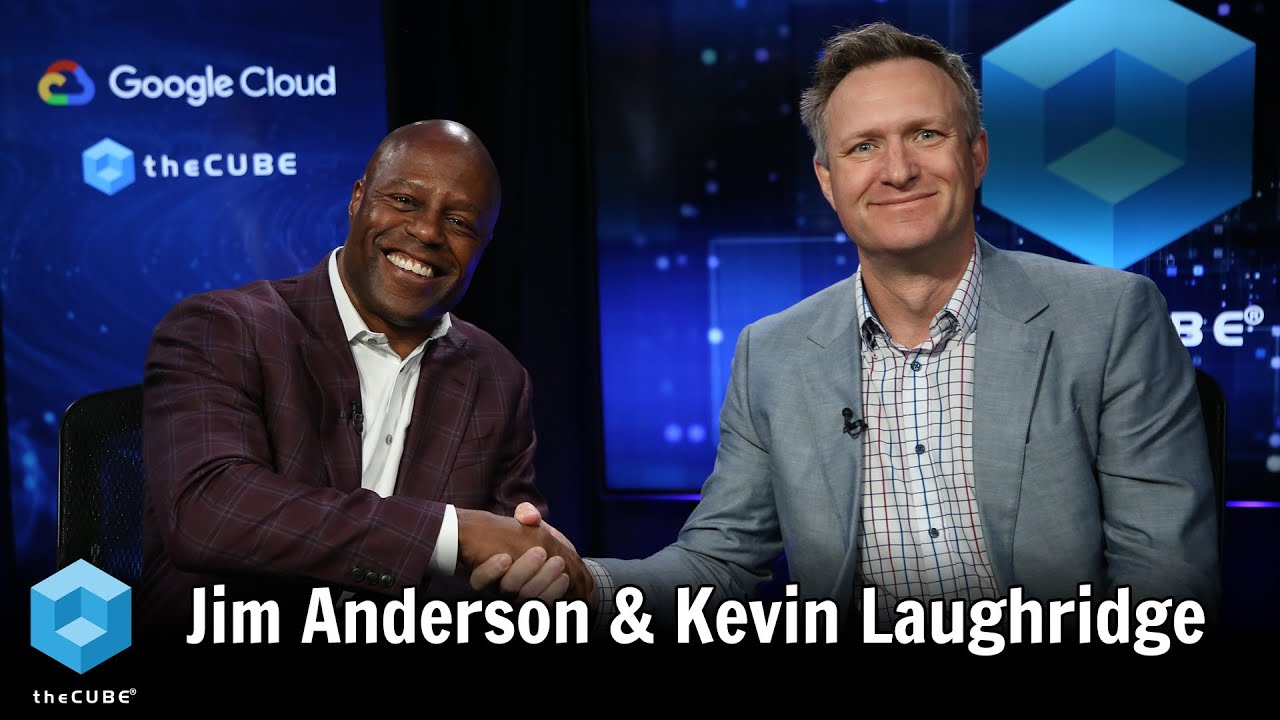
In this episode of the Google Cloud Partner AI Series, theCUBE’s John Furrier sits down with Jay Heglar, SVP of Data Platforms at Oracle, and Jim Anderson, VP of North America Partner Ecosystem & Channels at Google Cloud, to explore how their collaboration is helping enterprises unlock the full potential of AI by replatforming data and modernizing infrastructure.
The discussion dives into how Oracle and Google Cloud are enabling customers to bring mission-critical data closer to compute using Oracle Database on GCP. Heglar and Anderson detail how this partnership gives organizations the power of choice, allowing them to shift legacy workloads into modern AI-ready environments without disrupting core systems. They highlight how Oracle’s 23ai database, combined with Google’s analytics and agentic AI capabilities, is delivering secure, performant and scalable enterprise-grade outcomes.
Key topics include operationalizing AI with Agentspace, driving digital transformation through multi-cloud strategies, and reducing barriers to adoption through familiar tools and trusted platforms. The interview also examines the modernization journey from on-prem to cloud, the strategic impact of self-healing databases, and how Oracle and Google are jointly redefining what agility and data democratization look like for today’s enterprise.
Forgot Password
Almost there!
We just sent you a verification email. Please verify your account to gain access to
Google Cloud Partner AI Series. If you don’t think you received an email check your
spam folder.
In order to sign in, enter the email address you used to registered for the event. Once completed, you will receive an email with a verification link. Open this link to automatically sign into the site.
Register For Google Cloud Partner AI Series
Please fill out the information below. You will recieve an email with a verification link confirming your registration. Click the link to automatically sign into the site.
You’re almost there!
We just sent you a verification email. Please click the verification button in the email. Once your email address is verified, you will have full access to all event content for Google Cloud Partner AI Series.
I want my badge and interests to be visible to all attendees.
Checking this box will display your presense on the attendees list, view your profile and allow other attendees to contact you via 1-1 chat. Read the Privacy Policy. At any time, you can choose to disable this preference.
Select your Interests!
add
Upload your photo
Uploading..
OR
Connect via Twitter
Connect via Linkedin
EDIT PASSWORD
Share
Forgot Password
Almost there!
We just sent you a verification email. Please verify your account to gain access to
Google Cloud Partner AI Series. If you don’t think you received an email check your
spam folder.
In order to sign in, enter the email address you used to registered for the event. Once completed, you will receive an email with a verification link. Open this link to automatically sign into the site.
Sign in to gain access to Google Cloud Partner AI Series
Please sign in with LinkedIn to continue to Google Cloud Partner AI Series. Signing in with LinkedIn ensures a professional environment.
Are you sure you want to remove access rights for this user?
Details
Manage Access
email address
Community Invitation
Clive D’Souza, Google Cloud, & Vikas Agarwal, PwC US
In this episode of the Google Cloud Partner AI Series, theCUBE’s John Furrier sits down with Jay Heglar, SVP of Data Platforms at Oracle, and Jim Anderson, VP of North America Partner Ecosystem & Channels at Google Cloud, to explore how their collaboration is helping enterprises unlock the full potential of AI by replatforming data and modernizing infrastructure.
The discussion dives into how Oracle and Google Cloud are enabling customers to bring mission-critical data closer to compute using Oracle Database on GCP. Heglar and Anderson detail how this partnership gives organizations the power of choice, allowing them to shift legacy workloads into modern AI-ready environments without disrupting core systems. They highlight how Oracle’s 23ai database, combined with Google’s analytics and agentic AI capabilities, is delivering secure, performant and scalable enterprise-grade outcomes.
Key topics include operationalizing AI with Agentspace, driving digital transformation through multi-cloud strategies, and reducing barriers to adoption through familiar tools and trusted platforms. The interview also examines the modernization journey from on-prem to cloud, the strategic impact of self-healing databases, and how Oracle and Google are jointly redefining what agility and data democratization look like for today’s enterprise.
Clive D’Souza, Google Cloud, & Vikas Agarwal, PwC US
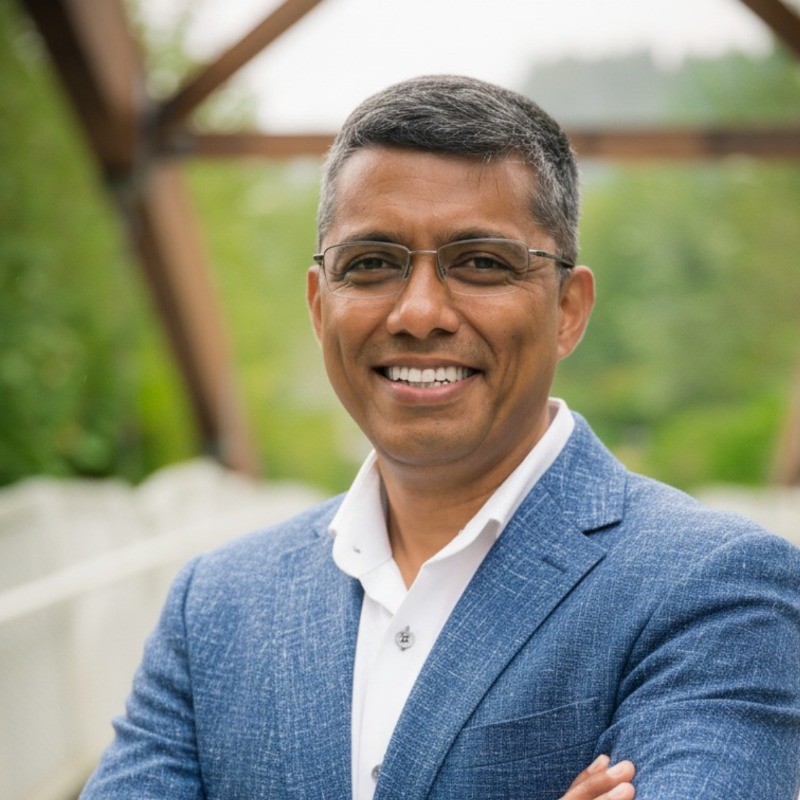
Vikas Agarwal
Chief Technology & Innovation Officer, PwC AdvisoryPwC US
Clive D’Souza
Director & Head of Partner EngineeringGoogle Cloud
In this Google Cloud Partner AI Series conversation, theCUBE’s Rebecca Knight sits down with Clive D’Souza, director and head of partner engineering at Google Cloud, and Vikas Agarwal, chief technology and innovation officer at PwC US, to explore why agentic AI is a fundamental shift – not just the next AI wave. D’Souza details how customers are choosing fully integrated, domain-specific stacks (Agentspace, Vertex Gemini) to achieve real ROI and scale, backed by security that’s “day-zero” by design. He outlines Google’s safe AI frameworks (spanning model to n...Read more
exploreKeep Exploring
What distinguishes the current advancements in AI from previous waves in terms of impact, customer adoption, and technological integration?add
What are the security concerns associated with AI, and what frameworks has Google developed to address them?add
What are some examples of how AI has improved efficiency and reduced costs in business operations?add
What is the significance of a partner-first approach in developing real-world outcomes from AI, particularly in the context of Google Cloud?add
What is Google's agent development kit and the agent-to-agent protocol, and how do they assist partners in creating domain-specific solutions?add
Clive D’Souza, Google Cloud, & Vikas Agarwal, PwC US
search
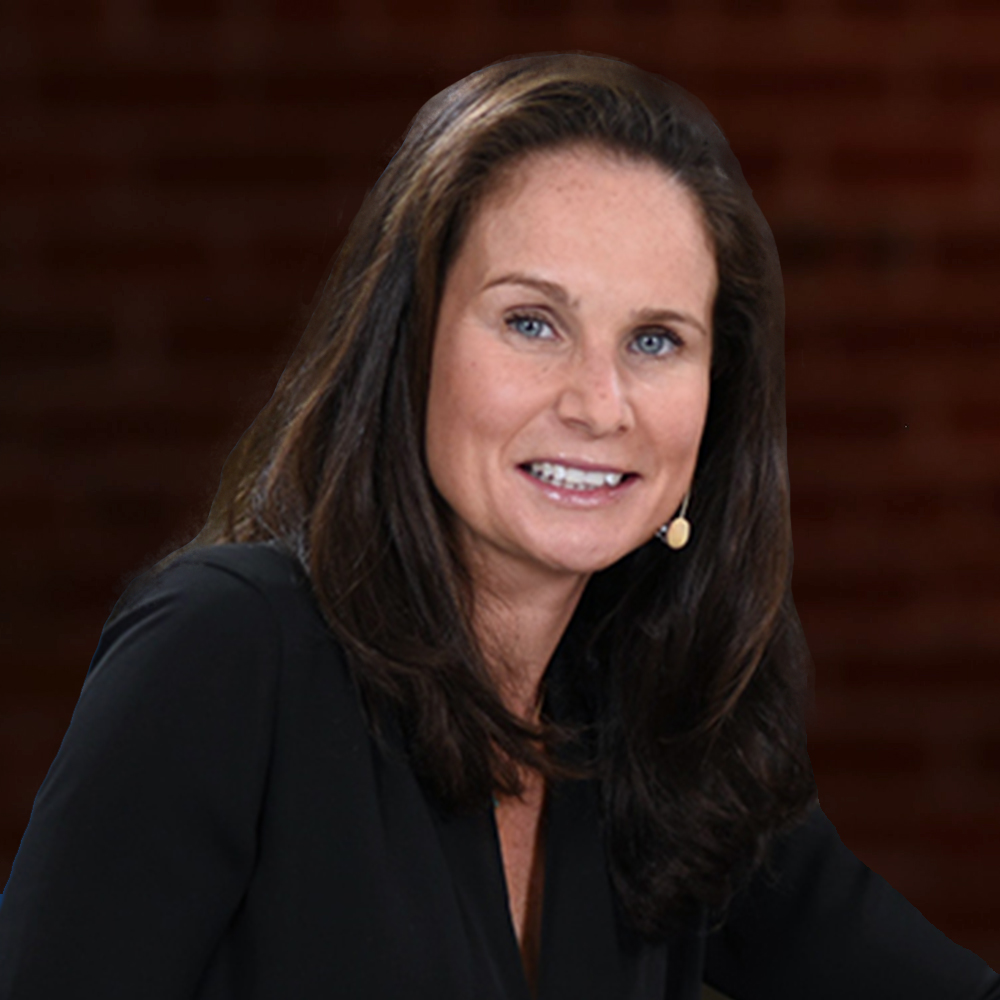
Rebecca Knight
>> Hello everyone and welcome to theCube Studios in Palo Alto and the Google Cloud Partner AI series. I'm your host, Rebecca Knight. Today, we have two guests with us. I would like to welcome Vikas Agarwal, Chief Technology and Innovation Officer at PWC Advisory. Welcome Vikas.
Vikas Agarwal
>> Thank you.
Rebecca Knight
>> And Clive D'Souza, Director and Head of Partner Engineering at Google Cloud. Welcome.
Clive D’Souza
>> Glad to be here.
Rebecca Knight
>> So I want to start with you, Clive, because you have talked about agentic AI as this fundamental shift and not just the next iteration. What in your mind makes this leap different from past AI waves?
Clive D’Souza
>> There's a lot in the question. If you look at it, historical perspective, just going 12 months back, we just seeded the concept and construct of agents and in the last 12, 14 months, the processing power and what we are seeing in terms of consumption of the customers has gone through the roof unlike anything else, and these systems are real. They're generating real ROI, and they're actually driving productivity, driving scale. Unlike just the fastest LLM or the fastest compute, we are seeing customers fundamentally shift their choice of a cloud services partner and they're going for a platform which is giving them complete integration from top to bottom, which is very domain specific as opposed to just giving me an LLM specific, task specific commodity compute. That's where we are seeing the shift happen and it's happening very, very fast.
Rebecca Knight
>> Because I want to get your perspective as Chief Technology and Innovation Officer, what are some of the real aha moments that you're seeing customers have as they move from pilots to production and real deployment?
Vikas Agarwal
>> I think there's a few that we're seeing. One, we're seeing that it's really important for people at the beginning to have a hypothesis of what they're trying to achieve, and I think it's very important with the agents as what your end state is and what your goal is and how you're trying to get there. Two, I think people start pulling the chain of agents and they start thinking about what they can do and they realize how antiquated their existing processes are. So one example I like to often talk about is a dashboard and an executive looks at a dashboard and you ask them why? Well, you look at it to get an insight, so now the agent can give you that insight. Well, you use that insight to take an action. Now the agent can take that action and you start pulling that string. It's fascinating to say, "Well, I don't have to really do anything." This thing can actually go end to end and use thinking and judgment in the steps along the way with the LLM models in context to start to automate all those tasks in a very intelligent way.
Rebecca Knight
>> And it feels almost like magic.
Vikas Agarwal
>> Yep.
Rebecca Knight
>> Yeah, but at the same time, security, scalability, these are paramount for organizations to trust AI and also to deploy it effectively. Clive, how is Google Cloud shaping its stack, Agentspace, Vertex Gemini to shift to both securely and able to scale?
Clive D’Souza
>> So one thing, security is something we live and breathe and it's a day zero priority for us even before AI showed up. As it relates to security and securing AI, we are firm believers how using AI for doing for human good. We have two specific constructs. First thing is we acknowledge that from a security perspective, there is not a layer in the entire AI stack, which is not wonderful. Starting at the model layer, you can have a denial of model service. At the data layer, you can have data poisoning. At the LLM layer, somebody can what we call as bias injection. Even at the infrastructure layer, people can try and do illegal data infiltration, exfiltration. So we have all these frameworks identified. So what Google did about 12 months ago is we came up with about 15 frameworks based on our initial assessment of what these things look like and that is the origination of safe or safe AI. We didn't stop there. We actually took that and we completely created a correlation which includes our competition, which includes people who are in the LLM. So Anthropic, OpenAI, Amazon, everybody is in that, and we drove that together and we are bringing that whole concept of making security a common threshold for across all our vendors, to drive that our customers get the safest AI so to speak. But we have integrated from a security perspective, not just at the LLM layer, which we have, but even down to the networking layer. Simple example, if someone tries to exfiltrate data outside of a Google stack. We have a layer seven monitoring with a model armor, which we call, which prevents it. It's got nothing to do with AI sitting here, but our infrastructure is designed around that, that's AI's inherently core to us. We can do that because we have a completely integrated stack.
Rebecca Knight
>> Okay. I want to ask you about where we're already seeing AI showing up in the numbers because I know that PwC is reporting results like eight times faster cycle times, 30% cost reductions. Can you share a client story that really illustrates how that is? How you're making AI have a real business impact?
Vikas Agarwal
>> Yeah, absolutely, and I'll share two stories with you that I think were very powerful. One, we had a client that had a call center. Their call center operations were almost over 2,000 people. First through the LLM models, they were able to take the 2,000 down to about 1,500 because they were able to get a lot more efficiency and how the people found knowledge, how the people found information, their cycle time through the calls that they were having and then through agents, they were able to actually take it from 1,500 down to a thousand because they found that a lot of people, what they were doing with just moving information around or moving tasks around. So they were able to take the next best actions from calls and actually use agents to connect to different systems to take different actions on what was coming in from their customers from the call centers. Another area that I thought was really interesting was we had a client that had almost 200 paralegals that were just translating state laws into plain English and we developed a set of agents to do that automatically and the 200 went down to 20. So it was even a greater gain, but all they were doing was something that with the right context, we were able to back test, we were able to prove it's safe, we were able to prove it. The type one, type two error was actually less than the human from that standpoint and got a lot of confidence and trust from the client to actually move to a more agentic approach.
Rebecca Knight
>> Well, and confidence and trust is so critical in all of this. Was it that the client could actually see these results for themselves or how did you build that trust?
Vikas Agarwal
>> Yeah, I think there were a few things is one is transparency in the models and how they work. And I think Google does especially a good job of that inside their models to be able to say it's not a black box and this is kind of what's happening and how you break down some of the thinking and the reasoning and the logic that's happening. And two, it was a lot of back testing and we kind of back tested and simulated what would the machine have done and how did that compare to the human results and really look at that side by side. I think it's an interesting phenomena that we always expect humans to be imperfect and machines to be perfect, and we have to remind people that both are imperfect. They're imperfect in different ways, but I think oftentimes, our testing finds that the machine is less imperfect even though it can be imperfect at times.
Rebecca Knight
>> Exactly. So many companies get stuck in this pilot purgatory. I'm actually interested in both your perspectives on this. In terms of the biggest challenges that enterprises are seeing as they try to move beyond experimenting and getting their employees to just play around with AI into scaling it across the enterprise. Why don't we start with you Clive?
Clive D’Souza
>> By the way, you nailed it because there is definitely a POC fatigue and there's a thing where stuff just falls off the cliff. So there are a couple of points where we are seeing success happening. One, it's all about orchestration and not about isolation. All things AI, it's a data story and we always go and say that if your data within your entire enterprise data corpus is not integrated, you don't have a data strategy, you're going to fail. And AI is a team sport when it comes down to connecting all of them. The second thing for successful outcomes, when you're seeing this over and over again, you need to develop that what we call a subject matter expertise, not just in the technology, but having the workflows, the agentic systems, the business logic, all interconnected. That's where too Vikas's point earlier, getting this insights matter and that's where you start seeing ROI. And we are seeing this happening, by the way, as an industry, we just released a report not too long ago, more than 80% of the Fortune 500,000 companies, so to speak, who are deploying AI are just seeing a positive ROI. It's showing them. It's in high single digits, but very fast climbing up. Second thing, agentic AI in and of itself, in the example Vikas made earlier where you're seeing the number of agents go down or the insights coming quicker. These agents communicate or the system of agencies taking off. We are seeing upwards of 50% of the agentic systems driving this implementation and these are production workloads, but the predicate was all based on one, have a data strategy, pick the right platform. Two, have a deep, deep what we call as the AI center of excellence. So you need those subject matter experts, those consultants can help you.
Rebecca Knight
>> Who are mapping the actual workflow and the processes that contribute to how work gets done.
Clive D’Souza
>> Exactly, and I think Vikas has a very good point the very first time. It's not about adopting technology for the sake of, you need to have a very well-defined business value end-to-end at the beginning as opposed to I'm just going to throw a bunch of bodies in technology. You want to get that very clean and well-defined.
Vikas Agarwal
>> I think that we find that all the time that people go into a POC without knowing what the end outcome is. If you don't have that end outcome that North Star defined, you don't know where you're going. And then the other thing I often see is there's a lack of accountability, right? It's still not clear sometimes in an organization, well, is the CTO responsible or is a business unit leader responsible and who is actually responsible? There's one thing is building the tech, which is getting really easy. It's not hard to get the technology done, but what's hard is adoption and the outcome and who is actually accountable for that adoption and that outcome and who's going to take it the last mile to actually say, "I'm going to make sure that this gets through." And then who's going to make the hard workforce decisions that may need to happen that follow that? And that whole chain is important. And you think about large organizations, it's very bureaucratic. There's a bouncy ball going over. Everyone's pointing fingers at the other person. When we often advise CEOs and boards that that accountability is probably the single most thing that we see missing these days.
Rebecca Knight
>> Well, so actually let's talk about that because this is such a big part of this embracing, this agentic AI era is the adoption and it's the people that bringing the humans along is going to be the toughest thing, but there is real fear, there is real concern about jobs displacement. You just gave some examples about law firms and call centers that had some changes. So how do you advise clients to have employees embrace this and adopt it? Especially when they have those legitimate fears?
Vikas Agarwal
>> Look, I often tell people that they need to address very head on the cultural fear and the lack of agency. I think we as humans don't like to not be in control of something and that makes us fear it, and that's part of the whole ecosystem of the cultural change. But that requires a lot of acknowledgement of what is changing, what you're going to do to upscale your people. And I think it's more about we often advise the message to be everyone is not going to get replaced, it's the people that don't use AI that are going to get replaced. And if you embrace this, there's room and in growth that you will still have a place to have because, and with growth, most of these problems are solved, but to grow, you got to make some of these hard tactical decisions to change your ways of working. Now, there's a lot of moving pieces there. It's hard always clearly define that. There are things where some of this stuff that there are new jobs, there are different jobs and people need to oversee the agents and people need to do X, Y and Z, but that's where you got to inspire your workforce to upskill and to transition themselves into those roles.
Rebecca Knight
>> It's a real mindset shift.
Clive D’Souza
>> Can I add a point to that?
Rebecca Knight
>> Yeah, absolutely.
Clive D’Souza
>> Because you bring a great point. We always see change management in general, it is a tricky one. And where we are seeing more success is if the leadership leads with a construct, AI is coming to reinforce you, not replace you, that's the very first thing. And you got to deeply believe in that. And oftentimes we are seeing when we tell them we can do more with less in terms of the same headcount, you're doing more. You're not reducing the headcount or reducing that human being from that role. It works really well, but it takes conviction, it takes leadership. It takes a little bit of setting the strategy and having that alignment. But yes, those fears are there, but as is with any massive large disruption, you have to go through these motions, right? So it's here.
Vikas Agarwal
>> And I think it's part of the evolving role too for some of the CTO AI leaders. I'll tell you, when I took on my role at PwC, we had a big debate about, "Well Vikas, do you own adoption or do you just own building the tech?" And I said, "I refuse to not own adoption." I said, "I want to see the chain through. Hold me accountable." Because otherwise I just build a bunch of stuff, the other person complains. And then we sit in this circular thing of, "Well, I did my job." And, "Well, I did my job and you don't get the outcomes you want."
And so I fought to say, "Oh, I'm not going to take this role unless you give me ownership and accountability of the adoption." And that means a hand in the L&D programs. That means a hand in the report cards going up to our board and our CEO. That means calling it when something is not working that may disagree with a business unit leader. And I think that's an evolving role that I think CTOs need to think about is who is going to be that person that does that? And it's a very, very important job to do because otherwise, no one is doing it.
Rebecca Knight
>> Vikas, talk a little bit about PwC's agent OS and how this vendor-agnostic layer ensures governance and auditability.
Vikas Agarwal
>> Absolutely. What we're finding in today's ecosystem is that there are a lot of systems using agents, right? People have multi-cloud systems. The big ERP providers are providing agents within their ecosystems. The CRM providers are providing agents in their ecosystem. And what we've really used Agent OS to do is to provide a layer of orchestration that allows the MCP protocols to be shared, a library of agents that may exist in different ways so that you know that you're not duplicating what you're doing in one system with another system. And sometimes, you need an agent that goes across all these systems and you need something in that, then that's what really agent OS provides, and it's meant to be agnostic and orchestrating and also provide kind of a layer that can sit above from that standpoint when people have different clouds and all these different systems.
Rebecca Knight
>> Clive, your Google Cloud is taking a real partner-first approach to AI. In fact, you are here because of the Google Cloud, North America partner tech forum, which has gathered folks like you into the Bay Area. Why is this in your mind, this partner-first approach so essential in order to develop the real-world outcomes that we want to see from AI?
Clive D’Souza
>> One, we are the only public cloud who has said that we have 100% partner-attached ethos going forward. And secondly, we all have seen how the industry has matured. And if you look at our professional services organization by design, and this is something ICO Thomas and further up the chain have made the decision, rightfully so, we are just not going to play in the same space as our partners. We don't want to compete with them. So by definition, we are looking at a partner community, our scaling engines. Secondly, we want to be closer to the customers and we want to focus on our technology. So we are completely focused on the best technology there is to bear as a completely integrated domain-specific AI next cloud, so to speak, and letting a partner scale through that. That is how we build this out on.
Rebecca Knight
>> Can you walk us through Google's agent development kit and the agent-to-agent protocol and how it helps partners build domain-specific solutions?
Clive D’Souza
>> Yeah, Vikas talked about their AI operating system and they also have some great examples in the medical care they have developed. At the end of the day, when you look at agent development kit, it lets a client or a customer or a partner in this case come in and land into a layer, which can very quickly take the goodness of what Google has. You don't necessarily have to define how your protocols will talk to each other, but we give them that layer to come in, define what that end-use case would look like, and Google stitches it for them. The backend in terms of managing infrastructure, the security, all of that's taken care of them. The second thing is we define the agent-to-agent protocol, so to speak, and that has become an industry standard. In fact, Microsoft has adopted it, other hyperscalers have adopted it, and that gives the clients and the customers to build their agentic systems, not just on one cloud, but multi-cloud, multi-domain-specific agents, us talking to each other. That's what we have designed.
Rebecca Knight
>> I want to ask you both about a use case, the oncology use case, because this is, we know that cancer doctors are busy with data entry and looking at charts, keeping up with compliance, when in fact, they should be also really talking with patients and helping patients. Why was in your mind, the physician workflow such a strong candidate for an AI agent?
Vikas Agarwal
>> I think it was just such a great example of highly educated, highly paid individuals doing work that was very manual and tedious. And again, something that high leverage, high scalability, high degree of data that just needs to be processed and put into places. So when you looked at that pattern, it was just such a great pattern that where you opened up, like you said, the time of the physician to spend more time with the patient and let that busy work happen automatically through the agents. And we see that a lot in the healthcare field, that there's so much paperwork, there's a lot with the insurance companies, there's a lot with the ecosystem and there's a lot of time spent by physicians coding and doing this and doing that, and these technologies are helping and there's judgment involved, but that's what the beauty of the LLM models is with the right context. You can get that judgment more right than the person actually did it, and that's changing with agents and that's what's really exciting
Rebecca Knight
>> And collaboration. So it's the agent in collaboration.
Vikas Agarwal
>> Yeah, it's doing the work and then human's saying, "Yeah, that's right." And then it's moving on from there. And so the human actually going in and doing all those things individually.
Rebecca Knight
>> And the human patient receiving the benefits?
Vikas Agarwal
>> Absolutely.
Rebecca Knight
>> Of more time with their doctor. Clive, beyond healthcare, what are some other use cases that you are seeing?
Clive D’Souza
>> In fact, we were talking about the tech forum yesterday because the sheer pace of adoption. We are seeing AI literally race pretty much across the industry from verticals. We are seeing retail move forward. You're seeing what we have done at Wendy's. They have essentially shaped off 20 plus seconds on each order they fulfill. We are seeing AI take off in back-end manufacturing Unilever. You're seeing AI take off in banking and financial services. So there's literally not one industry segment which is being held behind. We've even seen state governments leaning in with our agent space, deploying it to raise productivity. I wish I could tell you there's one industry which is lagging behind, but we have been so pleasantly surprised that every single industry you name the vertical right now is in some stage, shape or way or form adopting AI. Some may be a little bit ahead. Retail obviously is going a lot further ahead, and banking is not too far behind, but healthcare life sciences is right on a rocket
Rebecca Knight
>> And really accelerating something.
Clive D’Souza
>> It is accelerating. To the example, if I may, because we talked about the oncology. The benefit of AI, especially for humanity, so to speak, an oncologist, the biggest asset they have outside of the skills is the time. And if they can shave off even 15, 20 minutes and get to a quicker, cleaner or much more robust answer on a data set, on a corpus where the element are trained on, it is the best outcome for the patient and the doctors. Doctors are service people. They want to go and save lives and do good things for people. We feel really warm in our heart when we see that, "Okay, we can do that." Right? That's how we are looking at it.
Vikas Agarwal
>> One of the things I'll tell you that I'm most excited about is even I think you guys announced over the past week, the agent payment protocols.
Clive D’Souza
>> Yes.
Vikas Agarwal
>> And you think about what that's going to do to transform consumer behaviors and retailers, and now retailers need to meet clients and consumers on the platforms where Google is and where others are, and you're going to be able to go through Gemini, you're going to be able to sit there and say, "Hey, tell me about my favorite backpack for a kid." And then immediately just single click and go and buy that backpack and get it shipped to you across a dozen retailers and across your preferences and criteria. So I think it's really exciting how we're going to see consumer behaviors change that, and I think retailers are going to need to use more AI to just understand that shift and how they're going to market in that new shift, because it's not going to be about search engine optimization anymore. It's going to be about how they essentially help the AI know the best of their products.
Rebecca Knight
>> Well, and just to expand that out. So if we get used to that in our personal lives as customers of kids backpacks, we're going to be the employees, the workers who go to work and expect our enterprises to have the same kind of intuitive behaviors.
Clive D’Souza
>> And that's where the world is going. We see that agentic AI with the frameworks giving you the agency, literally that's what all things agents are about is driving productivity, driving that acceleration happening at that scale. And that I believe will be our end state, so to speak, and will come at that very rapidly within advancements we're making.
Rebecca Knight
>> So Vikas talked a little bit about trust earlier in this conversation, but transparency and trust is so important, especially when we are allowing these agents to make decisions for us. It's one thing about buying a backpack, but another thing about patient care when you are going through something like cancer, how do you ensure that and make people feel comfortable?
Clive D’Souza
>> Yeah, so I'm so glad you asked the question. So I'm going to take a step back here. So when you look at our healthcare, for that matter, any LLMs, not just healthcare LLMs, any LLMs. The way Google defines and refines our processes is our LLMs are trained on a set of data and that data is then frozen, even though that layer is frozen for us. Every time that LLM or in this case that model is inferring or interacting with patient data or individual specific data, that information is never passed on to Google. We don't have insight into it, we don't look into it. It's always in the customer's account, attendance, as you call it. So there's a very hard firewall. So that's one aspect of it. The second aspect of it is even today when you have all these agentic workflows, BB financials, BB healthcare or BB any sensitive data, we are still big proponents of having human in the loop. I don't believe we are yet at a point where an agent makes 100% of the decisions. We still claim that it's an AI-assisted decision-making, AI-assisted whatever workflow you want to look at. So we get to the decision point quicker, but we don't make the decision. And I don't believe we'll ever get to a point where we'll be 100% reliant on AI. You'll always have the humans in the loop. To Vikas's point earlier, the oncologist or the doctor will look at it and say, "Yep, this looks right." Or the retailer will look at the supply chain manifest and it's like, "Yep, this looks right." So the humans are never going to go away. It's just that the level and the intellect operating will be moving further up the stack.
Rebecca Knight
>> And I was actually interviewing an MIT professor recently who was describing the dull and tedious work that we do as the repetitive stress injury of the knowledge era. And so for a physician to have to do all of this data entry, this tedious work and these insurance claims, that is what leads to the repetitive stress injury.
Clive D’Souza
>> It is. If I may just add to that, it's just funny you bring it because I get to talk to a lot of customers and executives, and one of the things they said that the repetitive task, the monotonous task, it drains their energy. It takes them out to your point, but anything which energizes them, a doctor working on a case and trying to understand the medication treatment or a supply chain logistics expert taking 15 spreadsheets and going through, "Here's what I'm looking at it."
Not the repetitive task of getting those 15 spreadsheets, but understanding the patterns and AI helping them get to that point faster, that is what energizes them. And I don't believe that's going anywhere. You're just going to be able to do more of that things, which energize them, but the repetitive task, the monotonous task, yes.
Rebecca Knight
>> So as we wrap up here, I would like you both to give our audience a key takeaway of how to succeed in the agentic era. Vikas?
Vikas Agarwal
>> So I talk a lot about the focus on culture. Like I said, I think the technology is there. I think the engineers are there. I think there's a lot of foundational technology that now needs to get applied, and that's not the hard part of the problem. I think the culture is the hard part of the problem. It's getting people to adopt is inspiring people in terms of understanding their fears and their lack of agency with these technologies. So I always say my biggest piece of advice is that you have to really focus on that culture.
Rebecca Knight
>> Okay, Clive?
Clive D’Souza
>> Into building off of Vikas, I would say, look, we will meet any customer, any client where they are. The biggest advice I can give is start, and don't let the technology overwhelm you. And it's a very rapid learning curve and people get there. So go build that expertise because AI is here to stay. It's not going anywhere, and this is going to become literally intrinsic to our core.
Rebecca Knight
>> Focus on your people and just start. I love it. Great advice. Vikas and Clive, thank you both so much for coming on.
Clive D’Souza
>> My pleasure.
Vikas Agarwal
>> Thank you.
Clive D’Souza
>> Thank you.
Rebecca Knight
>> And thank you for joining us on this edition of the Google Cloud Partner AI Series. Stay tuned for more.














 Rebecca Knight