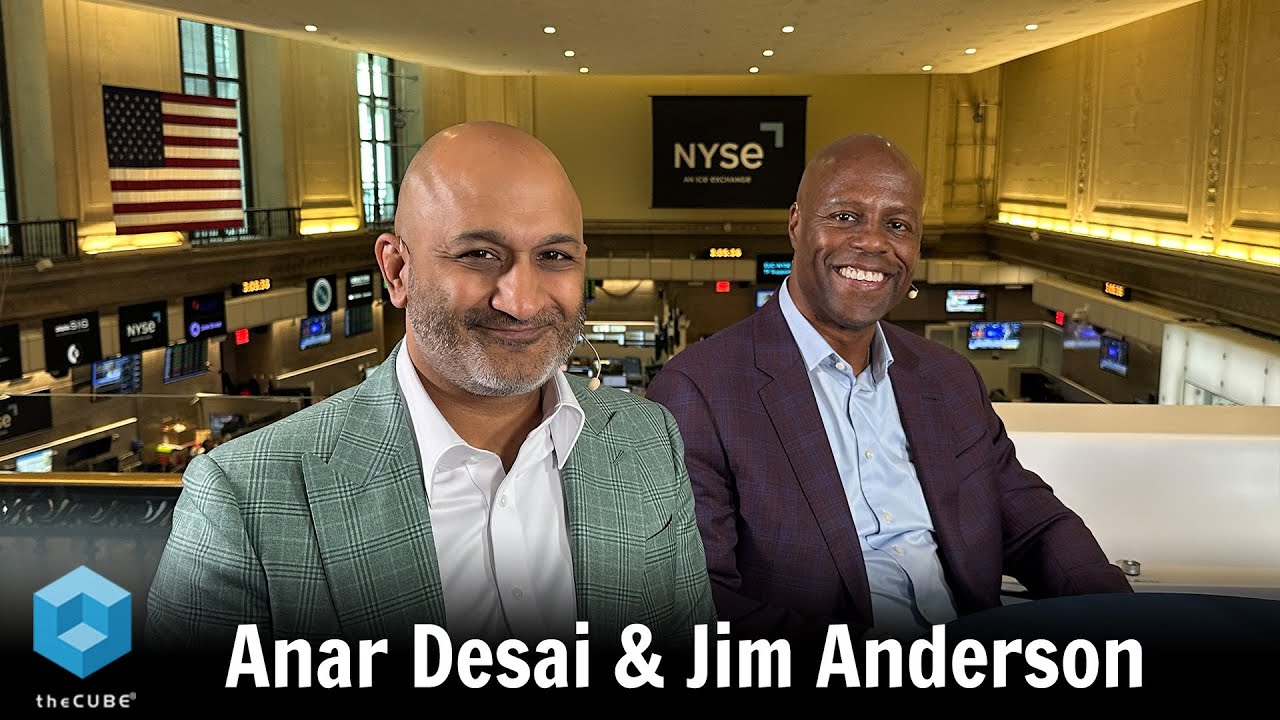
This session of theCUBE and the New York Stock Exchange Wired Partners Showcase examines how Google Cloud partners use artificial intelligence agents and cloud data platforms to modernize retail operations and accelerate time-to-value. Samrah Khan of Google Cloud, director, and Morgan Seybert of Tredence, chief business officer and head of retail, join theCUBE Research hosts at the NYSE Studios to discuss systems integration, AI agents, personalization, inventory control towers and data-driven strategies. Khan emphasizes that bringing models to the data lowers cost and speeds return on investment, and they note partner reports of up to 60 percent faster time-to-value. Seybert reports on practical outcomes from deployments, and they describe how combining Gemini with Google Cloud improves availability and personalization.
Key takeaways include AI-driven inventory and personalization gains and measurable business impact. Seybert reports that combining Gemini with Google Cloud reduces out-of-stock rates by 40 percent and adds roughly three percent to top-line sales. Khan emphasizes that model localization to data reduces infrastructure cost and accelerates return on investment; partners report up to 60 percent faster time-to-value. Industry analysts observe 10 to 15 percent conversion improvements from personalized experiences. The discussion highlights factors to consider for retail transformation including systems integration, agent orchestration, data governance and metrics for time-to-value, informed by trends from the National Retail Federation and the Consumer Electronics Show.
Forgot Password
Almost there!
We just sent you a verification email. Please verify your account to gain access to
Google Cloud Partner AI Series. If you don’t think you received an email check your
spam folder.
In order to sign in, enter the email address you used to registered for the event. Once completed, you will receive an email with a verification link. Open this link to automatically sign into the site.
Register For Google Cloud Partner AI Series
Please fill out the information below. You will recieve an email with a verification link confirming your registration. Click the link to automatically sign into the site.
You’re almost there!
We just sent you a verification email. Please click the verification button in the email. Once your email address is verified, you will have full access to all event content for Google Cloud Partner AI Series.
I want my badge and interests to be visible to all attendees.
Checking this box will display your presense on the attendees list, view your profile and allow other attendees to contact you via 1-1 chat. Read the Privacy Policy. At any time, you can choose to disable this preference.
Select your Interests!
add
Upload your photo
Uploading..
OR
Connect via Twitter
Connect via Linkedin
EDIT PASSWORD
Share
Forgot Password
Almost there!
We just sent you a verification email. Please verify your account to gain access to
Google Cloud Partner AI Series. If you don’t think you received an email check your
spam folder.
In order to sign in, enter the email address you used to registered for the event. Once completed, you will receive an email with a verification link. Open this link to automatically sign into the site.
Sign in to gain access to Google Cloud Partner AI Series
Please sign in with LinkedIn to continue to Google Cloud Partner AI Series. Signing in with LinkedIn ensures a professional environment.
Are you sure you want to remove access rights for this user?
Details
Manage Access
email address
Community Invitation
Samrah Khan & Morgan Seybert, Tredence
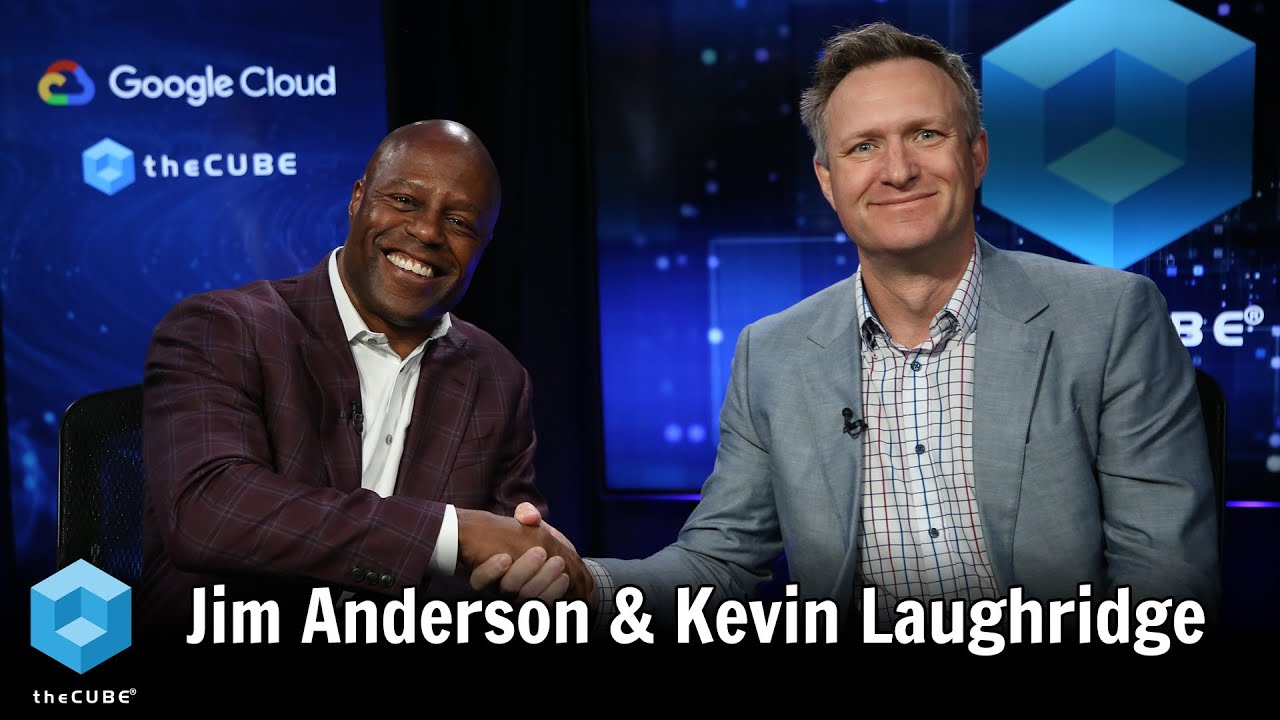
What happens when cloud innovation meets partner agility? In this episode of the Google Cloud Partner AI Series, theCUBE Research’s John Furrier sits down with Jim Anderson, VP of North America partner ecosystem and channels at Google Cloud, for a candid and forward-looking conversation. Together, they unpack how AI is reshaping Google’s partner playbook — and what that means for the future of enterprise transformation.
Anderson shares how partners are shifting from transactional relationships to long-term, journey-based engagements — mirroring the evolution of AI itself. By integrating Google Cloud’s core AI capabilities with their domain expertise, partners can accelerate time-to-value and deliver smarter, more contextual solutions that meet the growing demands of enterprise customers.
Key Highlights:
• How Google Cloud’s full AI stack is driving innovation across industries
• The rise of AI agents and why they're set to surpass SaaS in enterprise value
• The evolving role of partners in delivering scalable, high-impact solutions
• Democratization of computer science and how it’s enabling the next wave of creators
• Jim’s take on the future of the ecosystem, customer co-selling and partner growth strategies
With rapid innovation as a constant, Anderson emphasizes the need for partners to be adaptable and future-focused. He highlights how Google Cloud’s infrastructure provides a solid foundation for experimentation, growth and AI-driven transformation. The message is clear: partners who lean into AI integration will lead in delivering differentiated value and stronger business outcomes.
In this segment of theCUBE + NYSE Wired: Google Cloud Partner AI Series, Samrah Khan, director of North America systems integration partner at Google Cloud, and Morgan Seybert, president of retail and CPG at Tredence, join theCUBE’s John Furrier to discuss how AI is solving long-standing inefficiencies in the retail and CPG sectors. Seybert outlines the transition from data-rich but insight-poor environments to a new era where Google Cloud and Gemini provide the toolkit for real-time decision-making. By moving beyond traditional dashboards, Tredence is enabli...Read more
exploreKeep Exploring
How is AI intersecting with retail, and how does Google fit into that intersection?add
What percentage of decisions in the average retailer are driven by insights, and why is that percentage so low?add
How did a major retailer use Google's Gemini and related technologies to reduce out-of-stock rates and increase sales, and what were the results?add
How is AI being used in retail, and what specific use cases (operations, personalization, data monetization, website assistants, etc.) are generating value?add
>> Welcome back. I'm John Furrier, host of theCube, here at theCube's NYSE Studios. Of course, we have our Palo Alto Studio connecting Silicon Valley and Wall Street. We're here talking to the leaders in the Google Cloud partner ecosystem. It's a showcase. Samrah Khan is the director of North America Systems Integration Partner. It's great to see you again. Welcome back. Morgan Seybert with Tredence, president of retail and CPG. You guys are partnering and we just had NRF coverage, so this is going to be right on point. Welcome, welcome to theCube.
Morgan Seybert
>> Thanks for having us, John. Appreciate it.
John Furrier
>> So obviously, the beginning of the year, you had CES, the big show on consumer electronics, and then right after, it's like a one-two punch, NRF happened here in New York, but the top theme was AI. It was an AI show. You guys were there. This speaks to the major trend right now that the user experience is that the users are there, but the moneymaking and the business models are changing in retail. How do you guys see AI intersecting and how does Google fit in?
Morgan Seybert
>> Yeah, absolutely. I think right now, is an incredibly exciting time in retail, John. If you look at retail over the last decade or so, there's been several truce in retail. Industry out of stocks have been averaging about 8% hurting retailer sales. 72% of promotions are failing to break even. 30% of cloud spend is wasted. 26% of marketing investments are inefficient. Those have been the common truce in retail and everybody has known about those inefficiencies and haven't been able to solve for it because they haven't been able to integrate all the rich data assets that they have, and then turn that data into meaningful insights that their teams can use to make better business decisions. And so we're incredibly excited about what's happening in retail right now, because data is now getting into the hands of end business users, store associates, marketing managers, merchandising planners, supply chain planners in a very digestible way through tools like what Google is doing with Gemini, as well as what they're doing with the core Google Cloud. And we're seeing retailers really take advantage of these new solutions to fundamentally change their business, drive greater efficiency in their supply chain, improve marketing ROI, and better personalized experiences.
John Furrier
>> I love the term, at resources and assets. This is really the leverage. Talk about the relationship with Google because this is a new opportunity to do things you couldn't do before, asset leverage, resource leverage, new business opportunities. Talk about the relationship with these guys on Google. What's working? How does it work?
Morgan Seybert
>> Yeah, absolutely. Yeah, I'll start. So I'd say from our perspective, if you look at the average retailer, less than 15% of decisions in the average retailer were insights driven. And the reason for that is retailers had so much data. They had massive data. If you think about it, they have their clickstream data, they have their sales data, they have their customer data. And the way they used to solve this problem in retailers, they throw thousands of dashboards at their end users. Like, one of our partners with Google, they used to have 40,000 dashboards that they expected a human to mine through to find information. And so through the power of Google, you're able to crunch all of that data, and then surface the key insights that truly matter. And so we're really excited by the speed and the cost efficiency that Google's been able to bring from a Google Cloud perspective. And then with what they're doing around Gemini, Gemini enterprise, Gemini enterprise for CX, we're really excited about those tools. And actually, not only changing the internal insights generation process, but actually changing the way retailers interact with their customers on their website, in their marketing, et cetera. And so we think Google provides a wonderful toolkit for retailers, and then we're then taking that toolkit, and then using our accelerators that we built to work natively on Google, to then speed time to value for retailers.
John Furrier
>> So you're taking the customers that were data centric because they were, they were tracking everything. Retail, they do track stuff. They do a good job at that. However, it became so massive, dashboard fatigue. So now, they just get the answers. Is that kind of where it's going?
Samrah Khan
>> Yeah, I think that's definitely one aspect of it, John. If you look at a quarterly earning reports that just came out last week, I couldn't be more excited about what we're going to do with our partners this year. Our revenue is like 17.7 billion, jumped about 48%, right? So the momentum is really behind us. The market is ready. There is an unprecedented demand, especially in the unregulated industries like retail and CPG, where they're able to move much faster when it comes to AI adoption or even data modernization compared to some of the regulated industries that we were talking about before. From the partnership perspective with partners like Tredence, that go really deep and wide within the industry, that Google is predominantly number one and has been for decade plus for various different reasons because of our ads and our consumer business. It's amazing to see the expertise that they have built on top of our data platform, on top of our AI platform. But in addition to that, they had carved out the slice of our data platform and our AI value specific to customer use cases within retail and CPG that not many other partners have been able to replicate. So we have seen huge success with them in 2025, and I anticipate bigger success because to Morgan's point, the faster time to ROI is sometimes by 60% for certain retailers. It's tremendous.
John Furrier
>> Now, Morgan, I love retail. I love healthcare, because these are human edge scenarios, edge of the network, which I love, but they've always had the data. But this year, the theme was agents.
Morgan Seybert
>> Yep.
John Furrier
>> Now, agents, people who have been using agents from what we've been talking at NRF, was like, whoever adopted earlier had benefits this year. They had real top line outcomes, not just cost savings.
Morgan Seybert
>> Yeah.
Samrah Khan
>> Correct.
John Furrier
>> They had top line revenue, and that's just scratching the surface. So take us through the path, how you see the next journey here with, okay, I get it. We're deploying more use cases for customer experience. How do the agents fit into all this?
Morgan Seybert
>> Yeah. Let me maybe give you an example to kind of bring it to life, John. If you think about retail, one of the biggest challenges in retail for decades has been out of stock. Every year, about a trillion dollars are lost because products aren't available when the customer wants to buy them. And so with our friends at Google, we were working with one of the largest retailers in the world. They have over 10,000 stores that they operate and they were running 12% out of stocks, which meant 12% of the time when the customer went to the store, they couldn't find the product that they wanted to buy and they left without actually buying anything. And through what we were doing with Gemini and with Google, we were able to help them stitch all of the data together around their product so they knew what was shipped into the store, they knew what was selling out of the store, they could use computer imaging and envisioning to understand where the product was in the store. Was it in the back room, was it on the shelf, et cetera. And they could triangulate all of that information to then help their store managers actually bring that product from the back room, to the shelf when it was there, or to change their ordering pattern from a demand forecasting perspective so they could actually ship the right amount of inventory to each and every one of their stores. And as a result of that, that retailer saw 40% cut in their out of stock rate. And so if you think about it, that took that 12% number, dropped it down by 40% and add 3% to their top line sales just by solving this problem and putting Gemini in the hands of their store managers to help with inventory options.
John Furrier
>> That is amazing numbers. It doesn't even factor the stickiness of loyalty and customer satisfaction.
Morgan Seybert
>> That's right.
John Furrier
>> That just changes it because that's not even quantified.
Samrah Khan
>> Agreed.
John Furrier
>> That's an intangible, but that also will show up downstream.
Morgan Seybert
>> That's right.
Samrah Khan
>> And Morgan makes it sound very easy, but the reality is, anybody who's been in the retail CPG industry knows that this whole notion of building a control tower where you have demand sensing, demand forecasting, replenishment, et cetera, is like an uphill battle. It takes years. I'm not talking months. It takes years if this project is successful. I have seen many projects where a retailer embarks on building a control tower and sort of gives up 18 months through the process because in 18 months, the business, the market, the dynamics have changed and the specs were done long time ago. Tredence, by leveraging Google's cloud data and AI stack, was able to deliver the control tower in about six months. And I know six months may sound really, really long, but in the control tower terminology, it's actually really short. So I think the ROI is not just higher productivity or more revenue, it's also faster time to market.
John Furrier
>> Yeah. And also, that foundational control tower will enable no code, low code, average users doing queries, doing agents. So I think once you have that agility, a top enabled, then the thousand flowers bloom, I guess.
Samrah Khan
>> Correct. And I think, John, where Google is really unique and differentiated, if you look at our platform or if you look at our technology stack, it's because we firmly believe that you got to bring the models to the data, not the other way around. Because if you try to take the data to the model, you are looking at 90% higher cost in some instances and a much, much longer time to ROI compared to what the example that Morgan is talking about. That's why I think it's very important to pick the right platform.
John Furrier
>> Morgan, talk about what you just said. That's the design principle.
Morgan Seybert
>> Yeah.
John Furrier
>> Okay. Some people look at the other way. That's actually, we've seen the same data. It's harder to jam the data into a frontier model. It's better to take the model to the data. How do you see that? Because this brings up the last mile in AI problem that you guys talk about.
Samrah Khan
>> Right.
John Furrier
>> So explain the last mile problem, then talk about the philosophy of how do data and models interface the priorities, how that works?
Morgan Seybert
>> Yeah. From our perspective, the last mile problem has always been, how do we get the end user to use the data in a digestible form to make a better business decision? And when you look at the average retailers, I've said earlier, they're incredibly data rich, but their information and insight is poor. And really, the main driver of that has been the AI readiness of data. And so, one of the things we're talking about with almost every retailer we talk about is, is our data AI ready? Is it structured? Does it have the right data model in place? Is it have the right semantic layer, the right metadata to really make that data then consumable for end users? And so I look at a problem that's very common in retail around personalization. This has been a topic that's been talked about for years in retail, right? But what was personalization, right? Personalization was really segment marketing, right? So I would have a marketer that would sit there, they'd build an audience list, and then they'd send an email to that audience list. And so they'd end up with three different flavors of an email and they call that personalization. Today, because of the rich data that you talked about earlier, John, that we get the telemetry on our website, the clickstream data, all the purchase data that our shoppers are making, we have a rich understanding of who is price sensitive, what products are they looking for, what types of offers are they going to respond to, what channels are they going to respond to. And then through what Gemini allows us to do, we can then actually truly create personalized assets. And so when you go to a website, you get a completely bespoke experience.
John Furrier
>> It's one to one. It's me.
Morgan Seybert
>> And you get a completely bespoke experience. And so retailers that we're rolling this out with through GECX, they're seeing a 10 to 15% increase in conversion. And if you think of the traffic these retailers are getting, a 10 to 15% increase in conversion is a huge impact to their top line and the loyalty that you were talking about earlier.
John Furrier
>> I think that's the killer app for retail besides all the other things. Because if you think about that one-to-one, if you have the data, which they do, most of them all have it, that's where the AI will shine. And that's where I think, agents go to. So all the trends on the tech side that Google's working on, more memory, like literally memory in the systems, but memory in the context. The more tokens you can have as context, it's smarter about me. Maybe my patterns, what I did on the website. Not a cookie, like, "That's what he did. John wants this. He's looking for a sports jacket or a new pair of shoes or whatever." They can find it, and then give it to me in real time.
Morgan Seybert
>> Yeah.
Samrah Khan
>> Yeah. Nobody brings more AI to people than Google. You talked about tokens, 980 trillion tokens a month. So it's a pretty staggering number out there.
John Furrier
>> All right. Talk about what's next because I think, again, you're in the hottest area, Morgan, because retail, I mean, the proof is in the pudding, the business results.
Morgan Seybert
>> Yep.
John Furrier
>> It's cost savings, but that's not the core problem. You laid it out perfectly.
Morgan Seybert
>> Yep.
John Furrier
>> They've been trying to maximize and crank the wheel of value for the business. What's some of the business model conversations you've had with customers as you look out this year? It seems to be execution risk, not so much strategy.
Morgan Seybert
>> Yep, yep.
John Furrier
>> It means, "Hey, take AI, take the hill, infuse AI and everything." Okay, that's a strategy or board conversation. But then it gets down to, okay, let's do some math, but executing it versus saying it.
Morgan Seybert
>> Yeah. No, I think there's obviously a lot of buzz around AI. Everybody's talking about it. And I think we at Tredence, are pretty uniquely positioned on this. About $2 trillion of global retail revenue runs on our data science models and our data models. And so as we look ahead, I think it is really about execution. I think that's a great point, John. It's all about starting to build the agents for different use cases. And so we're seeing a lot of value in the kind of store manager assistant to help with labor scheduling, labor planning, on-shelf availability, demand forecasting, inventory optimization. We're seeing personalization be a huge one around building agents to better create personalized content so we can personalize the banner, the emails, the marketing touch points that we have. We're seeing huge focus on data monetization, which is retailers are very rich in data and addressable is becoming more important for marketeers.
John Furrier
>> Yeah, it unlocks.
Morgan Seybert
>> How do we then monetize that data with our retail, with our supplier partners? And again, I think agents built to help create that content, create that one-is-to-one personalization is a huge one. When we look about just the website and the digital assistance on the website, we were talking before we started about, you were buying skis recently, right? Having a digital assistant on the website to help you learn about you, learn what type of skier you are, what type of runs you like to go on, what's your experience level, and then recommending the right product for you through that more conversational experience, we think is where it's going to go and-
John Furrier
>> I totally agree with that, 100%. Also, more context. My patterns are different, but this comes back down to business value. If I get the right answers-
Samrah Khan
>> Correct.
John Furrier
>> ... I'm going to be a customer and a loyal customer. If you can create multimodal experiences and cross the network, "Hey, John was shopping online for a jacket, he's in the store." Little facial recognition, little AI action, I opt in. "Oh, it's on file." This is like new things and this highlights where AI shines. It gets things that either you didn't want to do, like the grunt work and the grind and the toil, whatever word you want to use, but also, things you could never get before. This is the new value. Thoughts on that piece there?
Samrah Khan
>> Yeah. I think sometimes customers really confuse chatbot with conversational agents. And I think it's always very important to understand that intelligent agents are very different than chatbots. We have moved away from just doing search in retail to decision making, but we have even moved past decision making. We are in the era of acting. So chatbots are not going to make decisions for you, chatbots are not going to take actions for you. You can only do that through intelligent agents. And I think it's very important from the partnership perspective that enterprises are working with services partners that really understand their business processes and their industries and what the gotchas and within the industries are. It's no longer about, "Hey, I'll take a data stack, I'll take an AI stack. I've made that decision. Just anybody can come and deploy it." No, the people that are best suited to deploy that are the people that know about your industry. And I think that's where Tredence is going to play a big role.
John Furrier
>> All right. How do you feel the partnership with Google?
Morgan Seybert
>> We've appreciated the partnership. I think Google's doing a lot of great things with Gemini and Google Cloud, and we love being at the forefront with Google and driving the adoption in retail. As I said, $2 trillion of revenues running on our data science models globally, and we are super excited to be the Google industry service partner of the year last year, and are looking forward to more of that this year.
John Furrier
>> Well, you're in a hot air, it's going to get better. So I guess what's next is more agents, more intelligence?
Morgan Seybert
>> Yeah, yeah. Look, I think the way people are going to buy is fundamentally changing, right? The whole path to purchase as it will, was I do research or maybe I do Google search back in the day, I do some research and I go to a variety of different retailer websites, and then I make a decision to buy. That's fundamentally changing, right? And I think people are going to start buying through places like Gemini. They're going to start searching more based on intents and wants and behaviors versus attribute-based search. And so I think the way people buy is going to fundamentally change. And I think the retailers that are moving quickly now to set them up for success are really going to be the ones that are going to merge as winners here.
John Furrier
>> And Samrah, you guys had the announcements at NRF on that. Talk about some of those things.
Samrah Khan
>> Yeah. I think NRF was big for us. Morgan was actually there, front and close in person. We have really pivoted to talking about how the enterprises and the consumers are going to leverage LLM to make the purchases. It's no longer about going online to make a purchase. It's all about leveraging LLMs that are already out there working on your behalf. So you don't have to look at 50 different sweaters, 50 different colors. Let somebody else do the work so you can get the sweater in the .
John Furrier
>> It's still searching, it's just different.
Samrah Khan
>> Somebody else is doing it for you.
John Furrier
>> Well, Google is still providing it. So congratulations, and congratulations for partner of the year again. Great to have you on. Love this area. We're looking forward to catching up soon.
Morgan Seybert
>> Appreciate it. Thanks for having us.
Samrah Khan
>> Okay. Thank you, John.
John Furrier
>> I'm John Furrier here with the Google Cloud partner showcase, really where the leaders are sharing their best practices, and also, ways to create innovation, to change the business models and create more revenue, create more business models, also more happy customers. We're doing our part here in theCUBE. Thanks for watching.

















 John Furrier