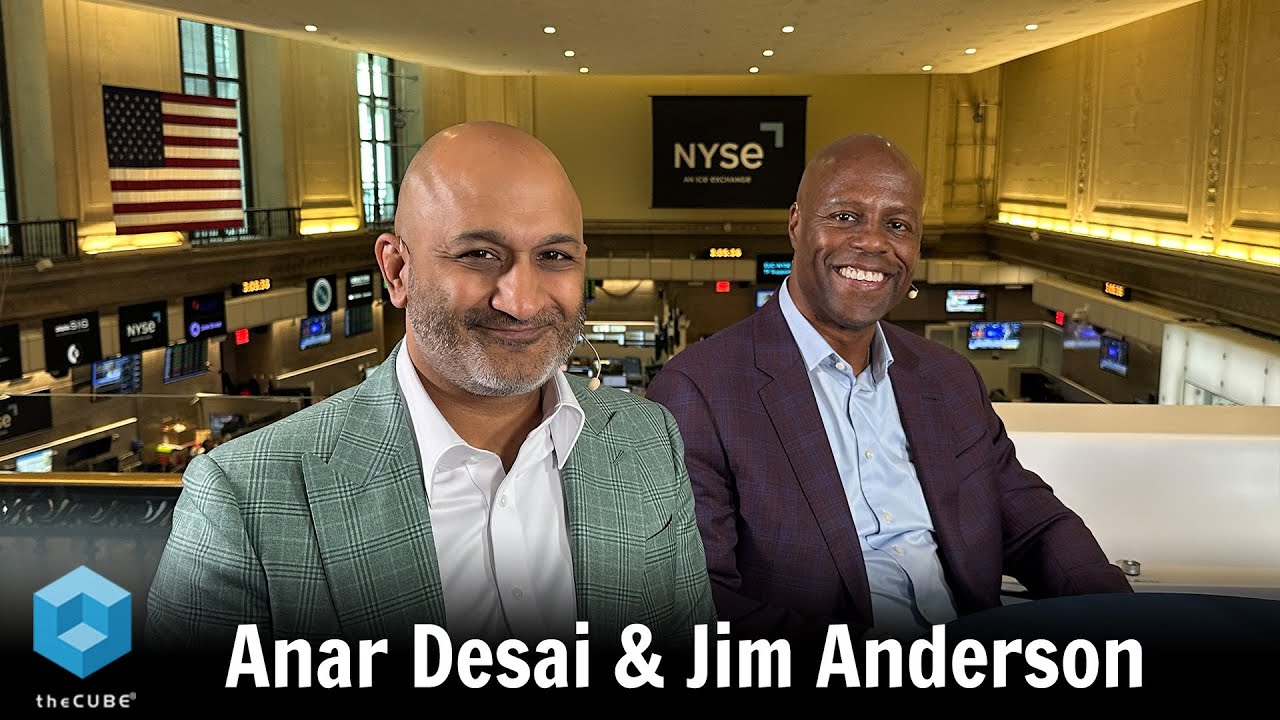
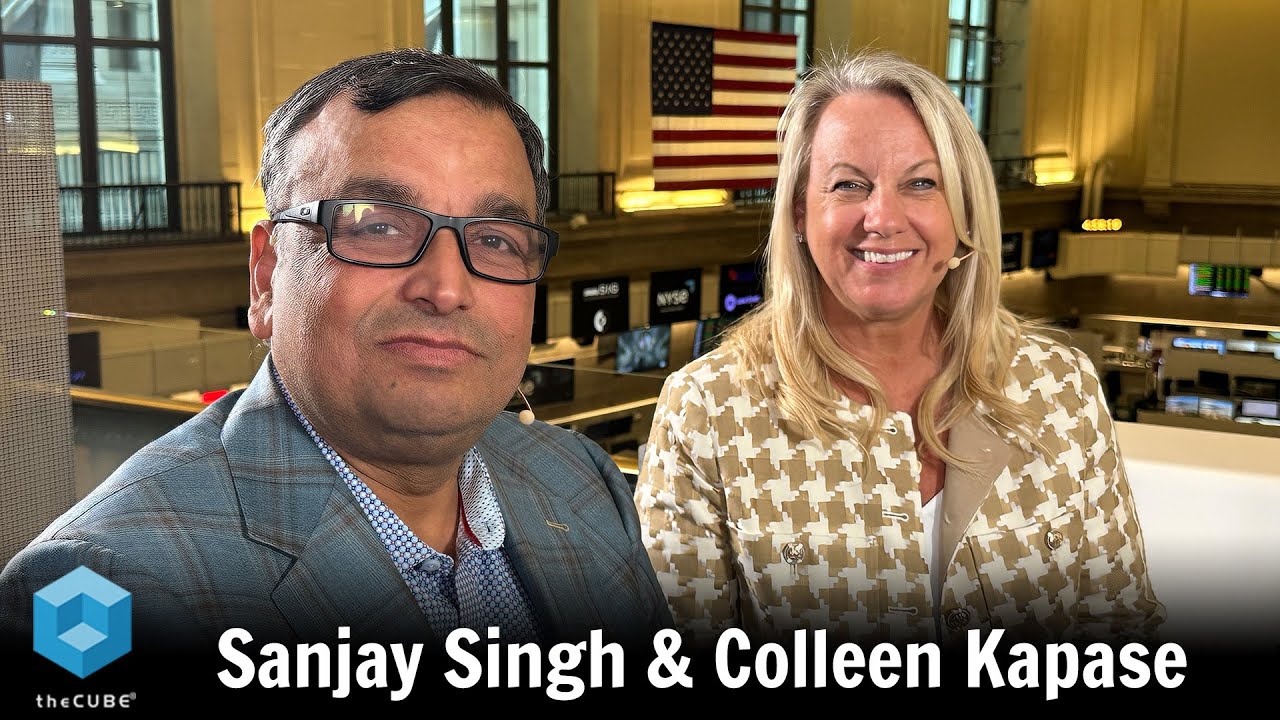
In this interview from theCUBE + NYSE Wired: Google Cloud Partner AI Series, Samrah Khan, director of North American system integrated partnerships at Google Cloud, and Yusuf Tayob, chief executive officer of Perficient, join theCUBE’s John Furrier to discuss the shift from AI hype to tangible enterprise reality. They explore how the refreshed partnership between Google Cloud and Perficient is helping organizations move beyond "pilot proliferation" to achieve outsized business value. Tayob outlines a three-pillar strategy for success, highlighting the "reverse abstraction" of the tech stack, right-sized orchestration and the necessity of building an AI-ready workforce to drive production-level results.
The conversation also dives into vertical-specific innovations, particularly in the healthcare and automotive sectors, where agentic AI is solving complex operational challenges. Khan and Tayob detail how "middleware agents" can extract value from legacy ERP and mainframe data in weeks rather than years, facilitating faster claims processing and significantly improving patient experiences. By focusing on both "first mile" infrastructure modernization and "last mile" workforce adoption, the guests demonstrate a proven playbook for achieving measurable ROI through accelerated enablement and customer trust.
Forgot Password
Almost there!
We just sent you a verification email. Please verify your account to gain access to
Google Cloud Partner AI Series. If you don’t think you received an email check your
spam folder.
In order to sign in, enter the email address you used to registered for the event. Once completed, you will receive an email with a verification link. Open this link to automatically sign into the site.
Register For Google Cloud Partner AI Series
Please fill out the information below. You will recieve an email with a verification link confirming your registration. Click the link to automatically sign into the site.
You’re almost there!
We just sent you a verification email. Please click the verification button in the email. Once your email address is verified, you will have full access to all event content for Google Cloud Partner AI Series.
I want my badge and interests to be visible to all attendees.
Checking this box will display your presense on the attendees list, view your profile and allow other attendees to contact you via 1-1 chat. Read the Privacy Policy. At any time, you can choose to disable this preference.
Select your Interests!
add
Upload your photo
Uploading..
OR
Connect via Twitter
Connect via Linkedin
EDIT PASSWORD
Share
Forgot Password
Almost there!
We just sent you a verification email. Please verify your account to gain access to
Google Cloud Partner AI Series. If you don’t think you received an email check your
spam folder.
In order to sign in, enter the email address you used to registered for the event. Once completed, you will receive an email with a verification link. Open this link to automatically sign into the site.
Sign in to gain access to Google Cloud Partner AI Series
Please sign in with LinkedIn to continue to Google Cloud Partner AI Series. Signing in with LinkedIn ensures a professional environment.
Are you sure you want to remove access rights for this user?
Details
Manage Access
email address
Community Invitation
Samrah Khan & Yusuf Tayob, Perficient
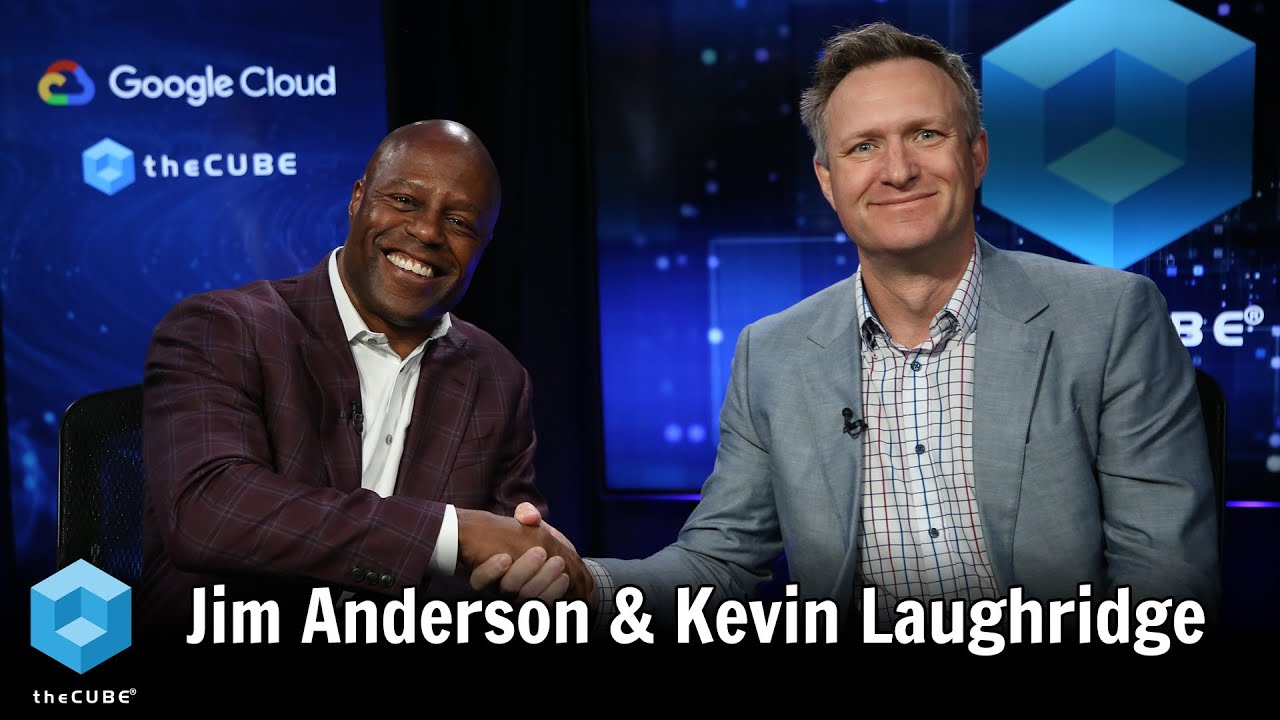
What happens when cloud innovation meets partner agility? In this episode of the Google Cloud Partner AI Series, theCUBE Research’s John Furrier sits down with Jim Anderson, VP of North America partner ecosystem and channels at Google Cloud, for a candid and forward-looking conversation. Together, they unpack how AI is reshaping Google’s partner playbook — and what that means for the future of enterprise transformation.
Anderson shares how partners are shifting from transactional relationships to long-term, journey-based engagements — mirroring the evolution of AI itself. By integrating Google Cloud’s core AI capabilities with their domain expertise, partners can accelerate time-to-value and deliver smarter, more contextual solutions that meet the growing demands of enterprise customers.
Key Highlights:
• How Google Cloud’s full AI stack is driving innovation across industries
• The rise of AI agents and why they're set to surpass SaaS in enterprise value
• The evolving role of partners in delivering scalable, high-impact solutions
• Democratization of computer science and how it’s enabling the next wave of creators
• Jim’s take on the future of the ecosystem, customer co-selling and partner growth strategies
With rapid innovation as a constant, Anderson emphasizes the need for partners to be adaptable and future-focused. He highlights how Google Cloud’s infrastructure provides a solid foundation for experimentation, growth and AI-driven transformation. The message is clear: partners who lean into AI integration will lead in delivering differentiated value and stronger business outcomes.
In this interview from theCUBE + NYSE Wired: Google Cloud Partner AI Series, Samrah Khan, director of North American system integrated partnerships at Google Cloud, and Yusuf Tayob, chief executive officer of Perficient, join theCUBE’s John Furrier to discuss the shift from AI hype to tangible enterprise reality. They explore how the refreshed partnership between Google Cloud and Perficient is helping organizations move beyond "pilot proliferation" to achieve outsized business value. Tayob outlines a three-pillar strategy for success, highlighting the "revers...Read more
exploreKeep Exploring
Why are partnerships like Google and Perficient important for realizing AI's business value, and what separates organizations that successfully move AI from pilot to production from those that remain stuck in pilots?add
How do Google Cloud and a partner like Perficient use agentic AI and the Google technology stack to improve healthcare payer member experience (for example, helping members understand benefits for a major surgery) and deliver measurable business outcomes?add
How can middleware agents be used to connect legacy ERP and mainframe data to speed up dealer incentive claim processing and improve outcomes without replatforming core systems?add
What's next in your partnership with Google — what are the next steps and plans (any data to share; more agents or physical AI)?add
>> Welcome back here. I'm John Furrier, host of theCUBE here at theCUBE's NYSE Studios. Here, of course, we have our Palo Alto studio kind of thing, Wall Street. So this is Google Cloud's Partner Showcase. We've got a great discussion from experts who are in the field, creating the value, leveraging the transformative nature of AI and bringing solutions and really changing the game. We have Samrah Khan as director of North American System Integrated Partnerships. Welcome to theCUBE. Great to see you. Yusuf Tayob, Chief Executor of Perficient. Thanks for coming on. I really appreciate this partnership conversation. Partnerships and ecosystem is the big game changer we're seeing in terms of how that's changed. One, because the velocity is super-fast. AI native applications and infrastructure is moving fast, building on top of distributed computing, cloud, et cetera. So this is kind of where the hotspot is. Yusuf, tell us about the partnership with Google and some of the things that you're working on.
Yusuf Tayob
>> Well, first of all, we love the partnership with Google. We've had a longstanding partnership between Perficient and Google, but in the last six to nine months, we've really rethought partnerships inside our business. We believe that we exist because of our technology ecosystem partners, but we also believe there are a few in the industry right now that are really redefining what it means to be AI native, what it means to be AI first, and that are really powering the future of the AI economy. We believe Google is squarely in that. And so we're very excited about the partnership and very excited about what Google and Perficient do together in the market.
John Furrier
>> One of the things that's just been going on recently, and just last week, there was a big Wall Street reaction to SaaS stocks and a big conversation around software and SaaS and the transformation. Of course, I wrote a big post on SiliconANGLE saying why everyone got it wrong. But there's a real gap between Wall Street and kind of like mainstream value identification or recognition to where the infrastructure and software is moving. There's more software than ever before. It's not like software's going anywhere. It's just AI that's coming in. This really speaks to the value that's coming out right now with customers. You guys take complex environments and technologies and make them easy to deploy and create value. And so, we're in this kind of like, it's happening, but it's not yet modeled fully. It's rolling out. You guys, you got these new verticals like healthcare that have been nice, comfortable, structured data environments now have AI thrust upon them. Automotive, we got autonomous vehicles, robotaxis. I mean, a lot of data, a lot of AI now in the equation, not just talking points. We're talking about real impact. What's your reaction to that and how people can understand the value coming out?
Yusuf Tayob
>> Yeah. Look, I think the why is sort of easy. The AI hype has turned into AI reality. There's real business value and real results that you can drive from AI. Certainly the partnerships between companies like Google and Perficient can unlock that value because Google brings a technology stack we believe unrivaled by anyone, and we bring deep expertise relative to industry and function. You put that together and you get outcomes and value. But what I would say is there's a real distinction between the enterprises or the organizations that are getting it right, like moving from pilot to production to value, and those that are still kind of stuck in pilot prolification modes. And it comes down to three things from our experience. First of all, there is a complete reverse abstraction of the tech stack. And those companies that are getting it right have figured out that reverse abstraction. And that really is enabled and powered by everything that the Google Stack brings. The second is having right sizing the controls and the orchestration that you put into AI. And the third is really building an AI ready workforce. And when you get those three things right and then you've got the right technology and the right industry depth, you can really see outsized value.
John Furrier
>> Samrah, talk about the ecosystem because I used to love the term disruptive enabler because that was like an old school concept of someone gets disrupted and someone takes new territory. The new term is accelerated enablement because all verticals are winning with AI. And the S&P 500 is showing that the people in the S&P enterprises are getting more productivity than the basic worker because they got leverage, operating leverage. Google Cloud is providing a lot of that enablement. Talk about the relationship, how you guys work together. He mentioned the stack, you guys are bringing a lot of value. He's got domain expertise. You put it together.
Samrah Khan
>> Yep. For me, I always go back to the customers. People talk about the stock market, software is down, but the reality is that for us at Google, 2025 was a big banner year. We were everywhere from NASA to Sphere in Las Vegas to Olympics this year. I think this is really our time. The momentum is really behind us and we couldn't be more excited about what we're doing with our partners, especially somebody like Perficient, where not only do they bring domain and industry expertise, they actually bring the customer trust. There are industries like healthcare where Perficient has done time and time again, improvement to certain business processes within specific functions that now they're almost at a point is where they're leveraging our platform and our AI stack to build the accelerator and get to value in six weeks as opposed to doing a proof of concept. So to me, I think 2026 is our time. It's our time to win together.
John Furrier
>> I was talking on theCUBE Cube pod we had on Friday, every Friday, it's no longer a strategy risk. It's an execution risk. Can you guys share examples of how the partnership has created value? And you mentioned healthcare and automotive. Can you just give some examples because that's the theme, acceleration, then adoption happens. Adoption creates more opportunities. So it's kind of like that flywheel. And then someone will say, "Okay, let's model it out, then we'll figure out how to quantify it down the road." But talk about the successes, some examples.
Samrah Khan
>> Yeah, maybe I'll talk from the partnership perspective and, Yusuf, you can deep dive into a specific customer use case. Look, as we look at our partner ecosystem, which has really come together for Google Cloud, we are partnering more and more with partners that are really focused on business outcomes. And I love when partners like Perficient go to an enterprise and talk about workforce adoption and impact, not transition and change, right? That's where you really get the mind share and the mind share of the people that are actually going to use the product. I think what's super interesting for Perficient, let's take healthcare as an example, and without naming any customer name, let's say a big pair, they have various different departments, customers call in or members call in and they're like, "Hey, I have this plan. I have this plan. I have this plan. I have a big surgery coming up. How does all of this come together?"
And you have somebody on the call who's going through thousands and thousands of pages to figure the information and the data out. This is where Google Cloud and Perficient really come together where you use what we call our agentic brain, which is our data platform that our agentic AI runs on top of. You combine that with Perficient's expertise of understanding that customer's business function and business process and taking our platform and then turning it into real outcomes for that specific customer. I think that's where the story becomes really powerful. We're no longer, let's try this, let's try that, and hopefully you'll get some ROIs. We're actually talking about real numbers here, whether it's like call volume, et cetera.
John Furrier
>> Has real value, cost and revenue. I love that. I love the change, transition and change. I've been there, done that. It's more of a positive vibe to look at it the way you are. I love that. Love that. Yusuf, talk about the use cases, the healthcare.
Yusuf Tayob
>> Well, I'll build on this example because I know the one Samrah's talking about. So how do you sort of take what she's described and get into the specifics because how do we make that happen? So big healthcare payer, I could tell you it's a Blue Cross Blue Shield, one of the majors, right? And it's one of the state payers. And as Samrah described, if you think about the member experience and the stress of the member experience when you're trying to get help and when you're trying to either prepare for a surgery or understand your benefits or whatever the case might be, I mentioned the Google Stack being unique because from infrastructure and the chip with data and security and the agentic experience or the agentic workspace, you can kind of build a very different, unique experience for the people that work in the payer, but also the patients. And in this example, really it came together around what we call an AI studio. Okay. So I mentioned three things that sort of make this different, make it reality. One is this notion of reverse abstraction of the tech stack, which the-
John Furrier
>> What does that mean? Just define that.
Yusuf Tayob
>> So if you think about the legacy stack, you brought up this notion of software and what's going on, right? If you think about a legacy tech stack, you've got sort of your database or your systems of record, and then you've usually got some expensive infrastructure or middleware that sits on top of that. And then you've got maybe some SaaS application on top of that, and then you've got some experience layer and you've got lots of silos. Think about inverting that. And what Google technology allows you to do is build agentic capabilities that go straight to the data that you need, regardless of where it may have sat historically. So massively compressed timeline then to be able to get value and create real experience for your user.
John Furrier
>> All right, great. Thanks for defining that. So number two, you were on number two.
Yusuf Tayob
>> Yeah.
John Furrier
>> Thank you for defining that, by the way.
Yusuf Tayob
>> Yeah, of course. The second piece of this is what we call right sizing your orchestration and right sizing your controls. Security and safety, particularly in regulated industries like healthcare is super important. And at the same time, we see security and governance and other things sometimes get in the way of making progress. And so, finding the right combination there. And the same thing with orchestration. Agents are great, but agents need humans as well. And being able to right size that orchestration where you're giving the agent enough autonomy to make the right decisions, but you're putting a human in the middle where you need to train the agent or to continue to help the agent learn. So that's the second piece. And then the third piece is having an AI ready workforce. If you're putting agents out with a workforce that still likes to do things the old way, you don't get the value.
In this particular example, around an AI studio, this company did all those three things really well. And so now you've got an ability to build the tech much faster. You've got an ability to then... In this case, we put agents next to people helping those patients, 1.7 million calls we fielded so far over 200,000 chat conversations. Productivity's interesting. I think productivity's up about 10%, but more important, the experience, patient experience, those scores are up 20%. And it's because you've got a workforce that now knows how to work with the AI.
John Furrier
>> Yeah. I think Samrah, your point about that, the words that you use kind of gets triggering. It's like, oh yeah, transition and change management. That's like going to the dentist. It's like, you know you got to go, but when you talk about value that's immediate and easy, and this acceleration becomes a huge deal, it's not like, here's the manual, let's get training, here's how you use the tools. You're getting almost instant success.
Samrah Khan
>> Yes.
John Furrier
>> If you do it right. You just laid out the template. That's a playbook. What's been the reaction? I mean, can you share the adoption, anecdotal story? What's been the reaction from the people in the workforce, the people who have to operate, and of course the customers?
Samrah Khan
>> Yep. So look, I mean, the customers at this point in time, right, they're not asking us, "Hey, can we transform?" They're asking us, "How fast are you going to get us there?" And there are two parts to it. We just talked about what I call the last mile, which is people, workforce adopting the AI, making their life easier, finding positive impact for them. So it's not a resistant or change, it's actually impacting and improving their day-to-day life. But there's also a second component to it, which is what I call the first mile. And this is sort of like my networking speak, which is there are people in engineering and IT and product that are responsible for safety, for security, for deployment, for total cost of ownership, et cetera. Google's point of view is we're not here to rip and replace your infrastructure and stick around for three years before you're going to see ROI. Our position is, how are we going to modernize and drive value out of what you have in place within weeks while we work on a long-term plan? So our position is always twofold. We're going to work on the last mile impact, but we're also going to really focus on making sure we have the buy-in from the CISOs, CIOs, and CTOs. So legacy systems like ERPs and CRM that have 50 years worth of data, we're not looking to retool, we're not looking to remove the data and we're not looking to restack. Rather, a good example would be we're deploying middleware agents using Google Cloud. How do we extract the value out of that? So you're putting the IT and the CISOs at ease because you're not putting more work on them while providing value to the last mile. And ultimately, our goal is not just serving the enterprises, but serving their customers, as you mentioned.
John Furrier
>> Yeah. Yusuf, you mentioned the three things earlier. I think this speaks to the trend that we're seeing. I'd love to get your reaction because what I hear you saying is the old days was you have builders who have built stuff, they pass it off to the operators and the operators will go to the customer. That's all happened now, collapsed into one process. The builders, the operators, and the customers are working together, so the reverse abstraction enables that. Did I get that right?
Yusuf Tayob
>> You got that right. And it's with a focus on outcomes and value creation, not a focus on replatforming systems. I mean, Samrah just mentioned this notion of middleware agents. So I'll give you an automotive example where we're working together. Big OEM, global auto manufacturer, lots of data sitting in ERPs and in mainframes, lots of expensive middleware, independent SaaS applications that users touch. And in this particular example, we're looking at when dealers have incentives, manufacturer provides incentives, dealers have to claim or prove that they're eligible for those incentives. Those are highly manual processes with data that sits in lots of different systems touching multiple different departments. So Perficient and Google are working together in this particular OEM. We're building those middleware agents. Those middleware agents are going directly to the legacy data sources, both ERP and mainframe, but they're collecting that data in a way that makes sense to the business users who need to actually make decisions on those incentives. And we've cut the time down or we are cutting the time down from weeks in some cases on some of those claims to hours. And again, it doesn't involve taking out the ERP or taking out the mainframe or anything else right now. We can get to that later, but this is about creating real value now.
John Furrier
>> Yeah. And it also takes that legacy and modernize and brings in the new stuff.
Samrah Khan
>> Yeah. I mean, this particular automotive company, right, in their case, imagine you are a dealership, you sell their cars. As a dealer, we all want to get paid our money. We file a claim online. Sometimes it was taking weeks to get the money, right? With this particular process, the claims processing time has gone down significantly. So it's a win-win situation for everybody, low touch, speed to market.
John Furrier
>> Well, you guys have a new way to engage the customer, build value. Congratulations. I guess my final question is, what's next in the partnership? Any data you want to share? What's next? Where do you guys go from here? More agents, physical AI?
Yusuf Tayob
>> I would say, as I said, we've had a longstanding partnership with Google, but in a way, I feel like we're just getting started. Because when you look at the infrastructure layer plus the data, plus the security, plus the ability to then build the agentic stuff on top of that, you look at the adoption of these capabilities in the enterprise right now. This is why we've sort of refreshed the partnership and we remain committed to really creating outcomes and value in regulated industries and non-regulated industries.
John Furrier
>> Well, you guys are closing the gap. Well, congratulations. Thanks for coming on theCUBE. Really appreciate it. I'm John Furrier. We're at the Google Cloud Partners Showcase where the examples, the templates, the best practices, where the production workloads are starting to come in line with AI and the values there and reduces cost, but also drives more revenue. You're starting to see the proof points. This is the year of execution and we're doing our part to keep up. Thanks for watching.













 John Furrier