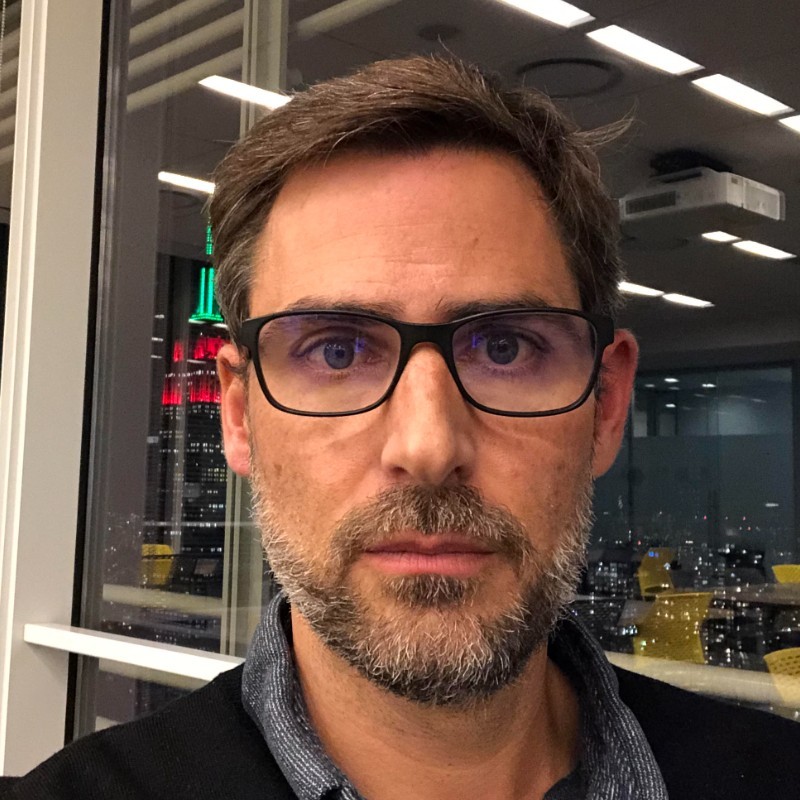
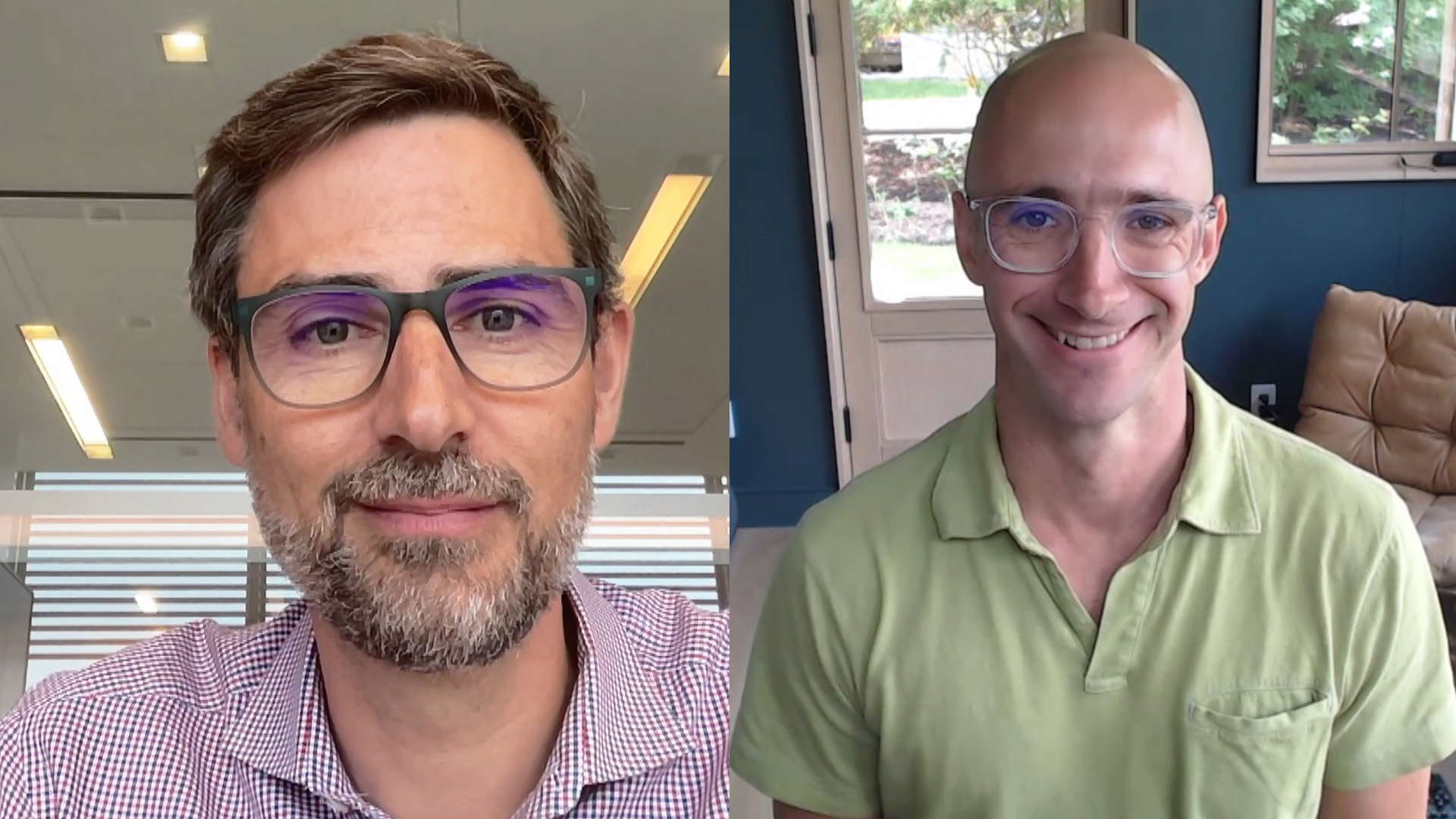
Stephen Orban, VP of Migrations and ISVs at Google Cloud, and Yrieix Garnier, VP of Product at Datadog, discuss their partnership. Datadog's observability and security solutions help identify performance and security issues with over 750 integrations, including 35 Google Cloud services, ensuring visibility across the stack and AI workloads like Vertex. The platform-first approach focuses on simplicity and deep integrations with Google Cloud services. The partnership benefits customers with seamless migrations and reliability at scale, as seen with Statsig achieving 99.99% reliability during a cloud migration. Large retailers and gaming companies rely on Datadog for performance monitoring during peak seasons. Data analytics and machine learning are used to provide observability and make informed decisions. The series aims to create a wide ecosystem to meet customers' needs, with contributions from partners like Datadog. Continuing investment in engineering and data science talent will drive future growth and innovation.
Forgot Password
Almost there!
We just sent you a verification email. Please verify your account to gain access to
Google Cloud Marketplace Marvels. If you don’t think you received an email check your
spam folder.
In order to sign in, enter the email address you used to registered for the event. Once completed, you will receive an email with a verification link. Open this link to automatically sign into the site.
Register For Google Cloud Marketplace Marvels
Please fill out the information below. You will recieve an email with a verification link confirming your registration. Click the link to automatically sign into the site.
You’re almost there!
We just sent you a verification email. Please click the verification button in the email. Once your email address is verified, you will have full access to all event content for Google Cloud Marketplace Marvels.
I want my badge and interests to be visible to all attendees.
Checking this box will display your presense on the attendees list, view your profile and allow other attendees to contact you via 1-1 chat. Read the Privacy Policy. At any time, you can choose to disable this preference.
Select your Interests!
add
Upload your photo
Uploading..
OR
Connect via Twitter
Connect via Linkedin
EDIT PASSWORD
Share
Forgot Password
Almost there!
We just sent you a verification email. Please verify your account to gain access to
Google Cloud Marketplace Marvels. If you don’t think you received an email check your
spam folder.
In order to sign in, enter the email address you used to registered for the event. Once completed, you will receive an email with a verification link. Open this link to automatically sign into the site.
Sign in to gain access to Google Cloud Marketplace Marvels
Please sign in with LinkedIn to continue to Google Cloud Marketplace Marvels. Signing in with LinkedIn ensures a professional environment.
Are you sure you want to remove access rights for this user?
Details
Manage Access
email address
Community Invitation
Google Cloud & Datadog
Stephen Orban, VP of Migrations and ISVs at Google Cloud, and Yrieix Garnier, VP of Product at Datadog, discuss their partnership. Datadog's observability and security solutions help identify performance and security issues with over 750 integrations, including 35 Google Cloud services, ensuring visibility across the stack and AI workloads like Vertex. The platform-first approach focuses on simplicity and deep integrations with Google Cloud services. The partnership benefits customers with seamless migrations and reliability at scale, as seen with Statsig achieving 99.99% reliability during a cloud migration. Large retailers and gaming companies rely on Datadog for performance monitoring during peak seasons. Data analytics and machine learning are used to provide observability and make informed decisions. The series aims to create a wide ecosystem to meet customers' needs, with contributions from partners like Datadog. Continuing investment in engineering and data science talent will drive future growth and innovation.
Stephen Orban, VP of Migrations and ISVs at Google Cloud, and Yrieix Garnier, VP of Product at Datadog, discuss their partnership. Datadog's observability and security solutions help identify performance and security issues with over 750 integrations, including 35 Google Cloud services, ensuring visibility across the stack and AI workloads like Vertex. The platform-first approach focuses on simplicity and deep integrations with Google Cloud services. The partnership benefits customers with seamless migrations and reliability at scale, as seen with Statsig ach...Read more
exploreKeep Exploring
What is the focus of Google Cloud and the Marketplace Marvel series?add
What features does Datadog offer in terms of observability and security solutions?add
What services does Datadog support with Google Cloud, and how does their integration provide value in cloud migration?add
What are some considerations that need to be taken into account when migrating workloads to Google Cloud while maintaining performance and minimizing disruption for end users?add
What are some of the capabilities across Google Cloud that aim to help customers with their data analytics and machine learning needs, in addition to partnerships with companies like Datadog to provide integrations and higher level services?add
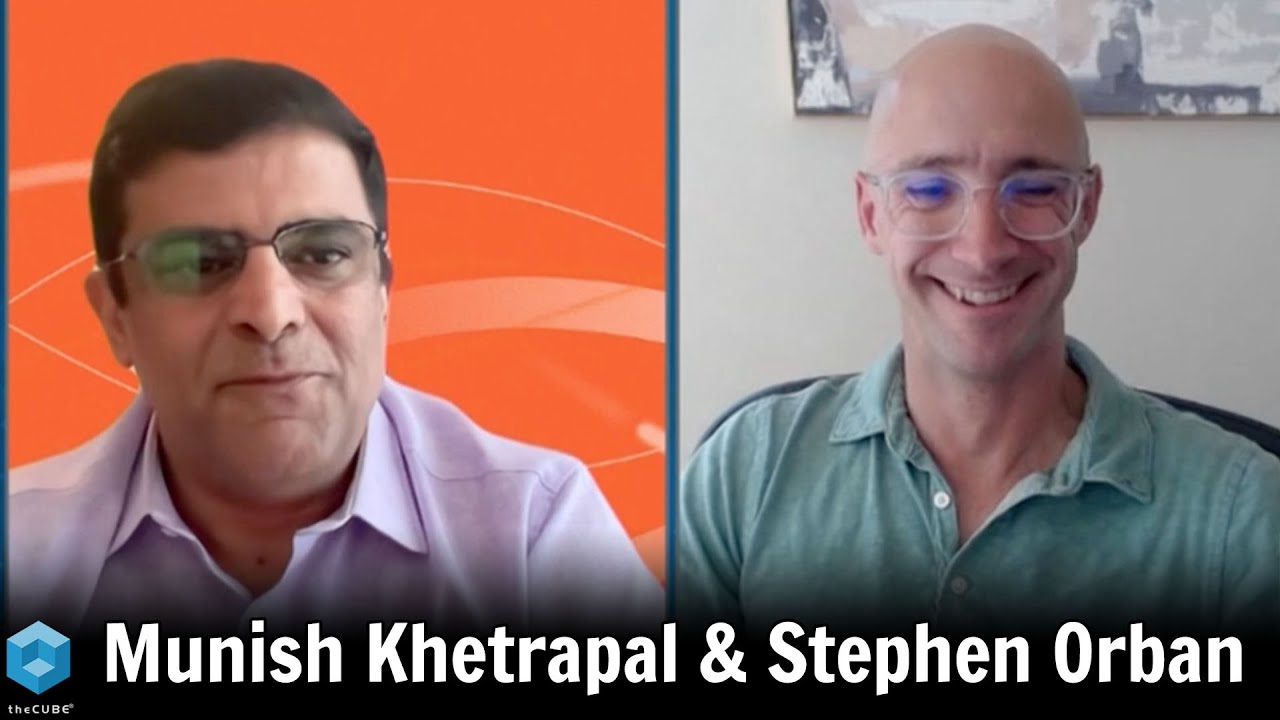
>> Hello and welcome back to the Marketplace Marvel series. I'm John Furrier, host of theCUBE here in our Palo Alto studio. This is a series where we're featuring all the latest, greatest people making the tech happen in cloud and obviously in the marketplace. Here with Stephen Orban, VP of Migrations and ISVs and Marketplace with Google Cloud. And Yrieix Garnier, who's the VP of Product at Datadog. Gentlemen, thanks for coming into theCUBE for this special Marketplace Marvels.
Stephen Orban
>> Awesome to be here. Thanks for having us, John.>> Stephen, set the table for us. Folks watching this, we've had some other videos talk about this Marketplace Marvels. Why are we doing this series? What's the focus of Google Cloud and the Marketplace Marvel series?
Stephen Orban
>> Yeah, well first of all, thanks for hosting us, John. And big thanks to Yrieix and the entire Datadog team for being on this journey with us. So look, it's a super exciting time for Google Cloud, and an even more exciting time for our marketplace. As we really continue to see significant growth from software companies like Datadog, who really are leaning in to make marketplace their default way to meet customers where they are, as they transform with GCP. So we have lots of large customers like Home Depot, Goldman Sachs and Mayo Clinic who are really making significant moves to Google Cloud, for whether it be a digital or an AI transformation. And as that happens, our backlog of committed spend grows with it. And customers of course have two ways to satisfy those commitments. One, by consuming Google Cloud products. Or by consuming one of the thousands of ISVs in our marketplace. And as we've added more and more capabilities for ISVs to find and reach our customers, including selling alongside them with our field teams, and recently adding support for customers to buy from the reseller of their choice. We're finding that actually customers migrate faster for when they buy from the right software company or the right ISV at the right time. And consequently, our ISVs close larger deals faster and more often. But at the same time, to really be successful growing a marketplace business, it's just like anything in life and business really. You get what you put into it. So we've started this series, and thanks again John for hosting and Yrieix for doing it with us today, to really shine a light on some of the ISVs who do this well, how they've done it to both help our customers understand why Datadog is such a great choice for observability on Google Cloud, and to help ISVs achieve similar levels of success. And I think what you'll hear from Yrieix is that Datadog has leaned in on all of the three necessary components of successfully partnering with us on Marketplace. First, they build unique solutions that customers can only find on GCP. Datadog, as you know, is one of the most comprehensive observability solutions out there, and it's certainly true of Google. They've built more than 750 integrations into more than 35 of our services. And they do so really quickly as soon as we launch services. With Vertex, they have observability for Vertex right away. They market it really well to their customers in the right place and their product experience. And we have great collateral for our respective field teams to understand how and why Datadog is a great choice on GCP. And then they engage in deep post-sale relationships with us. So those are the three things that we see all ISVs and Datadog does in spades.>> Steven, we're really proud to host this. You know me, I'm a fan of marketplaces now in a time where more than ever, people are architecting, and building, and deploying new kinds of technologies and solutions. It's a really integration world and this cloud next gen is here. Of course, Datadog's been there from the beginning, president of the creation of Wave 1 of the cloud here. Yrieix, talk about Datadog. You're the VP of Product, which is, as we say, you get the keys to the kingdom. You get the road map, you talk to customers, you got to make decisions. Datadog's been very successful, huge, loyal customer base, a product market fit that's legendary. But now as you guys look at this next wave coming, a lot of integrations, a lot going on. Set up Datadog for us with folks watching, and then we'll get into some of the things I want to ask about the marketplace and how you guys are integrating in. So what's going on with Datadog? Give us the update.
Yrieix Garnier
>> Sure. So hey, first, thanks John. Great to be here with you guys, you and Steve. And as you said, Datadog has been pretty well known now. We are I think the observability solutions in the market, but we also have a both observability and actually a security solution. That platform will actually really bring all those insights from all the different layers of your stack, coming from the infrastructure, all the way to your applications and going with logs, traces. But also security signals that we all bring together into really I think really adding value for customers in few ways. Which is the first and the mission of Datadog, and what's created for that is actually breaking down silos between the different organizations, between the different teams. We talk about Dev Ops now, we talk about Dev Sec Ops. We including more and more of those personas into the Datadog platform. But we really help our customers identify performance issues, security issue, being able to reduce that meantime to resolutions, meantime to detections and get to the root cause of that. What's been evolving with Datadog that over the last few years, the company has been there for more than a decade now, is actually really thinking about how we bring that information upfront for our customers. How we bring that with some AI features, and really making sure that we make the most value of all the different telemetry or different data you can go and send to Datadog. And as everybody knows, this is a very, very large environment. So breaking down those silos is even more critical, because you have way more on that stack, way more complex, and that's where customers really need some solution like Datadog for that.>> I definitely want to get into some of those non-disruptive operational elements that are needed for measurement, and tracking, and doing all that observability as it changes and evolves too. But also you guys have been very successful on winning over the developers, very organic growth. That gets you in the market, that makes you guys big. You're successful. But now you're a part of the fabric. And as we look at the marketplace opportunities, things are happening a little bit differently. It's growing. How do you guys look at that customer, not only new acquisition of customers, but also serving existing customers? How do you guys think about the marketplace? And how does that factor into your growth strategy and your go-to-market, making it go faster? What's your take on that? Because I can see both sides of that, continue to get new customers, but they already have Datadog, and they got to integrate in. What's the view of the marketplace and how do you look at that?
Yrieix Garnier
>> The way I would say we see the marketplace, but I would take even more broader the partnership with Google here. The marketplace is one of those elements here, is really thinking about this holistically. Which is if you look at the marketplace, the marketplace is we see more and more customers going to the marketplace. This is where we see customers that actually do want to, most of them simplify their procurements, simplify their legal processes that they already have those agreements in place with Google and with the marketplace. And they are actually looking for that to leverage more and more solutions. And Steve said it earlier, they do have a pretty large commitment on those marketplace, and they want to be able to go and retire some of those commitments. So the ability to leverage the Datadog solutions, and combining Datadog and Google Cloud services spend together, really helped them into going into those higher commitment tiers with the marketplace. So that's really seen from a customer perspective as a true value, to be able to just have their spend, hit their spends and then at the end of the day, have some better deals, and better solutions from both Datadog and from a Google perspective.>> I love that the point of engagement is wherever the customer needs faster conversion on getting the product out there, make more money. I buy the economics. I'm a huge fan of marketplaces. But what's interesting about the marketplaces is the use cases and the integrations. Can you comment on Datadog because of your market position, you have a lot of touch points with customers infrastructure. And certainly as Google adds more cloud services, back in the old days, "I got three integrations, I got Stripe and I got some APIs." Now there's 100s of services. Give me the example of the use cases that you guys are tying in with Google, and how many services, what's the service integration look like? I guess set the table for what the new integrations look like. Because there's a lot. Integration is a big deal.
Yrieix Garnier
>> So let me start, and Steve can add on top of this. So Steve did say we have 750 integration with Datadog. We have about 35 with Google Cloud services. So it's a large number of those services we do support with Datadog. And this is across, I would say the entire spectrum of those services. We support some FML workload infrastructure like serverless, with Cloud Run, Cloud Functions. We obviously support containers. We've been a very big actor in the container space. So we do support with GKE. We do have a ability to detect all the different instances. We as much as you spend them up, Datadog is already there on part of it. This is actually really key, is not just a high level integration, but to really go deep into those integrations. We support the AI solutions from Google too, and I think we were the first partners to have an integration with Vertex AI. Really getting into that visibility into the AI offering from Google, and making sure that from Datadog, we bring that information into your overall stack. Because now what you're running on top of AI is as important as any of the other workloads that you actually have. And we keep go expand, and expand those solutions and having more and more of those integrations. And the beauty of this and the partnership is really that as Google built some of those, we already are working with them, partnering with them ahead of time to be able to almost launch at the same time. And make sure that from the customer perspective, that that integrated solution, integrated view, and really be able to have the observability across the entire solution they have running on Google. So that's I think one of the key value we provide. And you asked for an example, and how we see that is really from a cloud migration perspective. All the customers when they think about either migrating to the cloud, or even sometime being able to move from different cloud providers to another one, they want to make sure they have the entire solutions supported within their existing processes. They use Datadog for that migrations, and that really helped them into have a seamless migrations to go from wherever they are to where they really want to go, really want to be with Google, and being able to have that integrations and support with the less disruption they can on their services, on their applications, and obviously on their businesses at the end.>> I think interoperability is a big point there. Stephen, talk about the Google... Okay, go ahead. So the Google.
Stephen Orban
>> Yeah, I was just going to add and double down on what Yrieix was saying. I think whenever we talk to a customer about any big migration, or a transformation that they might be doing, the first thing that they want to know is, how are they going to be able to monitor and observe these workloads so that they can do so safely? It's really about reducing the risk of moving to cloud as fast as possible. As Yrieix said, we share a pursuit and wanting to bring that transparency to customers. And it's one of the first conversations we have is, "Okay, how are you going to observe your workloads?" Datadog happens to be not just a leader in this space, but also a great partner, runs really well on Google Cloud, is integrated with more than 35 of our services. Yrieix mentioned they were the first observability partner to give transparency into Vertex. So now that AI workloads have become one of the most top of mind things for most CIOs and enterprises that we work with, they're able to build AI applications with speed and confidence because Datadog can observe it, because they were the first to make that available. Just to give an example, we also talked about breaking down silos and making it consistent across. Together with Datadog, we worked with one of the largest FinTech companies out there that process lots of payments for customers, and they consolidated on Datadog as an observability platform across their entire, many different lines of business. Because it was just going to be so much more convenient, the tech was better, and it helped them across the uniformity of their environment. So really exciting customer win for us together also.>> Yeah, I want to follow up, if you don't mind. Datadog has a great platform first strategy. The interoperability Yrieix just mentioned that's a huge feature, right? Across environments is key. Question for you, Stephen, on the Google side. Can I, as a Google customer of my single service account, give Datadog access to my projects, and can it discover new ones? Can I fully bring Datadog in to all my services to get that telemetry value? And then Yrieix I want to ask you, does that translate over into the interoperability piece? I think that's a key killer feature right there. Stephen, what do you think?
Stephen Orban
>> 100%. The answer is 100% yes, you can. And Datadog has made it easy not just to find and discover Datadog on Google Cloud, but also to wire it up into all of our different services so that customers can, as I said before, migrate with speed and confidence knowing that they're able to observe the workloads they're running on Google Cloud.>> Yrieix on your side, you guys have a UX. Well, people love your user interface and user experience. Does that change at all? You're a customer. I want to be able to see everything, but I don't want to feel like I'm jumped into a silo. And what's your answer to that? Because that would be cool if you could be integrated into Google Services and not feel like anything happened.
Yrieix Garnier
>> Exactly. The way we do integrate with Google is, we do have a UI within Datadog. And this very intuitive UI, as you say, is well known from the data perspective to be like, we don't have any query languages. We just make it simple but not simplistic. This is one of our motto internally, making sure that hey, we solve the most complex use cases, but from a customer perspective, it sounds pretty straightforward and very easy. We do have that platform first approach, which is all the data are actually together, which means we have a data platform behind this where we move again that complexity, and make sure that we provide that very simple view, but really connect it between all the different type of telemetry we're getting. Because again, Datadog, we go from your code, all the way to security, through your infrastructure, to your logs, to your APM, your applications, your traces, your even costs now. So we integrate all of that. The way we bring this into the Google ecosystem with the marketplace is really about how you want to initiate that integration with Datadog. When you think about observability in general, you want it to be everywhere. You don't want to have miss one application or another one, because those could be your weakest point and this is where something can break. You want to be ahead of that. So with Google Cloud, what we're doing, we actually, with that single Google Cloud service account, you set it up once and then all your services can actually benefit from it. Which is if you're running on GKE, we'll be able to actually automatically detect any new clusters you'll be launching. If you run on the serverless side, we'll have a new sidecar for cloud runs to really simplify that instrumentation. So every time you will launch a new workload, Datadog will be there along the way. We even bring information about your cut cost, which means we can even tell you what's happening within your cost, both in Datadog alongside observability, so you can measure your cost versus the performance of your applications. And we even bring security data like our cloud infrastructure and entitlement management, which brings those information into the Datadog to know exactly how your whole environment is actually configured. So that's very unique integration and very deep integration we have between the two platforms.>> I definitely want-
Stephen Orban
>> It's a super powerful combination also, John. I think one of the things Yrieix just mentioned is, as a customer launches new GKE clusters, or launches new serverless functions or capabilities, Datadog automatically looks at it and can observe it. If you think about it, there's oftentimes in a big enterprise context, the tension between a central cloud or security team, and then the individual development teams who are constantly launching new capabilities. Datadog's capability in this space helps bridge that gap and get the best of both worlds. So the developers can still be free to launch new things, but they're going to get the observability and security they need in it, that they can do it with confidence.>> And I think that's what I was jumping in on, because that is a huge feature. Because one, Datadog wins because they get more access to services on Google. Google, you win because Datadog has an install base, and the client experience is going to guarantee confidence in the telemetry and the data that they're going to be getting. This becomes super important. I want to get your thoughts on the customer impact now. Because if you look at in today's world we live in, there's not a lot of confidence going on around, "Am I observing everything? Are those updates going to go through?" I don't want to see disruption, nevermind breaches and security instance, we're talking about disruption, just classic Dev Ops gone bad disruption. And that's in the absence of observability. Yrieix, you and I were talking about this before we came on camera that this day two, whatever day three operations you want to call it, this is a huge deal. Because the scale of a disruption could have a ripple effect. We've seen that and people are nervous. So this is an important part that these services can be discovered, managed and instrumented.
Yrieix Garnier
>> So if you think about those disruptions, we had some very recent examples I think in the last few days here, and those are actually, it's most of the time a question of, what's your overall approach? What's your culture you have behind Dev Ops, behind even Dev Sec Ops in this case? And making sure that when you think about that, it needs to be really entrenched into your processes, into your way of thinking about observability, but really thinking about the services you want to give to your different customers and to different applications. So I'll take maybe one example. We have one of our customers, Statsig, which is a joint reference between Google and DataDog. And they were really thinking about, "Hey, how do I want to go and migrate to Google Cloud? How I want to be able to move my workloads from the different vendors to Google Cloud?" And the key thing for them, which is I think for all the different vendors, and all the different customer here is like, "How do I do it with the less disruption that I can, maintaining my performance while still serving my end users?" And this with a pretty large scale, which is really, really important for them.>> What's the reliability on that? You said at scale. What's the reliability? Is it like 99%?
Yrieix Garnier
>> Yeah, so actually the interesting part is if I jumped even to the conclusion there, when they did that migrations with DataDog, no disruptions for the different users being able to have GKE, BigQuery, memory stores for Redis, all out of the box deployed. And again, with those integrations we built between Datadog and Google Cloud, being able to really get not even to three nines, 99.9, but actually managed to achieve four nines, 99.99 reliability. And really doing this while they even increased their different transaction volume that they were actually getting on their platform. So it's not just reliability with less volume, but reliability better with higher volume. So that's really I think the key part of doing this as smooth as you can without disrupting, without even people understanding that behind the scene, you've changed something as critical as your cloud platform here.>> Stephen, weigh in on this on criticality of the integrations are when you need uptime, guarantees, reliability and confidence around the infrastructure working, whether that's fail over fault tolerance. Just overall attention to detail on the engineering side. I know we've talked about this in the past on other Marvels. This is a huge deal right now. The world is looking at this.
Stephen Orban
>> Yeah, I think Yrieix nailed it. In that particular customer example that we worked together on Statsig, their reliability went up, but not just on less data. They were actually taking more samples, and we were looking at more of their environment and the reliability went up. And again, it's one of the first things that customers ask us. "Okay, I want to move to the cloud. I know I'm going to be able to get the higher agility and be able to react to customer demands faster and better. But with that, comes the responsibility of a larger environment that could be shifting with autoscaling events, etc." And really know Datadog is just such a critical partnership for us to really help customers be able to do that with speed and confidence.>> Scale's a double-edged sword, right? You've got the greatness of scale and the goodness of clouds. You got to manage it. Is there any other examples that you guys can point to? You don't have to name names. I know this is, Statsig is a great public reference. But you guys are involved in a lot of deals. I know you can't name names, but there's a lot of large scale deployments that are really pushing the envelope on new software. Certainly security is a challenge, and getting the best software enabled environments at the edge as well, cloud's a big part of it. Can you guys share any other examples? You can anonymize it for me, but I'd love to hear your thoughts.
Yrieix Garnier
>> I have I think one, which a few, but one type of case study which is interesting. Which is if we take a large retailer company, or even one of the gaming leader we see out there, it's also becoming super important when you get into some of those spike seasons like Black Friday, or you are launching a new game and you really want to make sure that you have the right performance, you actually have the right experience for all your end users. This is really key where you want to make sure that you be able to go and provide that value to your end users. And that's where Datadog has come into play, because we really help you monitor that performance ahead of time, and during those even spike of usage. And again, that's where bringing this information together, bringing this into that platform, into DataDog is really critical. And that's I think something we're doing very well here at Datadog.>> Awesome. Guys, I want to say thanks for coming on this Marvel series. Steve, always a pleasure. Before we leave, I want to get your thoughts, just a closing, parting question. There's more data coming in than ever before. Every year it's like, "Oh, there's more than the past 20 years, now past five years time." Whatever. Tons of data, unstructured and structured data. How do you guys stay on top of it? Obviously Yrieix on you guys, this is your job. Your job is to make sure you get the right products. Steve, you got to make sure that you get the Google Cloud capabilities and all the right integrations. How do you guys stay ahead? Obviously machine learning and AI is going to be a big part of it. As you look forward, we have more data coming in, more lower latency requirements are there. The pressure to observe in context, it's a challenge. I know you guys are on top, that's what you guys do. Datadog, it is your differentiator. Thoughts on how you guys stay ahead of the game?
Stephen Orban
>> For us, John, it's a combination of things. So we have a number of capabilities across Google Cloud, whether it be BigQuery, which is a world leading analytics tool, or Gemini and Vertex to help customers take all that data and use it in machine learning models, to make smarter decisions across their business. But beyond that, just in the context of this series, we want to make sure we have the broadest, and most open ecosystem on earth, to make sure that we have all of the capabilities that our customers need. Sometimes it's going to come from us, but more often than not, it's going to come from our partners like Datadog, who are building integrations and higher level services to help customers achieve their outcomes. And then the only other thing I would add that we didn't talk a lot about throughout the rest of the conversation, is in addition to all these integrations, our teams in the field as we're working with customers have just become accustomed to working with each other. So our technical customer engineers, and the Datadog customer engineers work very closely on all of these customer opportunities. And there's just a familiarity that makes it really easy to together help customers achieve some of their hardest outcomes and we're very grateful for that partnership.>> Yrieix, you got the product roadmap ahead of you, the key kingdom. How do you stay ahead? AI, machine learning, AI embedded everywhere. Tell us what's going on. Give us a peak.
Yrieix Garnier
>> We do. By the way one of the core thing for Datadog is we invest a lot into our R&D. We have a pretty large investment into our engineering team, and then we do scale our platform, we scale it way more than any customers would need individually, but we true for that massive amount of data. We embed more and more of AI/ML solutions. We really bring that into, hey, how we help you doing some RCA, root cause analysis, how to understand what's happening into your environment. But we also help our customers doing it on their own environment. Because we also now start to have observability for your own LLM applications, that really help customers understanding what's happening into my core, my responses. All those different interactions. And we actually worked with Gemini to be able to train Gemini on Datadog, but also integrates with Gemini to understand that what's going to happen into those apps, being able to integrate that within your overall observability. So I think scale is only going to get bigger and bigger. But now even more with LLM, even more with AI, we have tools to really go beyond just providing information, but really helping customers understand the reason about those and act behind that. So that's really I think the journey we've been on, and we'll continue investing on that with Datadog, with that pretty large engineering side, and all the data scientists, AI/ML that we're building into the platform.>> Yrieix, congratulations to your team. You guys are great, and obviously scale's a competitive advantage for the folks who can get it right. Stephen, you guys are bringing more scale. Great conversation, Stephen. Yrieix, thanks for spending the time with me today on the Marketplace Marvel series.
Stephen Orban
>> Thanks for having us, John.
Yrieix Garnier
>> Yeah, likewise.>> Okay, you're watching the Marketplace Marvel series. These are the leaders that are bringing technology to the table to build the future. I'm John Furrier, your host of theCUBE here in Palo Alto. Thanks for watching.