We just sent you a verification email. Please verify your account to gain access to
Google Cloud Next '24. If you don’t think you received an email check your
spam folder.
In order to sign in, enter the email address you used to registered for the event. Once completed, you will receive an email with a verification link. Open this link to automatically sign into the site.
Register For Google Cloud Next '24
Please fill out the information below. You will recieve an email with a verification link confirming your registration. Click the link to automatically sign into the site.
You’re almost there!
We just sent you a verification email. Please click the verification button in the email. Once your email address is verified, you will have full access to all event content for Google Cloud Next '24.
I want my badge and interests to be visible to all attendees.
Checking this box will display your presense on the attendees list, view your profile and allow other attendees to contact you via 1-1 chat. Read the Privacy Policy. At any time, you can choose to disable this preference.
Select your Interests!
add
Upload your photo
Uploading..
OR
Connect via Twitter
Connect via Linkedin
EDIT PASSWORD
Share
Forgot Password
Almost there!
We just sent you a verification email. Please verify your account to gain access to
Google Cloud Next '24. If you don’t think you received an email check your
spam folder.
In order to sign in, enter the email address you used to registered for the event. Once completed, you will receive an email with a verification link. Open this link to automatically sign into the site.
Sign in to gain access to Google Cloud Next '24
Please sign in with LinkedIn to continue to Google Cloud Next '24. Signing in with LinkedIn ensures a professional environment.
(upbeat jingle) >> Good morning, nerd
fam, and welcome back to Google Cloud Next,
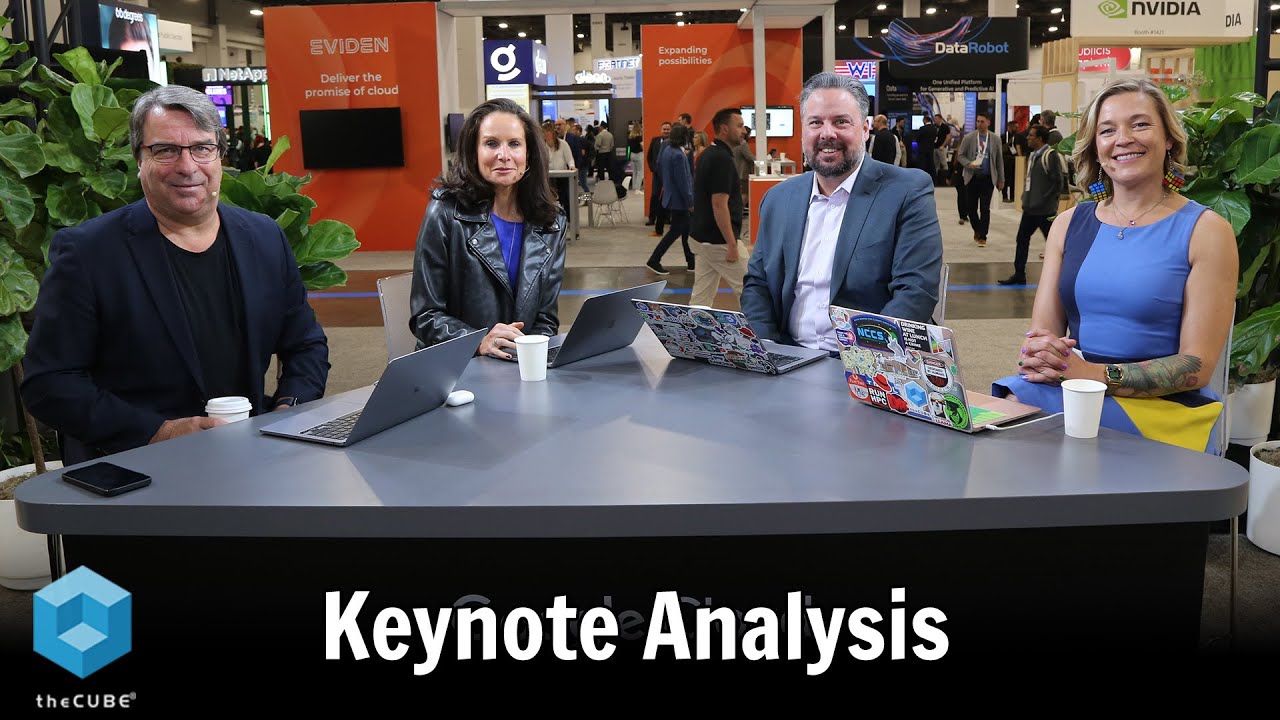
we're here in Las Vegas. It's day three of this absolutely fabulous power-packed event. My name's Savannah Peterson,
joined by my fabulous co-host, Rebecca Knight, and John Furrier. John, what's been your favorite
part of Vegas this week? >> I think the whole Gemini 1.5 proves that intelligent software
is coming faster, you're seeing better software
stacks emerge with data. I think the question of
how to run cloud at scale with high-performance gen AI
will be the biggest opportunity for businesses to change their
growth strategy so, you know, to me, the tech question
is, how do you run it? >> So this next segment
will be really awesome. >> Yeah, how are you doing
this morning, Rebecca? >> I'm great, I'm great, and
I second everything that John is saying, and what I find most
fascinating based on my beat is how we are really entering
this AI-driven workforce >> and how it's really going to
change people's day-to-day jobs. >> Yeah, I love it,
well, our next guest is, ain't his first rodeo, very
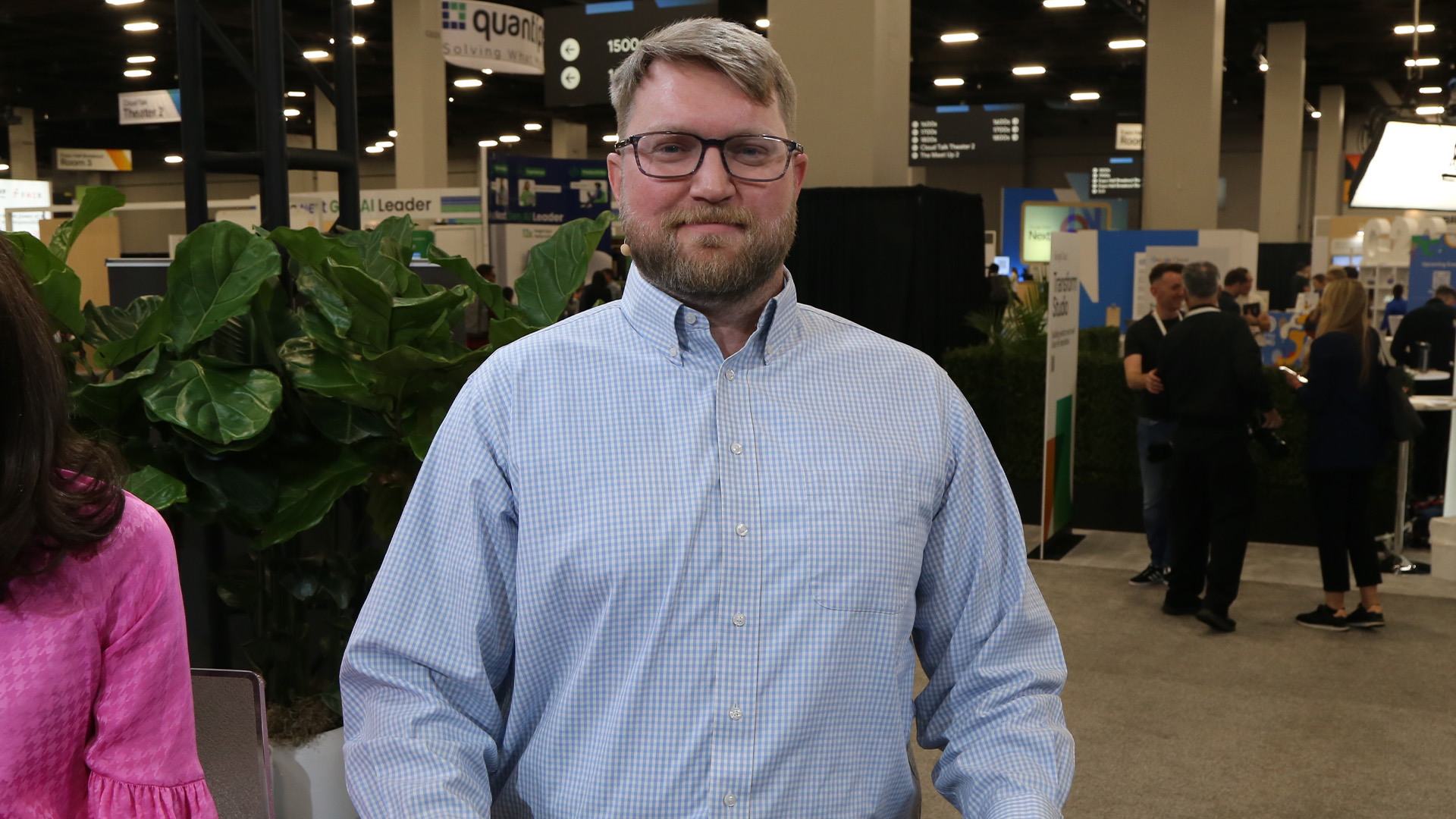
happy to have you back, >> Nick, thank you so much for being here. >> Thank you so much for having me on, genuinely appreciate it. >> Yes, absolutely. How
are you feeling day three? >> Absolutely, hey, you know what? Not as much energy as I had on day one, >> but we're getting there. >> You're still smiling,
you're bringing it, we're feeling it here
on the desk with you. You just said something
before we started that I love. You spent the last few years
taking away the worst part of people's jobs at Harness. What does that mean now that
we're in this new AI era? >> Look, everybody's
actually talking about AI but they're talking about
removing the best part of the job, and I think that's a huge problem because that causes resistance. And what we've done for the
last seven years, when we came into the world as continuous
delivery using machine learning and AI, was actually doing
it to remove that worst part. So no one wants to babysit deployments. No one wants to wait for tests to run. No one wants to write policy
and do all these tasks. So let's let AI do the
things that we hate doing >> so we can do what we love. >> Well, I want to dig into
this 'cause this is exactly where I like to be thinking about how people actually experience
work and their day-to-day. How, and you are taking away the toil, as you tech people call it,
and giving people more time to be creative, to innovate,
to think big thoughts about where do I want to go do next, what's my vision, what's my strategy? Do you have any great examples of people that have actually done
that at their company and said, "Hey, since
AI took care of that, I could do this." >> Absolutely. I mean, if you look at
United Airlines specifically, they removed, and this is
no, you know, you can look at the quote, 99% of their
toil by using Harness. So now they give all of
their operations folks, their developers, all of that time back. And now if you actually
look at the performance of their applications, their
mobile app's infinitely better in that short period of time, right, also allowing them to actually get >> to the cloud astronomically faster. >> Yeah, that's some
serious data right there. Do you have any other customer examples you can drop like that for
us, 'cause that was powerful. >> I'm here for it. >> No, absolutely, I think
when you actually look at all these customers, like regardless of whether it's our largest
financial services customer, so you look at Citibank,
same kind of thing. When you're going and
you're taking away all of the provisioning, the thought process of how do I onboard and get this through, now they're actually doing this at a rate that's 30 times faster. These are things that are massive, they're huge game-changers.
>> That's huge. >> And it's because what you're doing is you're providing a guarded path, right? You've made it easy for
people to do the right things and you've made it hard for
them to do the wrong things. The reason the cloud started
was 'cause it was easier to do the wrong thing. We would go out and spin up a server. Now if we make it easy
to do the right thing, we'll actually get people doing it >> the way they're supposed to. >> You know, one of the
operational questions that's been around MLOps,
you mentioned that earlier. It's come up as it's being redefined, I won't say redefined, but Gemini is forcing it to be reframed, if you will. So how would you reframe
the MLOps opportunity as language models are
introduced, multimodal, runtime is starting to
get much more smarter in terms of the software side. As developers put this all
together, how do you run this? >> What's the vision? >> Yeah, the vision here,
I think, if we don't put it in a guarded path, we
actually can't trust it. If we look at anything
that we generate with AI, we have to take it with
a zero-trust methodology, we have to literally treat
it as if it was a bad actor. And so if we don't put it
through a process that checks for all of the security
options to make sure that all the tests are run, or resiliency, that even if we apply
these, they'll actually meet not just the, you know, is
it up, but is it performant? If we're not doing all of
that through the delivery, we genuinely don't achieve anything. >> We only add backlog and we don't
actually get to production. >> That's a really good point. You see a lot of different
customers across verticals. >> Yes. >> Are you noticing any trends? Is everyone at a similar proof-of-concept >> or excited about AI's
stage, what are you seeing? >> We're seeing actually
people somewhat consolidate, because now they can't do
this with 17 different tools. They can't string this together with scripts and parts and pieces, they actually have to use
a platform to do this. They have to put policies in
place and rules to make it, again, easy to do that right thing. And that's how they're
gaining the velocity, because now you have a happy path or a golden path to production. >> Everyone wants a happy path
to prod, yeah, I love that. >> So here at Google Cloud Next, you are doing a session called
Innovate with Confidence. I'd love to hear what are the
components that you advise and how you talk to customers about how this is how we get
from proof-of-concept to this is going to add real
value to our organization. >> Absolutely. >> Rebecca: And even figuring
out the proof-of-concept >> to start with. >> Sure, I think one of
the things is, you know, we've always talked about
move fast and break things. The problem is in the enterprise, if you move fast and break
things, that doesn't work. >> Savannah: It's a big break. >> It's a big break,
right, you can't do that at the largest financial institutions. But what you can do is you can move fast, you can fail fast in earlier environments, but you can run them for all the tests. So I guess to that point
is, you have to make sure that what you deliver is guarded, that it has all of its protections, it's doing all the right
tests and all the measures, and it stops it and prevents
you from making those mistakes. If you put that in place, now
you can actually do anything. You can take ideas and they'll
only make themselves as far as they're actually allowed
to go into production if they meet those requirements. So ideas become quickly iterated. The good ones make
their way to production, >> the other ones, we can
go and iterate again. >> Nick, I got to get your perspective, 'cause we've interviewed
across multiple ecosystems, AWS and other clouds,
obviously on premises, developing with data centers are changing, becoming AI centers.
>> Nick: Yes. >> Because you can do stuff on-prem with workloads end-to-end.
>> Nick: Absolutely. >> Big theme, end-to-end. As an ecosystem partner, Google's presenting a pretty
damn good package here. Stack's looking good,
you got more performance, intelligent software layer orchestration, the Kubernetes 10 years old, that bet's playing out
beautifully, serverless, that abstraction, good
call, and then the apps, obviously infused with gen
AI, so check, check, check. As a participant, the ecosystems are critical for customer success. How is Google's ecosystem,
from your perspective, or ecosystems in the new era
of generative AI evolving and what are the table stakes? What are some of the key
prerequisites for success? >> What's your opinion? >> I think you're, the key to success here is actually looking at where you were, where you are, and where you're going. And oftentimes, people are only looking at where they're going and they
make decisions based on that. The problem is, if you're
constantly doing that, you'll always have new tools,
new policies, new procedures. And if we're not looking
at where we came from and actually incurring that
into where we're going, that's a big one. So if you're truly, in
order to have success, I believe you have to
support where you were, where you are, and where you're going, and that's what'll actually launch people. And it gives them an easy
way to crawl, walk, and run. If we move them entirely
and you shift everything that they're thinking about
and one day, they're on Tomcat, and the next, they're Kubernetes or Lambda or serverless functions,
then that becomes a problem. And if we can slowly give them
a way to crawl, walk, run, now we can actually
start achieving things. And you actually take people
that would've been blockers >> and you actually make them your champions. >> And better together
too, like the ecosystem is also a better together
philosophy technically. So like there has to be some
room for innovation strategies >> for you guys too as participants. >> 100%. No, I think, you know, in
the innovation side of life, if you're not innovating, you're dying. And you'll see that here, we
see people actually, you know, again, so many companies
are coming together, they're either partnering
or they're acquiring, because now you can't do this alone, you can't do this as a single product, you have to do this as a
platform to truly enable people. >> You can't fake AI, it's
like security, because, and the other thing too I'd
love to get your thoughts on is, came up a lot is when do I use AI and when do I build my own? Those aren't mutually exclusive, you can use a lot of other
AI tools and technology and figure out where you want
to build your core competency with whatever you got
that could be infused. >> What's your opinion of that view? >> Seven years ago, we came out with our first artificial intelligence, we built neural networks and clustering around thinking about things
like your best engineers. And back then, I was
telling people, you know, people would say, "Oh, we're in AI world." No, they were barely doing math, they were doing standard deviation, it's not even machine learning. And so honestly, people
constantly talk about this as if it is true. We've been doing this for
a long period of time, we've created our own to think about things like our best engineers. However, we can use large language models to look at language infinitely better, why am I going to recreate that? And genuinely, it's about using what's there in the ecosystem. Right, that gives you the scale, but making sure it's done in
a secure, compliant manner. >> John: Awesome. >> Absolutely, well, you just
touched on it a little bit, the developer experience. How is AI improving
that and are you seeing, I'm curious because you just
talked about buy-in as well within a company level,
who are the big champions >> of AI within an organization right now? >> Right now, the champions
are actually the business. The problem is is we don't
give them a very good and easy way to actually leverage it. And so unless a company's
willing to put in the guardrails to make it happen, it doesn't happen. But I think you brought
up a very important point, developer experience. Right now, we're in an awesome time. For the first time, look,
every other engineer you have at a company, chemical
engineers, electrical engineers, mechanical engineers, you
give them every tool they need to succeed, you would not ask them to build their own hammer. >> Savannah: No. >> And yet our software engineers,
for too long, we've said, "Go build your own hammer
in order to start working." And for the first time,
the entire ecosystem is actually looking after the people >> that we hire to do smart things. >> So what is that going to
unlock in terms of potential? >> I'll tell you what,
if you take the metrics, anyone says 25 to 30%
of the time right now is used in actually writing code. If we even doubled that,
right, the amount of code that can make its way to
production, it's infinite. You take that on top
of AI generative code, which is now what, 20 or
30x-ing even those numbers, now we're taking good engineers
and making them great. We're making great engineers the best. >> And I think that's the
opportunity right now. >> So over the course of your
career, you've helped a lot of early stage companies
find their market fit, devise their strategy,
hire the right team. How do you see the landscape
right now for startups, particularly when we are at this phase of a new dawn of gen AI? >> I think right now, startups are tough because if they're a single-point product, it becomes very difficult. Right now, we have a massive
thing in consolidation around the entire industry. And so they're not part
of a larger platform, it actually becomes a problem. They're just one other tool that has to be integrated
into an ecosystem. That's a challenge, we
see platform companies truly thriving right now, which is great >> because we started that journey- >> How convenient for you.
>> Good for you. >> It works out. >> I got a question for you, Nick. Since you get to see so much
action, what do you hope, and you're a CUBE alum, what do you hope that you can say the next
time we have you on the show that you can't quite say yet? >> That's a great question. I think one of the things
that I would love to be able to come here and say, and
really be as a larger partner of Google and come here and
actually show, you know, we've got some neat things coming out and we're doing some things
with them and I'd like to actually show those specific things >> on theCUBE specifically. >> Can you tell us
anything about those things >> or are we just going to,
are we just going to- >> Right now, look, we have 13
modules that do amazing things and a lot of them Google
doesn't do right now. And so we want to start
helping people measure and understand their door
metrics, their space metrics. We want to really help people
understand the business the way the CTO needs to,
and we're really trying to help Google do that right now, >> so my hopes are to do that soon. >> And Savannah, that's the key, we've been saying on
theCUBE, the ecosystem for Google this year is going
to be the real test for them, because you can't win without
an ecosystem in cloud, because there's so many white spaces, so many big opportunities for
partners to be successful, and Google could sell through them. So it's like... >> There's some power plays. >> Well, it's looking good right now, everyone's standing tall, so good job. >> Yeah, no, I think it's
really, I think it's interesting. Last question for you. Do you find that this, just
touching on that, do you find that there's a different
energy around partnership with the AI tech revolution
versus other tech moments we've had? >> I think this is
following most revolutions, and you get a massive uptick, and everybody throws
their name in the hat, and you have to sift through the ones that are actually doing it. And so we've been doing it
for the last seven years since inception, it's
something we've known well. But I do think it will,
the difference will be who actually leverages
artificial intelligence well versus who just uses it for marketing. >> That'll be the difference. >> Yeah, yeah, the real players. >> Nick: Correct. >> You can't fake AI,
I mean, at some point, it'll be obvious. >> It's moving so fast. Thanks for coming on. >> Yeah, thank you so much, Nick. This was an absolute pleasure. I want to see some pictures
of your ranch in Arizona since we talked about it. Rebecca, John, always a pleasure
to share the day with you, and thank all of you for
tuning in to our three days of live coverage here
in Las Vegas, Nevada. We're at Google Cloud Next,
my name's Savannah Peterson. You're watching theCUBE,
the leading source for enterprise tech news. (calm music)
(upbeat jingle) >> Good morning, nerd
fam, and welcome back to Google Cloud Next,
we're here in Las Vegas. It's day three of this absolutely fabulous power-packed event. My name's Savannah Peterson,
joined by my fabulous co-host, Rebecca Knight, and John Furrier. John, what's been your favorite
part of Vegas this week? >> I think the whole Gemini 1.5 proves that intelligent software
is coming faster, you're seeing better software
stacks emerge with data. I think the question of
how to run cloud at scale with high-performance gen AI
will be the biggest opportunity for businesses to change their
growth strategy so, you know, to me, the tech question
is, how do you run it? >> So this next segment
will be really awesome. >> Yeah, how are you doing
this morning, Rebecca? >> I'm great, I'm great, and
I second everything that John is saying, and what I find most
fascinating based on my beat is how we are really entering
this AI-driven workforce >> and how it's really going to
change people's day-to-day jobs. >> Yeah, I love it,
well, our next guest is, ain't his first rodeo, very
happy to have you back, >> Nick, thank you so much for being here. >> Thank you so much for having me on, genuinely appreciate it. >> Yes, absolutely. How
are you feeling day three? >> Absolutely, hey, you know what? Not as much energy as I had on day one, >> but we're getting there. >> You're still smiling,
you're bringing it, we're feeling it here
on the desk with you. You just said something
before we started that I love. You spent the last few years
taking away the worst part of people's jobs at Harness. What does that mean now that
we're in this new AI era? >> Look, everybody's
actually talking about AI but they're talking about
removing the best part of the job, and I think that's a huge problem because that causes resistance. And what we've done for the
last seven years, when we came into the world as continuous
delivery using machine learning and AI, was actually doing
it to remove that worst part. So no one wants to babysit deployments. No one wants to wait for tests to run. No one wants to write policy
and do all these tasks. So let's let AI do the
things that we hate doing >> so we can do what we love. >> Well, I want to dig into
this 'cause this is exactly where I like to be thinking about how people actually experience
work and their day-to-day. How, and you are taking away the toil, as you tech people call it,
and giving people more time to be creative, to innovate,
to think big thoughts about where do I want to go do next, what's my vision, what's my strategy? Do you have any great examples of people that have actually done
that at their company and said, "Hey, since
AI took care of that, I could do this." >> Absolutely. I mean, if you look at
United Airlines specifically, they removed, and this is
no, you know, you can look at the quote, 99% of their
toil by using Harness. So now they give all of
their operations folks, their developers, all of that time back. And now if you actually
look at the performance of their applications, their
mobile app's infinitely better in that short period of time, right, also allowing them to actually get >> to the cloud astronomically faster. >> Yeah, that's some
serious data right there. Do you have any other customer examples you can drop like that for
us, 'cause that was powerful. >> I'm here for it. >> No, absolutely, I think
when you actually look at all these customers, like regardless of whether it's our largest
financial services customer, so you look at Citibank,
same kind of thing. When you're going and
you're taking away all of the provisioning, the thought process of how do I onboard and get this through, now they're actually doing this at a rate that's 30 times faster. These are things that are massive, they're huge game-changers.
>> That's huge. >> And it's because what you're doing is you're providing a guarded path, right? You've made it easy for
people to do the right things and you've made it hard for
them to do the wrong things. The reason the cloud started
was 'cause it was easier to do the wrong thing. We would go out and spin up a server. Now if we make it easy
to do the right thing, we'll actually get people doing it >> the way they're supposed to. >> You know, one of the
operational questions that's been around MLOps,
you mentioned that earlier. It's come up as it's being redefined, I won't say redefined, but Gemini is forcing it to be reframed, if you will. So how would you reframe
the MLOps opportunity as language models are
introduced, multimodal, runtime is starting to
get much more smarter in terms of the software side. As developers put this all
together, how do you run this? >> What's the vision? >> Yeah, the vision here,
I think, if we don't put it in a guarded path, we
actually can't trust it. If we look at anything
that we generate with AI, we have to take it with
a zero-trust methodology, we have to literally treat
it as if it was a bad actor. And so if we don't put it
through a process that checks for all of the security
options to make sure that all the tests are run, or resiliency, that even if we apply
these, they'll actually meet not just the, you know, is
it up, but is it performant? If we're not doing all of
that through the delivery, we genuinely don't achieve anything. >> We only add backlog and we don't
actually get to production. >> That's a really good point. You see a lot of different
customers across verticals. >> Yes. >> Are you noticing any trends? Is everyone at a similar proof-of-concept >> or excited about AI's
stage, what are you seeing? >> We're seeing actually
people somewhat consolidate, because now they can't do
this with 17 different tools. They can't string this together with scripts and parts and pieces, they actually have to use
a platform to do this. They have to put policies in
place and rules to make it, again, easy to do that right thing. And that's how they're
gaining the velocity, because now you have a happy path or a golden path to production. >> Everyone wants a happy path
to prod, yeah, I love that. >> So here at Google Cloud Next, you are doing a session called
Innovate with Confidence. I'd love to hear what are the
components that you advise and how you talk to customers about how this is how we get
from proof-of-concept to this is going to add real
value to our organization. >> Absolutely. >> Rebecca: And even figuring
out the proof-of-concept >> to start with. >> Sure, I think one of
the things is, you know, we've always talked about
move fast and break things. The problem is in the enterprise, if you move fast and break
things, that doesn't work. >> Savannah: It's a big break. >> It's a big break,
right, you can't do that at the largest financial institutions. But what you can do is you can move fast, you can fail fast in earlier environments, but you can run them for all the tests. So I guess to that point
is, you have to make sure that what you deliver is guarded, that it has all of its protections, it's doing all the right
tests and all the measures, and it stops it and prevents
you from making those mistakes. If you put that in place, now
you can actually do anything. You can take ideas and they'll
only make themselves as far as they're actually allowed
to go into production if they meet those requirements. So ideas become quickly iterated. The good ones make
their way to production, >> the other ones, we can
go and iterate again. >> Nick, I got to get your perspective, 'cause we've interviewed
across multiple ecosystems, AWS and other clouds,
obviously on premises, developing with data centers are changing, becoming AI centers.
>> Nick: Yes. >> Because you can do stuff on-prem with workloads end-to-end.
>> Nick: Absolutely. >> Big theme, end-to-end. As an ecosystem partner, Google's presenting a pretty
damn good package here. Stack's looking good,
you got more performance, intelligent software layer orchestration, the Kubernetes 10 years old, that bet's playing out
beautifully, serverless, that abstraction, good
call, and then the apps, obviously infused with gen
AI, so check, check, check. As a participant, the ecosystems are critical for customer success. How is Google's ecosystem,
from your perspective, or ecosystems in the new era
of generative AI evolving and what are the table stakes? What are some of the key
prerequisites for success? >> What's your opinion? >> I think you're, the key to success here is actually looking at where you were, where you are, and where you're going. And oftentimes, people are only looking at where they're going and they
make decisions based on that. The problem is, if you're
constantly doing that, you'll always have new tools,
new policies, new procedures. And if we're not looking
at where we came from and actually incurring that
into where we're going, that's a big one. So if you're truly, in
order to have success, I believe you have to
support where you were, where you are, and where you're going, and that's what'll actually launch people. And it gives them an easy
way to crawl, walk, and run. If we move them entirely
and you shift everything that they're thinking about
and one day, they're on Tomcat, and the next, they're Kubernetes or Lambda or serverless functions,
then that becomes a problem. And if we can slowly give them
a way to crawl, walk, run, now we can actually
start achieving things. And you actually take people
that would've been blockers >> and you actually make them your champions. >> And better together
too, like the ecosystem is also a better together
philosophy technically. So like there has to be some
room for innovation strategies >> for you guys too as participants. >> 100%. No, I think, you know, in
the innovation side of life, if you're not innovating, you're dying. And you'll see that here, we
see people actually, you know, again, so many companies
are coming together, they're either partnering
or they're acquiring, because now you can't do this alone, you can't do this as a single product, you have to do this as a
platform to truly enable people. >> You can't fake AI, it's
like security, because, and the other thing too I'd
love to get your thoughts on is, came up a lot is when do I use AI and when do I build my own? Those aren't mutually exclusive, you can use a lot of other
AI tools and technology and figure out where you want
to build your core competency with whatever you got
that could be infused. >> What's your opinion of that view? >> Seven years ago, we came out with our first artificial intelligence, we built neural networks and clustering around thinking about things
like your best engineers. And back then, I was
telling people, you know, people would say, "Oh, we're in AI world." No, they were barely doing math, they were doing standard deviation, it's not even machine learning. And so honestly, people
constantly talk about this as if it is true. We've been doing this for
a long period of time, we've created our own to think about things like our best engineers. However, we can use large language models to look at language infinitely better, why am I going to recreate that? And genuinely, it's about using what's there in the ecosystem. Right, that gives you the scale, but making sure it's done in
a secure, compliant manner. >> John: Awesome. >> Absolutely, well, you just
touched on it a little bit, the developer experience. How is AI improving
that and are you seeing, I'm curious because you just
talked about buy-in as well within a company level,
who are the big champions >> of AI within an organization right now? >> Right now, the champions
are actually the business. The problem is is we don't
give them a very good and easy way to actually leverage it. And so unless a company's
willing to put in the guardrails to make it happen, it doesn't happen. But I think you brought
up a very important point, developer experience. Right now, we're in an awesome time. For the first time, look,
every other engineer you have at a company, chemical
engineers, electrical engineers, mechanical engineers, you
give them every tool they need to succeed, you would not ask them to build their own hammer. >> Savannah: No. >> And yet our software engineers,
for too long, we've said, "Go build your own hammer
in order to start working." And for the first time,
the entire ecosystem is actually looking after the people >> that we hire to do smart things. >> So what is that going to
unlock in terms of potential? >> I'll tell you what,
if you take the metrics, anyone says 25 to 30%
of the time right now is used in actually writing code. If we even doubled that,
right, the amount of code that can make its way to
production, it's infinite. You take that on top
of AI generative code, which is now what, 20 or
30x-ing even those numbers, now we're taking good engineers
and making them great. We're making great engineers the best. >> And I think that's the
opportunity right now. >> So over the course of your
career, you've helped a lot of early stage companies
find their market fit, devise their strategy,
hire the right team. How do you see the landscape
right now for startups, particularly when we are at this phase of a new dawn of gen AI? >> I think right now, startups are tough because if they're a single-point product, it becomes very difficult. Right now, we have a massive
thing in consolidation around the entire industry. And so they're not part
of a larger platform, it actually becomes a problem. They're just one other tool that has to be integrated
into an ecosystem. That's a challenge, we
see platform companies truly thriving right now, which is great >> because we started that journey- >> How convenient for you.
>> Good for you. >> It works out. >> I got a question for you, Nick. Since you get to see so much
action, what do you hope, and you're a CUBE alum, what do you hope that you can say the next
time we have you on the show that you can't quite say yet? >> That's a great question. I think one of the things
that I would love to be able to come here and say, and
really be as a larger partner of Google and come here and
actually show, you know, we've got some neat things coming out and we're doing some things
with them and I'd like to actually show those specific things >> on theCUBE specifically. >> Can you tell us
anything about those things >> or are we just going to,
are we just going to- >> Right now, look, we have 13
modules that do amazing things and a lot of them Google
doesn't do right now. And so we want to start
helping people measure and understand their door
metrics, their space metrics. We want to really help people
understand the business the way the CTO needs to,
and we're really trying to help Google do that right now, >> so my hopes are to do that soon. >> And Savannah, that's the key, we've been saying on
theCUBE, the ecosystem for Google this year is going
to be the real test for them, because you can't win without
an ecosystem in cloud, because there's so many white spaces, so many big opportunities for
partners to be successful, and Google could sell through them. So it's like... >> There's some power plays. >> Well, it's looking good right now, everyone's standing tall, so good job. >> Yeah, no, I think it's
really, I think it's interesting. Last question for you. Do you find that this, just
touching on that, do you find that there's a different
energy around partnership with the AI tech revolution
versus other tech moments we've had? >> I think this is
following most revolutions, and you get a massive uptick, and everybody throws
their name in the hat, and you have to sift through the ones that are actually doing it. And so we've been doing it
for the last seven years since inception, it's
something we've known well. But I do think it will,
the difference will be who actually leverages
artificial intelligence well versus who just uses it for marketing. >> That'll be the difference. >> Yeah, yeah, the real players. >> Nick: Correct. >> You can't fake AI,
I mean, at some point, it'll be obvious. >> It's moving so fast. Thanks for coming on. >> Yeah, thank you so much, Nick. This was an absolute pleasure. I want to see some pictures
of your ranch in Arizona since we talked about it. Rebecca, John, always a pleasure
to share the day with you, and thank all of you for
tuning in to our three days of live coverage here
in Las Vegas, Nevada. We're at Google Cloud Next,
my name's Savannah Peterson. You're watching theCUBE,
the leading source for enterprise tech news. (calm music)