We just sent you a verification email. Please verify your account to gain access to
Google Cloud Next '24. If you don’t think you received an email check your
spam folder.
In order to sign in, enter the email address you used to registered for the event. Once completed, you will receive an email with a verification link. Open this link to automatically sign into the site.
Register For Google Cloud Next '24
Please fill out the information below. You will recieve an email with a verification link confirming your registration. Click the link to automatically sign into the site.
You’re almost there!
We just sent you a verification email. Please click the verification button in the email. Once your email address is verified, you will have full access to all event content for Google Cloud Next '24.
I want my badge and interests to be visible to all attendees.
Checking this box will display your presense on the attendees list, view your profile and allow other attendees to contact you via 1-1 chat. Read the Privacy Policy. At any time, you can choose to disable this preference.
Select your Interests!
add
Upload your photo
Uploading..
OR
Connect via Twitter
Connect via Linkedin
EDIT PASSWORD
Share
Forgot Password
Almost there!
We just sent you a verification email. Please verify your account to gain access to
Google Cloud Next '24. If you don’t think you received an email check your
spam folder.
In order to sign in, enter the email address you used to registered for the event. Once completed, you will receive an email with a verification link. Open this link to automatically sign into the site.
Sign in to gain access to Google Cloud Next '24
Please sign in with LinkedIn to continue to Google Cloud Next '24. Signing in with LinkedIn ensures a professional environment.
(bright music) >> Hello, everyone. We are getting toward the end of day one of theCUBE's live coverage
of Google Cloud Next, here in beautiful Las Vegas, Nevada. I'm your host, Rebecca Knight, along with my co-host, Rob Strechay. Rob, we are talking so much
about collaborations here. I mean, that really
seems to be a big theme at this conference. >> Yeah, I think so. And I think again, the big piece of this is that Google has brought quite
the ecosystem to bear here, and I think, again, it is about
all of the different pieces that make Gen AI and AI real, which is why this is going to be
such an exciting conversation. >> Exactly. Let me welcome to the show, a first timer here on
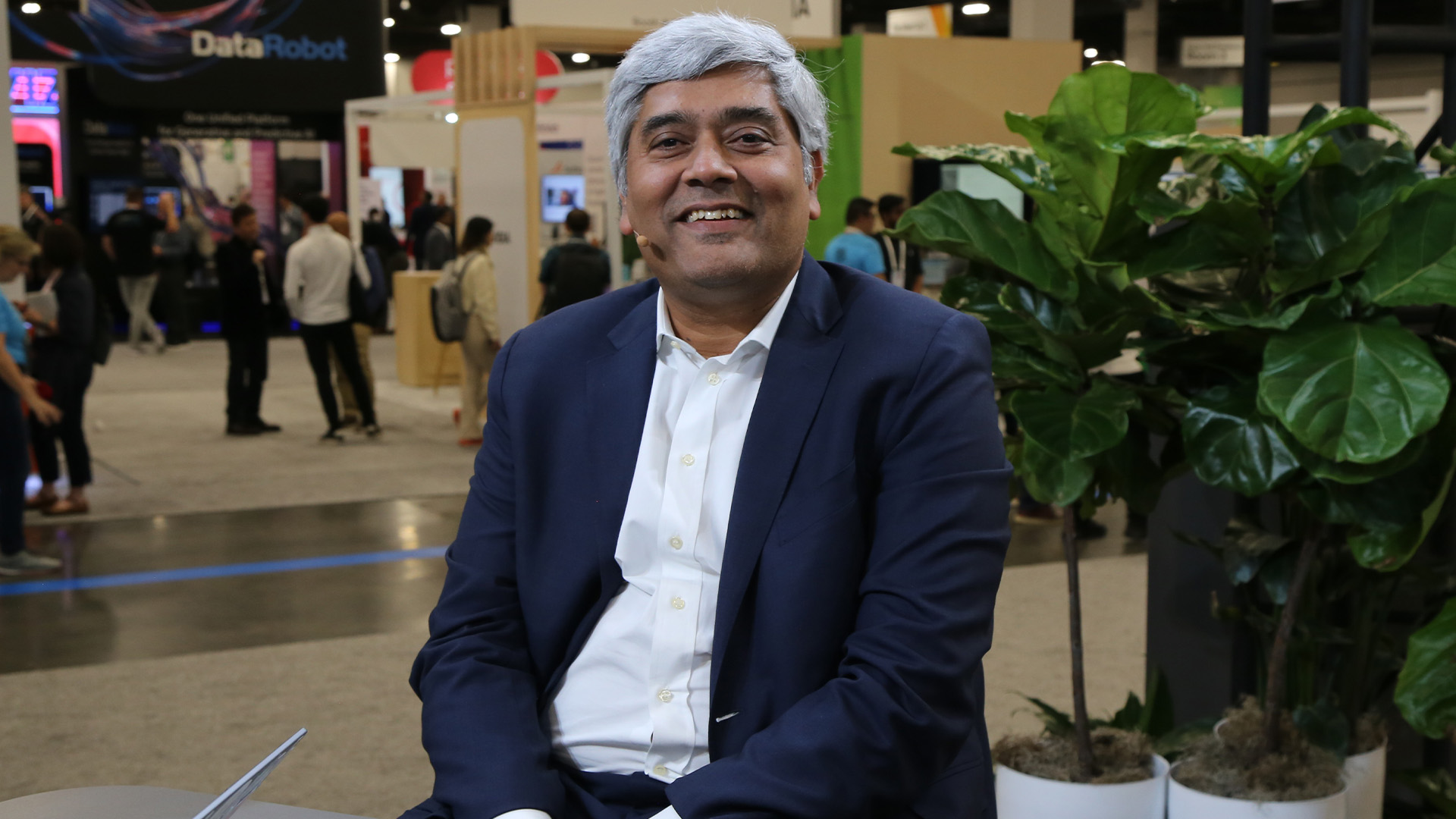
theCUBE, Mihir Shukla. He is the founder and CEO
of Automation Anywhere. Thank you so much for
coming on the show, Mihir. >> Glad to be here. >> So why don't you begin
by telling our viewers a little bit about Automation Anywhere? >> Of course. Automation Anywhere is a software company. It is an AI powered automation platform. Our vision is to transform
how work happens, and we do that by automating
processes end to end. We have about 300 million
of this processes automated and they've been growing
three times a year. So world as we know it is
changing in front of our eyes, and we are looking forward to a world where every human being is empowered to be assisted with this technology and being able to unleash
their true potential. And that's the future we
are all working towards. >> And I think, again,
it makes so much sense with automation and AI
and ML underneath the hood and things of that nature. Why is it with Google
and now Google Cloud now? What's the intersection between Automation
Anywhere and Google Cloud? >> It's a very timely question. So what is happening is the combination of technologies are coming together: automation, AI, and now generative AI. And we did an announcement today where we are expanding our
longtime partnership with Google, with their AI models, Vertex and Gemini. And what we are doing is we are
combining these technologies in a way and making things possible that weren't possible just a year ago, in a way that it expands our imagination. Let me take an example of
kind of things we are able to do together to ground
this conversation. So think about in a healthcare setup, a discharge post after visit summaries. Now this platform, because
Google is multimodal model, we are able to create automatic
after-visit summaries, but not just that, but in a native language,
in an audio format. And that's automatically done. So completely taking a
patient experience to a level that you could never imagine before. So this is the power of technology. It is being able to do things that you could never imagine before. And now it is coming together with Google and Automation Anywhere partnership. >> So talk a little bit
more about that use case, because that is fascinating and it is something that
all of us really can grasp what that would do to change
both the patient experience of our medical lives, as well as the doctor or practitioner's. So can you just dive
into that a little bit about how that works and what
actually the upshot of it is? >> So if you think about
our healthcare practice, there are a couple of big challenges. One is the burnout for nurses and doctors and amount of administrative
work they have to do while taking care of us. And other is all of the
patient understanding of what the diagnosis is and what are the things
they're supposed to do. And in the diverse world that we live in, often we find that there is a gap between their understanding of what they need to follow through with. So in some the projects, we
are working on both ends. So assisting putting the power of AI, generative AI and automation
hands of doctors directly. They used to spend about 25% of their time in administrative work. And if you can cut it down to five to 10%, we all know that that time
could be better spent. And then I describe the patient outcomes. If a patient understands
what they need to do, sometimes the healthcare
outcome can be 60% better just by doing that piece right, if they understood it. >> And I think that's a great use case, 'cause I, again, knowing people
who've gone to the hospital and even people who may not understand the doctors' speak,
because they're not always, you know, doesn't seem like English or any other language sometimes. But what other use cases
are you running into that really are benefiting from this and that you're seeing
with your work with Google? >> There are hundreds of
this fascinating use cases. So we today have 300 large, many, many, so about 300 of them running
on Google Cloud today. Let me maybe share a few of them. Let's take underwriting
process for a bank. So again, using Google's
multimodal capability, what we are able to do is
take a property's videos, images, hundreds of documents,
summarize all of them, and creating an underwriting proposal that is automatically generated, waiting for a human being to provide their inputs and validate it. But you could automate that
process 90, 95% of the way in a way that you could
never imagine before. This process used to
take sometimes few days and now it's matter of minutes. Another area where we apply is in anti-money laundering processes. It's a complex process
for many of the banks. A large number of people are occupied just with compliance work. And again, by looking at
thousands of documents and data points, we're
able to ingest all of it, make sense out of it, make decisions, and create alerts where appropriate. So I can go on across virtually
every single industry. Take an example of a text processing. So we all know it can be complicated. >> I was going to say it very timely. >> Very complicated and very timely. And it is even more complex
for large enterprises. By feeding it set of tax laws and providing it tax documents, it can quickly figure out
which tax laws to apply. When in doubt, it can take a human input. But it can quickly figure out a process that could take month
into just couple of days. >> When you are talking
about the different ways that automation can automate
different processes, what is the effect on the workforce? Because I mean, I'm thinking
about those underwriters and those tax assessors and
the people who are dealing with money laundering. What is it doing for their day to day to have so much of their
job just taken care of? I mean, what are they able to do and what is the upshot for businesses? Are they seeing a rise in
morale or overall productivity? >> So you could look at this
picture from multiple angles. So if you look at from
macroeconomic perspective, and I'll come to the
individual story as well, but from macroeconomic
perspective, if you think about it, first time in human history,
we have a declining workforce that has never ever happened
in our industry of humanity. So the next 10 years, the
working age population is going to decline by 3%. Now, unless somebody knows
another million people on some island that we don't know about, this is all the people we
have to work with, right? So the fact that this
technologies will allow us to do things in a declining
workforce environment is in need of an hour. Without it, our social infrastructure, none of this could work, right? So this is very timely. What is amazing about individuals is the more and more people that
are coming to the workforce are looking to build a
career and not just a job, and they're looking to
do a purposeful work. And so these technologies
are allowing them to kind of remove the mundane work and allow them to apply their
human skills to the workforce. It will transform workplaces. So it will make some jobs redundant, just like it always does, but it will create many more jobs. The best information we have today says that it will create 10 million new jobs. So this entire transformation is about re-skilling our workforce and allowing them to achieve
their true potential. >> Yeah, I think to me, that's really the
fascinating piece about this, is people are going to be able to do more with less people on particular jobs, but it also should help them from a cognitive fatigue type
of aspect of it as well. What are you finding
from working with Google that democratizing AI and
where do you see that going over the course of this year with bringing these customers in? Because you're seeing a lot more, in fact, you've already talked about use cases that are more direct in production than we hear about out there, and we see that 30% of organizations still don't even know
what use case to pick. >> I think what Google
and Automation Anywhere are doing together is we
are taking this conversation to an enterprise transformation. I think a lot of
generative AI conversation has been limited to personal productivity and there is an aspect
of personal productivity that is useful. But this is so much bigger, right? Completely, we talked about few examples of how an enterprise could operate, how patient or a customer experience could completely transform and creating a new way
of doing everything. And that phrase is very timely, given you see everywhere. This is really a new way of
imagining how work happens. So anyway, that's the future. That's the future that Google
and Automation Anywhere are charting together. >> I know that you're spending a lot of this conference talking with customers about their experiences
with Automation Anywhere, but also their experiences, what their pain points are
in coming up with new ways to use Gen AI, choose the right pilots. What are you finding, what are you hearing from your customers, and what are you going
to take back with you after being at this conference? >> So one of the things that
our joint customers struggle with is what are the areas they can create the most impact? Opportunity seems like it's everywhere. So when it is everywhere, what are the right places to start? So one of the things that we are able to offer our customers is they have this large database
of 300 million processes, and we have a before and after effect. So we are able to use that
as a benchmarking tool to allow customers to see that what is possible in the art of the AI. And we are able to show them that this is their current
state of operations, they could be operating here, which is what a good looks like. The difference between here and here is sometimes difference
of few hundred million to a few billion dollar
impact to the business. And then it is about charting
a true transformative path. This is a, not an overnight journey, it's a multi-year journey, but allowing them to a path to it that leads them to a new operating model. And it is rewarding for
everybody in this year to take them from this
point to this point. >> When you look out a year from now and you're sitting there
and you have even more, as you were talking about the number of processes
compounding that you have, what do you hope for that
you can talk to us about that here's the successes
in democratizing AI that we've had over the
course of the last year? >> I think most people, when they talk about
the capabilities today, they are thinking about
what they could automate that they do today. I think the real power of this technology is doing things that you
could never did before. And that's a step that
would naturally happen in this journey. If you travel the same distance in a car that a horse would cover, what's the point of having
a technology, right? So these technologies are exponential and I think this time next year, we should be talking about
amazing new experiences that we could never experience before, and how that transformed patient, customer, and employee experiences in a way that fascinates us and stretches our imagination. >> Mihir- >> That's what I would love to see. >> I love the way you're
talking about this, because you just have such
a sense of awe and wonder when you're talking
about these technologies, and frankly, a lot of times on theCUBE, we are talking about really
the nuts and bolts of the tech and we kind of flew sight of just how incredible this technology is. Do you find that you're an outlier in the conversations that you're having? Do you think other people
are similarly as inspired by the power of this technology? Or are they thinking really in terms of, "Okay, how do we get the ROI, how do we?" >> I think people are beginning
to see the potential of it. I think if you step back and
look at the true capability of human race as a race, we weren't put on this planet to type from one screen to another. We are capable of doing so much more. And I often remind people
that we as a civilization, we have a potential to,
a hundred years from now, surf on the slopes of the Mars. Then 200 years from now,
surf the Saturn rings. You can imagine what the
potential of this race is. And if 70% of us are doing repetitive work that could be automated, we are not going to accomplish
any of those things. So if you step back and look
at the journey that we are on, we have to be inclusive, we
have to retrain our workforce, we have to take everybody with us, make sure the benefits are spread to every part of the society. Nevertheless, the journey
is a amazing journey. Just imagine how far we've
come the last hundred years. Imagine what next 50 to
70 years will bring to us. And what an exciting time to be alive. >> Absolutely.
>> Indeed, indeed. Powerful. Mihir, thank you so much
for coming on theCUBE. A really, really fun and
inspiring conversation. >> My pleasure.
>> Thank you. >> Thank you. >> I'm Rebecca Knight. For my co-host, Rob Strechay, stay tuned for more of
theCUBE's live coverage. You are watching theCUBE, the leading source of enterprise news. (cheery music)
(bright music) >> Hello, everyone. We are getting toward the end of day one of theCUBE's live coverage
of Google Cloud Next, here in beautiful Las Vegas, Nevada. I'm your host, Rebecca Knight, along with my co-host, Rob Strechay. Rob, we are talking so much
about collaborations here. I mean, that really
seems to be a big theme at this conference. >> Yeah, I think so. And I think again, the big piece of this is that Google has brought quite
the ecosystem to bear here, and I think, again, it is about
all of the different pieces that make Gen AI and AI real, which is why this is going to be
such an exciting conversation. >> Exactly. Let me welcome to the show, a first timer here on
theCUBE, Mihir Shukla. He is the founder and CEO
of Automation Anywhere. Thank you so much for
coming on the show, Mihir. >> Glad to be here. >> So why don't you begin
by telling our viewers a little bit about Automation Anywhere? >> Of course. Automation Anywhere is a software company. It is an AI powered automation platform. Our vision is to transform
how work happens, and we do that by automating
processes end to end. We have about 300 million
of this processes automated and they've been growing
three times a year. So world as we know it is
changing in front of our eyes, and we are looking forward to a world where every human being is empowered to be assisted with this technology and being able to unleash
their true potential. And that's the future we
are all working towards. >> And I think, again,
it makes so much sense with automation and AI
and ML underneath the hood and things of that nature. Why is it with Google
and now Google Cloud now? What's the intersection between Automation
Anywhere and Google Cloud? >> It's a very timely question. So what is happening is the combination of technologies are coming together: automation, AI, and now generative AI. And we did an announcement today where we are expanding our
longtime partnership with Google, with their AI models, Vertex and Gemini. And what we are doing is we are
combining these technologies in a way and making things possible that weren't possible just a year ago, in a way that it expands our imagination. Let me take an example of
kind of things we are able to do together to ground
this conversation. So think about in a healthcare setup, a discharge post after visit summaries. Now this platform, because
Google is multimodal model, we are able to create automatic
after-visit summaries, but not just that, but in a native language,
in an audio format. And that's automatically done. So completely taking a
patient experience to a level that you could never imagine before. So this is the power of technology. It is being able to do things that you could never imagine before. And now it is coming together with Google and Automation Anywhere partnership. >> So talk a little bit
more about that use case, because that is fascinating and it is something that
all of us really can grasp what that would do to change
both the patient experience of our medical lives, as well as the doctor or practitioner's. So can you just dive
into that a little bit about how that works and what
actually the upshot of it is? >> So if you think about
our healthcare practice, there are a couple of big challenges. One is the burnout for nurses and doctors and amount of administrative
work they have to do while taking care of us. And other is all of the
patient understanding of what the diagnosis is and what are the things
they're supposed to do. And in the diverse world that we live in, often we find that there is a gap between their understanding of what they need to follow through with. So in some the projects, we
are working on both ends. So assisting putting the power of AI, generative AI and automation
hands of doctors directly. They used to spend about 25% of their time in administrative work. And if you can cut it down to five to 10%, we all know that that time
could be better spent. And then I describe the patient outcomes. If a patient understands
what they need to do, sometimes the healthcare
outcome can be 60% better just by doing that piece right, if they understood it. >> And I think that's a great use case, 'cause I, again, knowing people
who've gone to the hospital and even people who may not understand the doctors' speak,
because they're not always, you know, doesn't seem like English or any other language sometimes. But what other use cases
are you running into that really are benefiting from this and that you're seeing
with your work with Google? >> There are hundreds of
this fascinating use cases. So we today have 300 large, many, many, so about 300 of them running
on Google Cloud today. Let me maybe share a few of them. Let's take underwriting
process for a bank. So again, using Google's
multimodal capability, what we are able to do is
take a property's videos, images, hundreds of documents,
summarize all of them, and creating an underwriting proposal that is automatically generated, waiting for a human being to provide their inputs and validate it. But you could automate that
process 90, 95% of the way in a way that you could
never imagine before. This process used to
take sometimes few days and now it's matter of minutes. Another area where we apply is in anti-money laundering processes. It's a complex process
for many of the banks. A large number of people are occupied just with compliance work. And again, by looking at
thousands of documents and data points, we're
able to ingest all of it, make sense out of it, make decisions, and create alerts where appropriate. So I can go on across virtually
every single industry. Take an example of a text processing. So we all know it can be complicated. >> I was going to say it very timely. >> Very complicated and very timely. And it is even more complex
for large enterprises. By feeding it set of tax laws and providing it tax documents, it can quickly figure out
which tax laws to apply. When in doubt, it can take a human input. But it can quickly figure out a process that could take month
into just couple of days. >> When you are talking
about the different ways that automation can automate
different processes, what is the effect on the workforce? Because I mean, I'm thinking
about those underwriters and those tax assessors and
the people who are dealing with money laundering. What is it doing for their day to day to have so much of their
job just taken care of? I mean, what are they able to do and what is the upshot for businesses? Are they seeing a rise in
morale or overall productivity? >> So you could look at this
picture from multiple angles. So if you look at from
macroeconomic perspective, and I'll come to the
individual story as well, but from macroeconomic
perspective, if you think about it, first time in human history,
we have a declining workforce that has never ever happened
in our industry of humanity. So the next 10 years, the
working age population is going to decline by 3%. Now, unless somebody knows
another million people on some island that we don't know about, this is all the people we
have to work with, right? So the fact that this
technologies will allow us to do things in a declining
workforce environment is in need of an hour. Without it, our social infrastructure, none of this could work, right? So this is very timely. What is amazing about individuals is the more and more people that
are coming to the workforce are looking to build a
career and not just a job, and they're looking to
do a purposeful work. And so these technologies
are allowing them to kind of remove the mundane work and allow them to apply their
human skills to the workforce. It will transform workplaces. So it will make some jobs redundant, just like it always does, but it will create many more jobs. The best information we have today says that it will create 10 million new jobs. So this entire transformation is about re-skilling our workforce and allowing them to achieve
their true potential. >> Yeah, I think to me, that's really the
fascinating piece about this, is people are going to be able to do more with less people on particular jobs, but it also should help them from a cognitive fatigue type
of aspect of it as well. What are you finding
from working with Google that democratizing AI and
where do you see that going over the course of this year with bringing these customers in? Because you're seeing a lot more, in fact, you've already talked about use cases that are more direct in production than we hear about out there, and we see that 30% of organizations still don't even know
what use case to pick. >> I think what Google
and Automation Anywhere are doing together is we
are taking this conversation to an enterprise transformation. I think a lot of
generative AI conversation has been limited to personal productivity and there is an aspect
of personal productivity that is useful. But this is so much bigger, right? Completely, we talked about few examples of how an enterprise could operate, how patient or a customer experience could completely transform and creating a new way
of doing everything. And that phrase is very timely, given you see everywhere. This is really a new way of
imagining how work happens. So anyway, that's the future. That's the future that Google
and Automation Anywhere are charting together. >> I know that you're spending a lot of this conference talking with customers about their experiences
with Automation Anywhere, but also their experiences, what their pain points are
in coming up with new ways to use Gen AI, choose the right pilots. What are you finding, what are you hearing from your customers, and what are you going
to take back with you after being at this conference? >> So one of the things that
our joint customers struggle with is what are the areas they can create the most impact? Opportunity seems like it's everywhere. So when it is everywhere, what are the right places to start? So one of the things that we are able to offer our customers is they have this large database
of 300 million processes, and we have a before and after effect. So we are able to use that
as a benchmarking tool to allow customers to see that what is possible in the art of the AI. And we are able to show them that this is their current
state of operations, they could be operating here, which is what a good looks like. The difference between here and here is sometimes difference
of few hundred million to a few billion dollar
impact to the business. And then it is about charting
a true transformative path. This is a, not an overnight journey, it's a multi-year journey, but allowing them to a path to it that leads them to a new operating model. And it is rewarding for
everybody in this year to take them from this
point to this point. >> When you look out a year from now and you're sitting there
and you have even more, as you were talking about the number of processes
compounding that you have, what do you hope for that
you can talk to us about that here's the successes
in democratizing AI that we've had over the
course of the last year? >> I think most people, when they talk about
the capabilities today, they are thinking about
what they could automate that they do today. I think the real power of this technology is doing things that you
could never did before. And that's a step that
would naturally happen in this journey. If you travel the same distance in a car that a horse would cover, what's the point of having
a technology, right? So these technologies are exponential and I think this time next year, we should be talking about
amazing new experiences that we could never experience before, and how that transformed patient, customer, and employee experiences in a way that fascinates us and stretches our imagination. >> Mihir- >> That's what I would love to see. >> I love the way you're
talking about this, because you just have such
a sense of awe and wonder when you're talking
about these technologies, and frankly, a lot of times on theCUBE, we are talking about really
the nuts and bolts of the tech and we kind of flew sight of just how incredible this technology is. Do you find that you're an outlier in the conversations that you're having? Do you think other people
are similarly as inspired by the power of this technology? Or are they thinking really in terms of, "Okay, how do we get the ROI, how do we?" >> I think people are beginning
to see the potential of it. I think if you step back and
look at the true capability of human race as a race, we weren't put on this planet to type from one screen to another. We are capable of doing so much more. And I often remind people
that we as a civilization, we have a potential to,
a hundred years from now, surf on the slopes of the Mars. Then 200 years from now,
surf the Saturn rings. You can imagine what the
potential of this race is. And if 70% of us are doing repetitive work that could be automated, we are not going to accomplish
any of those things. So if you step back and look
at the journey that we are on, we have to be inclusive, we
have to retrain our workforce, we have to take everybody with us, make sure the benefits are spread to every part of the society. Nevertheless, the journey
is a amazing journey. Just imagine how far we've
come the last hundred years. Imagine what next 50 to
70 years will bring to us. And what an exciting time to be alive. >> Absolutely.
>> Indeed, indeed. Powerful. Mihir, thank you so much
for coming on theCUBE. A really, really fun and
inspiring conversation. >> My pleasure.
>> Thank you. >> Thank you. >> I'm Rebecca Knight. For my co-host, Rob Strechay, stay tuned for more of
theCUBE's live coverage. You are watching theCUBE, the leading source of enterprise news. (cheery music)