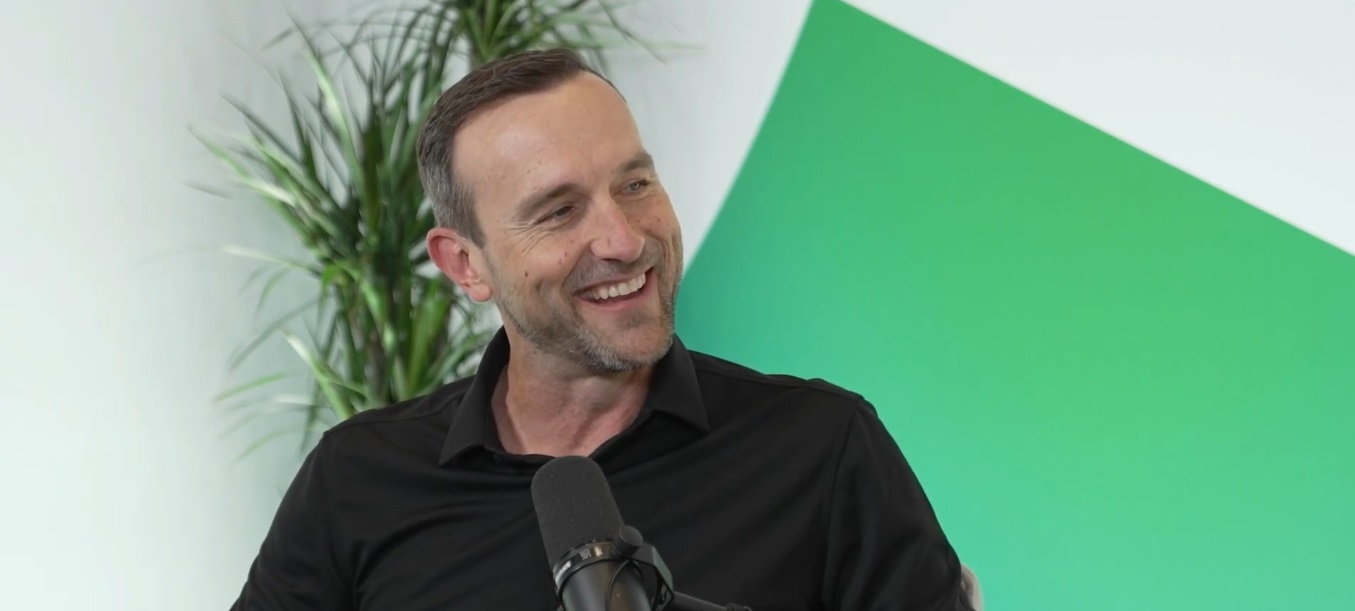
Recorded at Google Cloud Next 2026 during the Google Analyst Summit, this conversation explores agent platforms, Gemini Enterprise and Google Cloud's full stack approach to artificial intelligence AI. Will Grannis of Google Cloud, vice president and chief technology officer, joins theCUBE Research hosts for a focused discussion on moving agents from prototyping to production. Grannis outlines the role they play supporting top enterprise customers and translating long-term research and development into deployable systems.
Grannis explains Gemini Enterprise's no-code agent experience, memory and skills to reduce token consumption, Agent Guard for discoverability, model portability and Tensor Processing Unit TPU optimization to improve time-to-value. They highlight a shift from retrieval augmented generation RAG prototypes to agent-driven production and note that Gemini Enterprise lowers barriers through built-in identity, observability and reliability. Analysts also observe the platform's multi-vendor openness and data-centric tooling such as Knowledge Catalog and Omni capabilities, which accelerate developer adoption and enterprise deployment of AI agent solutions.
Forgot Password
Almost there!
We just sent you a verification email. Please verify your account to gain access to
Google Cloud Next 2026. If you don’t think you received an email check your
spam folder.
In order to sign in, enter the email address you used to registered for the event. Once completed, you will receive an email with a verification link. Open the link to automatically sign into the site.
Register for Google Cloud Next 2026
Please fill out the information below. You will receive an email with a verification link confirming your registration. Click the link to automatically sign into the site.
You’re almost there!
We just sent you a verification email. Please click the verification button in the email. Once your email address is verified, you will have full access to all event content for Google Cloud Next 2026.
I want my badge and interests to be visible to all attendees.
Checking this box will display your presense on the attendees list, view your profile and allow other attendees to contact you via 1-1 chat. Read the Privacy Policy. At any time, you can choose to disable this preference.
Select your Interests!
add
Upload your photo
Uploading..
OR
Connect via Twitter
Connect via Linkedin
EDIT PASSWORD
Share
Forgot Password
Almost there!
We just sent you a verification email. Please verify your account to gain access to
Google Cloud Next 2026. If you don’t think you received an email check your
spam folder.
In order to sign in, enter the email address you used to registered for the event. Once completed, you will receive an email with a verification link. Open the link to automatically sign into the site.
Sign in to gain access to Google Cloud Next 2026
Please sign in with LinkedIn to continue to Google Cloud Next 2026. Signing in with LinkedIn ensures a professional environment.
Are you sure you want to remove access rights for this user?
Details
Manage Access
email address
Community Invitation
Will Grannis, Google Cloud
In this interview from Google Cloud Next 2026, Yasmeen Ahmad, managing director of product management, data and AI cloud at Google Cloud, joins theCUBE's Dave Vellante to discuss how AI agents are displacing humans as the primary users of enterprise data platforms — and why that makes the modern data stack the new legacy. Ahmad explains that agent-native architectures require a fundamental rethink: where traditional stacks centered on SQL engines optimized for human queries, agents need vector search, embedded AI reasoning and graph capabilities. She also highlights how the shift from developer APIs to tools and skills unlocks new scale — enabling thousands of modular capabilities without the brittle tech debt of versioned API management.
The conversation explores how Google Cloud frames this evolution as a move from systems of intelligence to systems of action, with the knowledge catalog emerging as the critical missing layer. Ahmad reveals that early generative AI deployments on raw data platforms topped out at around 50% accuracy — and that a context layer providing aggregation, enrichment and hybrid search is what closes the gap. Partnerships with Salesforce, Workday, SAP and ServiceNow reflect the need to aggregate context across enterprise SaaS platforms alongside structured and unstructured data sources. She also unpacks the newly launched data agent kit, which consolidates data engineering and data science agents into modular tools compatible with Cloud Code, VS Code and Gemini CLI. From Apache Iceberg enabling a true cross-cloud lakehouse without forcing enterprises to anchor to a single cloud provider, to Shopify's leaders reframing themselves as managers of agent swarms, Ahmad provides a roadmap for organizations ready to move from AI-assisted workflows to fully AI-native operations.
play_circle_outlineGemini Enterprise Enables No-Code, Governed Agents from Prototype to Production Across HR and Finance with Identity, Observability, and Audit Trails
replyShare Clip
play_circle_outlineOpen, Multi-Vendor AI Platform: Portability, TPU/GPU Interoperability, Rapid Deployment, Persistent Workflows, and Governed Agents/Models
replyShare Clip
play_circle_outlineTPUs and AI-optimized infrastructure deliver efficiency, performance, and cost advantages.
replyShare Clip
play_circle_outlineReal-Time Enterprise Digital Twin: Omni-Hybrid Compute and Knowledge Catalogs for AGI-Powered Apps
In this interview from Google Cloud Next 2026, Will Grannis, vice president and chief technology officer of Google Cloud, joins theCUBE's Dave Vellante to discuss how Google is industrializing agentic AI and moving enterprises from isolated prototyping to full-scale production. Grannis, who has spent more than a decade bridging Google's advanced research with its top global customers, marks a clear inflection: last year's conversations centered on agent prototyping; this year they center on deploying AI across every business function — from HR and finance to ...Read more
exploreKeep Exploring
How have enterprise customers' priorities around AI agents changed over the past year, and how does Gemini Enterprise address their production, governance, and adoption concerns?add
How did Google transition its cloud from the earlier virtualized, scale‑out model to a new, tightly integrated infrastructure and software stack that supports agentic systems (systems of action/agency)—enabling persistent memory, skills, agent/model governance, portability, and other capabilities—effectively changing the engine "midflight"?add
How does being a full‑stack AI R&D and product organization — optimizing models for TPU-style hardware, feeding those models into agents, and exposing reusable "skills" in Google Cloud — improve efficiency, power/scale, and developer productivity?add
Is your long-term goal to build an "Enterprise AGI" — a real-time digital twin of the organization — and to evolve the Knowledge Catalog from a metadata repository into an application platform that can connect to and compute on distributed data (including pushing computation to the edge) and automatically enrich and transform data for AI and agents?add
>> Hi, we're back inside the Google Analyst Summit program. I'm Dave Vellante and this is sort of our special presentation. We're actually running this on theCUBE Live platform, which is out on the show floor. I'll be there later on today. We're here with Will Grannis, who's the Vice President and CTO of Google Cloud. Will, good to see you. Thanks for spending some time with me.
Will Grannis
>> Yeah, absolutely, Dave. Great to be here.
Dave Vellante
>> So what's the scope of your role? How do you spend your time?
Will Grannis
>> Two main things. Number one, make sure top 150-ish customers around the world have all the support they need from engineering to make sure that as our advanced technology makes its way out to them, that it's adopted well, it's scaled well and that those rough edges at the beginning of adoption are smoothed out as much as possible. On the flip side, I've been around for over a decade here at Google Cloud and so we've picked up by working hand-in-hand with these 150 customers every single year over 10 years. That's a lot of customer interactions. So we start to pick up these signals for the types of technology development that they'd like to see from us. So my team works with engineering to try out some new things. And so what you see at next today, we've been cooking up for a few years here in the engineering group and in OCTO.
Dave Vellante
>> So you were saying to me earlier that you're basically kind of the glue between the advanced research and what customers are actually doing. And so Thomas Kurian, his keynote was basically positive where we've moved beyond the experimentation phase where we're into the production and the scale phase. So I want to pick at that a little bit because I talked to a lot of customers and they're cautious. They're worried that agents can go rogue. You guys are working hard to make sure that doesn't happen. So when you talk to customers, how would you frame where they are the sort of maturity curve? What does it look like?
Will Grannis
>> Well, last year when we were at Next, the conversation we were having mostly with customers was around agent prototyping. How do we get started? What are the patterns just to build agents to execute the underlying AI successfully using their own data? This year it's all about production and spreading AI and agents across the entire span of their enterprise. And not just for one small group within their company. This is no longer the domain of only the data scientists and the software engineers. Now agents are spreading out to human resources, finance, the functions, all of these functions that make a business work. And so this year, CEOs, boards, CTOs, the conversations I'm having are how do we make sure that we're providing a platform that everyone can use agents to innovate? And that's why Gemini Enterprise is such a game changer because you can show up, no code, environment, you can express an intent and all of those things you mentioned that really freak out leaders in big companies and organizations, like, where's my audit trail? How am I giving it boundaries? How does it have identity? All those things are baked in so you don't get the friction upfront. Platforms of the last five or seven years, you have to deal with all of those. You have to press all the buttons and enable all the things before you get to the innovation. Now we flip the script. Now you start building with agents right away and all of that identity, the observability, the reliability is baked into the platform. So you're not discouraging innovation on the front end. Let me tell you, in the last month I've seen even in my team, I have an executive assistant, her name's Erica. She's amazing. She came to me in our one-to-one about a week ago and she showed me something she had built. She put a conversational interface over a system that we have at Google and deployed it. She's never written a line of code, doesn't have any background as a data scientist, but using Gemini Enterprise, same tools our customers have, everyone's getting involved in the agent era.
Dave Vellante
>> She could be a forward deployed engineer.
Will Grannis
>> Yeah. Don't give her any ideas. I need her here.
Dave Vellante
>> Okay. I want to ask you about that because it seems to me that when I look back at the cloud era, AWS, they won the technical user. They had a great cloud. Okay, awesome. You guys seem to be winning that same technical user now of the modern day because of AI. And so I want to understand that. If you agree, I'm sure that's sort of a favorable sort of posture, but how are you seeing those technical startups, the tech companies? That's kind of the core of this industry. How are you seeing them gravitate to the Google Cloud?
Will Grannis
>> Well, they're all about time to value. If you are a 10-person startup, you need leverage. And so the platform like Gemini Enterprise Agent Platform, they can go right away. They get started with advanced tooling and they can build agents or they can bring agents from other places. There's even now portability of memory from different AI providers. So you can bring over that context that you had with one agent. You can bring it on over to Google Cloud and you don't have to start all over again. And that kind of leverage is what those fast moving, highly technical companies need. And that's at the platform level. When it comes to infrastructure, I think they're also starting to see the benefits and performance that sit in our infrastructure, like in Anthropic, very early customer of TPUs, for example, proving patterns that you can go from a world of GPUs to TPUs, you can operate on GPUs and TPUs, but that programming paradigm now is available so that anybody that wants to look at their options and infrastructure, they can do so with far less friction than they were dealing with before.
Dave Vellante
>> So many threads that we could pull on here. I want to come back to the premise of Google Cloud Next, which is essentially we've moved from RAG-based chatbots on a request and retrieve. Obviously reasoning was in there, but now it's a totally new game. It's agents that take action. You guys are calling it system of action. We call it system of agency, pretty much the same thing, different words. The premise that Google's putting forth is it necessitates an entirely new infrastructure and essentially software stack that is tightly integrated. So explain how Google transitioned from essentially what was a kind of virtualized cloud back in the day, scale out to this new era. How did you get from point A to point B without... How'd you change the engine in midflight essentially?
Will Grannis
>> Well, so first of all, enabling agentic execution over long time horizons or kind of multitask workflows, that requires a lot of advanced capabilities that are just now available to users and customers. So for example, think about memory. Memory is super important so that you don't have to start these agents... Every time an agent executes, it should have the state from the last time that somebody tried to do something. You can do that through memory. You can also codify skills, another new capability within the platform. So let's say you're doing something over and over again in an organization, let's say like checking in code or doing code review. You can get skills that instruct the agent how to do this at runtime that's much more efficient than trying to figure out how to prompt it. And that information is available on demand in a central registry that everybody can use. So in a lot of ways we're utilizing techniques that we've used over cloud before, which is like Model Guard. If there are models that work better, you want those in a place that is visible, you want to be able to utilize those models, pull them into your workflow. Now doing the same thing with agents. Over the last year, we've deployed Agent Guard. So someone in your organization builds an agent works really well. You want to be able to discover it. You want to be able to use it for yourself. Well, now we're even getting into skills, these very atomic execution actions that agents can take. And oh, by the way, by turning them into skills and putting them in at runtime, we're decreasing the amount of tokens and the amount of extra thinking that these models are doing. So we're also baking inefficiencies. You talked about this kind of new long-running agent paradigm. There's a lot of stuff under the hood that makes that work. Now in terms of cloud evolution, I'm here to tell you that for the decade plus I've been at Google, this is nothing new. Full stack AI R&D is Google's core. You start at the processor level, we're on eighth generation tensor processing units. So we've been at this for a decade. Nothing new. You go up to the platform level. Google Cloud started from a premise of being the most open, most available cloud. And we were the first to deploy capabilities. Remember Anthos?
Dave Vellante
>> Of course, yeah.
Will Grannis
>> Remember abstracting over multiple providers being able to move workloads around? We've always had a premise.
Dave Vellante
>> When nobody was talking about multi-cloud. In fact, it was a banned term at AWS.
Will Grannis
>> Exactly.
Dave Vellante
>> Yeah.
Will Grannis
>> So this is part of our core DNA is building a platform that maybe you want to build agents with us. Great. Maybe you want to bring your agents in and deploy them in our infrastructure. Great. Maybe you want to use our models. Great. Maybe you want to use someone else's models. Great. The platform level, nothing new here. We've always been open. We've always been multi-vendor. Then you get up to like the models and the application layer. I think the big shift now is instead of starting with, I have to go build this big bulky app. Now you can start with, I want to get an agent going. And you have all of that tooling and all of that optionality sitting underneath the hood and the time to start, the time to value is so much, so much faster.
Dave Vellante
>> So how does that resonate with customers? Because obviously the big, big news here was TPU and some things have changed. Now you got training and inference. So you're evolving. So there are certainly some novel things. I heard on Tuesday night at the preview, I heard it's not an ASIC. I said, "Well, what is it?" They said, "Well, it's kind of a general purpose chip." Okay. Well-
Will Grannis
>> But the principles are nothing new, Dave. These principles of AI-specific infrastructure, optimized infrastructure.
Dave Vellante
>> So I was talking to Tim Crawford, good friend, and he's like, I'm geeking out and he's saying, "Look, CIOs," because he's the CIO whisperer. "CIOs don't care about this stuff." I'm like, "Well, maybe they do, maybe they don't." I think CIOs, they like to talk tech. They like to know what's under the covers, but they also need to know how it benefits them. So that's my question. This integrated story that you're telling, how does that resonate with customers? I'm sure you talked to them about your TPUs. It's a fundamental differentiator that you have. How does it resonate with them and how does it translate into business value?
Will Grannis
>> I think when people hear the full stack, AI full stack, at first they think, well, this is a bunch of product areas. And even sometimes it's displayed as discreet pieces. But actually I think the secret behind this complete AI stack is if you watch new technology adoption, there's always a race of capability and then there's an optimization. There's a race of capability and then optimization. And by being a full stack AI R&D and product organization, we can optimize at all the layers of the stack. And this is what Thomas was talking about in the keynote is our models are built with TPU type of sensibilities in mind so they can take advantage of native AI processing versus other types of processors that are more general purpose. They're not going to be as efficient in power or in scale. Oh, by the way, the models then feed the agents. And because the models are already optimized against the hardware, now they're going to run more efficiently. And now we start to introduce skills, which is a new pattern and bringing skills and making them available in Google Cloud means you don't have to spend as many tokens trying to figure out the right way to do things and you can guide with context from your own organization to best practices and you can find your end state more efficiently and just keep going up the stack. So the way I think about it is this full stack of AI, we're building in those optimizations that CIOs always want, but in the past it feels like they accrete a whole bunch of technical debt and cost debt and then they have to... How many times have you heard a CIO tell you, "The CEO told me 50% out this year or the CFO."? You don't have to wait with Google Cloud to take those numbers out at the end. We're giving you efficiency while we go because we are involved in primarily in R&D and delivery models, infrastructure, platform, agents, the whole thing.
Dave Vellante
>> I want to ask you about key use cases. Contact center is obviously wise, but to me it's like the VDI of use cases. It's just boring. It's important and it's good and it's impactful.
Will Grannis
>> I don't know, Dave. There are a lot of CIOs and CEOs that really like customer experience, contact center.
Dave Vellante
>> Absolutely. And it's a hard ROI. I mean, it's right there and it pays for itself. So I get that, but for sure. But I'm interested in some other things. Coding clearly is one. I saw an investor today complaining about Elon Musk putting an option to buy Cursor, and I was thinking, well, if you're going to be a frontier model, you better have a coding agent. So I want to ask you about that. And Google's philosophy juxtaposed to say what I see coming out of Anthropic and OpenAI, it's like this kind of shiny thing on the side. It seems like, and I know there was some acquisitions involved with WinServ, et cetera, but it seems like it's your coding philosophy is threaded throughout. And I wonder if you could put a finer point on that, because I don't think I fully understand it, but maybe you could help us understand how you differentiate from sort of the other frontier models.
Will Grannis
>> Well, so first off, we want to make sure that if you want to build, you could do that at any surface because we don't think it's just... Your builders aren't just in an IDE, they're not just in VS Code. They're also not just in a CLI. They also want to be in this kind of top of the stack, no code, low code environment. And so what you've seen this week is our opinionated view that it doesn't matter if you're a hardcore developer and you like your tool chain and you like VS Code and you like that surface, there's a path for you and we make the best models available in that surface. If you like the CLI, you've got that too. If you want maybe more of a platform where you want to switch between models depending on the workload, the agent, in Gemini enterprise agent platform, Claude's latest models are there, our latest models are there. You even have GPT OSS available in our platform. So open source from OpenAI. And then you kind of move up the stack. You say, if you just want to get started and you don't want to have to worry about this, and oh, by the way, this is the future where you don't care what model you're using, you want a conclusion, you want an execution against an objective and you want that done the best that it can be. You just go to Gemini Enterprise and it doesn't say, "Please pick your model before you get started, before you start coding." Just say, "I want to build." And you can do that in a studio version, which is more of like a canvas and a declarative mode, or you can dive right into a more kind of traditional coding experience, but you can do that right from the front end. So coding everywhere, building everywhere, there's no them and us anymore.
Dave Vellante
>> But again, I think that's just to put a finer point out, that is a different philosophy than the way that most frontier models are going to market, which is, "Hey, here's a codex or a separate sort of component." It's just there.
Will Grannis
>> Right. And if you think about the path of intelligence, if what we're really in the long arc of things of where we're really headed is some form of AGI, what that looks like is it looks like an interface that just helps you get done the work that you need to get done. It doesn't matter if you're doing document synthesis, if you're doing coding, you're trying to analyze a piece of content, it doesn't matter. And so the architecture is naturally going to gravitate to kind of a router on the top and specialized models underneath, but why would we surface all of that complexity to users? So if you look at the path that we're taking is if customers want to choose specific models for specific tasks, they can absolutely do that. If they'd rather just get work done, then they can start in Gemini enterprise and they can code right away, but they can also do a whole bunch of other things because why should you have to have a coding only model? Why should you have a coding only experience?
Dave Vellante
>> You mentioned AGI. We coined a term over a year ago now, Enterprise AGI. And the thinking was as a north star where organizations want to have essentially a digital twin, a real time representation of the enterprise, people, places, things, activities. The knowledge catalog is a step in that direction. The choice of the term catalog to me intimates that, okay, early is a V1, because we need more than a catalog. We need essentially an application platform that can consume more than metadata. It's got to have application logic and the like. And so I wonder if you could comment on that. Is that where you're headed? Is that the sort of north star of where you will go with essentially this data platform?
Will Grannis
>> It is. And our belief is it doesn't matter where your data is located, doesn't matter what form it's in. It's on us to build the tooling that allows connections to that data, even computation on that data where it exists. I mean, if you go back five or six years, Dave, we've had this product line called Omni for quite a while.
Dave Vellante
>> Yes. So Omni Spanner, I heard today-
Will Grannis
>> Exactly.
Dave Vellante
>> ... one of the breakouts. And I was asking where is it? And I was excited to see you guys are doubling down on it.
Will Grannis
>> And this is core DNA, which says if your organization needs to compute on the data where it's at and just bring results back, we've now enabled you to do that. We can push computation to the edge and then return results. And it's that type of mentality of if the data needs to stay where it's at, great. We're going to make sure that you can access it. We're going to make sure it can be ingested into other pipelines if needed, or we can just compute where it's at. So what you saw in Knowledge Catalog today, I think you also should take and put that next to some of the other announcements we made, which allows us to, as you store data, it's automatically enriched with metadata. It's automatically transformed to be usable by graphs or by AI inside your organization because that's another data engineering as you know, right? About 80%.
Dave Vellante
>> Oh yeah, it's wrestling with data.
Will Grannis
>> So the more we can do things on inbound, so when it's stored, it's automatically formatted in a way that can be available to AI and to agents, that's our philosophy and that's what you saw behind the product launches.
Dave Vellante
>> Well, I can tell you're excited.
Will Grannis
>> I'm excited.
Dave Vellante
>> 11 years and you've probably never been more excited.
Will Grannis
>> Dave, I have been in technology for a couple decades. This is by far the most exciting phase in my career of technology dislocation because it's opening up innovation to everyone. You know that story I told you about, Eric, at the beginning, that's the world we live in. It doesn't matter who you are, it doesn't matter what function you're in. It doesn't matter where you sit in an org. It doesn't matter because now Gemini Enterprise and platforms like that allow anybody to build.
Dave Vellante
>> Yeah. We agree that this is going to be the most profound change in the software industry by far and of course you need infrastructure to run software. Will, thank you so much for coming on theCUBE. Appreciate it.
Will Grannis
>> Dave, great pleasure to be with you.
Dave Vellante
>> Okay. And thank you for watching. This is Dave Vellante.


















 Dave Vellante