In this interview from Google Cloud Next 2026, Balazs Molnar, co-founder and chief executive officer of Rabbit PTE Ltd., joins Bryce Ageno, principal software engineer at Nordstrom, to talk with theCUBE's John Furrier and co-host Alison Kosik about how AI is reshaping cloud cost optimization from a reactive dashboard exercise into an autonomous, always-on discipline. The conversation centers on Nordstrom's real-world deployment of Rabbit's automated FinOps tooling on Google Cloud, where a single feature — the slot autoscaler optimizer for BigQuery — delivered 47% savings on reservation costs with minimal manual effort. Ageno explains how that result freed his data engineering team from reactive SQL tuning to focus on higher-value work: data modeling, ingestion automation and data catalog development. Molnar frames Rabbit's core differentiation as moving well beyond cost visibility to actual execution, and ultimately to "shifting left" — catching inefficiencies in AI-generated code before it ever reaches production.
The conversation also explores the rapidly expanding challenge of AI spend management, where Molnar notes enterprises are routinely exceeding their original AI budgets by 4 to 5 times — driven by poor model selection, absent caching strategies and the proliferation of agentic workloads. Ageno highlights an emerging frontier: context engineering, where testing changes to AI prompts carries its own token cost, making traditional QA approaches unworkable at scale. Both guests point to dashboards as an artifact of a passing era, soon to be replaced by autonomous agents that detect spending anomalies and resolve them before a human analyst would notice. Molnar outlines a near-term vision of AI effectively deploying 10 expert cloud engineers inside every organization's infrastructure around the clock — optimizing costs, auditing spend and enforcing efficiency at the code level. From Nordstrom's migration off Teradata to BigQuery to the coming era of AI-native FinOps, the discussion makes clear that cost intelligence is becoming as strategic as the AI investments it governs.
Forgot Password
Almost there!
We just sent you a verification email. Please verify your account to gain access to
Google Cloud Next 2026. If you don’t think you received an email check your
spam folder.
In order to sign in, enter the email address you used to registered for the event. Once completed, you will receive an email with a verification link. Open the link to automatically sign into the site.
Register for Google Cloud Next 2026
Please fill out the information below. You will receive an email with a verification link confirming your registration. Click the link to automatically sign into the site.
You’re almost there!
We just sent you a verification email. Please click the verification button in the email. Once your email address is verified, you will have full access to all event content for Google Cloud Next 2026.
I want my badge and interests to be visible to all attendees.
Checking this box will display your presense on the attendees list, view your profile and allow other attendees to contact you via 1-1 chat. Read the Privacy Policy. At any time, you can choose to disable this preference.
Select your Interests!
add
Upload your photo
Uploading..
OR
Connect via Twitter
Connect via Linkedin
EDIT PASSWORD
Share
Forgot Password
Almost there!
We just sent you a verification email. Please verify your account to gain access to
Google Cloud Next 2026. If you don’t think you received an email check your
spam folder.
In order to sign in, enter the email address you used to registered for the event. Once completed, you will receive an email with a verification link. Open the link to automatically sign into the site.
Sign in to gain access to Google Cloud Next 2026
Please sign in with LinkedIn to continue to Google Cloud Next 2026. Signing in with LinkedIn ensures a professional environment.
Are you sure you want to remove access rights for this user?
Details
Manage Access
email address
Community Invitation
Balazs Molnar, Rabbit & Bryce Ageno, Nordstrom
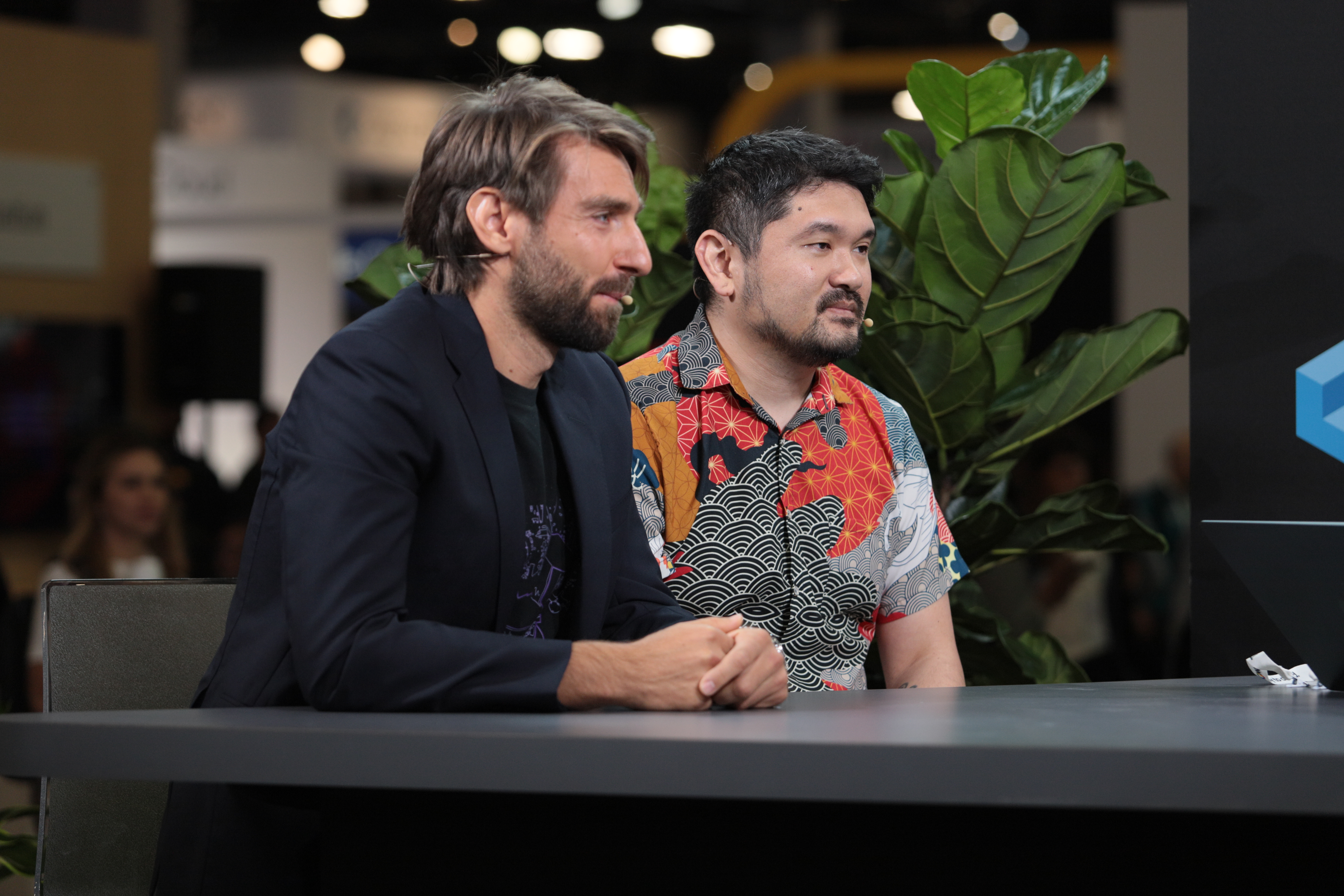
Recorded live at Google Cloud Next 2026 on theCUBE, hosts Alison Kosik and John Furrier speak with Balazs Molnar of Rabbit chief executive officer and co-founder and Bryce Ageno of Nordstrom principal software engineer. They draw on real-world implementation experience to address artificial intelligence readiness and cloud infrastructure challenges, including BigQuery autoscaling and reservation strategies, Google Kubernetes Engine and storage optimizations, Pub/Sub automation, data modeling and emerging agent-driven workflows that connect cost, performance and developer productivity.
Ageno reports that enabling Rabbit’s autoscaler optimizer delivers a 47% saving on BigQuery reservation costs and that automation yields measurable personnel and roadmap benefits; they recommend integrating autoscaling into cloud cost optimization practices. Molnar emphasizes a shift-left cost-aware approach to code and model selection and they highlight the importance of developer tooling for continuous cost visibility. Panelists emphasize that FinOps must evolve to address AI token economics, context engineering and automated auditing. This session supports cloud architects, data engineers and FinOps practitioners seeking practical strategies for cost optimization, generative AI readiness and operational efficiency.
In this interview from Google Cloud Next 2026, Balazs Molnar, co-founder and chief executive officer of Rabbit PTE Ltd., joins Bryce Ageno, principal software engineer at Nordstrom, to talk with theCUBE's John Furrier and co-host Alison Kosik about how AI is reshaping cloud cost optimization from a reactive dashboard exercise into an autonomous, always-on discipline. The conversation centers on Nordstrom's real-world deployment of Rabbit's automated FinOps tooling on Google Cloud, where a single feature — the slot autoscaler optimizer for BigQuery — delivered...Read more
exploreKeep Exploring
What stood out to you about their product or service?add
How can organizations move from identifying cloud cost optimizations to automatically executing them — including "shifting left" by making code cost-aware before deployment — so teams don’t have to manually optimize?add
Aside from cost savings, what personnel impacts and other intangible benefits did you experience (for example, automation freeing staff, reduced reactive SQL work, and an accelerated roadmap)?add
With AI-driven access to data increasing (chatbots, agents, many internal users), when should AI query BigQuery versus a transactional/Postgres store (e.g., AlloyDB), and how should FinOps evolve to manage and optimize the rising costs of AI/model usage?add
What are your thoughts and plans for using AI agents and automation in auditing and FinOps—e.g., automating bill-checking and report generation, and implementing showback or chargeback models—and what is your vision for auditing and reporting?add
>> Welcome back to Google Cloud Next 26. We are streaming live right here in Las Vegas. I'm Alison Kosik alongside John Furrier, and we're about to embark on another partnership and a use case, which is really important to talk about.
John Furrier
>> Yeah, I love when you have practitioners come on with real examples and AI infrastructure is booming. It's got a lot of value in managing and understanding it and how to use it. And the data feeds the AI, so you got to get that right. It's going to be a great topic.
Alison Kosik
>> Yeah. All right. Let's bring in our guests. We've got Bryce Ageno, Principal Software Engineer at Nordstrom. Welcome to theCUBE.
Bryce Ageno
>> Yeah. Thank you for having me.
Alison Kosik
>> And Balazs Molnar is the CEO and co-founder of Rabbit.
Balazs Molnar
>> Thanks for having me.
Alison Kosik
>> Welcome to theCUBE.
Balazs Molnar
>> Thanks for having me.
Alison Kosik
>> So I want to start with you because the use case is so important to bring this to light, Nordstrom. Everybody across America knows Nordstrom. What stands out to you about your partnership with Rabbit?
Bryce Ageno
>> What stood out to me was a lot of their automated tooling where they're not just there to display what your costs are, which a lot of the tools out there and that's all they do. They take it a step further. They figure out, and they know so much about BigQuery and how its cost works, how its compute works. So they have automation that built in that reduces your bill with literally a click of a button. One of their things that we turned on first was their optimizer for the autoscaler for slots. Literally pointed at it, click on it, 47% savings on our BigQuery reservation costs. And that's just like one of the features. That feature by itself is worth it by itself, but there's a bunch of other features that they have around across all of GCP for GKE automation, for cloud storage costs, reduction, recommendations on how you even structure your tables. So partitioning, clustering, indexing recommendations, all of these things are not only visible to you, but they offer a way to get that data to you in Pub/Sub topics. So you can automate your recommendations. And like with AI, it's a perfect example. You can then read that and then automate the fix.
John Furrier
>> I mean, the automation's great. The cost saving numbers are phenomenal. Congratulations. Well done.
Bryce Ageno
>> Thank you.
John Furrier
>> What's the secret sauce? Everybody wants this.
Balazs Molnar
>> A lot of work.
John Furrier
>> I mean, I mentioned in the opening, understanding infrastructure, we've seen this in the cloud. I mean, reserve instances on other clouds, you got BigQuery, big, heavy machinery, good ... I call it the front loader of data. It's really fast. But cloud, we had the FinOps way, but AI is going to enter more action. So understanding all the moving parts is ... Scope the order of magnitude of the complexity involved in all this.
Balazs Molnar
>> Yeah, absolutely. And then I think back in the days, and even like if you look at what the FinOps framework is, is basically about showing you where you can optimize. The problem is you still need to do that optimization. And then like teams at enterprises like Bryce's team, their job is not to optimize. Their job should be building stuff to make their experience better. And then what we've figured out is how we can move from just showing you what you need to do to actually execute it. And the next layer is really going to be about how do we call it shift left. So we preempt it that you actually overspend. So we do like, for example, a conscious code overview. So the AI is going to write more and more code, but they're not necessarily thinking about how to be more cost-effective. So if you can actually ... Before the code getting deployed, you can actually change it, so it doesn't drive additional cost. That's the best type of optimization. That never has to happen. That will never hit your bill. And, yeah, as you said, I mean, if we accept that AI is going to be the core of every single organization moving forward, I think there are really three things that you got to have to figure out. First, how do you going to pay for it? Second, how are you going to make it economical? And the third is, how you're going to use AI for the first two? So that's really what we're doing. And this is how we work with Bryce and the team as well to make sure that they can build better experiences.
John Furrier
>> One of the things I've observed during the cloud era, you go back. I mean, we started covering cloud, Amazon around 2013. Google Cloud had App Engine at the time, if you remember the glory days. And then look at the progress they've made. The DevOps, and now DevSecOps, they were developers and they ran operations. We were born in the cloud 17 years ago when we started this company, so we're all DevOps. So DevOps is dev and ops. Today in the AI world, Bryce, I want to get your thoughts on this because the superpower are called the triple threat tech athlete has three things, they build, they operate and they invest. And the investment piece wasn't really a big cloud deal because until FinOps became a thing, but budgets aren't getting bigger at the rate of the AI needs. So the only way to get more cash is to optimize on the spend. So you got to build more, better app, better service for the customers to get delivery. Love Nordstrom's got a great tech team. So as you think about the build operate, you got kind of an investment angle here because you're not like investing capital, but you need the capital to go back to the CFO saying, "Hey, I'm going to reinvest that cash into other products." How do you think about that?
Bryce Ageno
>> So I try to get ahead of a lot of things. So like when we first started talking to Rabbit, this is like only a few months into our BigQuery move. We had a big move off of Teradata to BigQuery and I knew already since we were doing a lift and shift that nothing's going to be optimized and our bill was going to go through the roof. So came to Google Next, was hunting out company to company to figure out, by testing them to see how much the intimate knowledge they know about BigQuery, how the reservations work, how all of these things work. And the only booth that had the technical expertise I was looking for that I could have a conversation with of like the details of what could help us save money was Rabbit. So I'll give you an example of like why we love our partnership with them is Google came up with a feature that allows you to add a configuration value to dynamically shift which change your reservation, right? If you want to use on-demand or multiple reservations, right? So as soon as that became a previewed feature, Rabbit had already thought of, "Oh, we can build some automation to help you, based on your query history, pick the cheapest billing model." So we're like, "Oh, all our airflow jobs, we can implement that in." We're now looking into implementing it with our Looker calls as well. So that's another thing where you don't have to think about it. You just save by just turning something on and that's ... The fact that they were already ahead of it, based on a preview feature that Google was releasing, we're confident that as new features come out, we're going to continue working with Rabbit to continue to help us save money.
John Furrier
>> Outside of the cost and the savings you got there, what was the personnel impact? You got automation, that frees people up, right? Talk about the other intangibles.
Bryce Ageno
>> Like what do you mean?
John Furrier
>> Like what was the benefits of the team? You had the bill skyrocket, that's cash and you got to go in and figure it out.
Bryce Ageno
>> Oh, yeah. Oh, perfect. So like the amount of time it takes. So you do a lot of reactionary SQL improvements, right? That's what we had a bunch of analysts and a bunch of our data engineering teams looking into, right? Each team has their own budget. Now, with the pressure a little bit gone on that, because the bill went down so significantly, they're working on getting, automating our ingestion process, right? We're spending more time on data modeling to make it easier for people to find data. We're able to integrate with other tools that we're doing for our data catalog and all these other features that we'd have no time for because we're focusing on getting that build down.
John Furrier
>> So you accelerated your roadmap?
Bryce Ageno
>> Yes, definitely.
John Furrier
>> Was there a contagion going on in the team like, "Hey, this is working, let's do other things?"
Bryce Ageno
>> It was one of those things where we turned it on, we saw the bill drop. Most people didn't believe it at first, so I had to really like talk to our leadership and like show them how it works, explain why it went down so significantly with just one of the features. But then once I was there, a lot of the roadmap, I was on a cost V team. We didn't need to do as much now. So I was like, "Oh, I could release a lot of our senior tools to work on other stuff now." So I talked to product and all that stuff. I was like, "We still want to continue working on costs, but now it's a lower priority, so you guys can put in other features on our roadmap."
John Furrier
>> They're happy. They're happier.
Bryce Ageno
>> Oh, they're very happy.
John Furrier
>> They're working on cooler things.
Bryce Ageno
>> Yeah.
Alison Kosik
>> Okay. From the team to the customer experience, maybe you can let us in on what are you looking at down the pike for the customer experience based on your relationship with Rabbit, what kinds of things can the customer expect to see change let's say in the next 6 to 12, 14 months?
Bryce Ageno
>> Are you talking about like the Nordstrom customers?
Alison Kosik
>> Yeah.
Bryce Ageno
>> So everything relates to data like we know now. So a lot of this helps us unlock our analysts, our merch partners, all of our parts of our business that uses data to make decisions. Now, they can get it faster. We have more time to organize. Our data's more discoverable because we have all this extra time to work on that features for our teams that directly moves to what our customers see. They get better products. They're going to get fresher things that they ... Because we have the data for them to make those decisions within Nordstrom, especially when they're purchasing ... I'm not good with the terminology here because I don't do that part of the work, I'm mostly focused on data, but yeah, the people that restock all of our stuff.
Alison Kosik
>> Yeah, yeah.
John Furrier
>> How about the manual processes? Because I love the automation piece as well as the cost savings things. It's a fall out of your chair moment for CFO and congratulations on that good work. What are other areas that you see that you can take out some inefficiencies, dashboards? What are the areas are people honed in on? Google calls the word toil or undifferentiated living by other vendors. What other areas you see?
Balazs Molnar
>> Yeah. I mean, like ideally where we are going is think about that you can have 10 of the best cloud engineers working for you 24/7 in your infrastructure and in your code to keep you optimized. And I think this is going to be the most important thing. This goes obviously beyond data, so every single cloud services, and it goes on the infrastructure and the code level as well. This is where we need to take this. Essentially, you won't need dashboards anymore because whatever data you will need, you will get it from a prompt. And that's the idea that dashboards are legacies, like the fact that they're aesthetic and, obviously, you go to website or you go to a SaaS product. I mean, that is literally yesterday as we speak. So that will be something that is quite exciting. We're going to start working with Bryce and the team very soon on launching some of these agents. And I think this is where like the real or another significant productivity boom is going to come because it's literally going to take off every part of the optimization burden from the engineering team's shoulder.
John Furrier
>> I guess Bryce, I guess I'll ask you, what was the reaction with like the finance team? Your relationship must be stronger. How did they lean into this? Because of course they watch on the costs. They see the numbers.
Bryce Ageno
>> Yeah. So I don't directly work with them. So like that normally goes through like our leadership and like they set the budgets for the year. And I was tasked with how do we stay within budget, right? And then we blew past that and was able to make room for other things, especially with our AI costs and all this use of Claude and Copilot, right? It gives our org room in our budget.
John Furrier
>> You got the hours saved on the engineering team. You got the cost savings, hitting all the boxes. I'm going to party for you at Nordstrom's for sure. Congratulations. I guess my question is, this show has been pretty impressive. Biggest Google Next I've seen, Google Cloud Next. What are you guys talking about here? What's on the agenda? What's some of the coffee chats you're having? As you look at Gemini coming out, you got a lot more agentic stuff coming. Google's done a good job of building that scaffolding around the open models for choice and certainly Gemini's their model. What are you guys chatting about now? What's the conversation like?
Bryce Ageno
>> So what I'm here for is a lot. I focus a lot on cost, but one of the other things is, since I help with some of the future thinking for our data org is AI calling BigQuery, right? Not every question is ... BigQuery is not a good answer for it, because that's a very analytical warehouse, right? So you have one of the features that Google recently announced I'm going to be looking into is the AlloyDB relationship with BigQuery to auto sync and reverse ETL back into Alloy. So then you could easily create an MCP server that is then intelligent enough with the use of AI to pick the correct warehouse to go to based on the question. Is this an LTP question or an OLAP question? Is this something that's going to be way more efficient using a Postgres interface or not? So those are the things we're looking for because I know that's already coming where everyone wants access to our data, but it may not be the most appropriate use of BigQuery. So, yeah, that's one of our main things. And obviously, another one is like the BI side of this, right? Everyone likes chatbots. They want to chat with data. This is another big thing, right? So this is definitely something we want to partner more with Rabbit on is like the amount of queries that are going to happen, because now it's not just looking at a dashboard. You have potentially thousands of people, even people that are working in the store, "I want to know my sales. I want to know this," especially with commission sales. These are all the kind of questions that every day people want a quick answer through their phone. And I see that all hitting BigQuery. I'm like, "Oh, we got to get ahead of this." Because now our customer base has just grown internally.
John Furrier
>> Yeah. FinOps is super important. In fact, we'll be at the FinOps Foundation in San Diego in 45 days. It's become a mainstream topic on the cloud side. So awesome work. Now, the scuttlebutt amongst the FinOps community is we ain't seen nothing yet with AI. So I'd love to get your thoughts on this because the words are even different. They call it token economics, but it doesn't represent the whole picture of AI because it does build on cloud native. So you got the DevSecOps teams rolling into this agentic layer, which is going to spawn more agents and more automation. Do you guys have any thoughts on how you see FinOps extending into AI? Because there are things coming. We're already seeing model costs because they're not optimizing for the right Pareto curve or the right routing to the right system. So there's so much stuff going on. What's your guys' vision on this? It's kind of a loose open-ended question, but I'm trying. I don't like the word tokenomics just because it doesn't really represent. I mean, tokens are-
Balazs Molnar
>> Yeah. So maybe I can give a stab.
John Furrier
>> Yeah. Take a stab at it.
Balazs Molnar
>> Yeah. So you asked me about earlier that what we were talking with customers here, and it's literally, that's the number one question that we're getting. How do we lower our AI bill? And as you said, it's a completely different word. And the problem with that is that every single customer almost uses everything differently. And one common thing is that everybody overspends. About 4 to 5X to what the origin of budget was.
John Furrier
>> And the CEO said, "Everyone use AI."
Balazs Molnar
>> Yeah. And everybody's using everything. We have Anthropic, we have Google, we have OpenAI and everything runs at the same place. So I think this is going to be, obviously, it's going to be the multimillion, a billion-dollar question of how do we actually make this more economical. And then this is why I said, the first question is how do you use it, but second, how do you make it work for the budget that you had it for? And the difficulty is that right now, like smaller things like model selection, so we were just discussing this with Bryce that people are using the best models to write an email internally and then that email probably costs $5. So it's not really the best use of the tokens, so these are one area. Other areas are like, there is a team of 30 people using an agent. They still individually pay for everything because they might not have the right strategy for caching. So there are different layers that we-
John Furrier
>> It's back to the infrastructure too.
Balazs Molnar
>> Yeah, absolutely.
John Furrier
>> I mean, everything has a systematic consequence.
Balazs Molnar
>> Yeah.
John Furrier
>> I mean, models are a great one. I mean, I was talking to a customer or a practitioner, actually a customer of another vendor, and they said, "Hey, we're going to get an AI factory on prem. Just pump out our own tokens for the dev, because why should I pay for tokens? I'll just pump out my own tokens, unlimited tokens." So they just did the ROI on the CapEx, payback on that. And then you got things like data pipelines. I mean, people built pipelines 10 years ago with all the business logic built into the database and the pipelines, you can't just have an agent move a pipeline.
Balazs Molnar
>> Yeah, absolutely.
John Furrier
>> There's like logic and so you would have to curate that or just leave it and build a new fresh one. So these are like, I mean very nuanced, but I mean Bryce, what's your thoughts on this? Because it gets kind of complicated.
Bryce Ageno
>> So like you hear a lot at this conference and I think for going forward you're going to hear like the context engineering, right? What does that mean? So you have a bunch of context, you're using AI to make decisions based on that context, but what hasn't really been really thought through is testing that context changes, right? So as you're paying for the model to use it, and then to test any changes for it, you have to pay again because then you're using the tokens to test the changes you make. So we're looking at that from a cost perspective of like, I can't run all of my tests every time I make a one sentence change to the context. So how do I determine what do I test for the changes I'm making? Do you do some kind of time regression every quarter? Things like that, because now all testing costs money. It's not like unit tests. So these are all things we have to think about and we don't really have solutions for, or even like the companies that are producing this stuff, they're like, "Here's the model," and then you figure it out. And I'm hoping as this is used more and more, and more and more companies have these same problems that there's a better way to test the context engineering because that is something we're looking into heavily.
John Furrier
>> I'm smiling because we heard the same music playing when data growth was happening. The data budgets aren't growing fast as fast as the data growth is, which was kind of a storage now data platform challenge. AI is the same conversation. The AI cost growth is far outpacing the budget. So you got to get to savings.
Bryce Ageno
>> Yes.
John Furrier
>> So the enterprises started looking at FinOps, not as a, "Hey, let's lower the bill." They're looking at it as an investment thesis for project optimization and talent retention because no one wants to work on tasks that aren't that high paying engineer doing tasks unless there's a design piece. Is that a good use of people?
Balazs Molnar
>> Yep. The question is going to be the ROI. Does it bring it back? How do you measure it? So I think this is another question that we keep getting of like, okay, if you're spending tens of millions of dollars in the AI right now, but what does it do to us? If an email costs us $5, that might not be the best ROI. So this is-
John Furrier
>> We saw a couple years ago on the security industry, GenAI really doing good work at toil like reports, because if there was ever an incident, CISO would have to then generate a boatload of reports. Audits kind of fall into the same bucket. Any thoughts on agents and automation around auditing? Because bills come in, you want to check them. Have you guys replicated that FinOps data engineer? Or are there plans? What's your vision on auditing? I won't say compliance, but like reporting stuff.
Bryce Ageno
>> Yeah. So we are doing a showback model for most of our stuff right now, so we haven't fully implemented anything like a chargeback. So as being part of the data platform team and our sister org is the rest of the platform that does all the cloud platform costing through Kubernetes and other forms of hosted compute, our first step is always to show. So people can at least see what it is and then they can identify major problems. But like he was saying that that's a reactionary way to work on it, right? Like you're reacting to data. That's why a lot of ... I believe it's true that dashboards are going to be a thing of the past, because you already have the data, you can use these agents to then look at the bills and then figure out those patterns even before a human would notice it. So that's where you're going to see a lot of the FinOps space use AI to identify these things instantly and then react to it and solve it all at once.
John Furrier
>> Guys, well, great example. Great use case. Thanks for coming on. Bryce, appreciate it. Love Nordstrom. I'm a customer, always great service, especially in New York City, my new home. Appreciate it. And yeah, I mean, people are happier, budgets are looking good. Thanks for coming on.
Bryce Ageno
>> Cool.
Alison Kosik
>> Thanks so much.
Balazs Molnar
>> Thanks for having us.
Bryce Ageno
>> Thank you.
Balazs Molnar
>> Thank you very much.
Alison Kosik
>> And you're watching The Cube, the leader in live technology coverage. We'll be right back.



















 Alison Kosik
 John Furrier