On theCUBE Research at Google Cloud Next 2026, hosts Alison Kosik and John Furrier sit down with Shilpa Akunuri, chief technology officer of Covered California, and Vishal Prabhu, managing director of the artificial intelligence, AI, and engineering practice of Deloitte, to explore how artificial intelligence, including intelligent document processing and generative AI, is transforming public sector healthcare operations.
The conversation addresses Doc AI implementations and intelligent document processing, workflow automation, user experience improvements and secure cloud-native architectures, and examines how productized solutions such as Media Insights Pro help agencies scale faster and more consistently.
Key takeaways include measurable operational gains and practical implementation guidance. Akunuri reports that Doc AI reduces document verification to under five seconds and delivers approximately 54% automation, saving an estimated 24,000 staff hours annually while achieving approximately 96% classification accuracy and 88% extraction rates; they emphasize the operational impact for public sector health programs. Prabhu notes that Deloitte's Media Insights Pro shortens time to value to weeks and emphasizes security, FedRAMP compliance and tamper and fraud detection; they highlight cloud-native architectures and controls that support government requirements.
Watch the full conversation to learn practical strategies for deploying AI and intelligent document processing in public sector healthcare, improving member experience and achieving secure, scalable operations on Google Cloud.
Forgot Password
Almost there!
We just sent you a verification email. Please verify your account to gain access to
Google Cloud Next 2026. If you don’t think you received an email check your
spam folder.
In order to sign in, enter the email address you used to registered for the event. Once completed, you will receive an email with a verification link. Open the link to automatically sign into the site.
Register for Google Cloud Next 2026
Please fill out the information below. You will receive an email with a verification link confirming your registration. Click the link to automatically sign into the site.
You’re almost there!
We just sent you a verification email. Please click the verification button in the email. Once your email address is verified, you will have full access to all event content for Google Cloud Next 2026.
I want my badge and interests to be visible to all attendees.
Checking this box will display your presense on the attendees list, view your profile and allow other attendees to contact you via 1-1 chat. Read the Privacy Policy. At any time, you can choose to disable this preference.
Select your Interests!
add
Upload your photo
Uploading..
OR
Connect via Twitter
Connect via Linkedin
EDIT PASSWORD
Share
Forgot Password
Almost there!
We just sent you a verification email. Please verify your account to gain access to
Google Cloud Next 2026. If you don’t think you received an email check your
spam folder.
In order to sign in, enter the email address you used to registered for the event. Once completed, you will receive an email with a verification link. Open the link to automatically sign into the site.
Sign in to gain access to Google Cloud Next 2026
Please sign in with LinkedIn to continue to Google Cloud Next 2026. Signing in with LinkedIn ensures a professional environment.
Shilpa Akunuri, Covered California & Vishal Prabhu, Deloitte
In this interview from Google Cloud Next 2026, Shilpa Akunuri, chief technology officer of Covered California, joins Vishal Prabhu, managing director of AI and engineering practice at Deloitte, to talk with theCUBE's John Furrier and co-host Alison Kosik about how AI-powered document intelligence is eliminating friction in government healthcare enrollment and driving measurable outcomes at scale. Akunuri details how Covered California — serving over 16 million enrollees, or one in three Californians — partnered with Deloitte and Google to deploy an intelligen...Read more
Shilpa Akunuri
CTOCovered California
In this interview from Google Cloud Next 2026, Shilpa Akunuri, chief technology officer of Covered California, joins Vishal Prabhu, managing director of AI and engineering practice at Deloitte, to talk with theCUBE's John Furrier and co-host Alison Kosik about how AI-powered document intelligence is eliminating friction in government healthcare enrollment and driving measurable outcomes at scale. Akunuri details how Covered California — serving over 16 million enrollees, or one in three Californians — partnered with Deloitte and Google to deploy an intelligen...Read more
exploreKeep Exploring
What problem was being solved for people (not just the system) in Covered California's eligibility and enrollment verification process, and how was it addressed?add
What impact did implementing Document AI have on staff productivity and operational efficiency?add
When did this initiative begin, and how quickly did it reach production?add
How are security and privacy handled in production?add
Shilpa Akunuri, Covered California & Vishal Prabhu, Deloitte
search
Alison Kosik
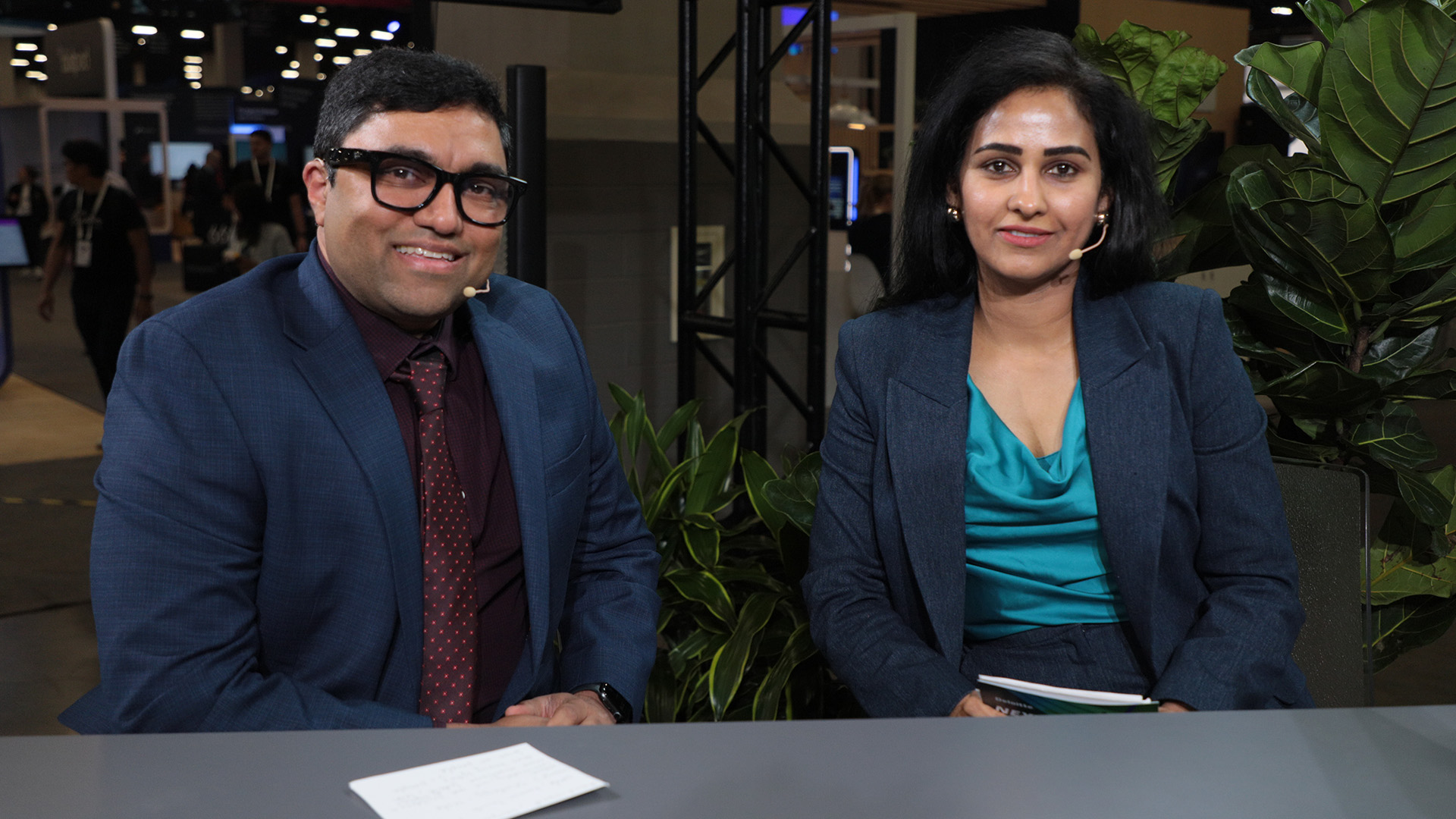
>> Welcome back to Google Cloud Next '26. We are streaming live right here in Las Vegas. I'm Alison Kosik alongside John Furrier, and it seems as if, excuse me, the C-suite has entered the room.
John Furrier
>> Yeah, and I think AI is obviously a tailwind for all businesses, but verticals where there's domain expertise is really popping. You're seeing real value being created, real efficiencies, and it's just really just been a great story. We got two great guests to expand on that and unpack it.
Alison Kosik
>> Yeah, let's go ahead and do that and introduce who's sitting here at theCUBE. We've got Shilpa Akunuri, the chief technology officer of Covered California, the nation's largest state-based health insurance marketplace. And Vishal Prabhu, managing director from Deloitte's AI and engineering practice, and who's been a key part, a partner in the transformation. Welcome to theCUBE.
Shilpa Akunuri
>> Thank you.
Alison Kosik
>> Shilpa, let me start with you and ask, what problem were you trying to solve for people, not just the system?
Shilpa Akunuri
>> Yeah, so Covered California, as you stated, is a state health insurance marketplace. Today we have over 16 million people enrolled on our healthcare marketplace. And the problem really is how do we eliminate the friction on our eligibility and enrollment verification platform? Make it as simple as possible for any demographic, any customer segment to come onto our platform and be able to compare, shop, verify, and check their eligibility on our healthcare, and be able to afford and buy healthcare's coverage.
John Furrier
>> What's been the challenge for you guys? Obviously a lot of data.
Shilpa Akunuri
>> Yes.
John Furrier
>> A lot of user experience.
Shilpa Akunuri
>> Yes.
John Furrier
>> Kind of the themes of the show. What were some of the core problems and how has the world changed for you as you scope and frame the future?
Shilpa Akunuri
>> Yeah, the problem is really two-front. One is on the consumer experience, like I mentioned. It's about the friction, the amount of time the consumers have to spend being able to submit all the documents. And before we implemented in partnership with Deloitte and Google, the Google Doc AI, the intelligent document processing platform, it would take anywhere up to 72 hours for a consumer to just know that whether they have submitted the right kind of documents or not. And with the implementation of Doc AI, we have brought that time down to almost near real time, under five seconds. So now our consumers can know from conditionally eligible to eligible in fraction of seconds. It's real time experience for them. And for all we know, the people that we are talking about are waiting for surgeries to get done for all we know.
Alison Kosik
>> I have to tell a personal story. I was on... You talk about waiting to hear from insurance. At one point, I had to get onto Obamacare. And I was waiting, I needed surgery and then I found out they wouldn't cover me. So I can completely relate.
Shilpa Akunuri
>> And-
Alison Kosik
>> Yeah, go ahead.
Shilpa Akunuri
>> Yeah. And the other end is our internal staff productivity, right? How do we hit that next level of operational excellence? Our staff was spending tedious number of hours. No one wakes up on a Monday thinking that I'm going to manually process tons of documents today, verifying manually. So we have cut down that processing time. So with Doc AI implementation, we have seen almost 54% in automation results, which translated to an estimate of 24,000 hours annually in our service center operations savings. What that means is it's not just manual labor hour savings, but how now they can focus on how high value customer support and providing that operational excellence to the next level, yes.
John Furrier
>> Vishal, Deloitte's seen the cloud wave. Now the AI wave is upon us. We've seen SaaS when that grew, that was great. Yeah, horizontal scale of the cloud, but the domain specific data was the SaaS app.>> Yep.
John Furrier
>> Now domain expertise in these verticals and the horizontal nature also applies to AI.>> Yes.
John Furrier
>> How does this fit in? How does that accelerate the time to value as these challenges that if you go back 5, 10 years, these were monster IT projects. I mean, they were like big, time-consuming. Take us through your thoughts on this.
Shilpa Akunuri
>> Absolutely, John and Alison. So what I've seen is there's been a broad impact of these technology disruptions. By embedding AI into the systems, we are not only making the systems faster, but we are also making more empathetic the customer journey. Like exactly what Shilpa called out earlier. By bringing in AI, has been able to have saved tons of hours for her talent staff or very talented staff and use those savings of those people so that it can be applied to areas where real human judgment matters the most. This is something, John, that I've always been saying. While we hear that AI might replace the human touch, what I would submit to you is, isn't AI the key to bring it back? Now, shifting to the strategy question that you had asked John and Alison earlier, I think it's high time that we scale this out, right? And what Deloitte is doing here is creating these ready to use products like Media Insight Pro. It allows our agencies to integrate with proven outcome focused services rather than having to reinvent the wheel every single time. So from a value standpoint, ultimately what we are looking at is building more responsive future for everyone, where technology is doing the heavy lifting and people can focus on people.
Alison Kosik
>> Shilpa, when does this journey start and how quickly did you get to production?
Shilpa Akunuri
>> Yeah, so in 2022, we have partnered with Deloitte and we ran through innovation sessions and we really pressure tested our approach. And from the get go for us, what mattered was very clear. One is the accuracy in the verification and the end-to-end workflow automation. And as policies evolve and the document types evolve, how could we adapt the system? So really build something that is built to scale, not just a one-time solution. And then by 2024, we went live, we rolled it out to identity platform. And at that time we were supporting 50 plus document types and by 2025 that scaled out to 80 plus document types and we saw real productivity, not just productivity benefits, which I quoted an estimate of 24,000 hours to our service center operations and also the performance improvement. It's almost 96% in extraction rate and classification rate and 88% extraction rates.
John Furrier
>> What was some of the, just scope the scale. Give us an idea of how big this was from a scale standpoint.
Shilpa Akunuri
>> Yeah. So if you put it in perspective, one in every three Californians are using our enrollment and eligibility platform. So what that means is-
John Furrier
>> It's pretty . It's the north star of every company I talk to.
Shilpa Akunuri
>> Yes.
John Furrier
>> Production workloads at scale.
Shilpa Akunuri
>> Yes.
John Furrier
>> I have to ask because this comes up a lot. How did you handle security and privacy because you have to nail that in production?
Shilpa Akunuri
>> Security is foundational for us. It is not just another checkpoint. Covered California, we are a mission-driven company. So what that means is we operate on three lenses, which is outcomes first, AI enabled and risk governed. So that's the lenses that we operate on. Again, we implemented Google SecOps that gives us a holistic view of all our security posture, log information and threat intelligence. And the next real big thing is automation, truly automating. So our goal is to have that prefilled enrollment application form, which will eliminate all of the consumer journey, the friction. And how we do that is through our security. We have like terabytes of PII, PHI information locally secured. That's how we earn the trust of Californians.
John Furrier
>> Yeah. And you got also a lot of federal, FedRAMP stuff going on too.
Shilpa Akunuri
>> Yes. Yeah. So Google assured workloads is another thing we are looking at to keep us in compliance with the stringent compliance checks like FedRAMP.
John Furrier
>> Vishal, this is where you guys shine in my opinion, because I think you look at just kind of hearing our talk, it's like, oh, this sounds so cool. There's a lot of back office stuff that could really mess this up, that gets taken care with AI, forms, databases, FedRAMP. I mean, that's a whole nother process. So things are getting faster. Comment and feel free to chime in on the velocity and where AI intelligence takes us to documents come in faster, you're smarter.>> Yeah, absolutely, John. And Shilpa gave great examples from carriers, right? I want to share two other examples which immediately come to mind where this velocity or speed to market that we talk about. So two examples that I could think of is the state of Maryland, their childcare subsidy program and the state of Nevada's time sheet verification services. In both these cases, we deployed Media Insights Pro. We saw that time from kickoff to go live was a matter of weeks instead of taking months. Now, especially for government services-
John Furrier
>> Once is a compliment, by the way.>> Yes.
John Furrier
>> I mean, project management can get unwieldy and go off the rails pretty fast.>> Absolutely, John. And that's the challenge that you called out, right? The world is disrupting in such a rapid pace. How do we stay ahead and better serve our constituents? So when it comes to government services, speed to market is not just another metric out there. What it really means is how do we get real help to people exactly when they need it? As if a family who is applying for childcare subsidy, they can't afford to wait for months for that service or program to become available. And this urgency, John and Alison are driving that massive hunger, if you will, for modernization.
Alison Kosik
>> Can I just ask this because governments are often just behind the curve when it comes to technology in general. It's so frustrating to see. Are you finding any pushback from maybe any government clients where they're not willing to accept technology to help them move these programs, move their businesses forward in a faster, more efficient fashion?
Shilpa Akunuri
>> Yeah. So Alison, we are very blessed to have an awesome client like Shilpa and Covered California DXAs. Callie has OTSI, right? To sponsor and support us, very trusted partner for them. What agencies typically, and for the right reasons, they are risk averse because when you hear in the news, AI, data privacy concerns, governments manage this massive amounts of PI, PHI, FDI data, as Shilpa called out. So trust is something that needs to be earned. But when there are bold plays, the way Covered California and DHC is working with OTS went ahead with Google and Deloitte, that becomes a new benchmark for other state agencies to be a fast follower.
John Furrier
>> Yeah, you're a leader. You're on the frontier, like frontier models.
Shilpa Akunuri
>> Yes. And I'd like to add, so that's where the fine balance between moving fast, adopting to the new technology and really tying it to the business value outcome, and also institutionalizing, thinking in systems. That's where that merge has to come together. That's where partners like Deloitte and Google have been created.
John Furrier
>> Yeah. We've been saying in the queue for years and finally it's happening. The systems mindset is now a conversation that's front and center.
Shilpa Akunuri
>> Yes.
John Furrier
>> I want to ask you, if you don't mind, because we see examples like this all the time, frontier leaders like yourself are getting success and that spreads. What's been the reaction inside the organization? Because there's always skeptics. There's also people who see the future, take the risk, implement it with a trusted partner, like Deloitte, who's invested a lot in their AI lives. We've covered that on Silicon Angle and theCUBE before. So when you come in and get the wins, the CFOs or the money's there and you can see productivity gains. When you see that kind of product, it kicks off macroeconomic conversation, not just tech. What's been the reaction inside the organization?
Shilpa Akunuri
>> It has all come down to how good we are with educating our business leaders and we cannot build one solution that fits everyone, right? That's where that eye for a customer, understanding the customer journey really comes into the picture. A simple example could be we have legal, we have policy setters, and then we have the business people. That's why clearly defining what success looks like for them. What is that success metric to legal? What is that success metric to the policy? So we really defining all the way through. Adoption and reach, measuring your AI implementation and adoption and reach. Yes, it's good for the IT leaders and the operations leaders, but that's not telling the whole story. What shadow AIs have I caught? What other leagues have I got? How many extra tokens am I using? These are the things that legal may be caring about. And from a policy standpoint, what kind of guardrails governance with HR1 policy now in place? How are we equipping ourselves to measuring with all those guardrails? So that way you need to really step into their shoes and give them that clear success metrics.
John Furrier
>> Yeah. And result, of course, agents can handle that too.>> Absolutely.
Shilpa Akunuri
>> Yes, exactly.
John Furrier
>> It's interesting. When you have these multi-stakeholder projects, you guys live and breathe this every day, the technologist, the game is still the same. The outcome is the end user, life changing outcomes. I mean, you mentioned the CX, that's just not user interface. That's like, I want to get my surgery or I have my family coverage credits. This is life changing outcomes. So we're back to outcomes, but outcomes in a real way. I mean, we heard outcomes, we're outcome focused. I mean, we've always been outcome focused, but hey, we deployed the project, we got users using the systems, they have to bend to it. Here, outcomes with AI are now real business engineer outcomes. We want to provide the service as fast as possible. This is kind of a first generation, in my career I've ever seen this.
Shilpa Akunuri
>> Yes, exactly. And I quote, Simon Sinek, "Profit isn't a purpose and purpose is what drives the work that we do and that drives the profit." And that purpose is very clear to us is the mission of advancing equitable healthcare for Californians.
John Furrier
>> Simon's great. He's got The Why, What's Your Why?
Shilpa Akunuri
>> Yes, The Five Whys.
John Furrier
>> But he also does a talk around evaluating organizations and he compares the Navy SEALs. And that talk, he talks about performance and trust, performance on the field and trust off the field. So this is now performance AI. It's got to be performant.>> Yep.
John Furrier
>> Trust, when those agents aren't working, then they better not become the bad agents.>> Absolutely, yep.
John Furrier
>> So trust is huge. You had mentioned that earlier. How is trust being earned? Is there examples that you can point to where, okay, that's a trust credit, that's trust credit. How does trust build?
Alison Kosik
>> Is it enough success stories that that's really the building blocks of the trust?
Shilpa Akunuri
>> Yeah. One example is our security posture, like I mentioned. So when we are able to enable our customers with the prefilled application, when you have all the right information and that headache is taken away from them so they can see that eligibility is possible or not to get a healthcare. So that's one form of trust. And on the inside, when we really secure our data, so through, again, any AI technology that you are able to avoid any kind of leaks and especially we are talking about PII and PHI.
John Furrier
>> You got to nail that. We hear a lot of phrases on theCUBE over the course of this show and other shows, we're in the first inning or we're just scratching the surface. It's early on AI right now.
Shilpa Akunuri
>> Yes.
John Furrier
>> Okay. And everyone kind of agrees to that. But what we see is success builds fast on the product side. Can you guys share your thoughts on where this goes next? Because you now have opportunities to do fast, closed loop cycles, forward deployed engineers, forward deployed product teams. You're starting to see a new construct form around product value loops. Thoughts on this?
John Furrier
>> Yeah, absolutely. And I think Google is an excellent partner in this area, John. The first frontier, the way we saw it was to use AI to conquer the paper trail. And we are very excited about the next set of capabilities that we are going to bring. I'll go to three of them. The first one is images and videos. And I see a massive urgent need for these services in the public sector space. Secondly, strategic insights. I'm not talking about just pulling up information from the systems, but connecting the dots across different information sources so that you have actionable insights for business leaders like Shilpa. And finally, this concept of building sophisticated agent in the loop systems, right? So that the trust factor of it, having AI really increase, take care of high workloads at scale while people can focus on areas that require that human judgment. So those are the areas that I see it. And I just have to call out. I'm super impressed with the Google relationship that we have. Really excited how Google AI services powered MIP's evolution into a comprehensive media intelligence platform.
Alison Kosik
>> So what's next in your... Oh, finish your thought. Finish your thought.
Shilpa Akunuri
>> No, please go ahead.
Alison Kosik
>> I was going to ask what's next on your roadmap?
Shilpa Akunuri
>> Yeah. So to add to that, the next big thing for us is again, surrounding security and trust is tamper and fraud detection. That's one solution that we are looking at as we enable more doc types and policy changes and everything.
John Furrier
>> Well, we're in a perfect storm of innovation. We hear Jensen Wong at Nvidia talk about the Pareto curves. Now having certain performance levels, almost great product segmentation.
Alison Kosik
>> Yeah.
John Furrier
>> You want to use Vera Rubin for the hard stuff for reasons, basic queries, the blog wells. That plays into, so AI infrastructure, TPUs with Google, but the stack is evolving. So now the agents are coming fast. And so if you do your work on the cloud native side, distributed computing, you then get a kickup in growth.
John Furrier
>> Yes, absolutely. And that is something very personal to me, John and Alison, because what I see is exactly as you called out, technology is changing at a very, very rapid pace, right? And the way I see is working with Covered California, working with DHS. When we create these solutions, rather than having other agencies go through the same loop, I'm seeing an opportunity where we bring productized solutions to the market so that agencies are getting outcomes. I see that as a faster and more cost-effective way for agencies to build a more nimble future for us.
John Furrier
>> I mean, the wishes that people wish they could do things are now possible.>> Yes.
John Furrier
>> They're gettable. AI is opening up and unlocking, the word of a year, a lot of value. Great use case. Thank you for coming on theCUBE.



















 Alison Kosik
 John Furrier