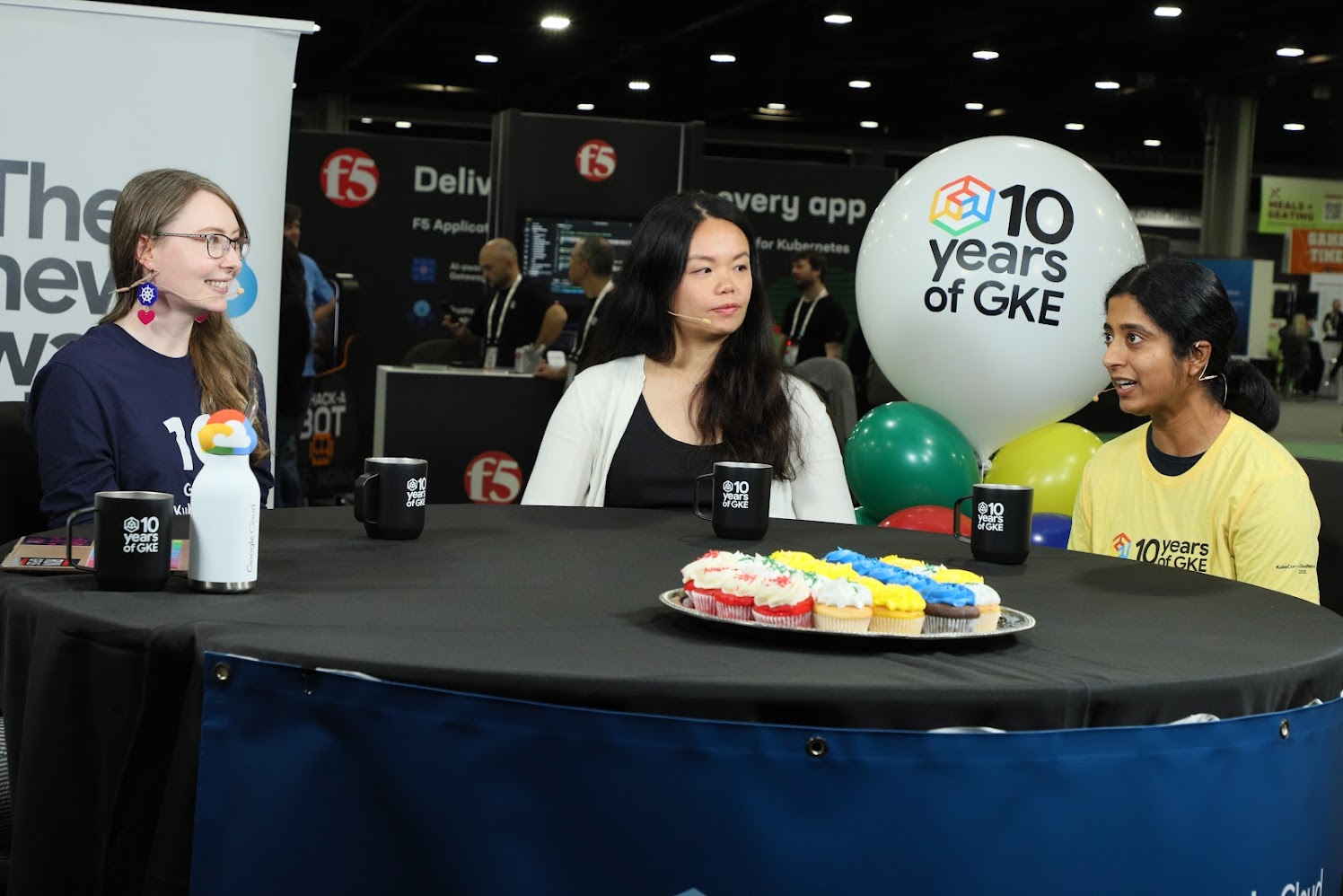
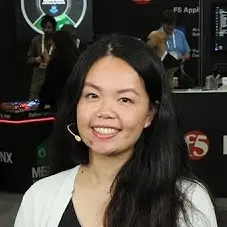
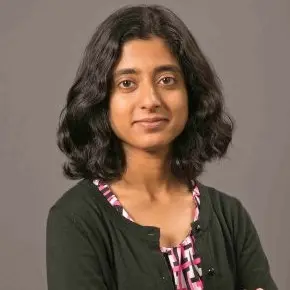
In this conversation at KubeCon + CloudNativeCon North America 2025 in Atlanta, theCUBE’s Savannah Peterson sits down with Google’s Kaslin Fields and Shubhika Taneja, plus GKE hackathon winner Amie Wei, to celebrate 10 years of Google Kubernetes Engine. They reflect on how Kubernetes has evolved from a small open-source project into foundational infrastructure for GenAI and emerging agentic AI, unpacking GKE’s latest announcements such as agent Sandbox and new LLM-aware inference gateway APIs and inference perf designed to serve billions of tokens efficiently without breaking the bank. Taneja also outlines Google’s core principles for the next wave of cloud-native AI workloads, from investing in open-source Kubernetes to delivering managed Kubernetes excellence on GKE and supporting diverse users across tools like Slurm and Ray.
The discussion then dives into the GKE 10-year hackathon, where developers were challenged to “put an AI on it” by augmenting long-standing sample apps with Gemini-powered intelligence on Kubernetes. Wei shares how she used vibe coding, the A2A protocol and generous Google credits to turn the Online Boutique demo into an online grocery experience with an AI assistant that suggests recipes from cart items and even factors in stock levels, making AI feel less daunting and more addictive to build with. Fields and Taneja highlight trends such as multi-agent architectures and offer practical advice for first-time hackers and those who don’t always see themselves represented in tech: seek out welcoming communities, lean on tools like the Gemini CLI to get hands-on quickly and remember you miss 100% of the shots you don’t take.
Forgot Password
Almost there!
We just sent you a verification email. Please verify your account to gain access to
GKE 10-Year Anniversary Exclusive. If you don’t think you received an email check your
spam folder.
In order to sign in, enter the email address you used to registered for the event. Once completed, you will receive an email with a verification link. Open the link to automatically sign into the site.
Register for GKE 10 Year Anniversary Exclusive
Please fill out the information below. You will receive an email with a verification link confirming your registration. Click the link to automatically sign into the site.
You’re almost there!
We just sent you a verification email. Please click the verification button in the email. Once your email address is verified, you will have full access to all event content for GKE 10 Year Anniversary Exclusive.
I want my badge and interests to be visible to all attendees.
Checking this box will display your presense on the attendees list, view your profile and allow other attendees to contact you via 1-1 chat. Read the Privacy Policy. At any time, you can choose to disable this preference.
Select your Interests!
add
Upload your photo
Uploading..
OR
Connect via Twitter
Connect via Linkedin
EDIT PASSWORD
Share
Forgot Password
Almost there!
We just sent you a verification email. Please verify your account to gain access to
GKE 10-Year Anniversary Exclusive. If you don’t think you received an email check your
spam folder.
In order to sign in, enter the email address you used to registered for the event. Once completed, you will receive an email with a verification link. Open the link to automatically sign into the site.
Sign in to gain access to GKE 10-Year Anniversary Exclusive
Please sign in with LinkedIn to continue to GKE 10-Year Anniversary Exclusive. Signing in with LinkedIn ensures a professional environment.
Are you sure you want to remove access rights for this user?
Details
Manage Access
email address
Community Invitation
Kaslin Fields & Shubhika Taneja, Google & Amie Wei
In this conversation at KubeCon + CloudNativeCon North America 2025 in Atlanta, theCUBE’s Savannah Peterson sits down with Google’s Kaslin Fields and Shubhika Taneja, plus GKE hackathon winner Amie Wei, to celebrate 10 years of Google Kubernetes Engine. They reflect on how Kubernetes has evolved from a small open-source project into foundational infrastructure for GenAI and emerging agentic AI, unpacking GKE’s latest announcements such as agent Sandbox and new LLM-aware inference gateway APIs and inference perf designed to serve billions of tokens efficiently without breaking the bank. Taneja also outlines Google’s core principles for the next wave of cloud-native AI workloads, from investing in open-source Kubernetes to delivering managed Kubernetes excellence on GKE and supporting diverse users across tools like Slurm and Ray.
The discussion then dives into the GKE 10-year hackathon, where developers were challenged to “put an AI on it” by augmenting long-standing sample apps with Gemini-powered intelligence on Kubernetes. Wei shares how she used vibe coding, the A2A protocol and generous Google credits to turn the Online Boutique demo into an online grocery experience with an AI assistant that suggests recipes from cart items and even factors in stock levels, making AI feel less daunting and more addictive to build with. Fields and Taneja highlight trends such as multi-agent architectures and offer practical advice for first-time hackers and those who don’t always see themselves represented in tech: seek out welcoming communities, lean on tools like the Gemini CLI to get hands-on quickly and remember you miss 100% of the shots you don’t take.
Kaslin Fields & Shubhika Taneja, Google & Amie Wei
Savannah Peterson
Principal Analyst & HostSiliconANGLE Media, Inc.
HOST
Kaslin Fields
Manager of Cloud Runtimes Developer RelationsGoogle
Amie Wei
GKE Global Hackathon Winner
Shubhika Taneja
Sr. Product Marketing Manager, AI/MLGoogle
In this conversation at KubeCon + CloudNativeCon North America 2025 in Atlanta, theCUBE’s Savannah Peterson sits down with Google’s Kaslin Fields and Shubhika Taneja, plus GKE hackathon winner Amie Wei, to celebrate 10 years of Google Kubernetes Engine. They reflect on how Kubernetes has evolved from a small open-source project into foundational infrastructure for GenAI and emerging agentic AI, unpacking GKE’s latest announcements such as agent Sandbox and new LLM-aware inference gateway APIs and inference perf designed to serve billions of tokens efficiently...Read more
exploreKeep Exploring
What significant technological changes have occurred in the last decade, particularly in relation to Kubernetes and Google Kubernetes Engine?add
What is Google's core philosophy regarding open-source Kubernetes and its applications for next-generation workloads, including advancements announced at KubeCon?add
What can be inferred about the growth and community involvement of Kubernetes over time?add
What challenges do developers face when learning to integrate AI into their work?add
What was the individual's experience and motivation for participating in their first hackathon?add
Kaslin Fields & Shubhika Taneja, Google & Amie Wei
search
Savannah Peterson
>> Good afternoon, nerd fam and welcome back to wonderful Atlanta, Georgia. We're here coming to the close of day two of our three days of live coverage here at KubeCon. My name's Savannah Peterson, very excited to be bringing you low key, my favorite exclusive series from the show floor, our 10-year anniversary celebration of Google Kubernetes engine. And with me today are three of the incredibly fearless, brilliant women at the show, Shubhika, Amy, and Kaslin. Thank you so much for being here.
Kaslin Fields
>> Thank you for having us.
Savannah Peterson
>> It is such a joy. I can feel just the energetic shift of having a bunch of brilliant babes on the show. It's refreshing. We have a lot to talk about. We're going to be talking about hackathons, we're going to be talking about community, but I got to open it up with you. We are really celebrating 10 years of achievement for the GKE team. There's been announcements, there's been events. Give us a little bit of a recap of what the week's been like for you and the team in this big milestone.
Shubhika Taneja
>> Yeah, it's been a special year. It's the 10th year anniversary of Google Kubernetes engine, and Kubernetes itself is coming on 11.
Savannah Peterson
>> I know. It's wild.
Shubhika Taneja
>> Yeah, it's wild. A lot to reflect on. So I think if we just look at the last decade itself, there has been relentless change in technology. We went from containerization to microservices, then there was GenAI, and now we are going towards agentic AI, and this feels different. Even though we have gone through these previous waves and we thought it was fast, this is really fast. So for us, it's always been about how do we proactively be ready for the next wave before it's here. And if you look at our announcements, or even if you look at our innovation, the core principles, it's just a deep connection between Kubernetes and GKE, the symbiotic relationship. It's never been more special than it is right now.
Savannah Peterson
>> Talk to me about that pinwheel effect and how you keep that momentum going.
Shubhika Taneja
>> Yeah. So if you look at our core philosophy, the first one I would say is just how Google invests in the open-source Kubernetes for the next-gen workloads. So for example, at KubeCon this year, we announced the agent Sandbox.
Savannah Peterson
>> Yes.
Shubhika Taneja
>> Yeah, that's proactively getting ready for the agentic wave, even though it's not fully, fully here. And we also launched a bunch of LLM-aware capabilities to Kubernetes this year. The inference gateway APIs and the inference perf, and that's all inference is the next big thing, right?
Savannah Peterson
>> Yes, it is. It's what makes AI real.
Shubhika Taneja
>> Absolutely. Yeah. How do you basically serve billions of tokens at lightning speed, but not breaking the bank of your organization?
Savannah Peterson
>> Right. And surprise and delight the user on the other end of that.
Shubhika Taneja
>> Absolutely. Absolutely.
Savannah Peterson
>> You may not even know what's going on under the hood. You might not even know it's Kubernetes powered agents or AI or whatever that might be. It's super exciting. Have you gotten to feel like you got to celebrate with some of your community members?
Shubhika Taneja
>> Yes, absolutely. We had a lightning talk earlier today, Kaslin and I, and we recapped some of the announcements. We had the hackathon covered there as well. We had cupcakes out there. Yeah. So it's been amazing. And I think, again, going back to the core principles. So the second one is on the reference implementation with GKE for anything that we do on Kubernetes, we have the managed site covered with GKE. So whether it's inference or agentic, we are always trying to deliver a better experience with the managed Kubernetes excellence on GKE. So that's our second core principle. And the third one I would say is just the open source ecosystem. We are always investing in that, whether it's Slurm or Ray on Kubernetes, or it's just all these different audience types like data scientists, developers, platform engineers, reducing that operational friction so that everybody is ready to use the platform.
Savannah Peterson
>> And it's that community that's really been at the core of the Kubernetes project of GKE, that flywheel. You are quite possibly the queen of Kubernetes over here platform. You and I have been in this game for a long time. Love that you're sitting next to me. So actually, we're going to dive into the hackathon, but I just want to ask you, since I have the privilege of having you next to me. How does it feel for you to be in here today to see this kind of momentum shift? I feel like the roller coaster finally went over the top and now we're going, vroom, down to the next thing.
Kaslin Fields
>> And my manager, she's not my manager anymore, but an ex-manager is here, and her first KubeCon was one of the really, really early ones, like 2015. My first KubeCon was in 2016 and I've been going to KubeCons non-stop ever since. But she took a break and this is her first one in a really long time and she was like, "This is not the conference that I remember." She went to the first one where it was just a few people in a hotel.
Savannah Peterson
>> I was going to say maybe a couple hundred people. Yeah, the first few I went to were tiny.
Kaslin Fields
>> It's amazing to see how excited everyone is about it. I love walking through the startups and all of the new projects and seeing what new things people are trying to do with the technology because even after 10 years, it's so foundational that people are building all these new capabilities onto it and trying to take advantage of the next wave while using Kubernetes and the conference has continued to grow. It's bigger than it was last year, so that tells me that things are alive and well.
Savannah Peterson
>> Yeah, it is really great. And I love that you brought up the community projects. I mean, it's wild to think that Kubernetes started as this tiny little project with a few people working on it to maintain it. Now, it's literally the platform underpinning our AI future. Wild. If you're listening, folks, your little tiny idea could end up quite literally being the backbone of the future, so don't hold back. So Kaslin, talk to me a little bit about the hackathon, what the goals were, the environment. Set the stage for us to then celebrate Amy.
Kaslin Fields
>> I am so excited that we did this hackathon because I love a chance for people to get hands-on. There are so many things that we thought about doing for the 10-year anniversary of GKE and we were discussing it and we were like, "AI is hard."
Savannah Peterson
>> I've never heard anyone say that.
Kaslin Fields
>> A lot of developers are trying to learn what it is and how it relates to them. It's not necessarily hard in terms of using it. You can go on whatever AI platform, Gemini and chat with the AI and do some cool things, but changing your mental positioning for understanding how it's going to help you do what you want to do, that's really hard for developers. So we wanted to offer an opportunity for them to get hands-on with building something with AI. Combine your skills in development with this new thing that you're trying to learn. So we put together this hackathon where the challenge is we have two sample applications that we've been using for years and years and years. And we're thinking as companies, customers, engineers who are working on various software projects, trying to learn how to incorporate AI into them. Take these sample applications and figure out how you would add AI to it.
Savannah Peterson
>> Put an AI on it.
Kaslin Fields
>> Put an AI on it, because that's what a lot of folks are being asked to do and they're like, "This is terrible. I just have to bolt this AI thing onto it." But if you-
Savannah Peterson
>> Preach, Kaslin.
Kaslin Fields
>> Yeah.
Savannah Peterson
>> Seriously. You know how much I've heard that? How much tired I am hearing that. Yeah.
Kaslin Fields
>> But if you get excited about it and creative with it, put some money behind it in a hackathon, maybe we can find some really cool ideas for how you can take that opportunity and make it feel like an opportunity instead of a slog.
Savannah Peterson
>> Yeah. Or a little bit of smoke and mirrors or a little bit of a, "Well, maybe this could work, but really it's just automation." Which is what I've seen a lot of. Well, it makes a lot of sense you want to do the hackathon. And that brings us to our star of this take, Amy. Amy won the hackathon, which is very exciting. Congratulations.
Amie Wei
>> Thank you. Thank you.
Savannah Peterson
>> First and foremost. But before we get into even talking about the project, this was your first hackathon, correct?
Amie Wei
>> Yes, and I'm super glad I did it.
Savannah Peterson
>> I mean, quite the outcome. Talk about being rewarded for your bravery quite quickly. I love that. I mean, that's incredible affirmation. So tell me a little bit about how you found out about it and what motivated you to want to participate. I mean, I remember my first hackathon, I was really intimidated. I will be super honest. There were plenty of people, way more technical than I am. And so what gave you the courage?
Amie Wei
>> Yeah, I also felt pretty daunting to try to build an application that uses AI and also GKE, but there was a lot of resources out there. I mean, Google offered very generous credits and so it was just a really cool experience for me to learn hands-on. I think when you think about AI, there's all these acronyms, the A2A, ADK.
Savannah Peterson
>> Yes, there are.
Amie Wei
>> It's like all these acronyms. But once you get some hands-on experience and it feels less daunting, it's actually kind of addictive. Because when I was building my application-
Savannah Peterson
>> Yes, it is....
Amie Wei
>> I kept wanting to improve it and thank God there was a deadline to this.
Savannah Peterson
>> Welcome to building. Yes, you are now one of us. Yeah.
Amie Wei
>> Because otherwise, it would have never shipped, because I was just making changes in the last moment. Yeah.
Savannah Peterson
>> So how did you find out about it even in the first place? Did you see it on the KubeCon website? Did you see it on GKE's website?
Amie Wei
>> Yes, yes. Yeah, I saw online. I think it might've been Reddit. There was like an AMA.
Savannah Peterson
>> Oh, on Reddit.
Amie Wei
>> I revealed myself as a Redditor.
Savannah Peterson
>> I think you're probably sitting amongst a lot of Redditors.
Amie Wei
>> Yeah. Okay.
Savannah Peterson
>> I'll speak for myself at least. I know Kaslin is too, so yeah. Okay, so you show up at a hackathon, you're feeling like, "Cool, maybe I can build this AI app. This sounds interesting." Talk to me about the process, how you decided what to build and then we'll get into the actual solution.
Amie Wei
>> Yeah. Yeah, I had to come up with an idea. Out of the two options, I chose the online boutique, because shopping.
Savannah Peterson
>> Love that.
Amie Wei
>> So I chose to turn the online boutique into an online grocery store. And then I built an AI assistant to essentially take people's grocery, the cart items and then suggest recipes based on those cart items, because I-
Savannah Peterson
>> Who has not had this thought before at the grocery store for real?
Amie Wei
>> Yeah. Because I always forget things at the grocery and I usually end up cooking the same meals at home, so I want to spice things up and I want to suggest the recipes based on my cart and then shop for more stuff.
Savannah Peterson
>> So how did you go? Did you have a team that you were working with? Did you do this individually?
Kaslin Fields
>> Individually, yeah. She was the-
Amie Wei
>> Yeah, I was the solo developer. One woman show.
Savannah Peterson
>> All right. I was already impressed. Now, I am extraordinarily impressed.
Shubhika Taneja
>> Yeah. We were equally impressed as well.
Savannah Peterson
>> And how long did it take you to go from entering this room, seeing this wonderful face to then being able to present and ship your application?
Amie Wei
>> I think it was on and off, probably a little over a month for me. So just going at it every couple of days. And then I have small ... There were a couple of days where I just go really late into the night, because I was like, "Ah, I got to get this working."
Savannah Peterson
>> It's addicting. I mean it is.
Amie Wei
>> It is, yeah.
Savannah Peterson
>> And entrepreneurship building, it's a bit of a virus. And once it's got you, I'm sorry, there's really no hope for you. You're just going to be building the future from now moving forward, because it's intoxicating, but in a really great way. I'm curious, as you were going through the process, did you find that as you built more or saw more things start to come together, more of those Legos come together, so to speak, that you felt more and more empowered?
Amie Wei
>> Yes, definitely. I think especially when the recipe generation works. When I was able to use the A2A protocol and I was able to make the API call to Gemini and see actual recipes and images come out, that was super fun and exciting for me. And looking at the recipes, it kind of made sense. I was like, "Okay, this is working." Yeah.
Savannah Peterson
>> So you're able to get, basically ... You can basically build almost a little mini cookbook for the week using this, which is really cool. Okay, so I got to ask, have you made any of the recipes?
Amie Wei
>> I've made variations of it. I'm also the type where I don't follow instructions a hundred percent.
Savannah Peterson
>> Natural-born rebel.
Amie Wei
>> Make tweaks.
Savannah Peterson
>> Yep. You're in good company there too.
Amie Wei
>> So based on what's in the fridge.
Savannah Peterson
>> Yeah. Yeah. So where do you see this going next? Are you going to keep working on it? Are you going to hope the Googlers leverage this and elevate you in some other unique and exciting way?
Amie Wei
>> I mean, it would be cool to partner with someone or a company on maybe a grocery store, if you guys are watching.
Savannah Peterson
>> I was just going to say, yeah, what's your favorite grocery store? Who would your ideal partner be? I love this for us.
Amie Wei
>> I'm from Chicago and I love Mariano's. It's like a local chain, but I think it's owned by Kroger. So Kroger if you guys are out there.
Savannah Peterson
>> Kroger, what's up? I'm not even sure which one is my live right now. It doesn't matter. Either way, if you all are listening, you should definitely check out Amy's app. I mean, it's fun that we're talking about this. I remember when smart fridges came out, which I'm an OG hardware nerd. Okay, it's kind of like we were putting an AI on it and we were putting smart on it back then. It was IoT it, whatever that was. And the smart fridge, I'm like, well, first of all, how does it know what that is? I mean, sure there is visual learning and AI within that, but they were all also clunky and they were also like $30,000 for a refrigerator, which is fine first time. I'm not exactly in the $30,000 refrigerator category myself. What I like about this is you're just at the grocery store, you pull it out. So you could do this based on ingredients that you were buying at the store as well as, did it have any knowledge of your pantry, or was it all just live on the fly?
Amie Wei
>> Oh, that would be cool. See, that would be a perfect next step to get the visuals of your pantry and what you have at home and then incorporating that. That's on the roadmap.
Savannah Peterson
>> Love that. Well, Kroger can fund that so that it then goes into the grocery store, but I think that would be kind of cool. I mean, every day I feel like my boyfriend texts me, "Do we have this in the house? Do we have that?" And it'd be cool if that was linked. "Oh, your lemons just went bad. Go buy some more if you want to make that dinner." Oh, I love this. How did it feel when the GKE and Google team announced you as the winner?
Amie Wei
>> Oh, I couldn't believe it. I thought it might've been a scam as I was reading, but no one asked for my social security or credit card security.
Savannah Peterson
>> They didn't ask for a wire transfer to Nigeria?
Amie Wei
>> No. And thankfully, I was just super excited when they reached out.
Kaslin Fields
>> You were a little more professional than that.
Shubhika Taneja
>> I remember Amy's face on the first call with her. Billy and me were on the call and she was super excited to it.
Amie Wei
>> Yeah. I was like, "Oh, this is great."
Savannah Peterson
>> I can imagine. So Shubhika, what was it like when you were reviewing all the entries? I'm sure both of you, I want both of your opinions. Shubhika, also, since you were just talking, what was it like when you saw what she had created? And was it a close competition? Did this stand out right away?
Shubhika Taneja
>> She definitely stood out and I'm sure Kaslin will have more details. And we saw a lot of trends as well in the submission, like vibe coding, which I'm sure Amy used as well. But, yeah, definitely stood out with all the trends, meeting all the requirements, creating all the videos, and it was definitely one of the top solutions that she had put together.
Savannah Peterson
>> Oh, yeah. No, I love that. And Kaslin, I mean, you've been involved in more hackathons probably than many of the people in this room combined. So you've really seen it all on the hack front, which is super cool. How did this compare? She, did Amy stand out right away as well?
Kaslin Fields
>> Yep.
Savannah Peterson
>> Yeah.
Kaslin Fields
>> And the interesting thing about this hackathon, like you mentioned, the vibe coding, we encourage people to use vibe coding for this hackathon, which I think is exciting and new and terrifying for a lot of people.
Savannah Peterson
>> All of those things I think is well stated. Yes.
Kaslin Fields
>> Yes. And so we did a webinar during the hackathon while the hackathon period was still open. It was the last one actually. There was a week left. And I was like, "You better be vibe coding if you're getting a solution in." Where we talked about vibe coding and how it can help you create a solution that works for a hackathon. Because that's really the point of a hackathon is prototype some things, see if this idea makes sense, be creative with it and get something working. So I think vibe coding works really well for that. So I think in hackathons going forward, you're going to see a lot of that. And another trend that we saw was multi-agent architectures. We've talked a lot about agents and how they're the new big thing, and I found it very interesting that a lot of folks gravitated toward those multi-agent architectures. I don't know if they've seen the hype or if they just decided that, that was a good way to break things up.
Savannah Peterson
>> That's an interesting data point though.
Kaslin Fields
>> Yes. And a lot of them, when you get into multi-agents, they're all interacting with each other. It gets quite complex.
Savannah Peterson
>> Yeah, absolutely.
Kaslin Fields
>> So anytime you ask anyone to do things with a lot of requirements, you get a bunch of submissions that don't meet those requirements.
Savannah Peterson
>> Lace eye.
Kaslin Fields
>> Yeah. So a really exciting thing about Amy's submission was that it wasn't just it met all the requirements, but it was a very complete solution of we saw that she had a clear idea. She had scoped that idea too. We have the items in the store, it tells you which items you have in your cart. It selects recipes based on them. If something is out of stock, she also thought about that for the store. If a lot of people are trying to, are interested in these specific recipes, buying these specific items, then we might want to change our stock based on that. So the fullness of the idea of thinking of the store's perspective, the user's perspective, and implementing the whole idea as one was what stood out about this one.
Savannah Peterson
>> That's cool. Well, it's very holistic and frankly it's a problem everybody has. We've all gone to the grocery store, we've all got a lot going on. I have one final question for you, and I know we're over time and I know they want me to wrap and I'm not going to do it because it's my show, so deal with it. Because we don't usually get to have this lovely kind of representation sitting on the news desk, and I want to take advantage of the opportunity to share a little bit of advice for anyone who might not normally see themselves represented in the classical white male in the Brooks Brothers blue jacket at a technology conference. What would your advice be to that first time hacker or that developer who's just starting to play around or just someone who might be watching their mom or dad on the show this week and is really curious to try? Amy, I'm going to start with you.
Amie Wei
>> Well, you miss a hundred percent of the shot that you don't take, so just give it a go and it might lead to something really cool.
Savannah Peterson
>> You're absolutely right about that. It's distinct and a total slam dunk. Shubhika, what would your advice be?
Shubhika Taneja
>> So one interesting thing that we heard at our lightning talk today was even from the other winner, the regional winner, that she was not very familiar with GKE and the platform engineering side that much. She still participated and she was our regional winner. And one key thing that struck me was that with AI, there is so much at your disposal that even though you may not be fully familiar with the platform, go try it. It's like an amazing tool, just the Gemini CLI or vibe coding for instance, that you can get your hands dirty. You can get the hands-on experience really easily and start right away.
Savannah Peterson
>> And it's true. I mean, if you were able to build this, to vibe code this, something so accessible. But I mean, let's just hypothesize for two seconds. If tens of thousands, hundreds of thousands of grocery shoppers all of a sudden felt more inspired about their weekly dinners or planned for their kids or whatever that might be. I mean, what a magical little inception moment. Just like the beginning of Kubernetes now leading to being the foundational backbone of AI. It's really special. Kas, what would your advice be?
Kaslin Fields
>> I ended up in the Kubernetes community because I went where the people who are friendly were.
Savannah Peterson
>> I love that. I just felt that in my heart. That's so nice.
Kaslin Fields
>> Yeah. When you interact with the different technical communities, you encounter some that are not super open and welcoming. And I think you've got to listen to your instincts. If you're in a community that isn't clicking with you, move to the next one. Within Kubernetes, there are many sub-communities and we try to be welcoming in all of them. We have a code of conduct for everyone, but one community's goals might not click with you as much as another one. So look for the ones where the goals and the vibes click.
Savannah Peterson
>> Was that a vibe coding vibe? That was a nice little slam dunk there again.
Kaslin Fields
>> Thank you. Rocked it.
Savannah Peterson
>> Yeah, you really rock. You always rock it, Kaslin. Kaslin, Amy, Shubhika, thank you so much.
Shubhika Taneja
>> Thank you. Thank you, Savannah.
Amie Wei
>> Thank you.
Savannah Peterson
>> This has been inspiring, heartwarming, and I'm just impressed, frankly. Great job. Congratulations again.
Amie Wei
>> Thank you. This is fun.
Shubhika Taneja
>> Congratulations, Amy.
Amie Wei
>> Thank you.
Savannah Peterson
>> That is so exciting. And I hope that all of you are just as impressed and inspired as we are here in Atlanta, Georgia at KubeCon, giving you an exclusive series, celebrating the 10-year anniversary of GKE. My name is Savannah Peterson, you're watching theCUBE, the leading source for enterprise tech news.