We just sent you a verification email. Please verify your account to gain access to
Google Cloud Next 2025. If you don’t think you received an email check your
spam folder.
In order to sign in, enter the email address you used to registered for the event. Once completed, you will receive an email with a verification link. Open this link to automatically sign into the site.
Register For Google Cloud Next 2025
Please fill out the information below. You will recieve an email with a verification link confirming your registration. Click the link to automatically sign into the site.
You’re almost there!
We just sent you a verification email. Please click the verification button in the email. Once your email address is verified, you will have full access to all event content for Google Cloud Next 2025.
I want my badge and interests to be visible to all attendees.
Checking this box will display your presense on the attendees list, view your profile and allow other attendees to contact you via 1-1 chat. Read the Privacy Policy. At any time, you can choose to disable this preference.
Select your Interests!
add
Upload your photo
Uploading..
OR
Connect via Twitter
Connect via Linkedin
EDIT PASSWORD
Share
Forgot Password
Almost there!
We just sent you a verification email. Please verify your account to gain access to
Google Cloud Next 2025. If you don’t think you received an email check your
spam folder.
In order to sign in, enter the email address you used to registered for the event. Once completed, you will receive an email with a verification link. Open this link to automatically sign into the site.
Sign in to gain access to Google Cloud Next 2025
Please sign in with LinkedIn to continue to Google Cloud Next 2025. Signing in with LinkedIn ensures a professional environment.
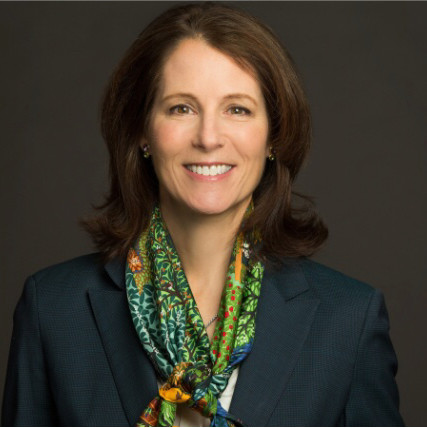
Susan Emerson, vice president of digital transformation at Salesforce, participates in an insightful conversation at the Google Cloud Next 2025 event. This session is captured on theCUBE, hosted by Savannah Peterson and Dave Vellante, where they delve into the dynamics of AI integration and the potential implications for the technology sector.
In the video, Emerson shares expertise on Salesforce's latest advancements, focusing particularly on the evolution of the Agentforce initiative. The ho...Read more
exploreKeep Exploring
What was the approach taken during the launch event for the new AI technology, and how was the product architecture designed to address the challenge of implementing AI in businesses?add
What are some examples of how Gemini integrates and the power that can be obtained when combining forces with it?add
What was the new announcement made by the company recently and how does it relate to extending processes through the ecosystem and potentially utilizing AI for sales reps?add
What do enterprise platforms look like in 2030?add
>> Good afternoon, CUBE community, and welcome back to fabulous Las Vegas, Nevada. We're here coming to the end of day one of our three days of coverage of Google Cloud Next. My name is Savannah Peterson, here bringing you all the best and brightest folks with Dave Vellante. Dave, we're finally going to be talking agents with Agentforce.
Dave Vellante
>> Yeah, one of the leaders in agentic.
Savannah Peterson
>> The first ones to put it on the map with that $1 billion benchmark.
Dave Vellante
>> .
Savannah Peterson
>> Or that one billion agent benchmark, I should say.
Dave Vellante
>> be up on the stage today. Maki, as we say in Boston.
Savannah Peterson
>> Oh, you guys are on that level.
Dave Vellante
>> We're on that.
Savannah Peterson
>> Yeah. Yeah.
Dave Vellante
>> No, not really.
Savannah Peterson
>> BFFs. Well, Susan and I are now on a first name basis. Susan, thank you so much for coming on the show today. We really appreciate it.
Dave Vellante
>> Oh, my pleasure. Thanks for being here on the floor at the conference.
Savannah Peterson
>> Hey, our pleasure to do that, getting to learn from people like you. We mentioned your announcement back in the fall, the goal of a billion agents. It was definitely the talk of the technology town for a bit.>> Yes.
Savannah Peterson
>> We're now about six, seven months, actually a little bit more than that, post that announcement. Where are we off at? Tell us where Agentforce is today.
Dave Vellante
>> Yeah, so we've just had tremendous momentum since that launch, and I think we really caught the market at just the right time. And the way we introduced it on stage with Sophie and that, you weren't there, but Sophie was an AI agent with a nice story about Saks Fifth Avenue. But one of the things that we did at that launch is we didn't just show the end user's story, but we went into the technology in terms of how this stuff works and what we had been building in terms of our agent architecture is a really nice way to break down the big problem of AI is changing my business, where do I start? And so the way the product is architected, it starts with this concept of a role or a job to be done or a digital task. It's like what you need the thing to do or the thing to support the human. And then adjacent to that is the data that they need to know, the data about the customer, the data about policies, the data about products. And then what was very next level for people were the ability to add guardrails and instructions, because so many people at that point in their AI journeys were managing for control and hallucinations. And so this architecture of here's the job to be done. Here's the data you have. This is the instructions you need to stay on top of. These are the guardrails that you need to pull away from and this is the action we want you to perform. That simple architecture opened the minds of everyone in terms of we can go further than we thought. The use case list is wider. We can go with autonomous agents now both for our employees and directly for our customers and meet them in a channel where that work is happening, whether it's in Salesforce or on your mobile app or things like that. So it's just been off to the races in the last six months since then.
Savannah Peterson
>> I'm not surprised to hear that. I'm happy to hear it. Such a critical point about meeting these humans wherever they might be or wherever the data might be when it comes to deploying Agentforce. I think it's really mission-critical. We're here at the apex of celebrating Google's innovation. Talk to me a bit how Gemini integrates and the power that you're able to get when you combine forces.
Dave Vellante
>> So we've been longstanding partners with Google for many years across things in our data portfolio with innovations like zero data copy, where we can leverage data in Google and processes and workflows in Salesforce. On the AI front, we're really excited about Gemini. I think you might have saw in the keynote Mark Benioff's message about how he uses it all day long, like true statement. We're all big fans of that. Within our Agentforce product, we've been working with Gemini as one of the options to power the AI user experiences. One of our foundational principles is around open and future-proofing, and so being able to allow customers to bring in different LLMs that are of choice has been something we've been aligned with for quite some time. So Gemini, to power our experiences, we've been doing that for quite some time around prompt engineering. We're looking at it right now for our reasoning engine, which powers our agent infrastructure. And then the capabilities around the multimodal abilities really will next level user experiences for us that are beyond the simple text. So all sorts of stuff there. And then the big net new announcement, all those things were part of our press release a couple of weeks ago, but today we also announced that agent-to-agent framework. And so where that gets very interesting, in our domain, we are often system of record, user experience of record where processes and people hang out, whether it's customer-facing or internal. And allowing us to extend through the ecosystem that Google also plays in, you can easily imagine processes where Salesforce is domain expert like, who is the customer? What should I tell the sales rep to do? Or how does the sales rep get productivity by having AI do process work for them? But what about when you have to go to other systems or records outside of the Salesforce process boundary? So that kind of ecosystem really is going to open up innovation from an end-to-end perspective. So I think we're all really excited about that.
Savannah Peterson
>> It is exciting.
Dave Vellante
>> And ensuring that the experience is identical or substantially similar. A month ago, we did this face-off, because the CEOs make it so easy for us. We had the Nadella versus Benioff face-off, the Rock 'Em Sock 'Em Robots, Clippy versus... Well, everything's going to just be agents talking to dumb databases. That was a fun setup. But the reason why we are so excited about what you guys are doing is this notion of the evolution of software. And we wrote processes as a malleable asset. In other words, the ability to orchestrate end-to-end a process. Not something that's hard-coded in microservices that is rigid, but something that's organic, essentially. And so when you were talking about processes outside potentially of your domain, I wonder if you could discuss that. First of all, how you're doing the hard work to include processes, because most of the agent washing, don't even talk about processes. A lot of them are just single agents or assistants. You guys have apparently done that work from what we can tell. And then, how do you extend that beyond your world of Salesforce assets?>> Well, I'll give an example and I'll do it from a sales perspective in terms of, let's say, you're a seller in Salesforce, you have a territory and a quota, all that kind of stuff. And your job previously was you're the CEO of your own business, you have to figure out where to spend your time, and you might be one salesperson in a sea of 10,000. How do you as a CRO get execution at scale with consistency and a distribution channel like that? Well, the old way of working is you might stare at a report or it might be you have an inbound hot lead, or something might fall in your lap. It could be random. But what if we can use all of that signal where the signal starts the process off? And so maybe you've got someone on your website strong signal to buy, on all the right pages, asking all the right questions, or maybe your an equipment manufacturer and you have devices that are sending you signal. All these things can start the process. AI can start the process. It can queue up an interaction with the customer. It can brief the sales rep. It can put it on the schedule. It can create all the work that they have to do like, "Here's your opportunity record or here's a quote." So it can do all that background work and pull the sales rep into the opportunity, and that's just all an intra-Salesforce example. Now, taking it out to the outside world, let's say it's that connected device thing, and then you're in the land of other process silos. Now, Salesforce might roll a truck with something like our field surface lightning capability in terms of sending out a dispatcher to fix equipment. But what if you had to get deep into a supply chain and that supply chain was in a different ecosystem and you had this agent-to-agent cross-boundary interoperability where each agent has essentially a business card of here's who I am, here's what I know, here's what I'm permissioned to do, how do we do that? And so that's been the land of APIs for a really long time. But this whole new ecosystem will allow for scale, inter-op, and just time and money takeout.
Dave Vellante
>> So when you take that one step further, again, the reason why we're excited about this vision, with your data cloud and all the harmonization work that you're doing in the data, again, something most technology platforms aren't doing today, they're just not, you've done that work, you've got work to do, but we can see the progress, potentially, Salesforce could be a platform to solve a lot of other problems outside of your current domain. You could essentially become maybe the fourth big hyperscaler, but software-only hyperscaler. Is that something that you think about? Is it a viable vision where you can bring in processes, incorporate them using your platform, going beyond just where you are today at scale?>> Well, that example I just gave in terms of inter-op of agents, essentially, brings the processes closer to the work surface, where it's going to happen. Whether it's in Salesforce or externally with a customer, on a mobile phone, that already does that. And in terms of where you started with the question around data cloud and harmonizing data, I mean, we've been working on that for many years. So thank you for recognizing that this is a huge opportunity for organizations to be able to leverage that data that traditionally has been locked in different operational systems. For all the right reasons, they've been there. But to be able to operationalize it with what I just often refer to as an active data substrate, where regardless of where that data starts, we need to get it in processes or systems or record or the human experience in ways that don't depend on moving and lifting and shifting and re-materializing data. And that's been one of the big properties that make people so excited about Data Cloud.
Savannah Peterson
>> You bring up a really good point right there I just want to drill into for a second, it's not just about meeting the data where it is, it's about not having to mess with it in order to make it useful across an organization.>> Well, sometimes you do need to mess with it, right?
Savannah Peterson
>> Oh, yeah.>> Take a retail example. We were talking before the cameras rolled. You might be across one brand's website with a couple different emails.
Savannah Peterson
>> Right.>> Maybe a couple different addresses that you ship to. How do we know that Susan is Susan? And so forth and so on. So sometimes you have to mess with data because you do want to harmonize it, but that doesn't mean you want to be copying it all over the enterprise.
Savannah Peterson
>> Yeah, exactly. That's duplication and able to service it.>> So mess with it is a great category, right?
Savannah Peterson
>> Yeah.>> Let's harmonize it, mess with it, align it, rationalize it. Yeah.
Dave Vellante
>> But we've been searching for the single version of the truth for a long, long time.>> A long time.
Dave Vellante
>> We get that.
Savannah Peterson
>> Yeah.
Dave Vellante
>> Maybe it's going to take some time. I think it will take some time for this to bake out, but our vision is what organizations want is a digital representation of their enterprise.>> Of the customer.
Dave Vellante
>> In real time, where the data is harmonized, revenue means revenue, not ARR, or calendar year or fiscal year. It's what we want it to be.
Dave Vellante
>> Yeah. You got this definitional stuff that is consistent across user experiences, processes, et cetera, yeah.
Dave Vellante
>> Right.
Savannah Peterson
>> Yeah. And it's not just about what they do want, for example. I think we focus on that a lot when we think about the customer journey. It's about what they don't want. I always notice getting targeted for things that might be sensitive after a breakup on Valentine's Day or something. But there's times in which I notice a lot because I think I buck some algorithmic trends in my personal buying patterns. Most of the internet thinks I'm a man because I'm as deep in tech as I am, and certain other categories and things have slowly gotten better. Google tells you what they think you are, which is always an interesting experiment. But I'm excited for this because it really is about that harmonization of the experience between the brand intent and the user as well, even beyond just their data. I mean, I can imagine you guys are Salesforce, you saw this moment coming to a degree, but you have been working on this space for a long time, did it really feel like a perfect moment with technology and perfect timing in terms of the market when this all came out last fall?
Dave Vellante
>> You mean Agentforce?
Savannah Peterson
>> Yeah.>> Oh yeah. Yeah, yeah. I mean, we've been working aggressively with AI for, at that point, probably two years. We saw it as a huge inflection point where we needed to really modernize everything we could. And obviously we have all of these product stacks across sales, service, marketing, and commerce. And so we got really busy bringing products to market, both in terms of leveraging all the common use cases you would expect to happen in sales and service. Our customers could realize the benefit very, very quickly by turning things on and then making some adjustments to make it their own. So that jaunt to commercial GA was really fun. I'll just call it really fun. And then at the same time, because we're enterprise software, we know that what we were gifted by all the AI vendors in the consumer space doesn't go the distance for the enterprise. And so you need to wrap everything up with AI level tooling in terms of observability, trust, data safety, data masking, prompt engineering tooling, guardrails. So we have this dual advantage. I call it the opportunity and the obligation of giving people these out of the box things that they can start with because it frames the mind and it frames the use case and the value prop. But then being able to dip into tools because Salesforce customers are longtime fans of, "That's a great app. Now I want to customize it." So we followed that same protocol with our AI. It was ripe for the moment. And then, as I think I mentioned earlier, some of the things that we put in Agentforce really allowed people a whole new set of use cases, because they saw the way they could bring additional guardrails, just use cases that before, they would've toed up to the line and said, "Not sure my risk profile allows me to do," and now when they see these things, they're able to go.
Savannah Peterson
>> That's exciting. Of those billion promised agents, how many have been deployed do you think?
Savannah Peterson
>> Oh, you'll have to talk to ceo.com.
Dave Vellante
>> Yeah.>> Aloha. Yeah, yeah.
Savannah Peterson
>> All right, we'll work on that. I think you're chatting with him .
Savannah Peterson
>> I mean, you're best friends with him, I understand.
Savannah Peterson
>> I know.>> Yeah. .
Dave Vellante
>> Maki, yeah. I'll find out. He's actually coming on our program later this month.
Savannah Peterson
>> I was going to say. He's coming on soon.
Dave Vellante
>> We will ask him. What do enterprise platforms, software platforms look like, maybe they're not even software, what do enterprise platforms look like in 2030? We know it's not going to be a bunch of agents talking to CRUD databases. We know that.>> Yeah, yeah.
Dave Vellante
>> But what will they look like?
Savannah Peterson
>> Oh, I wish I had that crystal ball.
Dave Vellante
>> Me too.
Savannah Peterson
>> Is that how you're going to leave it? Oh my gosh. Okay. Well then, I'll ground us with one final question because this has been really awesome because I think you might have a little gleam into this particular crystal ball. So when we're at Google Cloud Next next year, a year from now, what do you hope to be able to say then that you can't yet say today?>> Oh, what I hope is that we have even more examples of what we saw on the stage today. I really compliment the Google team for mixing up the product innovation with customer stories that are on the ground and workable. So I think more of that. I think that was a huge impact. It's a rally cry, a call to action that this is the year of production scale, folks. Stop messing around with POCs you don't care about. Find something to fix in your business and go because the technology is ready. I would want to see it on the backs of users and their stories and all the observable outcomes that were beneficial to their business, whether it's cost takeout or productivity or new ways to think about labor or the customer experiences that are completely transformed.
Savannah Peterson
>> I love that you called that out. It was the first thing I noticed walking into the show floor today, all the customer stories highlighted on all the signage, like you mentioned in the keynote. It's less about the speeds and feeds. It's more about the impact on human lives. Susan, thank you so much for such a great interview.
Savannah Peterson
>> Oh, thank you for your time, guys. Yeah, yeah.
Dave Vellante
>> .
Savannah Peterson
>> This was fantastic. Always fun to talk to you. Can't wait to see what your boy Marky says to you.
Dave Vellante
>> We'll see.
Savannah Peterson
>> We'll see. We'll see about that.
Dave Vellante
>> He's always vocal.
Dave Vellante
>> Visit us at Dreamforce this fall.
Dave Vellante
>> Yeah, absolutely. Can't wait to continue the conversation there. I hope all of you are having as much fun as we're having here in Las Vegas, Nevada at Google Cloud Next. My name's Savannah Peterson. You're watching theCUBE, the leading source for enterprise tech news.