Join Srini Shankar of GlobalLogic and Sheila Rohra of Hitachi Vantara, as they explore transformative approaches in the technological landscape. This segment, recorded live from Google Cloud Next 2025 in Las Vegas, offers insights into the roles of cloud, AI, and infrastructure in modernizing businesses.
In this video, the expertise of Shankar and Rohra is highlighted, focusing on their roles in advancing digital solutions and cloud infrastructures. Hosted by theCUBE Research's Dave Vellante and Savannah Peterson, the discussion touches on GlobalLogic’s alignment within Hitachi’s digital systems, along with key AI and infrastructure collaborations.
Key insights from Shankar include the integration of IT and operational technology (OT) worlds and the role of AI in engineering sectors. Rohra elaborates on Hitachi Vantara's strategies for improving data management and sustainability initiatives. The episode offers a comprehensive look at industrial digitalization and the strategies recommended by Shankar and Rohra for leveraging hybrid cloud solutions effectively, as noted by Carpenter, an analyst at theCUBE.
Forgot Password
Almost there!
We just sent you a verification email. Please verify your account to gain access to
Google Cloud Next 2025. If you don’t think you received an email check your
spam folder.
In order to sign in, enter the email address you used to registered for the event. Once completed, you will receive an email with a verification link. Open this link to automatically sign into the site.
Register For Google Cloud Next 2025
Please fill out the information below. You will recieve an email with a verification link confirming your registration. Click the link to automatically sign into the site.
You’re almost there!
We just sent you a verification email. Please click the verification button in the email. Once your email address is verified, you will have full access to all event content for Google Cloud Next 2025.
I want my badge and interests to be visible to all attendees.
Checking this box will display your presense on the attendees list, view your profile and allow other attendees to contact you via 1-1 chat. Read the Privacy Policy. At any time, you can choose to disable this preference.
Select your Interests!
add
Upload your photo
Uploading..
OR
Connect via Twitter
Connect via Linkedin
EDIT PASSWORD
Share
Forgot Password
Almost there!
We just sent you a verification email. Please verify your account to gain access to
Google Cloud Next 2025. If you don’t think you received an email check your
spam folder.
In order to sign in, enter the email address you used to registered for the event. Once completed, you will receive an email with a verification link. Open this link to automatically sign into the site.
Sign in to gain access to Google Cloud Next 2025
Please sign in with LinkedIn to continue to Google Cloud Next 2025. Signing in with LinkedIn ensures a professional environment.
Join Srini Shankar of GlobalLogic and Sheila Rohra of Hitachi Vantara, as they explore transformative approaches in the technological landscape. This segment, recorded live from Google Cloud Next 2025 in Las Vegas, offers insights into the roles of cloud, AI, and infrastructure in modernizing businesses.
In this video, the expertise of Shankar and Rohra is highlighted, focusing on their roles in advancing digital solutions and cloud infrastructures. Hosted by theCUBE Research's Dave Vellante and Savannah Peterson, the discussion touches on GlobalLogic’s alignment within Hitachi’s digital systems, along with key AI and infrastructure collaborations.
Key insights from Shankar include the integration of IT and operational technology (OT) worlds and the role of AI in engineering sectors. Rohra elaborates on Hitachi Vantara's strategies for improving data management and sustainability initiatives. The episode offers a comprehensive look at industrial digitalization and the strategies recommended by Shankar and Rohra for leveraging hybrid cloud solutions effectively, as noted by Carpenter, an analyst at theCUBE.
Join Srini Shankar of GlobalLogic and Sheila Rohra of Hitachi Vantara, as they explore transformative approaches in the technological landscape. This segment, recorded live from Google Cloud Next 2025 in Las Vegas, offers insights into the roles of cloud, AI, and infrastructure in modernizing businesses.
In this video, the expertise of Shankar and Rohra is highlighted, focusing on their roles in advancing digital solutions and cloud infrastructures. Hosted by theCUBE Research's Dave Vellante and Savannah Peterson, the discussion touches on GlobalLogic’...Read more
exploreKeep Exploring
What is Hitachi Vantara transforming the way data is used for?add
What does GlobalLogic do and where does it fit in along with Hitachi Vantara into Hitachi?add
What is the main concern surrounding the growing use of AI solutions in 2025 and beyond?add
What is the update on GlobalLogic's strategy partnership with Google and Hitachi group of companies under the DSS umbrella for driving digital transformation of clients using Google Cloud ecosystem?add
What are the potential benefits of using AI to manage data across various environments in the data world?add
>> Good afternoon CUBE community and welcome back to Las Vegas, Nevada. We're here coming to the conclusion of day two of our three days of live coverage at Google Cloud Next. My name's Savannah Peterson, bringing you all the sweetest stories from the show floor with Dave Vellante all week. Dave, you've got some history with one of the companies that we have on next.
Dave Vellante
>> I was just texting with a colleague of mine, Crawford Del Prete. He's the president of IDC. He says, "I'm on my way to Tokyo from here," and I had flashbacks of Odawara.
Savannah Peterson
>> Wow, well I'm-
Dave Vellante
>> Where Hitachi has a factory and-
Savannah Peterson
>> I'm glad we could take you on a little mention vacation.
Dave Vellante
>> Mount Fuji in the background, beautiful.
Savannah Peterson
>> I love that. I am not sure we're going to be talking about Mount Fuji on this segment, but maybe we will, maybe these two can integrate it in. Please welcome Sheila and Srini. Thank you so much for being on the show with us today.
Srinivas Shankar
>> Thanks for having us.
Savannah Peterson
>> Really appreciate it. Sheila, I'm going to start with you. Give us a little bit of the lay of the land. Talk to us about Hitachi Vantara and what you're working on, how that fits into the ecosystem.
Sheila Rohra
>> Sure. No, first of all, glad to be here. So Hitachi Vantara is transforming the way data is used for innovation through data storage and infrastructure and that also includes cloud management and digital expertise. And it's not just about the data, it's about how you use the data. And we provide solutions for our businesses to put that data to work and into a competitive advantage, enabling smarter decisions, AI-driven insights and operational efficiencies, while also optimizing hybrid cloud environments, making sure that data is always available and of course while driving sustainability.
Savannah Peterson
>> Nice. Wow. That's a lot. Okay, so Srini, I'm going to ask you then what's going on at GlobalLogic. I can imagine you're having a lot of conversations about AI. It sounds like you guys are working together. You mentioned you're bonding with his team this week, which is very fun. So yeah, give us the high-level overview.
Srinivas Shankar
>> So let me first start with a little bit about GlobalLogic and really where do we fit in along with Hitachi Vantara into Hitachi.
Savannah Peterson
>> Yeah, please.
Srinivas Shankar
>> So both of us are part of Hitachi DSS, which is digital systems and services, which is the umbrella organization that provides pretty much end-to-end digital and technology services capabilities, everything from infrastructure to enterprise to cloud to even OT. And really where we uniquely positioned within Hitachi is along with our other sister companies, we're probably one of the unique entities to really provide the full suite of IT/OT end product. Not a lot of companies are able to actually do that, or claim to be able to actually do that. So to your question about where GlobalLogic fits in and what are we doing, GlobalLogic essentially is a company that actually designs intelligent products and services for our clients. And we do that with capabilities in three areas, which is engineering, design and data. So the core of what we do is software product engineering. We actually build products for the vast number of tech ISVs, and also we build software products for a large number of industries that are getting software defined. Think about software that powers your advanced driver assistance system in your vehicle. Think about software that actually optimizes network traffic on network management devices. Think about life-saving software that actually goes into med-tech devices such as defibrillators that actually in some cases save patients' lives. We do a lot of that stuff. And I think along with Hitachi, we're actually powering industrial as well. So the whole opportunity around digitizing the industrial sector, we along with Vantara and some of the other companies which are part of Hitachi DSS, we're helping accelerate that.
Dave Vellante
>> Hitachi, a massive global company. The pendulum in our industry is always swinging. It swung to cloud. Now we swing back to hybrid, I mean, it's always been hybrid, but bringing AI to the data, people aren't necessarily going to put all their data into the cloud. Even at the keynote yesterday, we heard that. It was good to see Google leaning into that.
Savannah Peterson
>> It was.
Dave Vellante
>> At the same time we have this other dimension, there's the Z dimension, which is industrial. Again, something that Hitachi knows a lot about. And you're one of the few companies, as you just said, Srini, that actually has a perspective on those worlds. How should we think about that? Are those worlds coming together? Are they largely distinct worlds where the IT and the OT world, yes, they're coming together from a standpoint of technology is going, or are those worlds colliding? How should we think about that from a product and service and engineering and software standpoint?
Srinivas Shankar
>> There's a lot to unpack there. So you talked about hybrid, and I'm going to have Sheila talk about that as part of this segment. We talked about AI, we certainly want to dig into AI at some point, but specifically to answer your question on how these things are coming together, really if you think about it, the vast majority of industrial products, if not all, are actually getting digitized and they're getting intelligent. So if you think about use cases around computer vision, critical maintenance, proactive maintenance, metal works, we do a lot of work around metals, especially in hazardous environments associated with industrial products. So I think this is definitely one where the digitization of the industrial sector represents the largest opportunity or the biggest opportunity, in some states, trillions of dollars of opportunity over the next decade. Yeah, I mean that requires capability that brings together IT, OT and the product.
Dave Vellante
>> And then Sheila, what I was referring to as the XY dimension, if you will, the pendulum, what we see is a lot of customers doing experimentation with AI and the cloud, and here's some examples today going into production, but a lot of, for instance, banks that we talked to, your customers, they're building their own AI stacks now on prem because it's hard for them to just get solutions out of the box. A lot of what we call it AI purgatory, it's not my term, but others have used it. I'm sure you're seeing the same thing. What are you seeing and how is Hitachi Vantara helping them break through that logjam?
Sheila Rohra
>> Sure. Yeah, so as you know that there's a massive explosion of data out there, and practically not all of it is going to fit on-prem and also doesn't quite fit to all go in the cloud either, so it's inevitable that hybrid cloud is going to be a necessity for most of the business. So these cloud transitions are actually quite complex in nature, and this is actually where Hitachi Vantara comes in. We know data, so we're helping our customers, we're showing them how to store, how to move and how to protect the data while balancing the cost, the performance, and the business objectives. And the reason for that is hybrid cloud improves the operations of the business, and it also provides flexibility to run their workloads, whether it's on-prem or in the cloud. And when you have that flexibility, one of the key thing, and data is in the heart of every digital strategy, is how to protect it. So resiliency becomes key. And I'm proud to say that Hitachi Vantara solutions guarantees 100% data availability and ransomware protection so that our businesses are secure and running smoothly.
Savannah Peterson
>> A hundred percent is no joke.
Sheila Rohra
>> No joke.
Savannah Peterson
>> It's a pretty bold claim. How do you make sure you continue to uphold that? I would imagine you yourself have to be prototyping new technology and staying up to date. What does that process look like internally?
Sheila Rohra
>> Yeah, so of course we actually have a very rigorous quality assurance team to ensure-
Savannah Peterson
>> ....
Sheila Rohra
>> that we do the right reliability team. We also have a customer zero program. We actually put our IT, my own IT department through the test on that as well. And then of course, Hitachi Vantara's technology comes from the mainframe business from many, many years ago. We got this down, and we have a history of testimonials from our banks especially that actually can vouch for that too.
Dave Vellante
>> So this is a program, a guarantee, what are the details behind that? Or is it just, your experience, that's what you're seeing in the field?
Sheila Rohra
>> It is a program. We guarantee a hundred percent data availability.
Dave Vellante
>> And what happens if something goes wrong? What's the-
Savannah Peterson
>> It never goes wrong, I'm kidding.
Dave Vellante
>> Yeah, but what's the guarantee? Well, mainframes largely don't go down, you get that heritage, they actually don't go down.
Sheila Rohra
>> Well, it actually depends from contract to contract. Our contracts are actually outcome-based, so there actually are penalties associated with that.
Dave Vellante
>> Okay, so you put your money where the mouth is. Okay, cool. Thinking about automation in industry, we hear a lot about GTC. You were there, I wasn't. I was on a boat somewhere, but-
Savannah Peterson
>> Thanks for reminding me....
Dave Vellante
>> GTC, a lot of talk about robots and just superficially looking into it, you've got special purpose robots, they do pretty much the same thing every day, all day. They do it very well. Seems like a lot of potential. You said they're getting intelligent, et cetera. And then you see the humanoid robots, seems like maybe further away. Help us understand how you think about automation in the factory, robotics, robots themselves. What's hype, what's real?
Srinivas Shankar
>> Look, I think we do a tremendous amount of work in terms of things like warehouse automation, AGVs, which is automated guided vehicles, that's all real. When it comes to automation of... In robotics, in a hazardous environment, we do a lot of work. Think about actually oil rigs where for you to actually do corrosion detection, it's kind of hazardous to actually send somebody out there, not to mention that it's costly. So we have software that goes into robots that can actually determine hazardous environments using computer vision and in some cases take corrective action as well, so all of that stuff is real. Robots taking over the universe, I mean, I'm not the best person to comment on that. I mean, we'll see.
Savannah Peterson
>> I mean, who really is? I feel like we could all on that.
Srinivas Shankar
>> When you talk about AI, I mean robots and all of that stuff is just one part of it. There's actually three fundamental changes and shifts that are happening when it comes to AI. The first is AI infused in every product. You always know that AI is in your phones with Siri and all that, but if you think about the automotive industry or the broader mobility industry, you talk about the med tech industry, literally every surgical procedure today has AI into it. Image analysis to detect kidney stones, intra-procedural capability, image analysis to detect cancer during a procedure. So literally there's three elements to AI here that are truly impactful well beyond the hype about these robots and humanoids and all that stuff. First is AI infused in products. Every product is getting intelligent. The second is we're in an industry and we're a company that basically builds software. So the way software is getting built and the automation around the end-to-end SDLC or the software development life cycle, that's a fundamental shift that's happening and we're driving that shift, front, back and center. And the third element is, when I was here last year, the whole talk was 2023 was experimenting with AI proof of concepts, and 2024 was really scaling with AI. Scaling with AI is hard, industrializing AI is hard. So the third element of AI is, how do you build a reliable, responsible, and reusable enterprise stack that allows companies to scale AI across the enterprise. So these three really are the more powerful and more relevant manifestations of AI as opposed to talk about humanoids running around.
Dave Vellante
>> And I feel like number three is more of a '25, maybe even '26 type of phenomenon. Would you agree with that? That building that stack is something that's happening right now? Obviously Google has a stack, they're good at it, the big hyperscalers, they have it. But most enterprises, they don't, for instance, have liquid cool data centers. They're rethinking cluster management. They're rethinking storage. So would you agree and how do you see that playing out in your client base?
Sheila Rohra
>> Right. So you're absolutely right. We're seeing that in 2025 and in the foreseeable future, I would want to comment around the AI solutions and the stack of it. It is growing massively. It is growing massively. And from a study that we did internally recently, about 80% of those fail and that's a problem. That's a real problem, not only from a business standpoint, it's a problem, that's a given, but if you take a look at it from a sustainability issue, this puts a lot of pressure on the data centers and it's a problem. It is getting better now. It is slowly getting better and this is actually where the focus is going to be now in the coming years.
Dave Vellante
>> Hitachi is a company that's always been focused on sustainability, it wasn't... Hitachi never-
Savannah Peterson
>> ....
Dave Vellante
>> did this because of virtue signaling, they didn't care who was in the White House. My question is why is sustainability a good business?
Sheila Rohra
>> Why is sustainability a good business?
Dave Vellante
>> Why does it make business sense? Yeah.
Sheila Rohra
>> Well, if you look at it, so you're right, Hitachi has been known for sustainability for 150 years. So it's always been in the foundation of our innovation. That was the vision straight from the start. Now, let's take a look at, as I was saying before, there's a massive explosion of data, there's a high demand of AI solutions putting tremendous pressure on our data centers. And based on the results of the Department of Energy, the US data center consumed 4% of the national electricity and could rise up to 12% by 2028.
Savannah Peterson
>> That's a very significant number.
Srinivas Shankar
>> If I may, I just want to add to that perspective.
Savannah Peterson
>> Please.
Srinivas Shankar
>> Beyond the virtue signaling part that you talked about, sustainability makes absolute business sense in the context of data centers. Let's have some fun with numbers.
Savannah Peterson
>> Let's.
Srinivas Shankar
>> Talk about 2%, 4%, whatever you believe, there's enough data to say that today, the entire consumption of data centers is about 600 terawatt hours annually. If that doubles to 1,200 terawatt hours annually, that's equivalent to about 80 gigawatts of continuous power. 80 gigawatts of continuous power is the power that comes from about 80 nuclear power plants or the power needs of an entire nation like Argentina. So if we have to feed or address that demand of compute, you cannot have power scaling linearly because it's going to just strain the entire system and you cannot generate 80 gigawatts of continuous power, with just fossil fuel, that's unsustainable. So it's absolutely important that we leverage AI to ensure that the growth in power generation is non-linear with the growth in compute. And look at history. When has humanity ever overestimated the need for compute?
Dave Vellante
>> Never.
Srinivas Shankar
>> It's always underestimated the need for compute.
Savannah Peterson
>> Yeah, yeah, yeah.
Srinivas Shankar
>> So these numbers probably get blown out of the water anyway.
Dave Vellante
>> That's why the DeepSeek thing's such a chuckle to so many of us.
Srinivas Shankar
>> Jensen Huang said that. He mentioned that it's going to be about a hundred times the compute need for a platform like that.
Savannah Peterson
>> Which is wild to think about. Absolutely.
Dave Vellante
>> What's going on with Google? What's your relationship with Google? Fill us in on what's new?
Srinivas Shankar
>> Look, last year we announced a strategy partnership with Google, which was a 360 partnership where GlobalLogic, along with the Hitachi group of companies under the DSS umbrella would be driving digital transformation of our clients using and leveraging the Google Cloud ecosystem. So that manifests in many different ways. So for example, we've established a Google Cloud business unit within GlobalLogic that now serves all of Hitachi. We've got to a level of partnership status, which is typically deemed as the managed partner status, both in America and in Japan, that allows dedicated support from Google Cloud to be able to serve our clients. If you were to go to our booth and see some of the solutions that we've showcased there, they're actually built on Google Cloud Stack. So really over the last year since that announcement, we've really elevated our partnership with Google Cloud significantly from a 360 perspective.
Savannah Peterson
>> Awesome.
Srinivas Shankar
>> And both sell to buy from and sell with, and I'm sure we've done that at Hitachi Vantara as well.
Sheila Rohra
>> Yeah, so look, our customers rely on Google Cloud to actually store and manage the data and how we help our customers navigate through the complexity of the cloud journey, we actually provide them solutions to be able to seamlessly manage their data across the different environments. So we actually partner very closely with hyperscalers. Google Cloud is actually one of the top ones that we partner with as well.
Dave Vellante
>> Right, so multi-cloud, hybrid cloud-
Sheila Rohra
>> Multi-cloud, hybrid cloud.
Dave Vellante
>> You're the glue, the layer, the abstraction layer that makes all that simple.
Sheila Rohra
>> And we actually help provide recommendation to customers, how to store, how to move, how to prepare the data so that they can optimize their innovation and also being cost-effective at the same time.
Savannah Peterson
>> It's ecosystems. It's what we were talking about, it's ecosystems, fueling ecosystems in this particular case with the Google ecosystem and your ecosystem. It's pretty exciting. Final question for you all, because this has been a blast when we are here this time next year for Google Cloud Next, what do you hope to be able to say then that you can't yet say today? Srini, I'm going to start with you since you're closest to me.
Srinivas Shankar
>> Humanoids will not take over the world. So I mean, I can think you can rest assured yourself, but on a more serious note, look, I think we will have many manifestations of true edge AI use cases that are very value creative to enterprises. So I talked about 2023 was the year of just experimentation, throw money at it and let's see what happens. 2024, and to some extent, 2025 are the years of industrializing enterprise-grade AI. I think 2026, we're probably going to see good manifestations of value being created, including incredible examples of HDI use cases in the industrial segment, and we're actually driving a lot of that.
Savannah Peterson
>> Awesome. Can't wait to share those stories with you. It sounds incredible. Sheila, what about you?
Sheila Rohra
>> Yeah, it's a really good question. So one of the things about being part of a conglomerate like Hitachi Limited is that we have access to industries that some of our peers in competition don't have, energy, rail, just to actually name a few.
Savannah Peterson
>> Great point, yeah.
Sheila Rohra
>> So the way I look at it, since we live in the data world, sure we do a good job managing the data within the box per se. We will do a great job managing the data intelligently, using AI across different environments, on premise, co-location, public cloud. Now that we can see the data, we can help manage the data, it'd be great to provide AI solutions to those industries. And that is what I actually hope that we can share a year from now.
Savannah Peterson
>> Great. Well, we really look forward to it. Sheila and Srini, thank you so much for coming on the show today. This has been wonderful and insightful. Dave?
Srinivas Shankar
>> Thank you Dave and Savannah, appreciate it. I Enjoyed it.
Savannah Peterson
>> Yeah. Anytime. Anytime.
Sheila Rohra
>> Thank you so much. Thank you so much.
Savannah Peterson
>> Yeah, absolutely. And thank you Dave, and thank all of you for tuning in wherever you might be today. We're here in Las Vegas, Nevada at Google Cloud Next. My name is Savannah Peterson. You're watching theCUBE, the leading source for enterprise tech news.

















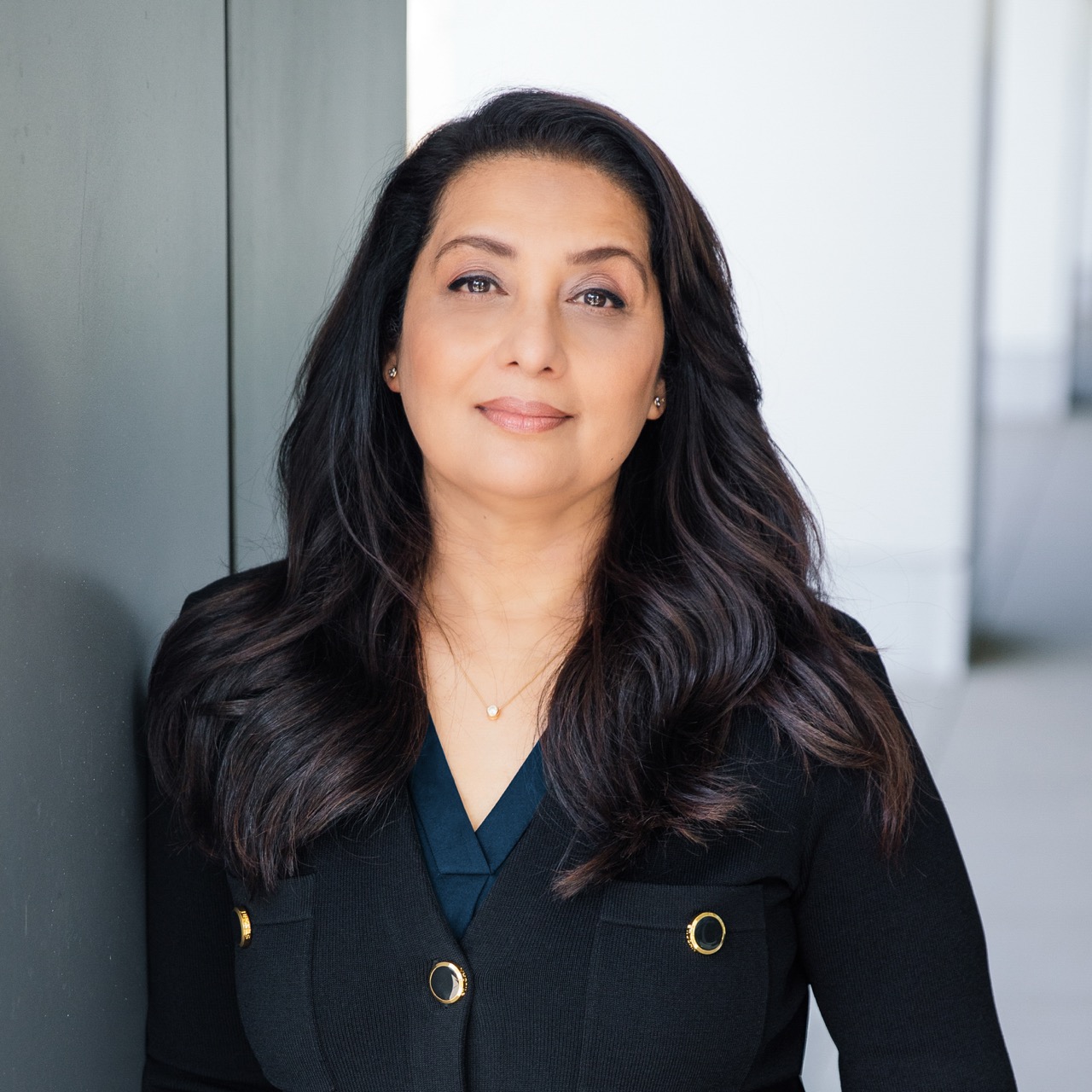

 Savannah Peterson
 Dave Vellante
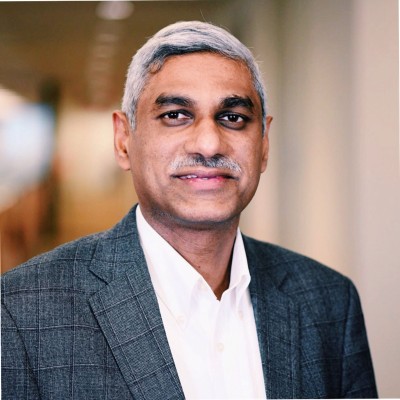 Srinivas Shankar