We just sent you a verification email. Please verify your account to gain access to
Google Cloud Next 2025. If you don’t think you received an email check your
spam folder.
In order to sign in, enter the email address you used to registered for the event. Once completed, you will receive an email with a verification link. Open this link to automatically sign into the site.
Register For Google Cloud Next 2025
Please fill out the information below. You will recieve an email with a verification link confirming your registration. Click the link to automatically sign into the site.
You’re almost there!
We just sent you a verification email. Please click the verification button in the email. Once your email address is verified, you will have full access to all event content for Google Cloud Next 2025.
I want my badge and interests to be visible to all attendees.
Checking this box will display your presense on the attendees list, view your profile and allow other attendees to contact you via 1-1 chat. Read the Privacy Policy. At any time, you can choose to disable this preference.
Select your Interests!
add
Upload your photo
Uploading..
OR
Connect via Twitter
Connect via Linkedin
EDIT PASSWORD
Share
Forgot Password
Almost there!
We just sent you a verification email. Please verify your account to gain access to
Google Cloud Next 2025. If you don’t think you received an email check your
spam folder.
In order to sign in, enter the email address you used to registered for the event. Once completed, you will receive an email with a verification link. Open this link to automatically sign into the site.
Sign in to gain access to Google Cloud Next 2025
Please sign in with LinkedIn to continue to Google Cloud Next 2025. Signing in with LinkedIn ensures a professional environment.
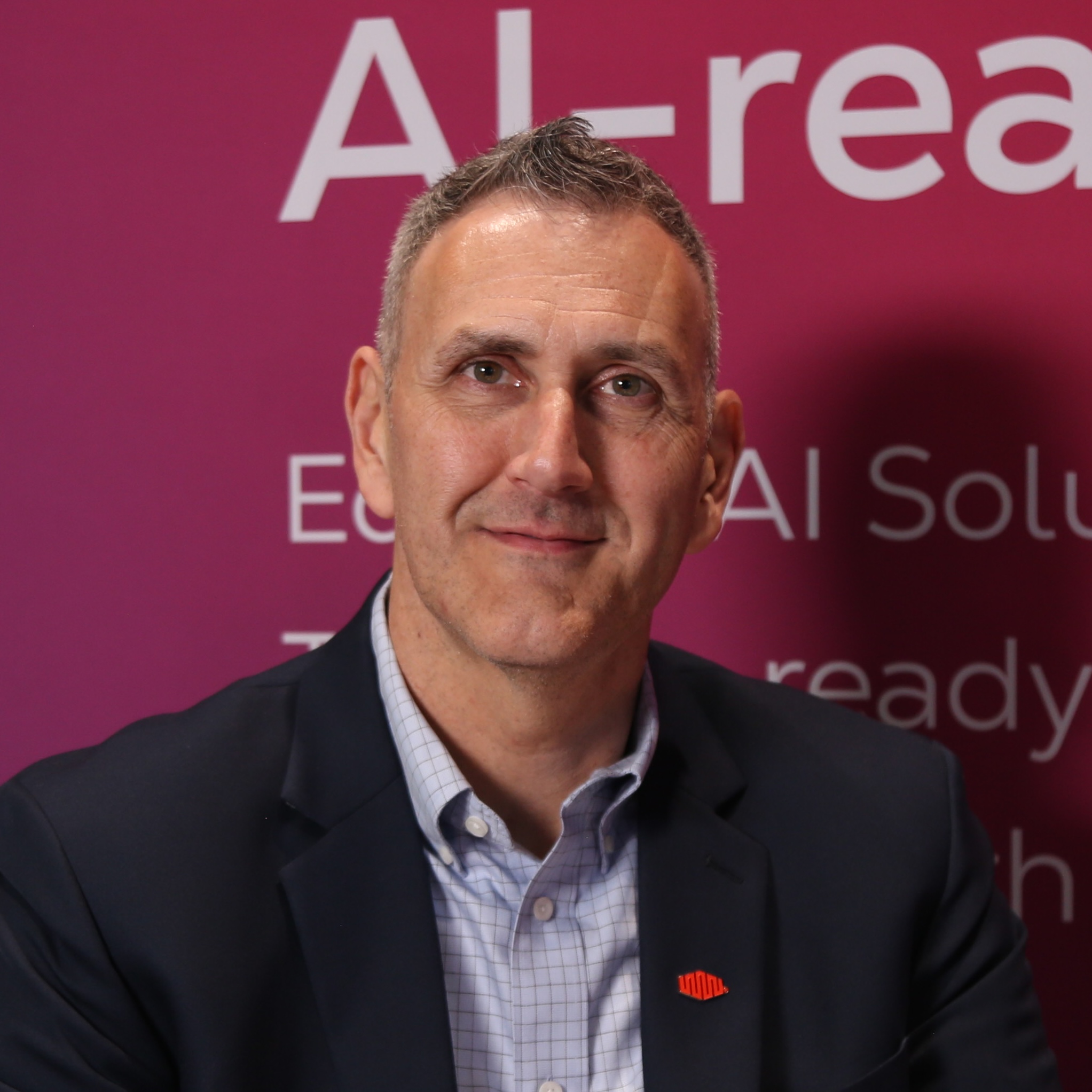
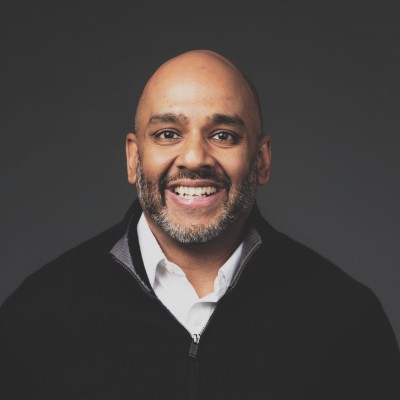
Join us for an engaging discussion between Arun Dev, Senior Director of Product Management at Equinix, and Kevin Egan, Director of Cloud Services at Equinix, during Google Cloud Next 2025 in Las Vegas. This session explores the complexities of multi-cloud networking and the revolutionary advancements at the edge of technology.
Arun Dev and Kevin Egan from Equinix delve into their expertise on data centers and cloud solutions. Hosted by Savannah Peterson and John Furrier on theCUBE, this discussion examines edge interconnectivity, AI advancements, and...Read more
exploreKeep Exploring
What are some of the challenges that enterprises like Uber face with multi-cloud networking?add
What has changed in the past three to six months regarding inferencing at the edge, and how are enterprises adapting to this shift?add
>> Good morning CUBE community and welcome back to Las Vegas, Nevada. We're here on day three of Google Cloud Next. My name's Savannah Peterson here in the cockpit for the first time in a while with John Furrier. John, good morning. So nice to see you.>> Great day three. You got a lot more action happening. Want to go right to the edge of the time slot here?
Savannah Peterson
>> Yes. Yes, exactly.>> The topic is edge, interconnecting all these data centers. Really big topic here. Equinix is here.
Savannah Peterson
>> Really big topic. So excited to welcome my friends from Equinix here. We've got Kevin Egan, who's been on the show multiple times. You're now about to sit here in the cockpit as the host. And Arun Dev, first time caller, but a long time listener hopefully.
Arun Dev
>> Excited to be here. Long time listener.
Savannah Peterson
>> Yeah, we're really excited to have you guys.
Arun Dev
>> Thank you.
Savannah Peterson
>> We just got off such a fun GTC together and I am really excited. We were talking about AI ready data centers there, but we're going to be talking about the fabric and interconnectivity and inference at the edge in this conversation. Arun, I'm going to start with you. I know that you've got a talk later today. Can you give us a little bit of a preview?
Arun Dev
>> Absolutely, Savannah. So I've got a session this morning with Uber. We're going to talk about the challenges with multi-cloud networking. What we find is over 90% of enterprises use more than one cloud. Well, it holds a lot-
Savannah Peterson
>> That's pretty much everybody.
Arun Dev
>> Pretty much everybody. Well, it holds a lot of promises, I think about 60% of them struggle with multi-clouds. And in our talk we kind of go through challenges that you face because the standards between what a cloud provider like Google provides is going to be different from what Amazon provides and the complexity falls on enterprises like Uber. So in our talk, we're going to talk about techniques, strategies, and tools to make that journey easier.
Savannah Peterson
>> How do you make that journey easier? Give us a little taste of that because now I'm curious.
Arun Dev
>> Excellent. So maybe a quick introduction to Equinix for folks who are not familiar with us. We are a large global provider of data centers, interconnection and digital infrastructure. We're in 260 plus locations, we're in 75 metros and we're in over 30 plus countries.
Savannah Peterson
>> You're everywhere.
Arun Dev
>> We're everywhere. We're the metro edge. So as a result of that, compare that with the fact that the clouds, the network service providers and the enterprises all meet at our facilities. We're now able to offer secure low latency connectivity between these different enterprises and the clouds. And that's one of the big pieces that people don't understand the scale and the size of what we offer.
Savannah Peterson
>> And you're best in breed in doing that.
Arun Dev
>> We are. We are. Just put some numbers in context?
Savannah Peterson
>> Please give us this.
Arun Dev
>> We have 44 cloud on ramps to Google.
Savannah Peterson
>> Holy moly. That's a lot of options.
Arun Dev
>> That's a lot. That's more than the next seven providers combined.
Savannah Peterson
>> Dust your shoulders off on that one.
Arun Dev
>> So we do have a lot of private on ramps and it goes back to our company's DNA. We've curated ecosystems and the neutrality aspect. So it's not just Google, all the other cloud providers are in the facilities as well.
Savannah Peterson
>> You're cloud friendly.
Arun Dev
>> We are cloud->> The thing too about Google this year, the networking was a big part of it. Although they kind of talked about compute storage and software, but the networking piece was significant. What's your take on the edge? Because hybrid is now has been standardized.
Savannah Peterson
>> It's a thing.>> It's a thing. But as AI comes in, what are you guys seeing changes at the edge? What are you guys seeing that's enabling from the more AI infrastructure, the horsepower? What are some of the customers doing? We're seeing a lot of networking action.
Arun Dev
>> Yeah. If you asked me a year ago, I'd say we're very early in the inferencing journey was more training. Well, what we've seen in the last three to six months is inferencing at the edge has really picked up. So you're starting to see enterprises now figure out they need to be in these different metro areas, all that inferencing happening in the edge and we are one of the best manifestations of the interconnected edge. And so the global footprint that I described, customers now have this vast set of capabilities that is at their disposal. Kevin's got some great insights into what we're seeing from an AI perspective.
Savannah Peterson
>> Yes he does.
Arun Dev
>> So Kevin, I'll have you chime in.
Kevin Egan
>> Yeah, thanks Arun. So obviously agentic, small, medium LMs, they're pushing more and more power to the edge and it's really driving customers infrastructure decisions. So as the edge becomes more powerful, what we're seeing are customers considering that metro edge that Arun talked about really be instead of an AI factory or a center of excellence for large training, now is inferencing and edge inferencing and distributed AI become critical.
Savannah Peterson
>> That's what makes it real for the rest of us. It's that inference at the edge.
Kevin Egan
>> Yeah. And that all centers around access to data. And so you have to have your multiple data access points, which comes back to the providers, the on-ramps to your cloud data. We can access that client-side data and the edge data and do that higher horsepower as it keeps increasing over and over again.>> It's interesting, Google's pumping up the whole interoperability cloud and they've been very open about multi-cloud. So as a cloud providers, you guys have on-ramps mentioned that you see-
Savannah Peterson
>> 44 .... >> a lot of AI factory momentum about on-premise activity. Big banks in New York or wherever, they want the IP and these AI factories to be co-located in their metro and on-prem, which defaults probably with you guys. Talk about that dynamic because now the factories need interconnects. They need to have the AI native with the software. Whether it's a robotics that manufacturing or a big bank, they're going to need to have generative AI.
Arun Dev
>> One thing that's not going to change is the need for networking, fast, high-speed networking. Because the latency matters in a lot of these cases.>> Big time.
Arun Dev
>> As you described, as enterprises get more savvy around where they're going to run certain workloads, whether it's co-location or in the clouds, the thing that hasn't changed is that fast interconnects that they need. Now over the last 25 years, we've provided the interconnects with physical interconnection in our locations. We also have our virtual Equinix Fabric for the last 10 plus years. So now we can do that fast interconnection between all these different locations. And say you decide you want to connect not just to the clouds, but you have the SaaS providers that may be in different locations. We can make that happen as well.
Savannah Peterson
>> And this is a big deal also when it comes to compliance and sovereignty and all the unsexy parts of AI too, correct?
Kevin Egan
>> Yeah.
Arun Dev
>> Absoutely.
Kevin Egan
>> Yeah, AI privacy for us, it's critical. Even if it's an AI factory, it centers around privacy data locality, data residency, sovereignty, sovereign AI. And then it also as it extends out to that low latency, high-speed fabric, it also centers around that privacy and private access to your data. So that's absolutely a key tenant for every customer across the maturity life cycle, right? Whether it's edge or distributed AI and or private AI that's sort of running that model training.>> At GTC too, that came up as well. I have to ask, what are you guys seeing coming out of Google Next knowing that we just came out of GTC, AI factories are hot, you guys are poised for that. What's the demand look like? What's the use cases that you see popping out now that's kind of front and center and where does it go? What dots connect?
Arun Dev
>> I would share two trends. One is inferencing is getting a lot more mature. And if you look at where we were, as I said a few months ago, we weren't really sure, but inferencing is getting mature. You need that interconnected edge. And then the other piece Google talks about as well is the cloud way and announcement. The network is becoming more and more important as we start to figure out these different models that Kevin talked about. So it comes back to the inferencing at the edge and then the networking connectivity here.>> And you mentioned AI native before we came on, that's the term Google's kicking around. They're using AI inside their own products. And I asked the VP of engineering like, "Okay, most people are consuming AI right now and probably using the data centers you guys have as whatever they're using in the cloud. But then they got to start thinking about how they use AI in their products, which you're hosting for them with all the complexity of the systems you guys are building. What software embeds do you see on the AI side that customers might be going towards? What do you guys offer there?"
Kevin Egan
>> Yeah, so I mean the two trends that we're really seeing is that AI factory, that private center of excellence where it's driving infrastructure decisions and it's centered around intellectual property. I want to protect my model. It's centered around the different data privacy requirements, whether it's a regulated industry. And then at the edge as that horsepower shifts to the edge, agentic small medium domain specific language models, you have to transfer your language models back and forth. You have to have access to your ecosystem of partners to get GPU on demand as a service, models as a service, your test and dev tools. And those are all driving traffic and interconnection and fabric. And that's the biggest trends that we're seeing.
Savannah Peterson
>> So I'm really curious because I've always really admired your ability to provide optionality for your community, and I can imagine there's a bit of a process when you're determining which clouds to support, which on-ramps to build, where to be on the edge. Can you talk me through a little bit what that looks like internally as you're prioritizing what to integrate next into the platform?
Arun Dev
>> So for us, when we look at markets and metros that we want to enter, we want to look at it as, I'll use Malaysia as an example. That's a new market we're entering. A lot of great demand, like the economy is starting to really pick up there and you start to see interest from the cloud providers wanting to go into Malaysia. So when you look at where we are investing, making the investments, it's these markets that are starting to shine. Thailand's another great example, Indonesia. These are markets traditionally that had to go to Singapore or Hong Kong for infrastructure. We are starting to see where the economies are developing. We go into markets like Malaysia, Kuala Lumpur, where you-
Savannah Peterson
>> Oh, this is awesome. So you're watching the total economic trends, generally speaking.
Arun Dev
>> Exactly. And then I'll go back to my networking background. We watched where the traffic is, where the traffic goes in and out. And we started to realize a while back, not all the traffic was going out of Singapore, Hong Kong, it was actually going out of the country in different routes. So you start to see economic activity, you start to see this demand, you start to see the clouds. And one of the things that I share is we sit at the table with all the clouds on a quarterly basis. We talk to them. So there's a fair bit of collaboration between the clouds on us. So we go in new markets, the clouds are either already there or planning to be there. Because the first thing when we have our facility is a customer say, "Well, I want to connect to GCP. Do you have the on-ramp for GCP?" So it's a number of different things, Savannah, that we look at, but it's in partnership with the clouds.
Savannah Peterson
>> That's awesome. Yeah, go ahead Kevin. I can see you've got a nugget over there. I see your face.
Kevin Egan
>> Well, I was just going to add, it's also the ecosystem of partners. We're cloud service providers, network service providers, our IT provider partner community alliances, but also AI providers, AI service providers, and providing access to those AI service providers has been really critical in how we partner and those alliances that we build that really want that interconnection back to our customers.
Savannah Peterson
>> That's a really good point because, speaking frankly, I bet there's a lot of companies who think they are those AI providers, and I bet you have to sort through the weeds a little bit to figure out who those gems are.
Kevin Egan
>> Yeah. Some want to provide managed services and host those at Equinix and really provide that service back to their customer. And then we have customers who want access to those services on demand. And so it's really a multifaceted alliance that we're working towards.
Savannah Peterson
>> Building on this conversation, because this is fun. Building on this feedback loop makes sense in terms of the providers, what is the interface like with your community when you're thinking about what do we need to build next? I know you're obviously, and looking at the traffic and the networking side of things makes sense in Malaysia, for example. But I'm curious, how frequently are you testing the waters with your customers?
Arun Dev
>> We're always testing the water with customers. We're always looking to be where they want to be 12 months from now. Even conversations here that we've been having this week with our customers is the first question they ask is, "Where are you going to be 12 months? And then what are my competitors doing?"
Savannah Peterson
>> Right? Oh, I bet. Oh, they want the inside scoop,
Arun Dev
>> Especially when it comes to AI.
Savannah Peterson
>> Oh my gosh, I'm not even surprised by that. Yeah.
Arun Dev
>> When it comes to AI and the fact that we're a neutral provider means that they know we have a seat at different tables. So they're like, "What are my competitors doing or where should be focused on?" There's a couple of different areas. As Kevin said, the world of ai, for example, is rapidly exploding. So we try to keep up with the trends-
Savannah Peterson
>> Just a little bit. It's like the whole show right now.
Arun Dev
>> And then just beyond that as well, what's happening in networking? What's happening in compute? What's happening in workloads? Where are the workloads moving to? We talked a little bit about data sovereignty. That's becoming important as well. Because they want traffic to stay within-
Savannah Peterson
>> It's vital. It's literally legal. It's a part of the code now. Yeah.
Arun Dev
>> And so we start to see a lot of these trends and the fact that we're a trusted advisor means we get to kind of share a little bit of what we're seeing plus things we're building. Not all of them come to life, but we start to give them early access. They got to start try these capabilities and then based on that feedback and what happens in the market, we start to bring them forward.
Savannah Peterson
>> You mentioned those workloads. Where are those workloads going? I would assume they're going to the edge, but that's my personal hunch.
Kevin Egan
>> It's both really.
Savannah Peterson
>> Yeah.
Kevin Egan
>> Going back to what John said from a use case perspective, Adair, our CEO, she's really driving towards a customer-centric story now. Let's build that on use cases rather than Equinix is the hero story and talk about our technology.>> You already got that done.
Savannah Peterson
>> Yeah. But we have to talk about that at GTC. You brought us all customers pretty much to discuss that and you can feel that. I think that's important here.
Kevin Egan
>> She's really brought that to the company to say, "Hey, we're going to come with our customer use cases to really tell our story and no longer kind of be in the back. Let's use our customers to tell our story." And that's been a big shift.
Arun Dev
>> As a product leader. A large part of what my team does is really instead of saying, "We're going to sit in the lab and go build some cool stuff." To actually sit with customers and understand, "Where are you struggling with inferencing? What type of requirements are you seeing? What do you see not just right now but 12 months from now?" So that's back to what Kevin was saying, not products, but really the customer problems and the use cases and how can we help them on that journey.
Kevin Egan
>> And that's why we're so excited Arun is co-presenting with Uber because it's just telling that story in a more powerful way.
Savannah Peterson
>> And talk about a million edge devices right there with all those drivers and everything else. The scale and capacity you have to support that level of a company is really something. You keep mentioning 12 months, so I'm going to wrap this up with one of my favorite questions to ask. When we're here at Google Cloud Next 12 months from now, what do you hope to be able to say then that you can't yet say today?
Arun Dev
>> You want to go first, Kevin?
Savannah Peterson
>> I love that, Kevin went straight to Arun on that. He is like...
Arun Dev
>> Kevin's Mr. AI.
Kevin Egan
>> Yeah. I would love for us to sit here and have an entire library of AI customer use cases. Some you've thought of and some you haven't.
Arun Dev
>> That's amazing.
Kevin Egan
>> And really be able to tell the story around the shift to that distributed AI and the agentic, but also the foundational private AI that we're building and we talked about at GTC. So that's a broad brush, but I would love to come with the use cases first and customer names and then things you haven't maybe thought about how they're accessing our partner ecosystem and our fabric. That would be-
Savannah Peterson
>> Yes, we're here for it.
Kevin Egan
>> We'd be high-fiving.>> We want the roadmap, go. What do you got?
Arun Dev
>> I've got more product innovation that's coming based on the conversations we had 12 months ago or six months ago. We've got along the areas of networking, but a lot more of AI infused into it. How easy would it be if you could go ask a agent to say, "Set up my connectivity to AWS from GCP." And it can do that for you today?
Savannah Peterson
>> Sweet.
Arun Dev
>> And then how do you build on that? If something goes wrong, what do you need to do? Can you fix it without having to wake me up in the middle of the night? There's some cool things-
Savannah Peterson
>> Every dev's dream right there. Yeah, yeah, yeah, yeah.
Arun Dev
>> There's some cool things that we're working with, embedding some of the AI capabilities into the network and then just making it available across irrespective of where the workload runs. Public cloud, on-prem, whether it's in a sovereign location, all of it. We kind make that work.
Savannah Peterson
>> I love that. Well, we look forward to telling those stories. We're going to have to do a series with all those customers and-
Arun Dev
>> Love it....
Savannah Peterson
>> make it magic. I love it too. Arun and Kevin, thank you so much for squeezing us in today. I know it's been a busy week for y'all. This is such a joy to start the day with you too.
Kevin Egan
>> Really happy to here.
Savannah Peterson
>> Thank you, John.
Kevin Egan
>> Thanks John.
Savannah Peterson
>> Great to be on the desk with you. And thank all of you for tuning in wherever you might be today. We're here in Las Vegas, Nevada at Google Cloud Next day three. My name's Savannah Peterson. You're watching theCUBE leading source for enterprise tech news.