We just sent you a verification email. Please verify your account to gain access to
Google Cloud Next 2025. If you don’t think you received an email check your
spam folder.
In order to sign in, enter the email address you used to registered for the event. Once completed, you will receive an email with a verification link. Open this link to automatically sign into the site.
Register For Google Cloud Next 2025
Please fill out the information below. You will recieve an email with a verification link confirming your registration. Click the link to automatically sign into the site.
You’re almost there!
We just sent you a verification email. Please click the verification button in the email. Once your email address is verified, you will have full access to all event content for Google Cloud Next 2025.
I want my badge and interests to be visible to all attendees.
Checking this box will display your presense on the attendees list, view your profile and allow other attendees to contact you via 1-1 chat. Read the Privacy Policy. At any time, you can choose to disable this preference.
Select your Interests!
add
Upload your photo
Uploading..
OR
Connect via Twitter
Connect via Linkedin
EDIT PASSWORD
Share
Forgot Password
Almost there!
We just sent you a verification email. Please verify your account to gain access to
Google Cloud Next 2025. If you don’t think you received an email check your
spam folder.
In order to sign in, enter the email address you used to registered for the event. Once completed, you will receive an email with a verification link. Open this link to automatically sign into the site.
Sign in to gain access to Google Cloud Next 2025
Please sign in with LinkedIn to continue to Google Cloud Next 2025. Signing in with LinkedIn ensures a professional environment.
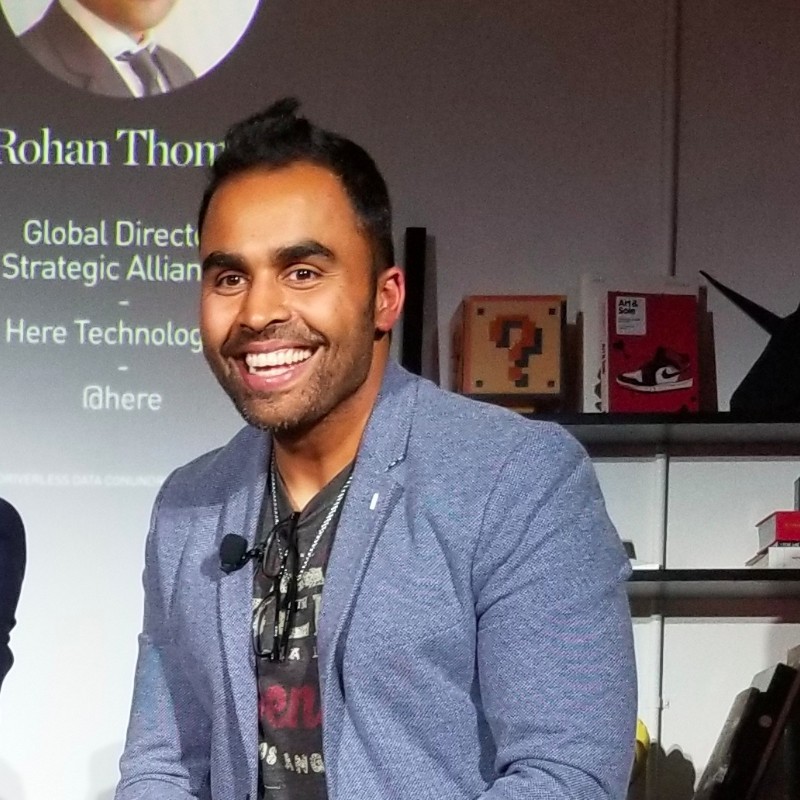
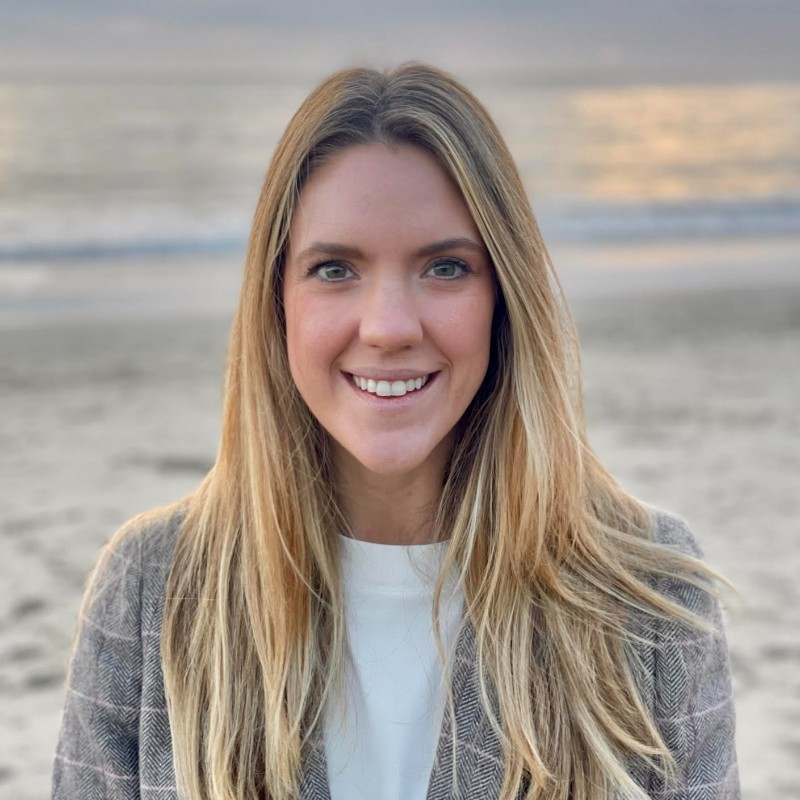
Join theCUBE as we delve into the dynamic world of cloud technology during our coverage of Google Cloud Next '25. Our hosts sit down with Maddy Kepple of DoiT and Rohan Thomas of YugabyteDB to uncover industry insights and trends shaping the future of multi-cloud interoperability.
Maddy Kepple, who heads the Americas division at DoiT, discusses how their innovative platform, DoiT Cloud Intelligence, enhances customer experiences by optimizing cloud spending and improving workload efficiencies. With years of experience in the cloud industry, Kepple emph...Read more
exploreKeep Exploring
How long have you all been working together?add
What are the benefits of working cross-functionally with different teams in a company, as explained by the speaker in the text?add
What are some common trends in the hybrid cloud utilization among ISVs and other customers that you work with?add
>> Good morning, nerd fam, and welcome back to Las Vegas, Nevada. We're here kicking off day three of our three days of live coverage at Google Cloud Next. My name's Savannah Peterson, joined here for all the insights today with John Furrier. John, how's your Vegas been?>> Been great. This event ends on a Friday, which normally they end on Thursday, but it's kind of weird that it's Friday, but-
Savannah Peterson
>> I know. I don't know what day it is anymore.>> But Google's done an amazing job with the announcement. They simplified a lot of things. Their multi-cloud interoperability is a huge feature, so just and the ecosystem, they got the chips and the hardware and the software and they got the ecosystem. So I see Google feels a lot like AWS in the early days.
Savannah Peterson
>> It's got those vibes for sure.>> Very curious. Very punching up. Very cool. Again, it's a great event.
Savannah Peterson
>> Speaking of cool, our next two guests are really cool. Maddy and Rohan, thank you so much for taking the time this morning. We appreciate you.
Rohan Thomas
>> Absolutely.
Maddy Kepple
>> Yeah, thanks so much for having us.
Rohan Thomas
>> Yeah.
Savannah Peterson
>> So Maddy, I'm going to start with you. Your booth is such a standout with that hot pink. I love it. Love it. It's like a magnet over there to go do it. Talk to me a little bit about where you guys are at right now, what's going on and why you're sitting here with me today.
Maddy Kepple
>> Yeah, I love to answer this question. So I've been at DoiT for actually almost six years now. I was our first seller in North America and now I'm proud to oversee our America's business.>> Nice.
Savannah Peterson
>> Love that. go girl.
Maddy Kepple
>> Thank you. I work with a lot of our new logo acquisition, our existing customers like Yugabyte. It's amazing actually why I joined DoiT as I was always so impressed by the ability to combine really amazing proprietary technology with our people. And quite frankly, we have some of the best engineers that you'll encounter.
Savannah Peterson
>> Casual flex.
Maddy Kepple
>> Yeah. Of course.
Savannah Peterson
>> I love that though.
Maddy Kepple
>> So we've been working on perfecting over a decade, merging our experience with our technology, and actually in the past 12 to 18 months, we've launched what's called DoiT Cloud Intelligence. It's a platform that's designed to give customers visibility into their spend, workload intelligence, and combine that with how to actually action that and gain more efficiencies within their .
Savannah Peterson
>> Which I can imagine everybody wants right now.
Maddy Kepple
>> Yes, yes.
Savannah Peterson
>> It's not just observability on what's going on, it's what is it costing us and why, and which activities are costing what, especially in this AI era that we're living in.
Maddy Kepple
>> Exactly. And we look at what business outcomes is each customer trying to achieve and how do we drive more efficiencies to help meet those.
Savannah Peterson
>> That's rad. So what brings you here with us, Rohan?
Rohan Thomas
>> Yes.
Savannah Peterson
>> Talk to me about Yugabyte and what's going on.
Rohan Thomas
>> Yeah. So at Yugabyte, we are a distributed database. So we are a fully Postgres compatible database. We build databases in a way for customers who have high throughputs. We are fully cloud-based and of course we are partnering with DoiT, which is what brings me here.
Savannah Peterson
>> Nice. How long have you all been working together?
Rohan Thomas
>> So I just joined five months ago, but even before that-
Savannah Peterson
>> Congrats on the new job.
Rohan Thomas
>> Yeah. Thank you.
Maddy Kepple
>> I've been working with Yugabyte for actually like five years.
Rohan Thomas
>> There you go.
Maddy Kepple
>> Yeah. One of my favorite customers, so if anyone else is listening.
Rohan Thomas
>> So I'm reaping the benefits of that.
Maddy Kepple
>> Yes, yes.>> So talk about the relationship between you guys and the use cases, because one of the themes here at Google Next is obviously with the TPUs and the AI infrastructure, which is the big focus across the industry.
Savannah Peterson
>> Big conversation this week.>> And the conversation has been how software's written is changing and database comes up a lot. So Postgres is very popular, but now AI needs access to a lot of data, low latency. We just had Equinix on, they talk about the edge. So you've got all kinds of now moving parts in the distributed computing framework. How do you guys see that? What's the customers look doing? Can you share some of the things that you guys are involved in that's enabling the customers because they're all looking at it and saying, "Hey, I got to be ready." The readiness is at an all-time high. You're starting to see companies get more profitable now in this cycle. What do you guys have? How does that relate to you guys and working together and the customer?
Rohan Thomas
>> Sure. So let me-
Maddy Kepple
>> Yeah. .
Rohan Thomas
>> Yeah. So I would want to say funny, you should say that, but since this is Google conference, not funny anymore, but we actually talking about AI, we just released our AI agentic application on Yugabyte today, this week actually.
Savannah Peterson
>> Congratulations. That's fun.
Rohan Thomas
>> Thank you. So yeah, so we wanted to make sure that we have something that we give customers to allow for anomaly detection and performance tuning. So that is available now if you want to check out. So that's kind of what we are starting off with, at least this conference.
Maddy Kepple
>> Yeah. And on the AI side, we all know it's a big buzzword. Everyone's trying to figure out their AI strategy. So what DoiT's really good at is figuring out what are the different technologies available in the market. We're a multi-cloud partner, so we ultimately are looking for what is the best for our customers and then how can they scale that efficiently and make sure they're hitting the business outcomes that they're looking for. So a lot of times we'll align with their executive team, what are some of the areas you're trying to go, and then we make tech suggestions and ensure that they're implementing it in a way that is scalable and efficient.
Savannah Peterson
>> And efficient. So coming back to you, Rohan, since you obviously have gone through this journey, what sort of efficiency challenges were you facing before you found Maddy, your new best friend?
Rohan Thomas
>> Yeah. Exactly. So we were looking at things like, so we are a startup, so we fast-growing startup, we have a lot of new customers and we have a lot of new leaders in the company, which is really bringing the company to the next direction. And as that new leadership comes in and brings us to this new direction, that fast inflow of customers, we have challenges in our finance side of things and our engineering side of things, engineering is spinning up things that is going awry and running out of order. Finance has multiple work streams that they are managing. So with DoIt, we are really kind of bringing all that together, bringing optimization into our cloud spend, into the cloud spend of the engineering and making sure that all the runners in our years are not taking place. So that's kind of the big positive that we are getting from DoIt, just to mention one.>> You mentioned all those stakeholders. One of the things that's come up on theCUBE this year, we had CFO Digital Summit , where CFOs have to kind of instrument the business models of the change. So efficiency drives cost savings, but revenue is also a big factor. How are the teams impacted when you guys start implementing the technology? Because one, speed's faster, so you got time to value has changed, the value curve, you move faster whether whatever business model's there, but other stakeholders now have to get on board. Engineering, they're on board because they're doing the work, but you got finance, you got different stakeholders. How is the team impact? Is it culture shock? Is it like, are people kind of connecting? What's the impact there?
Maddy Kepple
>> Yeah. It's honestly what I like about working with Yugabyte. We work cross-functionally. So Rohan and I are on the business side, making sure they're expanding their customer base, meeting their needs there. Our team aligns really closely with their finance team to ensure we're keeping everything in order there, keeping the CFO happy. And then our engineers are really tightly aligned, because of course with efficiency, you don't want to sacrifice performance reliability in your product. And when we first met, Yugabyte was actually looking at where to launch their freemium tier. That's how we had our very first engagement. And from there we figured out what platform will be the most cost-efficient, where will you be able to scale longterm? And as they grew and supported their customer base, we wanted to always keep that in mind. So we have a really good relationship because we work across the parties and we're always keeping the relevant stakeholders updated on what we're working on.
Savannah Peterson
>> It sounds like a proper collaboration. You are best friends. We're here at Google and we just came off the back of KubeCon in London. Would be rude of me to not bring up Kubernetes in this moment. Lots of complexity, always trying to decrease complexity. Rohan, talk to me a little bit about how that fits into multi-cloud. And Maddy, you can build on that after he starts.
Rohan Thomas
>> Yeah. So we take that and we go, again as I mentioned, we are born in the cloud companies, so we have a lot of customers which are, think of your top big banks in the world, think of your top gaming companies, automobile manufacturers, media and entertainment. We have a lot of these customers who want that flexibility of cloud, at the same time, they want to have flexibility to move from on-prem and have that migration and move to the cloud.
Savannah Peterson
>> They want to be able to do everything gradually.
Rohan Thomas
>> Exactly. So that's what Yugabyte-
Savannah Peterson
>> .
Rohan Thomas
>> Yeah. I wanted all approaches what Yugabyte bring to the table, where they are able to do it on the metal, on their own private cloud and migrate to the cloud.
Savannah Peterson
>> Which is what they're going to be doing anyway, especially as we ramp up in this AI.
Rohan Thomas
>> Yes. Exactly. And at the same time, we manage all the horizontal scaling for them so they don't have to worry about building database, they can focus on their customer. And to your point, as those customers are coming in, they can focus on their revenue instead of managing their environments with databases.
Savannah Peterson
>> Maddy, yeah, just building on that, I mean we can talk about complexity and Kubernetes, but I'm curious to expand it to you to get your perspective. How are you selecting the right partners like Yugabyte? You've got a lot of people in your ecosystem.
Maddy Kepple
>> You know it's interesting. We work with a lot of digital native companies, a lot of ISVs because one of the things we help a lot with is the concept of margin expansion. So what are your ultimate unit economics, so that is you're building and launching new products. How are you ensuring you're doing it efficiently, you're ultimately maintaining profit and you can build a scalable go-to-market motion there. So we work with a lot of different ISVs in the space. We look for ones that have overlapping interest with our customers. So ultimately we are focused on where we can drive efficiencies, give them the best technology and remain an unbiased party so that our customers know they are leveraging the best technology. So what we like about working with Yugabyte, they have the same thing in mind. They want to give their customers the best technology, focus on scalability and efficiency. So we work with a lot of the people actually that have booths today, but similar themes that we're helping them with.>> We talked to John Purcell a lot on theCUBE from your team. Shout out to him because he's the product guy. So the Google announces things like Gemini Flash, and one of the things that they say is there's thinking in it and there's a lot of efficiency, where the first time I heard this from the cloud company where they say, it's got built in, he didn't say budget management, but they said really about price performance. So they built it to be optimized specifically I guess it's FinOps, Fin CloudOps, if you want to call that. But it's actually designed to be targeted towards the fear that, hey, I'm going to do some AI, and all of a sudden the bill comes in, what services are going to, where's the value, where's the ROI? So as people start to get the business model transformation, what's your reaction to that and how does that fit into what you guys are doing? Because that seems like a perfect fit for what you're doing.
Maddy Kepple
>> Yeah, there's obviously a lot of different FinOps platforms out there. And so where we differ is we give more visibility into cloud intelligence. What are you spending on, workload intelligence, what do those workloads look like, how are you leveraging them. And we combine that with human intelligence. Our engineers are actually helping them action that. I think a really good example since we're at Google Next is BigQuery. BigQuery is a phenomenal tool. It's something you have to keep an eye on for increasing cost. So ours will show you how are you leveraging the product, but then you get to meet with our experts on how do you actually action those inefficiencies that you're uncovering. And so it's just a different perspective. And with AI it's obviously a big one. We use a lot of AI. So when we're talking to customers about what use case or what is your desired outcome, we can give them a lot of intel into what products to use, how to make sure you're gaining more efficiencies there. Yeah.>> It's interesting you brought BigQuery because what Google said here on theCUBE was is that they're actually doing native AI, which they call native AI inside BigQuery because they have insight into how it works. So they're applying AI on behalf of the consumption side. How does that fit into what you guys are doing because you have efficiencies that you're seeing already on Yugabyte? So that seems to be a tell sign to what customers are probably going to end up doing. Any thoughts on that?
Rohan Thomas
>> Yeah. So we are looking at that, we are evaluating how we kind of go into it, but most importantly what we are doing it, the Vertex that just came out, so we are kind engaging Vertex as our first entry point, and in the next couple of weeks you would be seeing a Vertex integration of our performance advisor that I just talked about. So that's kind of our foray into it.>> So you're ahead of the curve on that one.
Rohan Thomas
>> Yeah.>> .
Savannah Peterson
>> I was just thinking that. I was like, well, that's well-timed. .>> That's a perfect answer. help on that. It's so interesting how if you have the data and you have the domain-specific knowledge and your partnership that the AI is just such a great innovator. I mean, on the sales side, does that change your value proposition?
Maddy Kepple
>> It's interesting, because everyone wants to jump straight to AI, but they forget the basics of where are you storing the data, how are you accessing the data so that you can build compelling AI strategy.>> .
Maddy Kepple
>> Exactly. So from a sales perspective, there's so much more than just like, here's a new AI tool, it's implemented. It's what does your infrastructure look like? There's a security aspect, especially with ISVs, you need to ensure that when you're deploying an AI strategy, you're keeping these secured.
Savannah Peterson
>> Compliance, there's sovereignty, there's a lot of things you got to think about in this whole ecosystem.
Maddy Kepple
>> Yeah.
Savannah Peterson
>> Wow. This is impressive. Okay. So you mentioned workloads a second ago, Maddy, and I'm curious because you do probably both get to see quite a cross-section of the lay of the land and where those workloads are being ran. Tell me some of the trends that you're seeing.
Maddy Kepple
>> I mean, Kubernetes will always be extremely popular, especially Google came with GKE, and that was their darling product for a long time. A lot on BigQuery. We see a lot more expansion into Vertex AI for sure. So those are some of the ones we're seeing today.
Savannah Peterson
>> And are these, I mean, we know hybrid cloud is huge. Is some of this on-prem? Is it at the edge? Where are you seeing this actually ?
Maddy Kepple
>> A lot of hybrid cloud, especially in the ISV space. You want to be able to launch your product wherever your customers want you to be. So we work with a lot of other customers like Yugabyte, who are trying to maintain a footprint across the clouds, which is why do cloud intelligence is really helpful. You can actually see what you're spending across all three have a one-place, one-stop shop to manage that. I think we see less hybrid. There's some customers that maybe have a remaining co-location and that they're trying to move that over, but in general, a lot of our customers are built in the cloud or they're maintaining a multi-cloud strategy.
Savannah Peterson
>> Nice. So it's kind of everywhere.
Maddy Kepple
>> Yeah.
Savannah Peterson
>> Everyone's everywhere.
Rohan Thomas
>> .
Savannah Peterson
>> Yeah. Yeah. Everywhere, all at once. I'm not surprised. All right. I've got one very important final question for you too.
Maddy Kepple
>> Okay.
Savannah Peterson
>> So obviously been a very exciting partnership. Thank you both. And a lot happening very fast. You're clearly poised and ahead of the curve, given that last answer a second ago. What do you hope to be able to say 12 months from now at next Google Cloud Next that you can't yet say today? Rohan, I'll start with you because we're making eye contact.
Rohan Thomas
>> So I would want to say from a customer perspective, we want to bring more services, more Google-based services to our customers. So we're trying to be ahead of the cloud. We want to maintain that pace and at the same time, the partnership that we have, I want to see that partnership go to the next level as well. A second ago, I think Maddy was telling somebody who their biggest partners are. So hopefully next time when she's talking about us, she's saying, oh, and they are by the way, number two or number three. That's what I'm looking forward to.
Savannah Peterson
>> What does the next level mean when you say that in terms of your partnership? Just so I can call you out about it next year.
>> So the next level I would say, in terms of the amount of customers we are going to jointly go after and in terms of our spend that we have based on what we are spending on GCP, on Google, which is managed through DoiT, I want to increase that of course as well. So those are the two angles that I'm looking at from a customer perspective and our spend perspective.
Savannah Peterson
>> All right. We're holding you to it now. Now you've got the KPI. We're going to be tracking this .
Rohan Thomas
>> Thank you.
Savannah Peterson
>> What about you, Maddy?>> We'll his KPI's poured in.
Savannah Peterson
>> Just a gentle nudge in six months just to see how it's going.
Maddy Kepple
>> Well, a year from now, I'll bring John Purcell back so that you can hold him accountable for the KPI. But I think our brand has always been, we're amazing partner on the engineering side. We have really good FinOps technology, but a year from now, I want our brand to really be how we bring it all together. So there's a lot of things we're trying to do incorporate into our platform. What are the business objectives we've all agreed upon, how can we see them and how can we track back all the work we're doing to ultimately achieve those outcomes. I think that's what makes us different than other platforms. We've made a lot of recent exciting acquisitions, perfect scale on the Kubernetes side, which is designed to help with optimization. So hopefully a year from now, we'll still have a very large partnership, of course with Google. But our brand will really be more than just amazing engineers and amazing tech. It'll be a platform that brings it all together and helps customers achieve business outcomes faster.>> Business model transformations.
Savannah Peterson
>> Yeah, it's that ecosystem. Keep saying it on the news as it's going to be the ecosystem that wins this next era.
Maddy Kepple
>> Totally.
Savannah Peterson
>> Maddy, Rohan, thank you so much for joining us.
Rohan Thomas
>> Thank you.
Savannah Peterson
>> This has been great. Your energy is fabulous. Please infect everyone with that positive energy and bring them for our next guest. John, thank you for hanging out.>> Glad to help.
Savannah Peterson
>> And thank all of you for tuning to our three days of live coverage here at Google Cloud Next in Las Vegas, Nevada. My name's Savannah Peterson. You're watching theCUBE, the leading source for enterprise tech news.