We just sent you a verification email. Please verify your account to gain access to
Google Cloud Next 2025. If you don’t think you received an email check your
spam folder.
In order to sign in, enter the email address you used to registered for the event. Once completed, you will receive an email with a verification link. Open this link to automatically sign into the site.
Register For Google Cloud Next 2025
Please fill out the information below. You will recieve an email with a verification link confirming your registration. Click the link to automatically sign into the site.
You’re almost there!
We just sent you a verification email. Please click the verification button in the email. Once your email address is verified, you will have full access to all event content for Google Cloud Next 2025.
I want my badge and interests to be visible to all attendees.
Checking this box will display your presense on the attendees list, view your profile and allow other attendees to contact you via 1-1 chat. Read the Privacy Policy. At any time, you can choose to disable this preference.
Select your Interests!
add
Upload your photo
Uploading..
OR
Connect via Twitter
Connect via Linkedin
EDIT PASSWORD
Share
Forgot Password
Almost there!
We just sent you a verification email. Please verify your account to gain access to
Google Cloud Next 2025. If you don’t think you received an email check your
spam folder.
In order to sign in, enter the email address you used to registered for the event. Once completed, you will receive an email with a verification link. Open this link to automatically sign into the site.
Sign in to gain access to Google Cloud Next 2025
Please sign in with LinkedIn to continue to Google Cloud Next 2025. Signing in with LinkedIn ensures a professional environment.
Exploring High-Performance Computing and Quantum Technology with Dr. Muhammad Ali Khan
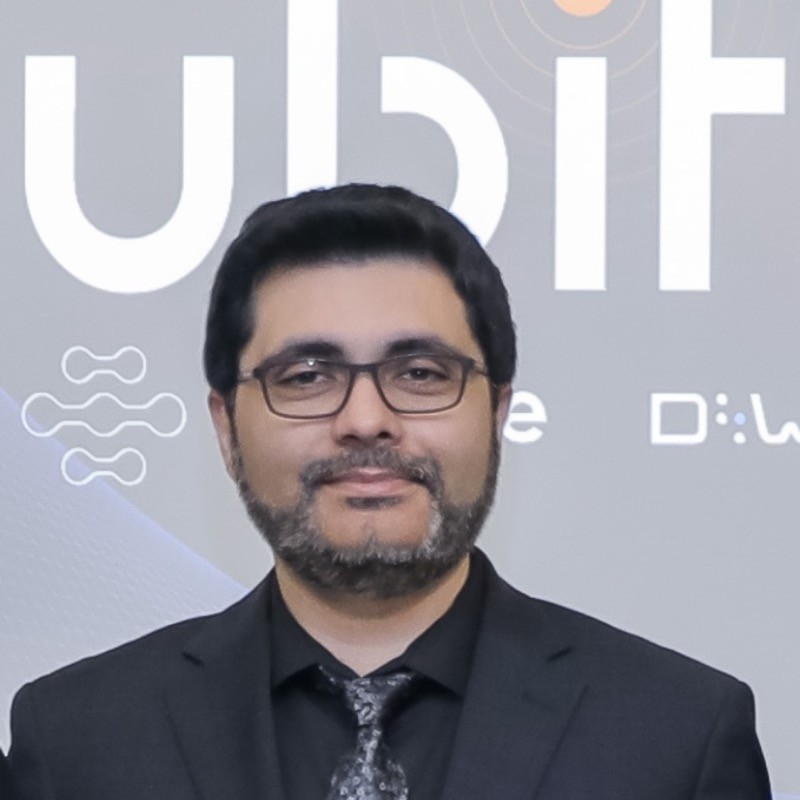
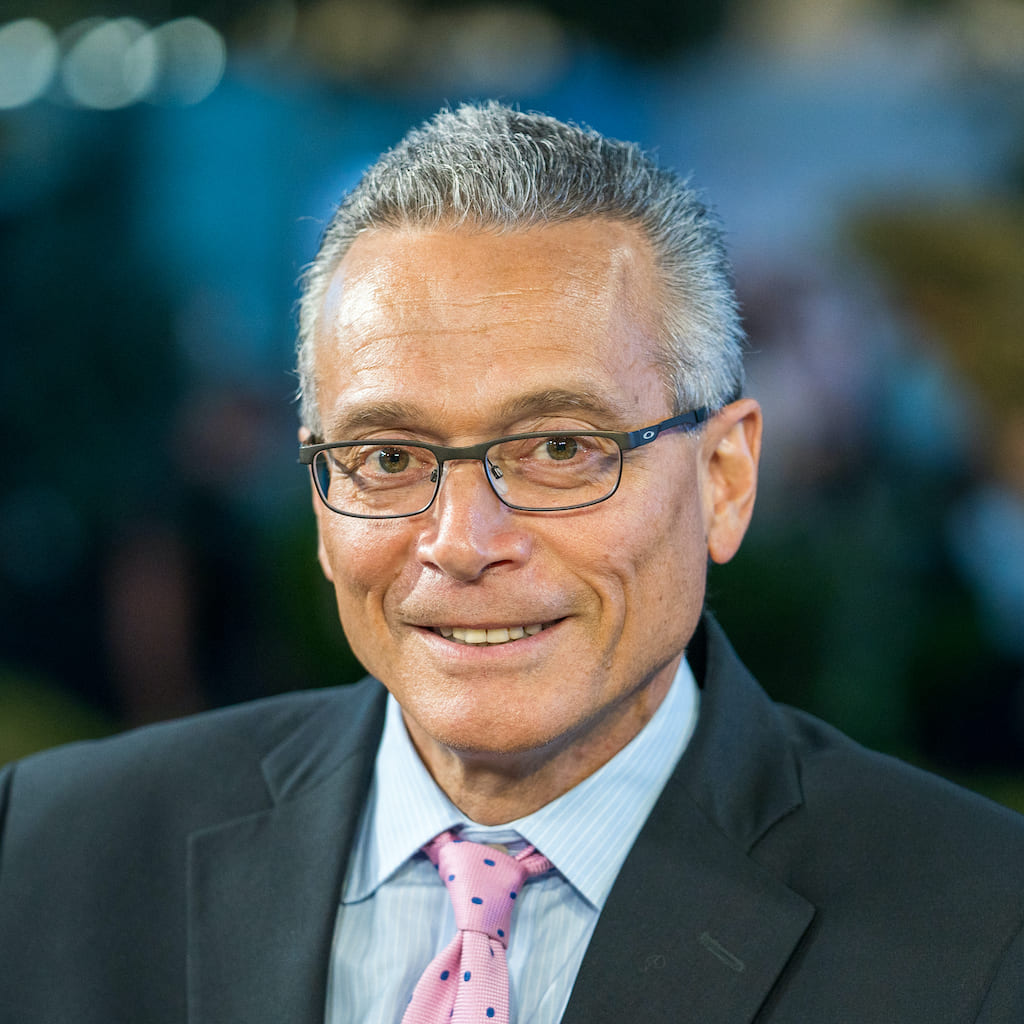
Dr. Muhammad Ali Khan, a former academic researcher and now the driving force behind Staque, joins us for an insightful discussion at Google Cloud Next 2025. In this interview, hosted by Savannah Peterson and Dave Vellante of theCUBE Research, Dr. Khan shares their journey from academia to entrepreneurship and how their company bridges the gap between advanced science and industry applications.
In this episode, Dr. Khan delves into Staque's focus on solving co...Read more
exploreKeep Exploring
What is the mission of the company described in the text?add
What is the process and approach used by the leader and their team to identify complex problems to work on now and in the future?add
What is the advantage of using DataStax tooling for quickly spinning up MVPs or fully productized applications?add
What are some examples of industries or use cases where quantum computing can provide significant advantages?add
>> Hey, good afternoon cloud fans, and welcome back to Google Cloud Next. We're here in Las Vegas, Nevada. My name's Savannah Peterson. I joined for all the insights with the inevitable, intimidable is the word I was going for, Dave Vellante.
Dave Vellante
>> What?
Savannah Peterson
>> Yes. I mean, I'm just saying you're one of a kind.
Dave Vellante
>> Thank you.
Savannah Peterson
>> That's all I'm saying.
Dave Vellante
>> Kind of you.
Savannah Peterson
>> It is. And actually-
Dave Vellante
>> Or inside baseball. Sorry.
Savannah Peterson
>> It's been a lot. Tune into all the segments and you might understand our jokes. Otherwise, sorry for leaving you hanging in the beginning. No, but actually, another one-of-a-kind situation and conversation that we're about to have is with our next guest. Mohamed, welcome to the show. Thank you so much for coming.
Dave Vellante
>> Hey Savannah. Hey, Dave. Thank you for having me.
Savannah Peterson
>> It's an absolute pleasure. I am so excited to more about what you're doing at Stack to connect cutting-edge science and technology. So tell us about Stack, the mission, a little bit about your story.
Dave Vellante
>> Yeah, I mean, you nailed it pretty much. We exist to bridge the gap between cutting-edge science and industry implementation, particularly cutting-edge computer science. So my background was academic researcher/professor before I became an entrepreneur about nine, 10 years ago. And having lived in both worlds, I saw a huge disconnect where the cutting-edge advances we do in science and research take decades to make their way into industry and in some cases even longer than that. So our whole mission is to cut down that time to months or weeks if possible, to solve industry's most complex problems. In a nutshell, we're a high-performance computing company. This is how I would describe ourselves. And within HPC, we focus on two main areas. One is building agents for solving complex problems, and the other is commercializing and productizing quantum computing. So yeah, that's a bit about us.
Dave Vellante
>> It's such an important mission. I mean, I'm obviously US-biased, but you think about the great research centers in the United States over the years, Xerox PARC. I don't even know what happened to Xerox PARC.
Savannah Peterson
>> That's actually a great question.
Dave Vellante
>> Bell Labs now owned by Nokia. I mean, when AT&T broke up, Bell Labs basically dissipated. IBM still has legit research.
Savannah Peterson
>> Yes, they do.
Dave Vellante
>> But for years they couldn't translate their research into commercial products. They struggled for decades. Now that seems to be getting better and more pragmatic, but so you were really filling a need, obviously not as big as those other ones that I mentioned, but congratulations on the vision and actually putting it into action. It's very exciting. I was going to ask you why you started the company, but it's clear why.
Savannah Peterson
>> Well, I think building on that, something that stuck with me is, you could say this, just even walking around the show floor, a lot of companies try and be everything to everyone, and it's not necessarily the strongest marketing strategy, nor does it necessarily lead you to be front of mind or best in breed in one specific thing. I love that you were mentioning before we went live that your sweet spot is very specific niche problems. So I'm curious about your process as a leader and how you and the team identify which complex problem to go after now and next in the future.
Savannah Peterson
>> Yeah, I mean, I'll go back to Dave's comment about AT&T Bell Labs, which has been kind of an inspiration for us. We kind of modeled our R&D process on the Bell Labs, but where we are different from our predecessors is that we work our way backwards from commercialization. We look at the business value that we can create and then work our way backwards towards R&D rather than the other way around. So we don't build a tool looking for a solution, we look at a problem and then build a tool that fits that problem. And that's why, to your point, Savannah, focusing on niche use cases is really important because if you build general products or general solutions, they're just not going to fit with the pain points that the industry has. So there are a couple of pain points that we have gone after quite heavily, one of which is modeling complex systems and using high-performance computing to solve decision problems in supply chains, in manufacturing, in aviation. But ultimately, the goal is that you have some optimization problem. You have a complex network, you have complex decisions to be made, you model it and then you solve it. And for that, we have built an agent, which is a supercomputing agent, which we call Super. Cheesy name. I know, but it's what we came up with and Super is deployed actually. Super is deployed in commercial applications. There are other scientific computing companies that are using it to serve their clients, and then there are consumers directly using it as well. And the key use cases for Super right now have been in autonomy, autonomous machines, planning their operations at scale, routing problems in supply chain and last-mile delivery. So that has been the focus for us.
Dave Vellante
>> I wonder if I could pick up on the supply chain one. So there are companies that are legacy collections of supply chain companies trying to solve this problem. And by infusing AI, building knowledge graphs, I mean, I think of a company like Leander, which is a collection of Managistics and JTE and all these legacy companies, and they're some great work, but it's like my security question. I feel like supply chain is a do-over and you're coming at it from a blank piece of paper. So I wonder if you could help us understand the efficacy of a new approach like yours compared to trying to fix ... The advantage of the legacy systems is they have access to all this data, which is important. I'm curious as to how do you address that problem, but architecturally how you're thinking about it differently?
Dave Vellante
>> Yeah, that's a great question, actually. And the biggest issue whenever you go to a legacy industry and try to pitch a new solution is that there is status quo. And they want to see something tangible before they agree to utilize your solution. But it is really hard to show something tangible because you don't have access to data, you don't have access to their systems. So this is where we have seen a big advantage in using DataStax tooling to quickly spin up MVPs or even in some cases, fully productized applications that we can show to end customers and say that this is how it's going to be. This is where you are right now, and once you work with us, this is how our AI agent is going to help you navigate complexity and solve it faster and save millions of dollars potentially. So once they see it in flesh, that's that aha moment where they say, okay, now we can have a conversation, now we can get into productization. So I think for us, it is critical to demonstrate and demonstrate fast. And this is where some of the toolings we use has been a great enabler for us.
Dave Vellante
>> So DataStax, Langflow, that enables you to achieve real-time results, right? Can you explain that in a little bit more detail?
Dave Vellante
>> It's an interesting story. So we started building agents a while ago, but our COO, Krishna Ganesh, he had to do some demos really quickly and it was a big customer. So he was like, okay, how do I do it? So he discovered DataStax and he discovered Langflow as the platform and he used it, and tomorrow there's a demo and he's spinning it up and it worked.
Dave Vellante
>> I love a COO. That's a techie.
Dave Vellante
>> Yeah, yeah. He's very hands-on.
Savannah Peterson
>> He's out there making MVPs.
Dave Vellante
>> Yeah, exactly.>> He's very hands-on with that stuff. And once he did, we looked at it as an organization and we said, okay, this is interesting. We should expand the usage of Langflow in our prototyping. And then we realized that we can actually take it from prototype to MVP to full product, which I didn't expect. I thought it was more of a prototyping tool, but it has full production-grade capabilities. So then we started moving our agents and building new agents on Langflow. And then that led us to discover Astra DB because we were using vector databases. And with Astra DB now we have all of our AI flows sitting in one environment and seamlessly communicating with each other. But the key driver is speed at which you can spin up these AI agents using this tool.
Savannah Peterson
>> That's a big deal. Speaking of speed, you brought up Super and also Quantum, but haven't quite combined them together yet for us. And you're our first ... well, probably our real first quantum expert on the show this event. So I'm curious, talk to me about how that enhances your ability to solve problems and how the hybrid compute future will help you navigate these really complex niche problems quickly and with extreme velocity.>> Yeah, that's a great question. So, Super is a supercomputing platform. It is not just quantum computing, it is classical high-performance computing as well as quantum computing. The way it works is you define a problem in natural language, you upload a case paper, a presentation or define it, just a business executive has a crack at it, defines the problem. Then it asks you clarifying questions and builds your problem statement. So that's where the AI comes in. The agent comes in. Once the problem statement is well-defined, then it figures out how to solve it and what is the key factor you're looking for? Are you looking for a superior solution? Are you wanting to cut down costs or do you need an answer really fast? So every morning when your supply chain is initiated or your drivers are going out to deliver, you want to optimize their schedules and adjust in real time in two minutes, get an answer. What is the key objective for you? And then accordingly, it comes up with an architecture for the problem to be solved using a combination of classical and quantum computing. Where quantum computing comes in heavily is when you need answers fast. That's where you can cut down times from hours to minutes, and in some cases seconds.
Savannah Peterson
>> And sometimes even days depending on how much you're->> It's true.
Savannah Peterson
>> Yeah.>> Yeah, totally. So I'll give you an example. In Canada, there is a food group, Paterson Food Group, they're a grocery chain. They run quantum computing every morning to optimize their last-mile deliveries. And it's a use case that we have been adjacent to. We have been close to through D-Wave and our partnership with D-Wave. So those are the kind of use cases where quantum computing really shines. And the other one is where you need a high quality solution and the classical methods are just not getting you there. For example, drug discovery or for example, building a new class of materials for a problem. So those are the problems where we see the most advantage from.
Savannah Peterson
>> I love that the grocery store is adopting quantum. On the front nose of quantum is the grocery industry. I mean, it makes sense. We had that conversation with Ian at MWC, which also makes sense, but it's quite fun to hear, honestly. It's very interesting. I got to ask you, since we're having this conversation, it's been a very spirited and healthy debate here on the desk about when Y2Q is coming and when do you think we'll be at, maybe you'll say we're already there a tipping point with quantum computing and its adoption at scale across the world, or at least across industries here.>> So one thing we have to understand is that there are different models of quantum computing. There is the gate-based model and then there is the quantum annealing. Think of gate-based-
Savannah Peterson
>> D-Wave.>> Exactly. Yeah. So think of the gate-based model as the solve-it-all model, but it is at a smaller scale right now. We have a few hundred qubits in some cases, tens of qubits, and they're just not enough to model the complexity that's in the world. So gate-based is going to take a little while to get there. But on the annealing side, we have made more progress. We have reached a scale of 5,000 qubits. And that's the infrastructure we use heavily. We use both. We use gate-based as well, but when it comes to commercialization, we have seen more bang for our buck from quantum annealing at this stage. And quantum annealing is practical today. It is deployed today. I was at Qubits a week ago actually, and I presented a live product which is powered by quantum computing and customers are using it today.
Dave Vellante
>> I had Alan Baratz at the New York Stock Exchange who's CEO of D-Wave, and I got an education on annealing, and they've been shipping their cloud-based service for quite some time, and they've now delivered an on-prem quantum computer. So they're actually in production.
Savannah Peterson
>> It's happening.
Dave Vellante
>> It was funny because Jensen of course created a lot of controversy when he said it's a decade away, sort of walked that back, and then at GTC they had Quantum Day. Again, I wasn't there, but I don't know, did you get any visibility on Quantum Day?
Savannah Peterson
>> Unfortunately, I did get to talk to a couple of our community members about HPC in that moment and about Quantum, but I did not get to immerse myself in the two-hour 17-person panel that they had going on. Quite literally 17.
Dave Vellante
>> My takeaway is this is a journey for sure, and you're going to see different techniques and it is going to evolve probably over a decade, but the potential is enormous, especially when you start thinking is what I learned from Alan. The biggest blocker to AI is energy. Quantum doesn't have that problem. They've got other problems.
Savannah Peterson
>> It does. It does. But you're right, when it comes to sustainability of AI, quantum computing is going to play an important role and that's the space where our core R&D is based. How do we intersect AI and quantum computing? And this is where, once again, our interaction and our relationship with DataStax is very important for us because DataStax is also an R&D-driven company. It's not just about the tool, it's about the research that goes into the tool and then how do you quickly put it in the hands of users. So when it comes to creating optimized, fine-tuning, and large-language model training pipelines, I think our collaboration with DataStax is going to be a great catalyst for that as well.
Savannah Peterson
>> What are some of the biggest challenges you have as you bring ... for most people, I mean, it is bleeding edge technology, bring the front line technology into some of these industries that are not historically necessarily known as the number one early adopters of said new technology? What is that conversation like?
Savannah Peterson
>> Yeah, it usually starts from something tangible. So our starting point with them is usually generative AI. That's how we start the conversation and show them the use cases of generative AI in their business. And then based on what problems they have and the complexity of the problem, we bring in other technologies into it like quantum computing. We don't throw quantum computing at every problem. And the starting point is always, what's the pain point that we're looking to solve? I'll give you one more example of a key use case that we have delivered. There is a hormonal health company, Science & Humans, that we work with. They have been serving consumers, diagnosing and treating hormonal health conditions for several years. In the last couple of years, they have had explosive growth in usage and they were getting to a point where their human clinicians just couldn't keep up with the demand. So what is the solution? You create AI clinicians, but that is a very sensitive topic and a very sensitive application because it's life and death and ... Exactly. And all kinds of regulations coming in.
Savannah Peterson
>> It's emotional space to be operating in.
Savannah Peterson
>> Exactly. Exactly. So we work with them and we designed our Cues, we call them Cues. Cue is an AI agent product that we have. So we designed Cue clinicians for them that specialize in certain health conditions like thyroid or menopause or erectile dysfunction, so on and so forth. And now we're moving to a point where we need these clinicians to work together to account for the overall health because your thyroids are not independent of your other hormones. I mean, they're interconnected. The whole body is a complex system. Now that's where we're bringing in quantum computing. You see, our starting point was AI agents, but then as AI agents need to scale, you need quantum computing or high-performance computing to enable that. This is typically our journey with our customers. Start with something very concrete, do an MVP, grow it to a product, and then bring in advanced technologies as needed.
Savannah Peterson
>> Yeah, yeah, take them down that journey. I love it. All right, I've got one more question for you, Mohammed, and I'm actually really excited to hear what your answer is. So when we have you back on the show at Google Cloud Next 2026, what do you hope to be able to say then that you can't yet say today?
Savannah Peterson
>> Yeah, I'm hoping a lot, actually.
Savannah Peterson
>> I'm excited. And tell us all the things you're hoping.
Savannah Peterson
>> So where I would like to be and what I would like to say is that leveraging quantum computing and high-performance computing, we have been able to bring down the time to train large language models or fine-tune large language models by at least 20%. That is the goal.
Savannah Peterson
>> Love it.>> That is the quantifiable, tangible goal that we have defined for ourselves over the next 12 months. And actually, I'm trying to get DataStax fully aligned on that as well and getting into it together and going after that goal.
Savannah Peterson
>> I love that. That's one of the things that's really magical about this time period is there's so many companies and great minds collaborating across industries, across sectors, across teams. We look forward to hearing your update on that 20%.
Dave Vellante
>> Looking forward to be back as well.
Dave Vellante
>> Where are you at as a company in terms of capital raised? What can you share with us?
Dave Vellante
>> Yeah. So we have been profitable. We have been around for about three and a half years. We're based in Canada, US, and UAE, particularly Dubai. Have been profitable since the inception because of our commercial focus. But now we are raising a round to accelerate some of the technological solutions and R&D that we are doing. So it's a $3 million round and we have already $1 million committed. I don't know my CFO is going to kill me for that or not, but I'm sharing some information here. I hope it's going to be okay.
Dave Vellante
>> So you guys funded it largely through positive cash flow?>> Exactly.
Dave Vellante
>> Early on. Oh, congratulations. Love it. Yeah, so you pretty much still own the whole thing. Most of it. Anyway.
Dave Vellante
>> No comments. No comments.
Savannah Peterson
>> I was like . That's about where we wrap this up. It is That time.
Dave Vellante
>> It gives you flexibility. That's all I'm saying.>> Yeah, sure, sure.
Savannah Peterson
>> I mean, it gives you autonomy. You're not answering to a big beefy board and-
Dave Vellante
>> Oh, you need capital and scale.
Savannah Peterson
>> Still have some pride in your teamwork. Anyway, I'm here for that. Congratulations on everything. Really exciting stuff that you're doing, you and the team, and I genuinely cannot wait. You operate in the space that I cover here for theCUBE, so I genuinely cannot wait to see what comes next. Make sure you keep us posted and we look forward to the next time you're on the show with us.>> Appreciate it, Savannah, Dave. Pleasure.
Dave Vellante
>> Thank you, Mohammad.>> Thank you.
Savannah Peterson
>> Yeah, and thank you, Dave. This was a fun one. Nice to end on a little quantum note. I'm feeling I got a little spring in my step here at the end of day two. I hope you all enjoyed that as much as we did. We're here in Las Vegas, Nevada at Google Cloud Next. My name's Savannah Peterson. You're watching theCUBE, the leading source for enterprise tech news.