We just sent you a verification email. Please verify your account to gain access to
Google Cloud Next 2025. If you don’t think you received an email check your
spam folder.
In order to sign in, enter the email address you used to registered for the event. Once completed, you will receive an email with a verification link. Open this link to automatically sign into the site.
Register For Google Cloud Next 2025
Please fill out the information below. You will recieve an email with a verification link confirming your registration. Click the link to automatically sign into the site.
You’re almost there!
We just sent you a verification email. Please click the verification button in the email. Once your email address is verified, you will have full access to all event content for Google Cloud Next 2025.
I want my badge and interests to be visible to all attendees.
Checking this box will display your presense on the attendees list, view your profile and allow other attendees to contact you via 1-1 chat. Read the Privacy Policy. At any time, you can choose to disable this preference.
Select your Interests!
add
Upload your photo
Uploading..
OR
Connect via Twitter
Connect via Linkedin
EDIT PASSWORD
Share
Forgot Password
Almost there!
We just sent you a verification email. Please verify your account to gain access to
Google Cloud Next 2025. If you don’t think you received an email check your
spam folder.
In order to sign in, enter the email address you used to registered for the event. Once completed, you will receive an email with a verification link. Open this link to automatically sign into the site.
Sign in to gain access to Google Cloud Next 2025
Please sign in with LinkedIn to continue to Google Cloud Next 2025. Signing in with LinkedIn ensures a professional environment.
Global AI/ML Partner Solution ArchitectGoogle Cloud
John Radko
SVP, Software EngineeringOpenText
Exploring Innovative Information Management Solutions at Google Cloud Next 2025
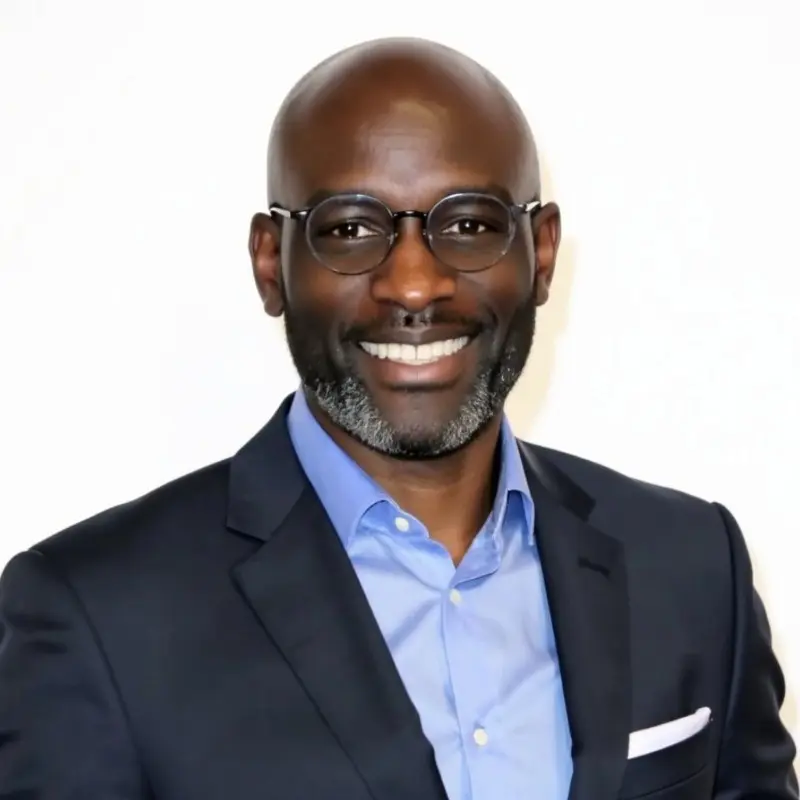
Yemi Falokun, product manager at Google Cloud, and John Radko, senior vice president and chief technologist at OpenText, provide an in-depth discussion at the Google Cloud Next 2025 event on theCUBE. They delve into the evolving landscape of information management and highlight the strategic partnership between Google Cloud and OpenText, focusing on leveraging cloud computing and advanced AI technologies to enhance enterprise data handling capabilities.
Savannah ...Read more
exploreKeep Exploring
What is OpenText known for and what type of information do they help companies manage?add
What are some key aspects of data privacy and security that Yemi discusses in relation to working with partners like OpenText who have a large amount of data?add
What are some key factors to consider in improving the response quality of an AI system?add
>> Good afternoon, nerd fam, and welcome back to Las Vegas, Nevada. We're here barreling through day one of our three days of coverage at Google Cloud Next here on theCUBE. My name's Savannah Peterson, bringing you all the insights and excitement with Dave Vellante. I feel like this show is all about breaking down what it really means, what this all means.
Dave Vellante
>> Well, I like the way you humanize technology.
Savannah Peterson
>> Yeah. Thank you.
Dave Vellante
>> And so, let's do more of that, because we're talking about information, amazing information.
Savannah Peterson
>> Yeah, we're talking about a lot of information, too, guys, a lot about data info and what it means for the people. John and Yemi, thank you so much for being here, guys. We really appreciate it.`
John Radko
>> Thank you.
Yemi Falokun
>> Thank you for having us.
Savannah Peterson
>> We are going to have a super exciting conversation, but I want to make sure that everyone's on board right away and knows the lay of the land with OpenText. John, can you open us with some details and what brings you to this fine chair right here?
John Radko
>> Okay. So, OpenText is probably the largest information management company in the world that most people have never heard of.
Savannah Peterson
>> Which is exactly why you're telling us about it right now.
John Radko
>> Exactly. For decades, we've been helping companies manage their information. We're probably best known for document management, but we also deal in structured data going between companies. We deal in managing test cases, security information, pretty much any IT operations, pretty much any kind of information you can think about. We help our customers manage and we have for decades. So, most of the customers we work with have a large repository of enterprise information. And so, the reason we are here is to make sure we continue to advance our technology forward so companies can leverage that information for insight and for competitive advantage.
Savannah Peterson
>> Wow. So, I have to say, you validated a, you just made me feel a little bit better because when I was doing my homework on you, I thought, "Oh my gosh, the scale and the breadth," and I was less versed. So, I imagine there's a lot of interaction and conversation here. Yeah. Talk to me a little bit about this partnership, why you trust the OpenText fam so much and why this is so critical right now.
Yemi Falokun
>> It is critical, as John mentioned. They are known to be the information management platform for a lot of enterprises with decades of information stored there, right?
Savannah Peterson
>> That's a lot of data, very-
Yemi Falokun
>> That is a lot of data, right?
Savannah Peterson
>> Yeah.
Yemi Falokun
>> So, this partnership actually started from a GCP point of view, maybe about six, seven years ago when they migrated their OpenText content platform onto GCP because what that then allowed us to do was to then start leveraging other GCP services like AI. So, now, you fast-forward that now to where we are today, where it's all about agentic. Last year, it was about Generative AI. What we're now doing with OpenText is now, they're now leveraging our platform services to actually now build AI on top of all that information that you have. If you look at their information online, they have something called the Aviator platform. And within that, I'm sure you've done your research. Within that, they have about five or six different solutions, whether it's Aviator content, DevOps, cyberspace, IT services management, experience, maybe it's your experience. They have a lot of information, and what's underlining that from an Aviator point of view is they've been able to leverage Vertex as a platform to deliver those features that they want their customers to use, leveraging all that information that they have stored within their enterprise.
Dave Vellante
>> OpenText was founded in the early '90s, right?
Savannah Peterson
>> Except for the OGs, yeah, yeah.
Dave Vellante
>> And I remember back then, like when I was at IDC, information management was, we had a library and they were literally librarians. That was their title, and it was an asset, and that was where all the information was, and we would go through microfiche. But that was when you started the company and you've evolved. You're now, I think, a $6 or $7 billion market cap company, but you've had to apply technology for business advantage throughout that. So, I wonder if you could take us through that journey a little bit and take us up to the point where the Google relationship started and how that has supported your business and your clients.
John Radko
>> Well, and that's a great place to start because as the company's grown over the years, the one thing that's been a constant is helping people manage information. And the important thing to realize, if you were to walk around the floor here, I know people can't see it. There's all these new companies and they're doing new use cases and everything, but the majority of what customers are dealing with existed last year. It existed five years ago. And they're not trying to replace, they're trying to enhance, they're trying to improve. And if you have a vast repository of information, there's a reason. There's so much to talk about moving to the cloud and migrating to the cloud. People need to keep what they've got going and keep enhancing it. So, it began with first getting information under control, and that involved digitization. Things like Capture, we really started in AI. We've been in AI for two decades. We have all kinds of patents, but not Generative AI. We were around machine learning because it was critical to our Capture business, and we helped customers digitize their information. Once you get the information digitized, you need to manage it. Key thing is security, you've got to protect it. You need it to be easily accessible to people that should see it and not accessible at all to people who shouldn't. But access is only one part of it. You need to make sure corporate records are managed right. So, you need to make sure you retain the records that you need to retain, that you get rid of records that you're not supposed to have. So, it's this whole thing of information lifecycle. As you roll forward, a major focus of our business became how can you integrate that to the leading applications that people were using? We entered the era of ERP. SAP started showing up everywhere. Salesforce started showing, ServiceNow, Workday, all of these different offerings. So, we integrated, so we natively integrate into these applications. That's part of the reason many of our users may not even realize we're there because they think they're using SAP, they think they're using Salesforce, and they're accessing, in some cases, information that existed in that enterprise before SAP was even installed there. So, that's that consistency of helping customers manage their information through the years. And what led to the relationship is really a couple things. One is we saw customers with an appetite to move to cloud, and we needed a cloud partner. And second, we saw customers who wanted SaaS applications, not the traditional license model, not even a private cloud. And so, we implemented our OpenText cloud platform as the basis for all of our SaaS offerings, and we needed a partner for that. And that's what Yemi was talking about. And that was a very challenging project. We took a bunch of software teams that had only built software for distribution on-premise, and they were building for cloud. Cloud was a moving target, and Google was a phenomenal partner for that. We went through a lot over two years. They brought partners in, they brought their professional services team. I was at a corporate event in Hawaii. I was on a teleconference back to the head of PS in Canada, and Google really showed up. And that's why fast-forward to current day, when we went with our Aviator program and we had to choose a direction for AI for our most critical businesses, we knew, I knew who I wanted to partner with because we'd already established that trust. The same way our customers trust us to manage their information, we trusted Google to see it through with us on our AI.
Dave Vellante
>> So, it wasn't just the tech, it wasn't just the great ML, AI, the awesome infrastructure. It was that relationship that actually-
John Radko
>> Absolutely. The tech is really table stakes in a lot of ways. The tech is great, and we're so excited about the announcements we're seeing at this show, but the relationship is probably what underpins it the most.
Savannah Peterson
>> Well, when we think about our AI future, I think trust is really at the core. Will we trust our systems? Will we trust the machines? Will we trust the thing interacting with us? Whether that's an agent or a person in the flash? And those, when we think about, we've talked about it a bit today. I'm going to keep bringing it up all week. When we think about the ecosystem that's going to surround a lot of these solutions to that core is this level of partnership. One of the things that's also there is making sure you're not taking a huge risk. Yemi, talk to me a little bit more about data privacy and security and how you stay in front of it, working with partners with as much data like OpenText has as an example.
Yemi Falokun
>> Yeah, sure. So, one of the key things about our platform is enterprise readiness. We talk about enterprise readiness and what that means. What that really means is ensuring, because one of the key concerns that people have is, are you going to use my data to train your model? No, we don't. We also then provide the same capabilities for our partners to be able to have the same conversation with their customers, as well. What's the security like, you're learning on a Google infrastructure that's secured from the ground up? What's the data governance like? The data that we use to train our models, we have a data governance process that goes around that, the privacy aspects of it, being able to enforce the security that you need in an enterprise. So, we bring all that to bear from an enterprise readiness point of view, and that's a core feature of Vertex AI platform that customers like partners like OpenText use to build solutions for their customers.
John Radko
>> And going along on that theme, one of the key things in a content management system, which is a big part of our business, customers have spent years defining permissions and roles and all of that. So, a key thing is you want the power of Generative AI and Agentic AI, but you don't want to try to replicate all those permissions and security. So, that's why it's important that we bring the AI to the data, and we don't take the data to the AI. What I mean is we implement AI into our information management solutions, our content management, experience management, and that's what we've done with Vertex, so that all the customers don't have to redo the permissions or check to make sure that nothing was missed when they moved it, because all the permissions are the same. They're still in there. When you go the other way, you add risk. So, that's why it's so exciting. And if you've seen the vision, because we're so aligned with what Google's doing on their vision for agents, you'll see they have the agent space and then it goes down and it's talking to all these connectors. And the advantage of that is that each of those connectors honors the permissions and security. So, again, the value we bring to our customers is that all the work they've done to organize their information, including securing it, holds with each release, we never do anything to break trust with them.
Dave Vellante
>> So, if I have a committed expenditure, the question is because you're invisible. If I'm a Google customer and I have a committed expenditure for a year, two years, whatever it is, how can I take advantage or can I take advantage of OpenText services and how do I do that?
Yemi Falokun
>> Yes, you can. The way you do that is through our marketplace. So, OpenText is listed on our marketplace. And so, if you have committed dollars as part of a commit that you signed, then you can work with from a go-to-market perspective, the account team on our side and account team on OpenText side, they will work with you to figure out what services do you want, what does that look like from a commit point of view. And then you can then draw down against that commit. So, there are mechanisms in place for you to use your commit dollars on the marketplace to buy OpenText services.
Dave Vellante
>> And that may happen through other SaaS applications, if I understand it correctly, because you're embedded in there. So, it might not be directly, although we always talk about you have to get your data house in order before you can do AI. And I think, oh, I think things like BigQuery and data lakes, but information management is a key part of that. Why?
Savannah Peterson
>> And it really is. Yeah.
Dave Vellante
>> Help us understand why information management, getting our house in order there is essential for good AI?
John Radko
>> Okay, so think about enterprise content management for a minute. And those are marvelous technologies, but they tend to deal with the data level. If you think about documents, huge amounts of information are in documents. And one of the things that makes LLM so spectacular is their ability to work with documents. Customers who are doing ECM. I want to differentiate here. A lot of times, when we think about files, we think about like our hard drives or maybe a cloud service that does sync and share, the same kind of things you swap pictures on, and that's your personal data, and that's really important. Enterprise data is different though. The enterprise data belongs to the company. It's managed by the CIO under governance. And so, when you're using an enterprise content management system or any kind of industrial grade content management, you don't just organize data, you put metadata around it. You might organize it by project or by customer. That's how we integrate to leading applications like SAP. So, why do I bring that up? When you're doing your AI queries and your prompts, it needs to understand the context. What is the metadata? What project is this? So, it's not just looking at the documents, it's looking at the metadata from the leading app. One other thing that isn't necessarily obvious, when you can take advantage of that information management, you don't look at a lot of stuff. So, if you go, I'm doing a query about a project in Malaysia, it doesn't look at all the other projects that you're doing in other places. That dramatically improves the quality of your response. One of the best things you can do to improve an AI response is to simply not give it irrelevant data. So, if companies have spent years organizing their data, having your information management in order makes your AI efforts so much more powerful.
Dave Vellante
>> Quality, speed, cost, all of those factors.
Savannah Peterson
>> And experience on the other end.
Dave Vellante
>> Exactly.
Yemi Falokun
>> The experience. Yep. And also being able to reduce the amount of data that you're searching also helps with the response quality. This is how, everything we do is grounded in the response quality you get back when you issue that natural language query and the LLM will only use, or the foundation models will use the data that you get back from that information corpus that you have in your enterprise. So, it's critical for you to be able to, when you make that search, to be able to reduce the footprint of data that you're searching against using metadata that's already stored over a number of years within OpenText systems so that the data you get back is probably the top 90% accuracy. And then you can then let the language model then return the response based on what the customer's asking for.
Savannah Peterson
>> It's a more sustainable approach, as well. Yeah, go ahead. I can see you're about to add.
John Radko
>> Yeah. Well, and part of it is to realize that in many cases, for our customers who have invested a lot in organizing their information, they get a payoff from that investment. So, this isn't something they have to do now. The AI arrives in our latest releases, they focus it at what we call our business workspace or information and context. And it just works because they put the time and effort into managing it. It's also important to realize its zero copy. So, we are using an AI framework, and we're working with Vertex, as well, to feed the model and get answers. But customers are not storing their data somewhere else. It's staying right where it is governed by the policies they've had in place earlier.
Dave Vellante
>> And that's the connector capability we talked about earlier.
John Radko
>> Exactly. Yeah. And that's bringing the AI to the data versus taking the data to the AI.
Dave Vellante
>> Irrespective of where that data is, this morning in the keynote, I was struck by the admission, I don't know if it was Thomas, I think it was Thomas or maybe it was one of the other speakers, said, "Look, not all data is going to go into the cloud, so we'll go to where the data is."
John Radko
>> Correct.
Dave Vellante
>> And not a lot of cloud companies will admit that, at least, or lead into it. So, we saw Nvidia, I heard Dell get a little mention, but there's a lot of stuff on-prem that's not going to move. It's too expensive to move for a lot of reasons.
Yemi Falokun
>> Yeah. And it's critical that customer choice is top of mind, and that's where that comes in. The data's not going to move. Probably, there's a lot of cost involved in moving that data anyway. Data's been stored over decades. So, it's critical for us as Google Cloud to have choice to allow partners like OpenText to use the services that they want to use within our portfolio to drive the user experience that they want for their customer base, which is where that choice is critical for us.
Savannah Peterson
>> It's about that choice and continuing to build on that trust that we were talking about to give their customers the continued confidence to whether whatever happens next. This has been fantastic. I have one final question for you both. When we are hanging out at Google Cloud Next in 2026, what do you hope to be able to say then that you can't yet say today? Yemi, I'll start with you. You've got a big smile.
Yemi Falokun
>> No, what I would say we would like to be able to say then is we've 12 months on from this Agentic world. We have a number of agents that are talking to each other. When we talked about announcing the 808, the agent to agent, we actually have partners like OpenText leveraging that framework or that protocol to build agents. We have customers coming to us to say, "Hey, I want to do X, Y, Z." And the reason, as soon as I issue that query, I have tens of agents that can actually do the work for me. And not only do I have tens of agents that can do the work for me, but I actually have the information to make the decision on which agent to use based on my own unique requirements, and that agent's able to do what I want to do at the right time. So, that's what I hope will happen. But early days and 12 months from now, hopefully, we'll have a conversation about the next evolution of agents.
Savannah Peterson
>> Yes. Love to hear it.
John Radko
>> On a similar theme. So, two weeks ago we had our OpenText World Europe and our CEO and CPO announced our focus on the digital knowledge worker and the digital knowledge worker are agents associated to the various spheres in which we operate. So, next year, I want to talk about all the value we've driven for our clients through their ability to leverage those digital knowledge workers working in a collaborative manner with human knowledge workers, because that's always been our job to help, to deliver information management technology that empowers knowledge workers. And we'll be talking about the wide array of digital knowledge workers that OpenText has put out many in collaboration with our partner Google.
Savannah Peterson
>> I love that. Well said. And I look forward to talking to you both about that at Google Cloud Next in 2026. John and Yemi, thank you so much for taking the time.
John Radko
>> Thanks guys.
Yemi Falokun
>> Thanks for having us.
Savannah Peterson
>> Thank you. And thank all of you for tuning in to our three days of coverage here in Las Vegas, Nevada at Google Cloud Next. My name's Savannah Peterson. You're watching theCUBE, the leading source for enterprise tech news.