We just sent you a verification email. Please verify your account to gain access to
Google Cloud Next 2025. If you don’t think you received an email check your
spam folder.
In order to sign in, enter the email address you used to registered for the event. Once completed, you will receive an email with a verification link. Open this link to automatically sign into the site.
Register For Google Cloud Next 2025
Please fill out the information below. You will recieve an email with a verification link confirming your registration. Click the link to automatically sign into the site.
You’re almost there!
We just sent you a verification email. Please click the verification button in the email. Once your email address is verified, you will have full access to all event content for Google Cloud Next 2025.
I want my badge and interests to be visible to all attendees.
Checking this box will display your presense on the attendees list, view your profile and allow other attendees to contact you via 1-1 chat. Read the Privacy Policy. At any time, you can choose to disable this preference.
Select your Interests!
add
Upload your photo
Uploading..
OR
Connect via Twitter
Connect via Linkedin
EDIT PASSWORD
Share
Forgot Password
Almost there!
We just sent you a verification email. Please verify your account to gain access to
Google Cloud Next 2025. If you don’t think you received an email check your
spam folder.
In order to sign in, enter the email address you used to registered for the event. Once completed, you will receive an email with a verification link. Open this link to automatically sign into the site.
Sign in to gain access to Google Cloud Next 2025
Please sign in with LinkedIn to continue to Google Cloud Next 2025. Signing in with LinkedIn ensures a professional environment.
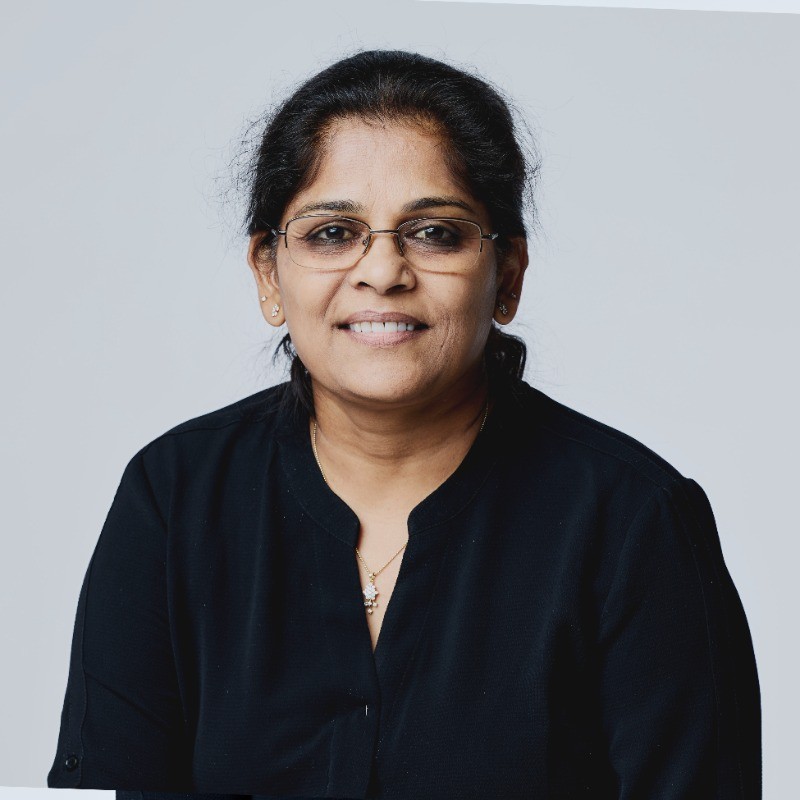
SVP & General Manager, Hybrid CloudHitachi Vantara
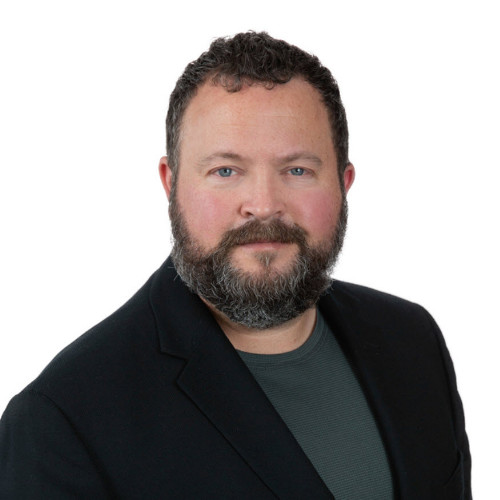
Rollen Roberson
VP, HyperscalersHitachi Vantara
Exploring the Future of Hybrid Cloud and AI Infrastructure with Hitachi Vantara and Google Cloud
Sunitha Rao, executive vice president of Hitachi Vantara, and Rollen Roberson, vice president of partner development at Hitachi Vantara, join us this week at Google Cloud Next 2025. The session delves into the intricacies of hybrid cloud infrastructure, AI advancements, and sustainability efforts within the industry, offering an engaging perspective on what the future holds.
In this insightful discussion, hosts John Furrier and Savannah Peterson ...Read more
exploreKeep Exploring
What is the importance of storage in today's changing technological landscape?add
What is the main focus and importance of sustainability in Hitachi's software?add
What benefits have come from the partnership between Vantara and Google over the past two years?add
What do you hope to be able to say at Google Cloud Next in 2026 that you can't say today?add
What collaborations are Google and Hitachi working on, and when can we expect to hear more about them?add
>> Good morning, Nerd fam, and welcome back to Las Vegas, Nevada. We're here midway through day three of our live coverage at Google Cloud Next. My name is Savannah Peterson, joined by the ineffable John Furrier today. John, we are going to be talking about sustainable infrastructure next, and this has been a really hot topic of the show.>> Yeah, it's one of my favorite topics. Data gets to be stored, data platforms are going to involve storage systems, the systems revolutions here, and I think this has been one of the most important conversations we've been saying on theCUBE, so this next session will be great.
Savannah Peterson
>> Yes. And on that note, Sunitha and Roland, thank you so much for coming to hang out with us.
Savannah Peterson
>> Our pleasure.
Savannah Peterson
>> I had the pleasure of hanging out with Sheila yesterday. Now we're going to dive even deeper into Hitachi Vantara. Very excited about this. I believe the data is something like 90% of organizations have committed to hybrid cloud at this point or are using multiple clouds. Sunitha, I'm going to start with you. There's some challenges there in realizing the value. Can you outline those for us?>> So I think the most important thing that's happening right now is letting go of on-prem, and when I say letting go of on-prem, it's not getting rid of it honestly. It's more about how do you have the same control and get the fanciness of the cloud, of scalability? How do you get both together?
Savannah Peterson
>> It's a fancy cloud. I like that.>> Exactly, and I think that's the value proposition of what hybrid brings to the table. I think the challenges there include, you have been on the on-prem world for a longer time. You understand the processes, you know what's going on. How do you make it repeatable in the cloud, and how do you actually get all of the same things on the hybrid as well and in one single frame? People think that tools and tools and tools are going to help them, but no, I would say that one manageability framework, and I think John put it really well, data platform, right? We are going to talk about the data platform in the context of a hybrid cloud, and that's what is going to solve these challenges of how do you keep it simple? How do you keep it both, on the same front between both cloud and on-prem?
Savannah Peterson
>> Roland, is that what you're seeing with hyperscalers and across the board?>> Yeah, definitely, and once again, thank you for having us on the show. I really appreciate it. But I agree, it's all about the data platform where we're seeing a much more attention being placed on that. When you look at what historically has been the challenge, there's always this cloud or not cloud kind of comparison, and I think that's went away now. So you see now, it's one blended environment across the board, and what our customers are actually looking for now is how do I maintain that contiguous data layer across, whether it's on-premise data centers or private cloud, COLO, extended in the cloud or the edge? So once you're doing that, it's how do I get the right data in the right place with the right permissions at the right time, and the results that I need? And AI has brought so much more prominence to that requirement due to the extreme processing capabilities we needed and the resilience that's required to maintain it.>> As senior leaders in your organization, you run the business, you've got your keys to the kingdom. You see the product innovation and the roadmap, you get the customers and your partners like Google. When you look at the shift with the AI infrastructure, this whole, what do you call it? AI factories or AI hypercomputer, the game is still the same. A complete reset's happening at how systems are being rolled out. On-prem at the edge, whether it's an Equinix somewhere or in the cloud, the interoperability, the hybrid cloud is standard. That's a done deal. We see that. The role of data, you're seeing things like HBM memories, SSD for a capacity tier, storage changing its role, not just as a physical media but in concert to that core system that's providing all the compute, GPUs. They're all operating together. It almost reminds me of the old PC days back in the day, then the server's like, "Hey, put the chip. Next there you got a little cache." The storage layer is a data platform. Talk about why that's important now, because if you get that right, this is the conversation we've been having. Can you share your opinion on the role of storage at that layer of the stack?>> So I think I would fall back on something called as an AI stack, I don't know if you've heard of that, and that's precisely available at every part of the whole infrastructure itself. I think it has to start grounds up. Storage is I would say the least of the whole thing. When you go right up the stack, you need to have capabilities that are enabling that smart intelligence into the system. You need to really understand how you can actually bring in, when you talk about sustainability for example, what is sustainability? End of the day, how less of storage you have on the system. How does that happen? That happens with how do you reduce the data set on the box? And I think we bring in a lot of value where our software is supposedly looking at low consumption for high performance and ultra-high latency workloads. There you go. That's the AI part of the whole situation that we are talking about. And when we are talking about security, we need to look at preemptive threats, how you can control it ahead of time and how can you actually integrate within the stack? So when a customer really is looking at a stack, like we have these banking customers as examples who come in and say, "I want the whole stack. I really need to understand to optimize my storage within a secure way and in a hybrid fashion." You cannot have four systems coming and doing that for you, and that's the AI stack, which basically takes care of each and every tier that comes into play, and gives a story that's more reliant, secure and smart>> And real time and low latency is even more talked about now.>> Absolutely.>> Because it's more complex, so more software has to be written. We are hearing for theCUBE, it's 15 years with the theCUBE, I've never heard the word compiler mentioned more. And the role of-
Savannah Peterson
>> Seriously.>> I've heard compilers multiple times, like, okay, that means the innovations at the microcode level is down around the chips. That's why I wanted to bring up the data part, because I think the connection there is that how you handle the data there dictates what happens above it.>> Yes.>> Reaction to that? Do you agree?>> Absolutely. Absolutely. I think the smartness, if you look at the past, you were talking about monitoring. It's no longer the monitoring. Monitoring is about telling you, "Okay, something is happening," but you need literally the Sherlock Holmes of your stack. You really need to know what's happening, how it's happening. I think that comes from the observability part, and that's the smartness. That's actually built in into this data platform concept that you're talking about and feeding it all up from the system all the way into the applications itself.>> Yeah, and this is where Hitachi Vantara really brings its legacy, what we are good in to the forefront. It's really exciting about all the new discussions we're having with AI and the importance of the data set, because if you look at the sweet spot of being super resilient, the high-performance capability that our products bring and how it's applied to that data, those are all prime requirements for the new age of AI that we're entering in today. And we've seen it before, whether it is mobile technology, the introduction of the internet, and we start to get into high-performance computing. Each one of these had a growth segment that applies data in a different way. Now AI is the next wave, and as we kind of push into that, it's very enlightening to see how we can now take advantage of all of that strength that we've built up historically and now apply it in a different way in different means with compliance and all the things that... Because AI is only as good as the data that goes in, and that's our strength. We make sure that it is compliant, we make sure it is secure, we make sure it is high-performant in critical situations, and that's everything that AI needs to function so that the end user community gets the information they need in a timely manner.
Savannah Peterson
>> That's awesome. I think that growth story is imperative. You mentioned sustainability. One of Hitachi's long-standing missions has always been to be more sustainable. It's always fun to talk to you all about that. I'm curious, given that you get to see a lot of different types of companies, and really, you talk about observability, you're observing the entire market quite frankly. What are some of the biggest myths or misconceptions that you're seeing in the market that you wish you could just wave a little magic wand and teach everyone instantly? Sunitha, I'll start with you.>> I would say that the level of importance that we need to give for infrastructure is a lot important now, which was actually not there in the past. Infrastructure used to exist. It's all about, okay, I'm going to bring this workload on, I'm going to push it on and then I'm done. I think that was a myth. I would really look at infrastructure that's really smart, really reliable, really cost-efficient and self-decisive. That's why I said self-aware. I think I bring back that concept all over again, because as long as you don't get away from the myth of saying that infrastructure is a thing of the past, no. I would call it as if you look at a skyscraper for example, plumbing is the backbone. Nobody would recognize that unless that plumbing fails, and that's what is infrastructure for you. So it's the strategic decision point for the future of AI, for the future of cloud, for the future of data. So that's something that I think we should debunk and call out more specifically for customers to adopt to the fact that you need to make intelligent infrastructure more than anything else.
Savannah Peterson
>> Absolutely. Self-awareness, always imperative. Love that you just brought that up. Hopefully everyone was listening and now we've just dispelled that myth and everything.>> Yes, absolutely.
Savannah Peterson
>> Roland, what about you?>> I hundred percent agree. As you looked at the growth of the internet and what we were trying to do at that time period, there was a new cycle of development, so there was a lot of next generation technologies that were being applied. And when cloud came about, it even made it more prominent that infrastructure to a degree was forgotten about. It was magically assumed to have been there, right?
Savannah Peterson
>> Right, working.>> I clicked a button and it was suddenly there. And the infrastructure community to a large degree was saying, "No, we're over here in the background," but they were kept in the back closet. Nowadays, it's more prominent than ever because it's more critical than ever, because it's where the data resides. It's how you control it effectively and where you control it. Compliance and where it needs to be, there's a lot of talk right now about how you repatriate from cloud, the geo-localization of the data for those controls that need to be in place for PII and other HIPAA type regulations, compliance. So it's more important than ever, and it really brings the infrastructure topic back to the surface where even for developers, they want to know, they're required to know.
Savannah Peterson
>> Yeah.>> We've been saying on theCUBE, this feels like the nineties, I date myself, because that's when a lot of hard work games, interoperability, OSI model kicked in. But now, the theme here at Next and what we've been seeing on theCUBE is that AI infrastructure is clearly the hottest category. I totally agree. Now, the other conversation is the role of software. Now, we've all known you guys have been a software company. We've covered that in theCUBE. Jensen's been saying it for years, "NVIDIA is really a software company." But if you look at the data today, it's the interplay between hardware and software where the LLMs and the foundation models can be very agile and plug in quickly into the hardware, so yes, that validates the software. The other thing is, to your point, and I want to get you guys' thoughts on this, is that it changes how software runs because having a server, call a database, load a website is now gone and everything changes on what the behavior of the infrastructure has to do because it's doing new things. So I guess my question is do you agree with that? And two, if so, what is the behavior that's being enabled by the infrastructure, and how does that software react?>> Yeah, so in case in point, this is a common topic that we're having with customers today because the landscape of how it is being used is completely different from how it's been done previously. If you think about the use cases that you have with AI today, what's the expectation from the user? They're putting a query into a chatbot or some other type of AI mechanism, but they're looking for an almost instantaneous response. Now, in order to achieve that, that query cannot transact, go all the way back through multiple hops back to the cloud and then back, so it has to be done more locally in many cases. But the training of that model may be more effective in cloud, but that means you're pushing the learned capability downstream closer to the user base. So you have to have localized data that's cached appropriately in order to answer those type of queries, so it doesn't have to go back through the entire plumbing, as you put it, of infrastructure and do multiple hops.>> It's designed for something else.>> Right. So you're designing an architecture nowadays that is very dynamic on how to handle data, but it also is very, I guess, reactive to how it needs to be performant and access certain types of data in order to be effective.
Savannah Peterson
>> Absolutely. I think to add to that, Hitachi keeps talking about sustainability, and you must be wondering, okay, is it in the platform or is it in the box or is it in the software? It's very much in the software. We look at optimizing software with, as I said, the reduction technologies, less storage, less carbon. So->> Power.>> Power, absolutely. And green tech, there. The second thing that we do in the software is enabling an opportunity to see how the software can control the fans and the hardware, and then it gives the required cooling speed that really takes care of maintaining the required power settings that you really need to do that. Now that said, is it possible only if you buy the software for the boxes that Hitachi sells? The answer is no. You can actually do it in a software-defined fashion. We are going to talk about this. In an environment that's more cloud-friendly, you could even provide it in the cloud infrastructure too, not just restricted to one kind of platform situations. So I would say software is the future. Jensen is absolutely right. I think I'm going to double down on that. It's going to be software for everything in the industry, so to speak.
Savannah Peterson
>> I love it, and I love the commitment to that. Love the double down.>> Yes, absolutely.
Savannah Peterson
>> It's so compelling that at every layer, sustainability is factored in to the plumbing, to the building, to everything that we're talking about in this particular metaphor. We've talked a little bit about cloud, mentioned cloud, we're here at Google Cloud Next. Got to ask you about how... And Roland, I'm going to go to you here to kick us off. What's the partnership like with Google Cloud and how does that help you enable your customers?
Savannah Peterson
>> Oh, we've got a fantastic partnership and it's been improving over the last two years significantly. We have a global strategic agreement with Google that allows us to not just from our Vantara standpoint work directly with them, but we can leverage the full breadth and weight of the larger Hitachi company globally, which encompasses 600 plus companies. So when you're looking at not just IT infrastructure or software development, we have our partnerships across the board for building data centers, for all the power that is there. So all of the sustainability, the power consumption, the efficiencies that we gain on our inside, I'll call it inside the box for the data centers, we can match that now and capitalize on it with actually the building of the facilities itself on the power critical infrastructure. So it adds->> You're bringing more data to the table.
Savannah Peterson
>> It is. It is exponential on what we can save to our customers and our partners such as Google, and they recognize that. And they have been very... Have you seen all the announcements this week? Google distributed cloud, what we're doing on the edge, all of that. So as you see Google moving from their traditional cloud data centers out into the hybrid cloud world, which is where we play, on the enterprise space, we're moving that way. So we're bringing all of that capability from infrastructure to meet them in the middle, and that's where really that synergy interacts.>> Yeah, absolutely. Can't agree more on that. I think the energy and the real parts of the Hitachi bring a lot more value add to this joint relationship, and I think Hitachi 1 is a completely big example of how both can collaborate together and go just beyond the partnership on storage to something beyond making it application ready, not just for one vertical but across the board for different verticals within the industries as well.>> Yeah, and that's what partnership's about, right?
Savannah Peterson
>> It's just going to say it sounds perfect.>> It is. We're trying to bring the best of what Google provides to us customer base, and we're trying to do the same. And I'm always confident when you bring a bunch of smart people together in a room, great things are going to happen, and we're seeing that all throughout this week.>> And with the proof here is you see both Google and what you guys are doing, it's out in public. And Google's moved the needle big time on the AI infrastructure with Iron Wood looks beautiful and the way they're thinking about storage, the way they're thinking about the simplicity of it is just going to... And then they're checking all the boxes in the AI side too. So then you guys bring that together, hence the ecosystem here.
Savannah Peterson
>> I know. We love a good partnership. Everyone's happy and all smiles. Why not? Why not? Last question for you both. I'm very curious actually to hear your hot take here. When we're hanging out at Google Cloud Next next year in 2026, what do you hope to be able to say then that you can't yet say today? Roland, I'm going to... Oh, go for it, Sunitha. You look like you're ready rock.>> No.>> She was ready to go.
Savannah Peterson
>> She was ready to go. I was going to give her break because I feel like I've been calling on her for .>> You should go for it. Go for it.>> No, I'll go for it. No, there's-
Savannah Peterson
>> You're both going to get to go.>> There are so many things in our pipeline that Google and Hitachi are doing together right now, there's almost too many to list. But the amount of work that we're doing collaboratively, both let's say hosting in the cloud, some of the work we're doing, as Sunitha had mentioned, with our software-defined storage as an example, lots of great innovations with that. You can come see them over at our booth. Also on the hardware, the appliances side, lots of work that we're doing together. So I don't want to spill the beans on all of that right now because I will, I've, been warned as I don't go off script, but all of this is primed and ready to go. And what you will see is right now we're letting some of it out there for people to kick the tires on where you will see announcements->> You've got to telegraph a little bit.... >> and it is going to be live and in the market next year.
Savannah Peterson
>> Oh, can't wait to hear more about that next year. All right, Sunitha.>> Absolutely. I think he's point on you will hear a lot more about some of the joint capabilities that we come to the market with, and we are going to talk really big things next year in terms of this joint collaboration, not just at the Vantara level, but more at the Hitachi level, where we can talk about some of the use cases that are fairly very new to the market that will be benefited with this relationship with Google. And we are really looking forward to that in our next Google event when we are going to come back next year.>> So you guys have got a lot going on.>> Absolutely. We're excited.>> You're Smiling, you're hiding the ball a little bit. You have to.>> There's never a down moment.>> I'm trying to squint through and read between the lines and say what's coming?>> Yes, absolutely.>> It sounds like products.
Savannah Peterson
>> Well, we can't wait.>> Come by and visit. We'll give you a sneak peak.>> We'll be tracking you. We'll be stalking you on LinkedIn.
Savannah Peterson
>> On the note of stalkers, I'm going to go ahead and say thank you both very much for being here. This has been fantastic, super insightful, and always really awesome to hear what Hitachi is up to and the solutions you're able to provide through your partners in collaboration. John, this has been great.>> Great.
Savannah Peterson
>> We thank all of you for tuning in to our fantastic three days and over 30 segments of live coverage here at Google Cloud Next in Las Vegas, Nevada.