Check out Felix AI Agentic for Gemini Enterprise: https://cloud.withgoogle.com/agentfinder/product/888b2241-722d-4426-b635-2553cb29e42d
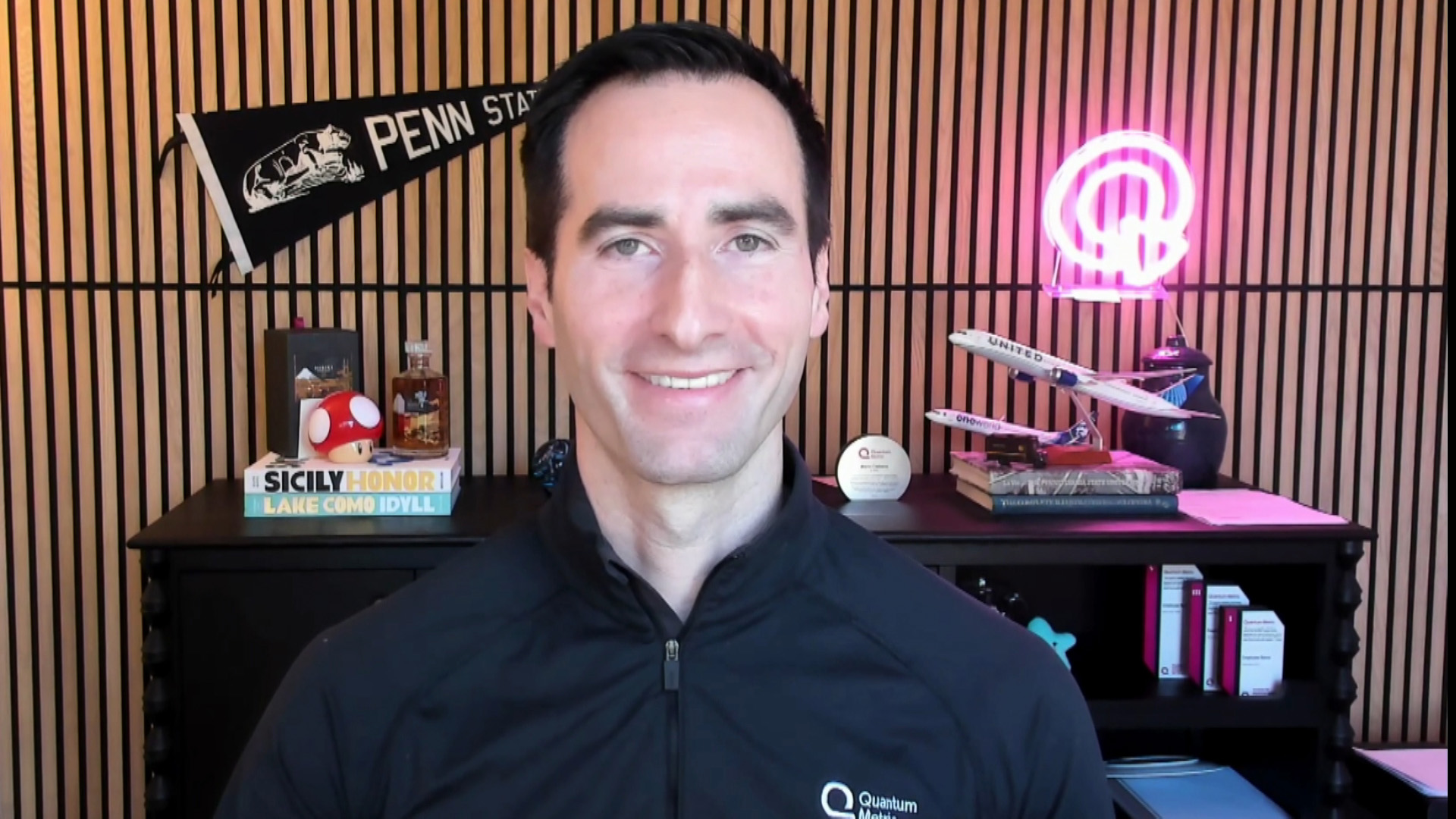
In this Google Cloud AI Agents in Action interview, Quantum Metric CEO Mario Ciabarra joins theCUBE’s John Furrier from the NYSE studio to explore how enterprises are shifting from digital self-service to autonomous, agent-driven experiences. Ciabarra explains how agents are beginning to complete tasks end-to-end on behalf of users – and why “getting digital experiences perfect” matters more than ever as agents have no brand loyalty and will abandon friction instantly. He shares how Quantum Metric is “releasing a new product” to show what agents are doing on company websites, and why precise data is essential to prevent hallucinations as teams use agentic AI to improve customer journeys across banking, airlines, telco, healthcare, gaming, retail and more. The discussion connects directly to Google Cloud’s ecosystem – covering the AI Agent Marketplace, Felix AI built on Google Cloud and how BigQuery and Gemini Enterprise underpin openness, technical depth and trust for agent-to-agent orchestration.
The conversation dives into real enterprise outcomes: moving from probabilistic to deterministic answers (e.g., “Why are sales down today?”) by orchestrating signals across marketing, merchandising, APIs and even weather; evolving employee experiences where a single interface (Gemini Enterprise) executes tasks across multiple back-end systems; and a mesh-style agentic platform that integrates systems such as Quantum Metric and Salesforce while routing through agents instead of point-to-point integrations. Ciabarra shares noteworthy marketplace metrics – about one-third of overall revenue flowing through Google Cloud Marketplace, faster collections for the CFO, and nearly 60% of net-new revenue influenced by GCP – highlighting co-sell momentum. Looking ahead, he describes how websites will personalize and improve themselves autonomously, powered by data on both human and agent interactions, with governance and privacy as core design principles.
Forgot Password
Almost there!
We just sent you a verification email. Please verify your account to gain access to
Google Cloud: AI Agents in Action. If you don’t think you received an email check your
spam folder.
In order to sign in, enter the email address you used to registered for the event. Once completed, you will receive an email with a verification link. Open the link to automatically sign into the site.
Register for Google Cloud: AI Agents in Action
Please fill out the information below. You will receive an email with a verification link confirming your registration. Click the link to automatically sign into the site.
You’re almost there!
We just sent you a verification email. Please click the verification button in the email. Once your email address is verified, you will have full access to all event content for Google Cloud: AI Agents in Action.
I want my badge and interests to be visible to all attendees.
Checking this box will display your presense on the attendees list, view your profile and allow other attendees to contact you via 1-1 chat. Read the Privacy Policy. At any time, you can choose to disable this preference.
Select your Interests!
add
Upload your photo
Uploading..
OR
Connect via Twitter
Connect via Linkedin
EDIT PASSWORD
Share
Forgot Password
Almost there!
We just sent you a verification email. Please verify your account to gain access to
Google Cloud: AI Agents in Action. If you don’t think you received an email check your
spam folder.
In order to sign in, enter the email address you used to registered for the event. Once completed, you will receive an email with a verification link. Open the link to automatically sign into the site.
Sign in to gain access to Google Cloud: AI Agents in Action
Please sign in with LinkedIn to continue to Google Cloud: AI Agents in Action. Signing in with LinkedIn ensures a professional environment.
Are you sure you want to remove access rights for this user?
Details
Manage Access
email address
Community Invitation
Mario Ciabarra, Quantum Metric
In this Google Cloud AI Agents in Action interview, Quantum Metric CEO Mario Ciabarra joins theCUBE’s John Furrier from the NYSE studio to explore how enterprises are shifting from digital self-service to autonomous, agent-driven experiences. Ciabarra explains how agents are beginning to complete tasks end-to-end on behalf of users – and why “getting digital experiences perfect” matters more than ever as agents have no brand loyalty and will abandon friction instantly. He shares how Quantum Metric is “releasing a new product” to show what agents are doing on company websites, and why precise data is essential to prevent hallucinations as teams use agentic AI to improve customer journeys across banking, airlines, telco, healthcare, gaming, retail and more. The discussion connects directly to Google Cloud’s ecosystem – covering the AI Agent Marketplace, Felix AI built on Google Cloud and how BigQuery and Gemini Enterprise underpin openness, technical depth and trust for agent-to-agent orchestration.
The conversation dives into real enterprise outcomes: moving from probabilistic to deterministic answers (e.g., “Why are sales down today?”) by orchestrating signals across marketing, merchandising, APIs and even weather; evolving employee experiences where a single interface (Gemini Enterprise) executes tasks across multiple back-end systems; and a mesh-style agentic platform that integrates systems such as Quantum Metric and Salesforce while routing through agents instead of point-to-point integrations. Ciabarra shares noteworthy marketplace metrics – about one-third of overall revenue flowing through Google Cloud Marketplace, faster collections for the CFO, and nearly 60% of net-new revenue influenced by GCP – highlighting co-sell momentum. Looking ahead, he describes how websites will personalize and improve themselves autonomously, powered by data on both human and agent interactions, with governance and privacy as core design principles.
In this Google Cloud AI Agents in Action interview, Quantum Metric CEO Mario Ciabarra joins theCUBE’s John Furrier from the NYSE studio to explore how enterprises are shifting from digital self-service to autonomous, agent-driven experiences. Ciabarra explains how agents are beginning to complete tasks end-to-end on behalf of users – and why “getting digital experiences perfect” matters more than ever as agents have no...Read more
exploreKeep Exploring
What series is being discussed in the text and who is the next guest featured?add
What services does Quantum Metric provide to companies in order to improve customer experiences?add
What platform or solution is being utilized and what are the reasons for choosing it?add
What is currently being prioritized or focused on in the context of agentic AI and its impact on organizations?add
>> Hello, welcome to theCUBE here in our New York City NYSE Studios. Of course, we have our Palo Alto Studios. I'm John Furrier, host of theCUBE. As the conversations are shifting from models to tools to outcomes, you're starting to see a change of how people are doing their work and forming their agents as the agent wave's continuing. I'm John Furrier, host of theCUBE. Welcome to the AI Agent in Action series, brought to you by Google Cloud. Our next guest is Mario Ciabarra, CEO of Quantum Metric, CUBE Alumni. Great to see you, Mario. Thanks for coming on theCUBE, part of the Google Cloud series.
Mario Ciabarra
>> It's great to see you again, John. Thanks for having me.
John Furrier
>> So, last time we chatted, we talked about retail impact of agents. A lot has changed. Give us the update on how you see your vision for agents on the agentic systems as it continues to thunder away with innovation, model advancements, and value creation and extraction around agents.
Mario Ciabarra
>> Yeah. As a quick reminder, John, as the CEO founder of Quantum Metric, we help companies understand where they can make better experiences for their customers. So, you might think about how you try to transact, purchase something, maybe book a flight, change your payment, and you run into a friction. How do companies understand where those friction points are, quantify them and make better digital experiences? This is what we do for the world's largest... the largest bank, airline, telco, healthcare, gaming retailer and more. And as we think about this transition to agentic AI, it reminds me a little bit about... Maybe you can recall this too. In the 1990s, I remember the first time I logged onto the internet. I remember picking up my first smartphone in the early 2000s and thinking about the shift that was made, and even transacting with the app store, downloading apps, buying apps. I think a market transition like those are happening today in the world of agentic AI. Thinking about those 1990s, if you remember so fondly, like I do, I think about how I might interact with an agent to book a flight or I might even go into a bank and try to deposit a check and work with a teller. I think what we're seeing today is, well, maybe there's a transition that we moved to digital. After that, I think what we're seeing today is now we're moving to agents where no longer are humans interacting with this self-service website. We're now transitioning to where agents are going to complete those tasks on our behalf.
John Furrier
>> As the agent infrastructure evolves, you're starting to see use cases where, hey, I might be non-deterministic, trying to plan a vacation or a trip. I don't yet know I'm browsing, I'm getting answers. I'm using the prompts. And then, once I lock in, then it's determined. I got to go to a payment rail and do some action. This is the current state of the agents right now. Agents also are throwing off a lot of data and talk to other agents. How do you see that? You're in the middle of this. This is a data gathering data for value creation for the user experience, and ultimately, getting the agent do the task.
Mario Ciabarra
>> Yeah, I agree, John. It's never been more important than today to get digital experiences perfect. If you think about humans, like you and I, we run into some kind of block and we're going to try six, seven times to make it work. Here's the crazy part. An agent has no brand loyalty. We're actually releasing a new product that allows organizations to see what an agent is doing on their website. And what we're learning is when we ask a question like, "Go shop for this," we're seeing it not only go shop for it on the brand that we asked for, it's actually at the same time, in parallel, shopping for six or seven other websites and then bringing that back and then displaying it to the user. And if it encounters any friction along that journey, it just abandons the site that you said and goes finds that solution somewhere else. Never more than now is it important to understand the experiences, both by humans and as we transition to agents, how to make them better. And the data to support how we make them better, of course, has been more critical. Enterprise teams, you think about a marketer, a product owner, an engineer, a designer, they've been using our data over the last decade to make these better digital experiences. Some of their jobs are being augmented with agentic AI as well. And we know that if you're a human and you don't have the right data, you'll go seek out more information. We might go ask a customer a survey or ask a follow-up. Agents don't have the ability to go survey customers yet today. And so, when they don't have the answers, we've seen it in our lives, they just hallucinate. They make up answers. And we're having agents autonomously improve the experiences, but they have the wrong data, they might not actually be improving anything at all.
John Furrier
>> Can you give examples of where you're seeing a agentic in the hands of the customer and what does that look like? I want to get into that, I'm the customer. Hey, my brand loyalty is to the brands I like, but if my answers can come faster, higher quality, that might shift. So, what's in it for the user?
Mario Ciabarra
>> Yeah, you probably have experienced it. I've experienced it myself. I'll go to Gemini and sometimes I would start off in Google search, but sometimes I'm just going into Gemini like, "What are the top three products that can solve for whatever I'm searching for?" I bring back the answers. Then, I want to feel the product so I end up on the brand's website and exploring it. So, this is just some of the tasks I have. But you know what I would love to do? Like you said earlier, is I don't like going through anyone's checkout. I just want to complete my task and be done. So, I think we're going to see some of these tasks get replaced with agentic AI. Go do this search, come back with some results. Maybe I go to the brand website, maybe I love this product and maybe the agent can then complete the transaction on my behalf.
John Furrier
>> Talk about the relationship with Google Cloud. Why are you partnering with them? What are you using? Obviously, they got the AI progress the past year. We've documented it a lot of goodness on the AI front coming in from Google Cloud and the advancements been phenomenal. What's powering you? What are you using and why?
Mario Ciabarra
>> Yeah, I mentioned earlier, I remember when the app stores got launched and how massively changing that was for organizations. I think as a software vendor today, you either have an agentic solution or you're going to be left behind in the dust. So, when I think about what we're doing with Google Cloud, it starts with the Google Cloud AI Agent Marketplace. We have already deployed our platform as a product that can be purchased through that marketplace, and we're going to talk a little bit about that probably further today. But when I think about why we've chosen Google Cloud as a partner and as a platform, we built Felix AI agentic on Google Cloud. It's because our enterprises are demanding three things from us. They need technical depth, they need openness with all their other data systems and they need trust. When we first went to market, we partnered with Google Cloud and their BigQuery offering. This was ahead of its time petabyte-scale analytics platform. So, think about our data and our analytics. This is a core heart of what we do. We needed the best-of-breed, the best-in-class analytics platform. That's what BigQuery offered us. And we went to market with Google Cloud teams offering BigQuery, giving enterprises a taste of what a really powerful analytics platform can do for them. Now, we think about this transition into Gemini and LLMs and success on agentic AI, and I think we're seeing that same forward-leaning platform here on Gemini Enterprise. So, what we needed was a platform that could communicate with other agents. We needed this technical depth and I'd love to just step into that, which is Gemini has the largest context window of all the LLM platforms. And if we think about maybe the why behind it, Google wrote the book on LLMs. They literally wrote the research paper about how LLMs came to life. They then went on to create this open standard of agent-to-agent or A2A protocol. How can agents speak to each other and orchestrate answers together? So, Google is leading and just setting a path for how enterprises can not only adopt generative AI, but how could they can orchestrate answers together. So, I think that technical depth is creating that success. And then, when I think about where enterprises demand from us is trust. They need to make sure that their data is only being used for their organization. They need to make sure that their data is secure and remaining private, so that their customers can trust them with their data. And so, Google Cloud has really led on all of those, the technical depth, the openness of how agents can speak to each other and orchestrate answers across multiple systems and that data security, privacy trust.
John Furrier
>> Talk about the unlock for the customers. Where is the impact? What are the use cases you're seeing on your joint solution with Google Cloud? Where's the value? What's the use case specifically?
Mario Ciabarra
>> Yeah, in the world of analytics, especially on digital analytics, I remember in 1995 starting my first website and looking through log files. And then, it transitioned to some web analytics. And today, really teams have gone from what they were getting out of those logs and initial web analytics of what is happening? Where is traffic coming from? Simple questions like that to more sophisticated questions of, why is this not converting? Why are people not able to complete a task? This is what Quantum is leading in our space, is helping companies understand why. And what we're seeing today that unlock is, obviously, I mentioned earlier, you either have an agentic AI solution or you will be left behind. So, that's critical. As we see this market transition happening, there's this unlock of how agentic AI can orchestrate answers across a huge set of data. And I think maybe giving you an example will help this come to life. And I think what enterprises are demanding are this move, as you mentioned, as you opened up from a probabilistic answer to deterministic. And I think it starts to come to life when we think about, imagine your boss saying, "Why are sales down today?"
And as humans, we think about how to answer that in a very logical step. As you've probably experienced, as I have, we might ask the same question out of generative AI and get a probabilistic answer, which means we might get different answers to the same question. If my boss says, "Why are sales down today?" And I ask the question five times and I get five different answers, this doesn't work for the enterprise. It just does not allow for alignment across an organization. So, moving to deterministic answers requires us to really orchestrate the flow, how we answer these questions consistently. And so, using Gemini enterprise and accessing lots of different data, we can reach these deterministic answers in thoughtful ways. So, for example, I might think about answering that question of why are sales down by going and looking at marketing campaigns. And okay, I might have a checkbox, "Okay, they look good." I might look at our merchandising data and say, "Oh, look, all of our products are still in inventory. I don't see any problems there." I might look at technical indicators like, "Oh no, all of our APIs are working great and our systems are working great."
And then, I might do something crazy and check the weather. And I see that there's a hurricane on the East Coast. And from that task I might say, "You know what? Let's break our sales down by each state." And now, I've noticed that the states that have sales down also correlate to the states that have the hurricane and I can conclusively say that our sales are down because of a hurricane. But you can imagine the flip side where maybe the login doesn't work or my account signup doesn't work, or my add to cart button doesn't work. I wouldn't want to say, "Our sales are down because of the hurricane," because the hurricane will go away and our sales will still be down. So, really thinking about how we answer these types of questions in a consistent and logical way, this is what enterprises are demanding from us. And at the same time, we're seeing these roles of the marketer, the product owner, the designer, embrace autonomous systems. So, we're going to see how websites not only personalize themselves better to us, but actually improve themselves on their own, these autonomous systems. And they require having this depth of data, of understanding what's really going on to the consumer, what's really affecting the agent that's browsing our website, and how do we make those experiences better in real time?
John Furrier
>> Mario, you guys are seeing the agent adoption, the use cases are there. Felix AI is in the hands of customers. Talk about how you see the future of Felix AI. And then, tie that to how me, as a user at an enterprise, engage and consume. You got the marketplace. Talk about the AI agentic system and how you guys get it in the hands of customers with the marketplace.
Mario Ciabarra
>> Yeah, obviously, I mentioned how this is changing the system for the software vendors, but I think about our audience is really the employees at these enterprises. And I think what not only are contributions, but all of the software vendors, if you think about the day-to-day task of an employee at any enterprise, they have to interface with lots of different systems. And I'll give you an example. I want to file a vacation day. I hate to share, but Quantum Metric, we have two HR systems. And so, which systems do our employees go to to file a vacation day? I'm excited as we embrace Gemini Enterprise and this world of agentic AI, our employees don't have to care that we have two. So, they'll be able to just go into Gemini Enterprise and saying, "File a vacation for me on Friday," and the system will take care of which vendor does that task go to complete. And I think about how we orchestrate these types of questions. So, for example, "What happened to John on his experience with this airline today?" You might go to Quantum Metric to look up John's experience. You might go to Salesforce to look up John's history and know that he's a very loyal member and he typically flies 12 times a year and so on and so forth. So, the ability to combine these tasks and have agentic AI orchestrate how to fetch the data, infer and summarize the responses back, I think that employee experience is going to completely change because of agentic AI, and I think it's going to really transform how employees do their day-to-day. I also think about not only has that really distilled down to a single interface for the employee, but I think about the switching costs. When we go and replace incumbent software, the conversations look twofold. One, how long will it take to retrain our teams? And then, two, how do I switch out all the back-end systems? And I think what's exciting is when customers come to me and talk about that switching costs and retraining, there's no retraining when there's just a single interface that they used before and after we come in. And I get questions like, "Can you integrate with Google Meet? Can you integrate with Slack or Teams?" We don't have to answer yes, yes, yes to those. Really the response back is, "Do you have an agent for these other systems?" And then, now the answer looks like put all of your systems into this agentic AI platform, and now we can unlock all of the value that they bring together. Not because each vendor has done this point-to-point integration, but because of the mesh network that's allowed in an agentic platform.
John Furrier
>> Well, you guys are doing some great work. Great to see you again, I have to ask, I always love the marketplace that are out there these days, easy to get the product. And there's so many diverse pieces of technology to use, models, integrations, databases. How has the Google Cloud Marketplace helped your business? Have you seen any go-to-market benefits? Take us through some of the business model updates on Google Cloud Marketplace.
Mario Ciabarra
>> Vertex AI and Gemini Enterprises has simplified how we deploy our platform using these models, but I think about the marketplace as really our go-to-market engine. We have a third of our overall revenue flowing through marketplace. This isn't just because, it's because our enterprises like to procure our software through Google Cloud's marketplace. Our CFO loves it because he actually receives the dollars months faster than us engaging with the enterprise. And almost 60% of our net-new revenue is influenced by GCP. Without a doubt, Google Cloud is our number one partner, and it's because we go to market with a co-sell team. Our partners at Google Cloud, their enterprise team, when they hear a customer having a need that looks like us, they'll pull us into a conversation and help us explain how we can help these enterprise solve the exact problem that they're looking for a solutions provider to provide. So, really, it's this combination of go-to-market, co-sell, co-branding, and this success is just so beautifully measured in the metrics I just shared. I think about our early days, we went to market with Google Cloud, with BigQuery, really exemplifying how a petabyte-scale platform can change the way analytics are done in an enterprise. I think today it's how does agentic AI usher in a new employee desktop? How does it allow for all of these systems to move from that point-to-point solution to really unlock the value that's in these enterprise systems? And so, marketplace for us has really been a tremendous benefit at really accelerating our growth and how we go to market with our largest partner.
John Furrier
>> Love the Google Marketplace, combined with the technology. The ecosystem has been expanding, we saw that at Google Next and we think Google Next next year is going to be even bigger. What are you optimizing for now? What's the focus?
Mario Ciabarra
>> It is no question that agentic AI is transforming every enterprise that we work with. It's transforming our own business. Not only are we getting more efficiency out of our own team, but how we help our organizations take advantage of the data that we collect. I think about analytics and it's not easy, John. It doesn't come super natural to organizations. How do we unlock the value that we've been collecting? First, on how humans interact on their websites and apps and kiosks, but now, even agents interact with their websites and apps. How do we unlock the value that's hidden in all this data? I think we've seen this transition over 10 years. We heard about the value of big data. I think today we're finally realizing that value with simplicity, having orchestrated tasks really answer the question of why are sales down? How can we improve our experiences? How do we get more people through our funnel to open up new accounts? I think all of that value and how we maybe feed that into an autonomous engine. I mean, imagine a website that customizes on the fly for John. It knows that you like your website like this, it knows that button layouts are better like that, and so on and so forth. Imagine an experience that customizes itself for John. I think that is how we see the future, and that's where we're investing our R&D for the success of the enterprises that we work with tomorrow.
John Furrier
>> All right. Thanks for being part of the Google AI Agents in Action series where leaders are sharing their leader's vision and their approach. Thanks for sharing here on theCUBE.
Mario Ciabarra
>> Thank you, John. Thanks for having me. I look forward to our next conversation soon.
John Furrier
>> I'm John Furrier, here at theCUBE, here at our New York City NYSE Studio. Of course, we have Palo Alto connecting Wall Street and Silicon Valley. Thanks for watching.







 John Furrier