Fortinet's Strategic Direction in the Cybersecurity Landscape
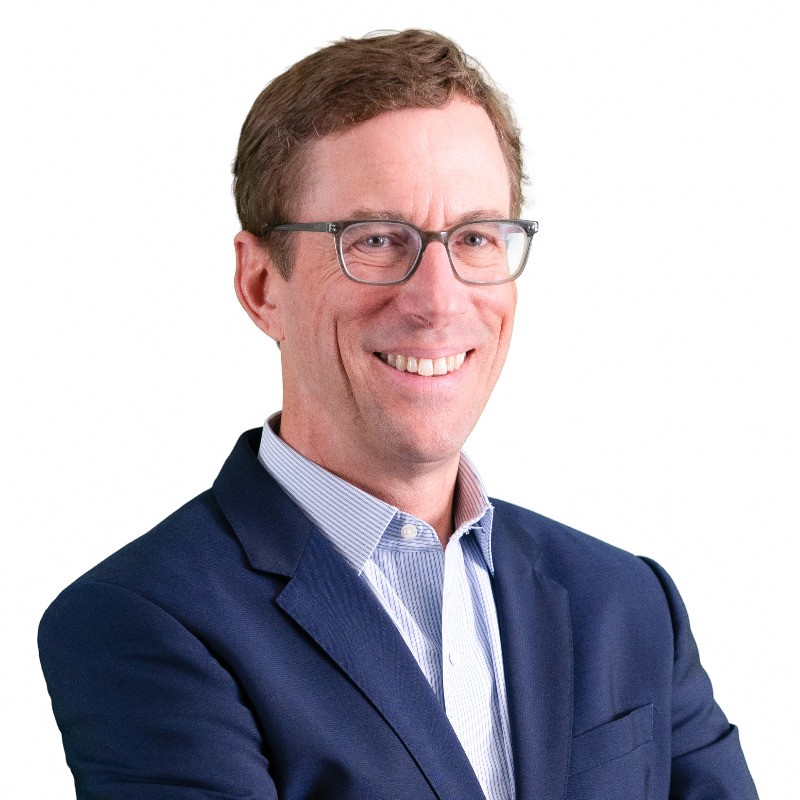
John Whittle, chief operating officer at Fortinet, joins John Furrier of SiliconANGLE Media for a CUBE Conversation to discuss Fortinet's strategic positioning and growth trajectory against the backdrop of evolving cybersecurity demands. With impressive first-quarter results, Fortinet leads the market through innovation and customer-centric solutions.
Whittle shares insights into Fortinet's market leadership, emphasizing its commitment to innovation and customer satisfaction. TheCUBE Research and its hosts highlight Fortinet's core strength in its engineer-led culture and its ability to navigate complex threat landscapes swiftly. Notably, Fortinet stands as the number one provider in firewall, SD-WAN, and Operational Technology security, with aspirations to lead the Software as a Service space as well.
In this discussion, Whittle outlines the critical challenges customers face and how Fortinet addresses these with an integrated suite of AI-driven solutions. According to Whittle, the company's organic growth approach ensures seamless product integration, delivering a scalable and effective cybersecurity platform. They emphasize Fortinet's collaborative efforts with global cybersecurity agencies and its progressive steps toward combating cybercrime.
Forgot Password
Almost there!
We just sent you a verification email. Please verify your account to gain access to
Fortinet Content Library. If you don’t think you received an email check your
spam folder.
In order to sign in, enter the email address you used to registered for the event. Once completed, you will receive an email with a verification link. Open this link to automatically sign into the site.
Register For Fortinet Content Library
Please fill out the information below. You will recieve an email with a verification link confirming your registration. Click the link to automatically sign into the site.
You’re almost there!
We just sent you a verification email. Please click the verification button in the email. Once your email address is verified, you will have full access to all event content for Fortinet Content Library.
I want my badge and interests to be visible to all attendees.
Checking this box will display your presense on the attendees list, view your profile and allow other attendees to contact you via 1-1 chat. Read the Privacy Policy. At any time, you can choose to disable this preference.
Select your Interests!
add
Upload your photo
Uploading..
OR
Connect via Twitter
Connect via Linkedin
EDIT PASSWORD
Share
Forgot Password
Almost there!
We just sent you a verification email. Please verify your account to gain access to
Fortinet Content Library. If you don’t think you received an email check your
spam folder.
In order to sign in, enter the email address you used to registered for the event. Once completed, you will receive an email with a verification link. Open this link to automatically sign into the site.
Sign in to gain access to Fortinet Content Library
Please sign in with LinkedIn to continue to Fortinet Content Library. Signing in with LinkedIn ensures a professional environment.
Are you sure you want to remove access rights for this user?
Details
Manage Access
email address
Community Invitation
John Whittle, Fortinet | CUBE Conversation
Fortinet's Strategic Direction in the Cybersecurity Landscape
John Whittle, chief operating officer at Fortinet, joins John Furrier of SiliconANGLE Media for a CUBE Conversation to discuss Fortinet's strategic positioning and growth trajectory against the backdrop of evolving cybersecurity demands. With impressive first-quarter results, Fortinet leads the market through innovation and customer-centric solutions.
Whittle shares insights into Fortinet's market leadership, emphasizing its commitment to innovation and customer satisfaction. TheCUBE Research and its hosts highlight Fortinet's core strength in its engineer-led culture and its ability to navigate complex threat landscapes swiftly. Notably, Fortinet stands as the number one provider in firewall, SD-WAN, and Operational Technology security, with aspirations to lead the Software as a Service space as well.
In this discussion, Whittle outlines the critical challenges customers face and how Fortinet addresses these with an integrated suite of AI-driven solutions. According to Whittle, the company's organic growth approach ensures seamless product integration, delivering a scalable and effective cybersecurity platform. They emphasize Fortinet's collaborative efforts with global cybersecurity agencies and its progressive steps toward combating cybercrime.
>> Hello, welcome to theCUBE Studio here in our Palo Alto Studio. I'm John Furrier, host of theCUBE, here for a special CUBE conversation with the chief operating officer of Fortinet. John Whittle is here. Thank you for coming in. Great to see you. Congratulations on your earnings. Business is good.
John Whittle
>> John, thank you. No, thanks for having me. Yes, business is good. We're very happy with the results.>> We've been following you guys for a long time. Obviously, love the golf tournament. We had a CUBE there one time. You guys have a PGA event. You guys are part of a lot of other activities as well as RSA. We just had you guys on theCUBE when threat report came out. Consistent cadence of sharing the data. Cyber security is well known. Before we get into some of the cyber challenges and opportunities, set the table for Fortinet. As the COO, you're looking at the trains and run-on time. Business is dynamic, big data's in full force. The AI factories are here. You're starting to see a lot more horsepower come in. What's the context of Fortinet right now? What's the business look like? You just had your earnings. Set the table for the performance and the current situation.
John Whittle
>> Yeah, so Fortinet is a leading cybersecurity company. We've grown through the years. We're headquartered in Sunnyvale and our business is worldwide. And we've grown from two founders in year 2000 over 25 years to approaching 15,000 cybersecurity professional employees around the world. Our engineering is in Canada and the US, and we're really focused on innovation at speed. The threat's moving super fast. It's even moving faster these days than it was when I joined Fortinet 19 years ago. And so we're really focused on engineering at speed to stay ahead of the threat and we're doing a really good job. And you can see it based on the accelerating customer adoption that we've had, growing faster than the market, which is our goal to show that we're protecting customers and adding value to customers better than the competition. And we're doing a good job.>> Yeah, you guys have a great reputation. Talk about the Q1 results. What were some of the drivers? Can you share some of the numbers and the performance momentum?
John Whittle
>> Yeah, so Q1 we had really significant positive results. It was notable because we're operating in a little bit of an uncertain geopolitical and macroeconomic environment. And so we grew faster than the market. It's really driven by our innovation. And so we, number one, most deployed firewall in the world. We have 55% of the deployed firewalls by unit volume. Number one SD-WAN provider in the world. Number one in OT security. We're very focused on SaaS, securing the edge, and we have line of sight to be number one in SaaS as well. And we've got a track record with the first three in terms of driving that innovation. And then we have the broadest AI powered security operations solution on the market. And we're focused on AI to drive that SecOps solution set, but also across the rest of our solution sets to help protect customers.>> When you talk to customers, Fortinet, you guys have a lot of presence, you have a lot of installed product. You're getting the content with the data. What are their challenges? When you speak to them, what's driving their behavior now? Obviously, the game is still the same. An adversary has to get right once. You got to be right all the time. This is what the customers have to rely on. What are some of their pain points? What are some of their concerns that you guys are looking at right now that's going to shape some of the growth for Fortinet?
John Whittle
>> Yeah, it's interesting. The threat landscape has always been complex and sophisticated. But in my opinion, it's taken a step function up in terms of complexity, sophistication, pervasiveness, and downside to customers. You have nation states very sophisticated. They're getting more and more active. We talk to cybersecurity agencies around the world who tell us that you would not believe how under attack the critical infrastructure is, and they need to collaborate with us on that. And so you have that situation where the threat landscape is taking a step function up in terms of the challenge. And then you have cybersecurity skills shortages where customers just don't have enough people to protect against this evolving threat landscape. And so that's an area where we can add a lot of value to customers by coming in there and being their trusted partner.>> On the agent side, that's an area we're seeing a lot of assistance. You go back two years ago at all the shows, Black Hat, DEFCON, RSA, a lot of poo-pooing of agents. There's lot of security challenges with GenAI. We saw that. This year, I was surprised to see a lot of agents in practical workflows. It wasn't like throwing agents at the problem. There was some identified clear line of sight of value creation and value extraction on the customer side for that deployment of machine learning, plus-GenAI-minus vibe. We saw that, the practitioners digging in. What are you guys seeing? Are you seeing the same thing? That there's some practical AI being used and is that augmenting the human in the loop?
John Whittle
>> Absolutely. We have been focused on that for 15 years in terms of automating these processes. And so we have really made a lot of progress in terms of practical AI that really helps our customers identify the problem. And then solve the problem. And so we're really focused on that. We're investing a lot in it. We've been investing in it for some time. We have 500 pending and issued AI patents in our portfolio, the largest AI patent portfolio of anybody in cybersecurity. And so we've been focused on this for years. And we are seeing it come to fruition where it's actually helpful and adds value to customers.>> One of the challenges, John, I want to get your thoughts on and love to get an example of how you spend your day. I'm sure it's pretty hectic. The customers are making a decisions on how they spend their time, what they optimize for. There's limited budget, obviously CapEx, OpEx is instrumental. AI requires a lot of CapEx. You see the hyperscalers, they're dumping a lot of CapEx into building out models. We're seeing trends now where the distillation from other models is being leveraged. You're starting to see the usage of AI. How are you guys optimizing your resource and your investment for the customer? Could you share your thoughts on that? Because obviously product-led growth is a big part of your story. You got number one in categories. I think four. You're going to be number one in four now? Three?
John Whittle
>> Yeah, yeah. We're number one in firewall, SD-WAN, OT security, and pretty soon SaaS. We have line of sight to SaaS as well.>> Okay. So you might be number one in SaaS pretty soon. That's four. So the market leader. Okay? What are you investing in? What's the focus? What's the optimization plan?
John Whittle
>> But we are investing in engineering and innovation. Like I said, the threat's moving fast. We have to move fast. We're engineer led. That engineering culture permeates Fortinet, so we're very focused on investing in engineering and innovation that matters to customers. And when you have 500,000 plus customers worldwide, you get a lot of good feedback from them. Another scale advantage we have, when you have tens of thousands of value-added resellers worldwide, you get a lot of feedback from them. They help support the customers too. And so we are very focused on that aggressive engineering to protect customers and add value to customers. And AI plays a big part in it across the board of our three pillars.>> Talk about the complexity. We were talking before we came on camera about some of the complexities are out there. You guys are working to solve that. You get a lot of operating leverage with cloud and now GenAI, machine learning, clearly bringing in some leverage. Which is great, because things don't always grow linearly and you want exponential scale, even on the data side as well. So when you look at the problems to solve across cloud, on-prem, and edge, how are you guys looking at it from a complexity standpoint? You got a lot of products. Is there an integration layer? How do you guys make those apps and workloads run in a secure manner across those environments? Is that a focus and how should people think about Fortinet in that context?
John Whittle
>> Yeah, that's definitely a focus of ours. And part of our strategy has been to focus on organic growth. And we've seen other companies where they're bolting on acquisitions and they just don't integrate well together. They don't work well together. So we've been very focused on organic growth. We have done some tech and talent acquisitions, which have been very valuable, but the core of our products have been developed organically from the ground up to be integrated and to work well together. So for example, when you look at our firewall, our SD-WAN solution, our SaaS solution, they all share a common operating system. And that allows it to work very, very well together. And it also allows our customers out there who have a firewall or SD-WAN solution to just easily turn on the SaaS solution. And so it's ease of use, ease of reaching that value of the added solutions that we have out there. And that's been a core value of ours to integrate.>> So no sprawl on bolting on products. There's tools and platforms.
John Whittle
>> Correct. Yeah, yeah. We're very focused on that integration and building them from the ground up to be integrated. Not integrating after the fact, after we acquired disparate operating systems, which in our experience is tough to do.>> Not to put you on the spot and put my CFO hat on, but I got to think there's some good operating margins involved when you start to have that common integrated approach natively.
John Whittle
>> Yeah, yeah. We have good operating margins, we've got good gross margins, and that reflects the value that we can add customers really. That's the financial reflection of that. And so we feel like that innovation investment that we've made pays off when we can show that value that we've added to customers.>> What I love about the Fortinet story is the founding story, Ken Xie, from the net screen side. He knows what access looks like, right? So access, you mentioned SaaS.
John Whittle
>> Yeah.>> Okay. You're going soon be number one in that area. There's no perimeter. There's been conversations over a decade now, so that's not really not current, but it's still a reality. Now you've got LLMs, you've got all kinds of other things permeating into the enterprise. What's the access level, because you have now access in, but there's so many more access points into a network.
John Whittle
>> Yes.>> How do you guys view that now? What's the Fortinet's current state of the vision there?
John Whittle
>> Yeah, the way we describe it is the edge is expanding. Soon there's no edge. And so you have to be really innovative. It's not as simple as it used to be. And so SaaS is a big part of our focus and we've got a very robust enterprise grade SaaS solution right now. And SaaS is such a solution where it's delivered as a SaaS solution, so you can improve it over time steadily. That's going to be a big focus of ours as this edge continues to expand and the complexity increases.>> Before we get some of the public-private partnerships, because obviously cyber is crossing over national security. Global, you mentioned the geopolitical situation. We'll put a pin in that. We'll get that in a second. But I want to get back to the customers, because I want to understand what your view is and how Fortinet's winning now. What are the areas you guys are winning and why? I've got the four categories. What's the reason? Is it a better product, faster performance, better security? What are some of the reasons why you're winning and what's those use cases? What are some of those use cases look like?
John Whittle
>> I think if you talk to people in the market, they will agree, Fortinet is the innovation leader. We are focused on engineering. We're focused on innovation that matters to the customer, and we're driving that innovation fast. A second competitive differentiator for us, and this is surprising to me that it is a competitive differentiator, is we are customer first. You will hear some other companies say that. We have led, we are customer first. We want to be very loyal to the customers and the partner ecosystem that we have. And so we're very focused on loyalty to customers. We take a very long-term view and loyalty to partners, and doing right by the customers in terms of great innovation. And beyond that, we want to have the absolutely most effective solution and the most cost-effective solution as well. And so with Fortinet, there are a lot of reasons for our success, but I think at a very high level, it's that innovation focus. It's that customer and partner first focus. And when you drill down from that, you have number one in firewall, number one in SD-WAN, number one in OT security, and soon number one in SaaS as well.>> It's nice to light up the scoreboard.
John Whittle
>> Yeah, .>> Number one across the boards.
John Whittle
>> Proof is in the pudding. And also the expanding customer base. We were talking earlier about the network effect. When you have 500,000 plus customers, some of those are the biggest banks, biggest health industry customers, biggest government organizations, and they kick the tires hard on our products. And so you have this crowdsourcing of trusts where we want new customers, customer prospects, to kick the tires hard. But also we've got a lot of customer references.>> I want to get into something that, we talked about cyber resilience a lot. And you hear that with recovery ransomware. But resilience now is an enterprise-wide bar that's always been there for application reviews, getting things on the network, getting things in the network, getting things set up. And then cyber crime, which over the past 15 years of theCUBE, we've seen it, "Hey, there's some countries enabling open source tools." Okay. Malicious things are happening."
Now it's full-blown economy. Right? Now you can get as a service, anything you want. The dollars are real. So cyber resilience is a bar that is going to maintain its height. What are your views on cyber resilience and the enterprise to keep their practices clean and strong, and then this whole cyber crime area?
John Whittle
>> In terms of resilience, obviously it's going to become more and more important. You have ransomware shutting down organizations. You obviously have serious headline-making events happening at big organizations. One of the interesting things that we're doing is we can scour the dark web, and look for agents who are selling information about organizations in advance of them being held ransom. Find out that they are going to be a target. Because oftentimes, these agents will sell information to hold organizations ransom before they're held for ransom.>> You're signaling the pre-setup run.
John Whittle
>> Correct. We see the breadcrumbs leading to the ransomware. And so it's a huge value we can add to organizations so they can protect themselves before->> On levels so they can get ready.
John Whittle
>> Yeah, yeah.>> Cancel your plans this weekend.
John Whittle
>> It's very, very cool. We're very excited about it. It's tied to our external attack surface management solution called FortiRecon, which is very robust crawling the dark web. In terms of cyber crime, obviously expanding like crazy, becoming organized businesses. You have nation states participating at a sophisticated level attacking critical infrastructure like we talked about. And we're focused on partnerships with those cyber agencies for various countries around the world. And you can imagine that when have 55% of the deployed firewalls, they want to partner with us to mitigate the risk. And so we're sharing information. We're in regular contact with some of largest cyber security agencies for governments around the world to help them protect their critical infrastructure from cyber crime. We have some other interesting things we're exploring. For example, a cyber crime bounty program. We actually partner with Interpol, the International Police Force. We've been partnering with them since 2018 to bring cyber criminals to justice. And we've been sharing information with them and collaborating with them. And we've had some success stories where we've had convictions of cyber criminals. And sometimes, bringing accountability can serve a lot of purposes. One of them is prevention, and having accountability prevents. And we're also in discussions with them about a possible cyber crime bounty program where for significant criminals, we will potentially contribute some money for the person who can bring them to justice.>> Yeah, that's an important point about taking them off the streets is literally justice, because the past behaviors disrupt their operations and they just re-form. They're back in a second. Okay, slap on the wrist versus taken out of commission, put in jail, put behind bars.
John Whittle
>> And it sends a message to others as well.>> Okay. So to wrap up, what's the biggest opportunity you guys see as you look out? A lot of action, a lot of change, some chaos, but that's the world you live in. Right? So how do you guys look at the next couple quarters? Next year? What's the North star? Take us through the strategy, what you guys are thinking.
John Whittle
>> Yeah, chaos and challenge, the complexities of the threat. That's where we can add value. And so we view that as a real opportunity to add value. We view our mission to protect and serve customers as a noble purpose. And so the more complexity in terms of the threat landscape, the more we can help protect our customers and add value that way. And so our focus will remain innovating fast, putting the customers and partners first. And we're very focused on building out this platform of cybersecurity solutions that are number one, from firewall to SD-WAN, to OT security, to SaaS, to the number one AI powered security operations solution. And we're going to have an AI layer across all of these various solutions that will help protect our customers.>> You heard it here. Fortinet, good earnings, number one and three, soon to be four categories. The security landscape is changing. It's getting more complex, but the tools are coming on, the platforms are unifying. The data's getting smarter. Agents are coming. A lot more action here on theCUBE. I'm John Furrier, your host. Thanks for watching.
>> Hello, welcome to theCUBE Studio here in our Palo Alto Studio. I'm John Furrier, host of theCUBE, here for a special CUBE conversation with the chief operating officer of Fortinet. John Whittle is here. Thank you for coming in. Great to see you. Congratulations on your earnings. Business is good.
John Whittle
>> John, thank you. No, thanks for having me. Yes, business is good. We're very happy with the results.>> We've been following you guys for a long time. Obviously, love the golf tournament. We had a CUBE there one time. You guys have a PGA event. You guys are part of a lot of other activities as well as RSA. We just had you guys on theCUBE when threat report came out. Consistent cadence of sharing the data. Cyber security is well known. Before we get into some of the cyber challenges and opportunities, set the table for Fortinet. As the COO, you're looking at the trains and run-on time. Business is dynamic, big data's in full force. The AI factories are here. You're starting to see a lot more horsepower come in. What's the context of Fortinet right now? What's the business look like? You just had your earnings. Set the table for the performance and the current situation.
John Whittle
>> Yeah, so Fortinet is a leading cybersecurity company. We've grown through the years. We're headquartered in Sunnyvale and our business is worldwide. And we've grown from two founders in year 2000 over 25 years to approaching 15,000 cybersecurity professional employees around the world. Our engineering is in Canada and the US, and we're really focused on innovation at speed. The threat's moving super fast. It's even moving faster these days than it was when I joined Fortinet 19 years ago. And so we're really focused on engineering at speed to stay ahead of the threat and we're doing a really good job. And you can see it based on the accelerating customer adoption that we've had, growing faster than the market, which is our goal to show that we're protecting customers and adding value to customers better than the competition. And we're doing a good job.>> Yeah, you guys have a great reputation. Talk about the Q1 results. What were some of the drivers? Can you share some of the numbers and the performance momentum?
John Whittle
>> Yeah, so Q1 we had really significant positive results. It was notable because we're operating in a little bit of an uncertain geopolitical and macroeconomic environment. And so we grew faster than the market. It's really driven by our innovation. And so we, number one, most deployed firewall in the world. We have 55% of the deployed firewalls by unit volume. Number one SD-WAN provider in the world. Number one in OT security. We're very focused on SaaS, securing the edge, and we have line of sight to be number one in SaaS as well. And we've got a track record with the first three in terms of driving that innovation. And then we have the broadest AI powered security operations solution on the market. And we're focused on AI to drive that SecOps solution set, but also across the rest of our solution sets to help protect customers.>> When you talk to customers, Fortinet, you guys have a lot of presence, you have a lot of installed product. You're getting the content with the data. What are their challenges? When you speak to them, what's driving their behavior now? Obviously, the game is still the same. An adversary has to get right once. You got to be right all the time. This is what the customers have to rely on. What are some of their pain points? What are some of their concerns that you guys are looking at right now that's going to shape some of the growth for Fortinet?
John Whittle
>> Yeah, it's interesting. The threat landscape has always been complex and sophisticated. But in my opinion, it's taken a step function up in terms of complexity, sophistication, pervasiveness, and downside to customers. You have nation states very sophisticated. They're getting more and more active. We talk to cybersecurity agencies around the world who tell us that you would not believe how under attack the critical infrastructure is, and they need to collaborate with us on that. And so you have that situation where the threat landscape is taking a step function up in terms of the challenge. And then you have cybersecurity skills shortages where customers just don't have enough people to protect against this evolving threat landscape. And so that's an area where we can add a lot of value to customers by coming in there and being their trusted partner.>> On the agent side, that's an area we're seeing a lot of assistance. You go back two years ago at all the shows, Black Hat, DEFCON, RSA, a lot of poo-pooing of agents. There's lot of security challenges with GenAI. We saw that. This year, I was surprised to see a lot of agents in practical workflows. It wasn't like throwing agents at the problem. There was some identified clear line of sight of value creation and value extraction on the customer side for that deployment of machine learning, plus-GenAI-minus vibe. We saw that, the practitioners digging in. What are you guys seeing? Are you seeing the same thing? That there's some practical AI being used and is that augmenting the human in the loop?
John Whittle
>> Absolutely. We have been focused on that for 15 years in terms of automating these processes. And so we have really made a lot of progress in terms of practical AI that really helps our customers identify the problem. And then solve the problem. And so we're really focused on that. We're investing a lot in it. We've been investing in it for some time. We have 500 pending and issued AI patents in our portfolio, the largest AI patent portfolio of anybody in cybersecurity. And so we've been focused on this for years. And we are seeing it come to fruition where it's actually helpful and adds value to customers.>> One of the challenges, John, I want to get your thoughts on and love to get an example of how you spend your day. I'm sure it's pretty hectic. The customers are making a decisions on how they spend their time, what they optimize for. There's limited budget, obviously CapEx, OpEx is instrumental. AI requires a lot of CapEx. You see the hyperscalers, they're dumping a lot of CapEx into building out models. We're seeing trends now where the distillation from other models is being leveraged. You're starting to see the usage of AI. How are you guys optimizing your resource and your investment for the customer? Could you share your thoughts on that? Because obviously product-led growth is a big part of your story. You got number one in categories. I think four. You're going to be number one in four now? Three?
John Whittle
>> Yeah, yeah. We're number one in firewall, SD-WAN, OT security, and pretty soon SaaS. We have line of sight to SaaS as well.>> Okay. So you might be number one in SaaS pretty soon. That's four. So the market leader. Okay? What are you investing in? What's the focus? What's the optimization plan?
John Whittle
>> But we are investing in engineering and innovation. Like I said, the threat's moving fast. We have to move fast. We're engineer led. That engineering culture permeates Fortinet, so we're very focused on investing in engineering and innovation that matters to customers. And when you have 500,000 plus customers worldwide, you get a lot of good feedback from them. Another scale advantage we have, when you have tens of thousands of value-added resellers worldwide, you get a lot of feedback from them. They help support the customers too. And so we are very focused on that aggressive engineering to protect customers and add value to customers. And AI plays a big part in it across the board of our three pillars.>> Talk about the complexity. We were talking before we came on camera about some of the complexities are out there. You guys are working to solve that. You get a lot of operating leverage with cloud and now GenAI, machine learning, clearly bringing in some leverage. Which is great, because things don't always grow linearly and you want exponential scale, even on the data side as well. So when you look at the problems to solve across cloud, on-prem, and edge, how are you guys looking at it from a complexity standpoint? You got a lot of products. Is there an integration layer? How do you guys make those apps and workloads run in a secure manner across those environments? Is that a focus and how should people think about Fortinet in that context?
John Whittle
>> Yeah, that's definitely a focus of ours. And part of our strategy has been to focus on organic growth. And we've seen other companies where they're bolting on acquisitions and they just don't integrate well together. They don't work well together. So we've been very focused on organic growth. We have done some tech and talent acquisitions, which have been very valuable, but the core of our products have been developed organically from the ground up to be integrated and to work well together. So for example, when you look at our firewall, our SD-WAN solution, our SaaS solution, they all share a common operating system. And that allows it to work very, very well together. And it also allows our customers out there who have a firewall or SD-WAN solution to just easily turn on the SaaS solution. And so it's ease of use, ease of reaching that value of the added solutions that we have out there. And that's been a core value of ours to integrate.>> So no sprawl on bolting on products. There's tools and platforms.
John Whittle
>> Correct. Yeah, yeah. We're very focused on that integration and building them from the ground up to be integrated. Not integrating after the fact, after we acquired disparate operating systems, which in our experience is tough to do.>> Not to put you on the spot and put my CFO hat on, but I got to think there's some good operating margins involved when you start to have that common integrated approach natively.
John Whittle
>> Yeah, yeah. We have good operating margins, we've got good gross margins, and that reflects the value that we can add customers really. That's the financial reflection of that. And so we feel like that innovation investment that we've made pays off when we can show that value that we've added to customers.>> What I love about the Fortinet story is the founding story, Ken Xie, from the net screen side. He knows what access looks like, right? So access, you mentioned SaaS.
John Whittle
>> Yeah.>> Okay. You're going soon be number one in that area. There's no perimeter. There's been conversations over a decade now, so that's not really not current, but it's still a reality. Now you've got LLMs, you've got all kinds of other things permeating into the enterprise. What's the access level, because you have now access in, but there's so many more access points into a network.
John Whittle
>> Yes.>> How do you guys view that now? What's the Fortinet's current state of the vision there?
John Whittle
>> Yeah, the way we describe it is the edge is expanding. Soon there's no edge. And so you have to be really innovative. It's not as simple as it used to be. And so SaaS is a big part of our focus and we've got a very robust enterprise grade SaaS solution right now. And SaaS is such a solution where it's delivered as a SaaS solution, so you can improve it over time steadily. That's going to be a big focus of ours as this edge continues to expand and the complexity increases.>> Before we get some of the public-private partnerships, because obviously cyber is crossing over national security. Global, you mentioned the geopolitical situation. We'll put a pin in that. We'll get that in a second. But I want to get back to the customers, because I want to understand what your view is and how Fortinet's winning now. What are the areas you guys are winning and why? I've got the four categories. What's the reason? Is it a better product, faster performance, better security? What are some of the reasons why you're winning and what's those use cases? What are some of those use cases look like?
John Whittle
>> I think if you talk to people in the market, they will agree, Fortinet is the innovation leader. We are focused on engineering. We're focused on innovation that matters to the customer, and we're driving that innovation fast. A second competitive differentiator for us, and this is surprising to me that it is a competitive differentiator, is we are customer first. You will hear some other companies say that. We have led, we are customer first. We want to be very loyal to the customers and the partner ecosystem that we have. And so we're very focused on loyalty to customers. We take a very long-term view and loyalty to partners, and doing right by the customers in terms of great innovation. And beyond that, we want to have the absolutely most effective solution and the most cost-effective solution as well. And so with Fortinet, there are a lot of reasons for our success, but I think at a very high level, it's that innovation focus. It's that customer and partner first focus. And when you drill down from that, you have number one in firewall, number one in SD-WAN, number one in OT security, and soon number one in SaaS as well.>> It's nice to light up the scoreboard.
John Whittle
>> Yeah, .>> Number one across the boards.
John Whittle
>> Proof is in the pudding. And also the expanding customer base. We were talking earlier about the network effect. When you have 500,000 plus customers, some of those are the biggest banks, biggest health industry customers, biggest government organizations, and they kick the tires hard on our products. And so you have this crowdsourcing of trusts where we want new customers, customer prospects, to kick the tires hard. But also we've got a lot of customer references.>> I want to get into something that, we talked about cyber resilience a lot. And you hear that with recovery ransomware. But resilience now is an enterprise-wide bar that's always been there for application reviews, getting things on the network, getting things in the network, getting things set up. And then cyber crime, which over the past 15 years of theCUBE, we've seen it, "Hey, there's some countries enabling open source tools." Okay. Malicious things are happening."
Now it's full-blown economy. Right? Now you can get as a service, anything you want. The dollars are real. So cyber resilience is a bar that is going to maintain its height. What are your views on cyber resilience and the enterprise to keep their practices clean and strong, and then this whole cyber crime area?
John Whittle
>> In terms of resilience, obviously it's going to become more and more important. You have ransomware shutting down organizations. You obviously have serious headline-making events happening at big organizations. One of the interesting things that we're doing is we can scour the dark web, and look for agents who are selling information about organizations in advance of them being held ransom. Find out that they are going to be a target. Because oftentimes, these agents will sell information to hold organizations ransom before they're held for ransom.>> You're signaling the pre-setup run.
John Whittle
>> Correct. We see the breadcrumbs leading to the ransomware. And so it's a huge value we can add to organizations so they can protect themselves before->> On levels so they can get ready.
John Whittle
>> Yeah, yeah.>> Cancel your plans this weekend.
John Whittle
>> It's very, very cool. We're very excited about it. It's tied to our external attack surface management solution called FortiRecon, which is very robust crawling the dark web. In terms of cyber crime, obviously expanding like crazy, becoming organized businesses. You have nation states participating at a sophisticated level attacking critical infrastructure like we talked about. And we're focused on partnerships with those cyber agencies for various countries around the world. And you can imagine that when have 55% of the deployed firewalls, they want to partner with us to mitigate the risk. And so we're sharing information. We're in regular contact with some of largest cyber security agencies for governments around the world to help them protect their critical infrastructure from cyber crime. We have some other interesting things we're exploring. For example, a cyber crime bounty program. We actually partner with Interpol, the International Police Force. We've been partnering with them since 2018 to bring cyber criminals to justice. And we've been sharing information with them and collaborating with them. And we've had some success stories where we've had convictions of cyber criminals. And sometimes, bringing accountability can serve a lot of purposes. One of them is prevention, and having accountability prevents. And we're also in discussions with them about a possible cyber crime bounty program where for significant criminals, we will potentially contribute some money for the person who can bring them to justice.>> Yeah, that's an important point about taking them off the streets is literally justice, because the past behaviors disrupt their operations and they just re-form. They're back in a second. Okay, slap on the wrist versus taken out of commission, put in jail, put behind bars.
John Whittle
>> And it sends a message to others as well.>> Okay. So to wrap up, what's the biggest opportunity you guys see as you look out? A lot of action, a lot of change, some chaos, but that's the world you live in. Right? So how do you guys look at the next couple quarters? Next year? What's the North star? Take us through the strategy, what you guys are thinking.
John Whittle
>> Yeah, chaos and challenge, the complexities of the threat. That's where we can add value. And so we view that as a real opportunity to add value. We view our mission to protect and serve customers as a noble purpose. And so the more complexity in terms of the threat landscape, the more we can help protect our customers and add value that way. And so our focus will remain innovating fast, putting the customers and partners first. And we're very focused on building out this platform of cybersecurity solutions that are number one, from firewall to SD-WAN, to OT security, to SaaS, to the number one AI powered security operations solution. And we're going to have an AI layer across all of these various solutions that will help protect our customers.>> You heard it here. Fortinet, good earnings, number one and three, soon to be four categories. The security landscape is changing. It's getting more complex, but the tools are coming on, the platforms are unifying. The data's getting smarter. Agents are coming. A lot more action here on theCUBE. I'm John Furrier, your host. Thanks for watching.